Peterborough Days

A few days in Peterborough allowed me to meet up with some of my descendants and see some local sites. First, a trip to Kirby Hall that nearly didn’t happen. As we neared the Hall there was a road closed sign. We followed the, very long, diversion to the other end of the closed road only to find …… a road closed sign; there was no indication that there were exceptions for access. This time there was a man sat in a works van and on enquiring he moved a few cones and we were told we could drive through to the Hall. Wondering if we might actually be able to get out again, we proceeded with our visit. The Hall were going to be in for a quiet day.

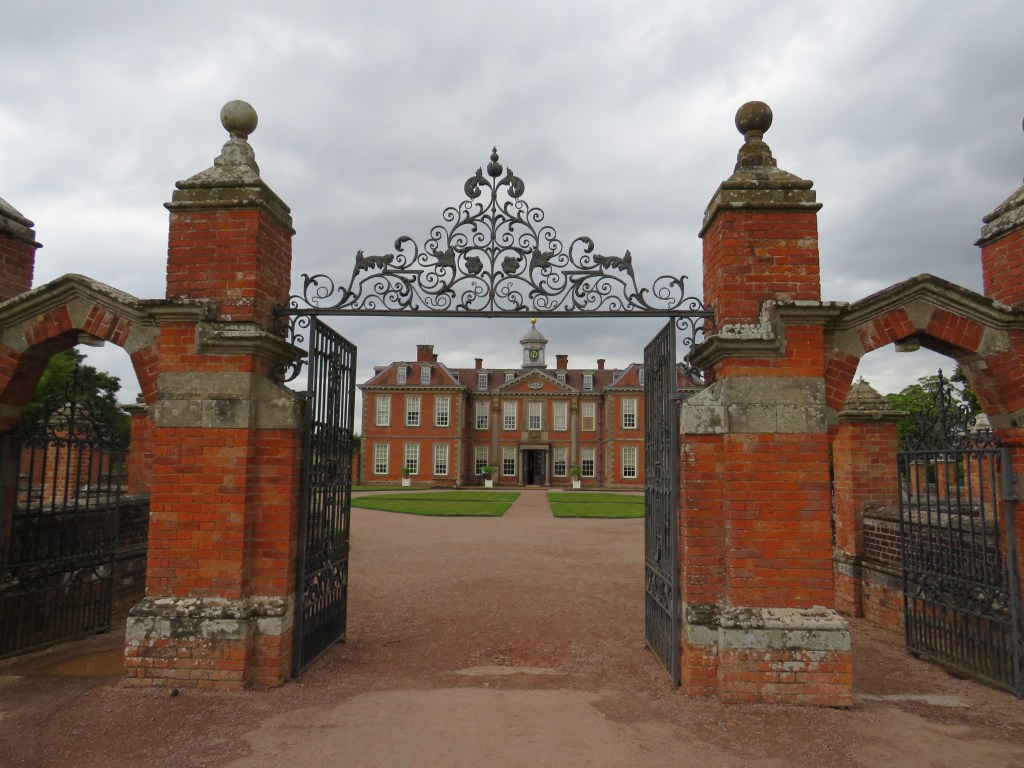
Kirby Hall is a ruin that was one of the first buildings to be acquired by the state for preservation, under the auspices of what is now known as English Heritage. It was built for Sir Humphrey Stafford in 1570; the architect was John Thorne. Five years later, Stafford was dead and four generations of Christopher Hattons went on to own the house. The first Christopher Hatton was a great favourite of Elizabeth I, allegedly first coming to her attention because of his dancing prowess. Yet, although he became her Chancellor, she never visited the Hall. What Hatton lost in prestige over this he probably made up for in the money that he saved by not having to host the Queen. James I, on the other hand, visited more than once. Christopher Hatton mark 3 was a great antiquarian and had the Hall remodelled, including the addition of a library. Inigo Jones provided plans and the appropriately named royal stonemason Nicholas Stone, was hired.

Ardently Royalist, Hatton fled to France during the Civil War and spend years trying to rebuild the family fortunes after the Restoration. His grandfather had been given land in London by Elizabeth I, which CH3 developed into Hatton Garden. Like his father, Christopher Hatton 4 was the governor of Guernsey and his wife and mother were killed when the gunpowder store at Castle Cornet blew up. Hatton himself was saved  by a black servant, John Chappell, who was left a pension of £20 a year in Hatton’s will. Between 1772 and 1831, most of the contents were sold, the owners ceased using the Hall and it was given over to estate workers. It gradually fell into disrepair.

Notable features were the bay windows and the gardens, which are believed to have been designed by George London, who name was familiar from my seventeenth century gardens talks. There were also the most enormous pears and apples I’ve ever seen in the garden, both the size of your average grapefruit.

I can report that we escaped via the ‘closed’ road and that zero work appeared to be happening, or to have happened. Disclaimer – I take no responsibility if I have confused the various Christopher Hattons.

The next day and it was a National Trust destination this time, in the shape of Lyveden Lodge. In Elizabethan times, the manor here was owned by Thomas Tresham. He was orphaned at a very young age and was brought up by and married into the Throckmorton family. Tresham was knighted by Elizabeth I but by 1580 had converted to Catholicism; thus just six years after his knighthood, Trensham was in prison for his beliefs. Trensham had his staff begin to build an impressive lodge for his guests, with plans to surround it with gardens and vistas; directing some of the proceedings from prison. The garden is held out to be one of England’s oldest garden landscapes. The lodge, manor and garden were full of Catholic symbols. Recusancy fines, a lavish lifestyle and having to provide dowries for six daughters meant that, when Trensham died in 1605, he owed the equivalent of a million pounds in today’s money. Realising that they wouldn’t be paid, the workers downed tools and the lodge was never finished. His son rebuilt the manor but abandoned the lodge. It was Thomas’ son, Francis Trensham, who became embroiled in the gunpowder plot. It is likely that it was Francis’ letter, warning his brother-in-law Mounteagle to stay away from Parliament, that led to the plot’s downfall. We planned to go to a garden after leaving Lyveden but it wasn’t open, so back to the van it was.

With a nod to my experimental archaeology course and our neolithic house-building experiences, our final visit was to Flag Fen. This is the site of a bronze age causeway, one kilometre in length, constructed when water levels were higher. The causeway was built from oaks, alder and ash, felled between 1280-920 BC. The uprights and platform required two million timbers. The causeway was in use for 1300 years and is thought to have had a religious significance as many objects found nearby appear to be offerings. There are also some prehistoric logboats being preserved on site. The staff were very informative and there were plenty of volunteers and conservationists on site. They have just been taking core samples and we were able to see wood that has been submerged since the bronze age. Having survived for thousands of years, the causeway is reaching the point where it is almost beyond further preservation due to changing conditions.

Weekend Three of Four Weekends of Family History

This was the weekend of the Secrets and Lies conference run by the Halstead Trust. I’ve been to a good many of these residential family history conferences over the years (and I do mean years, my first was over forty years ago) and this rated as one of the best. We’d travelled up to Peterborough the previous day and were ensconced in a caravan site half a mile away from the conference venue. Half a mile that is if you were prepared to cross a river and a railway line; it was actually two miles away by road. We were there for everything except bed and breakfast however so weren’t going to miss out.

Having had a quick recce in the morning, we arrived at the venue in the early afternoon to meet many friends. This was our first post-covid residential conference, so this was a first meeting in person for several years for some of us. It was also lovely to meet people who I was used to seeing in a rectangular box on a screen and discover how tall they were! There were also several of our lovely A Few Forgotten Women volunteers present; most appropriate given the conference theme of secrets and lies.

Lectures kicked off with Maggie Gaffney talking about a transportee, followed by Paul Blake illustrating just how the visual image, or our perception of that image, can lie. We were then treated to tales of bigamy and adulterine births in Scotland by Stewart Stevenson. The evening meal followed and Else Churchill rounded off the day with post watershed accounts of the bawdy courts.

Saturday dawned and I was first up, chatting about prostitution. I was glad that both my sessions were early on in the day as my capacity for being alert for a whole day at events like this is clearly waning. There was a choice of talks for Saturday’s lectures, so sadly I had to miss some I’d would have liked to hear. My first choice was Margaret’s ’Auntie Jo’s lost on the Family Tree’, which included the fascinating story of Agnes Beckwith’s life of secrets and lies, alongside a notable swimming career. After a buffet lunch of sandwiches and chips, which struck me as a rather odd but most acceptable combination I went to help Chris, who had been personning my bookstall all day. One of the advantages of in-person talks is that you do tend to sell a few books.

My choices for the afternoon were Alan Moorhouse’s tales of bigamy, Donna Rutherford’s detective story, cracking a coded message on the back of a postcard and Sarah Wise, with an account of her research into those incarcerated under the 1913 Mental Deficiency Act. Then a quick trip back to the caravan to get what passes for glammed up in our world. I was proud to receive a certificate of achievement from the Society of Genealogists. I’d actually been awarded this during Covid but this was the first opportunity for it to be handed over. Then to the food, to be frank, we aren’t a great fan of gala dinner food, preferring hearty platefuls of plainer fare over artfully arranged sprigs of not much surrounded by bits of drizzle. It is often a case of choosing the least worst menu options. This was not too bad by comparison. The soup was tasty, my aubergine something or other and Chris’ chicken something else were acceptable and puddings always go down well. A word about the dining room staff, who were just incredible in their efficiency. The woman in charge was managing them with a series of hand signals that made her look like she was a race-course bookie. She really should be in a top-class restaurant not a motel on a roundabout.

Then Sunday and by this time, I am realising that it takes stamina I am not sure I have to get through these events intact. The first talk by Calista Williams about the staff in Cottage Homes dovetailed well with the premier of my talk on Fallen Women. Judie McCourt then told us about Emma Costello’s life and divorce, including an encounter with a mystery Italian on a sofa. After more sandwiches and chips for lunch, Debbie Kennet treated us to a DNA case study, uncovering a paternity mystery.

Then it was all over. I know from experience just how difficult and exhausting these conferences are to organise and the team did a great job. I don’t know how many crises they were fielding under the surface, I am sure there were some but it didn’t show. I think I have persuaded a few people to come to our conference next year and I have a lot to live up to but I am confident of our excellent programme and beautiful location, so we do it all again then, although I have another bite of the conference cherry in between at the Guild of One-Name Studies conference in April and stand by for more family history next weekend.

Post conference, we arrived back at the van to find that it was three foot further back than we’d left it. Next door but one with huge new-to-them caravan and an automatic Volvo had been trying to move off site to go home. They’d left the motor movers on (which move the van into place a bit like a remote control car). Husband driving leaves engine running and car in drive mode and gets out to turn said motor movers off, as they are acting as a break. He turns them off – car then takes off on its own with the caravan, heading for our van. Wife in the passenger seat tries to steer car away from our van. Guy in nearby camper van tries to push their van away from ours and gets knocked down. At least this is the rather garbled story we came back to. Minor cosmetic damage to the tow hitch of our van and two broken feet where it was pushed back a metre. Site owners had been trying to ring but we had turned phones off in the conference. We were met by very apologetic damage-causers who were clearly still in shock five hours later. We ran checks to ensure we could still wind our legs up (that’s the caravan’s legs – not so sure about our own) and connect the car to the van, which were the concerns. Then to recover from the weekend.

Family History Weekend Number Two (of Four)

Before we get to weekend three of family history this month, I ought to report back on last Saturday, weekend two. We headed across the border to Bridgerule. I say across the border but the River Tamar divides Bridgerule, so some parts are in Devon and some in Cornwall. We were heading for  the church, where there was to be a local history display and we were booked to give family history advice. We had a postcode. The sat-nav didn’t recognise the postcode. Never fear thinks I, we will get to Bridgerule and if we can’t see the church, we will use What Three Words, which I also have. Bridgerule is tiny but there was no obvious church. Sadly there was no obvious phone signal either so the what three words option was out. We found the community shop and asked for directions. In fact we asked for directions twice more after that. It seems that some people can’t distinguish between a parish church and a non-conformist church. Eventually we find the church and the organisers had put on a great display, with equally great cake on offer.

I’ll be honest, in a place the size of Bridgerule, we were expecting one man and a dog if we were lucky but no. There was a steady stream of visitors and they didn’t just glance and pass by, they stayed and engaged. There was someone sat at our stall, asking for family history advice almost all day. In all, we fielded seventeen detailed enquiries. Partly I think because most of the visitors weren’t experienced family historians, we were able to help every single one. They all left with new information and delighted smiles. It is a long time since I have felt quite so much like a magician.

There was an interesting incident with Amazon in the middle of trying to record a talk ready for next month. Not sure if it was just because the order included an electrical item but I was asked for a tracking number. Unfortunately the driver’s only two words of English appeared to be ‘tracking number’. Where was this tracking number? I always delete all the emails that say ‘your order is out for delivery’ his engine is running while I look through the 200 or so delete emails of the past two or three days (searching didn’t seem to work, nothing in junk). Then he finds the third word in his English vocabulary ‘app’, nope, no app; I do all my stuff on the laptop not the phone. Finally found a teeny tiny tracking number when I went to the Amazon website. The whole palaver must have taken about fifteen minutes all told. By the time we’d finished, the noise of the pouring rain on the conservatory roof made recording tricky.

What else has been going on? A meeting with a new family member for Chris, who also has a Buckland Brewer connection and an excuse to eat cake. A talk to give and some work on a Cornish family. I’ve also been giving my talks for the coming weekend a final once-over. One was a little lacking in illustrations, as everything I wanted to use was copyright. As a consequence, I’ve been having a play with ChatGPT. I don’t have a paid account so there’s only so much you can do each day. Nonetheless, it has livened up the presentation. Really looking forward to chatting about the history of prostitution and fallen women this weekend, as you do – well, as I do anyway.

Image ChatGPT

Up the Garden Path 16

It has been a while since we’ve been up the garden path and to be honest, the garden has been a bit neglected over the summer. It has mostly been about a great deal of watering and thanks to the new wooden barrel, large capacity, water butt, I didn’t run out of water, although it came pretty close. I do worry slightly that it still smells as if I am watering things with neat whisky though. A lovely friend came and kept things alive when I was away in May, aided by me moving pots to the shady part of the garden and standing them in children’s paddling pools and the like. It turns out that I have about fifty things in pots, or rather things in fifty pots, which may be a little OTT even for a garden with very few flower beds.

A lot of time has been spent trying to weed the gravel, in which eleventy billion violets self-seeded. A few other things self-seeded as well but I allowed the marigolds and oriental poppies to stay while they flowered and there’s still a random foxglove. The patio, which makes up the majority of the garden, is another story. Anything that will grow in the cracks has and I don’t want to repoint it as otherwise there’s nowhere for the heavy rain to go. It looks, to be frank, a total mess. I do have a lethal looking implement ‘not suitable for use by under sixteens’, that is supposed to be ace for weeding gaps between paving slabs but is actually pretty useless. Much as I am not keen on the idea, I fear it will have to be weed killer. Now all I need is a dry spell to apply it, which isn’t looking like any time soon.

The large tree in a pot that was rescued and I was using to fill the one tiny gap where I am overlooked decided to die and is now no more, although the two bare twigs about nine inches long that I got from the Woodland Trust are flourishing, as is the lemon tree, which actually has lemons on, not that they look like being edible. Last year my new apple tree had one solitary apple, this year there are several, they are still a bit small, so I am hoping they get to harvestable size. A new apple tree in a pot has three apples, although the pear looks a bit sadly.

Definitely not all success stories. The Josephine Bruce rose an the new wisteria started off looking supper healthy then suddenly looked windburned, even though they are in the most sheltered bit of the garden. The rose now looks seriously poorly; too much whisky perhaps? I will prune heavily and hope for better things next year, a flower would be a start.

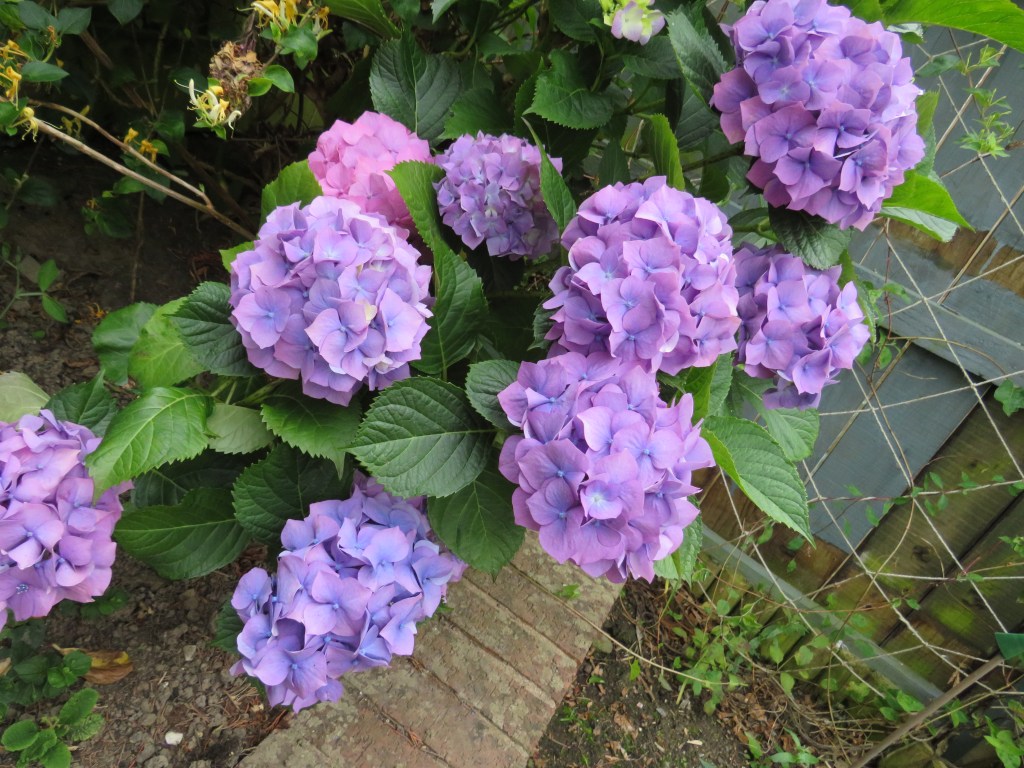
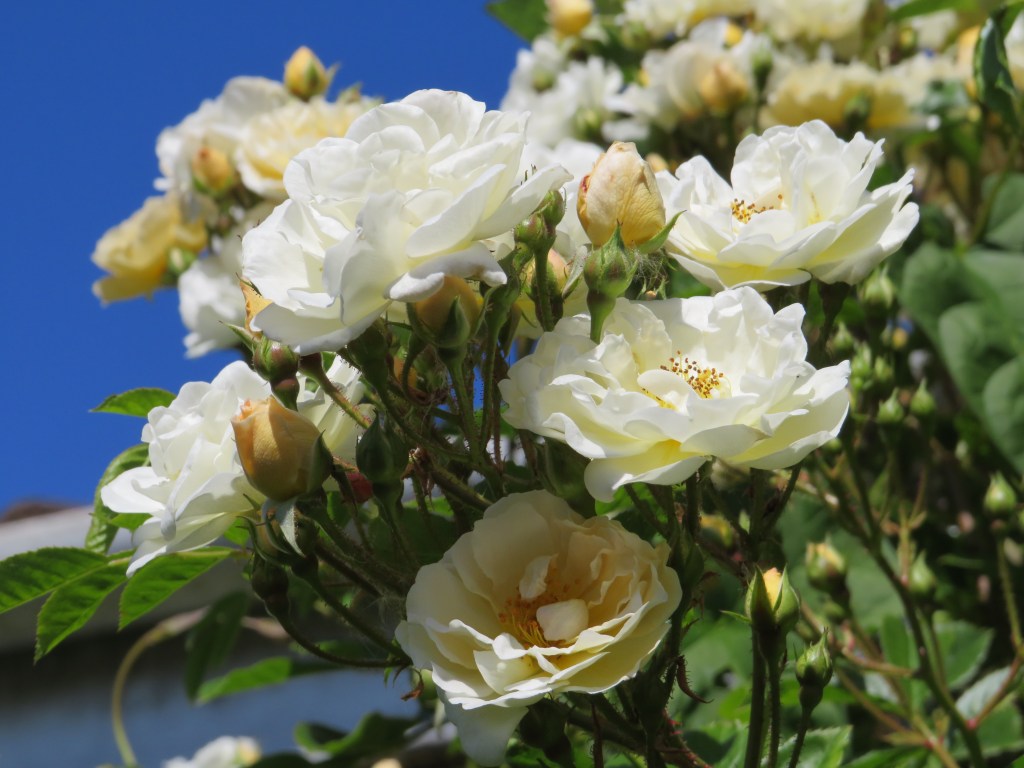
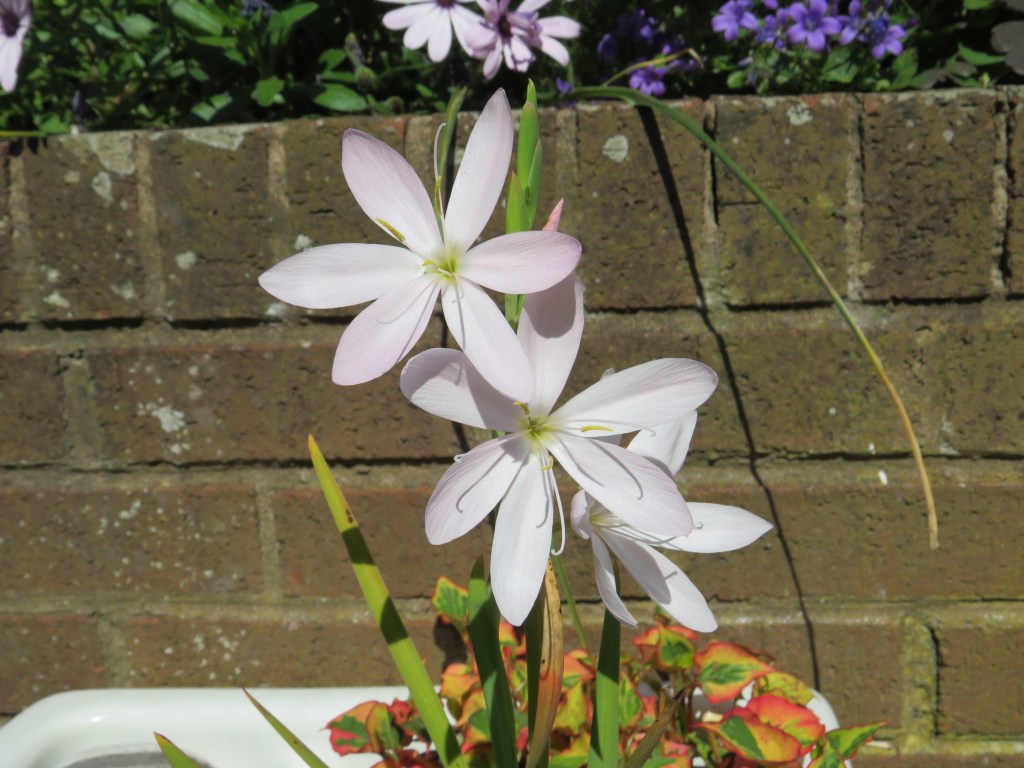
I guess having seventeen different plants in flower in September isn’t bad for a tiny garden, even though it does look a bit bare and drab in general. More work is needed! Some pictures of the last three months of flowers to cheer you up if it is wet, windy and decidedly wintery with you too.

A Family History Weekend and a Missed Opportunity

The Malvern trip continued with Gloucester Family History Society’s open day at the Heritage Hub. It was lovely to be able to see people in real life and chat about family history. I listened to Simon from WeAre.xyz, talking about his software (quick resolution to do more with my site), then gave my A to Z talk. After that, it was out for a meal and a catch up with family history friends. This is the first of four in person family history weekends in four different counties this month. A bit like buses, you wait for ever, then they all come at once,

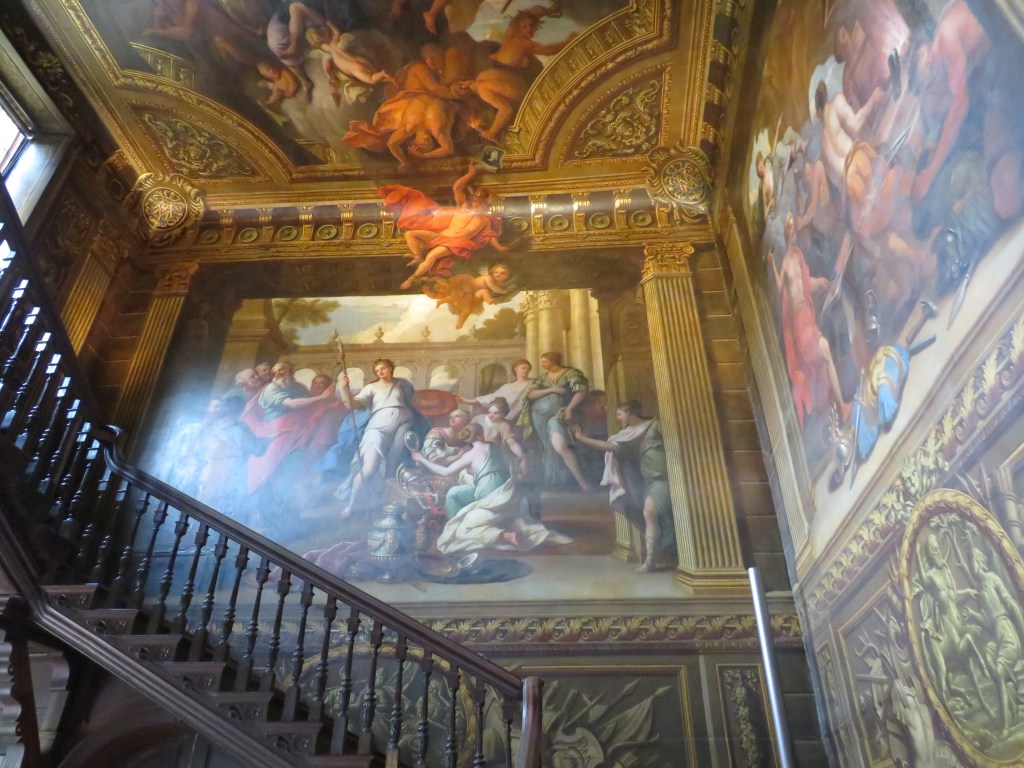
Sunday was rainy. I mean seriously rainy, so rather than  head off early, as we prefer to do, we sat it out, while I looked at the Withenbury family goodies I’d found at the Worcestershire archives. Note, I did not look back at earlier notes, a big mistake. The rain cleared up eventually, giving us just time to visit Hanbury Hall, a nearish by National Trust property and former home of the Vernon family. The most outstanding features are the wall and ceiling paintings by James Thornhill, which, unusually, were painted on dry, not wet, plaster. There are also traditional, knot-garden style gardens, with plenty of topiary, which I photographed for use in my seventeenth century gardens talk. I was also quite taken with a 1715 election ‘poster’, when Thomas Vernon was standing for the Whig cause. This, I thought was about all Hanbury Hall had to offer, how wrong I was.

We returned home. This involved me driving through storm and tempest, with torrential rain meaning that I could barely see the road. Fortunately that was just the last couple of miles, as I am chauffeured most of the way. I then continued to look at the Withenburys. Something I had noted before, when I was trying to prove that they are actually my ancestors, rather than probably my ancestors, was that a James Withenbury was an architect and sculptor. This chap is likely to be my 6x great grandfather’s brother, or maybe a half-brother. ‘That close’, I hear you cry. He is at least on the family tree of the ‘almost my ancestors’. He also, said my notes, which I was viewing from 150 miles away from Hanbury Hall, designed the frontage of the hall in 1718. It is likely that I walked past his architectural sketch while we were at the Hall! Another trip is on the cards.

An Excursion to the Malvern Hills

Today I am due to speak at an event in Gloucester. ‘Let’s go up a few days early’, we said, well I said, thinking that I could sneak a day at not too distant Worcester Archives and pick up some wills. First, I gave a talk to legacy webinars about marginalised ancestors, which you can listen to here if you are so inclined, no charge until 10 September. It was lovely to catch up with the lovely Fiona Brooker from New Zealand, who was my host, as I was part of the early, down-under shift. Then, in theory, we were off.

So leaving early entailed not leaving quite as early as we had intended, as the caravan-towing car randomly failed to start. By the time the recovery people had got it to go, it had been ‘diagnosed’ by the local garage and had been pronounced fit to travel, it was too late for us to reach our final destination in the Malvern Hills before curfew. The very helpful caravan site staff organised an overnight stop in Cheddar for us instead. Next day, when I was supposed to be at ‘The Hive’ in Worcester, we travelled on to Malvern. There was time for a visit to Witley Court in the afternoon. It turns out we had been before, so I won’t repeat the history but you can read about it here. Yesterday, we headed for The Hive. Unlike other archives that have morphed into community spaces, this one does still allow plenty of opportunities for researchers. It is an interesting building that reflects its name and the staff were super helpful. I’d done my best to do my homework before arriving and this mostly paid off.

I had a long list of wills and was directed to a microfilm machine where I could copy images directly to a memory stick. Someone or other’s law dictated that every image I sought was at the end of the film. Unfortunately, the rewind feature on the machine was faulty and many minutes were spent rewinding films by hand. As the archive is part of the library, research was accompanied by enthusiastic renditions of Grand Old Duke of York and Heads, Shoulders, Knees and Toes by a toddler group. I acquired several interesting inventories for ‘probably my ancestors’ but no earth-shattering revelations to convert them into actually my ancestors, not that I was expecting any. It turns out that I no longer have the stamina for all day visits to archives and much remains on the to do list.