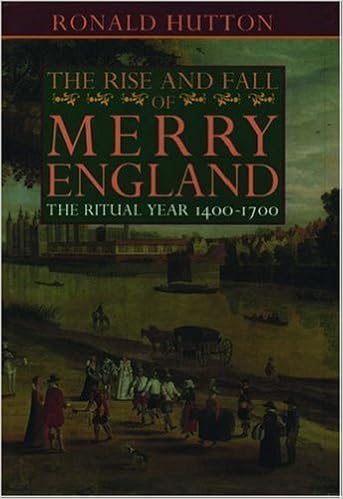
 So we open the final ‘window’ in our social history book advent calendar. Given that this time of year is stuffed full of ritual and tradition, it seemed fitting to save Ronald Hutton’s The Rise and Fall of Merry England: the ritual year 1400-1700 for today. Professor Hutton looks at a range of customs and traditions, both religious and secular in origin. Highdays and Holydays (sic) marked the seasons for our ancestors, providing injections of excitement into routine lives. Some of these were national rituals, others more localised and Hutton has sought out references in contemporary documents that shed light on what was going on in particular towns. There is an appendix listing the churchwardens’ accounts that Hutton used in his research; the coverage is prodigious. In the pages of this book we find out about Maypoles and mummers, Candlemas and church ales and everything else in between. Hutton admits that, at times, the evidence is fragmentary but he has produced a comprehensive account of the celebrations of the early modern period. The time span covered by this book saw more than one major event that served to dislocate our ideas of celebration. The tumult of both the Reformation and the Civil War meant that our rituals in 1700 were very different from those of 1400.
As I come to the end of this year’s ‘calendar’, I would like to encourage you to review books that you read. It is the season of giving and it is the greatest gift you can give an author, well apart from buying their books in the first place. Obviously it is lovely if they are 4 or 5 star reviews but they do need to be genuine reactions. I personally don’t review at all unless I can award a ‘good’ rating. Reviews do not have to be lengthy. If you feel you can write something more than ‘great book’, it is helpful but all the authors I know would be grateful for two word reviews. I know I don’t write enough reviews and I really should. There’s a New Year’s Resolution in there somewhere! Can you commit to writing one a week, one a month or one for every book you finish in 2018? Use whatever medium suits you, Amazon, Goodreads, Twitter or a blog but make an author happy.
It just leaves me to wish everyone a Happy Christmas and a new year in which we celebrate friendship and are tolerant of difference.
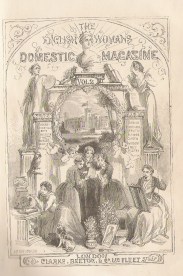 Today’s advent offering sits on my bookshelves but is not actually a book. If that sounds like a Christmas riddle, I will explain. It is a bound volume of the twelve issues of The English Woman’s Domestic Magazine from 1854. It was given to me many years ago by a family history friend (thank you Peggy) and is a real gem. There is no better way to investigate social history than through contemporary writing. There are some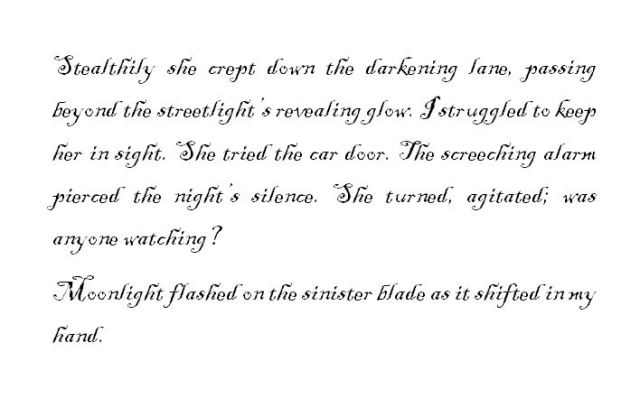
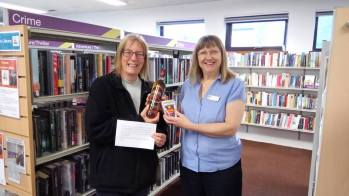 A few weeks ago, I responded to the challenge, issued by a Devon library, to write a fifty word crime story. I am usually accused of using at least four words where one will do, so this was well out of my comfort zone. I do enjoy reading crime novels, primarily those that are set in the past but it is not something I would consider writing.
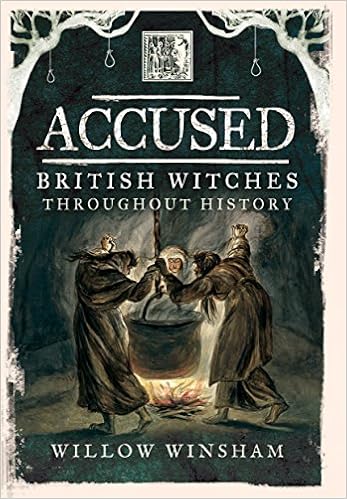 I’ll be honest, today’s offering has just arrived on my book shelf, so I have only had time to skim through it but it looks like a gem.
 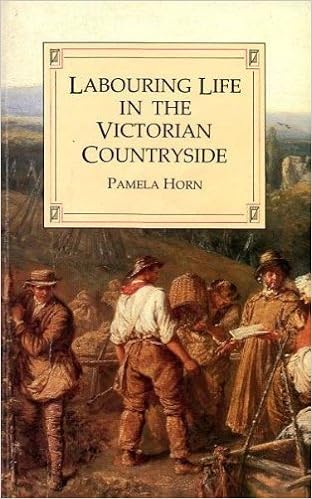 If anyone is still reading these, congratulations and I refuse to be responsible if you have succumbed to my suggestions and blown your book buying budget. Today I would like to introduce you to Pamela Horn’s
 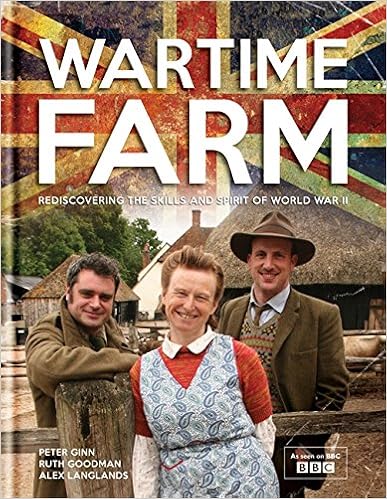 I could not compile a list of social history books and omit the ‘Farm’ series. They have already warranted a couple of passing references in other posts but today’s belongs solely to them. Many people, especially in Britain, are family with BBC TV’s living history series Victorian Farm/Edwardian Farm/Tudor Monastery Farm/Wartime Farm. All of these are now available on DVD and are a wonderful insight into rural life in the period specified. What is less well known is that each series also has an accompanying book; I have them all. These are ‘coffee table’ books: beautifully produced hardbacks with lavish coloured illustrations. There are contemporary illustrations as well as scenes from the programme. I have no idea how well this translates to the e-reader editions. The books are nonetheless well researched and the insight into the experimental archaeology carried out by the authors, Peter Ginn, Ruth Goodman and Alex Langlands, is invaluable. For those who are unfamiliar with the series, three historians/archaeologists spent a year recreating life in a farm of a particular period. The books describe the highs and lows of their experiences.
 Now for the second offering from Sara Read, this one co-authored by Jennifer Evans. I would like to introduce you to
 ![How to be a Tudor: A Dawn-to-Dusk Guide to Everyday Life by [Goodman, Ruth]](https://images-eu.ssl-images-amazon.com/images/I/61blmkkyi%2BL.jpg) Behind today’s advent ‘window’ is a true social history by Ruth Goodman, of Victorian/Edwardian/Wartime etc. Farm fame. In
Behind today’s advent ‘window’ is a true social history by Ruth Goodman, of Victorian/Edwardian/Wartime etc. Farm fame. In  Yesterday I managed to complete a very harrowing chapter of
  The History Interpreter - Janet Few