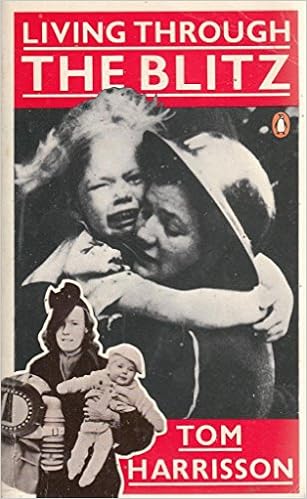
We are moving closer to the present day with Tom Harrisson’s Living through the Blitz. This book is based on the contemporary diaries and returns that formed part of the Mass Observation Survey and goes behind the ‘stiff upper lip’ media propaganda. Here you will find unvarnished, hard-hitting stories of fear and panic; accounts that are very different from nostalgic reminiscences, written long after the time. Inevitably, a significant proportion of the book concentrates on London but there are also chapters on the Southern ports and the industrial north. I particularly like the individual, personal experiences that shine out from the pages of this book. If the Blitz is history for you, rather than memory, you may well find that your preconceived ideas of keeping calm and carrying on are overturned by reading Harrisson’s work. More information about the Mass Observation can be found here. The original records are held by the University of Sussex.
I am still suffering from post-shed moving related injuries. Aided by adrenalin, yesterday I managed to steady sides of a shed as my companion devised a method of rolling the panels along on random bits of pipe. At least it is now ‘job done’ and I have a perfect excuse for not scrubbing floors (or indeed moving) for the next few days. I also have confirmation that the job I must not mention will see me take on a different role next year. I have a sparkly new job title and am now, in theory, less unimportant. As a result, I will be immersing myself in the world of Restoration Britain, slightly later in the seventeenth century than my usual stomping ground but I am relishing the challenge. Did someone mention ‘slowing down’?
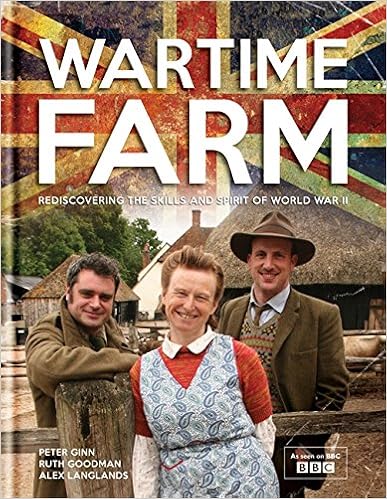 I could not compile a list of social history books and omit the ‘Farm’ series. They have already warranted a couple of passing references in other posts but today’s belongs solely to them. Many people, especially in Britain, are family with BBC TV’s living history series Victorian Farm/Edwardian Farm/Tudor Monastery Farm/Wartime Farm. All of these are now available on DVD and are a wonderful insight into rural life in the period specified. What is less well known is that each series also has an accompanying book; I have them all. These are ‘coffee table’ books: beautifully produced hardbacks with lavish coloured illustrations. There are contemporary illustrations as well as scenes from the programme. I have no idea how well this translates to the e-reader editions. The books are nonetheless well researched and the insight into the experimental archaeology carried out by the authors, Peter Ginn, Ruth Goodman and Alex Langlands, is invaluable. For those who are unfamiliar with the series, three historians/archaeologists spent a year recreating life in a farm of a particular period. The books describe the highs and lows of their experiences.
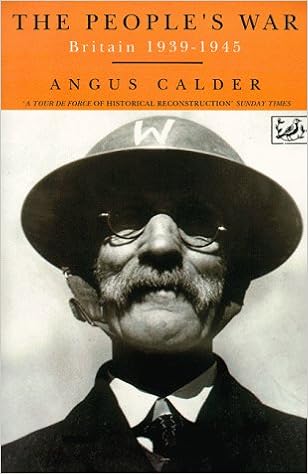 Today I would like to reveal a book that I found especially useful when I was writing up the more recent part of my family history. Angus Calder’s
  The History Interpreter - Janet Few