Social History Book Advent Calendar Day 11 Women and Work and a bit about the History of the early Twentieth Century

The Working Life of Women in the Seventeenth Century (e-Book) book coverThis comprehensive account was first published in 1919 and was written by Alice Clark, of the Quaker shoemaking family. Clark (1874-1934) herself is an interesting character, rising to become a director of the family firm in an era when this would have been very unusual. Her Working Life of Women in the Seventeenth Century is, justifiably, still regarded as a key work on this topic. Sadly it is not currently in print, although the publishers, Routledge, do offer a Kindle edition. You can get copies on online auction sites and various facsimile reprints are available.

The book considers the vital role of women in the family economy, in a century when we tend to imagine that all women were downtrodden housewives. Women’s roles in business, in agriculture, textiles, crafts and the professions are all considered. Clark’s stance is that seventeenth century women enjoyed an equality with men, that their role was complementary, rather than identical and that they played an invaluable part in the family economy. She has used account books, diaries, letters and other sources to illustrate the central role that some women played. She goes on to argue that women began to lose their place in the economic world with the rise of capitalism. By the end of the seventeenth century, she feels, women were increasingly constrained by household duties. The author’s feminist stance and her interest in economics and I suspect socialism, is in evidence but does not detract from the narrative. My Routledge edition has an valuable introduction and bibliography, contributed by Amy Louise Erickson. These enhance Clark’s own list of contemporary and secondary sources.

I enjoyed this book because it provides information about my favourite (well one of my favourites) century. Although this book is about the seventeenth century, it does also give us an understanding of aspects of the early twentieth century too. Clark was actively involved in the women’s suffrage movement and unusually, was a mature student at the London School of Economics. That a woman could write a book like this at this time is insightful.

A couple of things about the early twentieth century while I am here. First of all, it seem likes a long way away because of the seasonal celebrations in between but it is just five weeks before my online course about researching your family and/or locality in the early twentieth century begins. To save you clicking through to the blurb I will copy it here (see how I look after you). “Family historians often neglect the twentieth century as being ‘not really history’ but there is plenty to be discovered about individuals and the communities in which they lived between 1900 and 1945. Twentieth century research brings with it the difficulties of larger and more mobile populations as well as records that are closed to view. This course sets out to provide advice for finding out about our more recent ancestors and the context for their lives. This course would be of interest to those undertaking one-place studies as well as family historians.” It may surprise you how much there is still to be found about a comparatively recent period and the course contains plenty of hints for investigating the social history of the time. What ever time period you choose, focusing on just a few years really pays dividends, whether you are a family historian or a local historian. Sign up, you know you want to. Put a course on your Christmas list.

The early twentieth century is of course when Barefoot on the Cobbles is set. In between writing these blogs, which take more time than you might think, I am of course writing further chapters (I put that in in case my publisher is reading this). No, I really am writing. This week it is the harrowing death scene of one of the main characters. I am also trying to compose something that I can add to my Barefoot page on this website, to give you more information about what you can expect. The first attempt may even be there by the time you read this.


Social History Book Advent Calendar Day 10 – for those with an interest in agriculture

Henry Stephens's Book of the Farm: concise and revised edition by [Langlands, Alex]This one is for all those family historians with agricultural labouring ancestors and for writers of historical fiction who are using a nineteenth century rural setting. The lavish production and copious illustrations also make it ideal for history lovers in general to browse. Henry Stephens’ Book of the Farm, was first published as a guide to mixed farming in the 1840s. It became the handbook used by the historical interpreters working on BBC TV’s Victorian Farm (DVDs of this excellent series are available). One of the presenters, Alex Langlands, had an abridged version of Stephens’ work reprinted to accompany the TV series. He included an introduction and many coloured illustrations that I assume were not in the original. There are also copious line drawings, which may have been part of Stephens’ work. If you require regional farming specifics, you will need to look beyond this book but here is a wonderful general introduction, written at the dawning of the age of agricultural mechanisation. You will find a season by season account of the many and varied duties on a farm. You can learn how swine were fattened, driven and slaughtered and there are clear instructions for forming a dunghill (always useful). There are sections on training sheep dogs, sowing flax and hemp and making butter. Amazon have a ‘look inside’ feature, so you can see the full extent of the contents. A few short chapters in to this lovely book and you will be treading in the footsteps of your farming ancestors – but beware of the dunghills.
Social History Book Advent Calendar Day 9 and a bit about me

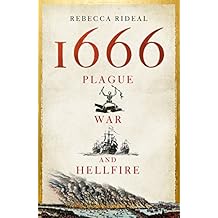
Product DetailsA much more recently written offering behind today’s advent window: Rebecca Ridal’s 1666: plague, war and hellfire, which was published last year. This might be viewed as a history, rather than a social history but there is so much about everyday life in this volume, that I feel justified in including it. Although the title is 1666, the book starts with an account of the plague of the preceding year. Skillful use of contemporary sources introduces us to a turbulent eighteen months in London’s history and events that reverberated around the country. The account is presented from the viewpoint of key characters, the well-known and the less well-known. We meet Nell Gwynn, Samuel Pepys, Charles II, Christopher Wren and Isaac Newton, all names that evoke the atmosphere of the age. Others who walk across the pages of the book may not be household names, unless you have studied the history of the period. For example: Aphra Behn, playwright and spy; Cornelius Tromp, Dutch naval commander; Nathaniel Hodges, a physician and Thomas Vincent, who provides a Puritan perspective.
Most of us are familiar with plague and fire from our schooldays. The book also covers the Dutch Wars and the dawning of the scientific age. The fears of a still largely suspicious populous as they faced these disasters, disasters that most believed to be punishments from God, are portrayed well. The style is accessible and the book can be read as you would a novel. I could imagine myself walking through London’s streets as I read. Living as I do in the seventeenth century, I found this book fascinating. I wish this had been published when I was researching my own seventeenth century social history, Coffers, Clysters, Comfrey and Coifs, as there is an extensive bibliography, together with the endnotes, providing plenty of leads to follow up. There are also some attractive coloured plates and three maps in the printed version.

Yesterday I spent a slightly chilly day, with other authors, attempting to sell books to the local populace. I did duck out for fifteen minutes to take a look at an early twentieth century Magistrate’s Court record that was written in the most appalling handwriting I have seen – think the stereotypical prescription scrawl. If I say that it made my handwriting seem legible you may get the idea. Sadly the case I was looking for for Barefoot on the Cobbles was not recorded at all. Very strange, considering that it was heavily reported in the press. Today I have my non-conformist history hat on as I am off to address the Exeter group of Devon Family History Society about ‘Toleration or Turmoil?: English non-conformity and our ancestors’. This may not be quite what the audience are expecting but I hope they enjoy it. I am told there will be posh biscuits in honour of the festive season – great!


Social History Book Advent Calendar Day 8

With some technical wizardry, this post should appear at a time when I am languishing in a local shopping centre hoping to sell my books to unsuspecting passers-by. I have a small share in a stall, along with other local authors. No idea how successful it will be but I will try anything once.
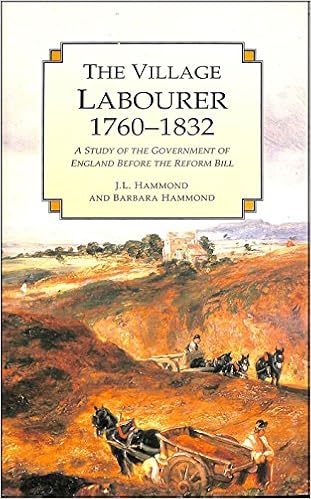
On the social history book front, I have chosen The Village Labourer 1760-1832: a study of government in England before the reform bill by J L and Barbara Hammond as today’s offering. This is another book that has been on our shelves for some time; the first edition came out in 1911. It looks at the fate of the disenfranchised rural labourer at a time when the government were bringing in enclosures. It considers how enclosures were forced on the agricultural poor and the impact that they had. It also covers the reaction and riots of the 1830s. It does come from a particular political stance but this is a refreshing outlook for a book written over a century ago. A slight criticism is the emphasis on the Home Counties. Seventy pages of appendices include transcripts of particular enclosure acts; there are also examples of family budgets. There is a companion volume ‘The Town Labourer 1760-1832: the new civilisation’, which also highlights the plight of the working classes, this time from an urban perspective. As long as you keep the authors’ biases in mind these volumes provide a valuable and interesting background for our working class ancestors.

Social History Book Advent Calendar Day 7 Occupational Hazards

Product Details

On the seventh day of Advent I offer you a little-known gem whose title is longer than some of my blogs. It is a wonderful little book, first published in 1831, entitled The Effects of the Principal Arts, Trades, and Professions, and of Civic States and Habits of Living, on Health and Longevity: with Particular Reference to the Trades and Manufactures of Leeds and Suggestions for the Removal of many of the Agents which Produce Disease, and Shorten the Duration of Life.* Ok, so it isn’t the snappiest title in the world but it is a fascinating read. The author, Charles Turner Thackrah, covers many occupations that were common as Britain entered the industrial age and warns of the possible impacts on health. Thus we learn that: ‘Cattle and Horse Dealers, leading an active life in the open air, are generally healthy, and would be almost exempt from ordinary maladies, were it not for their habit of drinking. Wet and cold would rarely produce even temporary ailment to the temperate man in an employment so conducive to vigour. Horse dealers’ grooms or riders are a sickly set of men. Their appearance indicates those diseases of the stomach and liver which result from a debauched and irregular life.’ As you can see, the author is outspoken and his opinions are not devoid of stereotypes but this does not detract from the book. Having covered nearly 150 occupations, Thackrah’s conclusions have a certain political bias, ‘The disproportion of wages is a great evil in our system. The high wages allowed in some departments induce drunkenness and improvidence; while the low wages frequently given to weavers, wool-combers, burlers, milliners, roadmen &c., prevent a supply of proper nourishment.’

I first came across this classic volume when I was working on my online course ‘In Sickness and in Death: researching the ill health and death of your ancestors’ and it is has become a firm favourite. It will also feature in my ‘Occupational Hazards’ presentation, which I will be giving at the Secret Lives conference next year. Thackrah includes occasional case studies as footnotes: ‘A K Aged 23 entered the flax mill at 11 years of age. She was six years employed in the dusty departments. … She is of low stature and of a sickly appearance; she complains of pain in the right side of the chest…. Expectorated matter is sometimes tinged with blood.’ Sorry, should have been a gore warning there – hope no one is reading this while they are having breakfast. The book is indispensable for anyone who is interested in the history of medicine or the effects of industrialisation. It is also an insight into the hazardous nature of various jobs in an age before health and safety. Its rather quaint pre-Victorian phrasing and vocabulary adds to its charm.

* The link that I have included gives the volume an abbreviated title; this is currently the cheapest option I can find. I did pay appreciably less for my copy so it may be worth waiting or shopping around.

Social History Book Advent Calendar Day 5

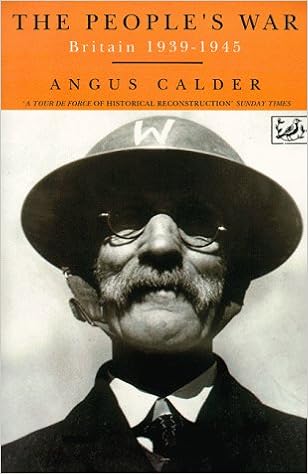
Today I would like to reveal a book that I found especially useful when I was writing up the more recent part of my family history. Angus Calder’s The People’s War: Britain 1939-1945 is an account of life on the Home Front. The content is wide ranging with sections on evacuation, civil defence, the Blitz, the role of the cinema, the War Ag and Bevin Boys amongst many other things. It is a lengthy book with footnotes and a bibliography that take you on to further reading. It was written in the 1960s, so expect the language and socio-political attitudes to be of that time but if anything, this adds to the value of the book. There have been many other accounts of this aspect of the second world war written since this one and there are likely to be more in the next few years but this particular volume remains a comprehensive and important contribution to our understanding of a period that is rapidly disappearing from living memory. It is now very difficult to use the memories of those who were adults during the second world war to recreate the world of the home guard, rationing, munitions workers, farmers and others struggling to cope during this time. Calder makes heavy use of oral testimony to recreate the every-day occurrences and concerns for those at home.
Another short post today – I did warn you! Thanks to all those who have enquired after my health. I feel fine and I should have paid tribute to the wonderful staff who I encountered yesterday – the NHS at its best.

Social History Book Advent Calendar Day 4

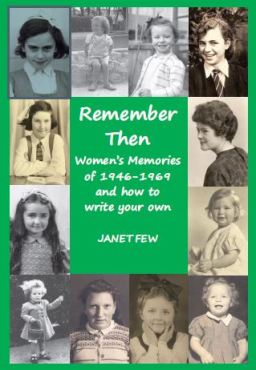
Apologies for the late arrival of today’s contribution to the advent calendar. I have spent the last eighteen hours adding to the list of things I do not have wrong with me. Said list is now assuming the proportions of a three volume novel. Still the good news is that, although what I do have remains a mystery, I don’t appear to have anything sinister. I spent the whole of last night on a trolley in A & E and this afternoon raising the alarm when the woman in the opposite bed tried to pull her cannula out, something that occurred about every five minutes. This means I haven’t slept for 36 hours, so I hope I can be excused if I cheat a little with today’s social history book and use one of my own. I say one of my own; it has my name on the cover but it is really the work of eighty wonderful ladies.

CoverRemember Then: women’s memories of 1946-1969 and how to write your own  is what happens when you let eighty women spend a year and a half recording their memories of life in Britain throughout the pivotal period 1946-1969. This twenty four years was one of tremendous change in almost every area that they investigated. During this time, we moved from liberty bodices to mini skirts and from ration books to ready meals. We witnessed the emergence of youth culture, the comprehensive education system, conspicuous consumerism and a new wave of feminism; the Britain of 1969, was very different to that of 1946.

Very little additional research has been done, the women’s voices have been allowed to speak for themselves. Memories are just that and sometimes memory is fallible. Efforts have been made to check dates and facts but for the most part, the ladies’ accounts have been taken at face value. The aim was not to write a comprehensive social history but to give a flavour of the period from the view-point of those who lived through it. Even reading the first names of the participants takes you back to the classrooms of the 1950s.

The ladies described their homes and neighbourhoods, clothes, housework and food, education and work, health and childrearing, leisure and celebrations, as well as tackling more emotive subjects, such as relationships and attitudes. Over a hundred illustrations and a comprehensive timeline of events evoke the essence of the era. This book is much more than just a collection of women’s memories. At the end of each chapter is the brief that the volunteers were given when working on that topic. This can be applied to other time frames and will help the reader, male or female, to write reminiscences of their own.

The women who took part came from a variety of social, economic and geographic backgrounds. Some ladies went to boarding schools, some to grammar schools and others to secondary moderns. Some left school at fourteen, others have PhDs. Some are only children, others had large extended families and some grew up in care. The ladies were aged from 59 to 95, so some experienced this era as children, some as teenagers and others as married women with families. I wove together the words of this disparate group of volunteers, using direct quotations from their reminiscences wherever possible, to reveal this period, as seen through their eyes. The result is a many faceted perspective of life at the time.

The book allows those born after 1969 to gain an understanding of what life was like for earlier generations. This makes it valuable reading for those working with older people, as it can spark conversations and help to awaken memories. If you lived through this era yourself, you will find yourself exclaiming, ‘I remember that!’ on every page.

Social History Book Advent Calendar Day 3 and Coming up Trumps

As regular readers will know, I am very keen on encouraging the younger generation to take an interest in history and heritage. One of the ideas in my booklet Harnessing the Facebook Generation: ideas for involving young people in family history and heritage* is to use family photographs to make Top Trumps cards. I thought, now that I have grandchildren who are old enough to play this, I would put the idea in to practice. There are available templates online but in the end I made up my own and I found 38 photographs of members of the family tree that could be used. I know I am fortunate to have so many pictures but they are rather one-sided, the vast majority coming from my maternal grandmother’s family. If you don’t have enough pictures you could always use pictures of where they lived or drawings (I did wonder about gravestones but maybe not for 3 & 4 year olds!). I decided not to limit it to direct ancestors, partly because then I wouldn’t have enough but also because I wanted to commemorate 4x great aunts who died childless and would otherwise have no one to remember them.

DSCF4299I did have some problems. The cards, are printed on paper and laminated as my printer won’t take card. This is not ideal and you can see through the backs of the cards but this doesn’t matter because of the way that the game is played. The cards are also a bit of a strange shape and it was incredibly difficult to get them all exactly the same size. It probably took me best part of a day to produce two sets. Yes, I could have gone to a pound shop and bought sets of Top Trumps but that would not be the same on so many levels.

We have yet to try these out with the target audience, as they will see the light of day at Christmas. I know in one case I shall have to somehow make the ancestors relate to robots – I am still working on that bit!

On the topic of Trumps – Twitter came up trumps yesterday. I was busy with the arrest scene in #Daisy aka Barefoot on the Cobbles and wanted to know what wording was used in a caution in 1919. I made a Twitter request and sure enough I woke up to eighteen responses including the answer! Incidentally, Daisy will soon have her own page on this website. As it is a ‘based on fact’ novel, I have a large number of old photographs of the characters and the landscape in which the story is embedded. I will be putting some of these online over the next few months – watch this space – well not exactly this space but the space on the website that doesn’t quite exist yet.

Maids, Wives, Widows: Exploring Early Modern Woman's Lives 1540-1714 by [Read, Dr. Sara]From my bookshelf today I offer you Sara Read’s Maids, Wives, Widows: exploring early modern women’s lives. This is a complete guide to how women lived in the period 1540-1740. It covers their day to day activities both domestic and cultural, employment, both paid and unpaid, childbirth and childrearing and much more. The author has used a wide range of contemporary sources in her research and there is a very useful bibliography. The book is illustrated with black and white plates. Inevitably, any social history of this period is relying on sources that tend towards the better off but nonetheless this is a wonderful book for family historians who want to bring their female ancestors to life, for historical novelists looking for background for powerful female characters or for those who just like to immerse themselves in the past. The Amazon link gives you the option of a quick ‘Look Inside’ preview – go for it. I predict that Alex in New Zealand – who is seeing how far through December she can get without buying one of my suggestions – may succumb at this point. There may well be another offering from Sara Read behind a later advent ‘window.’

(Available from me, from the publishers or as an ebook. It is also available via UK and Canadian outlets.)

Social History Book Advent Calendar Day 1 and a bit about Medical Procedures

It is December, my descendants have snow, so it must be time for something seasonal. Last year I shared some of my favourite historical novels in my blog ‘advent calendar’; this year it is the turn of non-fiction. Family historians, historical novelists and history fans in general need to immerse themselves in the past; these are books that help you to do just that. For the next twenty four days I will share with you a book that has helped me to evoke a past era. I have just pulled volumes from my bookshelves, so the historical periods will be varied and the choices eclectic. Some of the posts will be very brief and they will be interspersed with other randomness but here goes.

Food In England: A complete guide to the food that makes us who we are by [Hartley, Dorothy]Today’s offering is Dorothy Hartley’s Food in England: a complete guide to the food that makes us who we are. The book was first published in 1954 but unless you are interested in food history in the later twentieth century, this does not matter. The fact that it is still in print underlines the value of Hartley’s work. If you want to know what we used to eat and how it would have been cooked here is a substantial 676 page volume that will come to your aid. There is a chronological thread throughout the book, beginning with the contribution of the Romans, Saxons, Danes and Normans to our diet. There are line drawings to illustrate, amongst other things, cooking methods, breeds of sheep and techniques, such as scalding a pig. In addition there are plates showing kitchens an dining through the ages. There are also chapters on various groups of ingredients, including meat, vegetables, bread, dairy produce and drink. It is no secret that my culinary ‘skills’ are minimal and that I have no interest whatsoever in food preparation in the present. I do however find historic cookery fascinating. So although this is a book that the cooks amongst you will enjoy, it is also valuable if you want to know what your ancestors ate and how they would have prepared it. If you are an historical fiction writer and you want to make sure that the characters in your novel aren’t eating an anachronistic meal or if you are staging an event that involves period food, this book is highly recommended.

In other seasonal news, I thought that I would relate the saga of the flu injection. I am officially too young for this – just thought I’d make that point – but various health weirdnesses mean that I get invited by a disembodied, automated voice to have a needle jabbed in my arm. In fact no one seems to have told said automaton that I have actually now had my injection, as she is still ringing me up at various intervals. I digress. My appointment is for 10.41. I turn up at 10.30 to be told that the staff are about to have their coffee break but I can be booked in. ‘Booking in’ involves a tick being put against my name and being handed a piece of paper listing potential nastinesses associated with said injection. I sit down and the receptionist disappears for her caffine fix. A man comes to sit in her place. I have no idea of his rank but clearly most things are above his pay grade. He spends the next fifteen minutes repeating 30-40 times ‘I can’t book you in please take a seat and wait. The receptionist will be back in 15, 14, 13 (whatever) minutes. What is so difficult about ticking a name and handing over a piece of paper? Is the receptionist’s union going to object if someone usurps her role? It can’t be a data protection thing because everyone is here for a flu injection and they all go to reception and give the chap their name. Why have a person there at all? Why not just write a notice? During the next fifteen minutes forty people enter the surgery and no one leaves. The patients’ nearest and dearest, sat in cars outside, must be wondering if we are all being swallowed up in some vaccinatory black hole. I begin to feel quite sorry for the guy on the front desk. In the end the ‘audience’ are giggling hysterically as he repeats his message, using exactly the same words and intonation, for the umpteenth time. The joys of getting old.

Ailments of various kinds: your ancestors in sickness and death

In the three weeks since my last post (three weeks! – you’ll guess I have been busy) I have spent four wonderful days in schools, swording and spindling away, extolling the virtues of the seventeenth century. Summer hit the west country last week. Temperatures rose to 85 degrees – that’s 30 to some of you and yes, in the UK, that’s hot. Four hours ensconced in crowded classrooms with a bunch of 13 year olds and no air-con – great. Followed by a chance to get outside – hurrah. Or rather not hurrah, as now I am on a scorching sports field for an hour, without a smidgen of shade, banging a drum – as you do. Well as I do. I should perhaps add that I was attired in multiple layers of thick wool at the time. I then went straight on to an evening presentation. Let’s just say that we brought the smells of the seventeenth century with us. I have also been finishing off the job I must not mention and presenting on various topics to adults. Today’s will be the fifth talk in four days – why do I do this?

dscf3202#Daisy is making some progress. Some lovely friends have read a chapter and didn’t hate it, which was encouraging. I am currently immersing myself in suffragette activities, purely in the historical sense, though I am not adverse to a bit of banner waving. Next on the list is research into the wartime experiences of a new character who has forced his way into the narrative. This did lead to that exciting moment when your ‘based on fact’ historical novel requires you to research someone new and you find that he attended a school that has an archivist. Better still, said archivist responds to your email (written after office hours) within minutes with information and a photograph. Ok, so he wasn’t the heart throb I was hoping for but I can get round that with a minor re-write!

I am looking forward to the start of my online course “In sickness and in death: the ill-health and deaths of your ancestors”, next month. I keep finding more and more gems and am resisting the temptation to add them all to the course text or it will become another novel. Did you know that bookbinders are adversely affected “by the smell of the putrid serum of sheep’s blood, which they used as cement.” (C Turner Thackrah 1831)? On the subject of ill health, I manage to move awkwardly and pull a muscle in my back so have been hobbling around all week. Great excuse for not doing any housework; now I just need an excuse for the preceding five weeks. May not try the C18th remedy, which is cow dung and vinegar.

Added to this a new research client has presented me with some fascinating family members to pursue. Despite explaining that I would not be able to start this for some time, it was just too tempting.

I am excited that a webinar I gave earlier in the year on surname studies around the world is now available online. That wasn’t the exciting news I hinted at in my last post; that‘s even more exciting but still under wraps – patience is a virtue and all that.