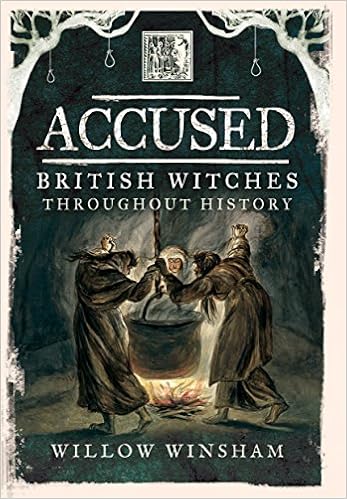
 I’ll be honest, today’s offering has just arrived on my book shelf, so I have only had time to skim through it but it looks like a gem. Accused: British witches throughout history, by the prosaically names Willow Winsham, is a little more ‘niche’ than some of my advent book choices. It is not the comprehensive study that the title might suggest but don’t let that put you off. Here we have eleven case studies from across the British Isles. Although most are seventeenth century accusations, the date span is 1324-1944. Through the stories of these women and these examples are all female, the author helps us to understand how individuals came to be the accuser or the accused and tells us of their lives before and in some cases, after, the indictment. At first, I felt that the very brief introduction was inadequate but Winsham’s aim was not to write yet another general study; there are a number of excellent ones already. If you regard this as a companion volume, that tackles the topic rather differently, then it can be viewed as an excellent book. Yes, we learn a great deal about the context through the stories if these eleven women but serious students of the historical witchcraft will need other books to get a fuller understanding of the background and the psychology behind this phenomenon. This is not a criticism of Accused, whose fresh approach adds a new dimension to our understanding. The author has used broadsheets, court reports and other contemporary sources to help us understand how human beings could revile their fellow men, or in this case women, in such an impassioned manner. The book includes extensive end notes, clear black and white illustrations and a bibliography.
Sadly, human nature does not change and although we might be unlikely to accuse our neighbours of witchcraft in twenty first century Britain, other forms of bullying and succumbing to peer pressure haunt our everyday lives. I am fascinated by people’s behaviour and what makes them act in a certain way. I am also keen on women’s history and the seventeenth century. With this combination, how could I not be interested in witchcraft history? I researched the topic carefully when I was writing Coffers, Clysters, Comfrey and Coifs: the lives of our seventeenth century ancestors, which contains a chapter on witchcraft. The topic also forms one of our Swords and Spindles presentations and my own The Burning Time talk about historic witchcraft is one of my favourites to deliver. Living as I do within a few miles of the home of the last (probably) three witches to be hanged in England how can I not be fascinated? And yes, I will come clean, there is a tenacious nagging idea for a second novel in here somewhere. I really need to suppress this until Barefoot is finished but I suspect that it won’t go away!
No writing accomplished yesterday sadly. I was diverted just as I was about to put fingers to keyboard, a process which is usually preceded by re-reading, for the umpteenth time, part of what I have already written. I always read aloud as this slows me down to an acceptable level and I was just declaiming my flowery phrases to an audience that consisted of a Christmas tree, when I was called upon to assist the fisherman of my acquaintance. He is currently moonlighting as the gardener of my acquaintance. Pressures of time mean that we are giving up the allotment. I say ‘we’; it is officially my allotment but all the hard work has been delegated to said gardener/fisherman. The incoming tenant did not want the shed so this week’s task is to relocate a eight foot by ten foot shed to my garden. In a method that does not bear imagining, the shed assumed flat pack mode and single-handedly the gardener, now in his eighth decade, managed to get this on to a trailer and up my drive. Then it was my turn to help bring the panels in to the garden. I promise I was lifting when instructed so to do but I have to say there was not much sign of my end of the structure leaving the ground. Somehow we struggled down the path and negotiated over hanging trees and the washing line in order to bring three panels into the garden before my back clicked in protest. I have no idea how we are going to get the remaining four panels in today. Again this is the royal we, my protesting back means that I can barely put my socks on let alone attempt shed lifting. These occasions make you realise that you lack fit, healthy, dare I say younger, friends.
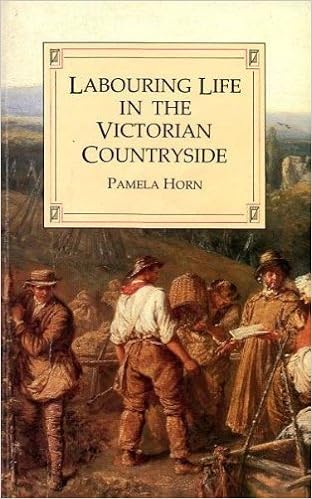 If anyone is still reading these, congratulations and I refuse to be responsible if you have succumbed to my suggestions and blown your book buying budget. Today I would like to introduce you to Pamela Horn’s
 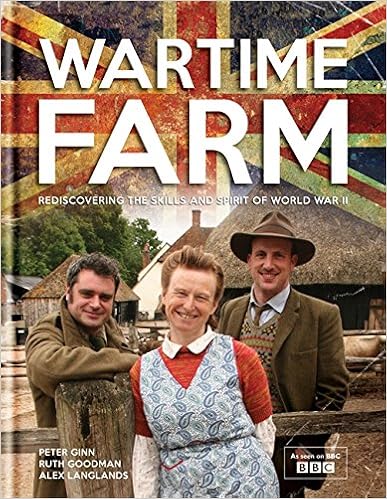 I could not compile a list of social history books and omit the ‘Farm’ series. They have already warranted a couple of passing references in other posts but today’s belongs solely to them. Many people, especially in Britain, are family with BBC TV’s living history series Victorian Farm/Edwardian Farm/Tudor Monastery Farm/Wartime Farm. All of these are now available on DVD and are a wonderful insight into rural life in the period specified. What is less well known is that each series also has an accompanying book; I have them all. These are ‘coffee table’ books: beautifully produced hardbacks with lavish coloured illustrations. There are contemporary illustrations as well as scenes from the programme. I have no idea how well this translates to the e-reader editions. The books are nonetheless well researched and the insight into the experimental archaeology carried out by the authors, Peter Ginn, Ruth Goodman and Alex Langlands, is invaluable. For those who are unfamiliar with the series, three historians/archaeologists spent a year recreating life in a farm of a particular period. The books describe the highs and lows of their experiences.
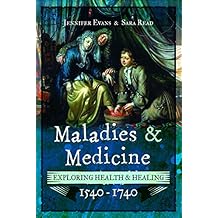 Now for the second offering from Sara Read, this one co-authored by Jennifer Evans. I would like to introduce you to
 ![How to be a Tudor: A Dawn-to-Dusk Guide to Everyday Life by [Goodman, Ruth]](https://images-eu.ssl-images-amazon.com/images/I/61blmkkyi%2BL.jpg) Behind today’s advent ‘window’ is a true social history by Ruth Goodman, of Victorian/Edwardian/Wartime etc. Farm fame. In
Behind today’s advent ‘window’ is a true social history by Ruth Goodman, of Victorian/Edwardian/Wartime etc. Farm fame. In  Yesterday I managed to complete a very harrowing chapter of
 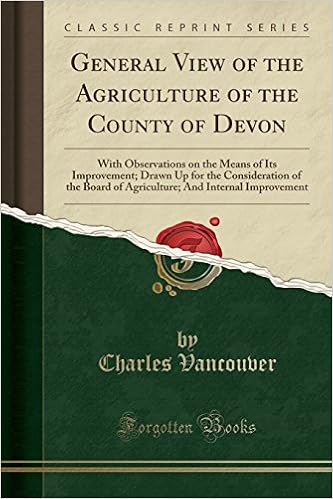 Another one for those interested in agricultural history today and it is a whole series of books, rather than just one. Most family historians I speak to have agricultural labourers hidden somewhere in the boughs of their family tree. What we need to realise is that these are not some amorphous group whose experiences were all very similar. Farming practices differ according to soil, terrain and climate. The
 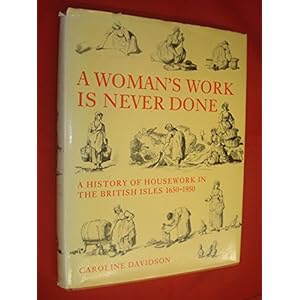 As I sit down, having just finished the washing up and sticking what may well turn out to be onion-flavoured marzipan on my Christmas cakes (short but sad story), what better than to introduce you to a book about housework. Caroline Davidson’s
 The History Interpreter - Janet Few