Until recently, I was a columnist for the In-depth Genealogist Magazine and also wrote for their blog. Now the magazine is sadly no more, contributors have been invited to re-post their blog material elsewhere, so that it is preserved. This is another post that I wrote for them.
As genealogists, we spend our time trying to recreate our ancestors’ lives. As we make progress, most of us move from collecting bare facts about vital events, to looking at the social historical context. If we are lucky, we may have photographs of our more recent ancestors, to help us to visualise what they looked like. Failing that, we may have physical descriptions from service records, prison records or asylum admissions’ books. Have you ever considered what your ancestors may have sounded like, what words they may have spoken?
Firstly, are there any examples of your ancestors’ actual words? If you are fortunate enough to have letters or diaries, these convey an impression of the writer’s turn of phrase. We don’t usually write how we speak of course but it helps us to get a feel for that person’s vocabulary and use of grammar. There are occasions when an ancestor’s verbatim speech may have been recorded, if they came up in court as a witness for example. Often the most accessible route to these words is through newspaper reports.
How about accent and dialect or even language? If you descend from those who emigrated, then their language may not be your own. Even if the language has not changed, the accent and inflection is not necessarily the same and neither is the meaning. You only have to consider the difference between American English and English English to understand how things have altered over time and distance. This does not just apply to emigrants. I grew up in south London, England. I have grandparents who were born in Cornwall, in the far south-west and Northumberland, on the Scottish border, both of these areas have very distinctive regional accents. Sadly, I was too young when these grandparents died to remember the way that they spoke. Regional accents are slowly being eradicated but there is still time to catch a flavour of your ancestors’ regional speech. Look for recordings in sound archives or online.
Dialect is distinct from accent and relates to words that are only in use in a particular district, often quite a small area. Dialect dictionaries are readily available and can help us to understand words that are local in origin and which may have been used by our forebears.
Think too about the use of individual words and idioms. Our vocabularies are changing. Some words, phrases and expressions would not have been used by our ancestors. Slang dates us and would have been very different in times past. If you decide to write up your family history and put words into your ancestors’ mouths, you need to get this right. Good dictionaries provide you with information about the earliest use of certain words and phrases but obviously you can’t look up every word. Reading books and auto-biographies, from the appropriate era, gives you a flavour of how words would have been used.
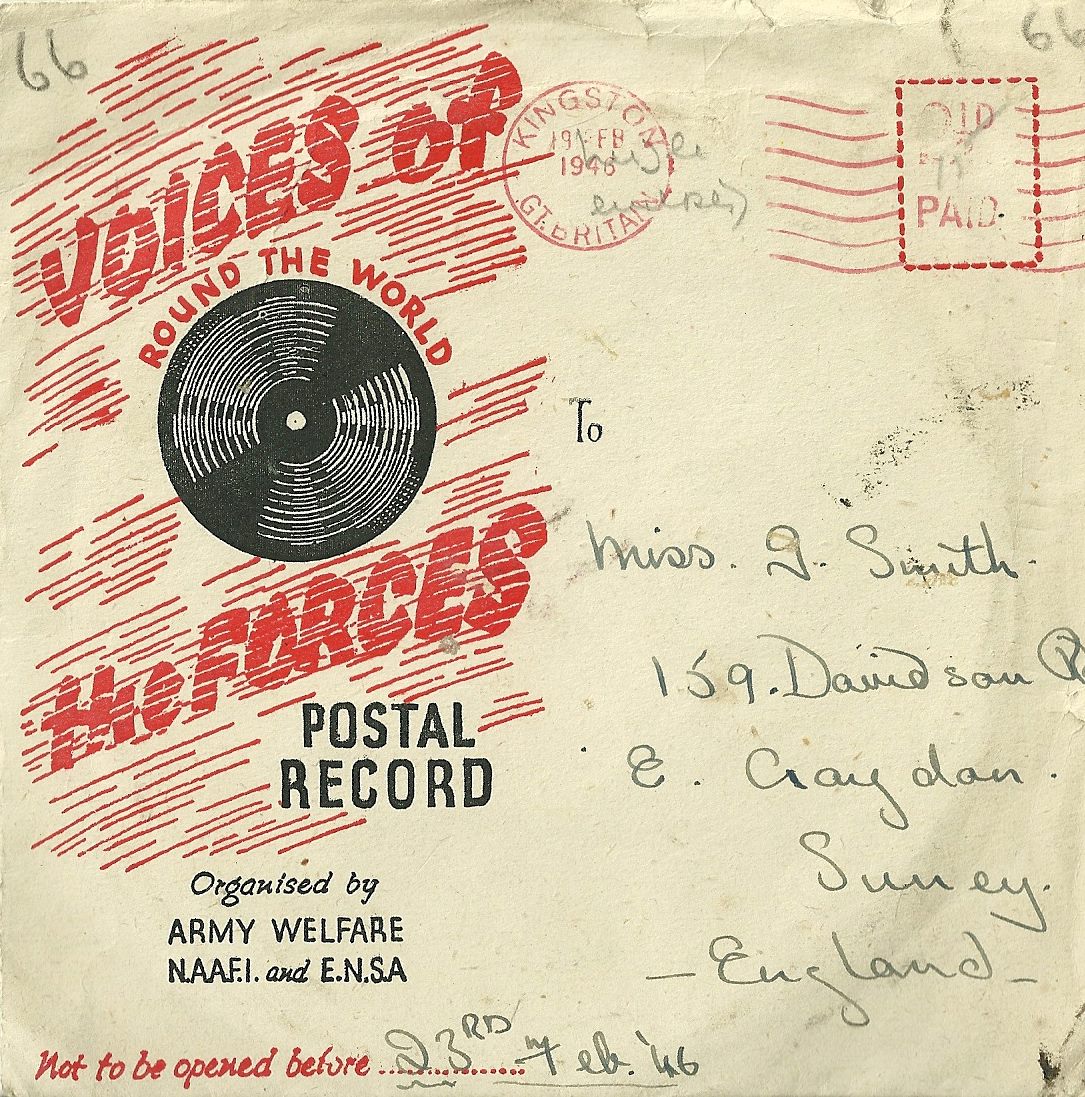
 Don’t forget that our ancestors’ language was modified by their surroundings. A few years ago I inherited a Forces Record that my father had recorded for my mother during the Second World War. He died when I was nine; I had no recollection of his voice. I was able to get this record converted to a format that I could listen to. I was astonished to hear my father speaking in immaculate BBC English, despite the fact that he grew up in London poverty. Of course he would be using his ‘telephone voice’ for the recording but this was still a shock. Then I realised that his peacetime occupation was as a cinema projectionist and that he was continually exposed to the refined tones of the film stars of the 1930s and 1940s; he sounded exactly like them.

 The History Interpreter - Janet Few