More Gravestones, Ancestral Homes and Non-roads

The holiday is over but due to the non-existence of the caravan site’s internet for several days, you think I am still stranded in Northumberland. All this happened a week ago; I promise you will catch up eventually.

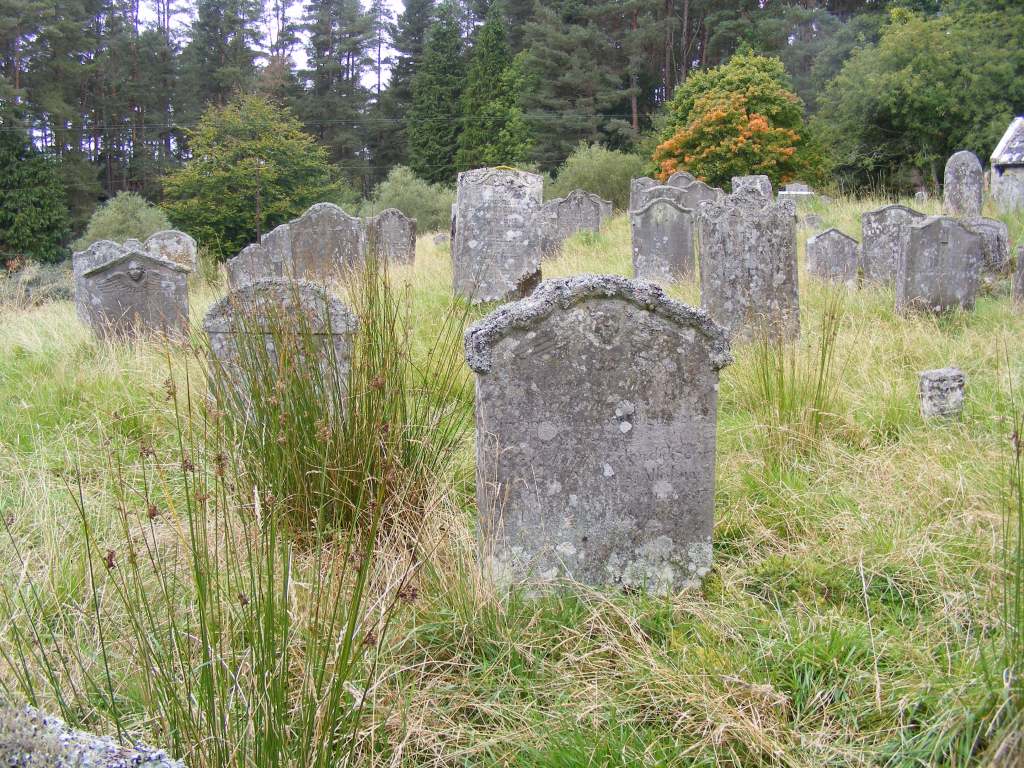
What is life like in the frozen north? you ask. Bracing, I think would be an accurate term; windy, a bit drizzly and about 10 degrees. It turns out that the car’s funny noise means it needs a new alternator and that is booked in for four day’s time. Now all we need is for it not to break down completely in the interim. We drive out to the edge of the Keilder Forest for more gravestone hunting of ‘almost certainly my ancestors’ the Newlands and the Corbitts. All I can say is that I have not inherited their hardy gene. They must have been very resilient, trying to eke out a living here 300 years ago. The landscape is inspiring but forsaken and bleak. All I need to do is to find a tiny bit more evidence to confirm that John Hogg really was the son of Robert and I can claim this area as an ancestral home. All the evidence suggests that John son of Robert should be on my family tree but I am waiting for something further (which I may never find) before I ink him in.
Another day and more ancestor hunting. This time though in a town, so slightly more adventurous. I enter the large town churchyard in search of a grave. I have no burial plan and there are hundreds of graves. What I do have is a photograph with a tiny bit of background that I am hoping to identify, in order to take my own photo. I pause just inside the entrance and hold up the blurry picture to indicate to my companion that we are looking for a grave near to a fence and a lamp post. I look at the grave immediately in front of me – and it was the one I sought! It also contained information that wasn’t legible in the photo. Definitely a win this time. For those who have been following my recent family history adventures, this commemorates Peter (he of the pig and the 5 women) his parents and two of his children, one of whom I had not been aware of before.

This success was followed by my first visit to a supermarket in more than six months. It was a smallish supermarket and it seemed to pass off without incident but I will be relieved to get back to home deliveries.

After braving the town, we feel in need of a socially distanced day, so it is off to one of my one-places for some covert photography of people’s houses. We are used to narrows country roads but my proposed route does take us to some ‘interesting’ places. Despite the fact that my companion is very keen on his ‘new to him’ car, he bravely goes where no self-respecting driver has been before. This is clearly not the place for the alternator to expire completely.

The non-road takes us past the ruined peel tower that might have been the home of the Hoggs who I hope are my ancestors. Some of the one-place farms are too far up drives to be photographed. Although my partner-in-crime expresses a willingness to turn up a front doors of strangers when we are in an area where visiting other people’s homes is forbidden, I am less keen. I am already aware that we have zoomed in to take pictures of farms displaying large ‘cctv in operation’ signs. I suspect the local farm-watch hotline is already buzzing with our descriptions.

This is the day when I should have been doing my alternative Race for Life. Given that my back is still not conducive moving much, I have decided to postpone my 5km run/jog/walk until I am nearer home. I have been ridiculously poor at asking for sponsors too, so if anyone has a few pennies to spare this is where to go.

Isolation Capers Two Weeks In – Day 14

We started early so today is day 14 for us. As the situation around us worsens, here are a selection of joyful moments.

The grandchildren have been participating in a Lego building challenge. Thursday (day 4) the challenge was the flag of your favourite country. I thought I’d cracked this with Libya.

DSCF0494

Turns out this is no longer Libya’s flag – drat.

We also had a family ‘wear your lobster socks to isolation’ day, which went well.

DSCF0495.JPG

Disclaimer – these are not my feet and legs

Given that the glorious weather (and goodness doesn’t it help) was not predicted to last, we went for outside activities. I managed to paint two bookcases and my co-isolatee has made good progress with the outside window frames. I am not close to running out of things for him to do (purely for his own benefit of course) any time soon.

Excited to receive my copy of Sara Read’s The Gossip. It is set in 1665 Could be topical.

DSCF0497.JPG

We did the clapping for the NHS thing. It seems so little but it helps us to do something and we are able to stay in, so that’s our greatest contribution. Inevitably, there is evidence that people have no idea what the word ‘essential’ means and they are going out unnecessarily.

Martha managed to get us a food delivery slot for Monday – yay! Won’t have to break open the six year old cream crackers yet.

I joined in a genealogy chat with some friends, mostly those in Australia and New Zealand, so it started at 7.30am but I can do 7.30am.

After many struggles, I managed (I hope) to upload my new One-Place Studies booklet Ten Steps to a One-Place Study, so it can be purchased from Amazon in a day or two. If you buy one and the formatting is weird please be gentle with me – it’s all a learning curve. I haven’t worked out how to download a copy of the cover, which I created on Amazon, that isn’t super fuzzy, so you will have to make do with the image that I used on the cover instead. When printers are up and running again, it will be possible to buy copies from me as well.

146 8 August 2014 Dull and Boring sign.JPG

Of all Things New: presentations, courses, books and more

New year, new things on the horizon. Here is just a selection. Last week I spent a very interesting day at the headquarters of Family Tree Magazine, filming two presentations for their downloadable content. Despite the fact that I am used to presenting, it is actually very difficult to talk for nearly an hour (x2) with no audience participation, no hesitation, deviation, umms and ahhs, coughs, pauses to swig gin etc.. The presentations will be available in a month or two. One is on tracing twentieth century English ancestry and the other on pauper ancestors.

Whilst on the subject of Twentieth Century ancestry, my online course for Pharos begins in a couple of weeks and is filling up fast, book now to avoid disappointment and all that. I am also preparing two new online courses, which will be available through Pharos. There will be an introductory one-place studies course, which will begin in September (ok, so that isn’t written yet either). The previous course, run by Celia Heritage, is no longer available, as Celia has other commitments. This one will be a brand new; I have deliberately not looked at Celia’s version. A course to help those tracing Agricultural Labouring Ancestors is planned for 2021. I also have a new presentation on the same topic, Sons of the Soil, which will premiere at Dorset Family History Day  in March. Err, no, that isn’t written yet either.

Back to one-place studies for a minute. Putting your Ancestors in their Place is now very nearly out of print. I am preparing a new booklet, which will have a rather different approach and a more international feel. It will also be available for Kindle, which I hope will be popular. With luck, that may be ready for THE Genealogy Show in June and yes, you’ve guessed it, not actually written yet. Add to this the book that I may need to write in connection with the job I must not mention and there are no prizes for guessing what I shall be doing over the next few months.

Deepest Darkest Devon

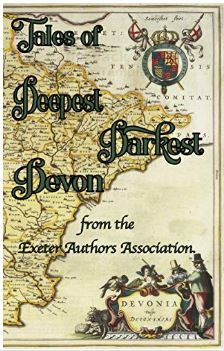
And now for something completely different, something that is actually written! Hurrah! Exeter Authors Association of which I am very much an inactive member, have produced an anthology of short stories with a Devonian slant, Tales of Deepest Darkest Devon. I am not by nature a short story writer but one of mine (ok the only one of mine) Brought to Book is in that collection. If you enjoyed Barefoot it is similar in style and based on a true story that took place in Devon in the 1820s and 1830s. You also get to read all the varied and fascinating contributions by other local authors. Priced at £4.99, it is due for publication on 31 March and is currently available in Kindle format only. It can be pre-ordered now here. Part of the proceeds will be donated to Devon Air Ambulance Trust.

My next novel is due to be launched on 29th August, ok, so there is the small matter of a third of it still to be written (have you spotted a theme here?) – that’s a mere detail. Advance notice that I will not be creating a millstone round my neck and writing 100 blog entries about the characters and locations as I did for Barefoot but I will be drip-feeding some hints and teasers in my blog posts in the meantime. #1 It is, like Barefoot, based on a true story. So, stand by, there will be more and a title reveal is imminent (when I have decided what it is to be that is!).

Whilst I look forward to these excitements, my thoughts are with my many Australian friends and the appalling fires that are currently threatening their homes and families. On a more positive note, it is exciting to see that several of my favourite genealogy presenters will be participating in Family History Down-under in March 2021. I think that it is very unlikely that I will be able to attend but if you live nearer than half a world away (or even if you don’t) this is going to be a major event on the genealogy calendar.

Not actually a Family History Advent Calendar Part 8

We have reached I in the alphabet. My favourite family/local history website for today was going to be Images of England but I have just discovered that it has been absorbed into The National Heritage List for England. This includes descriptions and photographs of 300,000 English listed ‘buildings’ (some aren’t actually buildings but things like lamp posts and letter boxes). This is great for local history and one-place studies. Be aware that the dates they give are based on architectural styles and not on documentary evidence, so may be approximate.

So as that doesn’t begin with I anymore, I will offer you a bonus entry. Ok, so it doesn’t begin with I either but I’m afraid you can’t be fussy. So L instead then. L is for London Lives. Subtitled ‘Crime, Poverty and Social Policy in the Metropolis 1690-1800’. The website tell us that it provides ‘A fully searchable edition of 240,000 manuscripts from eight archives and fifteen datasets, giving access to 3.35 million names.’ These include registers of three London parishes, workhouse records, probate material, guild records, coroners’ records, criminal records and hospital archives. It is definitely worth popping ancestral surnames into the search box, especially if you know your family spent time in London. There is a link to the Locating London website, which relates entries in the database to maps, based on John Rocque’s 1746 map.

Capture

Many of the entries in this year’s advent calendar are based on my book Family Historian’s Enquire Within. I would be very grateful if anyone in the UK wanting to buy a copy would get in touch with me directly (there will be no charge for UK postage). I am trying to free up book storage space ready for novel two arriving!

Researching our Twentieth Century Ancestors

Until recently, I was a columnist for the In-depth Genealogist Magazine and also wrote for their blog. Now the magazine is sadly no more, contributors have been invited to re-post their blog material elsewhere, so that it is preserved. This is another post that I wrote for the magazine, which I have edited to bring it up to date.

As genealogists, we often shy away from researching our twentieth century ancestors, treating them differently from earlier generations. When we begin our quest to uncover our family’s story, the inclination is to rush backwards as far as possible, as fast as possible. Often, our knowledge reaches back to the early years of the twentieth century without us having to do any documentary research. Here are people we have known and whose personal reminiscences, memorabilia and vital records may well be in our possession, or held by close family. For some of us, there is the tendency to view the twentieth century as ‘not really history’; after all we may well have lived through half of it. Our starting point may well be a granny or great granddad who was born in 1895. Family historians will often, justifiably, comment that it is easier to research in the nineteenth century than it is the twentieth. Records that are closed to public view, families that are increasingly mobile and just sheer numbers of people, all add to the difficulties of more recent research. This means we sometimes gloss over the recent members of our family tree, relying on what the family can tell us and instead we immerse ourselves in the stories of our earlier ancestors.

If you have never really focused on your more recent relatives, I would like to encourage you to do so. This is not just about a family tree, it is about recreating your family’s lives. There is so much context that can be incorporated in to stories of ancestors who were alive between 1900 and 1950: two World Wars, the changing role of women, the Great Depression, to name but a few. If you have an English family you might add the General Strike, in Ireland the fight for Home Rule. I had great fun researching this era for my novel Barefoot on the Cobbles. This period may see your family owning a car, a camera or a radio for the first time. Can you find out what they might have seen at the cinema, listened to on the phonograph or played with as children? Fashions, communications, travel and social welfare all changed immeasurably between 1900 and 1950; how would this have affected your family?

More recent research has become more important now that our quest for DNA matches encourages us to take our trees downwards, in an attempt to identify potential 3rd and 4th cousins.

Taking time out from your quest for earlier generations, to concentrate on those from this period, can bring great benefits. Just selecting a few decades really focuses the mind and you will probably be surprised how much you can find out about these relatives, their homes and localities and the lives they may have led. There is much to help you tell that story. You may well have photographs of this period. Even if you do not have photographs of your own ancestors, there are others available to evoke the era. There will be newspaper reports that again might not name your own relatives but will tell you what was going on in their communities. Would granny have attended the church bazaar? Did granddad win the ploughing match? Would your family have been affected by the closure of a major local business? It is much more likely that you will have precise addresses for twentieth century ancestors and it is also more likely that those homes are still standing. This opens up opportunities to include photographs of those homes in your stories.

This is also a fascinating period for those with One Place Studies to focus on – get ready for the release of the 1921 census by focusing on the other documentation now!

CUE ADVERTS

For those of you with British ancestors in this period, if you feel that this is a project that you might like to try and you would welcome further guidance, the next presentation of my five week online course Discovering your British Family and Community in the Early Twentieth Century, run by Pharos Tutoring and Teaching starts in January.

Barefoot on the Cobbles – true story based in Devon 1890-1919. Available on Kindle. Unless you are outside the UK, please buy paperbacks from me (trying to make room for Christmas tree) – postage free to UK addresses. Gift giving season approaching etc.. Also available Remember Then: women’s memories of 1946-1969 and how to write your own. Ditto that think about buying from me. What else can I say, oh talks available on both books on request. Phew, that’s today’s marketing done.

And just because I can, photos of a few of my ancestors who made it into the C20th. P.S I don’t seem to have inherited the ears!

003 Eliza Smith nee Seear 1823-1900.JPGMary Archer Dawson née Bowyer 1830-1919.jpg

Philip James Woolgar 1855-1913 c 1899.jpg

Pillories and Preparations

In the brief week at home, idleness has not been an option. Firstly, my home village staged a re-enactment to commemorate the 200th anniversary of the arrival of Methodism in the village. William Reed and Samuel Thorne chose the day of the revels to preach on the village green, were duly arrested and fined. I have to admit that being part of the action, exactly 200 years later, was a ‘hairs standing up on the neck’ moment. Mistress Agnes was present in Victorian guise and a few reprobates were pilloried in the newly acquired community pillory – every home should have one. There was also a truly spectacular flower festival. As someone whose idea of successful flower arranging is remembering to put water in the vase, I was in awe.

1 June 2019 William Reed Commemorations (4)1 June 2019 William Reed Commemorations (6)

I did briefly get back to writing novel number two, after a gap of a few weeks. This has necessitated me buying a book. Thanks to Martha’s research, I did get it half price but it is still the most expensive book I have ever purchased. Then, with assistance, I tried to rediscover my garden. The grass had to be scythed and the weeds still have to be tamed.

Then it was onward and upwards and back ‘up north’ to THE Genealogy Show. Yesterday was spent setting up and greeting friends from across the world, some of whom I have only previously ‘met’ online. My two (well one and a third) presentations are tomorrow so today will be more relaxing. A talk to hear, some brick-wall bashing for attendees who have booked appointments with an expert (a few of them have got me – oh well) and helping out on the Society for One-place Studies stall in between. It is going to be a good day.

TheGenShow

Writing and Reading of an Historical Nature

I am still busy getting on top of writing tasks before the festive season really strikes. Writing is also a great excuse as to why I am not excavating boxes that are residing in the office, having been designated as belonging on the ‘do I really want that?’ pile. Turns out that, in some cases, I do. Yesterday I uncovered Ordnance Survey map symbol flash cards – believe me these are more exciting than you think and date from the days when I was a geography teacher by mistake (long story). What will future forays into the unknown reveal? Most of yesterday was spent on the final edits of week four (of five) of my forthcoming online course on twentieth century family/community history. This is shaping up to be particularly appropriate for one-place studiers and those who feel that they should revisit the more recent branches of their family tree. In a timely manner, a blog post that I wrote for the In-depth Genealogist on the value of researching into the twentieth century has just appeared, do click through and take a look. Today’s writing choices include the final edits of week five of the course, an article about straw plaiters or the biography of a world war one servicemen. Variety is the spice of life and all that.

Oh, and for those of you wondering about the DNA, my kit still hasn’t been flagged up on the website as having been received and awaiting lab results. I am hoping that they are just slow to update the status of my sample, rather than an indication that my swabs are lingering in some sorting office in the back of beyond. There is progress on the third cousin tracing front but more of that another time.

indexAnother day, another historical novelist and again a writer based in Devon. Ruth Downie’s books have plenty to spark my interest. They are historical – set in Roman Britain (with side trips to the wider Roman Empire), they are crime stories and the main protagonist is a Medicus, so I get the history of medicine thrown in. Oh, and it is a series so I needn’t be disappointed when I finish the first adventure. So far there are seven books about Gaius Petreius Ruso and his wife Tilla and the reader can follow along as their lives unfold. Beware, as the first books have been reissued with Latin, instead of English, titles, so sadly there are fewer books than you may think.  These are fast paced plots, with characters that you can get to know and love, wrapped up in a well researched historical setting. There will be another writer of similarly themed books later in the calendar and Ruth Downie’s books definitely deserve to be as well known as hers.

Memories, Rain and some Crafting

What an amazing response to my request for women willing to share their memories of post war Britain. Thanks to the power of social media, I have had 500 hits on my website in 48 hours, several new followers – who may not be aware quite what they have let themselves in for – and willing, enthusiastic volunteers. I still need more and will be seeking to address the sample balance that currently favours those from the south-east. Strangely a third of my volunteers are called Lyn/Lynne/Linda and there’s me thinking everyone of my generation was called Janet!

Partly in order to come up with a snappier title for the project (and eventual book) than 1946-1969, I have asked volunteers what epitomises that era for them. Many have made references to freedom and rebellion, alongside family security. I can’t wait to get started.

I have been diverted from my immersion in the 1950s and 1960s by the need to put the finishing touches to my day course on early C20th family and community history, scheduled for Friday. A fair chunk of this relates to the first world war so it was good to take part in the Society for One Place StudiesHangout on Air on researching communities in world war 1.

The building work has ground to a halt whilst the brick work dries out in preparation for the erection of the glass bits. ‘Dries out’? Has anyone looked at the weather forecast? Mature fishermen of my acquaintance are muttering that they have never seen such high tides. The swimming pool that will one day be my conservatory floor now has a deep end and a very deep end. You can see wonderful reflections of trees and yes I even managed to dodge builders and rain to get the washing out. DSCF1301

The lack of a letter box (yes I know I have mentioned this before) has proved troublesome. This week I retrieved my post from various puddles and drains down the road when the temporary post box blew open and the contents blew out. I am now drying my train tickets to get me to Who Do You Think You Are? Live and my Race for Life sponsorship form on the Rayburn.

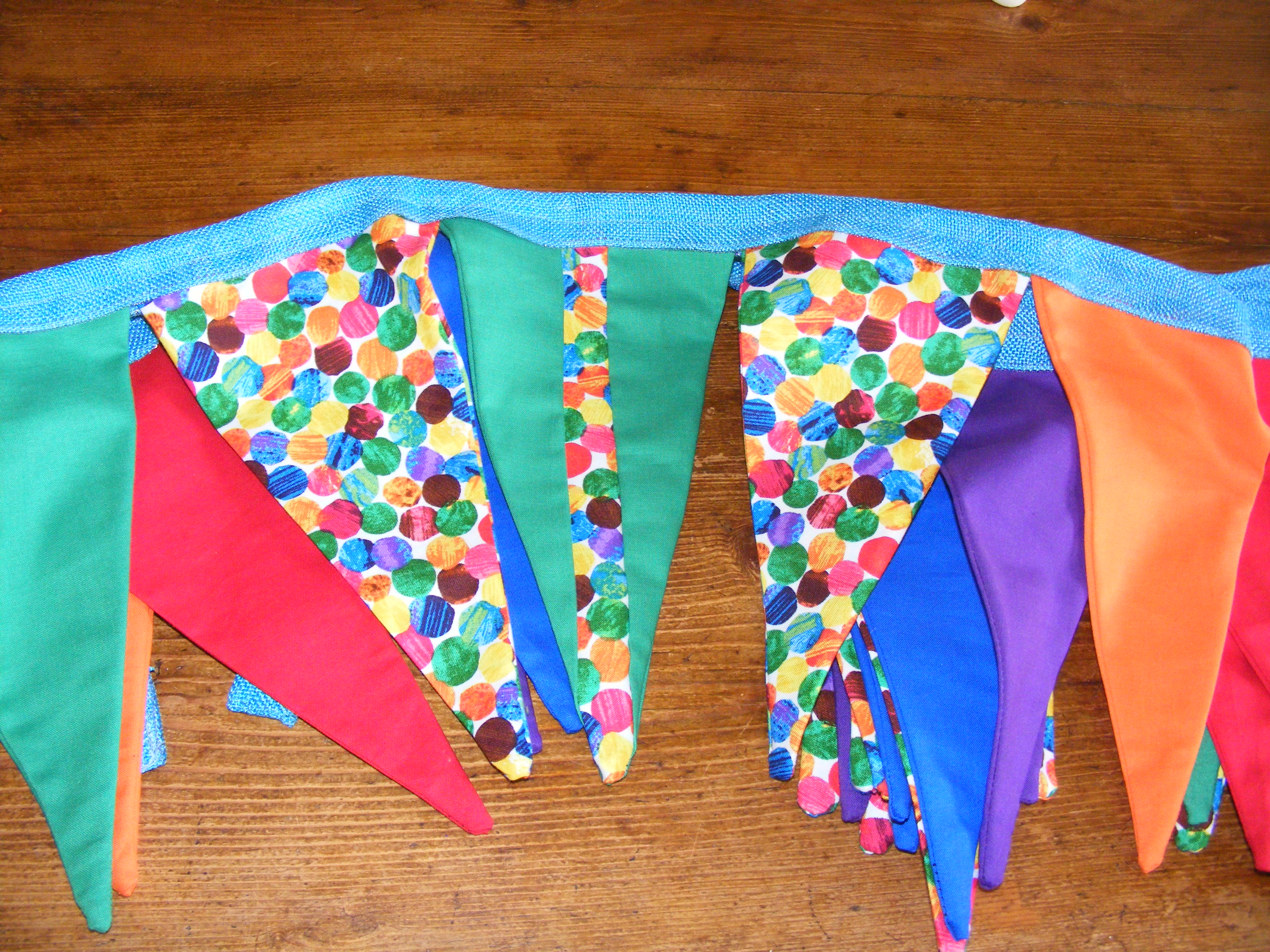
Those of us who are currently dwelling on the post war era are recalling that women of the time knitted and sewed and generally made things. Grandmotherhood has done something to reawaken my latent (and they are pretty well buried) craft skills. I can knit reasonably well but apart from an annual village sponsored knit (strictly squares only) I haven’t knitted for decades. I may have been somewhat put off by creating, at great personal effort, an arran jumper for a boyfriend who then promptly departed the scene. So far I have produced two sets of bunting (not knitted – that would be weird), which seem to have turned out ok and one set of booties, oh and a knitted hippo. Well, the latter is still in pieces and the instructions for sewing various parts together are a little unclear but it may turn out to look like a hippo in the end. With this in mind I went to order stuffing via a well known online retailer. I found 1 kilo for £6.49. The same make was available at £5.99 for 2 kg – looking like a no brainer. Then I spot that 4 kg of the same product is £6. I hesitate to order 4 kg, this stuff is pretty light, just how big is 4 kg going to be? I have been caught like this before. When I first left home I bought bacon and was blissfully unaware of just how much bacon weighed. I can’t remember how much I purchased but I did have bacon three times a day for a very long while.DSCF1170 DSCF1171

Historical Pot Pourri

As promised, we are back to the history. Another Hangout on Air for the Society for One-Place Studies. This time I was guiding people through choosing your ‘one place’. If you are thinking about taking on this kind of research do listen in. I was just thinking I was getting the idea of all this hanging out when, half way through, I realised I had my printer plugged in instead of my snazzy headphones. It seems you can still hear me though.

Whilst delving into the delights of YouTube, take a look at this amazing video of Buckland Brewer thanks to Burn the Curtain Theatre Company. I can’t believe I am lucky enough to live somewhere so beautiful. The History Group is thriving, with some exciting new projects in the wings. We have had two requests for assistance just this week.

I have been following up on the descendants of those who lost their lives in the Clovelly fishing fleet in 1838. I have managed to find two more with Braund connections. Philip Cowel of Hartland led me a bit of a dance, until I discovered that he was also called Curtis. His daughter married a Braund. James Kelly of Appledore had a son James Kelly Cook who married a Braund – they just get everywhere.

Two talks for Mistress Agnes this week and a lovely time with the ladies of Christchurch, Barnstaple and the history society in Chulmleigh, although Mistress Agnes was very wary in the latter as she heard that the Parliamentarian army was passing through.

At last, a publication date for Family Historians’ Enquire Within January I’m afraid so too late for Santa this year but always an option for spending your Christmas money! Ok, ok, I know I said it would be ready for Christmas but be fair, I didn’t say which Christmas. The typeset proofs for Putting Your Ancestors in their Place have arrived, which is very exciting but not looking forward to spending Christmas indexing.

For those who have brains to tax and minutes to fill over the holiday season do try the charity Christmas Puzzle. I have managed page one with Martha’s help – now for the rest.

Exploring History, Writing Books and Lost Fishermen

‘Putting your Ancestors in their Place: a guide to One Place Studies’ is now with the proof readers. If all goes well it will be available in time for Who Do You Think You Are? Live in February, to go with one of my presentations there. Hurrah – now what shall I write? Actually there are plenty of ideas so please don’t suggest anymore. If you are still waiting for ‘Family Historians’ Enquire Within’, it is on its way – promise. Gave the talk of that book yesterday. The audience seemed to appreciate the A to Z suggestions but a bit of a crisis when, with only ten minutes to go, I was still only on M.

Favourite website of this week is the ‘Explore’ section of the Victoria County Histories’ website. There are articles, maps, drawings, photographs and audio files, even for counties that are poorly served by the volumes themselves.

I’ve managed to successfully identify three death certificates for the Clovelly fishermen who were lost in the 1838 storm and whose bodies were recovered. Also completed three research requests and tried to unravel another confusing American Braund line.

This coming week will see me passing on the benefits of our gravestone recording experiences, listening to the story of the research into the men on our local war memorial and a day in the seventeenth century.

Still working on Lucy’s maternal line – details to follow.