The second day of RootsTech began, which meant an opportunity to catch the sessions that had screened late in the US day on day one, if that makes sense. I decided to take a look at the virtual expo hall. Unlike what you might be used to at UK genealogy shows, the vast majority of the stands that are available virtually are commercial, with only a tiny handful of society stands. A couple of the stands did catch my eye. Artifcts, if you can get past the spelling contraction, is a great concept, encouraging us to tell the stories of heirlooms. This is a lovely idea but I need convincing that you need to do this via a commercial site; just tell the stories for yourself in what ever format suits. This is something I have been working towards for a few months but other projects, such as A Few Forgotten Women’s free online sessions for International Women’s Day on 8 March, have rather taken over. The RootsTech expo hall also led me to a really good offer price, for in-person and virtual attendees, from Family Tree Magazine for membership of their Family Tree Plus Club.
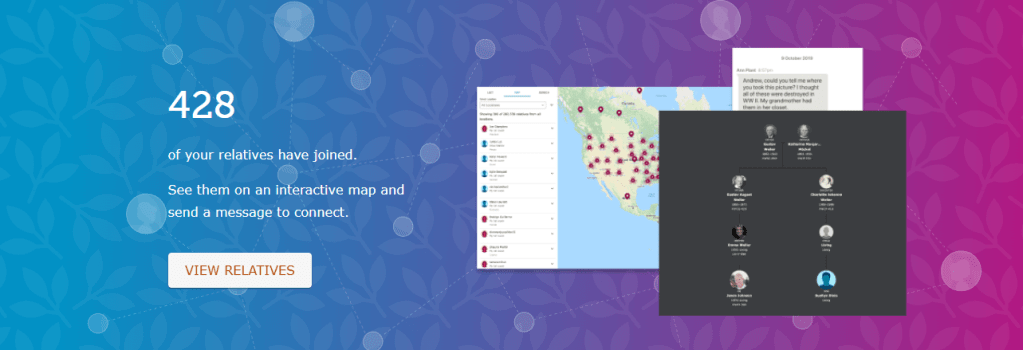
I also had a look at my Relatives at Rootstech, which is a bit of fun for those who have linked themselves to the composite tree at Family Search. This is available until the end of March and you can connect with other RootsTech attendees whose ancestry you allegedly share. I have to say that most of my contacts are 7th-9th cousins and some of the family trees delve into realms where I would not dare to tread but I am hopeful that my third cousin will respond to my message at some point.
In preparation for our Forgotten Women Friday on 24th March, when some of the women needing research are of Irish origin (volunteers welcome for tracing these and those from England), I began by listening to Brian Donavan’s Irish Family History is Easy. Seriously!. He focussed on using FindmyPast and Irish Genealogy. Definitely a great introduction to Irish research and I hadn’t realised so much was on FindmyPast. Next, I chose Hidden Stories Discovered in just Three Documents by Patti Gillespie, which sounded intriguing. Be warned on this one, the talk doesn’t start until four minutes twenty seconds in, so don’t be put off by the long silence. I liked her phrase ‘compassionate context’; our ancestors’ lives and life decisions should viewed in this way. Patti also emphasises the importance of citations. She regards any system of citation that will allow another person to recreate the research path as being adequate; a woman after my own heart.
I then watched Meet Storied; the next chapter in family history with Brandon Camp and Finn Larson. Storied is one of the sponsors of RootsTech. Their product is a way of encouraging and preserving stories and there’s a good deal on if you sign up during the RootsTech period. Whilst I am one hundred percent behind the principal, I can’t help feeling that, a bit like Artifcts, you could just write it down for yourself. The software also has a feature whereby artificial intelligence can assist you with your story. This is impressive but I do have some reservations about this. I suppose it might be useful for those who have concerns about their writing skills. There are some real plus points to the software though. I did particularly like their emphasis on including information about those with whom we have non-familial relationships, such as friends, neighbours and co-workers. In addition, there is the opportunity to capture relationships to communities, be that a village, a workplace, a church or other institution. The software even supports the inclusion of pets. There is a free account option, which seems to include quite a few features. The paid version include access to records but these are all US based.
That was all I had time for yesterday but there is no rush as the presentations remain available for you to watch at your leisure, I am still catching up on 2021 and 2022! If you didn’t think to register in advance for the free virtual event there is still time.

 The History Interpreter - Janet Few