Operation Toy Excavation

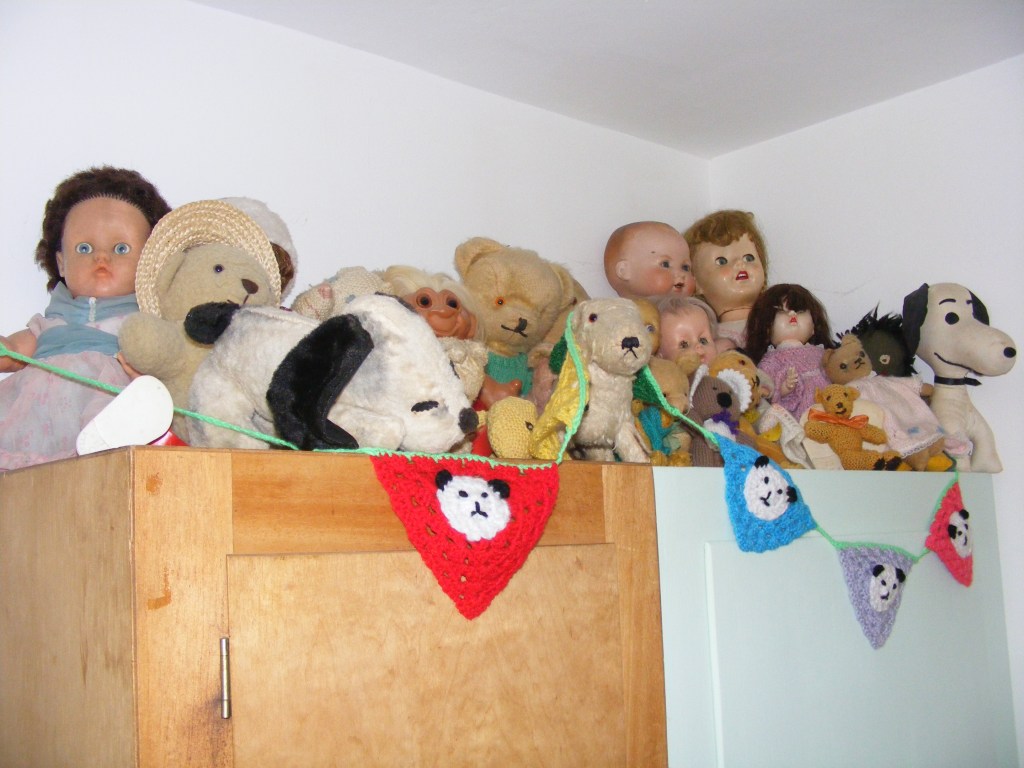
What else do you do on a summer Saturday but excavate the historic doll/stuffed toy collection from under the dust of ages and I do mean ages. I am not sure that the stuffed toys have had the dust bashed out of them for decades.

Meet the motley crew, some of who are almost centenarians.

They were removed from their cupboard-top home, stripped naked, apart from the two that my mother appeared to have sewn into their clothes and readied for the major operation.

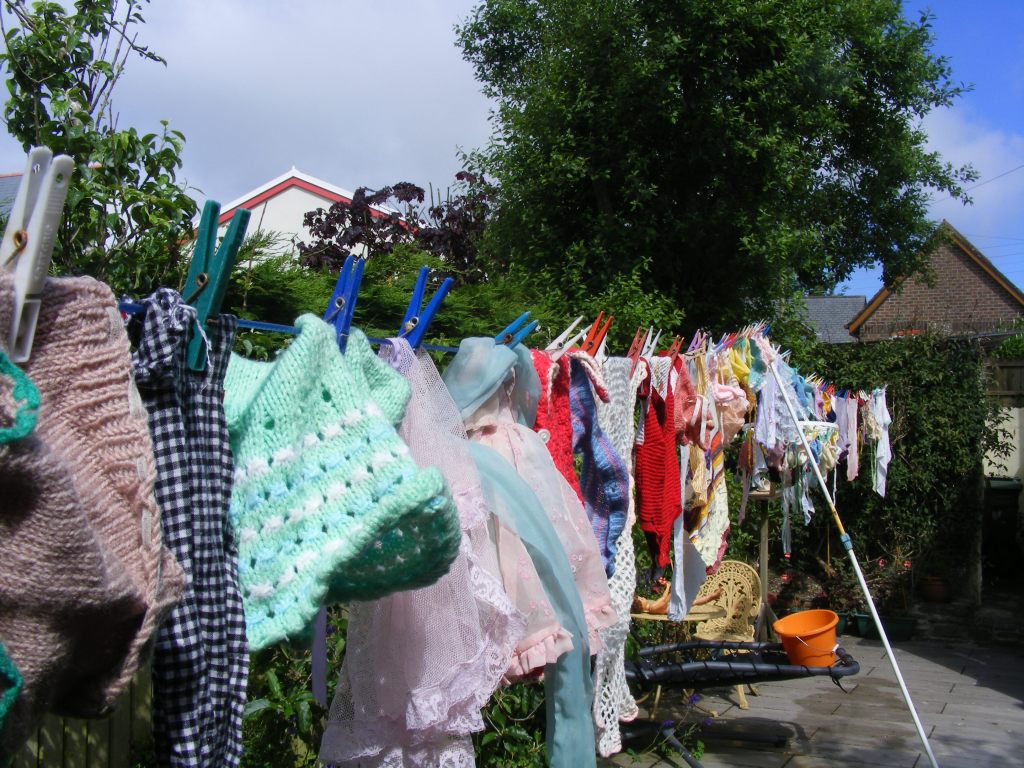
Next, to wash the clothes, some of which needed hand washing. It might be a while since they were last washed but I know from bitter experience these are old fabrics that are far from colour fast. Sadly, since they were last laundered, it seemed that the moth had made a meal of some of the woollen items, lovingly knitted by three generations.

The shoes were scrubbed and left to drain.

Then bath time. I don’t have a real bath (I have what is officially the smallest bathroom in the world – seventeenth century cottages not being too hot on bathrooms, so I replaced the bath with a shower). No bath means no bubble bath, so I substituted washing up liquid. It turned out that I also had to use a rather rough washing up sponge to scrap the dust from grubby limbs and faces – sorry dollies.

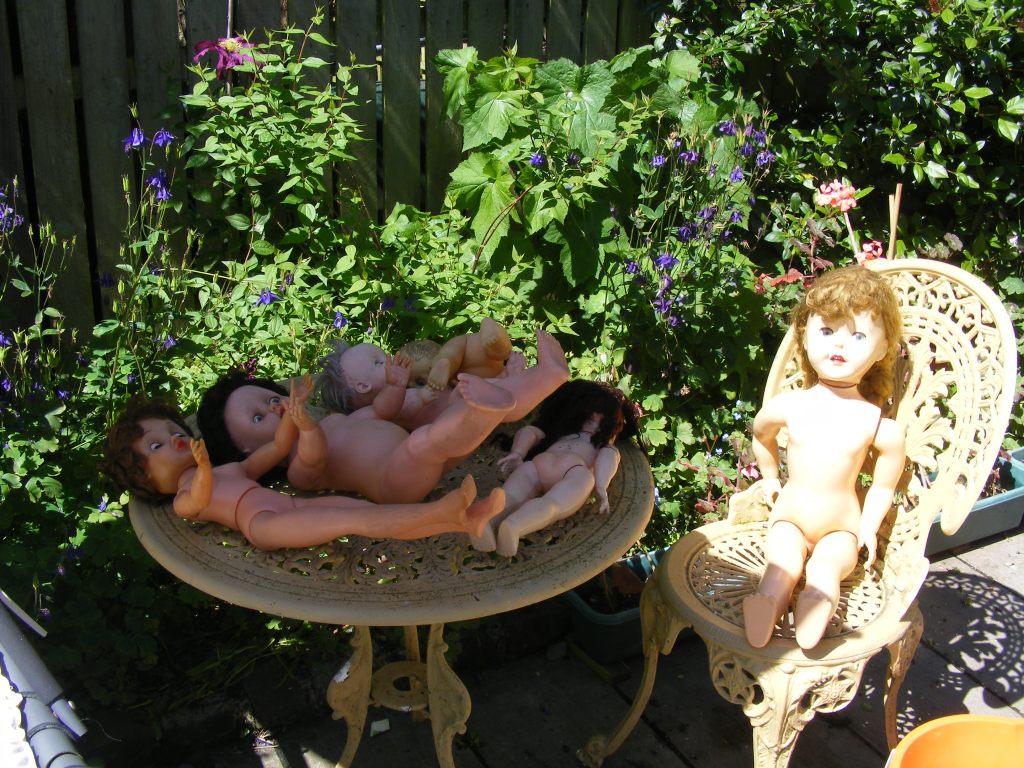
From the left: Christine, Jilly, Mary, Jane, Betty, Sally, Big Peter – you can pin point my generation just from the names.

As you will see, the baby bath has stood the test of time. I am wondering if this will be marked up as an inappropriate image.

Mary and Jilly

You have no idea how long it takes to peg umpteen small items on the washing line. Take it from me – a long time and it used up every inch of line and every peg I could find.

The dolls were left in the sun to dry. I did have to temporarily amputate a few limbs and even one head, in order to let the water drain out.

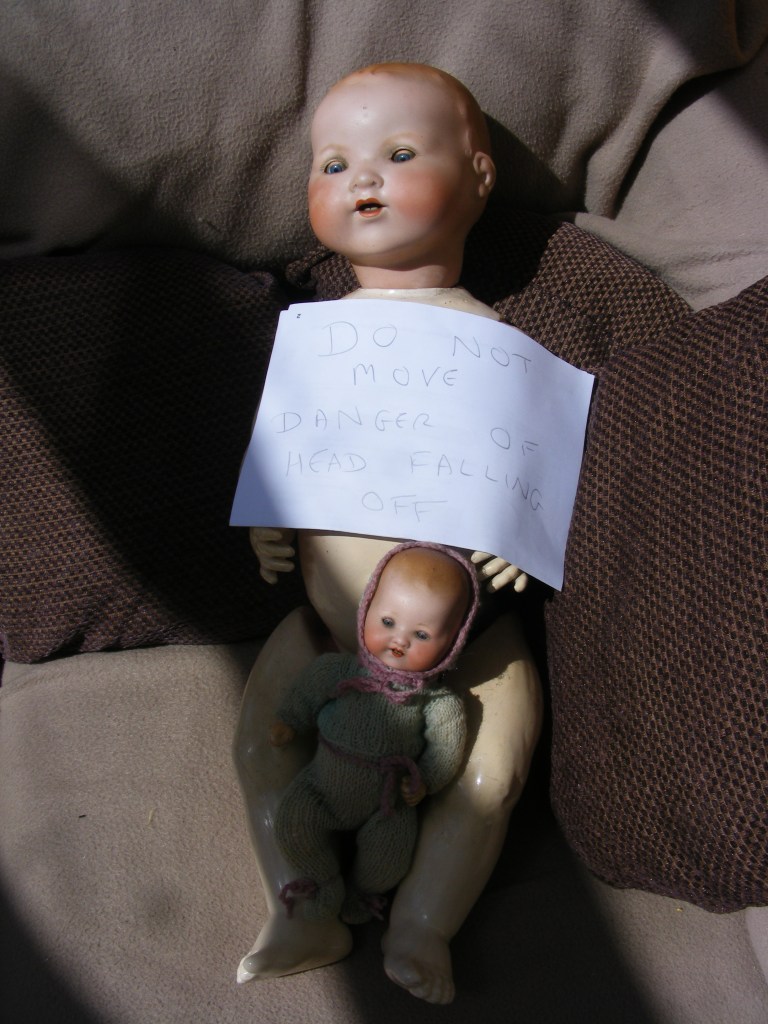
Big Peter and baby Peter (not a lot of imaginative naming on the part of my mother there), now in their late nineties, were spared total immersion, not least because baby Peter’s clothes don’t come off. In fact I fear for the stability of the wires attaching Big Peter’s limbs and heads, hence the warning notice.

Then it was time to bash the soft toys together and stand well back as the dust flew.

A quick bake in the sun followed. Today they will be redressed and replaced on top of the cupboard. It is a sobering thought that if they wait as long for their next washing as they did for this one, I may not be around to do it.

My lovely memories group ladies are writing about the toys and games of their childhood at the moment. I am fortunate to have many of mine still in my possession. The great loft sort has revealed a feast of goodies. They may just become the subject of a talk. In the meantime, whether you still have the contents of your toybox or not, I would encourage you to record the memories of your own particular treasures.

NB no dolls were permanently harmed in the creation of this blog – well, I am not sure I should have washed Jane’s hair (already her second lot of hair) but she will get over it.

My Life in Seven Censuses #Census2021 #Censusdayphoto

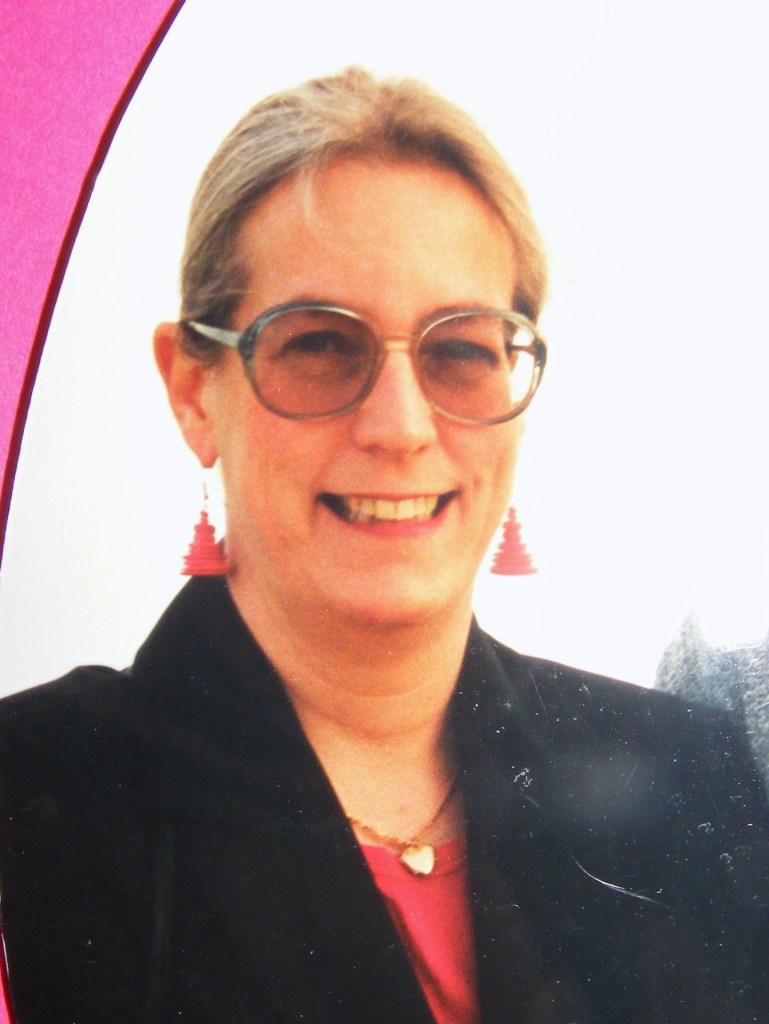
Fresh from filling in my census form in last week and then keeping my fingers crossed that I would live until census day to avoid confusing my descendants, I decided to look back at my appearances in censuses past. I have found the forms that I saved in 2011, 2001 and 1991, so I know exactly what I put then and I have copied the latest one too. I am sure I have the 1981 return somewhere but unearthing that may involve a trip into the uncharted territory of the loft. I have tried to pick photographs that were taken as near to census day as possible. It was difficult to find later pictures for years ending in 1 as I am the photographer, so appear in very few. 1991 was a total fail – I don’t seem to have anything between 1989 and 1993. So here is my offering; please do likewise and create your own census day stories.

23 April 1961

This is one of only two censuses where I appear as part of a complete family unit. I have just had my fifth birthday. I am living in a three-bedroomed terraced house at 28 Sundridge Road, Addiscombe, Croydon with my parents. Recent censuses ask about central heating and I believe past ones have included questions about radio ownership. At this point, we do not have central heating, although we do have both radio and television, as well as a fridge. I am about to start my second term at Tenterden School. I am a little hazy about when my father moved from job to job but he is working as a projectionist and I think, has just started working for Associated Electrical Industries. My mother is probably doing freelance book-keeping at home. I will shortly be going for a week’s holiday to Bognor. I have just been given my second tortoise, Emma.

25 April 1971

I am a stroppy teenager and am just about to return to Croydon High School after a term off having broken my wrist and ankle. Breaking both at once means that I haven’t been able to use crutches. School is two bus rides away and involves many flights of stairs, so attendance isn’t practical whilst I am in plaster. At least, that’s what I am claiming. I am studying for eight O levels (this will reduce to seven after my absence, although actually I learn better at home than I do at school). Whilst I am home from school, I am volunteering at the nursery school up the road; the first of many voluntary jobs involving children that I will take on. I am also recovering from a severe bout of flu, leading to my weight dropping to under six stone. I have just met my first ‘proper’ long-term boyfriend.

By this time, my father has died and my mum and I are living in a two bedroomed maisonette at 3 Parkfields, Shirley, Surrey. Thus, the census shows no record of my living at what I regard as being my childhood home, 57 Firsby Avenue, Shirley. We had solid fuel central heating at Firsby Avenue but now have electric, oil-filled radiators.

Mum is working both at home and in the office as a book-keeper for the instrument makers Negretti and Zambra. Around this time I am working in the restaurant at Crystal Palace Athletics Stadium at weekends. An important member of our family is our dog, Sparky but she won’t appear on any official document.

5 April 1981

I have been married for nearly eight months and I am living in my first home of my own; a three-bedroomed Victorian terrace, 31 Cross Street, Sandown, Isle of Wight. We have gas central heating. Although I have had a colour television for nine years, we have reverted to black and white to save the license fee. I am working as a school secretary and my husband is a civil servant for the Customs and Excise Department. Censuses are keen on asking about qualifications, so I will record that, at this point, I have seven O levels, three indifferent A levels and a Diploma of Higher Education in history and sociology (DipHE was a short-lived and fairly meaningless qualification that was the equivalent to two years of degree level study). I am working to convert this into a full degree through the Open University. I am looking forward to starting a family and I am just about to go on holiday to Guernsey.

21 April 1991

My second and last census as a complete family unit and a short stay in Aston Clinton, Buckinghamshire has slipped between the enumerators’ nets. Now I am in the ‘forever’ home at 12 Ranelagh Road, Lake, Isle of Wight. This is a detached three-bedroomed house with a two-bedroomed flat in the basement. We now have gas central heating, a washing machine and a freezer but the television is still black and white. Both my daughters feature in this census as school children. I have completed my honours degree and also have a Further & Adult Education Teachers’ Certificate Parts I & 2 (City & Guilds).

I am teaching genealogy evening classes and doing free-lance research. My husband is still with the Customs and Excise but is now commuting daily to Portsmouth to do so. My mum has moved to a bungalow round the corner.

I have learned to drive so the household has a car to record in the census for the first time (my dad’s short spell as a car owner fell between two censuses).

I am actively involved with Isle of Wight Family History Society, running their bookstall and library. I am also the Honorary Education Liaison Officer for the Federation of Family History Societies, traveling to Birmingham for the meetings. I am a governor at my daughters’ primary school.

29 April 2001

I am still at the same address, the first home to appear on two censuses. We finally have a coloured television. I am now a widow; one daughter is at university and the other is on the roll at the local High School.

My short stints as a lecturer for The Open University and a school dinner lady have come and gone. I am working part time teaching history in a private faith school, with a handful of pupils. I will later also teach geography and law, as well as taking on a role as school bursar. I am also working as a relief special needs classroom assistant, which I love.

I have added to my qualifications with a Part 2 certificate in Genealogy and Heraldry from the Institute of Heraldic & Genealogical Studies.

I am still involved with Isle of Wight Family History Society and also the Braund one-name Society as their historian and editor.

27 March 2011

Now I have relocated to Devon and downsized drastically to live alone in my current seventeenth century cottage. It has three bedrooms but two are little more than box rooms, a tiny garden compared to the 250 foot that I have left being and central heating fed by an oil-powered Rayburn.

The intended early retirement has certainly not happened. I have now spent nearly ten years with the job I must not mention and have been promoted to a position of responsibility. I work occasionally as a traffic census enumerator. I am also enjoying working as a seventeenth century historical interpreter for a local tourist attraction. Living where I do, my lecturing opportunities have greatly expanded. I volunteer for Devon Family History Society and the Braund Society. I have also completed my PhD. Both my children are now married. I have begun to travel abroad regularly; later this year I will visit Australia.

My daughters and sons in law are staying at my house on census night, in preparation for my mum’s funeral the following day. [Although I have put a note to this effect with my form, I didn’t include them as visitors. I have no idea why, perhaps I had already filled it in.]

21 March 2021

Again a home appears in two censuses, although this one is now sporting an additional conservatory, giving me 35% more downstairs space. I am still living here by myself, although due to COVID, I have a ‘bubble’. I have not seen my family, which now includes three grandchildren, for six or seven months. There are no holidays on the horizon.

I have had two more promotions in the job I must not mention but this is currently greatly reduced due to the pandemic. I am still giving family and social history lectures to a worldwide audience, although this is being accomplished virtually at present and this is keeping me busier than ever. Following the closing of the tourist attraction for which I was working, five years ago, I went free-lance as an historical interpreter but my colleagues and I haven’t been able to present in person for over a year.

I am now chairman of Devon Family History Society and also of my local history group and I continue to work for the Braund Society. I am a published author of both fiction and non-fiction.

What will 2031 bring?
Witchcraft and School Friends

Hastily, I should explain that he two parts of the title are not connected!

Saturday I got up at the crack of dawn and dawn cracks pretty early in June in the UK, to set off for London. As I heaved a case of books on and off trains I started to realise that a week of moving books and furniture (there will be a forthcoming post about this activity) had taken a toll on my back. Notwithstanding, I arrived at The Society of Genealogists to take part in their Seventeenth Century day seminar. Unfortunately even my ‘first train of the day’ start was not early enough to get me there in time to hear Elsa Churchill but I caught most of Colin Chapman’s informative session, packed with sources for C17th research. Colin and I often turn up on the same bill and it is always a pleasure to listen to him. After the lunch break and some running repairs to the air conditioning, which appeared to allow the room to be cold or hot but nothing in between, it was my turn.

I chatted about the impact of witchcraft on the lives of our C17th ancestors and lightened my load by re-homing some of my books, in return for a perfectly reasonable sum of money. Strangely, after becoming interested in this topic as part of my general foray into the social history of the C17th, I discovered that one of those tried for witchcraft, Joanna Elford, was probably related to me. I was followed by Michael Gandy and was very thankful that it wasn’t the other way round. Michael’s subject was how to read C17th handwriting and I suspect the audience were expecting sight of letter shapes and perhaps collective interpretation of documents. This was not to be. It takes an exceptional speaker to engage an end of the day audience for an hour and a half with not a single visual aid. Unbelievably, Michael held the room in thrall with an entertaining, relevant, tour de force on this topic without actually showing us any C17th writing at all – brilliant.

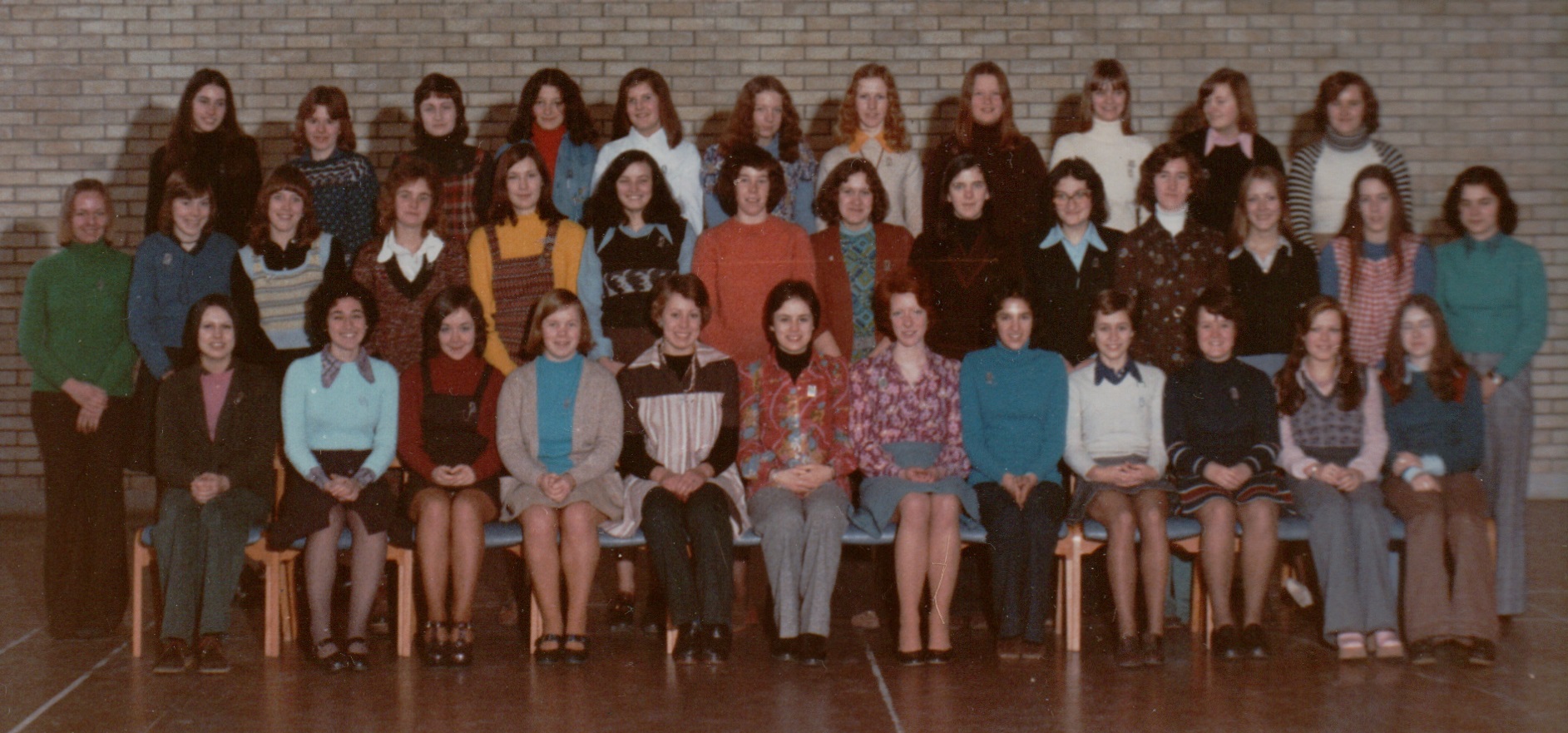
Then it was off to catch up with my school fellows who made up the class of 1974. I had missed the reunion itself but fifteen tail-enders were to spend the night in a nearby hotel and I set off to join them. School reunions can be fraught with anxieties: ‘What shall I wear?’ in my case compounded by the lack of room in the case full of books and the need to make it suitable for the talk as well. ‘Will I recognise anyone?’ ‘Will anyone recognise me?’ and if they do, does this mean I have worn well or that I still look as gawky as I did at school? ‘Have I been sufficiently successful?’ And most importantly, ‘How do my wrinkles/greying hair/middle aged spead compare?’. Of course anyone who voluntarily reconnects with a group of people they haven’t seen for forty years is going to be someone who is comfortable in their own skin, someone who feels they have ‘arrived’, by their own standards if not by anyone else’s.

StitchSCAN0137-SCAN0138

I limp my way as far as East Croydon station and decide that I really can’t face trying to find out where they have hidden the 64 bus stop since I was last here. I therefore elected to spend a high proportion of my book sales money on a taxi to the hotel. Said hotel is ‘posh’ by my standards. Ok, I know most of my hotel going is of the Premier Inn variety but this is four star. Although the surroundings are lovely it turns out that really only the prices are four star. Admittedly our party was accompanied by two sets of wedding guests and a group of England football supporters, who may well have been renegades from one of the wedding receptions but the service was execrable. I was expecting the food to be of the variety where you need a magnifying glass to see anything beyond the drizzle but there were several mouthfuls on each plate. Unfortunately, I somehow managed to choose something that contained two of my least favourite foods but that was my own fault.

My room is situated in the furthest reaches of the building, on the top floor and along an extremely long corridor. I struggle along with my case, which although no longer quite so full of books, was still heavier than my increasingly ‘twinging’ back was comfortable with. I come to terms with the room’s idiosyncrasies. The shower has no visible means of being switched on. I try turning, pushing and pressing various parts of the mechanism and am on the point of giving up when something I do results in water gushing out. Sadly, it took whoever was in the neighbouring room until 2.00am to work out how theirs worked and then they had a noisy and lengthy shower. Then there was the bed. To begin with I had twin beds that had been pushed together. I kept losing things down the narrow gap between the beds. Having retrieved the Kindle for the third time, whilst listening to midnight wedding revellers, I was beginning to despair. The bed was also as hard as ….. I will refrain from making any of the possible obscene similes here and just say it wasn’t very hard, not ideal when one has a bad back.

Of course none of this really mattered because we were there to meet our former school fellows and the chatting and reminiscing was in full force. We all have slightly different perceptions of the rarefied atmosphere that was our alma mater but agreed that we had an excellent grounding for our varied futures. Whether school days were the best or worst days of our lives, if we are historians, we should be recording our memories. Of course it is much easier to recall those memories in the company of those who shared them. If an actual reunion isn’t possible, what about a virtual one? Facebook, Google+, or just plain emails, are all possible vehicles for this. I and my classmates may not being doing this again in another forty years but a good time was had by all.

Then there was the journey home. Now, as I have said on previous occasions, I am no longer fit to be let out on my own. One of my former school fellows had offered to shepherd me back to the station. Where I come from two busses a day is considered a regular service but of course I am now almost in the metropolis so there are plenty of options, despite it being a Sunday. We are going for the tram. Ah, there are no trams. The police have cordoned off the area round our destination due to an illegal rave. I know I and my former classmates were on the rowdy side but to call us an illegal rave seems harsh. A bus driver is planning to go as close as the police will allow to the station and we hop on board. In my case the ‘hopping’ was more of a hauling but we are on our way. Although the road is closed, the station is open and I start the journey home through the engineering works and tube line closures. I manage to get an earlier than planned train out of London but sadly not early enough to get a different train from Exeter onwards. Two hours on a wooden bench at Exeter station puts paid to any remaining mobility in my back. Eventually home safe and sound. Now to edit the ‘year book’ that we are compiling; interesting to see the different paths that we have all taken.

W is for Writing it up – get that history recorded

We all plan to do it don’t we – write our memories, write that local history book, write up our family history. It is all so easy to put it off, ‘I will do it when I retire’, ‘I will just finish the research first’. Well, don’t be deluded, you will never ‘finish’ and as for more time in retirement – any retiree will tell you it just doesn’t work that way.

Writing up your research into a coherent narrative helps it to become appealing to your nearest and dearest. You know, those close to you who adopt a glazed visage when you enthuse about great great grandad’s first cousin once removed. Writing up aspects of local history enables you to share with others who are also interested. You may know it is a ‘good thing’ but the mechanics worry you. ‘I was never any good at writing’, ‘I don’t know where to start’. There is help out there. Take a creative writing course, or better still a writing up your history course – I run face to face courses for local and family historians and others do the same in different regions. There are also similar online courses available. There are books on how to write family and local history (see below). There are groups that can help and encourage you. Read what others have done to get ideas of what you do and do not, want to emulate. Use the spelling and grammar checkers on your computer, use the Thesaurus.

You are not writing a three volume novel – start small. Begin with the history of your house, not the whole town. Write about granddad’s war experiences, not the history of the whole family since Tudor times. Don’t just think in terms of writing a ‘book’. You could create a blog, a short article, a video, a presentation or an exhibition instead. Give yourself a deadline, maybe an anniversary that needs to be celebrated. Do it, not next year not next month but NOW. Make a start – you don’t even have to start at the beginning. Once you put fingers to keyboard you will be surprised how easy it is.

Beckett, John Writing Local History (Manchester University Press 2007)
Curthoys, Ann and McGrath, Ann How to Write History that People Want to Read (Palgrave Macmillan 2011)
Dymond, David (ed.) Researching and Writing History: a guide for local historians (Carnegie Publishing Ltd 2009)
Titford, John Writing up your Family History: a do-it-yourself guide (Countryside Books 2011)

Living the Life of my Ancestors – ‘When I was Young I Didn’t Have….’

I am sitting in semi darkness reliving the lives of my ancestors and wondering how long the computer battery is going to last. 2 hours 30 minutes it says but it was 4 hours something only 20 minutes ago so who knows. We have a power cut. So much for the photo voltaic panel sales talk – ‘you won’t have a problem in a power cut’. For which read ‘you won’t have a problem in a power cut in the daytime’. How often are power cuts in the daytime? Typing this is a tad tricksy as I have to angle the lap top screen down in order to be able to see the keys. I can touch type a bit but the result is often akin to some seriously poor optical character recognition.

It was someone’s idea not to turn the Rayburn on until after it was serviced. That would have been fine if the servicing appointment (booked in September) had not been at the end of November. I have already been blacklisted by most Rayburn servicing firms in the area. They usually try once, fail miserably and say something along the lines of ‘I wouldn’t have bought that model’. Well, no dear not-actually-servicing-anything man, neither would I but it came with the house. Well anyway, what I am getting at is that, during the sub zero (well almost) temperatures of the last few days, I have been huddled in one room wearing every layer of thermal clothing I can find (I have a few, I went to Lapland remember). This means the power failure does not make a great deal of difference to the temperature. I do have the trusty woodburner but even that hasn’t been man enough for a whole house this week. However it is doing very nicely at the moment thank you and I am quite cosy.

Being a historical interpreter has its advantages. I have Victorian candlesticks and candles that I actually know where to find. I am not yet reduced to creating more light by extravagantly burning the candle at both ends but when the light from the lap top is no more I may have to, or at least light another candle or two. I do have a free with something torch. It has a handy facility – a mugger deterrent. This means it emits a high pitched whine when the switch is in a particular position. Actually it emits a high pitched whine every time I try to turn it off because I can never remember which way not to turn the switch. No idea what my neighbours are thinking is going on, at any rate they haven’t come rushing round to rescue me yet.

So I have light (sort of) and heat. Hot food may be more of a problem. In the interests of economy, I regularly boil the kettle on top of the woodburner but cooking a main meal may be more of a challenge. I knew I should have bought that cauldron. Fortunately my ability to time travel means that I can telephone a colleague who is still in the twenty first century and get him to bring out a hot food parcel in the form of chicken and chips – the diet starts, as ever, tomorrow.

The lap top and comfy settee are clearly anachronistic and it would be an open fire not a woodburner but this is closeish to the conditions that my ancestors would have endured. No wonder they all went to bed when it got dark. Without the lap top this would be seriously boring. We do take electricity and all it brings for granted. I fear we may have to go back to managing without more often than we would like in the not too distant future. Even my mother’s childhood was spent without the advantages of electricity. Of course she did have gas. Sore point this, no gas out here in this part of darkest (literally at the moment) Devon. We need to think more about what different generations did or did not have in the way of facilities and labour saving devices. Do your descendants understand what is new to their generation? Have you recorded the ‘when I was young I did not have …..’ Not just the computer and the mobile phone but depending on your generation and where you were brought up – a fridge, a car, a television, a bath every day (or a shower at all). We need younger people to understand how things have changed (I won’t say progressed). Not with the ‘you don’t know how lucky you are’ attitude – although they don’t – but in a celebrating difference sort of a way. In some ways of course we were the lucky ones – mothers who were at home to play with us, the ability to walk to school safely or play outside. You’d better hope the power comes back on soon or I shall never get off this soap box. Stop reading this drivel and go and write down 10 or 20 or 50 things about your childhood that are absent from those of today’s children – for better or worse. Your descendants will thank you for it.