The Day the Books Came

Two and a half years ago, as the writing of Barefoot on the Cobbles came to an end, I had a glimmer in what passes for my brain of what I would do next. The idea wove, spun and developed, taking itself off in its own direction and then it was now. I have given birth to Sins as Red as Scarlet. Large pantechnicon fails to take note of the ‘on no account use your sat-nav’ directions. It causes chaos negotiating the narrow track to get itself where it should have been in the first place. It blocks the road while a pallet is deposited on the roadside (we don’t have pavements). It unloads 64 boxes. A nice little queue of cars is building up behind. Crowds are gathering. Nothing this exciting has happened in my village all lock-down. Time for the lorry to move off and oh dear, there is a hay-bale laden tractor coming in the opposite direction. Cue pantechnicon .v. tractor stand off. Tractor wins. The lorry and all the cars behind it have to do the reversing thing. Lorry comes very close to reversing into the car immediately behind it. Unfortunately I had put my camera down ready to heft boxes before all the tractoring so there is no photographic evidence.

My settee is now eighteen inches from the wall, I have a teetering pile in the kitchen. I am wondering how many I can ship out before my family visit. I suppose piles of boxes would make a good social distancing barrier. Now it is all systems go for launch day. Take a look at my previous post for details of how to join in. In the meantime, if anyone would like to order a copy or ten, you know where I am.

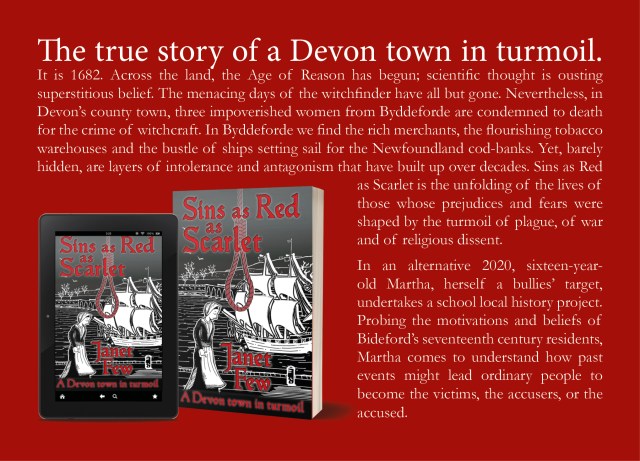
Today is the Day! – cover and title reveal

Ladies and Gentlemen – I give you Sins as Red as Scarlet.

3d and Kindle

This amazing cover has been designed by Devon artist, Robin Paul of The Branch Line.

Now some of you will want to know more about the novel. Details can be found on it’s dedicated page on this website, along with information about the special offers that are available to those who pre-order. I am pleased to announce that there will be an accompanying CD thanks to Dan Britton. You can come along and listen to me reading short extracts on Facebook Live at 11am (technology permitting). You can also book to attend the free Zoom talk about the research behind the book, that I will be giving on launch day, 29 August, at 2,00pm BST. Please contact me for details of how to register. If this email address bounces, or if you do not get a reply within 48 hours, please keep trying, or use an alternative email address.

Book & Kindle publicity (2)

#100daysofbfotc Day 100: Polly

02 Mary Elizabeth and Albert BraundThe final day has to belong to Polly, whose anguish reverberates throughout Barefoot on the Cobbles. She wasn’t intended to be the main character but I think most readers will identify her as such. It was meant to be Daisy’s story. In fact, before the novel got a title, I referred to it as ‘Daisy’. Daisy’s role however is reactive; it is Polly who plays a significant part in driving the narrative. Without doubt, Polly is the character with whom I found it easiest to identify. I understood her fears, her hopes and her despair. She is not a typical ‘heroine’; for most of the book she is elderly, prickly, diffident and not particularly sociable.  William Golding wrote, in Free Fall ‘‘My yesterdays walk with me. They keep step, they are gray faces that peer over my shoulder,’ and this sums up Polly. She is a victim of her life experiences, as indeed are we all. I am fascinated by human behaviour and what makes individuals act in a particular manner, especially if their actions are those that others find strange. Writing the novel gave me the opportunity to explore and attempt to explain, Polly’s motivations and those of the people she encountered.
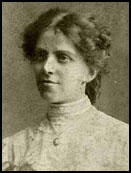
Polly Wakely was born on 1 April 1872, in Peppercombe Valley, the daughter of a ship’s carpenter. The 1891 census shows that she was in service at Chudleigh Villas, East-the-Water, Bideford. In 1893, she married Albert and as the novel shows, they set up home in Clovelly and had eight children. Barefoot on the Cobbles is Polly’s story, I hope I have done her justice.

There is no quotation from the novel today because tomorrow you can read it in its entirity for yourselves. More information about the novel can be found here. Copies will be available at various events in the weeks following the launch or can be pre-ordered from Blue Poppy Publishing or the author. Kindle editions can be pre-ordered for the UK and also on Amazon.com.

#100daysofbfotc Day 52: Jessie Kenny

Jessie Kenney 2Jessie Kenny was one of three suffragettes who played a key role in an incident that is described in Chapter 5 of Barefoot on the Cobbles. Jessie was one of twelve children; she was born on 1st April 1887, in Springhead, near Oldham and she worked in the local cotton mills. Together with her elder sister, Annie, she was inspired to take up the cause of women’s suffrage after hearing Christabel Pankhurst speak in 1905. The sisters joined the Women’s Social and Political Union. At this time Jessie was still in her teens but having learned to type at evening classes, she was soon serving the cause as secretary to Emmeline Pethick-Lawrence. A month in prison in 1908 damaged Jessie’s health, yet she continued to be active within the movement, which is how she came to be in North Devon in 1909, haranguing the Prime Minister, not for the first time.

After re-couperating in Switzerland, she reputedly had a lung condition, Jessie spent time in Paris, living with Christabel Pankhurst. She also went to Russia to help Emmeline Pankhurst mobilise Russian women to contribute to the war effort. When the First World War was over, she worked for the American Red Cross in Paris. She went to North Wales Wireless College and qualified as a ship’s radio officer, the first woman to do so however women were not allowed to take up this role. Instead she worked as a steward on cruise liners. Later she took up a post in the office of a school in Battersea. She died in Essex at the age of 98.

‘Suddenly the sharp-eyed police constable noticed the three women. Blowing his whistle and calling to his colleague, he made his way towards the suffragettes at a trot. The young ladies leapt up. With hats falling and hair flying, they headed for the cliffs. As the constable set off in pursuit, the women wisely dispersed in different directions.’

Barefoot on the Cobbles will be published on 17 November 2018. More information about the novel can be found here. Copies will be available at various events in the weeks following the launch or can be pre-ordered from Blue Poppy Publishing or the author.

#100daysofbfotc Day 35: The Western Front

Fromelles German Federal Archives This file is licensed under the Creative Commons Attribution-Share Alike 3.0 Germany license.

German Federal Archive Used under Creative Commons Attribution-Share Alike 3.0 Germany license

As a significant proportion of Barefoot on the Cobbles is set during the First World War, it needed to contain a scene from the Western Front. This was a challenge. I write by researching my characters’ geographical and emotional backgrounds, not in a vacuum. For the rest of the book, which all takes place in Devon, understanding the physical landscape, albeit with a twenty first century slant, was straightforward. Many of Barefoot’s main characters are female and although I am not a young female, I was once, so I can get inside their heads. I have never visited the battlefields, I have no experience of being on active service and I am not a young male. The thought of composing the battle scene was daunting.

I had already chosen the character, Abraham, that I would use for this part of the book and was interested to discover that he lost his life in one of the lesser known battles, a least from a British perspective (this particular battle has much higher prominence in Australian history). I had already formed an impression of Abraham’s personality but how would he respond to a war zone? I was unable to go to France while I was writing this novel but I read diaries, letters and memoirs written by those who took part in the battle. This gave me a much greater understanding of the landscape and help me to empathise with Abraham. I hope that I have created a believable character and a realistic environment. Despite having serious misgivings about my ability to think and therefore write, from the point of view of a First World War soldier, this is the chapter that I am most pleased with.

There are so many, oft used, words and phrases to describe the Western Front: horrific, damaged, muddy, bloody, terrifying, boring, a tragedy, ravaged; all those things. I think I will leave you with some words from chapter 8. ‘Across the plain where the purple clover once bloomed and the swallows used to dive, men prepared for death in a blood-stained ditch. The lurking mist that accompanied the persistent drizzle obscured the view but the deathly crumps of falling shells resounded as the wire-cutting party were sent into the abyss. From the vantage point of the higher ground, the Germans were set to defend the salient without thought for the cost in human pain.’

Barefoot on the Cobbles will be published on 17 November 2018. More information about the novel can be found here. Copies will be available at various events in the weeks following the launch or can be pre-ordered from Blue Poppy Publishing or the author.

#100daysofbfotc Day 29: Albert

Albert

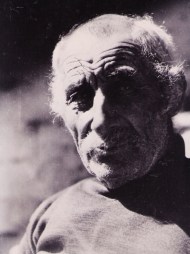
Albert allows us to view the events that occur in Barefoot on the Cobbles through masculine eyes. His reactions are very different to those of his wife, Polly. Throughout the book, the relationship between Albert and Polly develops and changes. We are introduced to Albert in the first chapter, when he is the shy young man, wondering how to approach the feisty girl from the neighbouring village. Albert’s tender relationship with his young adopted sister, Eadie, is an interesting insight into his character. He is a taciturn, hardworking fisherman, yet he has a tender side and we observe this in his interactions with his own children. It is largely through Albert that we understand the struggles of the Clovelly fishermen and the impact of a life that is circumscribed by the vagaries of the sea.

We follow Albert through the comparatively peaceful early years of his married life, then watch as tragedy touches the family. With Albert and Polly’s lives spiraling terrifyingly out of control, we find Albert desperately trying to understand his wife’s actions. As Albert strives to support Polly, we empathise with him in his impotence.

Born in Bucks Mills into a fishing family, Albert spent his married life in Clovelly. He lived until the age of ninety four and continued fishing until just a few years before his death.

‘In the bay, the herring were running and Albert and Bertie were making the most of the season, silver darlings shimmering in their nets. They would fling open the cottage door at the end of each day, bringing in the scent of the cold sea, fish scales sticking to their oiled-wool jumpers and to the backs of their scarred hands.’

Barefoot on the Cobbles will be published on 17 November 2018. More information about the novel can be found here. Copies will be available at various events in the weeks following the launch or can be pre-ordered from Blue Poppy Publishing or the author.

#100daysofbfotc Day 26: Edward Collins

Without Edward Collins’ actions Barefoot on the Cobbles would not have been written. He embodies human frailty, as do we all. His complexities are hinted at in the very brief glimpses of him that have been found in the records. He was key to my story, yet, of the main characters, he was the one about whom I could find least. As I sought to uncover a sympathetic, yet believable, motivation for his somewhat strange behaviour, a three-dimensional individual began to emerge; one who had experienced his own trauma and tragedy. Mainly due to his common surname, I was unable to contact any family members. Should they read the novel, I do hope that they feel the conclusions I have drawn from the meagre facts are not illogical. Despite the appalling, albeit largely unintentional, ramifications of his actions, I wanted the reader to be able to empathise with Edward Collins, who was, in his own way, a victim. I hope I have succeeded.

We meet Edward Collins in Clovelly, where he is staying for the benefit of his health. From the outset he is an enigma. He and his wife can clearly afford expensive hotels, what then are they doing in a small guest house on the North Devon coast? He is comfortably off, a professional, a university man. How will he interact with Clovelly’s down-to-earth fishermen?

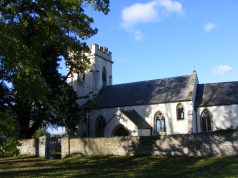
Thornfalcon Church burial place of Edward Collins

Thornfalcon Church

Edward Laurence Collins was born on 1 May 1880 in Liverpool. He gained an MA from Cambridge University and became a consulting engineer. Although I have been unable to positively identify a role for him during the First World War, I think that it is likely that he saw action in some capacity. He married Amelia Martha Hutson in 1915. It seems unlikely that the couple had any children. It also appears that his two sisters died unmarried, hence the lack of living relatives. The Collins remained in Clovelly for some time after the events described in the novel. Edward then travelled widely, probably in the course of his work, going to Gibraltar in 1926 and Chile in 1936. He had plans to live in the Channel Islands but I have no firm evidence that he did so. Edward Collins died on 17 January 1953 in Somerset and is buried in Thornfalcon Church.

‘Clovelly slept. There were no sounds from the cobbled street but the night and its attendant horrors, closed in on Edward Collins. Even eighteen months spent embraced in the village’s serenity had not banished the terrors that darkness could bring. He awoke from the recurring nightmare, shaking and sweating. Curled in a foetal position, clasping his knees, he silently sobbed.’

Barefoot on the Cobbles will be published on 17 November 2018. More information about the novel can be found here. Copies will be available at various events in the weeks following the launch or can be pre-ordered from Blue Poppy Publishing or the author.