Not actually a Family History Advent Calendar Part 9 Reports of Medical Officers of Health

Another day, another of my favourite websites. This one features in my ‘In Sickness and in Death: researching the ill-health and deaths of your ancestors’ online course. So, M is for Medical Officers of Health.

The Public Health Act of 1848 introduced the role of local Medical Officers of Health, who had to report on conditions in their own areas. Those for London boroughs from 1848-1972 are available on the Wellcome Library website. These give summaries of causes of death and report particular problems in the area. They may also mention severe weather conditions and public health problems. It is also worth seeing if any are available in the local archives that cover your ancestral areas.

For more detail about medical statistics see the Wellcombe Library Guide.

Capture

Many of the entries in this year’s advent calendar are based on my book Family Historian’s Enquire Within. I would be very grateful if anyone in the UK wanting to buy a copy would get in touch with me directly (there will be no charge for UK postage). I am trying to free up book storage space ready for novel two arriving!

Ancestral Ill-health and a bit about Books

It has been a busy week, with some fascinating family history discoveries. As some of you will know, I have been publicly somewhat scathing about the works of fiction that are strewn across the internet, purporting to be someone’s family tree. Not wishing to delve too deeply into people who die before they are born, have children at the age of two, or are allegedly living in three different countries at one and the same time, I attempt to avoid these. Occasionally there may be a nugget of usefulness of course and my recent foray on to Ancestry.co.uk did lead to a photograph of my great great grandfather’s brother. I have a picture of g-g-grandfather and there is a likeness. I also found two people whose online trees bore some resemblance to reality and I was able to offer the owners copies of family photographs. One even replied, so I guess that is a bonus.


John and Thomas Dawson

My Ancestry DNA test is currently languishing in the lab waiting to be processed. Yes, I am going to join the ranks of those irritating testees who do not have a tree on Ancestry. I have however added my ancestral surnames to my profile back sufficiently far for any fourth cousins to look for a common ancestor.

I am, as anticipated, making use of some of the original documents that can be accessed via Ancestry, notably collections from London Metropolitan Archives. It was via some workhouse admissions’ and discharge registers that I discovered that my great great aunt had been in the county asylum. Coincidentally, my ‘In Sickness and in Death: researching the ill-health and deaths of your ancestors’ students were discussing asylum records this very week and even better, one has kindly volunteered to look up some potential records about great great aunt that are not online – aren’t people lovely? Now, if any kind soul is at the London Metropolitan Archives with a spare five minutes to investigate her stay in another asylum………

The great thing about running online courses is that you learn so much from your students. You may have spotted a Facebook post from me that referred to the list of 1832 cholera epidemic victims in Manchester. The transcription of this dataset is cunningly hidden away on FindmyPast and what a gem! For the benefit of those not on Facebook, here is the entry for 16 year old Elizabeth Aspin ‘No. 177, Elizabeth Aspin, commonly called Crazy Bess, aged 16. Residence Back Parliament-street. Employment: woman of the town. Constitution: stoutish. Natural susceptibility: subject to diarrhoea after drinking. Predisposing cause: alternately starved and drunk, often sleeping in the street. Exciting cause: drunk on the Reform celebration day the day before her attack, cried passionately when Laurence was taken to the hospital. Locality, crowding, filth &c. for the locality see case 181. Dates of attack and event: seized Friday, August 10th, at 11 pm, recovered August 30th. Communication or non-communication: no known communication with Laurence nor any body else.’ Further research suggests that she was baptised in Manchester in 1817, daughter of Thomas and Ellen and that she survived the epidemic, marrying George Townley in Radcliffe, Manchester in 1836 and moving to Salford.

Advance notice of a couple of book signing/buying opportunities. I will be giving a talk about Barefoot on the Cobbles as well as selling and signing books at The Wine Box in Torquay at 2.00pm on Friday 8th November – wine and books – how can you resist? I am especially pleased about this, as part of the novel is set in Torquay. I will also be at Torrington Craft Fair on 7 December with copies of all my books. A few people have asked if they can get copies of my books at RootsTechLondon. I will have a limited number copies of Remember Then, as that is the subject of my talk but I am travelling in on public transport so will only have other titles if you ask in advance. I need to know by 9 October. I could mention that the festive season is only however many weeks away but I won’t.

Are your Ancestors Dead? – a family history post

One thing that all but our most recent ancestors have in common is that they are dead. Particularly when we first start out on our genealogical journey, we all have those ancestors hanging from our family tree who are 327 and we have not yet killed them off, in the nicest possible way. The temptation is to focus on births/baptisms and marriages, as they are more likely to progress our tree but it is vital to seek out deaths/burials as well. It is not unusual to find people constructing a tree based on someone who died at the age of two, so could not possibly have married great-granny. It is not just about when they died though; what about the how and the why. Do you know how your ancestors died, or what conditions were prevalent at the time of their deaths, or how their occupation might have impacted on their health? Do you know your byssinosis from your convulsive ergotism and which ancestor would be more likely to suffer from which?

The health problems and deaths of our ancestors are an integral part of our family’s history. Sickness was a very real fear for those who lived in past centuries, diagnosis was not straightforward and cures and preventatives could be ‘unusual’ at best and useless at worst. Illness and disease was such a fundamental part of our ancestors’ lives that we owe it to them to investigate this aspect further, if we want those ancestors to be more than just a two-dimensional name on a page. I do have a particular interest in this topic and several of my presentations cover aspects of the history of medicine. A number of you will have heard tales of my ancestors who habitually fell off (or into) things.

This is the time of year when I revisit this topic, as I am about to present my five-week online course for Pharos Teaching and Tutoring In Sickness and in Death researching the ill-health and death of your ancestors. If you think this post is some kind of convoluted advertisement, you’d be right but it is also because I feel that this is a very important but often neglected, topic. The course will help you to set your ancestors’ lives in context by looking at the illnesses, disabilities and diseases that brought about their deaths or had an effect on their well-being. It covers a variety of records that might provide information about ill-health, or causes of death for specific ancestors, or about prevalent threats to health in the past. The causes, symptoms and treatment of various illnesses are investigated in all their gory and fascinating detail and significant medical developments of the last 400 years are explored. If any of my writer friends have persevered this far, it could be great for historical novelists too. The first lesson begins on 13 August, so if you do want to fill one of the remaining spaces, don’t delay. It can all be done in your own time, from the comfort of your own keyboard, so there are no excuses. The only part that is time-prescribed is the weekly online ‘chat’. I should add that no webcams are used in this process, all you need to do is to type your comments, so you are free to join in wearing your pyjamas. The sources that are referred to are from English records, as they are what I have access to but the principals apply world-wide and you are encouraged to relate what you have learned to your own ancestors.

Advert over – normal service will resume shortly and yes, I know I have left you hanging in Cornwall – one more post to get us home soon, I promise.

Bill of Mortality

Day 5 #bfotc sources

Day five of the ‘advent calendar’ focusing on some of the historical/genealogical sources that I used in the writing of Barefoot on the Cobbles.

Capture

Dr Toye Western Times 28 January 1938

Several medical men grace the pages of the novel and in my quest to learn more about them, I came across Plarr’s Lives of the Fellows of the Royal College of Surgeons. Using their database, it is possible to search for RCS members and find details of their lives and careers. Plarr’s Lives started life as printed volumes, published between 1930 and 2005, the first of which were compiled by the then College librarian Victor Plarr. More recent obituaries have been added since. Entries vary in the amount of detail that is given and many are based on family contributions.

More information about Barefoot on the Cobbles can be found here. Copies are available at various events and at all my presentations. You can order from Blue Poppy Publishing or directly from me. Kindle editions are available for those in the UK, USA, Australasia and Canada.

Social History Book Advent Calendar Day 16 – History of Medicine

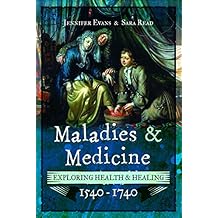
Product DetailsNow for the second offering from Sara Read, this one co-authored by Jennifer Evans. I would like to introduce you to Maladies and Medicine: exploring health and healing 1540-1740. After an introduction that explains the theories underpinning medical practices at the time, the book is arranged on an ailment by ailment basis. The authors look in turn at head complaints, abdominal maladies, whole body ailments and reproductive maladies. Each condition is discussed in terms of ‘causes’, as understood at the time, preventatives and ‘cures’. The authors have used a wide range of contemporary sources, medical treatises, letters, herbals, diaries and case notes, to help the reader understand attitudes to and treatments of, diseases and conditions in the early modern era. The book is enhanced by black and white illustrations and a bibliography of written and online sources.
This is another book that is comprehensible to the interested amateur, whilst being underpinned by serious academic research. The writing style is accessible and amusing at times, although perhaps not for the fainthearted, as historical medical treatments were not pretty. This book had obviously appeal to me in my Mistress Agnes mode and I particularly enjoyed writing the health and medicine chapters in my own Coffers, Clysters, Comfrey and Coifs and Remember Then. The former even has a medical procedure on the cover! When Maladies and Medicine hit the shelves earlier this year, I had no hesitation in adding it to the reading lists for the students on my online In Sickness and in Death – researching the ill-health and death of your ancestors course. It only doesn’t feature in Til Death us do Part: causes of death 1300-1948 (or for ebook fans) because I wrote it before Maladies and Medicine was published.

And in ordinary life, what ever that is, the great cover debate for Barefoot on the Cobbles continues. It now looks very different from yesterday’s version. Amidst addressing Christmas cards and anguishing over cover designs, I have been writing the Barefoot inquest scene and wishing there were forty eight hours in a day.

Social History Book Advent Calendar Day 7 Occupational Hazards

Product Details

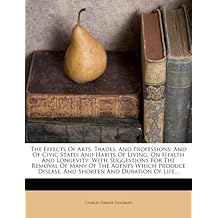
On the seventh day of Advent I offer you a little-known gem whose title is longer than some of my blogs. It is a wonderful little book, first published in 1831, entitled The Effects of the Principal Arts, Trades, and Professions, and of Civic States and Habits of Living, on Health and Longevity: with Particular Reference to the Trades and Manufactures of Leeds and Suggestions for the Removal of many of the Agents which Produce Disease, and Shorten the Duration of Life.* Ok, so it isn’t the snappiest title in the world but it is a fascinating read. The author, Charles Turner Thackrah, covers many occupations that were common as Britain entered the industrial age and warns of the possible impacts on health. Thus we learn that: ‘Cattle and Horse Dealers, leading an active life in the open air, are generally healthy, and would be almost exempt from ordinary maladies, were it not for their habit of drinking. Wet and cold would rarely produce even temporary ailment to the temperate man in an employment so conducive to vigour. Horse dealers’ grooms or riders are a sickly set of men. Their appearance indicates those diseases of the stomach and liver which result from a debauched and irregular life.’ As you can see, the author is outspoken and his opinions are not devoid of stereotypes but this does not detract from the book. Having covered nearly 150 occupations, Thackrah’s conclusions have a certain political bias, ‘The disproportion of wages is a great evil in our system. The high wages allowed in some departments induce drunkenness and improvidence; while the low wages frequently given to weavers, wool-combers, burlers, milliners, roadmen &c., prevent a supply of proper nourishment.’

I first came across this classic volume when I was working on my online course ‘In Sickness and in Death: researching the ill health and death of your ancestors’ and it is has become a firm favourite. It will also feature in my ‘Occupational Hazards’ presentation, which I will be giving at the Secret Lives conference next year. Thackrah includes occasional case studies as footnotes: ‘A K Aged 23 entered the flax mill at 11 years of age. She was six years employed in the dusty departments. … She is of low stature and of a sickly appearance; she complains of pain in the right side of the chest…. Expectorated matter is sometimes tinged with blood.’ Sorry, should have been a gore warning there – hope no one is reading this while they are having breakfast. The book is indispensable for anyone who is interested in the history of medicine or the effects of industrialisation. It is also an insight into the hazardous nature of various jobs in an age before health and safety. Its rather quaint pre-Victorian phrasing and vocabulary adds to its charm.

* The link that I have included gives the volume an abbreviated title; this is currently the cheapest option I can find. I did pay appreciably less for my copy so it may be worth waiting or shopping around.

Mistress Agnes in the News, Calibrating Cobbles and Medical Reports

It appears that Mistress Agnes, along with Master Christopher, has got herself in December’s Family Tree Magazine. I have no idea how she has achieved this as cameras were not invented in her day and even portraits were dodgy, in case your soul was stolen. I really can’t turn my back for five minutes. Rumour has it that she is off to Westward Ho! tomorrow and in Bude on Monday. People will keep asking her to tell them about her life and times and quite frankly, it just gives her big ideas. She will be insufferable.

In the process of writing my One Place Studies book I have come across this excellent website MyHomesPast. A great opportunity to upload photos of your homes past and present, as well as any pictures you might have of ancestral homes. The only drawback is that I need time to look out all those ancestral home photographs, remind me when those ten day weeks start.

I have been delving more deeply into the Clovelly fishing disaster of 1838 and have identified six possible death registrations for the victims. I’ve been restrained and only ordered three of these, now to wait and see if they are the correct ones.

Another interesting, newly discovered source are the London Medical Officer of Health Reports 1848-1972, available online from the Wellcome Institute.

I haven’t been neglecting my own One Place Studies either. Tonight I am liasing with a local theatre company in connection with a show called The Bureau of Extraordinance Survey. Apparently they ‘calibrate the cobbles, measure the mice, rotate rhubarb and weigh hey as they survey your settlement, no stone will be left unturned or leaf unlisted’ but I am none the wiser.