So today is All Hallows Eve. Amidst all the pumpkin carving and tricking and treating, I would like to think about all those who lost their lives and in some parts of the world, are still losing their lives, due to accusations of witchcraft. For the most part, these were unfortunate women (and a few men), often elderly and on the margins of society, who fell foul of the prejudices and intolerance of their neighbours. Sadly, it seems to be human nature to be wary of difference. Is this because we can only cope with threat if we believe it to come from someone ‘not like us’? Are threats are harder to bear if we feel that they come from within our own circle, whether that be geographical, racial or social? My fascination with human behaviour and the history of the marginalised, naturally led me to take a detailed look at witchcraft accusations. A general study for the chapter in Coffers, Clysters, Comfrey and Coifs led to my talk The Burning Time. The parallels between witchcraft accusations and modern bullying are powerful and to highlight these I chose to weave the story that became my novel Sins as Red as Scarlet, setting the true story of witchcraft accusations in Bideford against a strand set in 2020. As I tried to make sense of why three women from Bideford were put to death in 1682, I quickly realised that the seeds of this tragedy had roots that stretched back decades. Whilst on the subject of Sins as Red as Scarlet, I’d like to thank Hidden Branch for this lovely review. It is gratifying to realise that readers understand where I was heading with the book.
So, as you don your witch’s hat, please think about those in your own family history, or from your home area who might have suffered persecution in the past. Apart from the six women who are mentioned in my novel, to give them their real names Temperance Lloyd, Susanna Edwards, Mary Trembles, Elizabeth Caddy, Mary Beare and Grace Elliott, there are others I will be remembering. Not least is Joane Elford, acquitted of ‘laming and pining’ Alice Paynter in 1671. She is almost certainly the sister of my 9 times great-grandfather Peter Elford. I tell the story of the Elford family here but there are very few details available about Joane.
If you want to read Sins as Red as Scarlet, it is available on line but as usual, if you are in the UK, I urge you to come directly to me, to my publisher Blue Poppy Publishing or to your nearest independent bookshop. Happy Halloween.
Sorry for the long silence dear readers. It certainly hasn’t been because I have been idle. Although I am continuing to stay at home, I have been around the world virtually, Zooming into homes across the planet. I am pleased to announce that I have enough support to continue to present my ‘History Interpreter Online’ series of Zoom family and social history talks. This is deliberately a small group so we maintain a friendly, chatty atmosphere but we do have room for a few more, either as occasional visitors or ‘season ticket’ holders.
I’ll start with the exciting news. I have had the great honour of being awarded a certificate of achievement by the Society of Genealogists. These are awarded annually ‘in recognition of efforts and activities that have made some exceptional contribution to genealogy to the benefit of anyone wishing to study family history’. I know I am in some very illustrious company, so it did come as a bit of a shock. The precise citation is, ‘For long-term services to family and local history and encouraging the involvement of young people in history and heritage.’ The ‘long-term’ bit makes me feel very old but I suppose I have been seriously researching my family for 43 years so I guess it is justified! I am looking forward to the face-to-face presentation, which can hopefully take place in August next year.
Despite the ‘long-term’ research I have managed to add 9x 10x and 11x great grandparents to a branch of my tree this week so there’s always something new to discover.
Of course, it is impossible to ignore the fact that, in general, things have been on the gloomy side. Christmas, as expected, will be different this year. I had planned to visit the descendants right at the end of the school holidays, giving family members who are in school as much time as possible to develop any nasties they may have picked up. The freedom that we have to visit for five days around Christmas Day itself just doesn’t work for me, especially as we would have a 600 mile round trip to make and the world and his wife will all be travelling on the same days. It is a very long way to go to wave to your nearest and dearest from the other side of a chilly field, which is what it would mean if we went in early January. Although I would go to the ends of the earth to see my family, my head says that, having been so careful for nine months, it would be stupid to be reckless now. So, I will, regretfully, continue with my ‘just because I can doesn’t mean I should’ stance and make the most of what technology will allow.
It is, of course, that time of year when not just visiting but also seasonal gift giving is in our thoughts. Many of us are unable or unwilling to visit shops in person at the moment, so we are seeking other alternatives. Living, as I do, a distance from a shopping centre, relying largely on online shopping is the norm, although I do love the atmosphere of the shops at this time of year. I usually try to find a garden centre with displays of decorations. I am planning a swift visit to acquire a Christmas Tree but shan’t be lingering any longer than necessary. The added consideration this year is that gift purchases will need to be sent directly to the recipients or be easily postable. I am hoping to patronise as many small independent online shops and sellers as I can. If I was more talented, I would be hand-making gifts. I am also hoping that folk may want to relieve me of a few more books. I am happy to gift wrap these and send them straight to the recipient if you are looking for gift ideas. My fictional offerings are described here and for non-fiction you need to look here. I don’t charge for postage to the UK. Or you could gift a season ticket to my talks!
Zero progress on a potential new novel I’m afraid. My writing has been devoted to finishing a new course for Pharos and an article for Who Do You Think You Are? Magazine, due out next year.
The next thing to look forward to will be getting the historic decorations out of the loft.
Next week I am co-hosting a themed #Devonbookhour on Twitter, when we will be focussing on historical novels, with a special emphasis on those set in Devon and/or written by Devon writers. This begs several questions. Firstly, what constitutes an historical novel? There are probably as many definitions as there are readers of this genre. Clearly some proportion of the book has to be set in the past but how much of the book and how far in the past? Time-slip or dual time-line novels are popular; I’ve written one! I do class mine as an historical novel and in my case 75% is set in the 1600s, with the remainder in a somewhat alternative version of 2020. My own opinion and I know that others will disagree, is that more than half needs to historical for it to be an historical novel. What then is history? The Historical Novel Society stipulate that books for review should be set at least fifty years ago. I think most of us struggle to accept anything that is within our lifetimes as ‘historical’; I am just coming around to considering books set in the 1960s and 1970s, that were written more recently, as historical. There are of course many books that are set in what is now the past but are emphatically not historical novels because they were contemporary when they were written.
Historical novels come in many guises and all are valid in their own way. There are those that seem to have been written as historical novels in order to justify the swashbuckling pirate type and a woman in a corset on the cover. Sometimes there is little evidence of historical research and the plot, frequently a romance, would have worked equally well in the present. I am not intending to be disparaging here, this is a hugely popular and highly marketable, version of the historical novel, even though it would not be my personal preference.
Then there are the immaculately researched historical novels, where the historical setting is intrinsic to the plot. This category can be sub-divided into those that feature famous people, frequently royalty and those whose main characters are purely fictional. In this respect, my own books are in a minority, as they tell the true stories of real but little-known people.
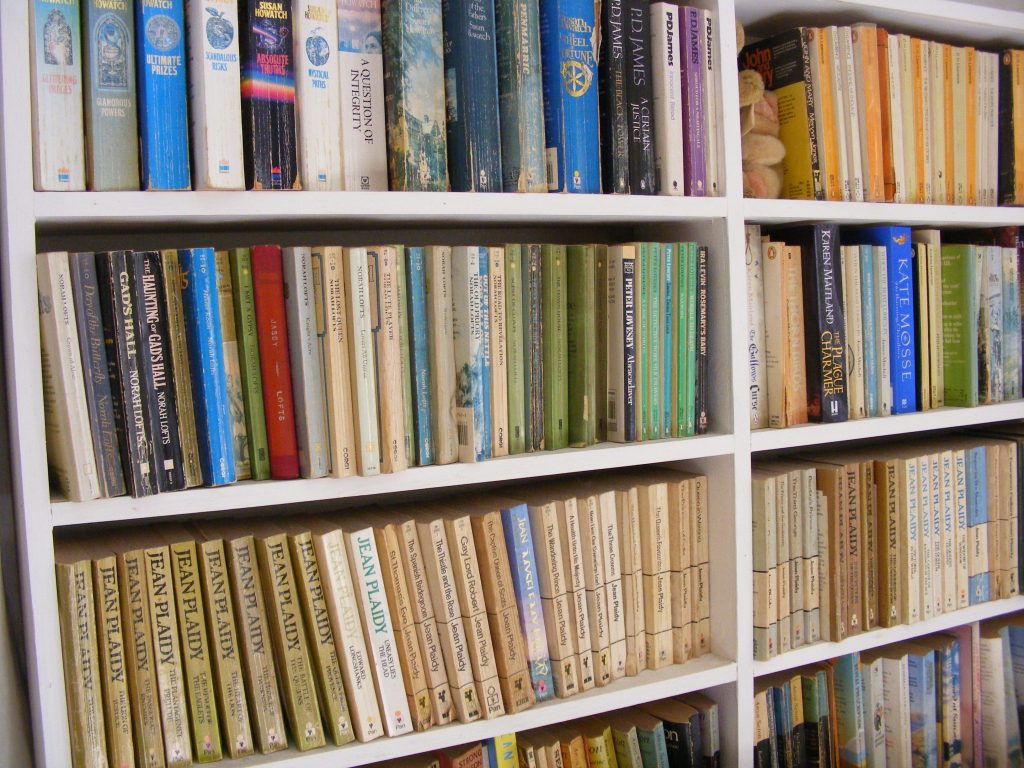
Why do people read historical fiction? Is it to learn more about the past in a digestible way, or is it because they are fascinated by history, or both? My own love of historical fiction and history blossomed concurrently. I can tell you exactly when my historical novel journey began and it did not grow out of reading children’s historical novels; I came to the likes of Rosemary Sutcliff and Cynthia Harnett as an adult. At the age of eleven I watched the film of Dragonwyck, probably on a wet Sunday afternoon, on a flickering black and white TV. I would probably struggle to sit through it now but somehow it spoke to me. I was already an avid reader, consuming up to five books a day in the school holidays. It was a diet of Enid Blyton, Malcolm Saville, Monica Dickens, Elinor M Brent-Dyer, Enid Blyton, Ruby Ferguson, The Pullen-Thompson sisters and yet more Enid Blyton? I have no idea how I realised that Dragonwyck was a book but realise I did and I quickly worked my way though Anya Seton’s entire output. I do still reread these. I then turned to Jean Plaidy. I have kept a shelf full of her books but I haven’t read one for decades. Then Norah Lofts, Cynthia Harrod-Eagles, Daphne du Maurier R.F. Delderfield and Susan Howatch were added to the repertoire. Next, inspired by the first Poldark series (despite the obvious attractions of Aiden Turner – he of the unrealistic scything – I never got into the remake) I read Winston Graham’s novels. It was fortunate that I latched on to such prolific authors. By the time I reached adulthood, I was eagerly awaiting the yearly offerings from E.V. Thompson, followed by Lindsey Davis and Susanna Gregory. I am a bit of a sucker for series, where I can follow the characters from book to book. I was looking forward to more from Ariana Franklin, when sadly, she died. You will also find Barbara Erskine and Phillippa Gregory’s non-royal fiction on my shelves.
In preparation for the Twitter event, I have looked at several ‘Best Historical Novels’ lists and these rarely contain my favourites, several of whom are now considered to be a bit outdated. Here are three such lists and from their combined suggestions I’ve probably only read a dozen.
I have attempted my own list of authors, rather than specific titles, below. Some rate a place for nostalgic reasons, rather than as a reflection of my current reading habits. I don’t go for a particular time period, my favourites span 2000 years. Although I am happy to read a book set in wartime, I am not so keen on books that focus on the battlefront. The geographical setting is also an attraction for me. I do enjoy reading about places I’ve been. I tend to favour books set in Britain, particular the west country, which is probably why I have read so few on the ‘best’ lists. Strangely, some of the best known and highly revered historical novelists do not feature on my list. I promise I have tried the likes of Hilary Mantel and C J Sansom but just couldn’t get into them. It sounds slightly ridiculous but it is partly their sheer size. Not that I mind the lots of pages thing but I tend to read in bed and believe me you do not want Wolf Hall landing on your nose when you doze off. Perhaps I should try them again as ebooks.
I have yet not mentioned the output of my many author friends, some of whom will be less widely known but whose new books I eagerly await. I do enjoy genealogical fiction and my own Sins as Red as Scarlet has a nod to this. Although these tend to fit better into the genre of crime novels, some have considerable historical content. I have already written about several of my favourites. In fact, if you check my blog archives for December 2016, I singled out an historical novelist for each day of advent.
So here are some authors whose books I have enjoyed, as well as those mentioned above. I have made no attempt at ranking here (I have gone for alphabetical order). I am sure I will have missed some, so sincere apologies if I have offended you by not giving you a mention. It may not be because I didn’t enjoy your book!
Piers Alexander
Rebecca Alexander
Kate Braithwaite
Ruth Downie
Stacey Halls
Paul Marriner
Wendy Percival
Sara Read
Liz Shakespeare
Reay Tannahill
M J Trow
Beth Underdown
Join us on Twitter on Monday 9 November 8.00pm for #Devonbookhour (except it will be an hour and a half!).
Amidst all the #100daysofbfotc blogs, it has been a while since I wrote of other things. Life has been busy; what‘s new? There have been visits to and with descendants, articles to write, courses to run and presentations to give. With All Hallows Eve in mind, my talk about Seventeenth Century Witchcraft has been requested a couple of times, always one that leads to fascinating audience discussion. Also with a seasonal flavour, my colleagues have been out and about recreating life at the time of the Great Fire of London; although I am never quite sure why schools think it is appropriate to book these sessions to coincide with Guy Fawkes Day!
On the subject of anniversaries, preparations for our parish commemoration of the centenary of Armistice day have reached fever pitch. Our village green is bedecked with knitted poppies, we have recruited volunteers to represent almost all of the 90 service personnel from the parish (and have hopes of getting the full complement before next week). Songs of the era are being sung, communal food is being prepared. Every service person has a mini-biography hidden on our history group website, ready to go live at 11am on 11 November (I hope!). I have been in to the local school to chat about Remembrance and the children have produced some wonderful art and written work. It has been four years in the making and next week, all that hard work, by many people, will come to fruition. Someone was heard to mention that next year is the 75th anniversary of D-day and should we be celebrating that? I did turn a deaf ear; someone else can organise that one!
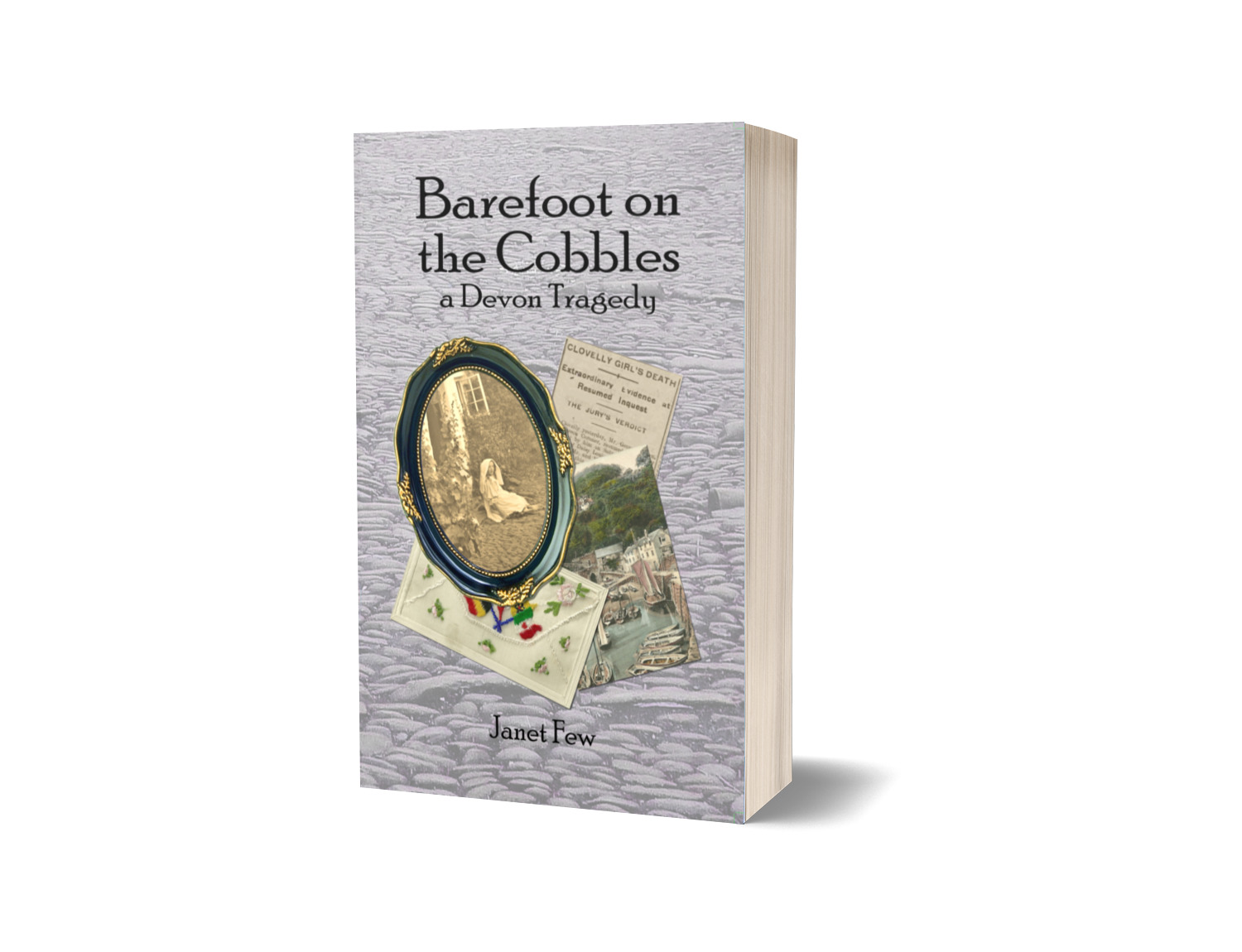
Now to my own personal excitement. Although I finished writing Barefoot in the Cobbles in March, in the few weeks I have been at home since then, the time has been spent editing and marketing. This week, I conquered the learning curve that was necessary to convert Barefoot into Kindle format. I do hope I have got it right. It looks ok to me. So, you can now pre-order copies for your electronic device here. Having said that, I am really hoping that potential readers will opt for paper copies too. There are 54 boxes of books in my very small house. I do need to sell some – please. If you are thinking of buying this book I have been harping on about for forever, please do read a bit more about it first. It won’t be to everyone’s taste and I don’t want people to be disappointed.
If you still think you might enjoy my creation, can I make a plea that you purchase a copy directly from me, either at one of my many events or other talks, or by emailing me. Alternatively, I would encourage you to order online from my lovely publisher, Blue Poppy Publishing and for the next 13 days, you get £1 off and free postage to the UK. These options deplete my stock, as would ordering from your local independent bookshop. When buying my book, or indeed any other, please make the convenient ‘buy it now’ Amazon button your last resort. It is the easiest option and if you qualify for free postage, it has great appeal. In the past, I have been as guilty as anyone of taking advantage of this immediacy. In my case and that of many other authors who are not working with major publishing houses, it means that you will get a print-on-demand, slightly inferior quality, version and that the stock pile in my house remains the same. You don’t need me to tell you where almost all of the, already very meagre, profits go in this case. The position is obviously different for overseas readers, who will need to use the links on their own versions of Amazon to avoid the horrendous postage costs. Actually, at the moment, I am still struggling to upload a version for Amazon orders of the printed copy but hopefully I will get there by launch day, another learning curve. Two weeks to go!
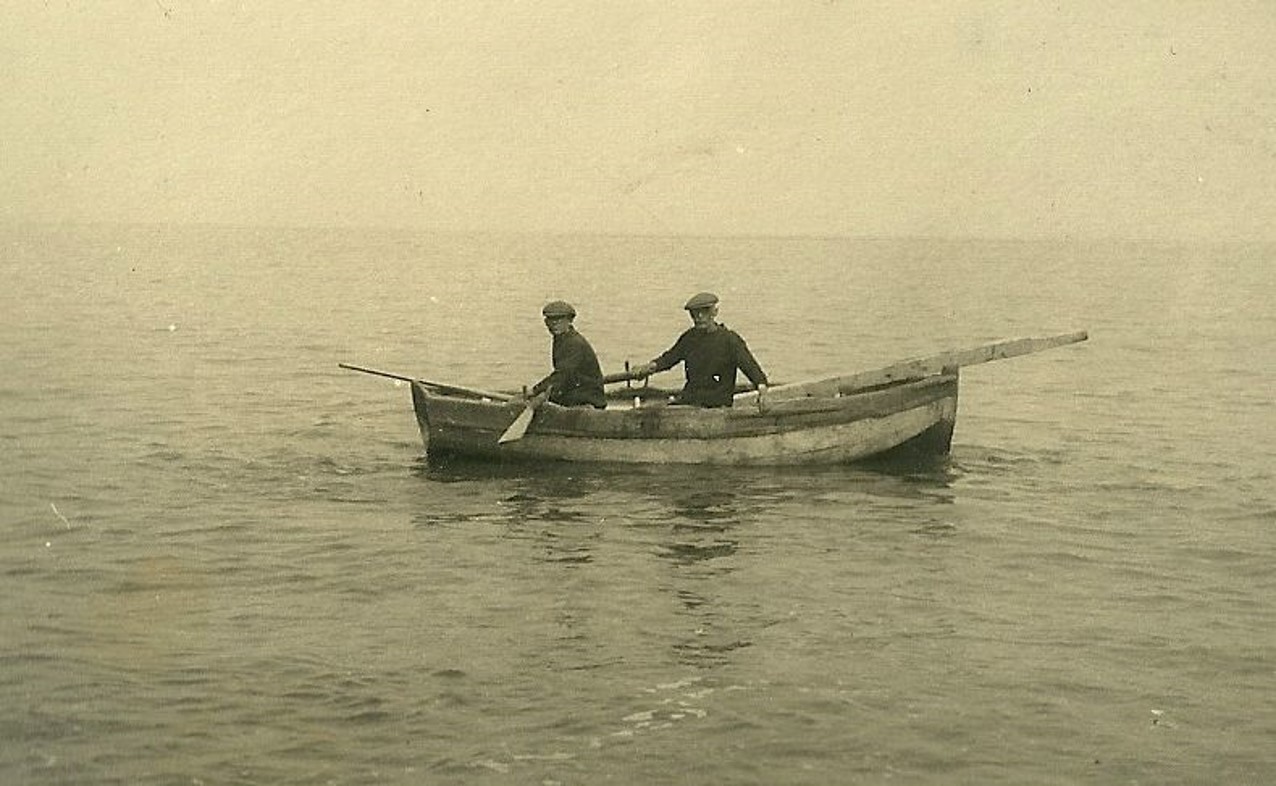
A story about a fishing community needs to include a boat builder and in Barefoot on the Cobbles it is Philip Waters from Appledore. In the novel, Polly’s father works in the Waters’ family yard and it is to Philip that Albert turns when he wants a new boat. It is said that the Waters put double ribs in the bottom of their clinker boats for additional strength.
Philip Bale Waters was born in 1863 in Appledore, into the boat building family of Edwin Waters and his wife Mary Elizabeth née Bale. Edwin was a Clovelly man, which is why the Clovelly fishermen trusted his boats. When he was a child, Philip’s family lived with his maternal grandparents at 12 Alpha Place. He did his apprenticeship in Appledore and married Harriet Williams in 1884; they had 11 children. They spent most of their married life living at 123 Irsha Street in Appledore. Philip died in 1959 at the age of 95.
‘A few more catches like this and there would be enough coins in the pot on the mantleshelf for Alb to buy a better boat. He hankered for a ledge boat, such as they used at Bucks Mills, preferring it to the heavier picarooner favoured by the Clovelly men. Polly looked up at her husband.
‘There’s nigh on three pounds ten in the pot now,’ she said. ‘You could send word to Philip Waters, over to Appledore. By the time the boat’s ready, us’ll have enough.’ ’
Barefoot on the Cobbles will be published on 17 November 2018. More information about the novel can be found here. Copies will be available at various events in the weeks following the launch or can be pre-ordered from Blue Poppy Publishing or the author.
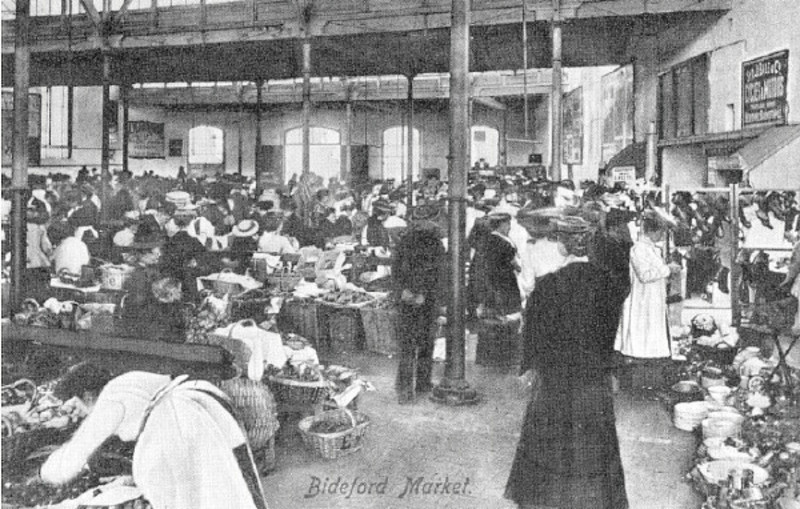
In 1891, when Polly visits Bideford Pannier Market in the second chapter of Barefoot on the Cobbles, the new market building had only been open for seven years. It replaced an earlier market on the same spot and was designed, in particular for the butchers, in a designated Butchers’ Row and fishmongers. It was also the local corn exchange. The previous market had been owned by the Lords of the Manor but as they were disinclined to improve the building, the Corporation took responsibility. Market days were Tuesdays and Saturdays and attracted many traders and shoppers from the surrounding rural villages.
The building cost the ratepayers £4200 and it opened on 15 April 1884 amidst great celebrations. The area was bedecked with garlands and there was a peal of church bells, a gun salute and a mayoral procession. Other activities including a concert, a dinner for 200 town worthies, with food provided by the nearby (and now closed) New Inn. This must have been a protracted affairs there were many loyal toasts. The North Devon Gazette gives a detailed account of the proceeding and the attendees at the dinner. Later in the week there was a tea party for 2000 children.
Bideford’s market charter dates from 1272 and the Medieval market was in a different location, at the bottom of the High Street, near the river. The panniers, that give the market its name, are the woven baskets that would be slung either side of the backs of the donkeys and pack horses who brought the produce to market.
‘Tuesday brought market day, with its feverish hubbub and bustle. From early morning, eager sellers arrived with their produce, by rail, by cart, or with panniers slung across the back of a horse or a donkey. Farmers’ wives walked to the town from the surrounding villages to sell eggs, cheese or succulent pies. The smell of the butchers’ stalls with their carcasses of meat and hanging game, caught the throats of the more fastidious. Squawking chickens in stacked crates and the shouts of the stallholders, vied with the chatter of gossiping women and the squeals of children clamouring for sweetmeats.’
Barefoot on the Cobbles will be published on 17 November 2018. More information about the novel can be found here. Copies will be available at various events in the weeks following the launch or can be pre-ordered from Blue Poppy Publishing or the author.
George Frederick Lefroy appears in the court scenes at the beginning and end of Barefoot in the Cobbles. He is the solicitor for the defence, so plays a significant role in determining the outcome of the trial.
He was born in Bristol on 15 February 1882, the son of Reverend Frederick Anthony and Henrietta Lefroy née Gurney. By 1904, George was serving with the 1st Gloucesters, Royal Garrison Artillery Volunteers as a Second Lieutenant. George married Isobel Elaine May Beaman in Eastbourne, Sussex in 1908 and had one son. In the First World War he was a Lieutenant in the Royal Field Artillery. He was invalided out and was awarded the Silver War Badge. The Lefroys lived at Orchard House, Pilton in Barnstaple and he set up in partnership with Mr Seldon. He died in 1938.
‘Mr Lefroy rearranged his papers. He wanted this strange little lady to go free and not just because it would enhance his professional reputation. He prided himself on his ability to represent and take seriously, the cases of the downtrodden and Polly was certainly that.’
Barefoot on the Cobbles will be published on 17 November 2018. More information about the novel can be found here. Copies will be available at various events in the weeks following the launch or can be pre-ordered from Blue Poppy Publishing or the author.
Eadie is another character who had to undergo a name change to avoid confusion. She appears in only three chapters, near the beginning of Barefoot on the Cobbles, yet her role is an important one. It is through Eadie that we first glimpse how Albert might react to parenthood. Her story has been handed down through the family and is told in the novel with little elaboration.
Eadie was born on 14 May 1884 into a large family, who lived in what was then called Ivy Cottage, Bucks Mills; the history of the cottage will be posted in a couple of days’ time. Her father was a fisherman, known as ‘Crumplefoot Tommy’. Her mother, Ellen, struggled to cope and when Eadie was about six, she was informally adopted by Ellen’s brother, William and his wife Mary. From that point onwards, Eadie spent her whole life living in Rose Cottage in Bucks Mills. She married her first cousin, Walter in 1908, amidst a certain amount of disapproval because of their close kinship; they were in fact cousins several times over as Eadie’s parents were also first cousins. Eadie cared for William and Mary in their old age but somehow found room for eleven children in the tiny four-roomed cottage. Walter died in 1938, when the youngest child was only eleven and Eadie died in 1955.
‘On the step of Captain Joe’s substantial house sat a weeping child, dishevelled and dirty, her tears tracked by the grubby smears on her sun-stained cheeks. A young fisherman was walking towards her, on his way up from the shore. As Albert approached, the girl’s hand scrubbed across the bottom of her nose and she sniffed heartily. The other hand failed to push her dark hair from her eyes. Her faded ribbon had long since ceased to perform its duty.’
Barefoot on the Cobbles will be published on 17 November 2018. More information about the novel can be found here. Copies will be available at various events in the weeks following the launch or can be pre-ordered from Blue Poppy Publishing or the author.
More information about Bucks Mills can be found here.
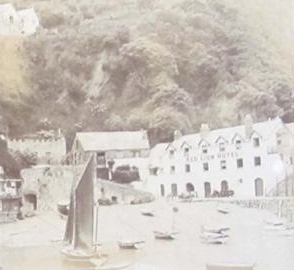
John Thomas Moss appears only obliquely in Barefoot on the Cobbles, as the proprietor of the Red Lion Hotel on Clovelly’s quayside. He was born in Clovelly on 22 October 1868, the son of John and Mary Moss née Foley and spent his childhood living at North Hill. Initially, he followed his father’s trade and went to sea. John married Lizzie Arthur Slocombe, in 1893, in Ilfracombe and the eldest of their two daughters was born there. They set up home back in Clovelly, at 15 High Street and when he came ashore, John managed the Red Lion. He died 1951.
‘The members of the Mariners’ Union repaired to The Red Lion for their repast, which would be accompanied by beer, or even whisky. The Club Room had been suitably decorated with garlands of greenery and candles for the occasion. Mr Moss’ staff were on hand to serve a roast dinner, befitting of the status of those on the top table.’
Barefoot on the Cobbles will be published on 17 November 2018. More information about the novel can be found here. Copies will be available at various events in the weeks following the launch or can be pre-ordered from Blue Poppy Publishing or the author.
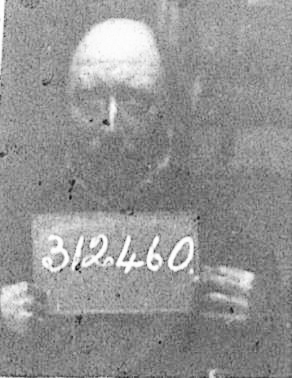
As we meet Will Harding, in the penultimate chapter ofBarefoot on the Cobbles, he is on his way home from a tour of duty on a merchant ship, just after the end of the First World War. Harding is the forgotten victim in a Clovelly tragedy whose tale is oft told. Whereas the event, which is included in the novel, acknowledges his companion, Harding’s name is not usually mentioned. It was only when researching for the book, I realised that two men were involved. I will hold my hand up to Will’s age being wrong in the novel. I could pretend that there was some valid literary reason for this but then you might ask me what that was. In my defence, Will is very vague about his age on official documents but I can’t justify why I chose to use the incorrect one.
William Robert Harding was actually born in Clovelly in 1882, son of Richard and Mary Ann Harding née Whitefield. Both families had a long seafaring tradition and Will joined the merchant service. He married Rosa Evelyn Jenn in 1903 in Cardiff and they had a son and three daughters. He served on a number of ships together with other Clovelly men.
‘Weary and apprehensive, Leonard hauled his kit bag on to the cart and hunched down next to Will Harding, an experienced sailor who looked older than his thirty four years, with weather-hewn face and prematurely balding pate hidden under a cap. Will was a family man, eager to get back to his pretty wife, his near-grown son Billy and three little girls.’
Barefoot on the Cobbles will be published on 17 November 2018. More information about the novel can be found here. Copies will be available at various events in the weeks following the launch or can be pre-ordered from Blue Poppy Publishing or the author.


 If you still think you might enjoy my creation, can I make a plea that you purchase a copy directly from me, either at
  A story about a fishing community needs to include a boat builder and in
  In 1891, when Polly visits Bideford Pannier Market in the second chapter of
  George Frederick Lefroy appears in the court scenes at the beginning and end of
  Eadie is another character who had to undergo a name change to avoid confusion. She appears in only three chapters, near the beginning of
  John Thomas Moss appears only obliquely in
  As we meet Will Harding, in the penultimate chapter of
  The History Interpreter - Janet Few