Not actually a Family History Advent Calendar Part 3

Time is short, hence no post yesterday. Oh, she will have been working away at those three writing projects she mentioned’, I hear you say. Err, well, maybe just a little. I’ve actually been wasting spending time re-assessing a longstanding (over 40 years) family history brick wall but I should really be doing other things. For those who remember the story of Mary Cardell, some progress has been made (of the three steps forward, two steps back variety) but a DNA match supports my latest hypothesis. Inevitably, said match has not responded to my message but heigh ho. To cut a long and sorry story short, I am now pretty sure that Mary had an older sister, all I have to do is confirm it and I have pretty much run out of options for this. I do need a marriage record from Worcester Archives, so if any of my readers are planning a visit ………. Watch this space for the story so far but don’t hold your breath!

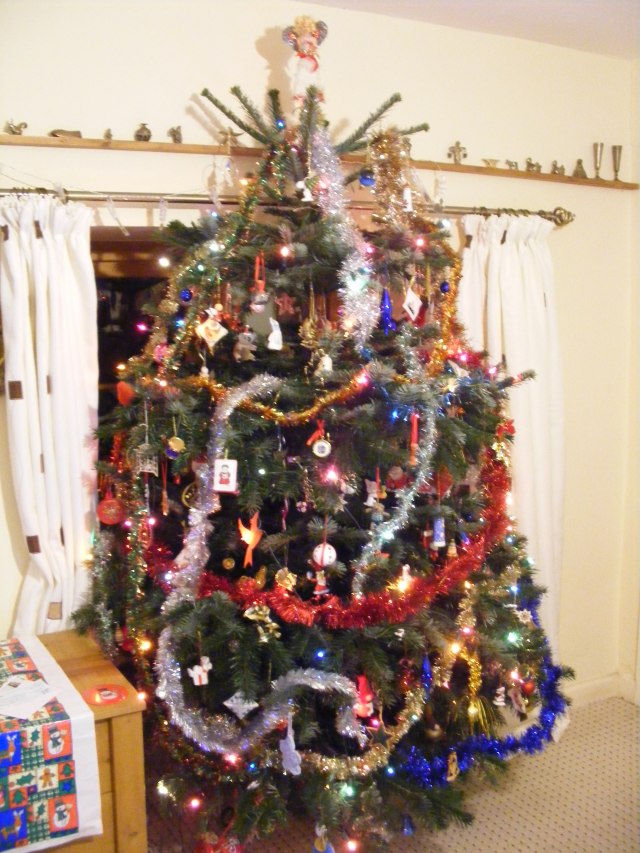
Before my alphabetical website entry, a gratuitous photograph of my Christmas tree – because I can!
DSCF0350

C is for Caribbean

All right-thinking people now view slavery as a truly appalling episode in our history but we cannot judge our ancestors by modern standards. It is also important not to air-brush out unsavoury aspects of our family’s past.

The Legacies of British Slave Ownership project have created a website and database that not only enables us to search for slave-owning ancestors but there are also maps, documents and background information available. It provides a portrait of British Slave-ownership in the Caribbean at the time slavery ended, in 1833. Some of the entries are brief, others are full of genealogical detail. Here is a particularly informative example:

‘Margaret Dunbar ye Base child of Mary Blake Born June ye 22nd was Baptized Nov 8th [1761]. By 1784 Margaret was the housekeeper of James Tierney in Kingston and pregnant with his child. James Tierney was a barrister, brother of George Tierney MP and brother-in-law of Abram Robarts MP. In his will he left Margaret £1000 and ‘all my household furniture and utensils, pictures, plate, china, linen and carriages and any one of my horses which she may choose for herself. James died in 1784 and his daughter Sabina Eleanor Tierney (q.v.) was born 15/12/1784. In Sabina’s baptism record, her mother Margaret Dunbar was recorded as ‘a free Quadroon woman’.

By 1787 Margaret had begun a longer-term relationship with Ebenezer Robertson. Their first child, Margaret, was born 13/01/1788 followed by a son, Francis William, 02/05/1789 and another daughter Mary Ann, 09/07/1790. An Act of Assembly, 10/12/1790 conferred, with certain restrictions, the privileges of whites upon the reputed kin of Nicholas Blake, deceased, planter, St Elizabeth, including Mary Blake and her descendants, who include Margaret Dunbar and her four oldest children: ‘Mary Blake of the Parish of Kingston a free mulatto woman and James Blake and John Blake free mulatto men, the reputed children of Nicholas Blake decd; late of the parish of St Elizabeth, Margaret Dunbar a free quadroon, daughter of the said Mary Blake and Sabena Eleanor Tierney, Margaret Robertson, Francis William Robertson and Mary Anne Robertson the infant children of the said Margaret Dunbar to all rights and privileges under certain restrictions.’

Many of the entries in this year’s advent calendar are based on my book Family Historian’s Enquire Within. I would be very grateful if anyone in the UK wanting to buy a copy would get in touch with me directly (there will be no charge for UK postage). I am trying to free up book storage space ready for novel two arriving!

Not actually a Family History Advent Calendar Part 2

So today has been Christmas cake-making day mark two. I was going to be restrained and only make one but when I learned that the descendants would be descending I thought a second would be in order. I don’t do cooking. The only exceptions are Christmas cake, Christmas pudding and chutney. Christmas cake making (something I’ve been doing for forty years) has a ritual of its own and this extends to the utensils that have to be used. Firstly, the mixing bowl. You can still buy bowls like this but this one was I believe a wedding present for my parents in 1947. The eggs are always cracked into a glass Snoopy mug (late 1970’s vintage), using a bone handled knife that was also a parental wedding gift. The flour is always scooped out using a plastic mug that was mine when I was a toddler. The recipe is always the same, although this year I used gluten free flour for the first time. I always add extra mixed peel. I used ground almonds instead of whole ones. There was a year when I couldn’t get ground almonds and we tried doing things to whole ones in a blender – not the greatest success! In the days when I had assistants, strict turns were taken with adding the ingredients. It still feels odd making the cakes by myself but it is part of Christmas, just like the tree.

DSCF0353.JPG

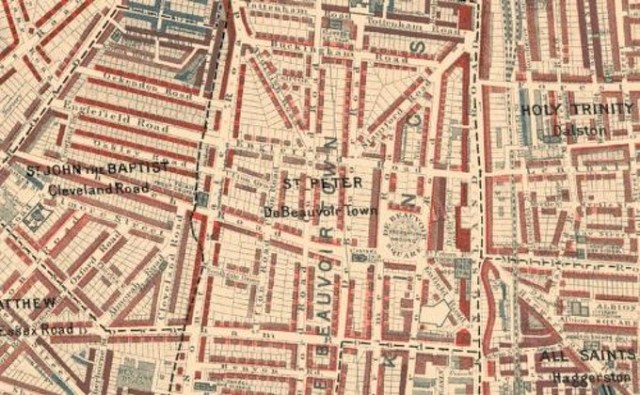
My Family History website offering for today is another London-centric one, apologies for that but I am attempting to be vaguely alphabetical. So do take a look at Booth’s Survey of London. Charles Booth was an influential social reformer and his extensive surveys of Life and Labour in London, undertaken between 1886 and 1903, created a mass of source material that can be very useful for those who have London ancestors. Even if your own family did not live in London, the conditions he described would be equally applicable to large towns and cities elsewhere. His survey investigated working conditions, poverty, migration, leisure and religion. He created a series of colour coded maps, which indicated the social class of each street. These ranged from ‘upper class’ to ‘lowest class, semi-criminal’. These maps are available online and can be searched and freely downloaded. The maps were based on his findings, which were recorded in 450 notebooks that are in the custody of the London School of Economics. Some of the notebooks are viewable on the website; consulting the remainder requires a visit to the London School of Economics’ Library. The notebooks can be searched by keyword, enabling references to particular streets to be identified.

My own ancestors owned a grocer’s and tea dealer’s shop on Kingsland Road, Hackney in the second half of the nineteenth century. From Booth’s maps I can see that it was identified as ‘middle class, well-to-do’ (makes a change for my ancestors). The notebooks tell me that ‘Kingsland Road is a first rate market street in the shopping place of the neighbourhood.’ ‘Saturday is the great marketing night’.

Picture1

From Booth’s Poverty Map http://booth.lse.ac.uk


Not actually a Family History Advent Calendar Part 1

It is beginning to look a lot like …… Decorations are up! I have been putting some of these ornaments on my trees for over fifty years and my mother for more than twenty years before that! Christmas is all about recalling old memories and making new ones; it is about family past and present. I’ll be sharing some family bits and pieces over coming weeks. For more about family associations and my Christmas tree, see my post from 2013.

DSCF0349

Some of my Christmas Tree Ornaments that date from the 1940s

As regular readers are aware, during December, I often blog an advent calendar, with twenty four vaguely history themed posts. I had decided that this year my writing time should be devoted to novel number two, which I really need to finish by the end of March, ready for a late August launch. Added to this, I have been invited to undertake three other writing projects, which I suspect will have tightish deadlines, so another reason for blog posting to take a back seat. It seems, however that my fans (believe me there is a least one) have been eagerly awaiting this year’s offering. Well, I can’t promise twenty four entries (especially as I have already missed two days) but I thought I would share some favourite family/local history websites during December. If you are feeling the advent calendar withdrawal symptoms then you can always re-read these from previous years.

2012 History of Christmas A to Z starts here

2016 Historical Novelists starts here

2017 Social History Books starts here

2018 Barefoot on the Cobbles Sources starts here

For this year though, here is the first of my family history sources, in roughly alphabetical order.

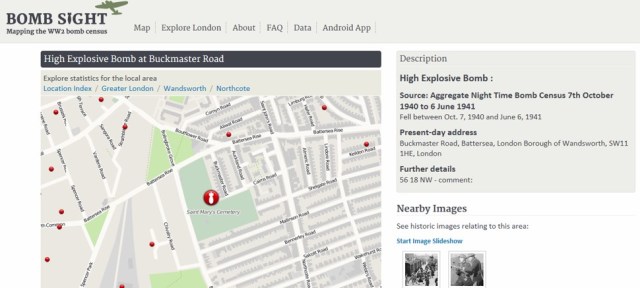
B is for Bomb Sight This site makes public maps of World War II bomb damage in London. There are maps of all incendiary devices that fell on London between 7 October 1941 and 6 June 1941. You can search by street and many incidents are accompanied by photographs or memories. See also The National Archives research guide to the Bomb Census Survey 1940-1945 that can be down loaded from their website.

Picture1

Many of the entries in this years advent calendar are based on my book Family Historian’s Enquire Within. I would be very grateful if anyone in the UK wanting to buy a copy would get in touch with me directly (there will be no charge for UK postage). I am trying to free up book storage space ready for novel two arriving!


Researching our Twentieth Century Ancestors

Until recently, I was a columnist for the In-depth Genealogist Magazine and also wrote for their blog. Now the magazine is sadly no more, contributors have been invited to re-post their blog material elsewhere, so that it is preserved. This is another post that I wrote for the magazine, which I have edited to bring it up to date.

As genealogists, we often shy away from researching our twentieth century ancestors, treating them differently from earlier generations. When we begin our quest to uncover our family’s story, the inclination is to rush backwards as far as possible, as fast as possible. Often, our knowledge reaches back to the early years of the twentieth century without us having to do any documentary research. Here are people we have known and whose personal reminiscences, memorabilia and vital records may well be in our possession, or held by close family. For some of us, there is the tendency to view the twentieth century as ‘not really history’; after all we may well have lived through half of it. Our starting point may well be a granny or great granddad who was born in 1895. Family historians will often, justifiably, comment that it is easier to research in the nineteenth century than it is the twentieth. Records that are closed to public view, families that are increasingly mobile and just sheer numbers of people, all add to the difficulties of more recent research. This means we sometimes gloss over the recent members of our family tree, relying on what the family can tell us and instead we immerse ourselves in the stories of our earlier ancestors.

If you have never really focused on your more recent relatives, I would like to encourage you to do so. This is not just about a family tree, it is about recreating your family’s lives. There is so much context that can be incorporated in to stories of ancestors who were alive between 1900 and 1950: two World Wars, the changing role of women, the Great Depression, to name but a few. If you have an English family you might add the General Strike, in Ireland the fight for Home Rule. I had great fun researching this era for my novel Barefoot on the Cobbles. This period may see your family owning a car, a camera or a radio for the first time. Can you find out what they might have seen at the cinema, listened to on the phonograph or played with as children? Fashions, communications, travel and social welfare all changed immeasurably between 1900 and 1950; how would this have affected your family?

More recent research has become more important now that our quest for DNA matches encourages us to take our trees downwards, in an attempt to identify potential 3rd and 4th cousins.

Taking time out from your quest for earlier generations, to concentrate on those from this period, can bring great benefits. Just selecting a few decades really focuses the mind and you will probably be surprised how much you can find out about these relatives, their homes and localities and the lives they may have led. There is much to help you tell that story. You may well have photographs of this period. Even if you do not have photographs of your own ancestors, there are others available to evoke the era. There will be newspaper reports that again might not name your own relatives but will tell you what was going on in their communities. Would granny have attended the church bazaar? Did granddad win the ploughing match? Would your family have been affected by the closure of a major local business? It is much more likely that you will have precise addresses for twentieth century ancestors and it is also more likely that those homes are still standing. This opens up opportunities to include photographs of those homes in your stories.

This is also a fascinating period for those with One Place Studies to focus on – get ready for the release of the 1921 census by focusing on the other documentation now!

CUE ADVERTS

For those of you with British ancestors in this period, if you feel that this is a project that you might like to try and you would welcome further guidance, the next presentation of my five week online course Discovering your British Family and Community in the Early Twentieth Century, run by Pharos Tutoring and Teaching starts in January.

Barefoot on the Cobbles – true story based in Devon 1890-1919. Available on Kindle. Unless you are outside the UK, please buy paperbacks from me (trying to make room for Christmas tree) – postage free to UK addresses. Gift giving season approaching etc.. Also available Remember Then: women’s memories of 1946-1969 and how to write your own. Ditto that think about buying from me. What else can I say, oh talks available on both books on request. Phew, that’s today’s marketing done.

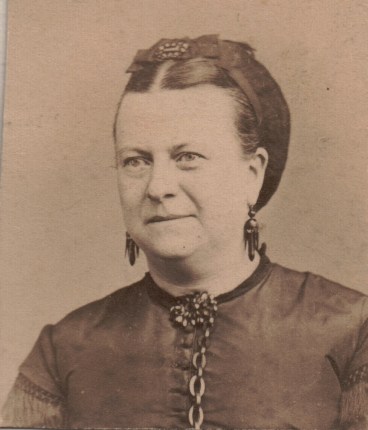
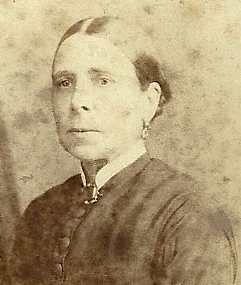
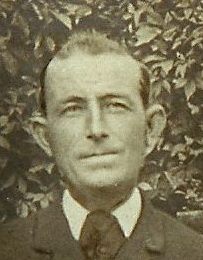
And just because I can, photos of a few of my ancestors who made it into the C20th. P.S I don’t seem to have inherited the ears!

003 Eliza Smith nee Seear 1823-1900.JPGMary Archer Dawson née Bowyer 1830-1919.jpg

Philip James Woolgar 1855-1913 c 1899.jpg

Four Favourite Sources for Researching English Ancestors in the early Twentieth Century

Until recently, I was a columnist for the In-depth Genealogist Magazine and also wrote for their blog. Now the magazine is sadly no more, contributors have been invited to re-post their blog material elsewhere, so that it is preserved. This is another post that I wrote for the magazine, which I have edited to bring it up  to date.

Regular readers will know that my historical novel Barefoot on the Cobbles is set in the early twentieth century. It is based on a true story and the sources that I used, in order to research the lives of the characters, are those that I also use for family history research. With the gift-giving season in mind, I am busy promoting it and my other books as potential present options. Sadly, many family historians do not focus on their more recent ancestors. This is a shame, especially in the era of DNA testing, when researching forwards can help us to understand our DNA matches and enable us to progress backwards.

I thought I would share my four favourite twentieth century sources. Regrettably, only one of these is universally available online. I realise that this may be frustrating for those of you who are unable to visit the relevant English archives. I am spreading the word about these fascinating record sets in the hope that raising awareness will encourage you to persuade the data-providing websites to make them part of their digitising programme, so that they can be accessible to all.

Firstly, the 1910 Valuation Office records. They are largely un-indexed and often ignored; yet their value is equal to that of a census return. The returns are arranged geographically and every property was valued, resulting in four pages of information being recorded in ‘Field Books’. Owners and occupiers’ names are given, together with details such as: when the tenancy commenced, how much rent was paid and who was responsible for repairs. Entries also include a description of the property’s construction, condition and number of rooms. The records for England and Wales are held at The National Archives (TNA), at Kew, in class IR58. The equivalent records for Scotland and Ireland are held at National Records for Scotland and The National Archives, Ireland. A research guide, Valuation Office Survey is available and reading this is highly recommended. Fortunately, the data provider The Genealogist is gradually releasing these records on their subscription website, I am eagerly awaiting the counties that are relevant to me.

Another under-used source is the National Farm Survey of 1941, which again is held at TNA. Class MAF32 includes a series of four forms relating to each land holding. These are:

  • The Farm Survey itself, completed by the surveyor, giving the names of the owner, occupier.
  • The 1941 Agricultural Census, which lists the acreage, crops and livestock on the holding.
  • The Labour and Motive Power Survey. This lists tractors and machinery but also gives information relating to tenanted land, such as the rent paid and when the tenancy began.
  • The Soft Fruit and Vegetables for Human Consumption Survey, which is particularly useful in market gardening areas.

There is a National Archives’ Research Guide, which gives further information about the Farm Survey.

The Absent Voters’ Lists are a specific kind of electoral roll. They were compiled in 1918 and 1919 to allow those who were still on active service to vote. For each individual listed, there is also information on their military service, ship, regiment, number and rank as appropriate. Surviving records are likely to be in local archives. There are further details and links to a few online lists.

Finally, a site that you can all consult and will be of interest if your family were in England during the First World War. This is the Red Cross website, which gives details of the service of all the Voluntary Aid Detachment nurses. The site allows access to the personnel records of over 90,000 volunteers, with details of the hospitals in which they served, as well as giving interesting background information.

The next presentation of my five week online course ‘Discovering your British Family and Community in the Early Twentieth Century’, run by Pharos Tutoring and Teaching, starts in January. There is still time to book if you would like to start the new genealogical research year in style. Incidentally, comments on twenty four different sources that I used when researching Barefoot on the Cobbles appeared on my blog in December 2018, so do check back in the archives for these.

Red Cross website.JPG

Image: screen shot from https://vad.redcross.org.uk

Family History and our Pets

Until recently, I was a columnist for the In-depth Genealogist Magazine and also wrote for their blog. Now the magazine is sadly no more, contributors have been invited to re-post their blog material elsewhere, so that it is preserved. This is another post that I wrote for the magazine.

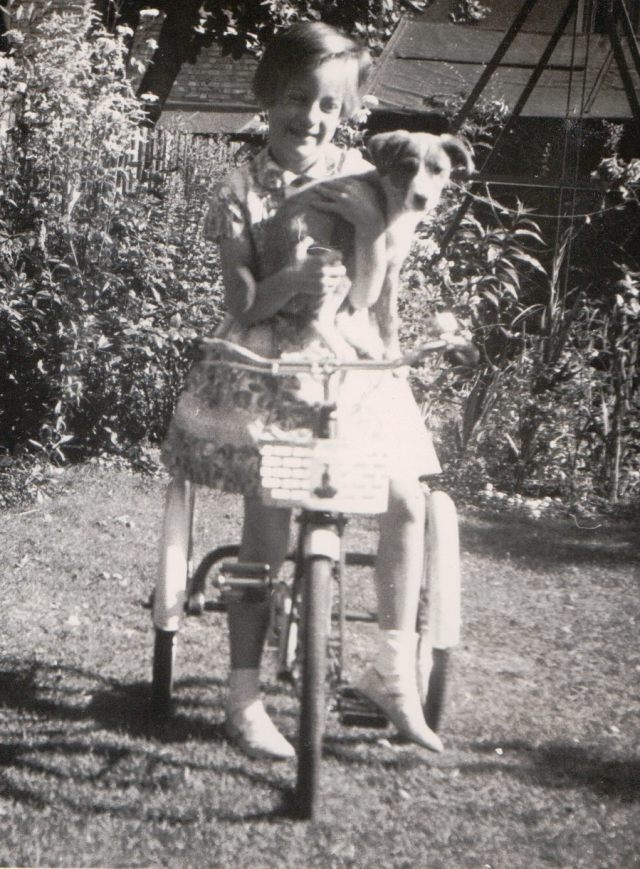
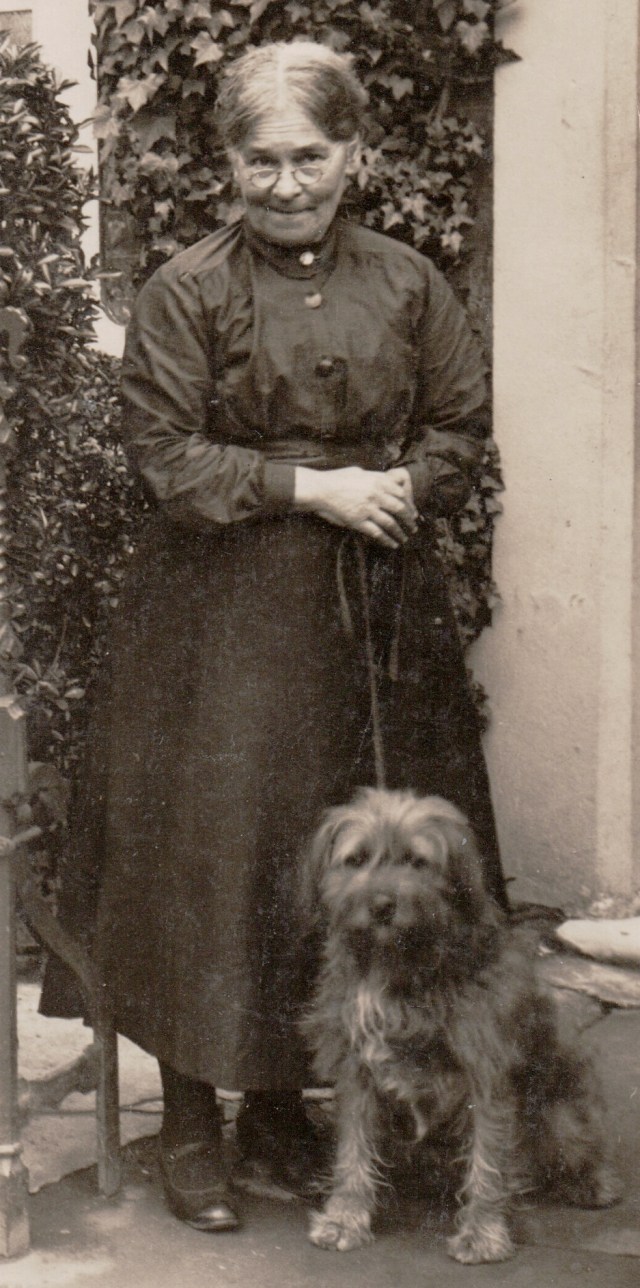
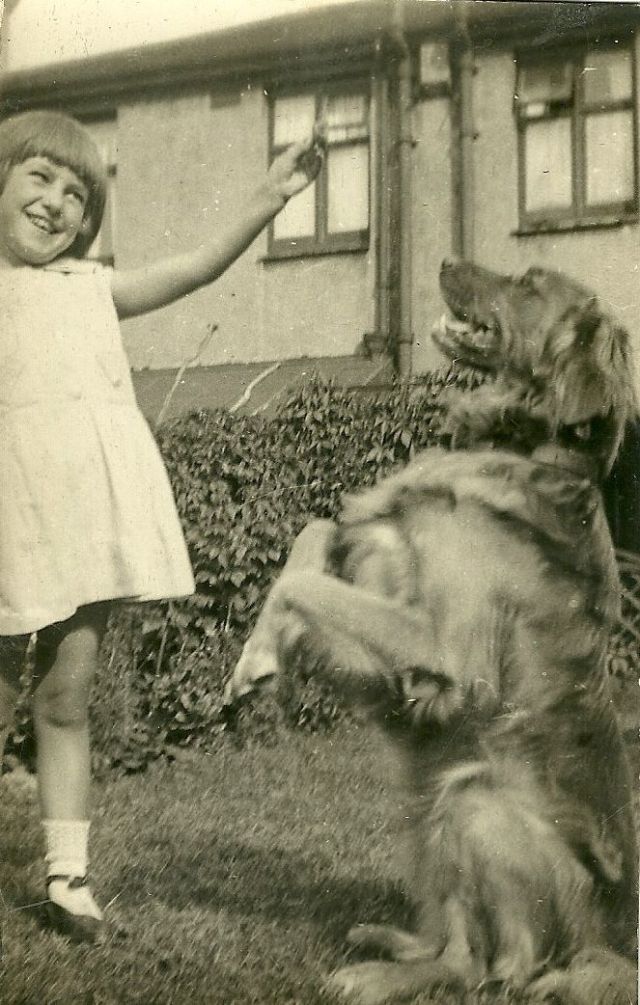
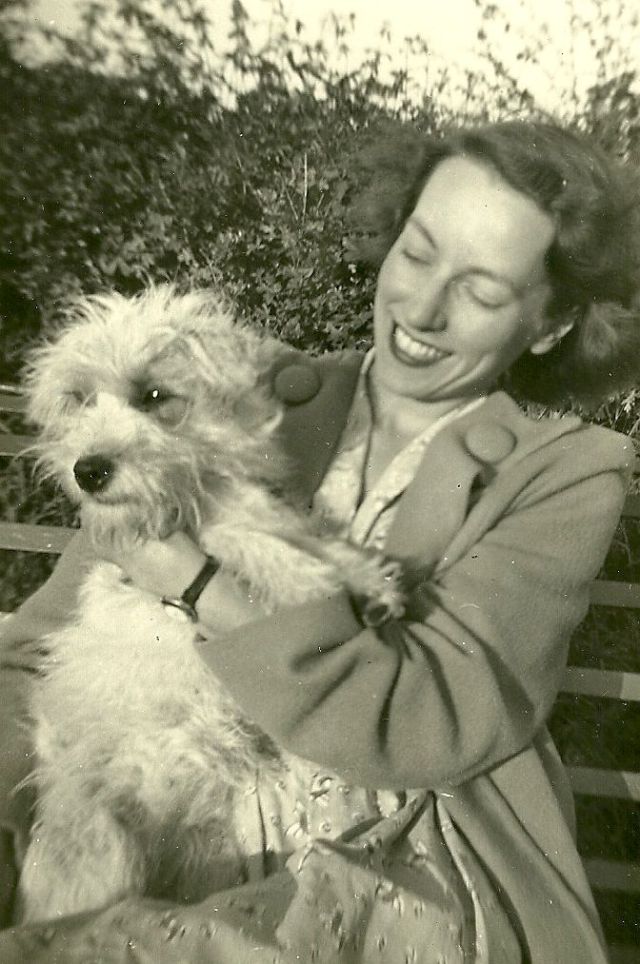
It started with a Tweet. Academics from Royal Holloway and the University of Manchester were investigating how we interacted with our pets between 1837 and 1939. As part of the project they were asking for pre-second world war photographs of family pets. I am fortunate to have a large number of photographs from my mother’s family and yes there were pets. Some of these animals I remember, although these were too recent for the purposes of the project but others lived on in family stories. Apart from the labels on the photographs, had I actually recorded the pet stories in any way? In some respects, pets are a little like those on our family tree who left no descendants, the maiden great-aunts whose stories will not be preserved unless we, the family historians, ensure that they are.

age 6.JPG

It occurred to me that we have a very special relationship with our animals but rarely do they feature in our family histories. We may have no idea about the animals that featured in the lives of our more distant family members but perhaps we should be acknowledging the existence of our own pets and those that belonged to our immediate ancestors.

Clara Woolgar nee Dawson 1858-1949 with Mephistopholes 1927.JPG

My great uncle was a serial pet owner. I have photographs of his dog Mephistopheles, so called because my uncle was performing in a choral piece of the same name at the time the dog was acquired. Like family stories that relate to people, things had become garbled in my memory. I was convinced that ‘Mef’ (imagine shouting ‘Mephistopheles’ across a park) was an Irish Setter but pictures show that he was anything but. Sadly Mef died of a heart attack when the coalman’s horse reared up suddenly and broke the front windows of the house with his hooves. Mef was replaced by a Red Setter, Dep, so called because he deputised for Mef. As a late teenager my mother had Judy the Cairn and Squibs the West Highland White Terrier. Throughout my own childhood my constant companion was Sparky the mongrel. So many memories but here is just one, we would hide under the bed together when Christmas balloons were being blown up.

Gwen and Dep c. 1933.jpg

There were occasions when we had to transport budgerigars from granny’s to home. We may only have actually done this once but it seems as if it was several times. Nor can I be sure why we were doing this, as we holidayed together. Initially granny had two budgies, Comfy and Cosy, one blue and one green, although I cannot remember which was which. To these was added the plain yellow Romeo, so called I think, because he had been found ‘roaming’. We seemed to make a habit of catching lost budgies, sneaking up behind them and rescuing them from the dangers of the wild with judicious use of a net curtain. The bird cage was put on my, by then outgrown, pushchair and covered with a blanket. I stood on the push chair step and leant forward holding the handle to stop the cage sliding off in the event of any emergency stops.

scan0015.jpg

I could go on with stories of how Nora the hamster escaped and lived in the back of the sofa for three days before recapture, or how we had to take the side panel off the bath when my daughter’s hamster made a similar bid for freedom some thirty years later. By now you have the idea, add your pet stories to other family reminiscences; man’s best friends deserve to be remembered. If you do have any pre 1939 pet photographs then get in touch with Pet Histories.

RootsTech Day 3

Another smooth journey. As we walk towards the ExpoHall we are triaged to divide us from the ComiCon attendees who are meeting in another part of the arena. We are clearly deemed to look more like family historians. That’s probably a good thing. Although we are slightly later today, we enter an almost deserted ExpoHall; pretty much just us and the explosives search dog. I begin the day listening to a lively presentation from Sylvia Valentine on workhouse records. She rightly praises Peter Higginbotham’s workhouse website.

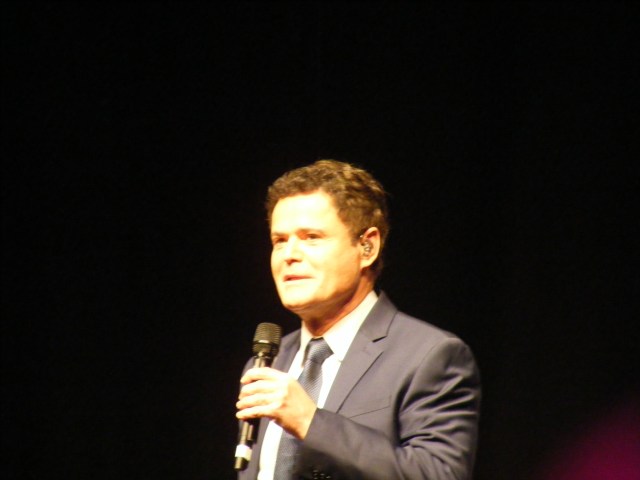
Next the much vaunted keynote by Donny Osmond. He speaks of his career with his family and his origins. Finishing with, ‘When you discover more about your ancestors, you discover more about yourself’. This time I have left the limited interviewing spaces to the die-hard fans.

DSCF0312.JPG

I follow this with a stint on the Pharos stand, encouraging people to enhance their genealogy education. I have met several of my former and present Pharos students over the three days at RootsTech; it is lovely to put faces to names. I also have the go-ahead to devise a new course. Watch this space but don’t hold your breath.

I opt for Drew Smith again, this time ‘Using an Ancestor’s FAN Club to get Past Brick Walls’, which he delivers to a capacity crowd. FAN stands for Family (or friends, depending on who you listen to), Associates and Neighbours. By investigating extended family, co-workers, school mates and others in the community, we may find clues to our own ancestors. Some FAN Club members are more likely to lead to success than others, so we should prioritise. The session ends with some interesting case studies.

Today is family day so there are many children present. It is a shame that the children’s programme does not seem to extend beyond LDS families. It is even more of a shame that the will to involve young people is not universal in the family history world. RootsTech do a great job in this regard. With this in mind, my final session is ‘Family History that won’t put your Kids to Sleep’ aka ‘Easy Ways to get your Family Involved in Family History’ by Mike Sandberg. This is based on the provision by Family Search. Suggested activities include ‘Walk Where they Walk’, ‘Touch what they Touch’, ‘Hear what they Heard’ and ‘Eat what they Ate’. He quotes, as I do in my talks on a similar subject, from Bruce Feiler’s ‘The Stories that Bind Us’.

The ExpoHall has closed during this lecture. My coat is in the hall. I have volunteered to help break-down a stand. My pass includes the words ‘Ambassador’ and ‘Speaker’. It does not include the magic word ‘Exhibitor’. It takes ten minutes and all my persuasive powers to get past security and back into the hall. The Guild of One-Name Studies stall dismantled and it is time to head back to the van. We have missed the worst of the ComiCon rush but there are still plenty of interestingly clad folk about. We crowd on to the DLR and are almost taken out by a pair of bunny ears. On the final escalator there is another incident. The up escalator is crammed. Chris is on the step in front of me, manfully carrying a box of books and therefore not holding on. The woman in front of him is wearing a large back pack. She leans back. He grabs for the rail but not before he has leaned into me. In order to avoid a domino rally of disastrous proportions, I instinctively grip harder. The sharp edge of the rubber handrail slices through my fingers. Great. I now have deep cuts filled with black rubber and neither of the two first aid kits we have with us appear to contain any antiseptic.

So, after all the build-up, it is over. I wish I could have cloned myself to hear more presentations. I am sad that I had to miss so many talks that I would have like to have heard and that I could not support all my friends who were speaking. The highlights were meeting friends, collecting the records from the MOD, giving my presentation to an appreciative audience and meeting Dan Snow and Kadeena Cox. I hope there will be another RootsTechLondon but maybe not until I’ve recovered from this one!

I seem to have been on a non-stop roller-coaster since April. These months have been book-ended by two major genealogical events, with another one in-between. It was wonderful to have played a part in all three. I have been away from home more than I’ve been there, we’ve had a wonderful genealogical cruise, family reunions, visitors, family holidays, research trips and the job we must not mention. Now I have nine talks to give in the next month and I need to prioritise finishing novel number two. I also need to seriously deplete the stock of the books I’ve already written in order to make room for the new one next autumn. The holiday season is rapidly approaching, if you want gift suggestions…….. (Unless you are outside the UK, please buy directly from me, otherwise my pile does not go down!)

Disclaimer: As a RootsTech Ambassador I receive complimentary admission to the event and a free registration to give one of my readers. My status as an Ambassador does not entitle me to any financial assistance for accommodation, travel or meals.

RootsTech Day 2

We leave a little later today and are at the station by 7.15am. As someone who lives in a village where there are two buses a week, the frequency of London public transport takes some getting used to. There was nearly an awkward train-related incident when I tried to encourage our party to get on a train bound for Cannon Street, when we are actually heading for Canning Town. Similar though eh?

Again the journey takes about an hour and I begin the day with a long chat with Pam and Paul on the Name and Place stand. This software is going to be so useful to those with One-Place Studies. My first session is Drew Smith on ‘Crowd-Sourcing your Brick Walls’, where he discusses the use of message boards, mailing lists and Facebook Groups, including the helpful Genealogy Squad, of which I am a proud member.

Excitedly, I collect my father’s world war two service records from the MOD stand. What a great idea to give us this quick turn-around opportunity – a highlight of the conference. As my father was in the RAF and the army (long story), I pick up two sets of documents; I guess this counts as BOGOF. By ordering late last night I managed to avoid the queue, which at times was 1½ hours long. Understandably this was a very popular offer.

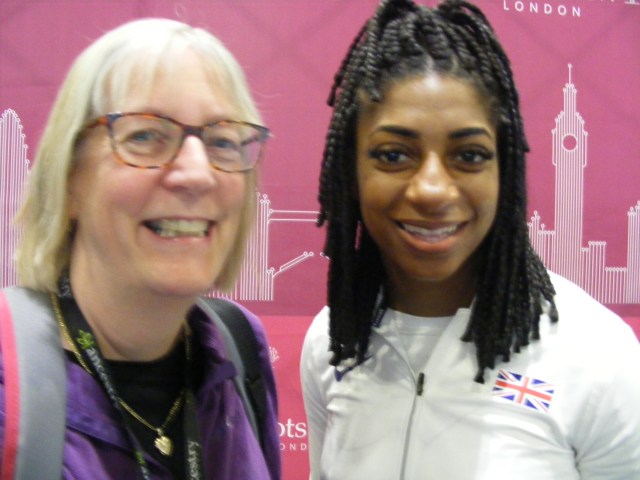
Then the keynote with Paralympian Kadeena Cox. As a follower of para-athletics I was excited to hear her story. The warm-up act was Tamsin Todd, CEO of FindMyPast. I spot that most of the presenters in the auditorium are using auto cue. Kadeena’s story of her Jamaican heritage and her own experiences overcoming her condition is one of strong family bonds and perseverance. Family Search have traced her family for her and also present her with a series of DNA kits. I am excited to have the opportunity to interview Kadeena and as the grandmother of Robot Wars’ biggest fan, I have to ask her about her experience as winner of the celebrity version. I then get to be number two in the queue for a meet and greet and autograph. I hand my camera to someone in the queue behind me; sadly their efforts are a tad fuzzy, at least of me.

DSCF0309.JPG

My next session is David Annal’s ‘My Ancestor was a Liar’. He stresses the importance of understanding the records we are using and why they were created. Then there is a Tweet-up for those of us who join in #Ancestryhour. I am an occasional attendee, as I usually remember as the hour draws to a close. Next I am able to chat to the FindMyPast officials, Tamsin Todd CEO and Ben Bennett MD. This is a very interesting hour, even though it means that I miss more lecture sessions I had hoped to attend. I comment that, exciting as all the additional records are, they are giving us lists of ‘hits’ that are becoming unmanageable. They are working to refine the search process to help with this. Also a priority is improving source citations. We learn that the 1921 census will include workplace information. We ask about the likely pricing model. They are not yet ready to announce this but it will be ‘similarish’ to that for the 1911 census and the 1939 register. I guess this means that patience will be needed before this becomes part of the subscription. We are reminded that FindMyPast are the only 1939 register provider with an ongoing programme to reveal the redacted entries. Over 5 million new individuals have been opened for view since the launch. Exciting news for Scotland is promised for the near future. We are also asked for our feedback on the event.

A slightly earlier arrival back on site today, which is much needed.

Disclaimer: As a RootsTech Ambassador I receive complimentary admission to the event and a free registration to give one of my readers. My status as an Ambassador does not entitle me to any financial assistance for accommodation, travel or meals.

RootsTech Day 1

We leave the van in the drizzly darkness that is 6.40am. We manage to not look like total rustics and click our debit cards on the yellow button at the station, in imitation of regular commuters. We change to the DLR at Woolwich Arsenal and a kind lady reassures us that we are on the correct train. Not only that but she kindly comes across to us as we are alighting to direct us to the right platform for our on-going train. Prince Regent station leads directly into the Excel, so we have arrived! There are plenty of happy smiley volunteers wearing ‘ask me anything’ tee-shirts. We can certainly ask them anything. It is day 1, they haven’t quite worked out all the answers yet. We are given bags at check-in. This is very kind but does mean that x thousand people now all have identical bags. I try and fail, to make mine look more distinctive.

The expo hall is barely stirring when we enter at 7.40am. I head to the speakers’ lounge and receive a thoughtful gift and handwritten thank you from the organising team. Then I check out the room for my talk later in the day. It is pretty cosy in the Excel. I am dressed for more Arctic climes. I move to the lecture rooms for the 9am session. A phalanx of Guild of One-Name Studies members are sitting in the back of lecture room 12. For this slot, I have chosen to listen to Myko Clelland on ‘Beyond the British Census’, a session that I have picked because I know he is a good speaker. Although I give talks myself on similar topics, I am sure there will be something new to learn and I am not wrong. We are told that the earliest surviving census is for first century China. More usefully, the Parliamentary Archives now allow a map search leading to catalogue numbers for the Protestation Returns. I am also reminded that the Welsh Tithe map is now online. Next, a really interesting discussion with Patricia and Evelyne, who run a family history society for young people in France.

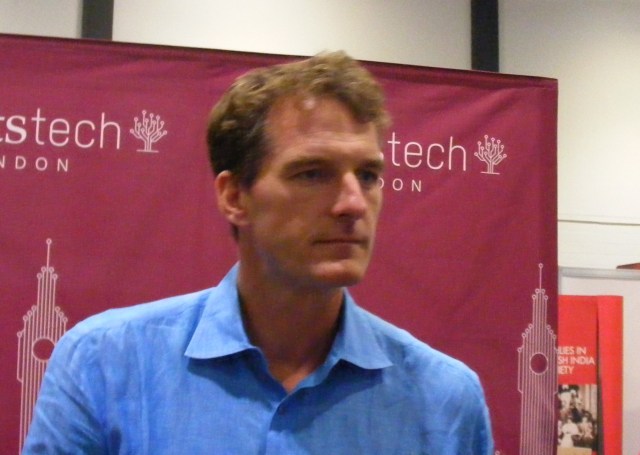
Dan Snow, the first Keynote, is introduced by show compere Nick Barrett. He tells of a wonderful childhood being immersed in history and outlines his descent from Prime Minister Lloyd George and also from a great grandfather whose blundering led to the slaughter of thousands of men on the Somme. Dan encourages us to embrace the unpalatable aspects of our family history and speculates that future generations may view some of our actions, such as our wilful destruction of the environment, with the kind of horror that we reserve for slave-owning ancestors, for example. I was then fortunate to be part of an interview panel with Dan; an opportunity that I nearly missed as it started early. I asked what he felt about history being squeezed from the school curriculum and his view was history can come from the family. I’m not going to argue with that.

DSCF0294.JPG

For the afternoon, I choose to attend Lesley Anderson’s presentation about emigration to Canada, because this is a topic that I am particularly interested in. She concentrates on sources available at Ancestry. Form 30A, Ocean Arrivals 1919-1924 sound interesting; these are also available on the Library and Archives Canada site. I follow this up with another session chosen for its content. This time, Simon Gibson, talking about ‘Engaging the younger audience through technology’. Having outlined technological advances over past decades, Simon goes on to advocate encouraging young people to use technology to interview older relatives. He then poses the question, ‘Are the traditional processes of genealogical research a hindrance to engagement (by young people)?’ The answer is undoubtably yes.

Next it is my turn to encourage people to record their own memories with my Remember Then talk. Considering I have some stiff competition from high profile speakers in other sessions, I have a good turn out and there are some lovely comments at the end. I even manage to sell a few books, leading to some more interesting conversations.

I am disappointed that the talk about Huguenot research, that I had earmarked, has had to be cancelled. By this time, the busy day is taking its toll but there is more to come as fifty or so Guild of One-Name Studies’ members forgather at The Custom House for food. Mindful of the length of our journey home, we don’t stay too long and arrive back in the van fourteen hours after we left it, longing for sleep. This is somewhat thwarted by a noisy nearby firework display. Tomorrow we get to do it all again.

Disclaimer: As a RootsTech Ambassador I receive complimentary admission to the event and a free registration to give one of my readers. My status as an Ambassador does not entitle me to any financial assistance for accommodation, travel or meals.

Ready for RootsTech

After ten lovely days with my descendants, I am hardly feeling rested in the run-up to Rootstech but I am looking forward to three days of fun, learning and meeting friends. We ensconce ourselves in a cosy caravan site some thirteen miles from the Excel Centre. Lovely though it would be to be closer to the action, this is the third major event of this kind this year and more central hotels in school holidays are prohibitively expensive. About the only downside of living in the bottom left hand corner of the country, is the cost of getting anywhere else.

We take our lives in our hands and drive in to the Excel Centre to help set up the Guild of One-Name Studies’ stand. This reinforces our resolve to drive through London as infrequently as possible. The trusty Sat-nav gets us pretty much to where we need to be. By dint of asking several high-viz clad folk, we manage to find where the appropriate entrance is. We cram the quart that is the Guild display materials into the pint pot that is our stand space. It is hard to believe that all these stands will be ready by first thing tomorrow. The excitement is certainly building.

Our journey back to the van is ‘enhanced’ by rain, darkening skies and rush hour traffic. We nearly end up in a one-hour queue for the Woolwich Ferry but thankfully manage to divert in time, in favour of the Blackwell Tunnel. After seventy five minutes, we have accomplished the journey; that’s London traffic for you. Tomorrow, the ‘delights’ of public transport.

Back in the van, I run through my talk once more and hope that I will not be performing it to one man and his dog. With so many great presentations to choose from, it is always a danger. Now to rest. I’ve no idea how folk have the stamina to include evening socialising and early morning meet-ups in their schedule every day. Alarm set for 6am, which I probably won’t need and I’m ready for the fun to  begin.

LondonBadges_640x640pxSpeaker.png

Disclaimer: As a RootsTech Ambassador I receive complimentary admission to the event and a free registration to give one of my readers. My status as an Ambassador does not entitle me to any financial assistance for accommodation, travel or meals.