One thing that all but our most recent ancestors have in common is that they are dead. Particularly when we first start out on our genealogical journey, we all have those ancestors hanging from our family tree who are 327 and we have not yet killed them off, in the nicest possible way. The temptation is to focus on births/baptisms and marriages, as they are more likely to progress our tree but it is vital to seek out deaths/burials as well. It is not unusual to find people constructing a tree based on someone who died at the age of two, so could not possibly have married great-granny. It is not just about when they died though; what about the how and the why. Do you know how your ancestors died, or what conditions were prevalent at the time of their deaths, or how their occupation might have impacted on their health? Do you know your byssinosis from your convulsive ergotism and which ancestor would be more likely to suffer from which?
The health problems and deaths of our ancestors are an integral part of our family’s history. Sickness was a very real fear for those who lived in past centuries, diagnosis was not straightforward and cures and preventatives could be ‘unusual’ at best and useless at worst. Illness and disease was such a fundamental part of our ancestors’ lives that we owe it to them to investigate this aspect further, if we want those ancestors to be more than just a two-dimensional name on a page. I do have a particular interest in this topic and several of my presentations cover aspects of the history of medicine. A number of you will have heard tales of my ancestors who habitually fell off (or into) things.
This is the time of year when I revisit this topic, as I am about to present my five-week online course for Pharos Teaching and Tutoring In Sickness and in Death researching the ill-health and death of your ancestors. If you think this post is some kind of convoluted advertisement, you’d be right but it is also because I feel that this is a very important but often neglected, topic. The course will help you to set your ancestors’ lives in context by looking at the illnesses, disabilities and diseases that brought about their deaths or had an effect on their well-being. It covers a variety of records that might provide information about ill-health, or causes of death for specific ancestors, or about prevalent threats to health in the past. The causes, symptoms and treatment of various illnesses are investigated in all their gory and fascinating detail and significant medical developments of the last 400 years are explored. If any of my writer friends have persevered this far, it could be great for historical novelists too. The first lesson begins on 13 August, so if you do want to fill one of the remaining spaces, don’t delay. It can all be done in your own time, from the comfort of your own keyboard, so there are no excuses. The only part that is time-prescribed is the weekly online ‘chat’. I should add that no webcams are used in this process, all you need to do is to type your comments, so you are free to join in wearing your pyjamas. The sources that are referred to are from English records, as they are what I have access to but the principals apply world-wide and you are encouraged to relate what you have learned to your own ancestors.
Advert over – normal service will resume shortly and yes, I know I have left you hanging in Cornwall – one more post to get us home soon, I promise.

 After a lovely time with two fifths of my descendants, I used the lacunae between Christmas and New Year to cough a great deal and revisit some family history. This was partly inspired by a recent meeting with the full range of my second cousins at the funeral of the last of my mother’s cousins. This officially makes me the oldest generation now, that is a sobering thought. I was also motivated to look at my daughters’ ancestors, in preparation for LivingDNA results for one of them. I found my own regional profile that I received from LivingDNA closely matched the documentary evidence and I have already
  In the course of working out what I was expecting, I also calculated how many of my direct ancestors I have discovered in forty two years of research. Not a bad haul for someone whose grandparents were born in the 1880s and 1890s, especially as I am 95% sure who the missing 3 3x great-grandparents are, which has a knock on effect on the totals in earlier generations. Whether I shall ever be confident enough to ‘ink these in’ is another matter.
 On the subject of self-doubt, as
 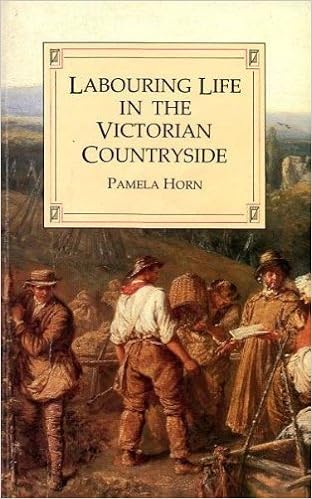 If anyone is still reading these, congratulations and I refuse to be responsible if you have succumbed to my suggestions and blown your book buying budget. Today I would like to introduce you to Pamela Horn’s
  Yes, geese are signing up for Weight-watchers in flocks as I type. I kid you not, the ‘Back to School’ shelves have not yet been cleared and the Christmas cards are on sale. For those of us in the northern hemisphere, with the dark evenings on the horizon, this means our thoughts turn to digging out our virtual or literal family history files and promising ourselves that this year we really will create some order out of the chaos that is the fruits of years/decades of research. Maybe we would like to tempt our dearest and not so nearest to take an interest in our obsession with a yuletide gift of a family history, or we would like to share family stories over turkey and tinsel. Now let’s be honest here, ‘would you like to see my spreadsheet of baptisms?’ just isn’t going to cut it. I can feel the glazed over looks from 100 paces. That fascinating story of great uncle Fred’s bigamy, or auntie Alice’s spell in jail, though, that could just raise a flicker of excitement. Even if your family is devoid of all black sheep, set their lives in the local and social historical context of their time and you could be on to a winner. ‘Did you know great-granddad was the local rat-catcher?’ ‘Granny served tripe twice a week’ or ‘Great great grandma died of cholera, did you know she would have passed 20 litres of diahorrea a day?’ (good one for the gore hungry children that) – so much more engaging than a list of names and dates. If you want some motivation then can I humbly recommend that you take a look at my five week online ‘Are you Sitting Comfortably: writing and telling your family story’ course that starts on 17 October. Details are on the
  #Daisy is making some progress. Some lovely friends have read a chapter and didn’t hate it, which was encouraging. I am currently immersing myself in suffragette activities, purely in the historical sense, though I am not adverse to a bit of banner waving. Next on the list is research into the wartime experiences of a new character who has forced his way into the narrative. This did lead to that exciting moment when your ‘based on fact’ historical novel requires you to research someone new and you find that he attended a school that has an archivist. Better still, said archivist responds to your email (written after office hours) within minutes with information and a photograph. Ok, so he wasn’t the heart throb I was hoping for but I can get round that with a minor re-write!
 The History Interpreter - Janet Few