Family History Round-up

I have been hidden down so many rabbit warrens with family history research this week that I may have grown long ears and a fluffy tail. I’m definitely in full on family history mode. I’ve attacked three major brick walls with a wrecking ball but still they stand, although in one case, I am tempted to climb over the rubble and add the ‘almost certainly my 3x great grandfather’ to my tree.

Problem one, Josiah Lamball, great unusual name you’d think wouldn’t you but no. Every last cousin for generations in and around Bampton, Oxfordshire called their child Josiah. Forget being called Lamball, let’s just throw in a Lambert or Lambeth for good measure. Definitely let’s ignore eleventy billion online trees who are convinced my Josiah descended from another specific Josiah. He didn’t. Look at the original records guys. This Josiah witnesses his father’s will with a totally different signature to the one on my Josiah’s marriage. I am pretty sure I know who his grandfather was and teeny tiny DNA matches agree but as they are all related anyway ………..

Leaving Oxfordshire (virtually) I travel to Northumberland, where I will shortly be literally, hence revisiting these branches now in case I want to add any places to my must visit list. Here, I am still frantically trying confirm my hypotheses that will take me back to my first non-English ancestor. The Elliotts first, who, lovely people, help by leaving wills. Sadly though, these rule out the strongest candidate for the father of Mary Elliott of Chollerton. I am now pinning my hopes on two wills that are not online via the wonderful North East Inheritance Database. I have taken out a second mortgage to order these from the Borthwick.

Don’t get me started on John Newlands who married Ann (Nanny) Corbit in Alwinton. Helpfully, this marriage is also recorded in the register for Oxnam in Roxburghshire, where it seems banns were called. Mortgage for Scotland’s People alert. I’ll give you that this entry says he married Bettie Corbit (Ann’s mother’s name) but it also gives the name of the farm where she lived in Alwinton, so it is the same couple. No burial record for John but I do have a photograph that I took of his gravestone. It has his age and date of death but despite all the photo manipulation in the world I can’t read it. Can I hope that it will have miraculously become legible five years further down the line when I visit? There’s even a highly likely looking baptism, naming a patterns fit etc. etc.. Those eleventy billion people with online trees of epic proportions would agree that this is the one. Except, there’s a much more plausible marriage for this John Newlands. No problem, say the eleventy billion, we will kill off wife number one so he can marry twice. Except, she is still alive, well and bearing children for the next ten years. There are no alternative likely baptisms. Could he have been ‘married’ to two women, one either side of the border at the same time? I suppose so but pretty unlikely. Firmly stuck here.

Aside from all this, I’ve been giving my ‘Researching your British Ancestors and their Communities in the early Twentieth Century’ online course a revamp ready for its next presentation. Unlike Paddy McGuinness in this week’s episode of Who Do You Think You Are? I expect you know the names of your grandparents but how much do you actually know about their lives and the communities in which they grew up? This course is a great springboard for telling the stories of those ancestors. Yes, I know my granny’s biography has been stuck in 1939 for far too long. It is on the to do list I promise. Read the story so far here. Why not join me on the course and find out more about your own grandparents? It is also a great chance for all those One-place studiers out there to focus on their places in the years 1900-1945.

Then I’ve been working on the background to Homes for ‘Fallen Women’ for A Few Forgotten Women, who will be looking at this in November. Next Friday, we are researching pupils from schools for the deaf but that’s another story. Anyway, fallen women. I was seeking a suitable case study, whose story I could record for International Day of the Girl in October. I spent literally a whole day false starting numerous girls before I found one that involves accusations of murder and four generations of illegitimacy. She’s the one!

The All About That Place excitement is hotting up and they now have a website. I have a list as long as my to do list of talks I want to listen to. Many are by friends, others will be new to me speakers with fascinating topics. My own two contributions are an Introduction to the General View of Agriculture, which I try to drag into every talk I give and Over One Under Two – the story of my straw plaiting great great grandmother Anne Stratford from Aston Clinton in Buckinghamshire. She is always up there among my favourite ancestors since I discovered that she grew up in the road where I lived for three years, although I didn’t know I had any connections to Buckinghamshire at the time. This was over forty years ago, I was still being fooled by my uncle saying they were from Cumberland! Ann will also get a mention in the online talk I am giving Women’s Lives on the Farm which is part of the Society of Genealogists ‘Was your Ancestor an Agricultural Labourer? Day There’s still time to sign up for that one.

In other matters. I now almost have shelves so I can unpack the last two post move boxes (not counting the things that live in boxes). I don’t know who needs to know this but if you move a heavy dresser there’s the likelihood that the doors won’t shut when you move it back. I have been risking fingers trying to shove bits of cardboard under one corner whilst the trusty assistant manfully lifts one corner. Dear reader, my fingers survived.
What will Family History look like in the Future?

As someone who is now in their forty sixth year of serious family history research, I have watched the family history movement grow and change (not always for the better) over many years. That growth and development will continue and so it should. We should not be content with doing things the way that they have always been done. Neither, of course, should we look to make changes just for change’s sake. The pandemic has forced changes on many aspects of our lives and the way that genealogical societies function is no exception. The past few years has, finally, seen the door to the family history community open a little wider. There is still a long way to go along the road to inclusivity but those first small steps are being taken, even if the difference may seem imperceptible.

Genealogy has, with some justification, long been perceived as a pursuit for middle-aged (ok let’s be honest here – old), middle-class, white people. This needs to change. There are ways of enabling all to engage in the hobby/obsession that many of us enjoy but it is not up to those who currently feel excluded to break down the barriers. There are things that we should all do to be more welcoming and to make the family history world more accessible and inclusive. Everyone has a heritage and no one should feel excluded from exploring their own story. It is clear that one group who have felt that the some aspects of the genealogy community have not been welcoming or accessible, are younger family historians. I know they are not the only group who have felt this but for now, let us focus on the young because without them, before long, there will be no genealogy community.

Understandably, as part of the evolutionary process of the family history movement, many young people want to pursue the search for their heritage in a different way to those of us whose journey began in the 1970s, or 1990s, or 2010s. There is an increasing focus on identity, in its many forms, on story-telling and on understanding the past as a vehicle towards well-being in the present. The genealogical world is evolving and there is the prospect of a fascinating future emerging. It won’t look like the family history world that some of us older genealogists have become comfortable with but there is room for all. Please, don’t think I am suggesting that everything needs to change. I know many were quite content with the status quo. New ways of approaching research, of running genealogical societies, of opening up the community, can sit alongside what is already in place, not necessarily replace provision that is already there.

I hope that everyone who takes family history seriously will be interested in this intriguing ‘what next?’. Your chance to glimpse the future is here. You can attend the online youth conference, organised jointly by the Society of Genealogists and the Family History Federation, on 7 May. This event showcases young presenters. There are some interesting new perspectives on family history being shared by some extremely knowledgeable speakers. The presenters are young but the conference is for everyone. There are more than twelve hours of presentations for the token amount of £1.50. It would be unbearably patronising of me to suggest that attendance was about supporting the next generation of family historians, although they would welcome that support. You will enjoy what is on offer and learn from those who are making their mark in the genealogy community. Come to hear one presentation, come to hear them all but please do register for the day. These are real-time only presentations, so no recordings but even if you can only pop in to listen to one or two, it is a bargain. I know that we will be hearing more from these young people in the future. The day is also an opportunity for programme organisers to find new speakers for meetings and conferences. There are ten presenters, all under the age of thirty, from five countries and everyone, of all ages, is encouraged to come along. It is going to be a great day. The programme is here and bookings can be made here.

Some Thoughts about Genealogical Conferences for All #GenealogyForAll

The #GenealogyForAll debate has turned to genealogical conferences and the fact that there are barriers to accessing most of these. Although the primary obstacle is deemed to be financial, this is not the only issue. Let us look first at cost. I have been instrumental in organising many family history events, both day conferences and residential conferences. I have also been heavily involved in the provision of online events. None of the events that I have helped to put on have intended to make a profit, merely to break even. Having been in circumstances where my ability to fund my family history research was severely limited, I have always been an advocate of keeping costs to participants as low as possible.

So what costs money? Let’s look at a weekend face-to-face conference. Accommodation is the biggest outlay. Cost is impacted on by the geographical convenience of the location and the facilities provided. A reasonable standard of food and accommodation is expected and the conference facilities need to be suitable, with good AV and wifi connections. A more recent consideration might be the ability to live stream the proceedings. All this is extremely costly and these charges are set to increase as inflation seems to be rapidly spiralling ever upwards at the moment. It would certainly not be unusual to be charged a four-figure daily sum for the hire of conference facilities in a central location and food and accommodation would be on top of that. More minor items on the conference organisers’ budget might include the printing of conference programmes, advertising and perhaps the provision of conference give-aways. Even the cost of conference badges has to be considered. If the conference is a commercial undertaking, which is rare in the genealogical world, there a profit margin will be added.

You may notice that the major omission in the previous paragraph is the cost of speakers. I declare an interest here. I am a speaker. When I first started teaching family history in the 1980s, when money was extremely limited in my household, I planned that what I earned would pay for the cost of my own research. I speak because I enjoy it and because I want to share my expertise but it is also a major part of the way in which I support myself. I consider that I give a professional service and that I and others like me, should receive financial recompense for this. It is a job. The fact that I happen to enjoy my job and that it overlaps with my hobby is irrelevant. For more than forty years I have done and continue to do, a great deal for the genealogical community on a voluntary basis but if I am asked to give a talk I would normally and justifiably, expect to be paid. I do occasionally speak for free for charities that I support, or for causes that I believe in and of course any talks I give for societies of which I am a trustee have to be delivered without payment.

I once organised a residential conference and a potential attendee asked if they could attend for free if they didn’t stay and didn’t want any meals; all they wanted was to listen to the talks. I gently explained that meals and accommodation were not the only costs and that speakers’ fees and travelling expenses were a significant part of the conference fee that we were charging. On that occasion, we were offering anyone who volunteered to help chair or steward a session, free attendance at that particular lecture and this is what I offered. I absolutely believe that speakers should be properly paid and not just because I am one. Like many aspects of the creative industries, working for ‘the exposure’ is not something that should be expected or tolerated. I cannot pay my bills with exposures. Some speakers, myself included, will occasionally offer to be paid in kind, giving a talk in exchange for free attendance at the remaining lectures that form the event but this should not be expected nor regarded as the norm.

Sometimes, people look at a speaker’s charges and the reaction is, ‘that’s a lot for an hour’s work’.  Giving a talk of an hour’s duration is absolutely not an hour’s work. The talk has to be researched and the presentation put together, which could easily take several days. A good speaker will always run through a talk beforehand, every time that they give it. Handouts have to be checked to ensure that information is current and links are not broken. There is also the time taken to travel to a conference to be taken into consideration.

Most genealogy speakers are in fact quite poorly paid compared to speakers in other fields. I was once invited to join a list of public speakers who covered a full range of topics. I was told that I was charging far too little, I wouldn’t be taken seriously if that was all I asked for and that I needed to make my fee at least twice as much. I explained that I knew my market and the sum suggested would be prohibitive for my potential audience. I was put on that list (now discontinued) at my requested rate and only ever got one speaker request as a result.

Online conferences can often be staged with fewer overheads. Here an element of the cost is the platform through which the conference is delivered. This can be achieved via something like Zoom, relatively cheaply but if you require anything more sophisticated, such as you might expect at major events, then the web-development charges are significant. Even at a simple online event, there are still speaker fees to be paid, although you save on travel costs.

I know that the costs of conference attendance are prohibitive for many. By the time you add on travel to a venue, the cost of a weekend face-to-face conference is approaching that of a week’s package holiday to a foreign destination for a UK resident. One way to help to make these events more affordable, is to offer a day delegate rate. This is an option that I often go for, staying in a touring caravan to reduce the expense. It does mean that I miss out on some of the social experience but at least I can attend. I am fortunate, this is affordable for me but it won’t be for others. The ‘going’ day attendee rate at genealogy conferences seems to be about £75. Yes, this includes lunch but it is still far more than many can justify.

Of course, we should accept that having a hobby costs money and that little in life is free but that doesn’t mean that we shouldn’t take steps to mitigate matters for those whose participation is limited by the cost of events.

So what is the solution? I am not sure that I know. Some organisations have the wherewithal to provide free virtual conferences, of which RootsTech in March is a prime example and incidentally well worth registering for. Anyone who has ever complained that conferences are too expensive should take the opportunity to attend this one. You have access to the presentations long after the duration of the event. In general though, this is not a viable economic model. Although many genealogical societies are charities, it does not mean that they can afford to stage major events at no charge to participants. What most societies do do, is offer a comprehensive programme of lectures to members, many of which are now presented online. A year’s membership fee of £20 or less might be much less prohibitive than a conference fee and of course society membership offers far more benefits than just the lecture programme. Some societies allow non-members to attend their lectures without charge. It is definitely worth looking at the societies that cover your areas of interest to see if this is the case.

Perhaps an option might be sponsorship, although sponsorship is harder to come by than it used to be and securing it is a time-consuming and thankless task. This could be sponsorship of a whole conference, a lecture, or perhaps sponsorship of an attendee. Maybe local societies could offer a number of free places at an otherwise paid for event, to those who find cost a barrier. How those free places were allocated would be up to the event organiser.

Cost is not the only impediment. Geographical access to face-to-face events is an issue. Caring responsibilities also prevent people from attending, as does disability access. On balance, it seems that there are fewer barriers to participating in an online event but for some the availability of adequate wifi, or the lack of a device will prevent them joining in. Another barrier, which is a whole topic in itself, is how welcoming these events are. There are those who find attending such events a social challenge, for a variety of reasons. We need to make potential attendees feel comfortable about being part of an event.

It will never be perfect. Nothing can ever be fully accessible to all in every respect. There will always be events that are inaccessible. Nonetheless, we can and should do what we can to be more inclusive, to offer a variety, so that there may be something that suits and to open up the opportunity to attend genealogy events to as many people as possible.

Mostly about going Virtual – Isolation day 93

With all the awfulness that is going on at the moment, I am sure this should be a deep and meaningful commentary on current affairs. It isn’t. Not because I don’t feel strongly about things. Not because I don’t care. I am an historian. I should have something to say. Not least about what some claim is the erasing of our history. Indeed I do have thoughts and opinions, it is just that they are not yet fully formed and putting them into words requires more emotional energy that I have at the moment. So I am sorry if this seems a bit like I am burying my head in the sand and ignoring world events but just for now, I am retreating back into the everyday, whilst I process everything.

There haven’t been many posts lately because, to be honest, most things are just jogging along in much the same way as they have for the past few weeks. The weather has turned a bit and the garden has reached a plateau. Plenty of baby blue tits to watch but not much else to report. So far, the relaxing of lockdown restrictions has not made any difference to my life, so I remain here in my own little world, making contact online. I have been invited to do several online presentations and have attended a lovely school reunion and several Devon Family History Society meetings. I took part in Crediton Literary Festival, talking about Remember Then, which was fun and there is also a YouTube video of me, with a very croaky hay fever voice, reading from Barefoot on the Cobbles. I will be reading for Exeter Authors’ Coffee Time Sessions on Thursday at 12. I have decided to run my own series of family/social/local history lectures, as well as provide a four week continuation of the family history course that I ran for Crediton library. There are still spaces if anyone is interested in any of these.

Tomorrow is the cover/title reveal for novel #2; so anyone who has been waiting for more news will learn more of what it contains. I am attempting to read some extracts from the book at 11am via Facebook Live. That’s another whole new learning curve. Now to create my ‘set’, which so far involves some red material, a sprig of bay and a noose …….hmmmm.

Capture

Books, Games and 34 years of Family History Teaching – Isolation Day 42

So, in the week when we saw the leader of the free world advocate drinking bleach (here is a tip – don’t) what has been going on in the bottom left hand corner of England? The days roll on but today, after two years and 80,691 words, I think I might just have ‘finished’ novel number two. Of course, ‘finished’ doesn’t actually mean finished at all. Now comes all the hard work of editing, tweaking, lurching between being quite pleased with it and thinking it is all total rubbish. It is a sense of achievement nonetheless. I have also seen the first rough ideas for the cover, which is very exciting. I will now reveal that the sub-plot involves a character undertaking genealogical research. I was heard to say that there probably wouldn’t be a novel three but I have just bought a book that might help with a germ of an idea.

I have been updating my beginners’ family history course, ready for presenting it online to a full group, organised by Crediton Library in May, which is apparently Family History Month. I am still struggling with days of the week. Please don’t expect me to remember month names, let alone special designations for those months. It was a bit of a shock to realise that I taught my first family history course thirty four years ago. Techniques and methods of accessing records have changed beyond all recognition since then. The sources and the excitement are unchanged however. My early courses were illustrated with large posters and overhead projector acetates. I advocated, purchasing International Reply Coupons (remember those) and wearing skirts in case you offended an elderly relative that you were interviewing (that was the women of course). Now I am that elderly relative! Online databases and DNA tests were the stuff of science fiction. I am not convinced that it has all been change for the better. I miss the meticulous research that has, in all too many cases, been replaced with a grab it all quick and never mind checking to see if it is plausible, let alone true, attitude. Of course, many modern researcher are scrupulous about verifying the evidence and citing sources and long may that continue. In comparison to those days in the 1980s, so much can be done from the comfort of home and with luck, reasonable trees can be built in months not decades.

On the family front, we have tried playing Monopoly online. It was not an unqualified success. To begin with, neither party had traditional Monopoly. Well I had a traditional board but couldn’t find the corresponding cards and money. So I was using the deluxe version, with renamed streets and allowances for inflation and my opponents had a superheroes Monopoly. ‘I’ve bought Thor’. ‘Where’s that?’ ‘Regent Street.’ ‘I don’t have a Regent Street’. ‘Third green one along’. It was a laugh a minute and I was swiftly bankrupted.

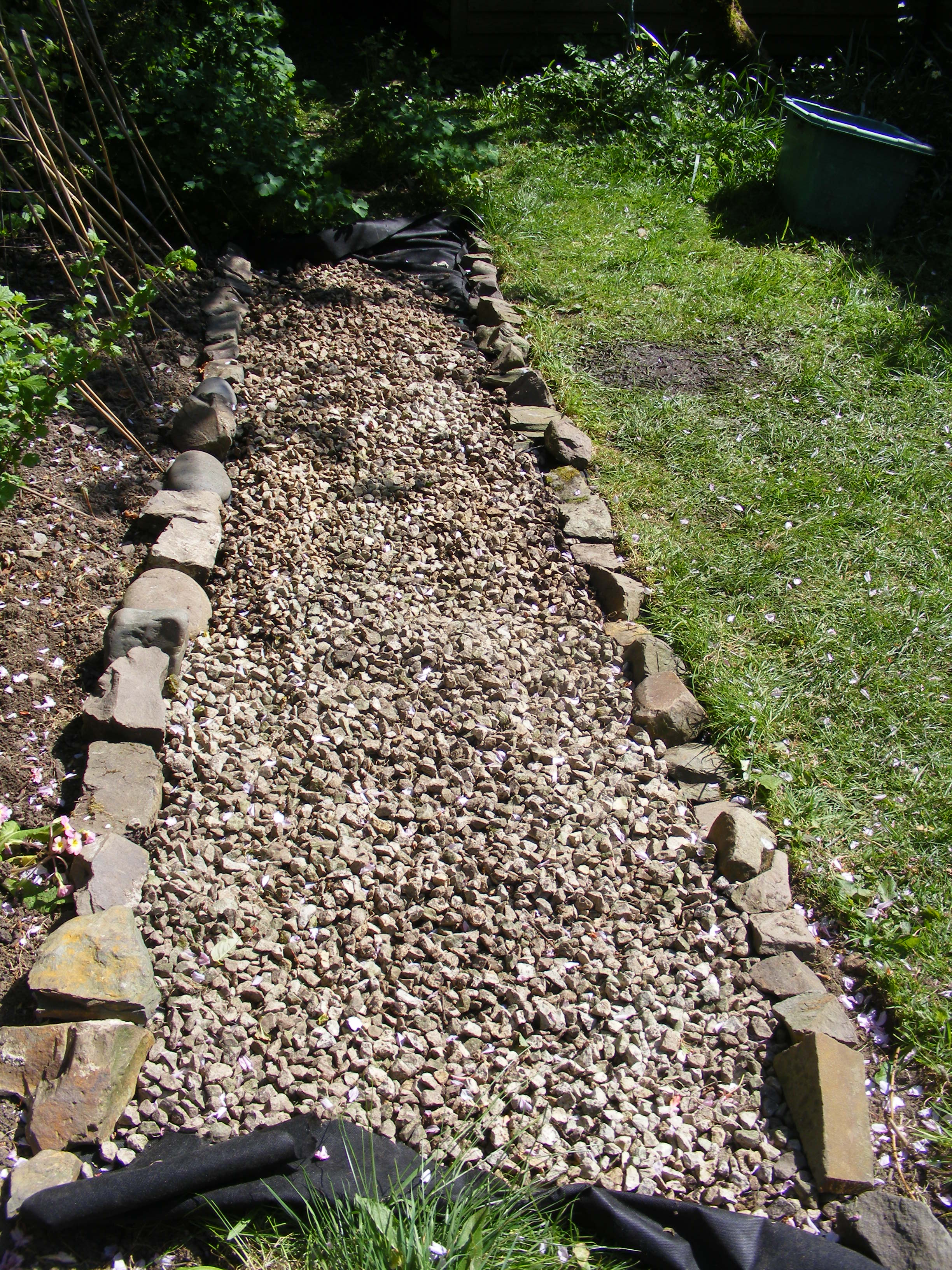
The garden has come on apace. We now have a fully re-instated path, well the weed inhibitor is laid but we will have to wait until replacement chippings are available. We have recycled as many old chippings as possible but the new path is longer than the old path and many of the original chippings have long since disappeared.

DSCF0533

I am gearing myself up for tomorrow’s #twopointsixchallenge when, in lieu of a marathon that I was never going to run, I will be doing a 26 minute workout, 26 minutes of gardening and offer 26 people the opportunity to have 2.6 hours of genealogical research in return for a donation to my chosen charity. I have not yet reached 26 takers for this so there is still time – I will give you until midnight my time on 26 April.

Stay safe – until next time.

Zooming About – Isolation Day 29

There has not been a post for a while because, let’s face it, one day is pretty much like another. Day whatever it is (29 apparently) of staying at home and I am beginning to wonder how I ever found time to go out. Thankfully, I am gradually finding that I am getting a few things done now but I do still have 52 things on my ‘before the end of April’ list (like that’s going to happen). Sadly, there are a few more that haven’t even made it to the list.

So, what have I been up to since we last met? I have joined in with the millions (literally) around the world who do daily PE with Joe Wicks. Not for me the namby-pamby seniors’ workouts, oh no, this is the full on half an hour school PE session. Yes, I am probably certifiable. I should explain that, although we do walk a fair bit on holiday, I am not really an exercise sort of a person. I have never been to a gym, or for a run [edit – I have been reminded that once a year for getting on for twenty years, I have indeed run 5k as part of Race for Life – for which I have done zero training] and my idea of a successful school PE lesson was to hide my kit sufficiently well to be told to tidy the PE store. After day three of the enthusiastic Joe I could barely move. I persevered. I can now grit my teeth, get to the end and not feel any adverse effects. I am treating this a bit like essential medicine. Genetics mean that I am already at higher than average risk were I to catch COVID-19, so I really do owe it to myself to try and put my slightly dodgy heart and my lungs in the best possible shape in case I do succumb. I do still feel like the whole thing is a bit of a penance though.

Zoom has taken over my life. There were several meetings last week, including chatting to nearly 100 genealogists, predominantly from Australia and New Zealand and writers’ group get togethers. Having climbed the Zoom learning curve, I have now arranged to take two sets of regular family/local history meetings online and organised a virtual two day one-name society reunion for May. I’ll let you know how it goes.

The garden has been duly attacked. Of the ancient seeds I planted a couple of weeks ago, only one sort has germinated. I now have a glut of woad. Hmm, that will come in useful if we are inside long enough to run out of clothes. Actually, outgrowing them is probably more likely, despite Joe. Some new flowers and veg seeds have also been planted. I don’t really have sufficient room but fingers crossed. The trees are coming into blossom and there are blue tits (one of whom thinks it is a woodpecker – long story) and sparrows in the nesting boxes. It is a positive aspect of being at home that I can see the garden at the nicest time of year.

DSCF0507

We had another family sock wearing meet up, lobsters .v. Amelia Earhart and the grandchildren have been showing me their Easter gifts. One of our number had to confess to not having his socks accessible but we managed to include him using the wonders of technology. It is surprisingly difficult to photograph your own feet – especially when they are hovering in front of a laptop.

The NHS clapping in our village gets louder each week. This week I broke out the replica C17th drum in order to join in.

Drum

The piano is progressing, the Cornish not so much. I have very very very nearly finished novel number two. I estimate there will be about another 2000 words to go. Then for the edits. Today’s clue is that it includes the (true) story of an errant clergyman with a chequered past.

Happy Easter!

Of all Things New: presentations, courses, books and more

New year, new things on the horizon. Here is just a selection. Last week I spent a very interesting day at the headquarters of Family Tree Magazine, filming two presentations for their downloadable content. Despite the fact that I am used to presenting, it is actually very difficult to talk for nearly an hour (x2) with no audience participation, no hesitation, deviation, umms and ahhs, coughs, pauses to swig gin etc.. The presentations will be available in a month or two. One is on tracing twentieth century English ancestry and the other on pauper ancestors.

Whilst on the subject of Twentieth Century ancestry, my online course for Pharos begins in a couple of weeks and is filling up fast, book now to avoid disappointment and all that. I am also preparing two new online courses, which will be available through Pharos. There will be an introductory one-place studies course, which will begin in September (ok, so that isn’t written yet either). The previous course, run by Celia Heritage, is no longer available, as Celia has other commitments. This one will be a brand new; I have deliberately not looked at Celia’s version. A course to help those tracing Agricultural Labouring Ancestors is planned for 2021. I also have a new presentation on the same topic, Sons of the Soil, which will premiere at Dorset Family History Day  in March. Err, no, that isn’t written yet either.

Back to one-place studies for a minute. Putting your Ancestors in their Place is now very nearly out of print. I am preparing a new booklet, which will have a rather different approach and a more international feel. It will also be available for Kindle, which I hope will be popular. With luck, that may be ready for THE Genealogy Show in June and yes, you’ve guessed it, not actually written yet. Add to this the book that I may need to write in connection with the job I must not mention and there are no prizes for guessing what I shall be doing over the next few months.

Deepest Darkest Devon

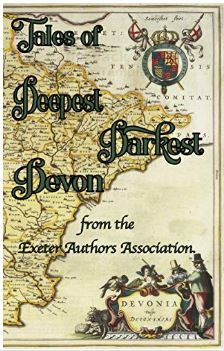
And now for something completely different, something that is actually written! Hurrah! Exeter Authors Association of which I am very much an inactive member, have produced an anthology of short stories with a Devonian slant, Tales of Deepest Darkest Devon. I am not by nature a short story writer but one of mine (ok the only one of mine) Brought to Book is in that collection. If you enjoyed Barefoot it is similar in style and based on a true story that took place in Devon in the 1820s and 1830s. You also get to read all the varied and fascinating contributions by other local authors. Priced at £4.99, it is due for publication on 31 March and is currently available in Kindle format only. It can be pre-ordered now here. Part of the proceeds will be donated to Devon Air Ambulance Trust.

My next novel is due to be launched on 29th August, ok, so there is the small matter of a third of it still to be written (have you spotted a theme here?) – that’s a mere detail. Advance notice that I will not be creating a millstone round my neck and writing 100 blog entries about the characters and locations as I did for Barefoot but I will be drip-feeding some hints and teasers in my blog posts in the meantime. #1 It is, like Barefoot, based on a true story. So, stand by, there will be more and a title reveal is imminent (when I have decided what it is to be that is!).

Whilst I look forward to these excitements, my thoughts are with my many Australian friends and the appalling fires that are currently threatening their homes and families. On a more positive note, it is exciting to see that several of my favourite genealogy presenters will be participating in Family History Down-under in March 2021. I think that it is very unlikely that I will be able to attend but if you live nearer than half a world away (or even if you don’t) this is going to be a major event on the genealogy calendar.

New Year – New Resolutions: telling your family’s story

As one year comes to an end and another looms on the horizon we often have wonderful intentions about where the next year will take us. Sometimes we make commitments that relate to our health or long overdue tasks. As genealogists, we might make research plans for the forthcoming twelve months. Meeting with relatives over the holiday season might have reawakened enthusiasm for investigating a particular branch of the family. One thing that all too many of us continually put off is the task that we label ‘writing it up’. One day we will put all this in some sort of coherent order for our nearest and dearest. We just want to kill off auntie Annie/get back one more generation/prove that family rumour first. In short, we want to ‘finish’ our research but as all but the most naïve genealogists know, the day that we finish our research never comes.

Why then are we putting off the dreaded ‘writing it up’? Some feel that their online tree, plus rigorous source citations, is a finished product in itself. Ask yourself though how appealing this is to non-genealogist family members. You are much more likely to spark their interest with stories, with context. To make your family into three dimensional characters, you need to think about the local and social historical background to their lives.

Drawing of Janet

My father’s portrait of me, aged about 4

Many of us, especially if we have been researching for years, just put ‘writing it up’ very firmly in the ‘too hard’ basket and screw down the lid. It is true that it can be a daunting task but it is one that should be tackled, sooner rather than later. To begin with, ‘writing it up’ doesn’t have to mean a book. There are many other formats, both traditional and more unusual, that can be a vehicle for telling your family’s story. Some of these are much less scary than a book and may suit your own particular strengths. Perhaps you feel that your literary skills are lacking. Don’t worry, if you can read this you will be fine.

You do not have to do it all at once. Concentrate on a small twig at a time, not the whole tree. Set yourself a realistic deadline; perhaps there is a family reunion or an anniversary coming up that could be a target. The most important thing is to stop procrastinating and put fingers to keyboard. Yes, you will find loose ends on the way; extra pieces of research that need doing but don’t let these divert you for too long – there can always be volume two! Think about your potential audience and what might appeal to them. In the end, this impossible task can become enjoyable rather than a millstone round your neck.

If your New Year’s resolution was to lose weight or to give up smoking, you might well seek help from a group who were embarking on the same journey. Researching and writing can be solitary activities, so mutual support and encouragement is important here too. If you publicly announce your intention to do something, be it taking more exercise or telling your family’s story, that public declaration is in itself a motivator. Can you get together as a small group and meet to share your progress and problems? Can you find a course that might offer both guidance and encouragement? Whatever route you decide to take, please don’t let 2020 be yet another year when you don’t start to ‘write it up’. Good luck. I am sure you will get satisfaction from your creation.

Janet Few runs ‘Writing and Telling your Family History’ courses for Pharos Teaching and Tutoring.  The next one starts on 31 March 2020,. These are online courses, which can be taken from anywhere in the world. This one is particularly appropriate for those with British ancestry.

Researching our Twentieth Century Ancestors

Until recently, I was a columnist for the In-depth Genealogist Magazine and also wrote for their blog. Now the magazine is sadly no more, contributors have been invited to re-post their blog material elsewhere, so that it is preserved. This is another post that I wrote for the magazine, which I have edited to bring it up to date.

As genealogists, we often shy away from researching our twentieth century ancestors, treating them differently from earlier generations. When we begin our quest to uncover our family’s story, the inclination is to rush backwards as far as possible, as fast as possible. Often, our knowledge reaches back to the early years of the twentieth century without us having to do any documentary research. Here are people we have known and whose personal reminiscences, memorabilia and vital records may well be in our possession, or held by close family. For some of us, there is the tendency to view the twentieth century as ‘not really history’; after all we may well have lived through half of it. Our starting point may well be a granny or great granddad who was born in 1895. Family historians will often, justifiably, comment that it is easier to research in the nineteenth century than it is the twentieth. Records that are closed to public view, families that are increasingly mobile and just sheer numbers of people, all add to the difficulties of more recent research. This means we sometimes gloss over the recent members of our family tree, relying on what the family can tell us and instead we immerse ourselves in the stories of our earlier ancestors.

If you have never really focused on your more recent relatives, I would like to encourage you to do so. This is not just about a family tree, it is about recreating your family’s lives. There is so much context that can be incorporated in to stories of ancestors who were alive between 1900 and 1950: two World Wars, the changing role of women, the Great Depression, to name but a few. If you have an English family you might add the General Strike, in Ireland the fight for Home Rule. I had great fun researching this era for my novel Barefoot on the Cobbles. This period may see your family owning a car, a camera or a radio for the first time. Can you find out what they might have seen at the cinema, listened to on the phonograph or played with as children? Fashions, communications, travel and social welfare all changed immeasurably between 1900 and 1950; how would this have affected your family?

More recent research has become more important now that our quest for DNA matches encourages us to take our trees downwards, in an attempt to identify potential 3rd and 4th cousins.

Taking time out from your quest for earlier generations, to concentrate on those from this period, can bring great benefits. Just selecting a few decades really focuses the mind and you will probably be surprised how much you can find out about these relatives, their homes and localities and the lives they may have led. There is much to help you tell that story. You may well have photographs of this period. Even if you do not have photographs of your own ancestors, there are others available to evoke the era. There will be newspaper reports that again might not name your own relatives but will tell you what was going on in their communities. Would granny have attended the church bazaar? Did granddad win the ploughing match? Would your family have been affected by the closure of a major local business? It is much more likely that you will have precise addresses for twentieth century ancestors and it is also more likely that those homes are still standing. This opens up opportunities to include photographs of those homes in your stories.

This is also a fascinating period for those with One Place Studies to focus on – get ready for the release of the 1921 census by focusing on the other documentation now!

CUE ADVERTS

For those of you with British ancestors in this period, if you feel that this is a project that you might like to try and you would welcome further guidance, the next presentation of my five week online course Discovering your British Family and Community in the Early Twentieth Century, run by Pharos Tutoring and Teaching starts in January.

Barefoot on the Cobbles – true story based in Devon 1890-1919. Available on Kindle. Unless you are outside the UK, please buy paperbacks from me (trying to make room for Christmas tree) – postage free to UK addresses. Gift giving season approaching etc.. Also available Remember Then: women’s memories of 1946-1969 and how to write your own. Ditto that think about buying from me. What else can I say, oh talks available on both books on request. Phew, that’s today’s marketing done.

And just because I can, photos of a few of my ancestors who made it into the C20th. P.S I don’t seem to have inherited the ears!

003 Eliza Smith nee Seear 1823-1900.JPGMary Archer Dawson née Bowyer 1830-1919.jpg

Philip James Woolgar 1855-1913 c 1899.jpg

Four Favourite Sources for Researching English Ancestors in the early Twentieth Century

Until recently, I was a columnist for the In-depth Genealogist Magazine and also wrote for their blog. Now the magazine is sadly no more, contributors have been invited to re-post their blog material elsewhere, so that it is preserved. This is another post that I wrote for the magazine, which I have edited to bring it up  to date.

Regular readers will know that my historical novel Barefoot on the Cobbles is set in the early twentieth century. It is based on a true story and the sources that I used, in order to research the lives of the characters, are those that I also use for family history research. With the gift-giving season in mind, I am busy promoting it and my other books as potential present options. Sadly, many family historians do not focus on their more recent ancestors. This is a shame, especially in the era of DNA testing, when researching forwards can help us to understand our DNA matches and enable us to progress backwards.

I thought I would share my four favourite twentieth century sources. Regrettably, only one of these is universally available online. I realise that this may be frustrating for those of you who are unable to visit the relevant English archives. I am spreading the word about these fascinating record sets in the hope that raising awareness will encourage you to persuade the data-providing websites to make them part of their digitising programme, so that they can be accessible to all.

Firstly, the 1910 Valuation Office records. They are largely un-indexed and often ignored; yet their value is equal to that of a census return. The returns are arranged geographically and every property was valued, resulting in four pages of information being recorded in ‘Field Books’. Owners and occupiers’ names are given, together with details such as: when the tenancy commenced, how much rent was paid and who was responsible for repairs. Entries also include a description of the property’s construction, condition and number of rooms. The records for England and Wales are held at The National Archives (TNA), at Kew, in class IR58. The equivalent records for Scotland and Ireland are held at National Records for Scotland and The National Archives, Ireland. A research guide, Valuation Office Survey is available and reading this is highly recommended. Fortunately, the data provider The Genealogist is gradually releasing these records on their subscription website, I am eagerly awaiting the counties that are relevant to me.

Another under-used source is the National Farm Survey of 1941, which again is held at TNA. Class MAF32 includes a series of four forms relating to each land holding. These are:

  • The Farm Survey itself, completed by the surveyor, giving the names of the owner, occupier.
  • The 1941 Agricultural Census, which lists the acreage, crops and livestock on the holding.
  • The Labour and Motive Power Survey. This lists tractors and machinery but also gives information relating to tenanted land, such as the rent paid and when the tenancy began.
  • The Soft Fruit and Vegetables for Human Consumption Survey, which is particularly useful in market gardening areas.

There is a National Archives’ Research Guide, which gives further information about the Farm Survey.

The Absent Voters’ Lists are a specific kind of electoral roll. They were compiled in 1918 and 1919 to allow those who were still on active service to vote. For each individual listed, there is also information on their military service, ship, regiment, number and rank as appropriate. Surviving records are likely to be in local archives. There are further details and links to a few online lists.

Finally, a site that you can all consult and will be of interest if your family were in England during the First World War. This is the Red Cross website, which gives details of the service of all the Voluntary Aid Detachment nurses. The site allows access to the personnel records of over 90,000 volunteers, with details of the hospitals in which they served, as well as giving interesting background information.

The next presentation of my five week online course ‘Discovering your British Family and Community in the Early Twentieth Century’, run by Pharos Tutoring and Teaching, starts in January. There is still time to book if you would like to start the new genealogical research year in style. Incidentally, comments on twenty four different sources that I used when researching Barefoot on the Cobbles appeared on my blog in December 2018, so do check back in the archives for these.

Red Cross website.JPG

Image: screen shot from https://vad.redcross.org.uk