One of those Weeks – mostly about yoghurt and family history

It has been one of those weeks. First there was yoghurt-gate. I volunteered to manage the T***o delivery without the aid of my trusty bubble companion. I’ve done this before. It does involve military style pre-planning because I am one of those who anti-bac wipes the milk cartons, hides the non-perishables away for three days and decants frozen stuff into clean bags but it can be done. Well, usually it can. For some reason I totally failed on separating out the non-perishable stuff into one bag as I unloaded the green basket that Mr Delivery Man rested in my porch. Then one of the yogurts found its way on to the quarry-tiled kitchen floor. Just take it from me this is NOT A GOOD THING. I suppose I should be grateful that it wasn’t carpet. I kid you not, yoghurt found its way out of the open kitchen door, three feet from where it fell, it spanned the three foot hallway to the door of the living room and such was the projectile quality of said yoghurt that it was still at a height to land on top of a table a further three foot away. I then had to clean up the worst of the yoghurt, which seemed to be enough to fill ten yoghurt cartons, despite the fact that the yoghurt pot was still three-quarters full. There were also quantities of yoghurt over me. The dilemma, should I abandon slowly defrosting shopping in order to get changed? Should I continue to unpack clad only in my underwear? In the end I carried on in my yoghurty garb, trying not to step in residue on the floor. At least I had decided against mopping the kitchen floor earlier in the day, as that would have been a total waste of time.

The upside to all this was that it bumped up my daily step count a treat. I am still trying to do at least three miles a day and as I am not going out this involves a great deal of jogging on the spot. This worked well during the weekend’s indoor athletics championships. Every time there was a decent length track event, up I sprang and jogged along. It really wasn’t worth getting up for the seven seconds of the 60m races but the 800m heats were ideal. I am quite thankful that there wasn’t a 10,000m event though.

Males, 3D Model, Isolated, 3D, Model, Full Body, White
Free image via Pixabay

I have also managed to lose the plot a couple of times this week, involving being a little late to one meeting and failing to realise until very late in the day that two meetings I thought would be consecutive, actually overlapped. This involved letting other people down, so caused me some sleepless nights but I guess we are only human.

Spurred on by the amount of dust revealed by the recent sunshine, I began to do some spring-cleaning/decluttering. I am now up to 2007’s spring clean. I am sure my offspring will be grateful to have a little less to sort out when the time comes. First, to rediscover the ‘office’, which I rarely actually use for anything other than storing officey things, as I prefer to sit by the wood-burner, or in the conservatory, according to the season. I am determined not to have more books than will fit on the seven six foot high bookcases (and that’s just half the collection – there are another six full height book cases in the spare bedroom.) So far, I have managed to part with some 1980s guides to record offices, the over-head projector acetates that I used to use for talks and today 30mm slides that were used for the same purpose. I have also jettisoned a whole load of old computer discs ‘how to recover Windows 98’ and the like and some random bits of computer wires that don’t seem to fit anything. Unless you looked at the bin and recycling box, I’m not sure you’d know I’d done anything but it is a start. I am now debating whether I can dispose of the large microfiche reader that hasn’t been used for about three years. I considered replacing it with a hand-held one but £100 for something I may never use seemed rather steep. I think I may go for adding it to the ridiculous amount of stuff in my loft ‘just in case’.

I am still Zooming left right and centre; it is a quieter week this week with only fifteen meetings. There are a couple of major events coming up, where I am virtually speaking. These are recorded sessions and somehow I always sounds as if I am reading a script (which I am not). It is more difficult to sound spontaneous in a recording and I have noticed that it is similar for other speakers. So you can join me for Family History Down Under in a couple of weeks’ time, including the premiere of my Embarrassing Ancestors talk and at the Family History Federation’s The Really Useful Show in April. Looking further ahead, the British Isles Family History Society of Greater Ottowa have just published the programme for their September conference and I will be there with another new presentation. In between, there is THE Genealogy Show in June, so it is going to be a busy year.

On the back of all this Zooming, I offered to run a Zoom of Zooms, so that other family history groups can benefit from the steep learning curve that I have gone through with Devon Family History Society and other groups in the last eleven months. This is not really me being philanthropic, it is self-defence, as I have already advised several groups and I thought it would be easier to do one meeting for a number of groups. If you know of anyone who is thinking of using Zoom, or would like to use it more proficiently, let me know and I will pass on the link. Believe me, virtual meetings are here to stay, even when face-to-face meetings are possible as well. It is not ‘too late now it is all almost over’.

I am excited begin another presentation of my Writing up your Family History online course for Pharos Tutors on Monday. Last time I looked there was still room for a couple more so why not begin to create order from the chaos of your family history notes.

Talking of which, I have now cracked open the new version of Family Tree Maker without too many hitches. I’ve also been revisiting one of my brick walls for the nth time. I still think I know who the parents of my 4x great grandfather (3 times over – best not to ask) are but I just don’t feel confident enough to ink them in. There may be a blog post!!


#RootstechConnect Ramblings Part 3

This will be my final #RootstechConnect report. I have more sessions to watch on my playlist and I will mention any that stand out but this is the last dedicated post. Many congratulations to the organisers. I hope it will be repeated.

 It is strange how so many of us are binge watching RootstechConnect talks, when we could just watch one a week for the next year. Maybe it is in a subconscious attempt to replicate the hectic face-to-face experience. Despite being lured into the garden by the glorious weather, I have made inroads into my playlist over the last two days.

Having recorded details of all my Relatives at Rootstech on a word document I realised that it would have been a lot more useful if I’d gone for a spreadsheet, so I could sort by common ancestors and so on. That took a bit of time. Now I have my list I need to do something with it and actually contact a few of these people.

For the final official day, I tried the two part Tracing your ancestors in the 1700s using DNA with Dr Tim Janzen. Sadly, his approach assumes that you have far more close relatives than I have and also makes use of GEDmatch, which I don’t use. When he said ‘I tested my mother’s sixteen first cousins’, I realised that his methodology wasn’t going to be much help to me!

Bringing your Genealogical Society into the C21st with Andrew Lee, was next, there were three parts this one. Suffice it to say that most of the societies I am involved with are considerably further into the C21st than those he was describing. It began with ‘get an email address for your society’. To be fair, it came from a US perspective and seemed to be addressed to small groups of 30-100 members. I really hope that less enlightened groups take his advice on various topics.

The great thing about virtual Rootstech is that, if you find a presentation isn’t relevant to you, you don’t have to regret sampling it, as you haven’t missed out on another session in order to attend.

Then it was time to check out every booth in turn and see if any of the downloadable resources were of use. I spent most of the time at the Family Tree Maker booth and was interested to see their resources for societies. I succumbed to the latest version but still have to grasp the nettle and try it out. I do miss the supply of free pencils and sweets that would come with a trawl of the various stands at an in-person conference!

Back to the ever-increasing playlist to listen to Discovering Records of the Enslaved a discussion between Sharon Batiste Gillins and Cheri Hudson Passey. A really thought-provoking session on how we share information about issues surrounding slavery, be we descended from enslaver or enslaved. I also watched her excellent follow up session Discovering Slaveholders in the Family Tree. These are definitely right up there on my best sessions list.

I looked at Community Reconstitution by Joe Price, thinking that it would be one for the one-place studiers. Personally, I prefer the term reconstruction but I wasn’t being picky. It was interesting to find that he viewed surname studies as a form of community reconstitution. The focus of the talk was not about community reconstitution at all, or at least not in my sense of the term but about adding more people to the Family Search tree. There was an emphasis on quantity over quality, advocating the use of five year olds to add new people and adding records whilst listening to audio books and exercising. That way madness lies.

Another session that I would recommend that you put on your must watch list is Girls must Feed Pigs by Darris G Williams. This is an interesting look at personal testimonies from various sources, such as Parliamentary enquiries, diaries and letters, that flesh out the evidence in the mainstream records. He recommended this from the family search wiki and similar pages for other countries. Ok so the list is shorter than the number of books on these topics that I own but it is a good start and we were invited to add to the content.  I just need several more lifetimes to do all this.

Encouraged by Twitter traffic, I then took a look at what #21dayfamilyconnectionsexperiment was all about, although I am not sure that I am any the wiser. Creative Storytelling Techniques borrowed from Photography from Laura Hedgecock was next, a novel idea and Laura’s photographs are stunning.

I learned about The Genealogist’s new Map Explorer feature. Something else to tempt me to take out a subscription, although I always told myself I’d wait for the rest of the Valuation Office Records to be added before adding to my subscription list. I did ask the question; it will be a while.

The final talk of my weekend was Shortcuts to Success: solving English genealogical conundrums with Else Churchill. Now to tackle those relatives at Rootstech. Only 20% are on my maternal side and 121 of the 269 descend from the same couple!

#RootstechConnect Ramblings Part 1

I have to congratulate the #RootstechConnect and Family Search Team for an impressive feat of organisation. The day began with a Zoom breakfast chat with the lovely folk from Family Tree Magazine (UK). It was great to see so many familiar faces. I was able to become part of the ‘What Family Historians Like for Breakfast’ poll.

I then started making my way through the playlist that I’d made from the 1500+ sessions on offer. This proved not to be as daunting as I’d thought, as some were less than two minutes long and none were more than twenty minutes. There doesn’t seem to be a way of knowing how long the session is until you open the video. I started with Why Family Search has a shared Family Tree with Brad Lowder, worth watching for the hilarious opening but I might dispute his reference to it as ‘the most accurate tree’.

I tried looking at Thru Lines and Genetic Clusters with Nicole Dyer, then watched Penny Walters’ more substantial Adoption sessions. Having had fun with Relatives at Rootstech, I tuned in to Mike Sandburg’s session, which was accompanied by rather a lot of background noise. I learned that you could filter the relatives by maternal and paternal lines. Only 20% of mine are on my mother’s side.

I then decided I’d better see what was on offer in the Expo Hall and maybe pick up some bargains. I was tempted to upgrade my Family Tree Maker at a seriously discounted price, although the person I ‘spoke’ to seemed to think it was a better idea for me to use the existing customer discount, which is substantially less than the show offer. I then tried to get a reduction for my soon to expire Ancestry account. Having got rid of the virtual assistant I got a real person who offered me 30% off but I would have to ‘ring this number’ as they couldn’t process payments on chat. I duly rang that number and spoke to a ‘customer solutions agent’. I was a bit surprised to find the person on the end of the phone had absolutely no idea what Rootstech was. She kept telling me that Rootsweb was different! ‘You know’, I said, ‘big virtual conference, half a million people.’ It appeared to fall on stony ground and I couldn’t get a discount as I had no record of the ‘conversation’ I’d had online, not much of a solution there then.

Some ‘proper’ sessions next. Maurice Gleeson on Y DNA for surname research, Sylvia Valentine’s Children in Care and Debbie Kennett’s Secrets and Surprises, followed by the briefer 10 Virtual Family History Activities to Connect with Family from Shenley Puterbaugh. I watched and enjoyed Sunetra Sarker’s live keynote session but I will give the other keynotes, none of whom I’ve heard of, a miss. I am afraid I just can’t get my head around using non-historians/family historians as keynotes, although that’s just me, other people love these sessions and find them inspiring.

I then had fun with My Heritage’s new Deep Nostalgia feature, which animates old photographs in a somewhat creepy fashion. This is another marmite thing and I have misgivings about tampering with the original evidence but this didn’t stop me giving it a go.

I finished the day with a brief visit to a virtual genie pub.

All in all, great fun. I hope you are joining the party. Now all set for day two. What will that bring?

Facts, Figures and Fiction: having fun with Relatives at #RootsTechConnect

Today came the excitement that we can see who our Relatives at Rootstech are. I now have 71. Not unexpectedly, 65% are living in the US, 16% in Canada, 10% in Australia and 9% in the UK.

The closest relation, who remained so about as long as my alleged relationship to Prince William lasted (see yesterday’s blog), was a third cousin. Some more tree surgery and now she is correctly labelled as a 5th cousin once removed. I have four of these and these are the closest Relatives at Rootstech. This is about par for the course given my dearth of cousins. Amongst the Relatives at Rootstech, I have six sixth cousins, fifteen sixth cousins once removed and seven sixth cousins twice removed. Then follow various seventh and eight cousins. The most remote relatives identified are nine nineth cousins, five of whom descend from the same couple.

What was most interesting, was which branches of my family were and were not, represented. I should say that, apart from one brick wall great great grandparent, my tree is fairly evenly populated, with many lines back to 4x or 5x great grandparents and beyond. I looked at my Rootstech relatives and which of my eight great grandparents they linked to. As expected, no one was connected to the brick wall ancestor. I have now added the people who I believe to be his parents and the ancestry beyond that, to see if that makes any difference. Much more surprisingly, two other great grandparents were not represented at all, although I suppose one was called Smith and others may not have had much success tracing them. Given the high levels of emigration from Devon and Cornwall, I was expecting many of my relatives to link to that quarter of my ancestry. What I wasn’t prepared for was quite how overwhelmingly this was the case. 72% of my Relatives at Rootstech come from this 25% of my ancestry. An overwhelming 38% of my Relatives at Rootstech come from just one line, although I must say that I believe the earliest generations of this tree to be speculative. I suspect that US descendants of this line became adherents of the LDS church, which might account for the high number of matches.

I began, as you do, by madly and randomly clicking on the various listed relatives. The I went through them methodically, making a note of all the names, so, if the number goes up, I can tell who is new. I have also listed the relationship, the common ancestors and where the relative lives. I then went through each one, to see if they featured on my list of DNA matches. Of course, I only picked this up if the user name was similar or recognisable. I thought I might identify the connection for some of those DNA matches with no Ancestry trees, or private trees. I was surprised and disappointed find just one Relative at Rootstech who was also a DNA match, and I had already identified her place on my tree.

Relatives at Rootstech by Great grandparent

If you want to join in the fun, there are three stages to the process. You need to make sure you have signed up for RootsTechConnect using the same email address that you use to log in to Family Search. You have to have some kind of tree at Family Search and you have to have opted in to Relatives at Rootstech. I would love to find out that I am related to someone I know.

The Power of Blogging and Being in Two Places at Once

There have been some more excitements on the family history front lately. Having discovered new third cousins, just a week later, I was contacted by the great niece of my father’s life-long best friend. The best friend had written his memoirs, mentioning my father and my contact also had photos that I didn’t have. As my father died when I was nine, these memories were particularly precious. The way in which she found me was also amazing. She didn’t go searching for the descendants of my dad, instead she had Googled a place name, where her great-uncle had been during the war. On last year’s VE day anniversary, I had blogged about my dad’s wartime experiences. He and his friend had joined up together, so the place was mentioned and my blog came up on her Google search!

Along with half the genealogical world, I am signed up for next week’s RootstechConnect. If you haven’t yet registered, go ahead now, it is free. There is an unbelievable amount on offer. An optional aspect of this is to join ‘Relatives at Rootstech’ via the Family Search website. This means that, during the conference, you can contact those who appear on the same composite family tree as you. This tree is hosted on Family Search and for it to work, you have to have a least an outline tree there. This was something that I had resisted up until now but as I lack any living ancestors, I thought I would go for it. It actually doesn’t take long, as you only have to add three or four generations before you link up with the worldwide tree that is already there. There are minor frustrations, as you have to lop off some of the wildly speculative connections that others have added but this was soon accomplished. As of today, I have 69 relatives at Rootstech.

Adding to the Family Search tree also enables you to have a bit of fun seeing if you are related to anyone famous; although many of the possible celebrities are American. I really don’t subscribe to the cult of celebrity and I would far rather be connected to interesting lesser known individuals but it seemed rude not to give it a whirl. For about ten minutes I was Prince William’s tenth cousin once removed. I was mildly interested enough to see if the suggested link held water. It didn’t. After a bit more pruning, I was left with an alleged relationship to an obscure US President. Suffice it to say, that was wrong too but by then I’d lost the will to conduct any more tree surgery.

I have been revisiting one line of my daughters’ ancestry and have been able to add a few generations. When one of them was very small (I won’t say which one to project the guilty) she decided that she was going to name her future children water filter and fish tank; this decision passed into family lore. So there I was, delving into a Wiltshire parish register, only to find that her x times great grandfather had the christian names Fish Coppinger. I checked the original and also a military record and that really was his name. I hoped that would be a clue to earlier relatives but although Fish Coppinger (in this case Coppinger was the surname) was a notable individual, he certainly doesn’t seem to be a relation of the Wiltshire agricultural labouring family that I was researching. I suspect they named one of their fifteen children after the local landowner, in the hope of preferential treatment.

FindmyPast are rolling out new ways of viewing documents. I haven’t had much change to explore yet but after the initial, ‘oh no this is awful’ reaction, that usually accompanies anything new, I have discovered some distinct advantages. I am a fan of the new ability to go straight from image to transcription without going back out to the results. Moving to adjacent images is also now easier.

Oh and the being in two places at once thing. This is an art I appear to have now perfected. I was giving a Zoom talk the other day, whilst my friends were in a meeting of a different society. It seems that someone in their audience was multi-tasking, as they were able to hear a snippet of my talk being relayed by someone who hadn’t muted themselves and was in one meeting, whilst listening to mine.

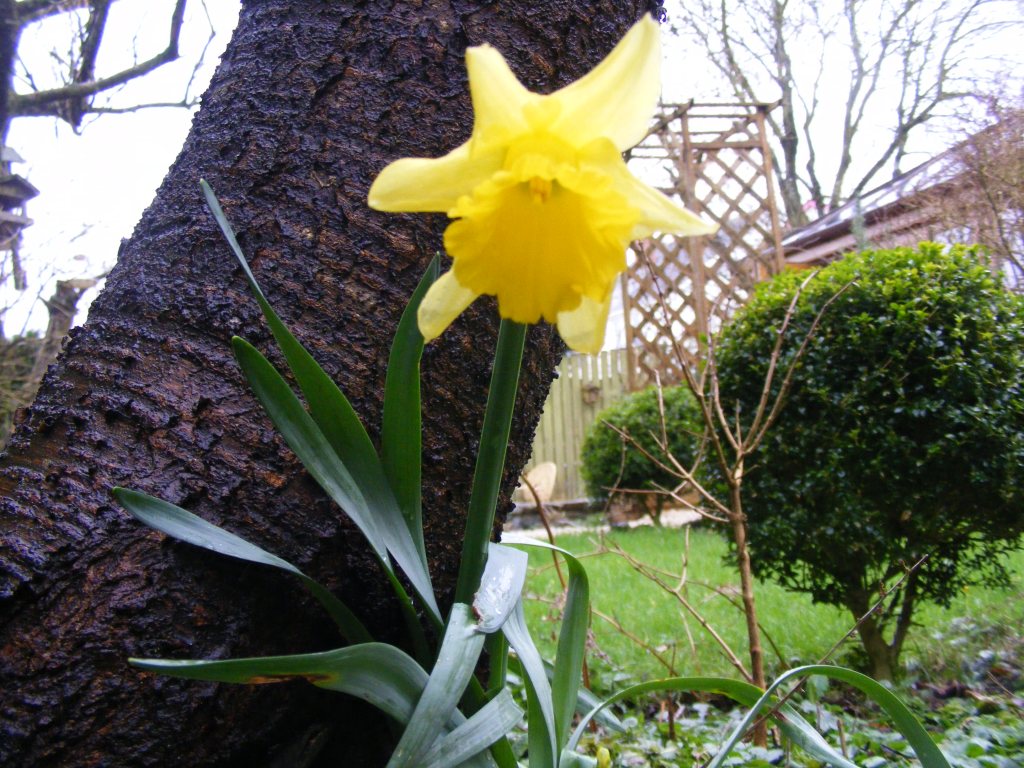
The really exciting news is that I will be joining the ranks of the vaccinated next week and just to prove that spring it on the way, this lone daffodil has been bravely blooming in my garden for the past couple of weeks.

Seasonal Musing and some Exciting News

Sorry for the long silence dear readers. It certainly hasn’t been because I have been idle. Although I am continuing to stay at home, I have been around the world virtually, Zooming into homes across the planet. I am pleased to announce that I have enough support to continue to present my ‘History Interpreter Online’ series of Zoom family and social history talks. This is deliberately a small group so we maintain a friendly, chatty atmosphere but we do have room for a few more, either as occasional visitors or ‘season ticket’ holders.

I’ll start with the exciting news. I have had the great honour of being awarded a certificate of achievement by the Society of Genealogists. These are awarded annually ‘in recognition of efforts and activities that have made some exceptional contribution to genealogy to the benefit of anyone wishing to study family history’. I know I am in some very illustrious company, so it did come as a bit of a shock. The precise citation is, ‘For long-term services to family and local history and encouraging the involvement of young people in history and heritage.’ The ‘long-term’ bit makes me feel very old but I suppose I have been seriously researching my family for 43 years so I guess it is justified! I am looking forward to the face-to-face presentation, which can hopefully take place in August next year.

Despite the ‘long-term’ research I have managed to add 9x 10x and 11x great grandparents to a branch of my tree this week so there’s always something new to discover.

Of course, it is impossible to ignore the fact that, in general, things have been on the gloomy side. Christmas, as expected, will be different this year. I had planned to visit the descendants right at the end of the school holidays, giving family members who are in school as much time as possible to develop any nasties they may have picked up. The freedom that we have to visit for five days around Christmas Day itself just doesn’t work for me, especially as we would have a 600 mile round trip to make and the world and his wife will all be travelling on the same days. It is a very long way to go to wave to your nearest and dearest from the other side of a chilly field, which is what it would mean if we went in early January. Although I would go to the ends of the earth to see my family, my head says that, having been so careful for nine months, it would be stupid to be reckless now. So, I will, regretfully, continue with my ‘just because I can doesn’t mean I should’ stance and make the most of what technology will allow.

It is, of course, that time of year when not just visiting but also seasonal gift giving is in our thoughts. Many of us are unable or unwilling to visit shops in person at the moment, so we are seeking other alternatives. Living, as I do, a distance from a shopping centre, relying largely on online shopping is the norm, although I do love the atmosphere of the shops at this time of year. I usually try to find a garden centre with displays of decorations. I am planning a swift visit to acquire a Christmas Tree but shan’t be lingering any longer than necessary. The added consideration this year is that gift purchases will need to be sent directly to the recipients or be easily postable. I am hoping to patronise as many small independent online shops and sellers as I can. If I was more talented, I would be hand-making gifts. I am also hoping that folk may want to relieve me of a few more books. I am happy to gift wrap these and send them straight to the recipient if you are looking for gift ideas. My fictional offerings are described here and for non-fiction you need to look here. I don’t charge for postage to the UK. Or you could gift a season ticket to my talks!

Zero progress on a potential new novel I’m afraid. My writing has been devoted to finishing a new course for Pharos and an article for Who Do You Think You Are? Magazine, due out next year.

The next thing to look forward to will be getting the historic decorations out of the loft.

Family Stories: some books to get you thinking

Sometimes I review books on my blog. This is one of those occasions. I would like to introduce you to two offerings from The Genealogical Publishing Company, in Maryland.

The first is Roots for Kids: finding your family stories by Susan Provost Beller (2020). I am passionate about involving young people in exploring their history and heritage and I was intrigued to see what this 68 page book had to offer. I even managed to get past the use of the word ‘Kids’ in the title, which I must confess does tend to set my teeth on edge but that does not detract from the content. The author, very sensibly, focusses on family stories, rather than formal genealogy. The book is written by a US author, which means that some of the activities are not so appropriate elsewhere, or need ‘translating’. For example, there is an assumption that the reader will have immigrant ancestors within the genealogical timeframe, which is less likely in a European context. This might mean that it is not an ideal gift to a young person from outside the US but nonetheless there are some excellent suggestions that are universal. For the British reader, it is probably a book to be used as a source of activities for adults to present to a child. The book is enhanced by black and white drawings.

There are suggestions for ways to approach older relatives, a section on surnames and hints for organising information. Despite the rather steep £14.78 UK price tag, this book would be very useful for adults working with young people and hoping to introduce them to genealogy, through the medium of family stories. It is probably best suited to the 8-12 age range.

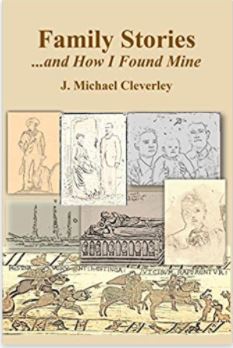
The other book is a substantial volume by J Michael Cleverley, entitled Family Stories and how I found mine. I always recommend that my ‘Writing up your family History’ students read family histories by others, in order to see what they feel might work for them. This book would be particularly useful as it adopts a rather different approach. The author has obviously carried out an enormous amount of research into both his own family and the broader historical context. Spanning 900 years, the author recounts his own family story, setting it firmly within the broader history of the time. Unlike many family histories, the author tends to focus first on the broader history and then introduce the appropriate family story, rather than the more common approach of beginning with the family. This makes this family history a bit different and works very well.

The intrinsic family story is obviously of greatest interest to those who share this ancestry but it is definitely worth a read to find out about the background, which has a broader appeal and as a good example of how a family history might be approached.

The book is accompanied by outline family trees, giving names only. These were a little faint and would have benefited from including some dates and place names. The book includes an impressive bibliography, detailed endnotes and an index; all valuable additions to a family history. Again, this volume attracts a hefty price tag, £36.39, something for a family history society library perhaps.

I was given free copies of these books in return for a frank review.

Seeing double – when family history gets confusing

Since returning from the frozen north, in between wall-to-wall Zooming and another weird allergic reaction incident (see below), I have been revisiting a branch of my daughters’ ancestry. It is so long since I last looked at this family that the documents that I wrote, telling their story and recording my research path and sources, no longer open. Fortunately, I have hard copies, so can retype. My version of this line stops with Thomas and Sarah Kear of St. Briavels in the Forest of Dean, Gloucestershire. Other researchers have extended Thomas’ ancestry further but this was all I was confident of and indeed still is, although I am pretty sure where it goes next.

Newland Church

Looking again at the evidence, I realised that there were two Thomas and Sarah Kears in St. Briavels and neighbouring Newland, having nine children between them from 1765-1789. The obvious way to distinguish between the two families was to assume that those baptised in St. Briavels were one family and those in Newland were another and certainly this did not lead to biologically impossible families. By now some of you will be wondering if this was in fact all one family, as did I but it was definitely two families; there are two burials for both Thomas and Sarah Kears, all in Newland. God bless them, both Thomases and one Sarah left wills and this sorts t’other from which. One Thomas was a maltster and the other a coal miner. Although both have sons called Thomas, the dates of their baptisms and a property that continues through the family makes it clear that the St. Briavels Thomas and Sarah are the correct ones for my daughters’ line.

Next to look for marriages of Thomas Kears and Sarah …….. . Yes, as expected, there are two, seven years apart, both in Newland, both a year before the baptism of the eldest child and guess what both Sarah’s have the SAME surname – James. Then of course there are the two Thomas Kears baptised in Newland within a month of each other in 1745……… almost certainly neither of which are the one I want!

It is always worth returning to old research. This time I discovered the sad story of a family member who took his own life and was drowned, according to the coroner, ‘asphyxiated by upper dentures’.

Ignore what is below if you are just here for the family history.

Now the weird allergy thing, sorry but some people did ask (never ask, never). Some of you will recall that, earlier in the year, I received free (but unwanted) botox courtesy of an adverse reaction to who knows what. Friday I was happily Zooming away, looking as normal as I ever look. An hour later I went to drink a cup of coffee and realised that my mouth was seriously swollen. Ring 999 said Dr Google. I was reluctant to do this so went for 111 instead. The call handler quickly decided that this was above their pay grade and I was passed to a paramedic who actioned the ‘super-fast, highest priority’, emergency ambulance. I explained the difficulties with finding my house and precise instructions were relayed. By this time, I was sat clutching the emergency epi-pen that I’d been given last time and the paramedic talked me through its use, in case I needed to self-administer it. I was once trained in the application of these things but it was so long ago that I had retained nothing of this potentially helpful information. After half an hour, the paramedic says he will get off the line in case the emergency ambulance needs to ring. I ask how long it might be. ‘Any time now, you are top of the list, as if you are having a heart attack.’ I have packed my emergency ‘going to A & E’ bag. I have arranged back up if I don’t get back in time to host a meeting in the evening and I am sat on the stairs with shoes and coat on and the door open. I debate how bad one has to be to use the emergency epi-pen. I can still breathe and talk, so I am thinking not now but of course once one isn’t breathing …….. After an hour and a half, the ambulance arrives, they’ve been deployed from another area due to volume of calls. Don’t get me wrong, I love the NHS and they do an amazing job in the face of ridiculous underfunding. I am also aware that the downside of living in the middle of nowhere is that emergency services don’t get to you so quickly but an hour and a half for absolute highest priority does seem a tad overdoing it. Just as well I wasn’t having a heart attack.

I was treated in the ambulance for an hour, give oxygen, medication was organised and as I didn’t seem to be getting worse, I was free to go, with strict instructions to seek urgent help if it recurs. Still absolutely no idea what is causing this and this time the rash (which came first last time) developed later and much less severely. Next step will be parting with copious amount of blood to see if they can work out what is going on. Ah well, life is never dull.

More Gravestones, Ancestral Homes and Non-roads

The holiday is over but due to the non-existence of the caravan site’s internet for several days, you think I am still stranded in Northumberland. All this happened a week ago; I promise you will catch up eventually.

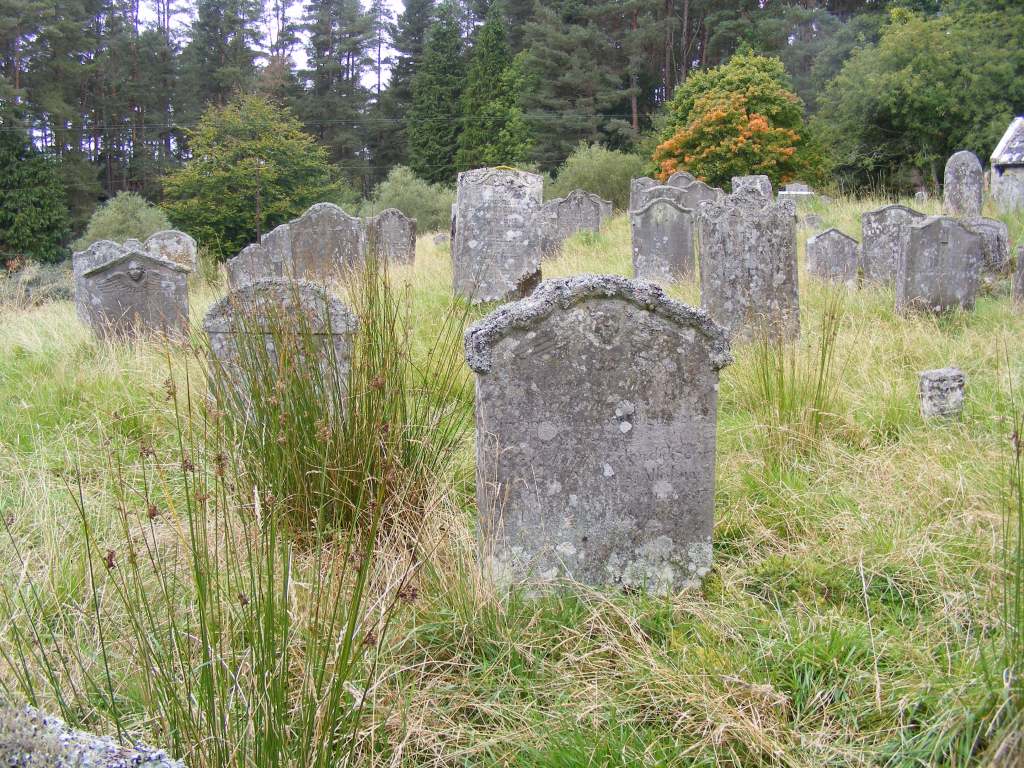
What is life like in the frozen north? you ask. Bracing, I think would be an accurate term; windy, a bit drizzly and about 10 degrees. It turns out that the car’s funny noise means it needs a new alternator and that is booked in for four day’s time. Now all we need is for it not to break down completely in the interim. We drive out to the edge of the Keilder Forest for more gravestone hunting of ‘almost certainly my ancestors’ the Newlands and the Corbitts. All I can say is that I have not inherited their hardy gene. They must have been very resilient, trying to eke out a living here 300 years ago. The landscape is inspiring but forsaken and bleak. All I need to do is to find a tiny bit more evidence to confirm that John Hogg really was the son of Robert and I can claim this area as an ancestral home. All the evidence suggests that John son of Robert should be on my family tree but I am waiting for something further (which I may never find) before I ink him in.

Another day and more ancestor hunting. This time though in a town, so slightly more adventurous. I enter the large town churchyard in search of a grave. I have no burial plan and there are hundreds of graves. What I do have is a photograph with a tiny bit of background that I am hoping to identify, in order to take my own photo. I pause just inside the entrance and hold up the blurry picture to indicate to my companion that we are looking for a grave near to a fence and a lamp post. I look at the grave immediately in front of me – and it was the one I sought! It also contained information that wasn’t legible in the photo. Definitely a win this time. For those who have been following my recent family history adventures, this commemorates Peter (he of the pig and the 5 women) his parents and two of his children, one of whom I had not been aware of before.

This success was followed by my first visit to a supermarket in more than six months. It was a smallish supermarket and it seemed to pass off without incident but I will be relieved to get back to home deliveries.

After braving the town, we feel in need of a socially distanced day, so it is off to one of my one-places for some covert photography of people’s houses. We are used to narrows country roads but my proposed route does take us to some ‘interesting’ places. Despite the fact that my companion is very keen on his ‘new to him’ car, he bravely goes where no self-respecting driver has been before. This is clearly not the place for the alternator to expire completely.

The non-road takes us past the ruined peel tower that might have been the home of the Hoggs who I hope are my ancestors. Some of the one-place farms are too far up drives to be photographed. Although my partner-in-crime expresses a willingness to turn up a front doors of strangers when we are in an area where visiting other people’s homes is forbidden, I am less keen. I am already aware that we have zoomed in to take pictures of farms displaying large ‘cctv in operation’ signs. I suspect the local farm-watch hotline is already buzzing with our descriptions.

This is the day when I should have been doing my alternative Race for Life. Given that my back is still not conducive moving much, I have decided to postpone my 5km run/jog/walk until I am nearer home. I have been ridiculously poor at asking for sponsors too, so if anyone has a few pennies to spare this is where to go.

Mills, Castles and Elusive Gravestones

Having arrived in COVID central, on another lovely sunny day, we set off in search of the many local mills once worked by the Eadington family. We wander round Lesbury and then on to Alnmouth, which is very pleasant. We have reasonable success in locating the sites on our list and most are away from the crowds anxious to enjoy the last day of summer. We get stuck behind a flock of sheep, some of which have gone rogue and broken away in the opposite direction. One man and his dog, or in this case quad-bike, it is not. ‘Hunt the mill’ does take us to places other itineraries do not reach.

The next day and the temperature has dropped by ten degrees. Undaunted we venture north in the footsteps of my great great grandparents who travelled across the border to Lamberton Toll for a Scottish irregular marriage. I am pretty sure they would have taken the coach that ran up what is now the A1, from close to their home right to the Toll. I know that the toll house no longer exists but allegedly there is a plaque marking the spot. Fail on that one. It must be a very well-hidden plaque. Heading westwards, we call in at Norham Castle, built in the C12th for the Bishops of Durham as an entertaining space. It was here, in 1291, that Edward I and his advisors chose John Baliol, from thirteen contenders, to be the Scottish king. There was significant re-building following damage in the 1510s when the Scots got a bit troublesome. It had been subject to many sieges over the centuries. My ancestors lived close to this castle and would have known it when it was a little less ruined than it is now. Until it came under state ownership in 1929, it had not been maintained since the Union of the Crowns reduced the threat from the North.

Then it is off to Norham church to search for some gravestones. This will be fine, we have plot numbers and a plan. We know where row one is, what we don’t know is which end of the row is number one, nor is it quite clear what constitutes a row amongst the randomly scattered stones. More by luck than plan, we locate two of the four. What I have neglected to do, is note the names on stones surrounding the ones I am interested in, which might be more legible. We have phones, in theory we should be able to find the website and look at the transcription. In practice, neither of us has mastered using the phone for internet searches so that is not an option. In any case the stones I am missing are 1720s and the transcription was probably done in the 1980s so it is likely that they are no longer standing or legible.

Home via a couple of Scottish churches which involves a gate-related incident. Mindful that we are in a COVID hotspot, I attempt to hook the gate open with my foot. I achieve this and my companion exits the church yard. As he does so, he pushes the gate open further. Sadly, my foot is still wedged in it at the time. As I am wearing wellies in order to scour wet churchyards, I fail to hop backwards sufficiently swiftly and end up sinking to the ground grabbing the gate that I had been at pains not to touch in the process. It really is easier to stay at home. Fortunately, we have plenty of hand sanitiser. The car is making a bit of a weird noise. It is going and there are no warning messages but it looks like tomorrow will involve a trip to a garage. We do have form for getting stranded miles from home.