From Elusive Ancestors to Ag Labs

Amidst a quick trip to Yorkshire (of which more another time) and the uber frustrations of fourteen tedious hours attempting (and mostly failing) to get access to vital software for the job we must not mention, I have been spreading the family history love with my latest cohort of Pharos family history students. Unbelievably, I have been teaching online family history courses for Pharos Tutoring and Teaching for seven years now. Last night saw the first presentation of a new course draw to a close. The learners have been investigating ancestral migrations. Those pesky ancestors who won’t do the decent thing and spend their whole lives living in one place lead us a merry dance as they trip from one area to another, often leaving gaping holes in their life stories in their wake. This course was designed to help the students tell those migration stories, investigate possible motivations for movement and hopefully come a little closer to tracking down their elusive ‘brick wall’ ancestors. Unfortunately, I don’t have a magic wand, otherwise I wouldn’t have any brick wall ancestors of my own but it was pleasing to find the students reporting that they had to change their case study elusive ancestors as they had found them!

No sooner does one course end than another begins, or, in my case, two begin. Next up, Agricultural labourers, a five week course that starts on 17 July. We all have them don’t we? The ubiquitous ag labs who drip from every branch of the family tree. Do we dismiss them as somehow more boring than the sagger-maker’s bottom knockers? Not such a great job tile of course but ag labs are fascinating in their own right. What I love most about leading this course is seeing the students create stories about their own ag lab ancestors, stories that I then sometimes see published in family history society journals or online. Sometimes I join in with the students and use the course as an opportunity to tell an ag lab story of my own. The job I must not mention won’t allow it this time around, so, just to prove that I do sometimes practice what I preach, here is one I prepared earlier (you will also need this outline pedigree to follow the twists and turns). This is the story of a Wiltshire ag lab filled family, or series of families, who, like many others, ended up abandoning the countryside for life in Reading and later Croydon.

My second course for July is for those starting out on the all-absorbing branch of research that is one-place studies. They have such an adventure ahead! To add to the excitement, Pharos have a brand new shiny website, which not only looks good but make life easier for students and tutors. Most importantly, it is stuffed full of exciting and absorbing courses (not just mine) to help you hone your family history skills. I recently had a discussion about the importance of getting the balance right between learning more about how to do family history and actually doing it. Even if you’ve been a researcher for years there is always more to learn and joining a group often provides great encouragement. Important though gaining new skills is, you need to keep this in proportion and allow time to actually put it into practice. I do try to bear this in mind when I am writing courses and make sure that students can learn more about their own families as they work their way through the suggested exercises. Why not come along and join me for the ride? Last time I looked there were still spaces on the Ag labs and One-place studies courses. If you want to track down elusive and migratory ancestors, you will have to wait until next year.

Family Stories, Family Treasures and some Memories: a task for the family archivist

For the past few months, I have been trying to discover that useful commodity ‘spare time’ and use it to create a small website to be the repository of all the family stories that run round my head. This is rather different from the family history accounts that appear on this website. These are mostly uninspiring narratives, designed to record all the facts that I have found for that branch of the family. The new website is for stories rather than accounts and in future, these will vary from long biographies to short paragraphs about particular anecdotes from the past. There is also a section for my own memories, taken from my auto-biography. In particular, I wanted a vehicle for the stories of the family treasures that I am privileged to have in my temporary care. Without the associated narratives, these heirlooms become mere ‘things’; I feel the need to explain their significance and let others know why they are precious. Artefacts also provoke memories; memories of their owners, memories of occasions when they were in use and associated narratives.

All this may this seem self-indulgent and perhaps it is but I am the only person with most of this knowledge; it is my responsibility not to let it be lost. If I were able to see my descendants more often these would be the accounts that they would hear verbally from me but there may be more stories than there is time, so I decided that I would make a start. The website is tiny at the moment. I plan to add more stories on a regular basis but I didn’t want to begin with an overwhelming number. The intention is that my descendants will actually read this and I thought that they might be put off if I inflicted too much on them at once.

I am not expecting hundreds of hits on the site, or anyone outside the immediate family to read it much, although you’d be very welcome to do so. In fact, I may be optimistic thinking that my descendants will read it but at least now they have the option. What I hope may happen, is that others will take a quick look and be inspired to tell their own family stories. So, if you have five minutes, pop across for a brief glance at Granny’s Tales and then go out and do likewise.

New Book, New Ventures and a Random Shopping Order

Firstly, I am now allowed to tell the world the exciting news that my next book is at the publishers. This is a non-fiction volume, commissioned by Pen and Sword, about tracing Marginalised Ancestors. So, my usual fare of tragedy and trauma, with chapters on Poverty, Criminality, Illegitimacy, Mental Health, Sickness, Prostitution, Witchcraft and more. Each chapter includes a case study and they were such fun to research. I can’t wait to introduce you to Sarah and Joseph and Charity and Harriet and Frederick and co.. Don’t hold your breath though. I am hoping that this may be out by the end of the year, so in your Christmas stockings but it could be 2024. This isn’t exactly a cover reveal as it is still provisional but I have been given the green light to share.

Then two new ventures that will also involve writing. I am to join The History Girls as a reserve blogger. This blog contains a fascinating range of posts on all things historical and is billed as ‘A blog from great writers of historical fiction’. I am having a serious bout of imposter syndrome but it should be fun. As I clearly don’t have enough to do, I applied for and have been accepted as a contributor to the Mass Observation Project. This is particularly exciting as my mother was a contributor in the early 1960s. The website does say that the original project ran from 1937 to the early 1950s but does also mention some material from the 1960s and I distinctly remember my mother having to write down what was on her shopping list. They have asked for a biography ‘it can be as long or as short as you like’. Do they realise that I have an 80,000 word, as yet unfinished, auto-biography stashed away? I am assuming they don’t want all of that. On the other hand ……….

Last week, I encountered that thing when you accidentally click on the wrong day for your T****s order without realising (meant to be next week) and just bung all the favourites in the basket regardless to hold the order, thinking you’ll sort it out and delete stuff a couple of days before. Then you get an email confirming that goods to the value of twice your normal shop are on their way and you have no space in the freezer, because obviously the order is the following week and you daren’t even look at what you’ve ordered, as probably it includes stuff that your daughter, who eats funny modern stuff, ordered when she was here and a load of random things you don’t want. I never did look at the order, so Mr T****’s delivery man turned up with quite a lot of trays of stuff. Well, it could have been worse. Not too much frozen stuff, no weird modern stuff but I have all the ingredients ready for next year’s Christmas cake and puddings!

RootsTech Roundup Day 2 #NotAtRootsTech

The second day of RootsTech began, which meant an opportunity to catch the sessions that had screened late in the US day on day one, if that makes sense. I decided to take a look at the virtual expo hall. Unlike what you might be used to at UK genealogy shows, the vast majority of the stands that are available virtually are commercial, with only a tiny handful of society stands. A couple of the stands did catch my eye. Artifcts, if you can get past the spelling contraction, is a great concept, encouraging us to tell the stories of heirlooms. This is a lovely idea but I need convincing that you need to do this via a commercial site; just tell the stories for yourself in what ever format suits. This is something I have been working towards for a few months but other projects, such as A Few Forgotten Women’s free online sessions for International Women’s Day on 8 March, have rather taken over. The RootsTech expo hall also led me to a really good offer price, for in-person and virtual attendees, from Family Tree Magazine for membership of their Family Tree Plus Club.

I also had a look at my Relatives at Rootstech, which is a bit of fun for those who have linked themselves to the composite tree at Family Search. This is available until the end of March and you can connect with other RootsTech attendees whose ancestry you allegedly share. I have to say that most of my contacts are 7th-9th cousins and some of the family trees delve into realms where I would not dare to tread but I am hopeful that my third cousin will respond to my message at some point.

In preparation for our Forgotten Women Friday on 24th March, when some of the women needing research are of Irish origin (volunteers welcome for tracing these and those from England), I began by listening to Brian Donavan’s Irish Family History is Easy. Seriously!. He focussed on using FindmyPast and Irish Genealogy. Definitely a great introduction to Irish research and I hadn’t realised so much was on FindmyPast. Next, I chose Hidden Stories Discovered in just Three Documents by Patti Gillespie, which sounded intriguing. Be warned on this one, the talk doesn’t start until four minutes twenty seconds in, so don’t be put off by the long silence. I liked her phrase ‘compassionate context’; our ancestors’ lives and life decisions should viewed in this way. Patti also emphasises the importance of citations. She regards any system of citation that will allow another person to recreate the research path as being adequate; a woman after my own heart.

I then watched Meet Storied; the next chapter in family history with Brandon Camp and Finn Larson. Storied is one of the sponsors of RootsTech. Their product is a way of encouraging and preserving stories and there’s a good deal on if you sign up during the RootsTech period. Whilst I am one hundred percent behind the principal, I can’t help feeling that, a bit like Artifcts, you could just write it down for yourself. The software also has a feature whereby artificial intelligence can assist you with your story. This is impressive but I do have some reservations about this. I suppose it might be useful for those who have concerns about their writing skills. There are some real plus points to the software though. I did particularly like their emphasis on including information about those with whom we have non-familial relationships, such as friends, neighbours and co-workers. In addition, there is the opportunity to capture relationships to communities, be that a village, a workplace, a church or other institution. The software even supports the inclusion of pets. There is a free account option, which seems to include quite a few features. The paid version include access to records but these are all US based.

That was all I had time for yesterday but there is no rush as the presentations remain available for you to watch at your leisure, I am still catching up on 2021 and 2022! If you didn’t think to register in advance for the free virtual event there is still time.

RootsTech Roundup Day 1 #NotAtRootsTech

Yesterday saw the beginning of the genealogical extravaganza that is RootsTech. I am attending virtually, which is free and there is an unbelievable variety of presentations to choose from, with over 1300 speakers from across the globe. My playlist is best described as ‘eclectic’ and it reflects my particular interests, so I thought I’d share those I have watched so far, in case there’s something that appeals to you too. As I am in the UK, some the talks I am hoping to hear from day one are a bit late in the day for me but I will catch up on those today and there were plenty to choose from in the ‘On Demand’ section that I could watch yesterday. I could also catch up on a few from 2021 and 2022 that I didn’t manage to listed to then. I decided not to offer any sessions myself this time but two of my sessions from 2022 are still available, How to Handle Sensitive Topics in Family History and Family Photographs and a Sense of Belonging.

I began with Davina Wilson’s, Considering Age When Researching Your Ancestors, stressing the importance of age and giving a summary of key dates in English and Welsh research. This is an interesting and important topic and something we should all be aware of. I followed this with Help! My Ancestors were related to each Other! by Diahan Southard, as my Smith and Seear ancestors have first cousin marriages in two successive generations, which probably accounts for a great deal. Diahan gave a clear explanation of the difference between multiple relationship, pedigree collapse and endogamy and the impact that these have on our DNA. The advice to focus on our  ‘best’ DNA matches, those with the largest longest segment, particularly was useful.

Something a little different next, with Judy Nimer Muhn’s introduction to The Argyll Papers at Inverary Castle: the family and estate archive of the Duke of Argyll and Tackling Photo Albums: identify, preserve and share with Maureen Taylor

While I was waiting for the time difference to catch up, I looked back at some 2022 presentations and found Penny Walter’s Damnatio memoriae: condemnation of a person’s memory to be a thought provoking presentation about iconoclasm, selectivity and the considerations for family historians when dealing with difficult ancestral connections; definitely worth a listen for us all. Another presentation from 2022 was P J Elias’s How can FANs give context to your Ancestors’ Lives? Using his Polish-American family as examples. It is so refreshing to listen to presentations from young genealogists.

As well as taking the opportunity to listen to presenters who are now to me, it is always a pleasure to catch up with talks from my world-wide genealogy friends. I couldn’t resist another listen to Michelle Patient’s heart-warming Finding Frank story from last year. I love case study stories and this is a great one.

Better still, we do it all again tomorrow.

A Week in my Life: of free events and family history

It has been a bit of a whirlwind week. Monday began with some work on a new Migration course that I am writing for Pharos Tutoring and Teaching. This is going to be presented in May, so I need to get the Is dotted and Ts crossed. Then there was finishing off the Brick Walls presentation for Devon Family History Society. This is where we dig out our magic wands and try to solve members’ genealogical conundrums. The day was rounded off with a committee meeting. Tuesday was spent sorting some Forgotten Women biographies ready for uploading and reading through my Pharos Writing your Family History course to check for any necessary changes. This starts online in a couple of weeks and last time I looked there was room for a few more to join the fun. Next, a Cornish lesson and then chatting about Illegitimacy and Insanity etc. to the lovely Huddersfield and District FHS.

More migration course work on Wednesday and a typed chat with the students on my Discovering more about your Agricultural Labourers course. Then there was trying to master an online computer game that I have been playing with some of my descendants on an almost daily basis. Thursday was definitely Forgotten Women day, with two chats preparing for future events and the sudden realisation that International Women’s Day was almost upon us and we really needed to do something that we could prepare for quickly. Bear in mind that my fellow Few Good Women, who oversee this project, have lives that resemble mine for activity. Thursday evening found me, aided by Mistress Agnes, talking about seventeenth century gardens to a Zoom audience of 175. It was a Norfolk Family History Society meeting with Devon folk in attendance as well. Friday, I had my local history hat on and went to see the deeds of a local property. Then there was a small group meeting to run for Devon Family History Society in the evening. At these meetings we get together a couple of dozen people with an interest in a small group of Devon parishes. As usual, several attendees found common interests.

Oh good the weekend, a rest maybe? No, dear reader, you would sadly be wrong. More plans for the Forgotten Women event. This will be on 8 March and consist of three free Zoom sessions, when members of the team will share the stories of some of the women we have researched. Bookings are open and you can find details here. Then there was presenting the Brick walls session for Devon Family History Society, followed by another chat with those hunting down their agricultural labouring ancestors. Sunday, the day of not much rest. Thanks to one of our team’s efforts, our 8 March event was safely loaded on to Eventbrite. More stories were prepared for the Forgotten Women website, which also needed rearranging, as we’ve already, after just ten weeks, got more stories than we could present in the previous format.

So will this week be any calmer? Well, hardly. To begin with, there is Rootstech. I decided not to offer to speak this time but I will be attending virtually, for free and so can you. There are presentations by speakers across the globe on every subject related to family history that you could possibly imagine. My playlist of sessions I want to listen to is already ridiculously long, There is a facility called Relatives at Rootstech, which means you can see if any distant relations are amongst the attendees. Just this morning, I was excited to find that a previously unknown third cousin will be there. Third cousins are practically my closest relatives, so that was exciting. This is on the Smith side, which reminds me, I have a presentation to write about the Smiths. I need to organise my contributions for 8 March, I have more chats about agricultural labourers, I have talks to give about young people and genealogy, about twentieth century sources and about plague and so it goes on. Please don’t mention things like cleaning.

Looking Forward – Looking Back – mostly family history and a few other things thrown in

The holiday season is over, although I have to confess that I still have Christmas cards and a Christmas tree to take down. Bearing in mind that half the cards didn’t arrive until January, it seemed a shame not to display them for a while. I am probably risking the wrath of the bad luck fairy that dictates that decorations have to be away by the 6th (or is it on the 6th – who knows?) but I’ll survive.

I was away from home at New Year, so didn’t do the typical old year reflection/new year plans post. Better late than never – highlights of last year (in no particular order): spending time with friends and family; visiting some beautiful English coast and countryside; working on the revamped Braund Society website; being part of the Few Good Women group and launching the Few Forgotten Women project (another website created); passing (just) my grade 1 piano exam; passing (with rather more success) my postgraduate certificate in Experimental Archaeology and Material Culture; starting to learn Cornish; creating a living willow chair (even though ‘living’ is up for debate), some fused glass and learning to plait straw; making two separate, exciting family history discoveries in asylum records.

Plans for 2023: more of the same and finishing some projects started in 2022 including a book to complete, a dedicated family history website to launch, a course to write, Ivy’s biography to finish and a new one to create; Ireland to visit (postponed from 2020); more Cornish to learn, speaking in sentences would be good!

Even though I have only had a few days back in the old routine, there has been so much going on. My article The Family History Revolution, looking back over five decades of the world of family history, with thoughts on what may come, has appeared in Family Tree Magazine. The book I am writing is finally nearing completion, with half a chapter an introduction and a conclusion to go. It is a non-fiction family history book. I can’t announce the subject yet but you won’t be surprised to learn that it isn’t all sweetness and light. There is some overlap with my work on the Few Forgotten Women Project. What fun that is proving to be and it is such a lovely group of ladies to be working with.

Just before Christmas, some of our Forgotten Women team chatted to Helen Tovey of Family Tree Magazine and the podcast has just been released. Our next venture is a joint research project on Friday 20 January, dedicated as what we hope will be the first of a series of Forgotten Women Fridays. We are going to look at a particular set of records that feature forgotten women and collectively research those ladies on that day. We are inviting family historians to help us, so if any of my genealogy readers want to give us a hand, we’d love to allocate you one of the women from our chosen list. You have a day to find out as much as you can, using what is available online. Keep an eye on the Few Forgotten Women website on Friday for full details.

Another collaborative project: our local history group is preparing for a cemetery workshop at the end of the month. We are trying to compile mini biographies of those who are commemorated in our churchyard.

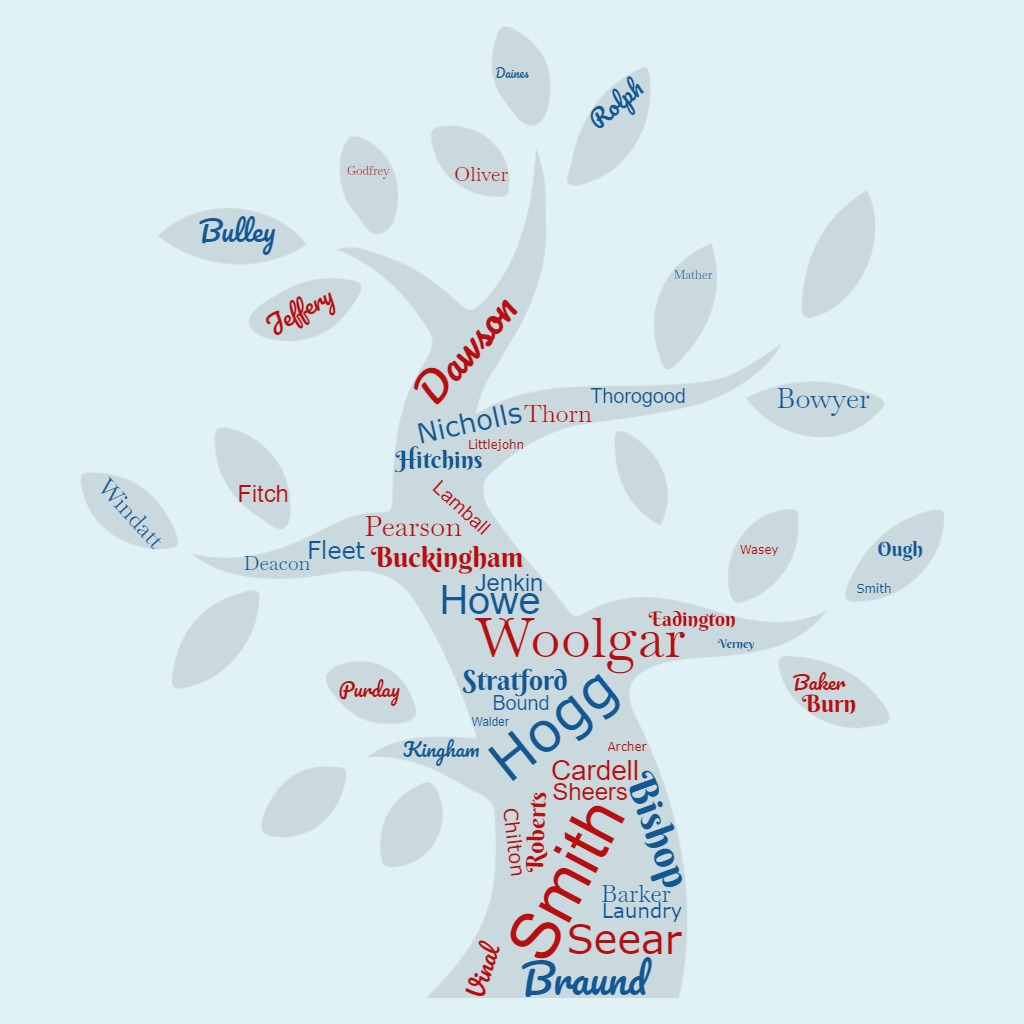
As part of my preparation for my, as yet to be revealed, website showcasing my own family history, I was looking at the surnames of my direct ancestors and created this using Wordclouds. There is a choice of outlines and colours. It includes the forty nine surnames I’ve discovered in my direct ancestry, back to my 4x great grandparents. I could have included the other sixty eight names from earlier generations but I rather lost the will. In theory, the names that feature in my more recent ancestry should be larger but that is not exact.

Ivy’s Story Part 1

Today would have been my Granny’s 130th birthday. As I mentioned recently, for the past couple of years I have, intermittently, been trying to write her biography. It is still very much a work-in-progress but I thought it was a good day to prove to the world that I have actually done something towards this. It is probably of no interest at all to anyone but me and my direct descendants but you never know who might want to read the story of growing up in a south London suburb around the turn of the nineteenth/twentieth centuries. So here is the beginning, which takes you up to her leaving school and being about to start work and meet her future husband.

This is 20% of her life; I am hoping it is significantly more than 20% of the finished biography but who knows? I then have to concentrate on my mother (my father’s story is written but needs adding to), three more grandparents, eight great-grandparents, fifteen great great grandparents (one is done) ……. I may be some time. I do also have a commissioned book to complete first arghhh.

I’ve not done a looking back on last year/looking forward to this year post but I do hope I might achieve some of this in 2023, as well as finishing the above mentioned book of course and continuing to help develop the Forgotten Women website and work on my other family and local history interests, oh and get a personal family history site ready to reveal to the world and there’s always more Cornish to learn. Not sure life is going to get any less hectic.

Telling Ivy’s (family history) Story

A couple of years ago my lovely family history support group and I started working on the stories of our grandmothers. Some of us are still going. I am 3500 words in and have got as far as Granny leaving school; I may be some time. This week I have been looking at what the students on my Pharos Writing and Telling your Family’s History course have produced in just three months. I don’t grade their assignments, just provide constructive feedback. Incidentally, the course starts again in March if you are interested. Looking at Granny’s story, I tried to imagine what my feedback might be. I’d never say this to a student but ‘could do better’ came to mind.

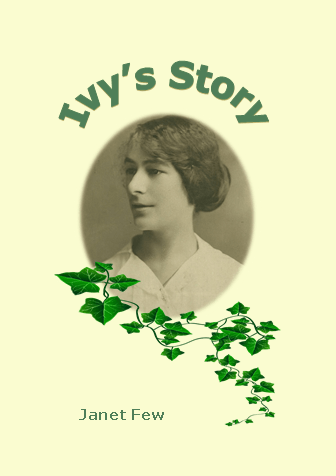
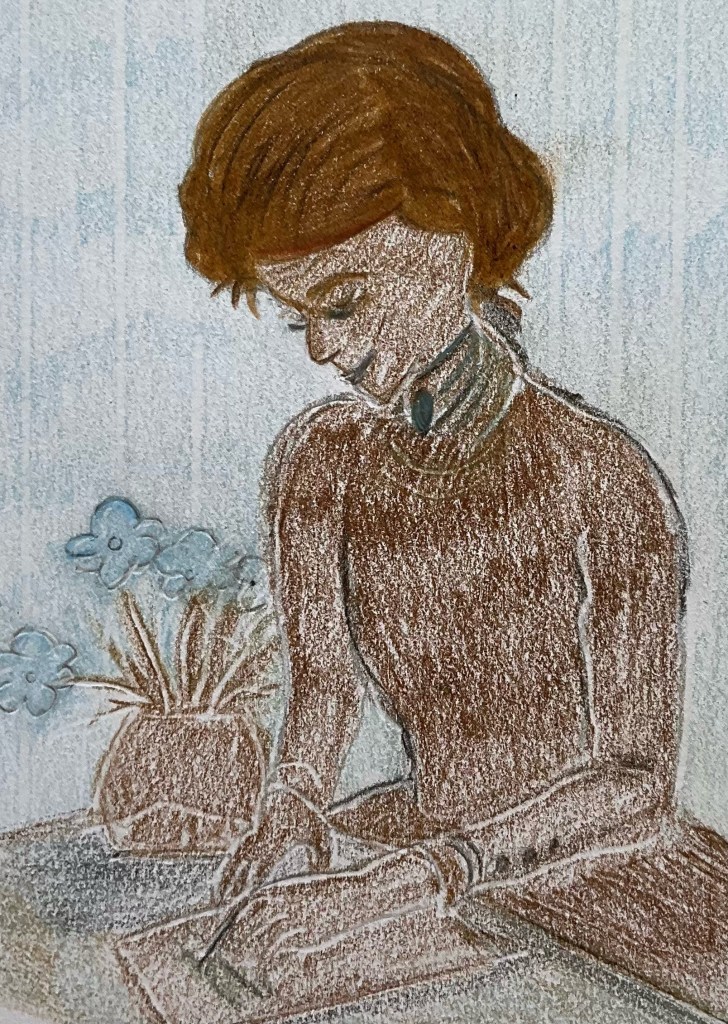
So yesterday I took what I’d written so far and tried to make it ‘look pretty’. Granny’s name was Ivy, cue some pretty Ivy fronds. Not sure what I will do if I get to my other grandparents, Frederick doesn’t conjour up anything similarly artistic. Anyway, after a day’s work I am quite pleased with the first twenty pages. Now to take the story further.

My mum jotted down some notes, one of which was ‘had a boyfriend in the 1914-18 war, used to sing opera to her on the train on the way home from work’. She added a not very uncommon surname. Could I track down possible candidates?. I tried unmarried men with the right surname and right sort of age, living in a five mile radius of Granny in the 1921 census. There were fourteen. Some seemed unlikely on the grounds of occupation. Of course I had no idea if I needed to cast my net wider in terms of age or location. Equally, said boyfriend could have been married, have moved away or have died in the war.

I turned to the 1911 census and found a possibility living just round the corner. This young man became one of the first RAF pilots, stayed on after the war and was killed when flying in 1919. Have I found the right person? In 1911, aged nineteen, he was working in his father’s saw mill, presumably locally. Does this preclude a train journey home from work? He may of course have changed his job after 1911. I am basing this on a Chinese whispers kind ‘evidence’ here. Perhaps there was just one single shared train journey. It also doesn’t quite square with mum’s other note that my grandparents’ first date was in 1911. They married in 1922. Did they drift apart during the war? My grandfather joined up but remained on English soil due to his poor eyesight and clerical skills (he was an accountant), so it doesn’t fit with a ‘don’t wait for me while I am gone’ scenario. Was he actually a boyfriend, or just someone who took a shine to Granny?

Someone has the potential boyfriend on a small private ancestry tree, suggesting they are a reasonably close relative. Said someone hasn’t logged on to their account for over a year. Nothing daunted I’ve sent a message. It seems a pretty fair bet that they won’t reply. If they do will they have any anecdotal evidence about a penchant for opera singing? I know I’ve had more than my share of family history luck this year. I can only dream about the possible survival of a diary mentioning Granny, a photograph of them together and a handy opera score tucked away somewhere.

It is that time of year for resolutions. How about joining me and resolving to tell a family story of your own next year.

A Few Forgotten Women

This post may explain why I have been a bit distracted of late and why posts have been more irregular than usual. This is an exciting day for the lovely group of ladies I’ve been working with for the past two years. We came together during lock-down to support each other and work on family history projects. A bit like organisations that encourage you to lose weight, if you know you will be reporting back every couple of weeks, you actually get on and do something. It has worked well and we’ve all become friends, some of us have even met in real life! We worked on our own biographies and the stories of our grandmothers, we looked at heirlooms and much more.

Several of us had an existing interest in marginalised ancestors. We realised that it was often women whose stories get overlooked, so we set out to preserve the memories of some forgotten women. After several months of work, we have today gone live with our website, introducing our first batch of forgotten women. This is just a start, we have more women’s stories in the pipeline and other ideas for further development. It is definitely a case of watch this space. I could make this a really long post and explaining the project but you might just as well head over to the A Few Forgotten Women website and discover what it is all about for yourself. It also means I can now go and eat breakfast instead of keep typing.