Zooming About – Isolation Day 29

There has not been a post for a while because, let’s face it, one day is pretty much like another. Day whatever it is (29 apparently) of staying at home and I am beginning to wonder how I ever found time to go out. Thankfully, I am gradually finding that I am getting a few things done now but I do still have 52 things on my ‘before the end of April’ list (like that’s going to happen). Sadly, there are a few more that haven’t even made it to the list.

So, what have I been up to since we last met? I have joined in with the millions (literally) around the world who do daily PE with Joe Wicks. Not for me the namby-pamby seniors’ workouts, oh no, this is the full on half an hour school PE session. Yes, I am probably certifiable. I should explain that, although we do walk a fair bit on holiday, I am not really an exercise sort of a person. I have never been to a gym, or for a run [edit – I have been reminded that once a year for getting on for twenty years, I have indeed run 5k as part of Race for Life – for which I have done zero training] and my idea of a successful school PE lesson was to hide my kit sufficiently well to be told to tidy the PE store. After day three of the enthusiastic Joe I could barely move. I persevered. I can now grit my teeth, get to the end and not feel any adverse effects. I am treating this a bit like essential medicine. Genetics mean that I am already at higher than average risk were I to catch COVID-19, so I really do owe it to myself to try and put my slightly dodgy heart and my lungs in the best possible shape in case I do succumb. I do still feel like the whole thing is a bit of a penance though.

Zoom has taken over my life. There were several meetings last week, including chatting to nearly 100 genealogists, predominantly from Australia and New Zealand and writers’ group get togethers. Having climbed the Zoom learning curve, I have now arranged to take two sets of regular family/local history meetings online and organised a virtual two day one-name society reunion for May. I’ll let you know how it goes.

The garden has been duly attacked. Of the ancient seeds I planted a couple of weeks ago, only one sort has germinated. I now have a glut of woad. Hmm, that will come in useful if we are inside long enough to run out of clothes. Actually, outgrowing them is probably more likely, despite Joe. Some new flowers and veg seeds have also been planted. I don’t really have sufficient room but fingers crossed. The trees are coming into blossom and there are blue tits (one of whom thinks it is a woodpecker – long story) and sparrows in the nesting boxes. It is a positive aspect of being at home that I can see the garden at the nicest time of year.

DSCF0507

We had another family sock wearing meet up, lobsters .v. Amelia Earhart and the grandchildren have been showing me their Easter gifts. One of our number had to confess to not having his socks accessible but we managed to include him using the wonders of technology. It is surprisingly difficult to photograph your own feet – especially when they are hovering in front of a laptop.

The NHS clapping in our village gets louder each week. This week I broke out the replica C17th drum in order to join in.

Drum

The piano is progressing, the Cornish not so much. I have very very very nearly finished novel number two. I estimate there will be about another 2000 words to go. Then for the edits. Today’s clue is that it includes the (true) story of an errant clergyman with a chequered past.

Happy Easter!

Pruning the Family Tree and other adventures – Day 19

I, like many others in these strange times, am finding it difficult to concentrate, least of all on what I should be doing. After a couple of totally unproductive days. I revisited a branch of my family tree that has been virtually untouched for over forty years. Before you scoff, bear in mind how difficult research was then. No digital images, no indexes, just trawling through page after page of original parish registers in archives. In fact, much of this was done by another trusted researcher. It is only now that I have got around to going over the earlier generations and verifying the information. Or in this case not verifying it. I come from a long line of Bishops. Not actual bishops you understand but people with the surname Bishop. This included four successive generations of chaps called Christopher.

It seems that the original researcher was pretty hot on baptisms and marriages. She also spent ages doing in-depth research in churchwardens’ and overseers’ accounts in which they feature, all good stuff. What she failed to do was to attempt to kill these guys off. First, I discover that the lady who held the distinction of being 9x great granny, Annes (or Agnes) Maddick, died before alleged 8x great granddad was born. Cue the substitution of Jane Thorne, second wife of 9x great granddad Christopher Bishop I, in the role of 9x great granny. Oh hang on, here was a burial of a Christopher Bishop just two weeks after the supposed baptism of 8x great granddad Christopher Bishop II. Clearly ‘my’ Christopher Bishop, who married Mary Bowman and went on to have yet another Christopher (lacking in imagination these Bishops), was not only not the son of Christopher and Annes but not the son of Christopher and Jane either. In the absence of probate material for Devon, I doubt if I will ever be able to be conclusive about my 9x great-grandparents on this line but never mind, I’d rather have a shorter tree that was accurate.

I have also undertaken the biannual excavation of the flies’ graveyard that is the shelf round my conservatory where the ‘walls’ join the roof. This involves much precarious balancing on window sills and is not to be recommended. Said shelf contains many historic ornaments, all of which have to be taken down and wiped in order to remove the fly pooh. What is it about flies and conservatories? The warmth I suppose. I maintain that I leave the cobwebs there (and believe me there are plenty of those) for six months in order to catch the flies. Are you convinced?

After over a week of ‘block’, I have just written some more of novel number two. Still scheduled for launch in August, even if it can only be a virtual launch of a digital version at first. It is so nearly finished. Probably about 4000-5000 words left to write. Today’s clue. Although the characters in the modern strand inhabit a rather different version of 2020, there are references to COVID-19.

Oh and the Cornish? Still not got beyond dydh da I’m afraid but a helpful book arrived in the post today.

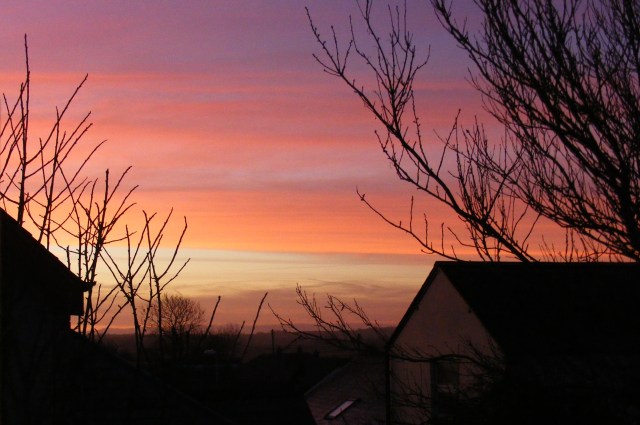
And a pretty sunrise from my bedroom window (December 2017), just because I can.

19 Dec 2017 1 (2)


Isolation Capers Two Weeks In – Day 14

We started early so today is day 14 for us. As the situation around us worsens, here are a selection of joyful moments.

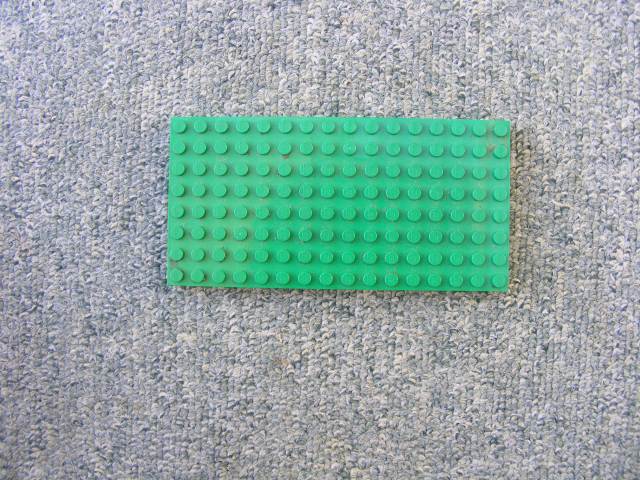
The grandchildren have been participating in a Lego building challenge. Thursday (day 4) the challenge was the flag of your favourite country. I thought I’d cracked this with Libya.

DSCF0494

Turns out this is no longer Libya’s flag – drat.

We also had a family ‘wear your lobster socks to isolation’ day, which went well.

DSCF0495.JPG

Disclaimer – these are not my feet and legs

Given that the glorious weather (and goodness doesn’t it help) was not predicted to last, we went for outside activities. I managed to paint two bookcases and my co-isolatee has made good progress with the outside window frames. I am not close to running out of things for him to do (purely for his own benefit of course) any time soon.

Excited to receive my copy of Sara Read’s The Gossip. It is set in 1665 Could be topical.

DSCF0497.JPG

We did the clapping for the NHS thing. It seems so little but it helps us to do something and we are able to stay in, so that’s our greatest contribution. Inevitably, there is evidence that people have no idea what the word ‘essential’ means and they are going out unnecessarily.

Martha managed to get us a food delivery slot for Monday – yay! Won’t have to break open the six year old cream crackers yet.

I joined in a genealogy chat with some friends, mostly those in Australia and New Zealand, so it started at 7.30am but I can do 7.30am.

After many struggles, I managed (I hope) to upload my new One-Place Studies booklet Ten Steps to a One-Place Study, so it can be purchased from Amazon in a day or two. If you buy one and the formatting is weird please be gentle with me – it’s all a learning curve. I haven’t worked out how to download a copy of the cover, which I created on Amazon, that isn’t super fuzzy, so you will have to make do with the image that I used on the cover instead. When printers are up and running again, it will be possible to buy copies from me as well.

146 8 August 2014 Dull and Boring sign.JPG

Day 11 Fruit and Veg, Toilet Rolls, Genealogy and other Isolation Issues

Today is day 11 for us. I am rapidly going to lose track of how many days it is and I certainly have to stop and think about the day of the week. The last few days have brought some highs and lows.

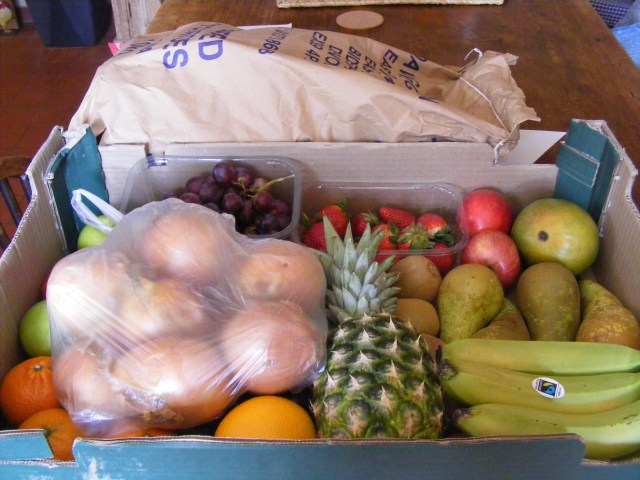
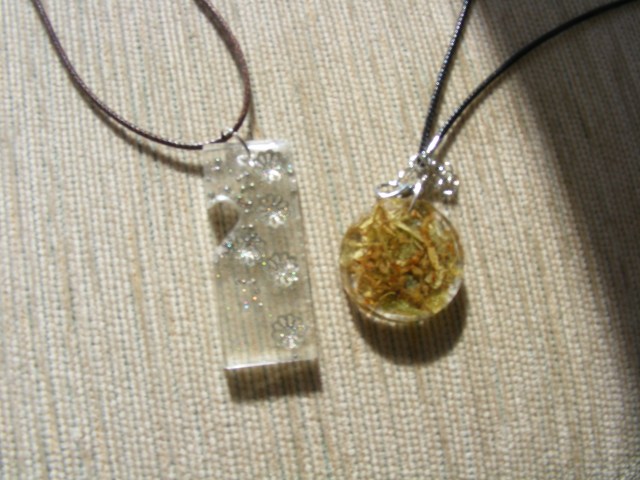
First positive was the discovery of one and a half toilet rolls. Ok, so they were in the almost never used outside toilet and covered in cobwebs but someone in the household is willing to use them. Actually, we have sufficient toilet rolls but the absence of any online shopping slots in the next three weeks is worrying. I do have a slot booked for two weeks’ time but very little of my potential order is currently available. I was feeling quite down about this yesterday morning but first our wonderful community shop, run by volunteers, delivered a few essentials such as bread and milk and then a massive box of fruit and veg arrived, ordered by Rebecca in lieu of Mother’s Day flowers. Under current circumstances, better than any flowers, there might have been a tear or two. A parcel arrived from BeingEdward for Mother’s Day. I Skyped to say thank you. He has been making resin jewellery with his mum. He had given me a necklace with half a heart shape and was very excited to show me that he was wearing the matching other half, cue more emotion.

DSCF0492

DSCF0493.JPGI am eternally grateful for ‘online’. I’ve helped Edward lay out a family tree. I managed to access Zoom for the first time to chat with other genealogy types and used Skype to meet with my authors’ group. I think Martha, Lucy and I are planning a family music recital later in the week. On the downside, I have a totally unintelligible communication from the US tax people, or possibly from Amazon, relating to my meagre Amazon sales to the US. I fill in my own UK self-assessment forms with ease. This is unintelligible, as is the website it directs you to. It seems I am a ‘non-resident alien’ (that may explain a lot) and I may need to visit my US Embassy for a tax form – like that’s going to happen. Or I can write to Illinois, ditto at present – not going to make a non-essential Post Office visit. So now I am worrying about being hauled off to some federal prison for non-payment of taxes.

Thanks to my co-isolatee, my lawn has been mown and even the shed is looking tidier. We planted some seeds. They are pretty antique but archaeologists have got Roman seeds to grow right? I spent an hour cancelling various aspects of our planned holiday to Ireland – hopefully we will be able to go next year instead.

I dropped in on #AncestryHour on Twitter. The lovely Daniel of Daniel’s Genealogy has interviewed me. Ah there’s another new novel clue for you – it does mention #Ancestryhour. I am still finding it very difficult to concentrate on anything, particularly writing and everything is taking longer than usual. Nonetheless my new One Place Study booklet is finished and with beta readers. You cannot imagine how long it took me to get Word to behave so that the pages that I wanted to have numbers did and that they were the correct numbers.

I am starting to get to know my next batch of students for my Writing and Telling Your Family History Course. I feel some of them may have more time than usual to devote to this. Still time to sign up if you want to join the merry throng – it starts on Tuesday – providing any of us can actually remember when Tuesday is!

Of Plagues, Pianos, Books and Surviving 2020

It is difficult to know what to write at the moment. Do I grit my teeth in ‘keep calm and carry on fashion’? Do I write uplifting stuff? Do I list all the adverts that are turning up on my social media feeds, most of which are for cleaning products at grossly inflated prices, or items that feed upon my fear? ‘Protect yourself from all known germs for thirty days by wearing this magic (very expensive) virus disinfection card round your neck’. Really? In their desperation people will clutch at anything. There are always those who are quick to capitalise. Our baser survival instincts are kicking in and baser they certainly are. I’ll admit it, ‘My name is Janet and my bathroom cupboard contains more toilet rolls than usual’. Not a crazy amount but yes, more than usual and I did panic buy two tins of carrots the other day. I am not stockpiling but I am replenishing larder and fridge more often than I might. I am wondering just how long I could manage without going out or having anything delivered. Current thinking is probably about four weeks, maybe longer with rationing, I do need to lose weight. My diet would be odd but I would not starve. I don’t use bread or milk, which helps.

I am lurching between making an effort to do things as normally as possible and just wanting to lock the door for three months. I’ll be honest, mostly I just want to lock the door. Normally, I am not one to panic but this, this is unprecedented. I think of my worldwide circle of friends, my neighbours, many of whom are in the vulnerable groups and yes, I do wonder who will make it out the other side. I like to think I’d be calmer if I wasn’t (just) within the higher risk age group, if I didn’t have what is referred to as ‘a pre-existing condition’ but maybe I’d still be scared. Events, from the village weekly coffee morning to Rootstech London, are being cancelled and I am relieved that the decision is being taken out of my hands; I don’t need to weigh up how risky my attendance might be. Like most people, I’d really like to skip the next few months and wake up to a saner world.

In other news and you’d be forgiven for thinking there is no other news. Every conversation, every news bulletin, every social media post seems to be about nothing else but there really is other news.

I’ve recently started having piano lessons. I have had lessons before, for a year, when I was seven. That was a very long time ago and my fingers were not so stiff then. After three lessons, I can stumble my way through classics of the 60s and 70s like Streets of London and Let it Be. Just don’t try to sing along unless you sing very slowly. Next on the bucket list might be learning Cornish, although I am reminded just how awful I am at any language but English.

The various writing projects are making progress. It may be as well that it looks like I will be home for a month when I expected to be in Ireland on holiday. This will give me some breathing space. My new one-place studies booklet is pretty much finished and the one-place course, which will see its first airing in September, is coming on. Pharos are already taking bookings. The novel too is nearly done. The clue for today is that it includes a chapter set in a plague outbreak that occurred in 1646. I have re-written that chapter with a much greater understanding of the sheer terror that my characters would have felt. As I haven’t put up many posts lately, I’ll give you another clue. The modern strand is set between June and September 2020. This is causing some problems! I am too locked into that time span to change it. Things are occurring daily that mean I need to alter sections; when I wrote most of it there was no corona virus. I need to go to press in June. There will come a point where there will need to be an author’s note, explaining why my characters’ experiences may not mirror reality and I’ll just have to go with it.

One thing I am not worried about is my ability to hibernate. I can find plenty to do without leaving home. I am very relieved that I have a garden. I would struggle if I could not get outside, particularly in the summer. I think of all the projects that might get done in a month’s isolation, tidying, decorating, reminding myself how to spin, writing up more branches of my family history. Incidentally, if you are thinking of using self-isolation to turn your family history notes and files into some sort of story and would like some inspiration and motivation, there are still a couple of space on my online Writing and Telling your Family History course which starts on 31st. It is a five week course but it will give you enough suggestions to keep you busy whilst the world calms down.

Look after yourselves my friends. Remember it is ok to be scared. Talk about it. Self-isolate but don’t be isolated. We need to care for our mental as well as our physical health. We are fortunate that we have the technology that allows us to support each other without meeting face to face.

Bluebells 2

Because we all need beautiful flowers right now

Who am I Related to?

As regular readers will know, I am comparatively new to the convoluted ‘excitements’ of Ancestry DNA matches. I’ve been having a little play. If you have nothing better to do, you might see how your matches compare. You probably won’t all read to the end so I will put today’s new novel hint at the beginning – #5 It contains a modern strand. The novel also has the beginnings of its own webpage now. This post is probably for those who like fiddling with numbers and charts. If that’s not you, please go and use your time more wisely and stop reading now.

So, back to the DNA. I have, according to Ancestry, two 3-4th cousin matches, 316 4th-6th cousin matches and as of this minute, 35,218 5th-8th cousin matches. I have looked at all those with common ancestors (allegedly 86 people although a couple have some incorrect trees). I have also checked all those that match at 16cM or more and all the shared matches of these people, plus a random selection of others. That’s over 2000 matches in all. So far, I have identified precisely how I am related to 78 people. The DNA that I share with some of these individuals is a little as 6cm. I am also more closely related to some than ancestry believes. Thanks to shared matching, I have an additional 237 matches, where I can tell which branch of the family is likely to be responsible for the link, although not the precise details of how we are connected.

I am very far from being a DNA expert, so please do tell me if all this is total nonsense. Anyway, I thought it might be fun to consider how my matches are distributed amongst different branches of my family and to speculate on why not all my great great grandparents are equally represented.

My paternal grandfather’s paternal grandfather

The Braund family from Devon and Cornwall can be traced back to the 1680s. 28 of my identified matches relate to this branch of the family and I know precisely how 20 of them relate to me. The closest relations are two 3rd cousins once removed, with whom I share 35 and 20cM. Most are 6th cousins but I do have a 7th cousin (who matches at 11cM) and a 7th cousin once removed (with 15 shared cM). I have not ruled out being related twice over with some of these individuals. In fact, in one case, I know I am.

My paternal grandfather’s paternal grandmother

The Nicholls family, also from Cornwall, can be traced back the 1630s. They yield just six matches, only one of which I can precisely identify. This is a 4th cousin once removed (a 20cM match).

My paternal grandfather’s maternal grandfather

The Bishops, another west country family, are responsible for a whopping 104 matches, most of whom have no trees or private trees. The 12 for whom I have precise details of how we are related, vary from a 3rd cousin once removed, who only shares 12cM of DNA, to several 6th cousins, one of whom shares 14cM.

My paternal grandfather’s maternal grandmother

The Buckinghams and their forebears come from Cornwall. I have 39 matches that I have identified as relating to this branch, three of whom have a known place on the family tree. These range from a 5th cousin (21cm) to a 6th cousin (11cm). The closest relative shares 43cM of DNA (precise relationship unknown).

This quarter of my family is responsible for nearly 60% of my identified matches. There are obviously a number of factors at work here. Firstly, as I have not inherited an equal amount of DNA from each grandparent, I am less likely to have matches with those whose DNA is more diluted in my make-up. Perhaps I have a higher proportion of west-country DNA (although Living DNA’s ethnicity estimate suggests not). In addition and probably more significantly, the south-west branches are likely to be linked to a higher proportion of emigrants, therefore there will be more residents of the USA amongst the wider family. Given the much higher number of US citizens who have tested, this is bound to have an impact. Also, by using shared matches to identify likely group members, there is a snowball effect.

My paternal grandmother’s paternal grandparents

What about the other three quarters of my ancestry? My paternal grandmother’s quarter is the poorest yield for DNA matches, with none for her father, the Hoggs from Northumberland and just two 4th cousins (19cM shared) for her paternal grandmother. I believe that this is largely because these lines are more difficult to trace, not just for me but for other researchers too. The Hogg line hits a brick wall in 1804. Therefore matches on these lines are probably hidden within the many hundreds of matches for whom I cannot identify a common ancestor. Of course, I cannot ignore the possibility that Mr Hogg may not actually be my genetic great great grandparent.

My paternal grandmother’s maternal grandparents

The Howe and Stratford lines from Buckinghamshire (with 7 matches, 4 of which are identified), give me one of my closest matches, a third cousin, yet we share just 27cM. It looks as if this grandparent is under-represented in my DNA, another possible reason for fewer matches. So, fewer than 3% of my matches come from my paternal grandmother.

My maternal grandfather’s ancestors

On my mother’s father’s side we hit the problem of endogamy; with the Smiths and the Seears intermarrying in three successive generations. This means that I am related to most of my matches in more than one way, making meaningful analysis difficult. I do have 46 matches in this line, five of whom can be located on my family tree. I have one matche to my Norfolk great great grandparent, Anne Bulley, a 4th cousin sharing 18cM of DNA). This again is a difficult-to-trace branch. Despite this, 15% of my matches relate to my maternal grandfather.

My maternal grandmother’s ancestors

Finally, to my maternal grandmother’s line. The Sussex Woolgars are well documented and can be traced back to the C15th, so perhaps it is not surprising that there are 23 relatives on this branch, ranging from a 4th cousin (with only 6cM shared) to a 6th cousin sharing 17cM. Six of these can be precisely identified.

On the virtually impossible to trace Cardell line I have two matches. These support my speculation as to the ancestry of my brick wall ancestor but more is needed.

The Essex Dawsons and Bowyers can be traced back to the 1650s, again giving potential for plenty of matches and there are 47 of them, of which I can pinpoint the exact relationship for 16, all of whom are 4th– 6th cousins. Thus, this grandparent gives me 23% of my matches, not far from her fair share.

In summary then, this is the percentage of matches that each grandparents is responsible for:-

Paternal grandfather 60%, paternal grandmother 3%, maternal grandfather 15%, maternal grandmother 23% – sorry, I know that adds up to 101% – blame rounding up/down.

Ancestry have just announced their Mother’s Day sale. Shall  take the plunge and get a daughter to test, so I can do all this for her paternal ancestry as well?

* My only connection with any DNA testing company, is as a customer. I have received no concessions, free gifts or financial inducements from any of them.

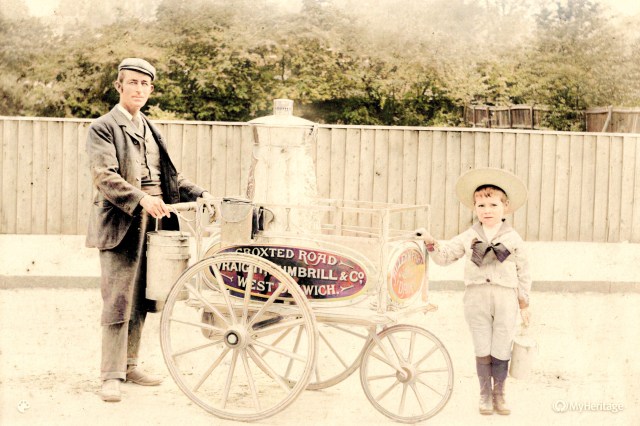
And just because I can, one of my favourite family photos, colourised by MyHeritage and then enhanced by me.Colourised Philip James and Percy James Woolgar c 1896
Scouting for Boys – and Girls

Warning: Proud Granny elements in this post but mostly family history.

This month has seen not one but two of my descendants continue the family tradition of involvement with the Scouting/Guiding movement. Both Edward and Lucy have been invested as Beavers. This occasion is significant for both of them but for Edward it also marks a step forward in his ability to work in a group setting – more of that on BeingEdward at a later date. They are the fourth generation to be involved in scouting. Edward’s mum was a Rainbow, a Brownie a Guide and a Brownie leader. She is now ‘Rabbit’ (all the adults are named after Winnie the Pooh characters) for Edward’s Beaver Colony. Lucy’s mum was a Brownie (Rainbows hadn’t been invented then) a Guide, earning the Baden-Powell Award and a young leader. I was, briefly, a Brownie and then an enthusiastic Guide before a spell as Tawny Owl.

Other family members have also been involved. Lucy and Edward’s maternal grandfather was a Cub and a Queen’s Scout. His father, their great-grandfather, was also  a Scout leader. It isn’t just their maternal ancestors who have been involved in scouting. There have been Beavers, Cubs, Scouts, Guides and Cub leaders amongst their paternal ancestors too.

I was trying to put together photographic evidence of this and discovered that I only have one photograph documenting my five years as a guide and this is blurry as it is taken from a slide. I do have a few pictures of others at camps but not of me. It just shows how easily a significant part of one’s past can disappear from the family record. My time as a Brownie and a Brownie leader are merely the stuff of memory, although somewhere in the loft I do have my brownie promise card. Our badges do survive and now adorn blankets. I have my guide handbook and a 1948 edition of Scouting for Boys, which must have belonged to my late father-in-law. It is exciting to see these traditions pass to a new generation.


So Your DNA Results are ‘Wrong’

* My only connection with Living DNA, or any other DNA testing company, is as a customer. I have received no concessions, free gifts or financial inducements from any of them. I receive no benefits should you decide to purchase their tests.

In the light of the recent ethnicity updates from Living DNA, the perceived accuracy of these estimates has again been the subject of heated debate. Personally, regarding the Living DNA update, I am very pleased with the strong correlation between the documentary trees and the ethnicity estimates of the three kits that I am involved with. This may be because we all have, as far as we know, 100% British ancestry within the genealogical time-frame. Inevitably, amidst the excitement and praise, the updates have brought out plenty of ‘my results are wrong, this company is rubbish’ comments. Indeed, I too have looked at the ‘accuracy’ of the estimates (and used the word rubbish about previous results – although I did qualify it!).

I am a long way from being any kind of DNA expert but many of the main complainants seem to be missing a number of points. Firstly, these are estimates, it is an emerging science, we are a long way away from ethnicity profiles being a complete reflection of our ancestral origins. They will become more accurate over time but the results are currently only as accurate as the base populations from which they are derived. They are more accurate for some areas than others. In Living DNA’s case, it seems that those with British ancestry are more likely to find that their results are a better reflection of the documentary evidence, than those whose families originate elsewhere.

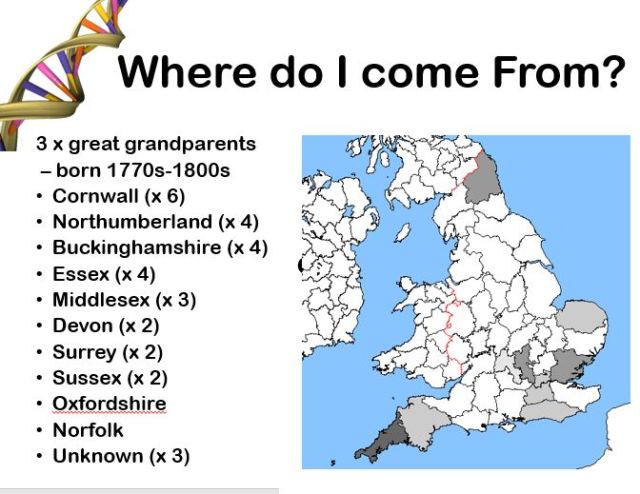
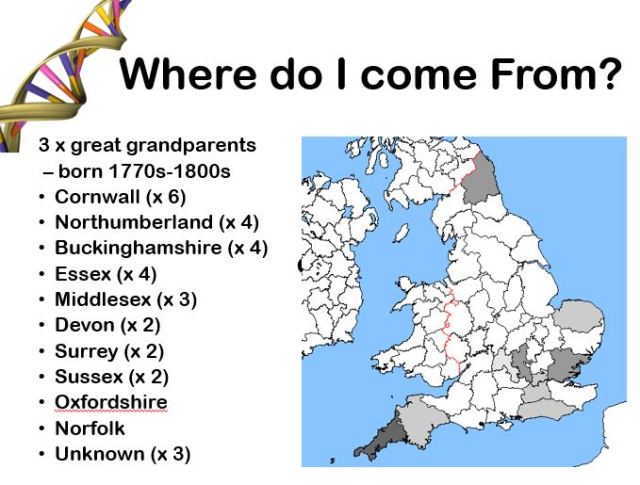
The crucial issue here is how we are measuring ‘accuracy’? Are we looking at where our grandparents were born? Our great grandparents? Their parents? In a British context, having talked to a number of family historians, it seems that you have to go back to those born about 1770-1800 (for me that is 3 x great-grandparents) before you stop adding additional birth counties (N.B. that is counties not countries) to your make-up. Here is an example:- My parents were born in two adjacent counties, Surrey and Middlesex. This does not reflect my earlier origins very well. If I go back to my grandparents, they were born in Surrey, Middlesex (x 2) and Cornwall, so I have added a county. Great grandparents adds Northumberland, Essex and Buckinghamshire to the mix of birthplaces. The next generation adds Sussex and Norfolk. The birthplaces of my 3 x great grandparents looks like the map below and beyond that only those counties illustrated feature. If I were able to go back beyond the genealogical time-frame (earlier than 1500) my deeper ancestry will be more diverse. Anyone with a British family trees will ultimately descend from those with origins in Europe (Saxons, Normans, Vikings, etc.) and beyond but it is unlikely that these individuals will ever appear on our documentary family trees.

Capture

Map created using Genmap

If you are non-British, there will be different considerations of course. Even for those whose ancestry is British, migration patterns cannot be ignored. For example, many who have Northern Irish ancestry in 1800 will find that these families came originally from Scotland or England. We may not know that because we are unable to trace our lines back that far but that may be what the DNA will reflect.

This is not all of course. We all assume that our documentary tree is genetically correct in every particular. It won’t be. Somewhere along one line or another, our solidly Yorkshire great-grandad won’t actually be the father of grandma. Great-grandma will have had a liaison with someone from Kent, or Germany, or Kazakhstan and we will never know, unless DNA matches give us a clue. Our only measure of accuracy is the tree we have lovingly researched and it is gratifying when our ethnicity estimate suggests we have got it right but it is not the company’s fault if we have got it wrong.

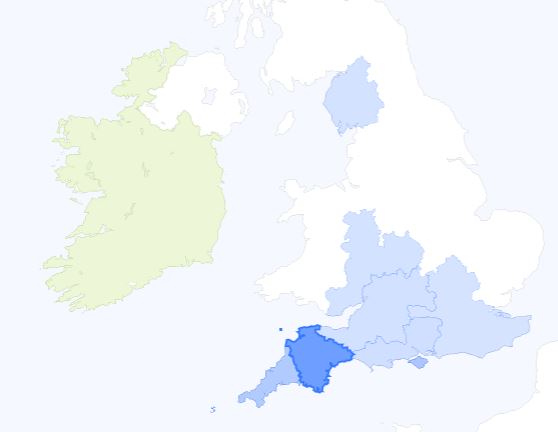
On the subject of updates, for my kits, the final Living DNA update is in and I should comment on that, as I have on the others. This person has ancestry from a very restricted geographical area (I promised not to use the word in-bred). So much so, that his sample formed part of the base data to identify Devon DNA. Going back to the ‘magic’ 1770-1800 mark (3 x great grandparents), 88% of his ancestry comes from within fifteen miles of his own birthplace and covers just two adjacent registration districts in north-west Devon. The other 12% is from Cornwall.

The original results were more diverse than this implies:

Devon 48.6%

Cornwall 24.5%

South-east England 13.8%

South England 7%

Cumbria 2.4%

Ireland 2%

South central England 1.6%

The new results reflect the documentary tree more closely:

Devon 64%

Cornwall 22.5%

South England 4%

Ireland 2.4%

South Central England 2.4%

South Wales Border 1.9%

Cumbria 1.7%

South-east England 1%

Now, anything other than the south-west appears to be just ‘noise’.

Capture

Map from Living DNA

Nothing to do with DNA but I know there are readers who are waiting for hint about my next historical novel. I have already said that it is, like Barefoot on the Cobbles, based on a true story. It is also, again like Barefoot, rooted in rigorous genealogical research. Oh and it does now have a title but I will be revealing that at a later date.

Another Day, Another Set of Living DNA Results

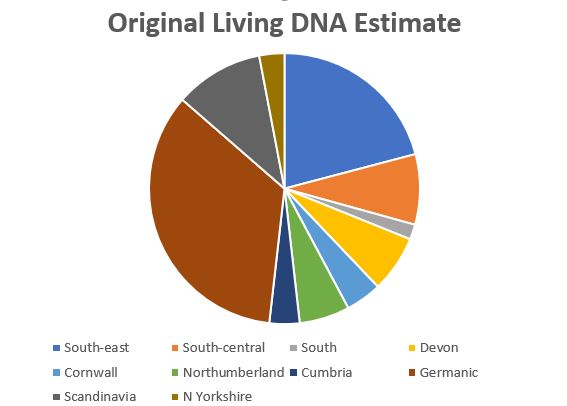
So today the second set of DNA results that I look after at Living DNA have received their update. These are Martha’s ethnicity estimate. Although I was very pleased with my own initial Living DNA results and their close resemblance to my documentary tree, Martha’s original results were, not to put too fine a point on it, pretty rubbish. Here are the comments that I made at the time. I do appreciate that our documentary trees do not always mirror our genetic trees and that ethnicity estimates are just that but Martha’s original results had us wondering if she had been swapped at birth, or, less dramatically, if she had been given someone else’s results altogether. As she matched both me and her maternal aunt, it seemed that neither scenario was the case.

Martha original Living DNA estimate

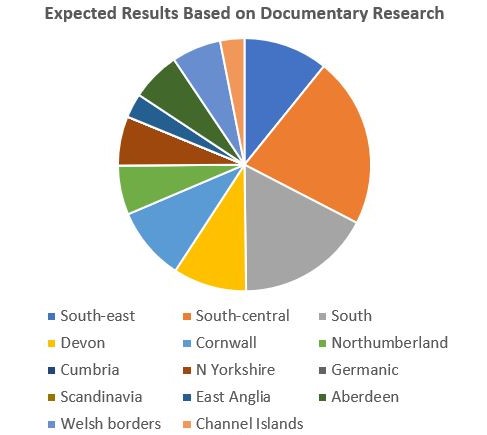
Martha expected results

It was a lovely surprise therefore to find that the updated results were much closer to what forty years worth of documentary research might have led me to expect. Previously, 45% of Martha’s DNA was designated to be Germanic or Scandinavian. Migrations from Europe to the east coast notwithstanding, this was a ridiculously high amount. This has now diminished to a much more likely 3.3%. Last time there was no trace of her paternal Scottish ancestry, a significant proportion from the Forest of Dean, her Welsh borders roots, or the small amount from the Channel Islands. Now, the Forest of Dean shows up, as does Aberdeenshire, although there is still no sign of Worcestershire, which is included in the Welsh borders region. What is notable is the complete lack of Yorkshire ancestry this time. I have 6.7% from Yorkshire in my revised estimate and I have not yet found any ancestors from Yorkshire. Martha, on the other hand, who now has zero Yorkshire DNA, has a Yorkshire great great grandparent.

Martha Feb 2020 Living DNA estimate

So then how close is Martha’s new estimate to what I might expect? As I did for my results yesterday, let’s look at this one region at a time.

Devon and Cornwall first. If Martha had inherited equally from all her 3 x great grandparents (which I know she will not have), her profile should show 9.4% each from both Devon and Cornwall. Last time, this was slightly under represented with 6.8% from Devon and 4.3% from Cornwall. The new results reveal similar amounts: 8.6% for Devon and 3.9% for Cornwall. This swing from Cornwall to Devon, small in Martha’s case, is more marked in my revised estimate.

Northumberland was about right last time at 6%. This has increased to 9.4%. Scotland now appears with 3.4%, as opposed to an anticipated 6.3%. Taken together, these regions are as expected.

The south and south-east of the country is where the highest percentages lie, according to the documentary evidence, with 53% having origins in these regions. Last time, only 30% showed up but now it is a much more realistic 68%. It is difficult to comment on the distribution between the south, south-central, south-eastern and east Anglia regions, partly because Living DNA include Essex in both the south-east and East Anglia.

So the verdict so far, with two out of three updates in, mine has gone from good to still good and  Martha’s, has gone from poor to good. Overall, I am very satisfied. Let us see what the third update will bring.

New DNA Results from Living DNA – some thoughts

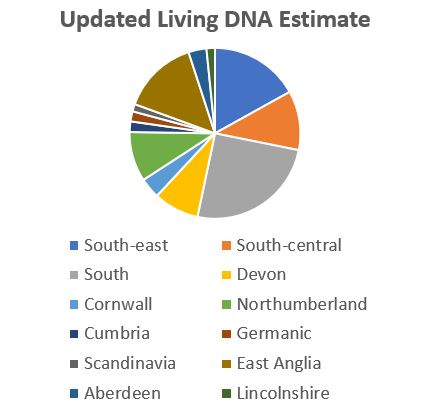
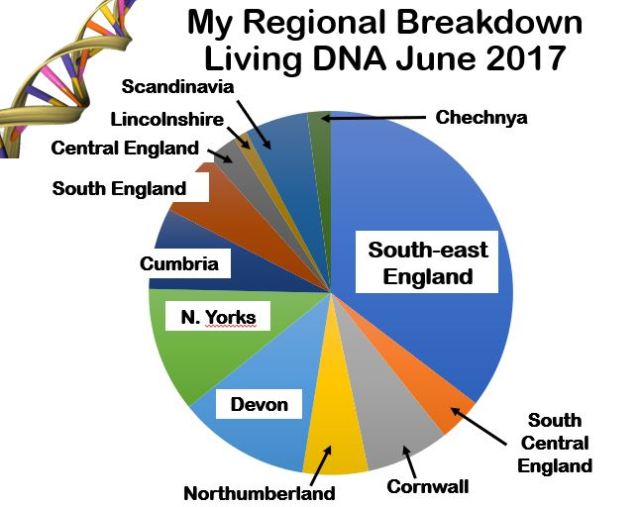
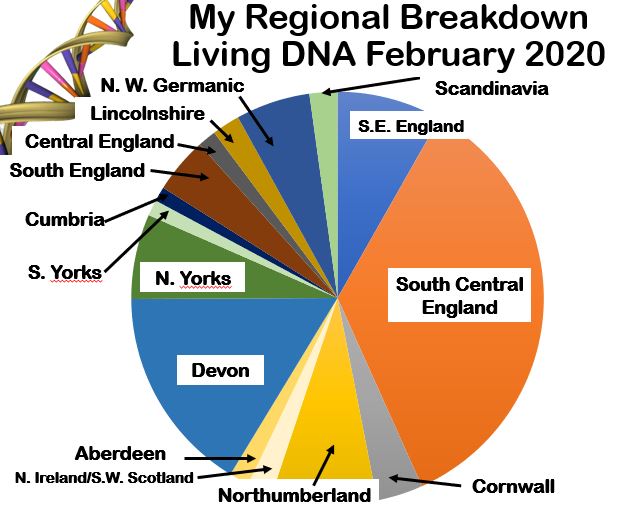
Well, that was exciting. My updated ethnicity estimate from Living DNA is in. My original results, which I received in June 2017, were a pretty fair reflection of my  what I expected, based on my documentary tree. Compared to my estimates from other companies, it was the closest match to what I have discovered during over forty years of research. Here is what I wrote at the time, some of which I have repeated here.

Today’s revised estimate is based on Living DNA’s improved, more refined data. There are no massive changes but it is interesting to examine the subtle differences and how the new results compare to my predictions, based on the paper trail.

I am now in my fifth decade of family history research and have an extensive pedigree based on documentary research. I am fortunate to know the geographical origins of 31 of my 32 3 x great grand-parents and 75% of the generation before that. This takes me back to the mid-eighteenth century, well before the point at which my ancestors converged on Greater London. Of course, these estimates are just that, ESTIMATES but as the science improves, we might expect that they will become more accurate.

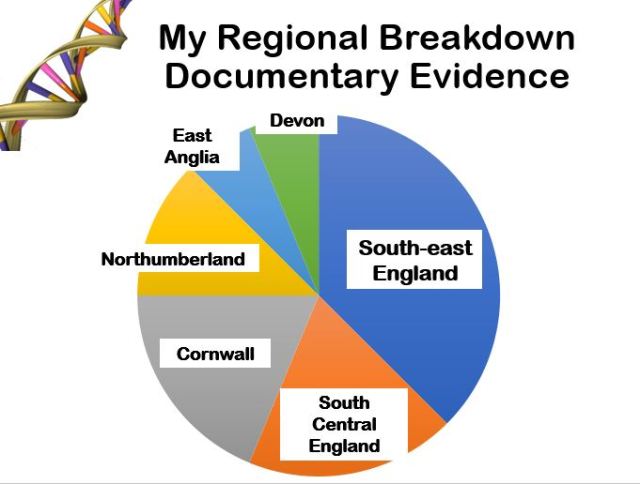
In preparation for the original results, I used my research to work out what I might expect. I am aware that the DNA that I have inherited does not come equally from all my 3 x great-grandparents and that some of them may have left no trace in my profile but I had no way of taking account of this. I am also assuming that my documentary pedigree is correct. Matches at other testing companies have, so far, not given me any reason to think that my genetic tree is different from my paper one. Based on my knowledge, my expectation was that my genetic make-up would reveal:-

Cornwall 20%

Devon 5%

Northumberland 12.5%

South Eastern England 37.5%

South Central England 19%

East Anglia 6%

So, as I did with the first results, let us examine a region at a time. Firstly the south-west, Devon and Cornwall. By my reckoning, the south-west makes up 25% of my ancestry, with 20% being Cornish and 5% for Devon. Living DNA’s first percentages were 7.4% Cornish and 11.7% from Devon. Now, the overall percentage is the same – 19.1% but the distinction between Devon and Cornwall has become less accurate, rather than more, with 3.5% Cornish and 15.6% now being allocated to Devon. As my south-west ancestors lived very close to the Devon-Cornwall border, on one side or another, I am not disappointed with this.

Next, Northumberland, which I would expect to be 12.5% of my ancestry. With the original results, by adding the estimates for Northumberland (5.8%) and Cumberland (7.2%), I had the anticipated 13%. This segment of my ancestry has now been refined to be slightly more accurate, with 7.9% for Northumberland, 1.1% for the North-west, 1.9% N.Ireland/S.W. Scotland and 1.5% Aberdeenshire, a total of 12.4%. I suspect that the lost 0.6% has defected to Europe.

In the south-east, again the more refined breakdowns have become less similar to the documentary tree. I believe that the bulk of my ancestors, 37.5%, come from the south-east, Essex and Sussex. Last time, Living DNA agreed, with 35.3%. Now, the new results show only 7.9% of my make-up being from the south-east. I would anticipate a further 19% to come from the south-central region. This was under-represented first time round, at only 3.9%. The swing to the south-central region has been huge; I now have 33.7% from there. Living DNA has also made minor adjustments to the percentages from the south, which has moved from 5.8% to 4.2% and to the central region, which has gone from 2.7% to 1.4%. So once again, I find that the percentage for the general area is what I would expect but the distribution within that area has become slightly less accurate.

So what does that leave? There is still no sign of my expected 6% East Anglian ancestry. As I commented last time, I suspect that that has become Scandinavian ancestry, which has decreased from 5.6% to 4%. Lincolnshire has increased from 1.2% to 2.1%. I have lost the anomalous 2.1% from Chechnya and gained 7.5% from north-west Germany, perhaps reflecting early migrations to the east coast.

What fascinated me last time and still does, is the alleged Yorkshire ancestry, which has decreased slightly, going from 11.1% for North Yorkshire, to 6.4% for North Yorkshire and 1.2% for South Yorkshire.  At present, I have one great, great grandmother whose origins are unknown but my best guess would be the Shropshire/Worcestershire borders. Should I be looking at Yorkshire instead, or might this be the DNA manifestation of Shropshire/Worcestershire?

I also have a 4 x great grandmother who appears on my tree in that position 3 times, due to the marriage of cousins in two successive generations, thus she represents 4.7% of my ancestry. I do not know her surname and I have no idea of her origins. At present, I have assumed she was from the south-east, which is where her children were born in the 1780s; I wonder if I may be wrong.

So, overall, I still find that Living DNA’s regional breakdown is broadly similar to my documentary tree. The minor tweaks that have come with new results have been a case of win some lose some. Overall though, I am pleased with Living DNA. I am still waiting for the updates on two other kits, so I will be reporting back further then. I am especially interested to see if the one which diverges dramatically from the paper trail has changed.

Capture

Map created using Genmap

Capture

Capture


Living DNA February 2020

* My only connection with Living DNA, or any other DNA testing company, is as a customer. I have received no concessions, free gifts or financial inducements from any of them.