Thoughts on All Hallows Eve

So today is All Hallows Eve. Amidst all the pumpkin carving and tricking and treating, I would like to think about all those who lost their lives and in some parts of the world, are still losing their lives, due to accusations of witchcraft. For the most part, these were unfortunate women (and a few men), often elderly and on the margins of society, who fell foul of the prejudices and intolerance of their neighbours. Sadly, it seems to be human nature to be wary of difference. Is this because we can only cope with threat if we believe it to come from someone ‘not like us’? Are threats are harder to bear if we feel that they come from within our own circle, whether that be geographical, racial or social? My fascination with human behaviour and the history of the marginalised, naturally led me to take a detailed look at witchcraft accusations. A general study for the chapter in Coffers, Clysters, Comfrey and Coifs led to my talk The Burning Time. The parallels between witchcraft accusations and modern bullying are powerful and to highlight these I chose to weave the story that became my novel Sins as Red as Scarlet, setting the true story of witchcraft accusations in Bideford against a strand set in 2020. As I tried to make sense of why three women from Bideford were put to death in 1682, I quickly realised that the seeds of this tragedy had roots that stretched back decades. Whilst on the subject of Sins as Red as Scarlet, I’d like to thank Hidden Branch for this lovely review. It is gratifying to realise that readers understand where I was heading with the book.

So, as you don your witch’s hat, please think about those in your own family history, or from your home area who might have suffered persecution in the past. Apart from the six women who are mentioned in my novel, to give them their real names Temperance Lloyd, Susanna Edwards, Mary Trembles, Elizabeth Caddy, Mary Beare and Grace Elliott, there are others I will be remembering. Not least is Joane Elford, acquitted of ‘laming and pining’ Alice Paynter in 1671. She is almost certainly the sister of my 9 times great-grandfather Peter Elford. I tell the story of the Elford family here but there are very few details available about Joane.

If you want to read Sins as Red as Scarlet, it is available on line but as usual, if you are in the UK, I urge you to come directly to me, to my publisher Blue Poppy Publishing or to your nearest independent bookshop. Happy Halloween.

The Day the Books Came

Two and a half years ago, as the writing of Barefoot on the Cobbles came to an end, I had a glimmer in what passes for my brain of what I would do next. The idea wove, spun and developed, taking itself off in its own direction and then it was now. I have given birth to Sins as Red as Scarlet. Large pantechnicon fails to take note of the ‘on no account use your sat-nav’ directions. It causes chaos negotiating the narrow track to get itself where it should have been in the first place. It blocks the road while a pallet is deposited on the roadside (we don’t have pavements). It unloads 64 boxes. A nice little queue of cars is building up behind. Crowds are gathering. Nothing this exciting has happened in my village all lock-down. Time for the lorry to move off and oh dear, there is a hay-bale laden tractor coming in the opposite direction. Cue pantechnicon .v. tractor stand off. Tractor wins. The lorry and all the cars behind it have to do the reversing thing. Lorry comes very close to reversing into the car immediately behind it. Unfortunately I had put my camera down ready to heft boxes before all the tractoring so there is no photographic evidence.

My settee is now eighteen inches from the wall, I have a teetering pile in the kitchen. I am wondering how many I can ship out before my family visit. I suppose piles of boxes would make a good social distancing barrier. Now it is all systems go for launch day. Take a look at my previous post for details of how to join in. In the meantime, if anyone would like to order a copy or ten, you know where I am.

Day 12 #bfotc sources

Day twelve of the ‘advent calendar’ focusing on some of the historical/genealogical sources that I used in the writing of Barefoot on the Cobbles.

Elsie_Howey

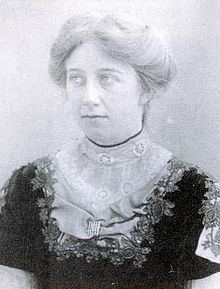
Elsie Howey

No novel set in the early years of the twentieth century should ignore the campaign for women’s suffrage. The incident that took place in Clovelly was a gift and I sought to find out more about the three women who were involved in this militant action. In another one of those co-incidences that peppered my research for this book, it turned out that one of the three, Elsie Howey, was, at the time, leader of the suffragettes in Torquay and Paignton. In reality, I don’t know what led my character, Daisy, to take a job up in Torquay. I toyed with using the suffragettes as the mechanism that accounted for Daisy’s move. In the end, I devised another plausible scenario but I still wonder if she knew and remembered that one of these women had links to Torquay. There is useful online information about Elsie and the Torquay suffragettes that I was able to use.

More information about Barefoot on the Cobbles can be found here. Copies are available at various events and at all my presentations. You can order from Blue Poppy Publishing or directly from me. Kindle editions are available for those in the UK, USA, Australasia and Canada.

#100daysofbfotc Day 100: Polly

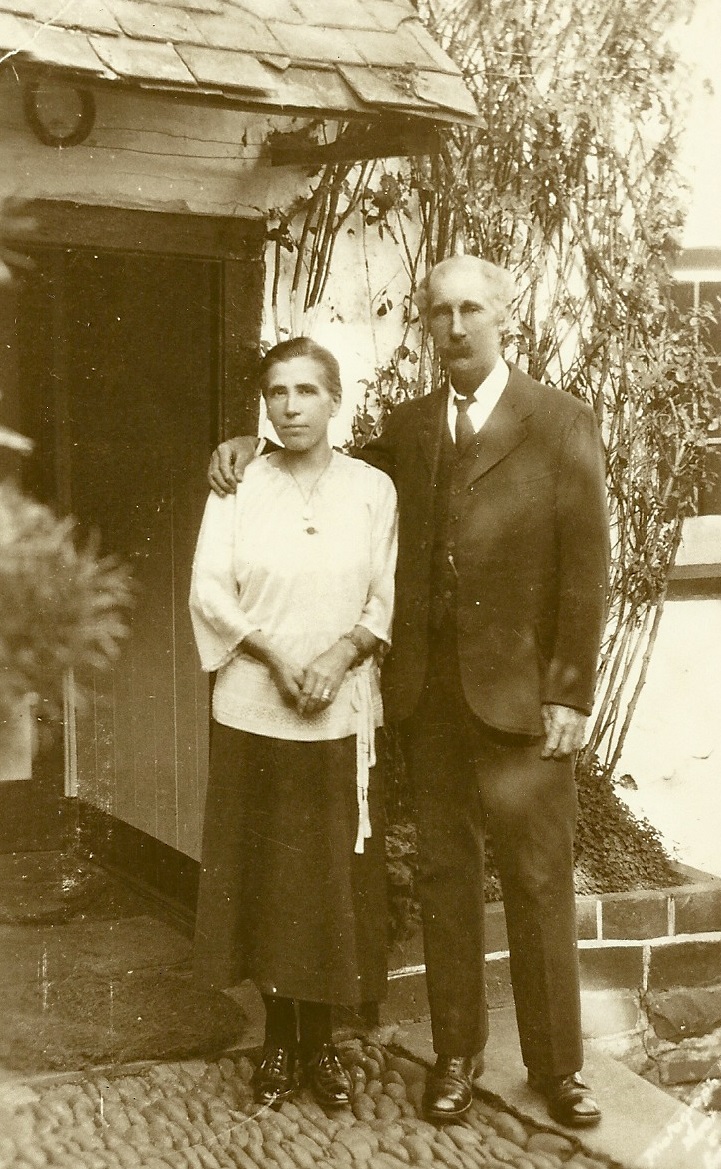
02 Mary Elizabeth and Albert BraundThe final day has to belong to Polly, whose anguish reverberates throughout Barefoot on the Cobbles. She wasn’t intended to be the main character but I think most readers will identify her as such. It was meant to be Daisy’s story. In fact, before the novel got a title, I referred to it as ‘Daisy’. Daisy’s role however is reactive; it is Polly who plays a significant part in driving the narrative. Without doubt, Polly is the character with whom I found it easiest to identify. I understood her fears, her hopes and her despair. She is not a typical ‘heroine’; for most of the book she is elderly, prickly, diffident and not particularly sociable.  William Golding wrote, in Free Fall ‘‘My yesterdays walk with me. They keep step, they are gray faces that peer over my shoulder,’ and this sums up Polly. She is a victim of her life experiences, as indeed are we all. I am fascinated by human behaviour and what makes individuals act in a particular manner, especially if their actions are those that others find strange. Writing the novel gave me the opportunity to explore and attempt to explain, Polly’s motivations and those of the people she encountered.

Polly Wakely was born on 1 April 1872, in Peppercombe Valley, the daughter of a ship’s carpenter. The 1891 census shows that she was in service at Chudleigh Villas, East-the-Water, Bideford. In 1893, she married Albert and as the novel shows, they set up home in Clovelly and had eight children. Barefoot on the Cobbles is Polly’s story, I hope I have done her justice.

There is no quotation from the novel today because tomorrow you can read it in its entirity for yourselves. More information about the novel can be found here. Copies will be available at various events in the weeks following the launch or can be pre-ordered from Blue Poppy Publishing or the author. Kindle editions can be pre-ordered for the UK and also on Amazon.com.

#100daysofbfotc Day 76: Captain James

Captain James with telescopeCaptain James appears in the first chapter of Barefoot on the Cobbles when he is visited by his grandchildren Albert and Eadie. Born in 1809, James spent his whole life living in Bucks Mills. He went to sea at the age of eleven and was a fisherman and pilot. He was credited with saving the lives of several local fishermen who had got into difficulties in Bideford Bay.

In 1836 he married his first cousin Mary and they had eleven children. He probably began his married life in a property known as The Bluff, before building King’s Cottage, next to his father’s home in 1845.  He died in 1898.

The grandfather, Captain James, was held in high regard by the villagers, most of whom were relatives of one kind or another. He could no longer row out to pilot boats in over the bar, or rescue ships in distress, these glories were now merely memories to be shared with the next generation. The old man might still potter in the bay, handline for fish from the shore or sit in the porch and ponder on the past. He would raise his telescope to scan the sea that had been his love and his master for more than eighty years.

Barefoot on the Cobbles will be published on 17 November 2018. More information about the novel can be found here. Copies will be available at various events in the weeks following the launch or can be pre-ordered from Blue Poppy Publishing or the author.


#100daysofbfotc Day 61: Fred

Alfred Braund - Clovelly lifeboat coxwainFred, Albert’s younger brother, is referred to briefly in Barefoot on the Cobbles. In reality, he was Alfred, known as Alf but I felt that this was too similar to Albert, so I opted for the alternative abbreviation. Like Albert, Alfred moved from his Bucks Mills birthplace to Clovelly. He married there and had two children. He was an active lifeboatman and was coxswain for a number of years.

 Albert and Fred, uneasy in their Sunday clothes, would be fidgeting restlessly, aware that there were nets to mend or pots to make but knowing that these were not tasks for the Sabbath.’

Barefoot on the Cobbles will be published on 17 November 2018. More information about the novel can be found here. Copies will be available at various events in the weeks following the launch or can be pre-ordered from Blue Poppy Publishing or the author.

#100daysofbfotc Day 39: King’s Cottage, Bucks Mills

King's Cottage coloured postcard

King’s Cottage, Bucks Mills is the home of Albert and Eadie’s grandparents. We get a glimpse inside in the first chapter of Barefoot on the Cobbles.

On 27 January 1845, Reverend John Thomas Pine Coffin, the landowner, had entered into an agreement with Albert’s grandfather, James, giving him permission to build ‘a house over the watercourse at the machine platform at Buckish, Parkham’. This land was adjacent to James’ father’s home. The new house was to become King’s Cottage and the rent was one shilling a year. By the time we open the front door of King’s Cottage in the novel, the family have lived there for forty five years. They were to remain there for a further twenty years. It was a substantial cottage, with a view over the bay and unique plumbing arrangements, which are mentioned in the book. Kings Cottage was described in the North Devon Journal in 1855, the house ‘at the lower extremity of Bucks, on a towering height above the beach, is a real curiosity. The rivulet that comes down between the hills, by and under part of his eagle’s nest premises, discharges itself in a cataract on the beach where it flows into the Atlantic.’

After the family left, it was tenanted by a relative of Clementine Churchill.

‘Even the gate was exciting, having, as it did, a ship’s wheel at the centre. Eadie’s small fingers would proudly trace the name that was engraved in the wooden frame: King’s Cottage. She smiled; her granfer was a king.’

More information about Bucks Mills can be found here.

Barefoot on the Cobbles will be published on 17 November 2018. More information about the novel can be found here. Copies will be available at various events in the weeks following the launch or can be pre-ordered from Blue Poppy Publishing or the author.

#100daysofbfotc Day 36: Independent Street, Clovelly

Independent Street Flossie Harris on rightIndependent Street, one of Clovelly’s few side streets, first appears in the pages of Barefoot on the Cobbles when Mrs and Mrs Collins arrive as paying guests in the home of Mrs Stanbury.

There isnt much to be said about a single street, an ordinary street, yet the incidents that took place there are the inspiration for the novel. Those houses, those inhabitants and a particular set of circumstances, all contributed to an appalling tragedy.

‘The path divided; Jack and his sledge swung to the right. Amelia was roused from her musings as they drew up at the far end of a row of cottages. Bright hollyhocks framed the newly painted door and the brass knocker shone.

 ‘You there Mrs Stanbury?’ bellowed Jack, rapping vigorously with the knocker. ‘Your guests be ’ere.’ ’

Barefoot on the Cobbles will be published on 17 November 2018. More information about the novel can be found here. Copies will be available at various events in the weeks following the launch or can be pre-ordered from Blue Poppy Publishing or the author.

#100daysofbfotc Day 32 Ada Wakely


Ada

Ada Wakely grew up in the fishing hamlet of Peppercombe, the fourth of five sisters. She appears in Barefoot on the Cobbles as an acolyte to her elder sister, Polly. It is Ada who travels to Bideford to attend Polly’s wedding and Ada who is in Clovelly to assist when her sister gives birth to her firstborn.

One of Ada’s personal tragedies is alluded to chapter 4 of the novel. After marrying a cousin of Polly’s husband Albert, Ada settled in Bucks Mills as a fisherman’s wife. Her son was born after seven years of marriage. Sadly, he was severely disabled and died at the age of twelve. This was not to be the only misfortune in Ada’s life but you will have to wait for the post about her husband, George, to learn more. Ada herself lived to the age of 105, dying in 1981.

‘Ada arrived from Peppercombe on the Friday bringing family news.

‘Ma sends her love,’ she said. ‘She wishes you well, ’tis in part the journey, you know she’s never liked the town. ’Tisn’t that ma hasn’t taken to Albert so much but he is from Bucks and that’s hard for her to swallow. She wants us all to settle down in Peppercombe and not go no further.’

‘And shall you?’ asked Polly.

Ada reddened.

‘Well,’ she said hesitantly, ‘who knows? Maybe I’ll be wed to a man from Bucks too one day.’ ’

 Barefoot on the Cobbles will be published on 17 November 2018. More information about the novel can be found here. Copies will be available at various events in the weeks following the launch or can be pre-ordered from Blue Poppy Publishing or the author.

#100daysofbfotc Day 27: Holidaymakers

Capture 3Holidaymakers who ventured to North Devon’s coast were welcomed and dreaded in equal measure. By the time in which Barefoot on the Cobbles is set, the income from tourists was an increasingly important part of the local economy. For those who lived in Clovelly in particular, money gained from providing for visitors enhanced the precarious living scraped by the fishermen. Some visitors took up residence in the local guest houses, many others were interlopers for a fleeting day. They came by sea from further up the Bristol Channel and were ferried ashore by the fisherman. Others arrived by charabanc from the station at Bideford. Still others were transported by horse-drawn vehicles, to be disgorged at the top the cobbles, so they could descend into a different world, stumbling in their unsuitable shoes.

Through the pages of the novel, we arrive in Clovelly when everything is changing. Soon, it will no longer be a fishing village, with holidaymakers providing a secondary revenue stream; before long tourist vessels will eclipse the fishing boats in the harbour. Folk from ‘up-country’ may pass through, leaving little of themselves behind, or they may dislocate the lives of the inhabitants forever. Welcomed or despised, holidaymakers were needed and they could not be ignored.

‘In half-forgotten pre-war holiday seasons P & A Campbell’s steamers had brought hundreds of day-trippers from Ilfracombe, or even South Wales. Tourists were tolerated. They spoiled the solitude, the silence and the regular rhythm of the fishing year. Yet with them came colour, diversion, bustle, excitement.’

Barefoot on the Cobbles will be published on 17 November 2018. More information about the novel can be found here. Copies will be available at various events in the weeks following the launch or can be pre-ordered from Blue Poppy Publishing or the author.