Christmas Cooking, a Little about Family History and a Bathroom Blitz

Traditionally in my house stir-up whatever day of the week it is is in October half-term. This year was no exception and I was joined on Zoom by some descendants for synchronised cake making. Said descendants don’t make pudding, so I was on my own for that one. Last year, the first attempt at cakes was a total disaster but puddings were a great success. Newly lacking a Rayburn, I decided to try cooking them in a slow cooker, which worked really well. I should explain that I always make three Christmas puddings. This year there will be five of Christmas lunch, some of whom don’t like Christmas pudding but often there’s only two; yet I’ve ‘always’ made three Christmas puddings, so three it is. The recipe makes three and although I am perfectly capable of scaling the quantities down (my cooking may be dodgy but my maths is ok), I don’t. I’d arranged to borrow another slow cooker, so that I could cook more than one at a time. Imagine my surprise, when looking in the cupboard that is really only opened once a year for my annual foray into cooking, to find not one but two slow cookers already there. Thinking I must have borrowed one from the fisherman of my acquaintance last year and not returned it and not being in the slightest surprised that he had just deposited another one for me to use this year (nothing that ‘might come in useful’ is ever thrown away), my reaction was merely – oh good I can cook all three at once. All three puddings duly spent the day in their slow cookers, although I did notice the water in one evaporated quite quickly and had to be topped up. They turned out looking good and I went to wash up the ‘slow cookers’, only to find that one had been cooked in a rarely used and clearly unrecognised, rice cooker instead! For more random Christmas memories see here.

Bathroom next. I have more bathroom space in this tiny bungalow that I had in my five bedroomed house. I use my lovely en-suite and the, similar sized, bathroom is really only used for guests. It was a not-so-delightful salmon pink, with dark mahogany and gold embellishments. For some reason the previous owner had stuck mirror tiles round the bath, which meant you really didn’t want to look in the wrong direction when sat on the loo. A year ago I decided it had to go. It has been a long wait but last week it was my turn to reach the top of the plumber’s list, either that or he was heartily sick of being phoned up to ask exactly which spring he was going to do this by. Still a way to go but he’s really cracking on now and the salmon pink is no more. Firstly, please can someone explain why, when I am having the bathroom done and said bathroom contains only one piece of furniture, why five other rooms (pretty much the whole house) have been impacted and now contain ‘stuff’? To be fair, I have moved the precious china cupboard in the hall to allow for free passage of the ex-bathroom to the van, so that accounts for some of it. Secondly, why is it that, as soon as the water is turned off (despite being warned), you need to use it. I’ve been feeding the Christmas cakes and in the absence of a working tap, I was forced to lick excess brandy off my fingers afterwards. The plumber may have wondered why the house and I, smelt of brandy at 9.30am.

I did promise you some family history and yes there’s been some. Prompted by the upcoming Forgotten Women Friday collaborative research, I remembered that I had a post office worker in my own family. I’ve therefore been writing about my grandmother’s cousin Kathleen. As she was someone with no descendants, if I don’t tell her story no one will. It seems that she was among the first women to qualify for the civil service and subsequently worked in the savings bank department. I’ve also been preparing my Timelines talk, which will be recorded for Rootstech. I’ve got a live one to do as well but that’s for another day. In order to create illustrations for the talk, I used the free version of Canva to produce a timeline for a small section of my grandmother’s life. Very fiddly and not scope for a huge amount of detail but decorative. In other news, a chapter of the next book is finally done. This is definitely a don’t hold your breath thing, as progress is a lot slower than I’d like. This part involved case studies of asylum patients and there were some fascinating but very sad stories. I am also in full-on Pharos course mode, with the one-place studies course drawing to a close – and what a lot of fascination studies are in the offing from the students. Starting on Monday is ‘Elusive Ancestor’, where we look at ancestors who can’t be found where they should be, almost certainly because they’ve changed location. I’ll be readying my sledge hammer to hopefully make some dents in a few brick walls. Feel feel to join us, there still some spaces.

Cousin Kathleen

Christmas is Coming

What does the average person do three days before moving house? Buy a live Christmas tree of course. I am determined to have Christmas decorations, despite moving at a ridiculous time of year and wanted to get in before the weekend rush. Said tree is now stashed in a friend’s garden waiting to be moved in asap. Christmas decorations will indeed come before unpacking boxes.

Creating long blog posts probably isn’t on the agenda at the moment, though but I have posted about Christmas Memories and my vintage Christmas decorations on my Granny’s Tales website. I have also posted about my Christmas decorations, some of which are more than seventy years old, on this site before.

Now back to packing all those awkward last minute bits – you know the sort that never quite fit in to the boxes you have left. This is definitely the most disorganised pack I’ve ever done for a move and I can’t quite work out why. Still unpacking will be a voyage of discovery, with random mixtures in every box. I may not be here until I am on the other side and will need to wait for the wifi to be connected, hopefully that won’t be too long. See you when I have swapped the rural seventeenth century idyll for a home that is once more by the sea.

Christmas Memories

Until recently, I was a columnist for the In-depth Genealogist Magazine and also wrote for their blog. Now the magazine is sadly no more, contributors have been invited to re-post their blog material elsewhere, so that it is preserved. This is another post that I wrote for the magazine, which I have edited to bring it up to date.

This four years ago I was taking delivery of my latest creation; a whole pallet full of poorly wrapped books were deposited near my driveway in the rain. I say my creation but that wasn’t really true. Eighty ladies had spent the preceding eighteen months writing their memories of various aspects of their lives in the decades following the second world war. I then wove these together into what was to become the book Remember Then: women’s memories of 1946-1969 and how to write your own. These ladies wanted copies of the book to give as seasonal gifts and I had very few days in which to package and post numerous copies. So that is a memory of 2015 but what about earlier December memories?

The previous year, my ladies had been writing the section of the book that related to celebrations. We wrote about food, gifts, gatherings, religious ceremonies, decorations and family rituals and traditions. Along with them, I too recorded what I remembered of this special time of year. These memories appeared on a blog post at the time. Many of the traditions of my childhood have been perpetuated by my descendants, other have been lost over the decades, making it important for me to preserve them for posterity. Are your descendants aware of how the holiday season was spent in your youth? Do you have older relatives who you could question about the customs of past decades? These memories are part of your family’s history and should be recorded.

Remember Then cover

To give you a flavour, what follows are just a few of the memories that my ladies shared. I would encourage you to preserve similar recollections for your own family.

“There was one year when the roast potatoes found themselves on the floor. I don’t think the five second rule had been heard of then but the potatoes were eaten, we survived and none the wiser. Then there was catering for Uncle Percy, who emphatically didn’t eat turkey – except of course when we convinced him that it was chicken! Christmas mornings meant cheeselets and ginger ale, later replaced by Benedictine or Southern Comfort.”

“When we were young, we always tried to give my parents a hand-made gift, made and wrapped in great secrecy. I remember string pot cloths, drawn-thread tray cloths, embroidered hankies, frilled aprons, home produced bath salts in decorated bottles, knitted tea cosies, gloves and ties.”

Many of our decorations were hand-made and we spent hours cutting coloured paper into strips and gluing them into chains. We also bought home Chinese paper lanterns made at school and made crepe paper streamers to decorate the ceilings. In later years, I made Christmas bells out of Teacher’s whisky bottle tops, painting them white and dipping the bottom edges in silver or gold glitter, then drilling a hole in the top to hang a bead clapper and a loop to put them on the tree.”

““We always went to the pantomime shortly after Christmas. We usually had good seats at the front on the left as you faced the stage. I have no idea how early mum had to book, or how much she had to pay, to get these premium seats. Being at the front was very important as, at some point, children would be invited to go up on stage and it was whoever could get there quickest. I don’t remember being disappointed. The lucky children would then help with the audience participation song and I think, were given a small gift.”

Glimpses then of past celebrations. Now is the time to grasp your own memories and commit them to paper before they fade into oblivion. By the way should you want a copy of the book, please contact me for details (still on a mission to reduce the book stock 🙂 )


Not actually a Family History Advent Calendar Part 6 Christmas Puzzling and Maps

For most of us, Christmas is a time for traditions, old and new. We recall past Christmases and family occasions. Sadly, there are those for whom this time of year is a challenge; memories are not always happy ones. We blithely wish others ‘Happy Christmas’ or ‘Happy Holidays’ [insert your preferred greeting of choice] but it is often far from happy. So, whilst as a family historian I would encourage you to share and make memories, I know that might not be easy for everyone. It is important to preserve the past, however unpalatable that past might have been but memories should only be dredged up if the process contributes to your own well-being. If slavishly adhering to family traditions or expectations is toxic for you, then ignore them, throw them out and start anew.

I am fortunate that I have wonderful Christmas memories and I enjoy the various traditions that have developed over the years. Some date from my childhood, others are of more recent standing. The past few years has seen the incorporation of Gordon Gray’s fiendish, charity Christmas Puzzle into our family’s seasonal repertoire. Do take a look if you are fans of this sort of thing. My first attempt suggests that I might do slightly better this year than on previous occasions but it is early days!

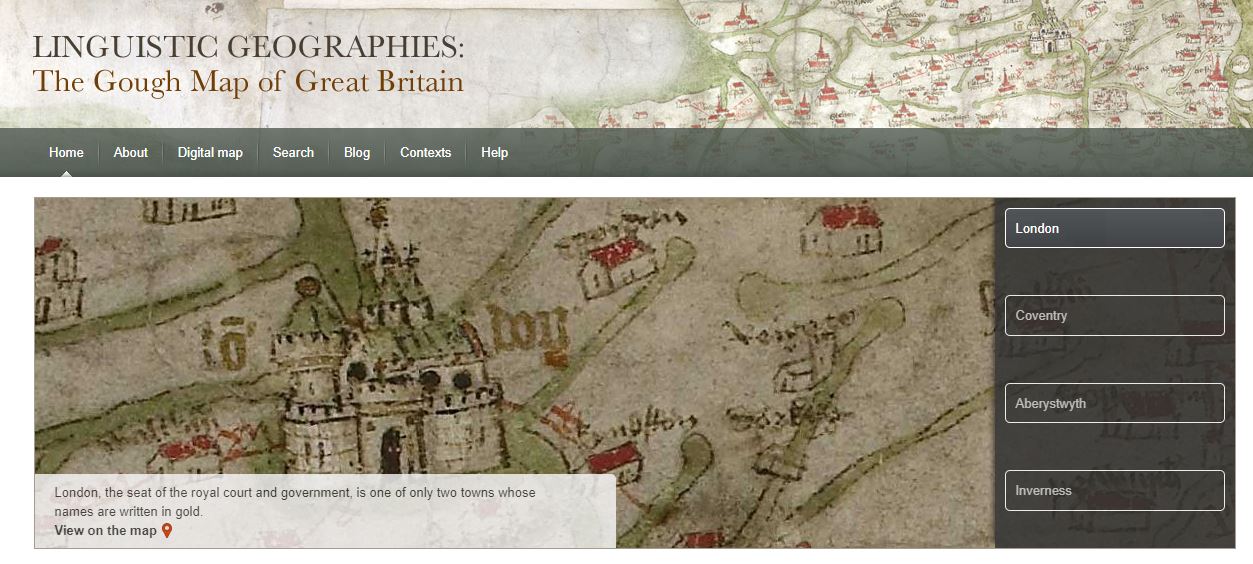
So what do I have as today’s advent favourite website offering? I give you G is for Gough Map. Probably dating from the 1370s, the Gough Map is the oldest known map of Britain. Its website allows searches by modern and Medieval place name. I know that very few people have traced their families back to Medieval times, I certainly haven’t but this is still a fascinating website – great for one-place studies too.

Capture

goughmap.org

Not actually a Family History Advent Calendar Part 4 – Bringing the ancestors to the Christmas party and a bit about clergymen

Last year I was given the task of ordering battery lights for the History Group’s entry in the village Christmas tree competition. This was an abject fail as the string that arrived was about 5cm long but that’s another story. In the magical ‘big brother’ way that is a feature of Facebook algorithms, up popped an advert for a string of lights where each light was also a peg. I had a light bulb moment (no pun intended). These pegs are meant for displaying Christmas cards. All I can say is that the cards would need to be teeny tiny as the pegs are quite close together but I did not want them for cards. I am very fortunate to have an extensive photograph album for my mother’s side of the family. Add to this, the few photographs I have for my father’s family and my daughters’ paternal ancestors and I amassed a cast of eighty. Given my paucity of cousins, I was quite impressed by this.

The pictures span 9 generations, from someone born in 1778 (who lived to be over 90) to someone born in 2013. I printed them out 2-3cm wide/deep and then laminated them. Hint if you are going to try this – leave at least a centimetre of blank laminate above each picture, otherwise the pictures are covered by a peg. I have a duplicate set of pictures for small visitors to play with should they want to. If you are going to do this, you might want to round the corners, as cut up bits of laminate can be quite sharp. One or two recalcitrant cousins do have a habit of twisting round to face the wrong way but that is the way of Christmas ornaments! I also have to remember to set the lights to constant not an annoying flicker (of which there are seven varieties) but I am pleased that I now have eighty family members joining me for Christmas. It is really difficult to photograph the effect successfully, as to get the full impression the pictures are too small to see but this will give you an idea.

DSCF0987.JPG

DSCF0352

Now for today’s alphabetical favourite family history website. C is for Church of England Clergy Database. This site provides biographical data on clergymen, taken form various archives in England and Wales, for the period 1540-1835. For those doing one-place studies, it is possible to use the advanced search to search by place. You may not have clergymen in your own family but it is great fun to learn more about who baptised, married or buried your ancestors. For example, I can tell you who the local curate was in 1620. This was probably just a few years after my house was built.

‘Philip Boteler, ordained deacon 5 Feb 1617 by William Cotton, Bishop of Exeter. 1 Aug 1620 became curate of Buckland Brewer, Bulkworthy, East Putford and West Putford. Went on to be rector of Landcross 5 June 1641’

Picture1

Many of the entries in this year’s advent calendar are based on my book Family Historian’s Enquire Within. I would be very grateful if anyone in the UK wanting to buy a copy would get in touch with me directly (there will be no charge for UK postage). I am trying to free up book storage space ready for novel two arriving!

Not actually a Family History Advent Calendar Part 2

So today has been Christmas cake-making day mark two. I was going to be restrained and only make one but when I learned that the descendants would be descending I thought a second would be in order. I don’t do cooking. The only exceptions are Christmas cake, Christmas pudding and chutney. Christmas cake making (something I’ve been doing for forty years) has a ritual of its own and this extends to the utensils that have to be used. Firstly, the mixing bowl. You can still buy bowls like this but this one was I believe a wedding present for my parents in 1947. The eggs are always cracked into a glass Snoopy mug (late 1970’s vintage), using a bone handled knife that was also a parental wedding gift. The flour is always scooped out using a plastic mug that was mine when I was a toddler. The recipe is always the same, although this year I used gluten free flour for the first time. I always add extra mixed peel. I used ground almonds instead of whole ones. There was a year when I couldn’t get ground almonds and we tried doing things to whole ones in a blender – not the greatest success! In the days when I had assistants, strict turns were taken with adding the ingredients. It still feels odd making the cakes by myself but it is part of Christmas, just like the tree.

DSCF0353.JPG

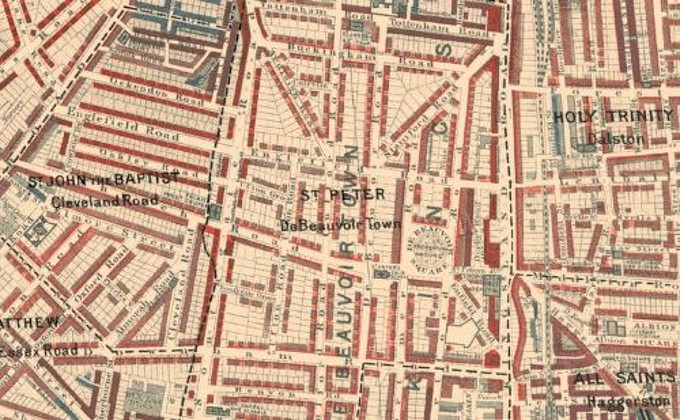
My Family History website offering for today is another London-centric one, apologies for that but I am attempting to be vaguely alphabetical. So do take a look at Booth’s Survey of London. Charles Booth was an influential social reformer and his extensive surveys of Life and Labour in London, undertaken between 1886 and 1903, created a mass of source material that can be very useful for those who have London ancestors. Even if your own family did not live in London, the conditions he described would be equally applicable to large towns and cities elsewhere. His survey investigated working conditions, poverty, migration, leisure and religion. He created a series of colour coded maps, which indicated the social class of each street. These ranged from ‘upper class’ to ‘lowest class, semi-criminal’. These maps are available online and can be searched and freely downloaded. The maps were based on his findings, which were recorded in 450 notebooks that are in the custody of the London School of Economics. Some of the notebooks are viewable on the website; consulting the remainder requires a visit to the London School of Economics’ Library. The notebooks can be searched by keyword, enabling references to particular streets to be identified.

My own ancestors owned a grocer’s and tea dealer’s shop on Kingsland Road, Hackney in the second half of the nineteenth century. From Booth’s maps I can see that it was identified as ‘middle class, well-to-do’ (makes a change for my ancestors). The notebooks tell me that ‘Kingsland Road is a first rate market street in the shopping place of the neighbourhood.’ ‘Saturday is the great marketing night’.

Picture1

From Booth’s Poverty Map http://booth.lse.ac.uk


Not actually a Family History Advent Calendar Part 1

It is beginning to look a lot like …… Decorations are up! I have been putting some of these ornaments on my trees for over fifty years and my mother for more than twenty years before that! Christmas is all about recalling old memories and making new ones; it is about family past and present. I’ll be sharing some family bits and pieces over coming weeks. For more about family associations and my Christmas tree, see my post from 2013.

DSCF0349

Some of my Christmas Tree Ornaments that date from the 1940s

As regular readers are aware, during December, I often blog an advent calendar, with twenty four vaguely history themed posts. I had decided that this year my writing time should be devoted to novel number two, which I really need to finish by the end of March, ready for a late August launch. Added to this, I have been invited to undertake three other writing projects, which I suspect will have tightish deadlines, so another reason for blog posting to take a back seat. It seems, however that my fans (believe me there is a least one) have been eagerly awaiting this year’s offering. Well, I can’t promise twenty four entries (especially as I have already missed two days) but I thought I would share some favourite family/local history websites during December. If you are feeling the advent calendar withdrawal symptoms then you can always re-read these from previous years.

2012 History of Christmas A to Z starts here

2016 Historical Novelists starts here

2017 Social History Books starts here

2018 Barefoot on the Cobbles Sources starts here

For this year though, here is the first of my family history sources, in roughly alphabetical order.

B is for Bomb Sight This site makes public maps of World War II bomb damage in London. There are maps of all incendiary devices that fell on London between 7 October 1941 and 6 June 1941. You can search by street and many incidents are accompanied by photographs or memories. See also The National Archives research guide to the Bomb Census Survey 1940-1945 that can be down loaded from their website.

Picture1

Many of the entries in this years advent calendar are based on my book Family Historian’s Enquire Within. I would be very grateful if anyone in the UK wanting to buy a copy would get in touch with me directly (there will be no charge for UK postage). I am trying to free up book storage space ready for novel two arriving!