The Tale of Peter Pig-owner and should I buy a kilt?

There’s so much going on at the moment, of which more another time but for today a tale that shows you can still find something new, even after over forty years of family history research.

Yesterday I should have been giving my presentation ‘Madness and Melancholia: the mental health of our ancestors’ a final run through (incidentally still time to come along to this one if you cross my palm with £2.50) but my early morning email trawl dictated otherwise.

An email from My Heritage ‘You’ve got Record Matches’. Sorry My Heritage John Parr of Devon and Johann Jakob Parr are not the same person. Nor is Richard William Braund of Cornwall the one in Melbourne. Their third offering did catch my eye. An extract from a history of Alnwick, Northumberland, published in 1866, referring to Peter Eadington a miller. Now, lurking on my tree is 4 x great grandfather Peter Eadington, miller, not of Alnwick but of Norham, some thirty miles north on the Scottish border. I knew that Peter’s daughter lived in Alnwick after she was married but it hadn’t occurred to me that there might be an earlier family connection.

Although my DNA and tree have been uploaded to My Heritage, I don’t have a subscription so couldn’t look at the record but I found a free copy of the book online and could see that this was too late for my Peter Eadington. Nonetheless it set me thinking. about family connections with Alnwick. Firstly, my Peter Eadington was a bit of a lad. He was a miller in Norham between about 1788 and 1805, during which time he had six children by three different women. One, Alice, he appears to have been married to, although no marriage record has been found. His two eldest daughters were probably born within weeks of each other. His story, as was, is available here but now of course it needs updating.

So, the whole of yesterday was spent following this Bright Shiny Object, with some success. During the course of twelve hours’ research I found, amongst other things, that Peter, whose baptism and marriage still elude me, was sometimes called Patrick, as was his first cousin Peter/Patrick, who was also his brother in law. Ancestry tree owners have these two beautifully muddled and today’s task is to decide which of the two married Sarah Dodds. I am almost certain it is my Peter, in which case he lied about his age on his marriage bond, probably because he was nearly twenty years older than Sarah. Personally, I would have been a bit more worried about his chequered past but hey. Unfortunately, this makes him the right age for cousin Peter/Patrick. The will of his father, David, freely available on the North East Inheritance database, was key to all this but because it is not on Ancestry, it has been ignored and therefore the Peter/Patrick name change has not been picked up. Also key is a family gravestone in Alnwick cemetery. The great piece of luck is that all this came to light BEFORE I am due to stay just outside Alnwick. With the luck of 2020 it would have been after, although there is still time for a regional lockdown to sabotage the trip. The bad news is that there are nearly 600 gravestones in Alnwick cemetery – ah well at least we will be socially distanced.

I now know that he, or possibly cousin Peter (I need to check who was at which mill and what time) owned a boar that, when killed, weighed 52 stone. Thanks British Newspaper Library. The ubiquitous Ancestry trees claim Scottish ancestry for both of Peter’s parents. I still have to satisfy myself that this is correct. If it is, they will be my first direct ancestors born outside England, which is very exciting.

Beside this, last week’s discovery that my grandfather’s first cousin was an actor with the fingers of his right hand missing, who performed with Cary Grant, pales into insignificance. William Smith is, after all, a bit harder to trace. So don’t tell me your family history is ‘finished’ there is always more to uncover.

Now back to who married Sarah Dodds?

St. Michael's, Alnwick

St. Michael’s, Alnwick

Book Launches, Boats and a side dressing of Crime

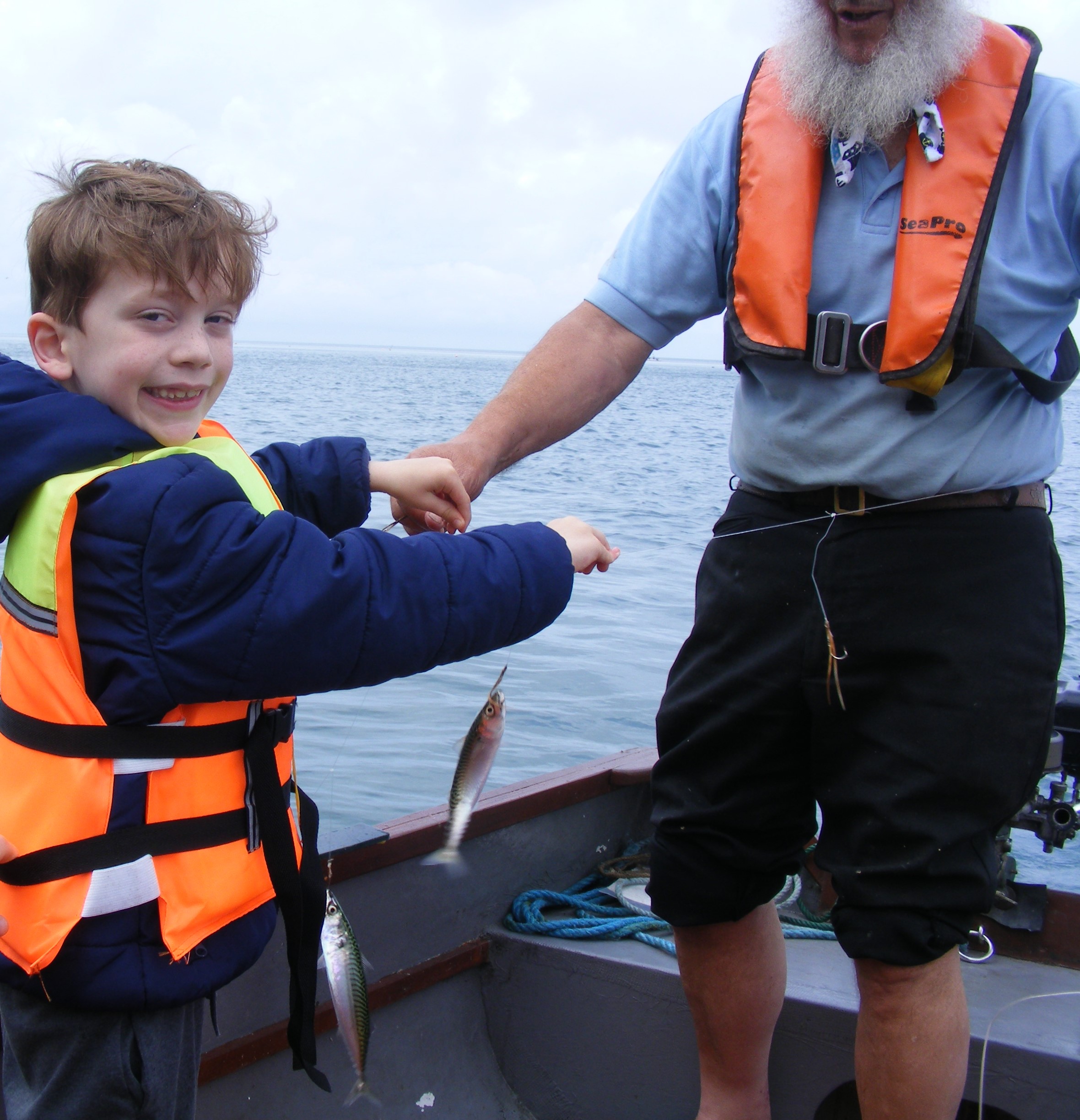
Busy, busy, busy. It has not all been work though. I spent a week going out with half my family; some weird activity that I’ve not done since March. This involved a spectacular face-plant (mine) on the football field, building sandcastles in the drizzle (effective for social distancing) and watching an excited boy catch his first fish. This particular expedition did involve running the gauntlet of a crowd of irresponsible idiots who clearly felt that being on holiday entitled them to abandon any concept of COVID awareness but we survived. Although it was lovely to see the sea, I am still much more comfortable staying at home and have no great longing for meals out, the pub or the hairdressers. I did get Martha to hack a bit off my hair while she was here but I could have managed without. It went like this – a little more off this side to even it up, oh now a some more off that side, oh and a bit off just here but she did a good job.

DSCF4414.JPG

This week it has been full on book marketing. Only three days until the big day and the excitement is mounting. Devon Family History Society have kindly offered to host my launch talk, when I will be describing how I researched the story of a seventeenth century town and its inhabitants, in order to write Sins as Red as Scarlet. This means spaces at the talk are available, so contact me now if you want the secret code to attend via Zoom. Those on the Devon Family History Society virtual talks mailing list will get the link automatically. Not only does Sins as Red as Scarlet greet an unsuspecting public on that day but an audio book version of Barefoot on the Cobbles becomes available too. Thanks to the lovely folk of Circle of Spears who have done a brilliant job. I seem to have cracked uploading to Amazon so Kindle versions of Sins as Red as Scarlet can be pre-ordered now and print-on-demand paperbacks for those outside the UK are in the pipeline. You will be able to order UK paperback versions but please don’t. Come to me instead, you’ll get a better quality, signed copy and I’ll pay the UK postage. Or go to a bookshop or my lovely publisher.

There are other exciting things on the horizon. On 5th and 6th of September, I am joining other local authors for two days of talks about various aspects of crime. My session will focus on the C17th but there are sessions that will appeal to lovers of history, folklore, literature, psychology, vampires, Agatha Christie and much more. At £5 for a ticket to listen to as many of the sessions as you choose, that can’t be bad.

I will also be giving two presentations for the Institute for Heraldic and Genealogical Studies in early September. The seventeenth century again and one-place studies in the C19th. Places are limited on these so book early etc. etc..

As for the autumn, wait and see!

A Botox Related Tale – aka medical update

An update – thank you all for your concern. The allergic reaction excitement continues. Pleased that the rash seemed to be receding, I went to bed last night only to wake up today to an image of seriously botched botox, staring me in the mirror. Mindful that my email from the doctor said ‘if it goes to your face go to the doctors immediately’, I drag a fisherman of my acquaintance from his bed so he can come and collect me to drive my delightful trout pout to the hospital; the doctors’ surgery being closed on Saturdays.

I am duly ummed and ahhed over. I was a bit disconcerted that the doctor didn’t think my mouth looked swollen. I know she doesn’t know what I normally look like but seriously, do people actually have upper lips stuck out this far without cosmetic intervention? I am given some steroids, about 8 tablets all to be taken at once – seems a bit extreme. I suppose now I will be able to train for sports such as weightlifting.  I am ‘monitored’ for two hours. By this time I have been sat in my mask for four hours without respite. They sure aren’t fun, especially if you only have one with you. Wear them though folks, it is important. I am called back to the consulting room. ‘Has it gone down?’ I am asked. Well being as my mouth has been covered in a mask for the last four hours and I don’t have access to a mirror, I have no idea. I opt for, ‘It is probably about the same.’

I am free to go, with more medication, a ‘just-in-case’ epi-pen and instructions to follow up with my GP. I decide I will do the handwashing thing. Forget twenty seconds, even two seconds is a challenge as water only comes out of the tap when you are pressing it and there is no plug in the sink. I fail to successfully master rubbing my hands together under a running tap when one hand is pushing the tap down. I decide against using my foot to press the tap. I head to the pharmacy. I am handed my drugs. ‘This will keep you awake’ she says; just what an insomniac needs. Well, I suppose it will counteract the ‘this will make you feel drowsy’ one.

Time to summon the fisherman of my acquaintance from wherever he has been lurking to try to avoid car park charges. Being a former Girl Guide I am well prepared. I have my emergency phone with me. The only trouble is it seems to have been deactivated because I haven’t had to use it in an emergency, or indeed for any other reason, for some considerable time. I can still make emergency calls. I am not sure dialling 999 for this purpose will be welcome. It seems it will still allow me to text. I send a progress report. The trouble is I have never quite got the hang of how you do spaces, so all my words run together and capitalisation is random. Unfortunately, the recipient, who hasn’t got his reading glasses, struggles with ‘HavEbeeNmoniterDfortWohourscAngohoMenowphOnenOtwoRking’. Reception are willing to phone on my behalf and back home I go.

My fingers are also a bit swollen but I have been able to remove my rings, in case they get worse. One finger has had a ring on it continuously since I was eleven. If feels really weird. Still no idea what caused this but as of this evening I do look less pouty. Sorry/not sorry there is no photographic evidence. It was not a pretty sight and I did have other things on my mind! God bless the NHS, all this has cost me precisely zero. Even if I’d had to call an ambulance, zero. Worth every penny of our taxation and I for one would be happy to pay more tax to support it.

The Day the Chippings didn’t Arrive and what Happened Next

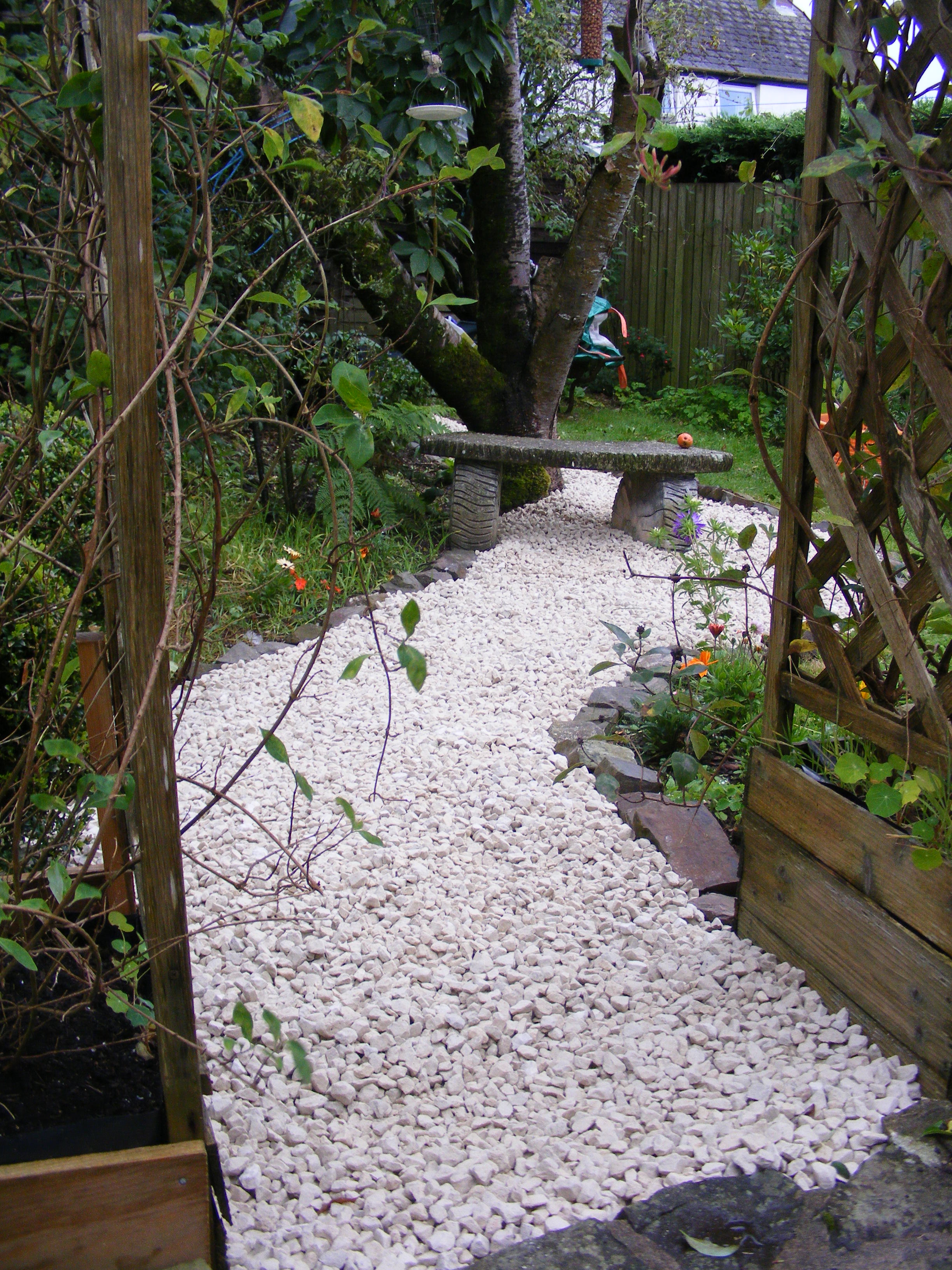
Having personfully carted 64 boxes of books into the house on Monday, it was all systems go for the tonne of chalk chippings, due to arrive on Tuesday. Tuesday dawns. The email arrives, ‘Your order is out for delivery and will arrive today’. By 6pm I am wondering what ‘today’ means and if I can go to bed, having been up very early in case they arrived at 7am. The office is allegedly open until 8pm. I try telephoning, ‘we are unable to advise on delivery times over the phone, please email’. I email. Zero response and zero chippings.

The next day I try ringing again, this time pressing #1 for sales. That’ll get them to answer, thinks I; a potential customer. Nope, more automated voices exhorting me to email. I spot a tab on the website marked ‘track and trace’. I’d dismissed this as some kind of COVID response. After all if you could track your delivery it would have said on the ‘your delivery is on its way’ email. Wouldn’t it? Well, it turns out no it wouldn’t. I duly track and trace. ‘We attempted delivery at 16.32 yesterday.’ You so didn’t, at least not to my house. I do know I am not the easiest property to find. Not having a road doesn’t help (there really isn’t a road, not just no road name). There had been a helpful box on the online order form regarding delivery instructions. I had written a three volume novel in this box, beginning, ‘on no account use sat-nav’ (that way madness lies) and ending with, ‘ring this number if lost.’ Had one of my neighbours been left with a dumpy bag of chippings that were surplus to their requirements? There are only six houses in my postcode. I can see three of the others, no chippings. I email one of the other two. No, no chippings there or next door (the 6th address).

Finally, an email. ‘Sorry for the delay. Your delivery will arrive today.’ By this time, it was all getting a bit deja vue. I should add that, because of the not having a road thing, these chippings would need to be put in place pretty quickly after arrival. Tuesday, the promised delivery day, was dry. Wednesday the second time around promised delivery day it was ******* with rain. 4.30pm, still raining and the chippings are deposited on a driveway that does not actually belong to me (but is where they are meant to be). I email apologies explaining that they will be moved asap. 7pm, my trusty assistant, who has been twiddling his thumbs for two days waiting to trustily assist, brightly says, ‘It’s stopped raining.’ Anyone who knows me will know that by 7pm I am not just past my best but I am practically comatose. I could think of things I wanted to do more than shovel and spread a tonne of chippings, like pulling out my finger-nails one by one maybe? With a sigh we set to and prove that two geriatrics can spread a tonne of chippings in under an hour. One of us was shovelling and wheel barrowing, the other was doing the seriously skilled levelling aka half-heartedly pushing a rake about. I am not prepared to say which was me but I don’t recall touching a spade.

We collapse. My arms feel a bit itchy. During the night most of my body from knees to neck becomes covered in a scarlet rash and boy does it itch. Small bumps appear on my flesh. What with the itching and an irritating fly in my bedroom that alights on my face every time I doze off I don’t get much sleep. The next morning. No. I don’t seem to be dead. Dr Google suggests I probably won’t be, unless it spreads to my face, in which case I might go into anaphylactic shock. Oh great and any ambulance would probably have as much difficulty finding me as the chippings lorry driver. I email my doctor’s surgery and wait for the words of wisdom. ‘Attach a photograph’ it says. It is barely daylight, my artificial light is at best dim, this could be tricky. So if anyone saw me at 6am leaning out of the window to get more light, photographing my arm, you’ll know what all that was about.

I wonder if I have any no-scratch mittens. I don’t. I start to feel a bit dizzy. I am trying to decide what on earth I could be allergic to. No new soaps or soap powder, not eaten anything odd. The only slightly unusual activity has been the chalk levelling. I refuse to believe I can be allergic to chalk. For a start, I didn’t really touch it much and my hands are one part that is relatively unaffected. Add to that, I am a veteran chalk riddler, dating from my days as a neolithic house builder. I had no problems then.

My doctor is due to contact me within 36 hours. I probably can’t cope with this for 36 hours. I can try the walk-in centre. I check to see if it is open. Paragraph one of the website, ‘Your local walk-in centre is closed due to COVID’. Paragraph two, ‘Please use the walk-in centre.’  Hmm. I opt for the chemists. This is quite brave as, apart from a few trips to the mobile post van and one visit to the tiny community shop next door but one, I’ve not been near a shop since March.

I show the pharmacy assistant my rash. She is clearly impressed, ‘that looks really bad’. She defers to the pharmacist who suggests antihistamine. I escape, drugs in hand. Progress report. A bit better today. Not better better but fewer/smaller red patches, though some new ones have appeared and they certainly itch. The anti-histamine ‘may cause drowsiness’. They aren’t wrong. I feel as if I have been drugged. Oh. That would be because……..

DSCF0747

The Day the Books Came

Two and a half years ago, as the writing of Barefoot on the Cobbles came to an end, I had a glimmer in what passes for my brain of what I would do next. The idea wove, spun and developed, taking itself off in its own direction and then it was now. I have given birth to Sins as Red as Scarlet. Large pantechnicon fails to take note of the ‘on no account use your sat-nav’ directions. It causes chaos negotiating the narrow track to get itself where it should have been in the first place. It blocks the road while a pallet is deposited on the roadside (we don’t have pavements). It unloads 64 boxes. A nice little queue of cars is building up behind. Crowds are gathering. Nothing this exciting has happened in my village all lock-down. Time for the lorry to move off and oh dear, there is a hay-bale laden tractor coming in the opposite direction. Cue pantechnicon .v. tractor stand off. Tractor wins. The lorry and all the cars behind it have to do the reversing thing. Lorry comes very close to reversing into the car immediately behind it. Unfortunately I had put my camera down ready to heft boxes before all the tractoring so there is no photographic evidence.

My settee is now eighteen inches from the wall, I have a teetering pile in the kitchen. I am wondering how many I can ship out before my family visit. I suppose piles of boxes would make a good social distancing barrier. Now it is all systems go for launch day. Take a look at my previous post for details of how to join in. In the meantime, if anyone would like to order a copy or ten, you know where I am.

More Isolation Reflections – Day 120

I had intended to post some reflections on isolation when we reached day 100. That has long since gone. Here we are, day 120 and I have now broken cover and left home for the first time, in order to visit half my family in a socially distancedish manner. Perhaps this means I shouldn’t call it isolation anymore but I am now home and have returned to hiding myself away.

What have I learned in 120 days? I have learned that going out is not essential to my wellbeing. I desperately miss my family and it would be lovely to see the sea but apart from that, I am relatively content in my own little world. I have learned that I probably would not be able to cope so well if I did not have a garden and the flowers and birds have been a joy. I was also fortunate that I was not locking down alone, although I am now officially a bubble instead. I have learned to use Zoom and Facebook Live. I have begun to find ways round the dismantling of my employment and book selling opportunities. I have learned that I can play a recognisable tune on the piano, albeit very slowly. I have not learned Cornish though – still on the to do list. Nor have I found time for all the cleaning and sorting I might have done.

I am still keen to stay at home, especially as our little area of Devon, which has the lowest COVID rate in the country, has just seen some new virus cases after a five week gap. I have zero desire to visit the hairdressers, the pub, a café or a shop. I do know I should be supporting the economy but these are not things I need to do and I don’t feel ready for this yet. I am probably up for a few walks in the country, if I can make time in the hectic online schedule I seem to have created for myself. This week is particularly ridiculous with wall to wall Zooming.

DSCF0709

On the subject of Zoom, yesterday I gave a talk for Devon Family History Society. Devon FHS have gradually been building up these meetings over the past months but this was the first that one had been advertised to the whole membership. The room capacity was 100. We had, after much debate, decided not to increase the capacity, as doing so would mean we would need to change the link we had circulated and folk are easily confused. People had been asked to log in 5-15 minutes before the start time. Half an hour before and there were already 30 people waiting. Ten minutes to go and we had hit 100 attendees. I had already promised to repeat the talk back to back for any who were waiting. My voice just about held out for the second session. Round two saw another 47 people in the room. Wow. They came from New Zealand, from Canada, the USA,  from France and from Malta. There were attendees from Scotland, from Wales and many English counties. Understandably, those who could not get in were disappointed and frustrated but there were so many lovely comments afterwards, it was worth the hard work. Several said that meeting in this way made them feel that they belonged to the group for the first time. The Devon FHS room capacity has been increased for future meetings and we look forward to bringing members together in this way on a regular basis.

Demolishing those Family History Brick Walls – some advice

I belong to many family history forums and most days I receive several emails with family/local history enquiries. I am afraid this isn’t an invitation for you to send me your queries – I am already at capacity! Nor is it meant to be a complaint about those who do ask questions. There are no silly questions and we should all be trying to increase our knowledge. This is meant to help people to frame those questions in a way that is more likely to get a satisfactory response.

It is highly likely that you can answer many questions yourself and if you can’t, there are steps you can take before you ask your question. Often, I am asked ‘where can I find such and such a record?’ or ‘are there any records for …..?’ type questions. Sometimes I know the answer straight away. If I don’t, I type the question into my search engine of choice and guess what, there, in a matter of moments is the answer. The questioner could have done the same.

Show me a family historian and I will show you someone who has a brick wall ancestor, those folk who appear to have been beamed down from outer space, or who disappear without trace. I often offer to help with a bit of demolition. Frequently, the enquirer hasn’t exhausted all the possibilities themselves, or there is a more productive way that they could set out their question. By reassessing the problem, they might be able to move that brick wall back a generation without any suggestions from me.

So, before you ask for help with your brick wall, here are some simple steps to follow.

  1. Decide exactly what the problem (the research question) is. Just pick one specific thing, not ‘more about John Brown’. For example, ‘I want to find John Brown’s parents’ names’, or ‘I want to know where and when John Brown died’, or ‘I want to find John Brown in the 1881 census.’
  2. Next, reassess everything that you already know about John Brown. There may be a clue in some aspect of the documentation that you already have. Create a timeline of John Brown’s life using all this information. Include the sources for that information, as some sources will be more reliable than others. Please note that ‘Ancestry’ is not a source, although ‘family tree compiled by x on Ancestry’ can be. Ancestry (or FindmyPast or Family Search etc.) may be the way that you accessed the source but the source will be an original document, a transcription or an index.
  3. See if you can fill in any gaps. Do you have John Brown’s birth AND his baptism, do you have him recorded in every census? Have you looked recently to see if there is new information available online that was not there when you last searched for John Brown?
  4. Make a note of any possible further research that might be helpful but which you cannot do at the moment, perhaps because the records are not online, or you can’t visit that repository, or afford to buy copies.
  5. Make a list of where you have already looked and what you have searched for.
  6. Finally, make sure you include a place and a time frame. Those who post on international genealogy forums seems to be particularly poor at this. There seems to be an assumption that, if no place is mentioned, it must be the US. There are genealogists elsewhere! Please avoid using abbreviations; these might be meaningful to you but ambiguous to others. Is WA Washington state or Western Australia?

To give you an idea of what I mean, I have given an example below. This is a genuine example, apart from the ‘searches completed so far section’.

When and only when, you have reached the end of step 6, share your problem. Family historians love a good mystery and a fresh pair of eyes can often help. If they can’t, then at least it might be comforting to know that you have done all the right things.

An Example

Brick wall ancestor – Mary Cardell 2 x great grandmother

Research Question

I would like to find the full names of Mary’s parents.

Summary

Mary Woolgar née Cardell is my 2x great grandmother. On her marriage certificate and the birth certificates/registrations for her four children, her surname is consistently spelt CARDELL. The marriage certificate suggests that she signed her own name. Earlier generations may not have been literate, so the name might be rendered differently and my searches have included all phonetically likely variants of the name, of which there are many! It is even possible that it is a corruption of McArdle.

The evidence suggests that Mary, or at least whoever provided the information to the  census enumerators, was convinced that she was born in Highgate, Middlesex. Ignoring the 1841 census evidence, when ages were rounded down in any case, the suggested dates of birth from the other sources are consistent. If all ages are correct, then Mary was born on 4 or 5 April 1817. It seems fairly certain that she was born between 1816 and 1818.

Other clues are provided by her marriage certificate to Philip Woolgar, which I obtained from the General Registrar. As it was a handwritten copy, I also consulted an image of the original parish marriage register, to ensure there were no copying errors at any stage between the church and the certificate that I received. The information was the same and assuming it is accurate, Mary’s father was James Cardell, a gardener. There is no indication that either of the fathers were deceased at the time of the marriage. Searching surrounding entries, suggests that whoever filled in the register did not make a habit of noting if the fathers were deceased, so we cannot be sure James was still alive. The witnesses were William Groves and Catharine Cardell who has been shown to be Mary’s sister.

Timeline (working backwards)

Sources are in red, possible further research is in blue. I have omitted the full document references here to simplify matters.

  1. 18 January 1892 buried Islington. Deceased online. I need to check the original burial registers and possibly locate a gravestone, if one survives. It seems odd that she was buried the other side of the river, albeit only seven miles away. Islington is however nearer to Highgate.
  2. 13 January 1892 died 153 Rialton Road, Lambeth (the home of her daughter Caroline) death certificate age 74 – born 14 January 1817- 13 January 1818
  3. 1891 census age 74 born Highgate, Middlesex – born 6 April 1816-5 April 1817
  4. 1881 census age 63 born Middlesex – born 4 April 1817- 3 April 1818
  5. 1871 census age 53 born Highgate, Middlesex – born 3 April 1817- 2 April 1818
  6. 1861 census living Rosendale Road, Lambeth age 44 born Highgate, Middlesex – born 8 April 1816-7 April 1817
  7. 7 Sept 1855 son Philip James born Figs Marsh, Mitcham son’s birth certificate
  8. 1851 census not located
  9. 5 Mar 1848 daughter Fanny Amelia baptised Highgate, ‘of Highgate’ baptism register
  10. 5 Feb 1848 daughter Fanny Amelia born, the exact address is unclear but appears to read ‘Cookers Haven’, Finchley daughter’s birth certificate
  11. 1 Feb 1846 daughter Mary Ann baptised Highgate, ‘of Highgate’ baptism register
  12. D Q 1845 daughter Mary Ann born registered Barnet RD (as Wodgar) born Finchley GRO indexes, census returns for daughter. I could purchase this birth certificate.
  13. 27 Nov 1842 d Caroline baptised in Highgate, ‘of Highgate’ baptism register
  14. J Q 1842 daughter Caroline born registered St Luke’s district (Caroline’s census entries say born St. Lukes (1861/1871/1901) Clerkenwell (1881 NB husband b Clerkenwell) London (1911)) GRO indexes I could purchase this birth certificate.
  15. 1841 census living Turnpike road, Finchley age 25 born Middlesex – born 7 June 1811-6 June 1816
  16. 1 May 1841 marriage certificate ‘of full age’ – born before May 1820. Father, James Cardell, gardener. I have also checked the parish register entry for the marriage and the details are identical to the marriage register

Searches completed so far (not a genuine example)

I have searched the indexes at Ancestry, Family Search and FindmyPast for James Cardell (and variants) between 1750-1805 in London and Middlesex.

If you want to know more about my actual long and inconclusive search for Mary’s parents, there have been several posts about it on this website, including the sorry tale how I nearly adopted a very exciting (but sadly wrong) set of ancestors for Mary. Of course, if you can find Mary’s parents for me, even better.

https://thehistoryinterpreter.wordpress.com/2019/03/08/my-problem-female-ancestor-internationalwomensday/

https://thehistoryinterpreter.wordpress.com/2019/03/22/clock-makers-vicars-huguenots-and-pirates-some-family-history-excitements/

https://thehistoryinterpreter.wordpress.com/2019/04/19/nearly-my-ancestors-or-how-i-almost-climbed-the-wrong-very-exciting-family-tree/

https://thehistoryinterpreter.wordpress.com/2020/01/19/how-do-you-solve-a-problem-like-maria-a-family-history-conundrum/

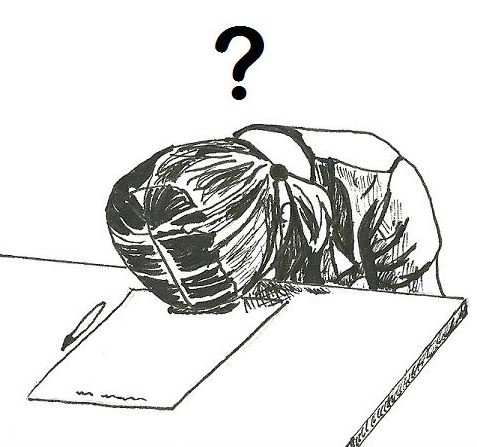
Ch 12 Puzzled Writer

Drawing by Artie Race


Preserving our History – a reflection on recent events

I have hesitated before posting anything on the events surrounding the protests following the murder of George Floyd, not least because I have been trying to process it all and indeed I still am. I wanted to make a considered comment and not something that was the result of gut-reaction inspired anger. If I am honest, my hesitation also sprung from a lack of courage. I am concerned about saying something that will cause offence. I am still not sure that I have the emotional reserves to combat the inevitable backlash from people whose views differ from my own. I know many people have been severing social media connections with those who express extreme views that they do not share. I have deliberately not done that, although I do admit to hitting the ‘snooze’ button on Facebook occasionally. I think it is important that I am aware of a range of opinions, even if it means seeing comments that make me horrified, angry, confused and deeply saddened. I know that we are all a product of our upbringing and our past experiences and that some of these opinions are very firmly entrenched but I am still struggling to understand the views expressed by some. So, this is my stance. It is still a little unformed but as an historian, I cannot delay any longer.

I am not a person of colour. I am fortunate to have grown up in a multi-racial area and to have had non-white close friends. I have the advantage that I am just young enough to have escaped the jingoistic, empire adulating, ‘everything Britain ever did was right’ version of school history. I have also spent more than forty-five adult years studying history. I am aware of the appalling atrocities that peoples of the past have committed but I know that nothing I can do will make me truly understand what it is like to be black in today’s white dominated world. My background means that I am aware of the European arrogance of the past, the notion that we have a right to colonise the rest of the world; the Americas, Australasia, Africa, the Indian sub-continent have all suffered at the hands of white European invaders, often acting in the name of religion. I know too about other invasions but I am trying not to turn this into a three volume history text book.

So, what do I feel about the perceived ‘erosion of history’, the spate of tearing down statutes? Firstly, who is committing these acts of criminal damage? In many cases these are not the acts of those with a genuine grievance, they are a mindless mob, who are copying the herd. Like those who are using violence to defend those same statues, most have very little knowledge of the person that the statue adulates. It is hard to empathise with those who are defacing, or indeed protecting, statutes without knowing about who they represent. I do understand however that people are, justifiably, angry. Whilst I think illegally removing or defacing statues is counterproductive, I do have sympathy for those who actually understand the full (and I do mean full) history behind the statue and exactly what that person did and are offended by aspects of that person’s life.

Let’s consider Edward Colston. I am probably one of the few people outside Bristol who had heard of Edward Colston before his statue was forcibly removed. Slavery is appalling. There is no other way to view it. I would like to think that no rightminded person now believes otherwise but sadly I am still hearing views that attempt to justify it – ‘but they treated them well when they got there’. What!? Where on earth does that travesty of the truth come from? This is the level of misinformation that has to be overcome. Yes, Colston was acting perfectly legally at the time, yes, he also acted philanthropically, establishing many institutions in Bristol and yes this was partly funded by the profits of slavery. These are facts. Slavery was an atrocity and nothing can dilute that. So, should his image have been removed in the way that it was?

I think it is essential that our past atrocities are not swept under the carpet, that man’s inhumanity to man is remembered. We can only move on if we look back and learn from our mistakes. It is no coincidence that the header on the home page of this website is George Santayana’s ‘Those who cannot remember the past are condemned to fulfil it.’ We do need to remember Colston. Remember him as a flawed human being who did good and bad things in his life. We also need to remember him in the context of his time, when his actions were both lawful and regarded as acceptable. This is emphatically not saying that slavery was in any way acceptable but we have to acknowledge and take ownership of the fact that it was regarded as an appropriate way of conducting business by those in western Europe at the time. Remembrance is not the same as reverence. Do we need to remember Colston by having a statue in a public place? Maybe not. It is also important to remember that this particular statue was not erected until long after Colston’s death. There had been an ongoing campaign, over many years, for its removal and it was undoubtably a daily affront for black people in the neighbourhood. I think, in this case, I side with David Olusoga, who advocates having the statute in a museum where the whole story can be told.

As a family historian, I can’t help thinking what about gravestones? Will there be a call to remove these monuments to people whose past deeds were contentious? Since I drafted this post, the news has come of gravestones being hidden because they refer to the deceased’s roles as ‘minstrels’. I don’t know what terms were used on those stones; I gather the language was deemed offensive. My own father blacked his face to perform as a minstrel when he was working with ENSA after the Second World War. Does that make him a bad person? Were someone to do this now, it would unequivocally be regarded as offensive but we cannot condemn the past by viewing it from today’s perspective. This does not excuse past behaviour but we need to remember the context. They knew no better. Now, there is no excuse, we all should know better; nothing justifies this behaviour today. Should my father’s gravestone be covered? In the case of those that have been hidden, is it the language that was being obscured or the person? Who decides who is ‘good enough’ to be immortalised in stone, be it a statue or a grave marker?

Perhaps though it is time to evaluate what statues and to a lesser extent gravestones, are for. Until now they have been regarded as a memorial, an object of undiluted glorification. The problem is that no human being that ever lived is wholly worthy of unadulterated reverence. Statues are a little like the air-brushed pictures of celebrities, that give people unrealistic aspirations and expectations. Images that tell half-truths, objects of propaganda intended to portray a one-sided narrative. We need to remember these people for who they were, a complex blend of admirable and despicable qualities, just as we are. At present, we are conditioned to think that anyone worthy of a statue must be a good guy (and don’t get me started on the preponderance of men in statues). Could we change that? Could we start to think about the people we have immortalised in a rounded way and in the context of their day? Could seeing a statue lead us to question, to wonder why people at the time thought them worthy? Could we start to think whether they would still be adulated today and if not, why not? Perhaps people will learn from the debates that may ensue as there are campaigns to remove or save individual statues. This would mean that there could be a new level of engagement with the past and that I would be thankful for. Statues need to remain but they should definitely tell a whole story and I hope that, by being there, they will spark conversations. Where they need to remain is a different issue and I am still not sure where I stand on that one.

I think it is our duty to preserve the past, in all its multi-faceted complexity. We should all strive to share that past in as balanced and unbiased a way as possible, be that the history of our nation or the history of our own family. Total lack of bias is almost impossible, as we all have firmly held convictions but let us at least try to see things from more than one perspective. As a result of what is happening now, perhaps a few people will be driven to look more closely at history and by that, I mean the history of all peoples. As a white history teacher, in line with the syllabus, I taught ‘Black Peoples of America’ and ‘The America West’ to a wholly white class. As an historical interpreter, I helped to present sessions on slavery. How arrogant was that? Yet it was my white perspective or nothing. What can I do now? What can I do to atone for having said #alllivesmatter? Of course, all lives matter, few people are suggesting that they don’t, it is just that some groups in society are less equal than others at the moment and that needs to be our focus until the balance is restored. We need to rediscover our compassion. We need to stop thinking only of our own narrow little worlds.

Although race is in the headlines at present and rightly so, this is about so much more than race. It is about intolerance. I have spent the past few years researching seventeenth century intolerance: religious intolerance, class-based intolerance, intolerance of difference, the plight of those who had no voice. Sadly, human nature does not change. In our ignorance, we still feel threatened by those who do not look like us, those who do not worship like us, those whose sexuality is not our own. In our fear we strike out, verbally and physically and we bolster ourselves by banding together with others who do seem familiar. We fear what we do not know and our ignorance leads to unfounded prejudices. ‘Ignorance’ sounds pejorative, perhaps ‘lack of knowledge’ would be better. The good news is that we can address our ignorance. We all have things we can learn, we can all do better. If you are reading this you have the gift that you need. All that is required is a willingness to learn in a spirit of open-mindedness, in a spirit of tolerance. I am debating what I can do to make even a tiny little bit of the world a more tolerant place, are you?

Thank you for reading. I know some of you will not agree with me. If I do not have the emotional energy to enter into a debate with you at the moment, it is not that I do not care. It is not that I cannot defend my views. It is just that my reserves are on empty and I only want to make a response when I am able to do so in a considered manner.

Faint Passports Never Won – well, anything really – Isolation Day 65

One of the downsides of lockdown for me has been that I am unable to get out and about to share my love of all things historical with many wonderful people. It has been inevitable but sad, to watch one speaking engagement after another tumble like a domino rally. Fortunately, I am starting to replace some of these talks with online versions. A consequence of not meeting audiences in person is that I have lost one of my main book-selling opportunities. This is not just financially significant. In a couple of months, a pallet containing a very large number of boxes of novel number two will hopefully be landing on my driveway. I need to shift existing stock to make space. Oh, you want another clue? Happy to oblige, novel two includes little known facts about what is a fairly well-known local incident. Very soon there will be a title/cover reveal. The cover is amazing – thank you Robin of The Branch Line.

Now, where was I? Oh yes, selling books, or in this case, not selling as many books as I need to in the next three months in order to have any room whatsoever in my tiny cottage. In the past, I have added myself as a potential book seller on Amazon. I stopped doing this because it was a pain removing myself again on the many occasions when I was away from home. You can’t just leave the items up for sale as you have to be able to send out purchases within 48 hours. As it doesn’t look as if I will be going anywhere anytime soon, I thought I’d reactive my Amazon seller status. Well dear reader, how long have you got?

I suspect because the dreaded GDPR has loomed its ugly head since I was last a seller, I am required to jump through the hoop of proving I am a person and that I am actually me. I assure you I am me, although when I look in the mirror, I do wonder why I am my mother. ‘Send a copy of your passport’. Thankfully, I do have one. I photograph my passport. Maybe I didn’t get its best side or something but back comes the message ‘your details do not match, change your surname to FEWB’. Well the whole deed poll thing seems a bit unnecessary, especially as FEWB is not my name. Was three letters too short or something? My passport didn’t have a superfluous B on it. I heave myself off the chair and go to scan the passport instead, on the highest possible resolution. It takes ages, whirring merrily away. I now have a jpg (acceptable format) of two pages of passport when I require only one. It is also 11MB and the maximum I can upload is 10MB. Fine, I will edit it. I edit jpgs all the time. For some reason, which ever programme I choose, it will not let me edit the file. Eventually, I use my snipping tool to take a screen shot. Ok so the instructions do say ‘we cannot accept a screen shot’ but how will they know? I send it off. Back comes the message ‘your passport is too faint’. Too faint? Well that’s hardly my fault. I haven’t irresponsibly been leaving it to fade in high sunlight or anything. I click on the link for ‘if you are having trouble’ and compose a message expressing my frustration and seeking advice.

Time passes. The process has already been spread over two days and taken me a couple of hours to not sort. An email arrives. It sets out a carbon copy of what to do, exactly as it appears on the webpage where you upload faint passports. ‘Does this answer your question?’ they jovially ask. Well, errr, no. Then it occurs to a fisherman of my acquaintance that, although passports are mentioned, my driving licence contains similar information. Worth a shot. By this time, I really can’t face another journey upstairs to the scanner. In my defence, this is not the height of lockdown laziness (well not entirely) but my back does still prefer it if I don’t move from sitting to standing too often. No immediate rejection message. I cross my fingers. No ‘this has worked’ email either though. I wait. Finally, when lamenting my plight to a friend, she checks and discovers that there my books are there, happily listed, so it must have worked! Now all I need is people to buy them in droves and if that happens, people to donate recycled bubble wrap! Actually, if you are reading this, please don’t buy my books on Amazon at all, just contact me. It will cost you the same but it saves me a few pennies (actually quite a lot of pennies). A thousand sales before the end of July isn’t too much to hope for is it? Ok, so it is but I can dream.

What with this and the shopping order that mysteriously disappeared (long and really not very interesting story – even less interesting than the one you’ve just read), I am reluctant to face the next learning curve, which is finally giving in to entreaties to do my tax return online. I have no problem at all with completing it on paper and it would normally be done by now. This year however I have had a letter saying they are not going to send me a paper form. I do know, that if I ring up and wait on hold for a couple of hours (because my call is important to them), they will send a form but I am fairly proficient with online, I should be able to do it. Shouldn’t I?

DSCF0578

More Lockdown Ramblings – Isolation day 62

I am trying not to dwell on the fact that, right now, you should be reading day 4 of a month’s worth of daily holiday posts from Ireland. It is a bit difficult to make much newsworthy from life chez-moi. As mentioned in my previous post, I chose to honour my World War 2 ancestors on VE Day. As a family historian I was excited that my children and grandchildren did the same. All that indoctrination gentle persuasion must have worked. They had the advantage of places to display pictures and bunting that are visible from the road. Still, we did our best. Here are our collective family efforts.

In other other news, I have had to temporarily (who am I kidding?) abandon joining Joe Wicks for his daily P.E. sessions. Currently, I can barely move having done something to my back, possibly not as a result of doing star jumps and Pikachus (really best not to ask).

I have spent half my life on Zoom, including 24 hours (in two 12 hour stints) over a weekend, hosting a hastily arranged worldwide Braund family reunion. This wasn’t what we planned but had the huge advantage that those who could never attend our face-to-face gatherings were able to join in. We had 53 people from five countries drop in over the weekend, ranging in age from 1 to 80 something. I’ve also taken part in virtual coffee mornings, piano lessons, family history classes and author chats. It is a whole new world but one that we are adapting to. We even managed to get 8/9 family members on screen looking almost normal, well as normal as we get anyway. The 9th family member was present but was working from home at the time.

Screenshot_2020-05-12-11-56-56

The garden is coming on. The flower seeds seem to have been eaten but peas, beans and tomatoes have survived.  The cherry blossom and clematis have come and gone. Now we are enjoying the laburnum and guelder rose. The birds have been delightful, with Mr and Mrs Blue-tit currently feeding their brood. We also had a visit from a field mouse, who stayed around long enough to be photographed.