G is for Gardens – an historical perspective #AtoZchallenge

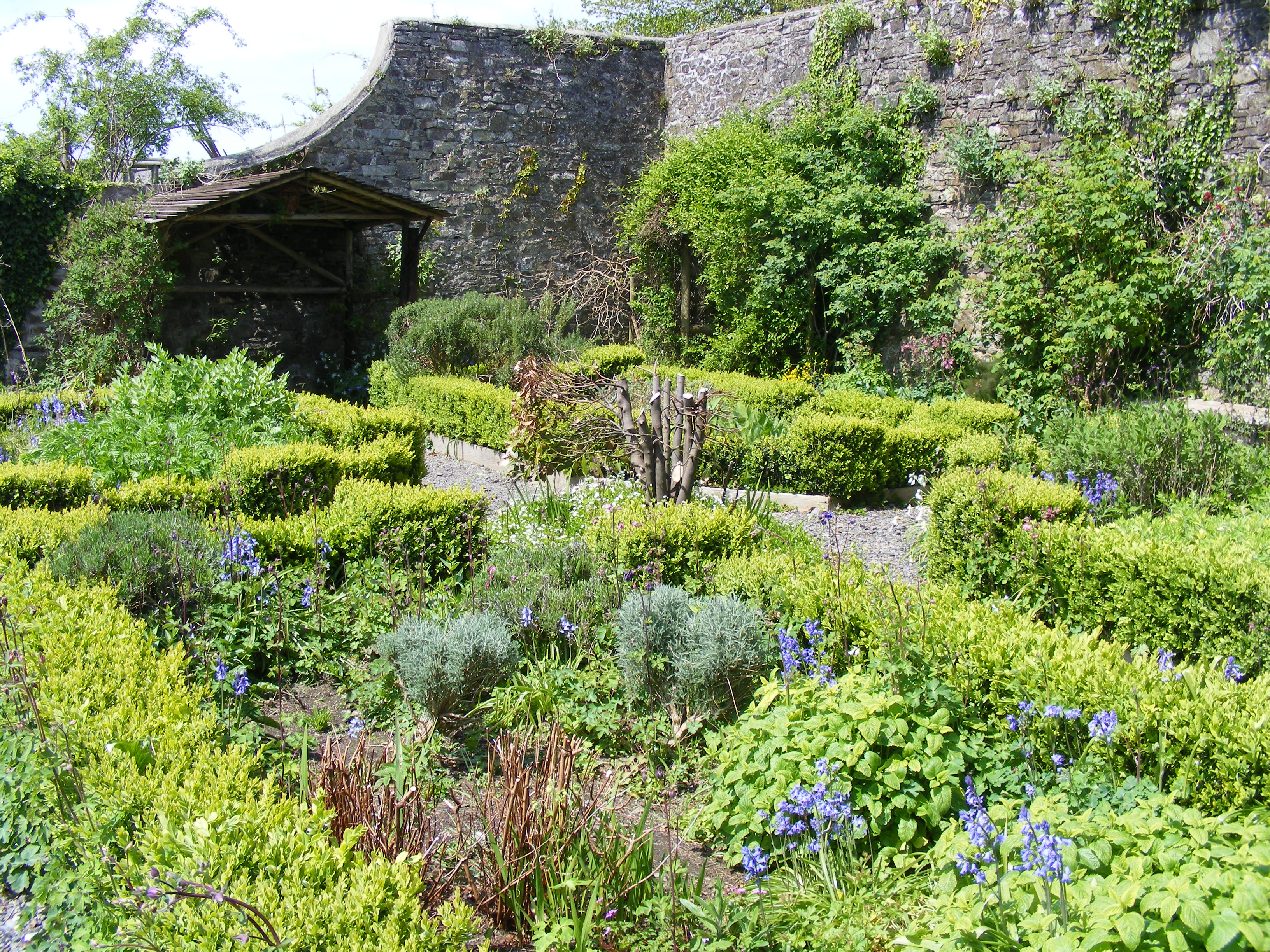
The history of gardens and the impact of gardens on the lives of our predecessors, is something that I have become increasingly aware of. Initially this was through my work as Mistress Agnes and her sojourns in the herb gardens of the seventeenth century. Then when I wrote Coffers, Clysters, Comfrey and Coifs, I looked at gardens of the rich and poor in Stuart England. This expanded into a more general study of gardening history and I now give talks on seventeenth century gardens and the historical use of healing herbs. You will have to wait until tomorrow, when ‘H is for Herbs’, for more on that topic.The knot garden’s low hedges divided the garden into geometric patterns

For ordinary folk, gardens have only become places of leisure and pleasure comparatively recently. The gardens of our ancestors were to provide necessary produce for the family. The wealthy however have embraced the role of gardens for ornament and relaxation for more than 500 years. I recently completed a course on healing gardens. Healing not only in the provision of medicinal plants but also healing in the therapeutic sense. Gardens, whether we spend time in them or work in them, assail all our senses and can promote a sense of well being. Their plants, their wildlife and even just the fresh air can all help to heal a troubled soul.

My ladies who are contributing their memories of 1946-1969 are currently writing about homes and gardens. How well do you remember the gardens in your life? Sometimes garden memories are more powerful than those of interior spaces. Specific plants can also evoke memories of people and of past events. Have you recorded your recollections of the gardens of your past?

Regular, pre A to Z Challenge readers, of this blog will recall that I have had extensive building work done to my home recently. This has given me the opportunity to think carefully about how my tiny garden will look now it no longer needs to impersonate a World War 1 trench. Yes, I shall pay homage to the seventeenth century origins of my cottage but I will not be a slave to this. There are many helpful books for those wanting to recreate gardens that reflect a certain historical period. I have listed a few below. I shall also be incorporating some family history into my garden.

3 June 1958September 1963Alongside more conventional ways of recording our family history, gardens can be used to do this. Can you include plants to represent members of your immediate family? For ancestors who had a flower name the choice is easy; my grandmother was called Ivy, no problems there. Alternatively, select a plant that they were fond of, or that you associate with them. Add flowers that featured in wedding bouquets. If no particular plant springs to mind, then what about a garden ornament? An anchor could denote an ancestral fisherman, a milk churn a dairyman forebear, or a pitch fork for a farm labourer. Those of us who find the past a pleasant place to live, can use our gardens to surround ourselves with representations of the past, creating a place of peace and serenity in the present.

Jennings Anne Tudor and Stuart Gardens 2005 English Heritage
Peachey, Stuart Farmhouse and Cottage Gardens 1580-1660 1996 Historical Management Associates Ltd.

F is for Family History or Genealogy? #atozchallenge #familyhistory

Are you a family historian or a genealogist? Personally I call myself a family historian, although I undertake genealogical research as part of my family history. I am aware that the meaning of ‘genealogy’ varies in different parts of the world.

Picture2

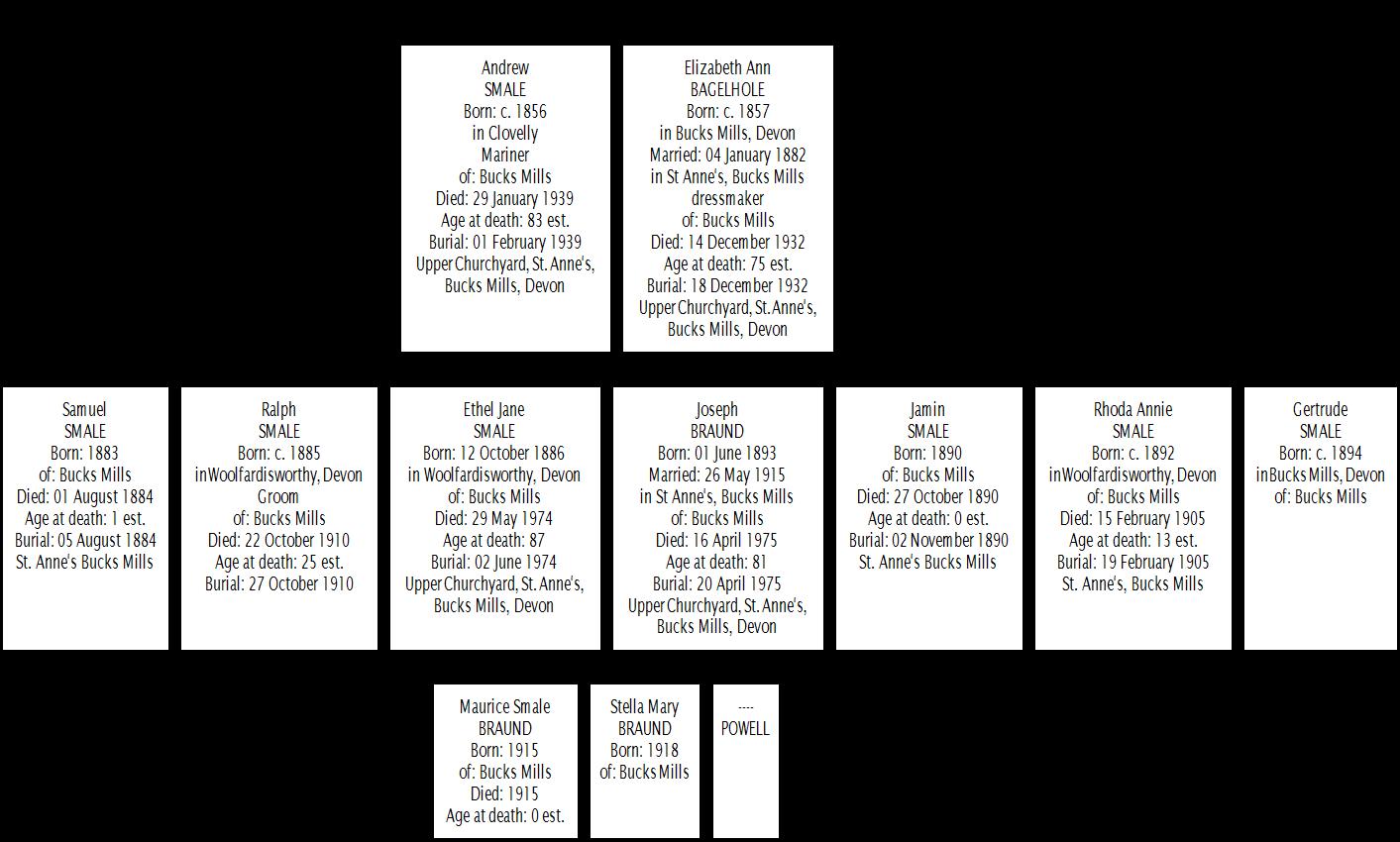
The genealogist constructs a pedigree

To me, genealogy is creating a pedigree, joining individuals together and establishing relationships between them. It is, quite literally ‘gene ology’. It is possible to do genealogy without being a family historian but a family historian must also be a genealogist.


A family historian creates the underlying pedigree but then looks beyond the names and relationships to study the national, local and social historical context that helps us to understand the lives of those individuals. A family historian wants to know what was happening in the town or village where their family lived. They aim to find out what their ancestor may have eaten or worn and what their home might have been like. They will study the occupations of their ancestors so they know what tools those ancestors would have used, what uniform they may have worn and what processes that form of employment could have involved. If individuals moved, then the family historian might look at possible route ways and motivations for that change of location. They will consider national events that those ancestors lived through and how these may have impacted on their lives. To me it is the family history, rather than the genealogy, that is the real appeal. What use is a list of names and dates when you have no conception of the lives that these people led?

Picture3

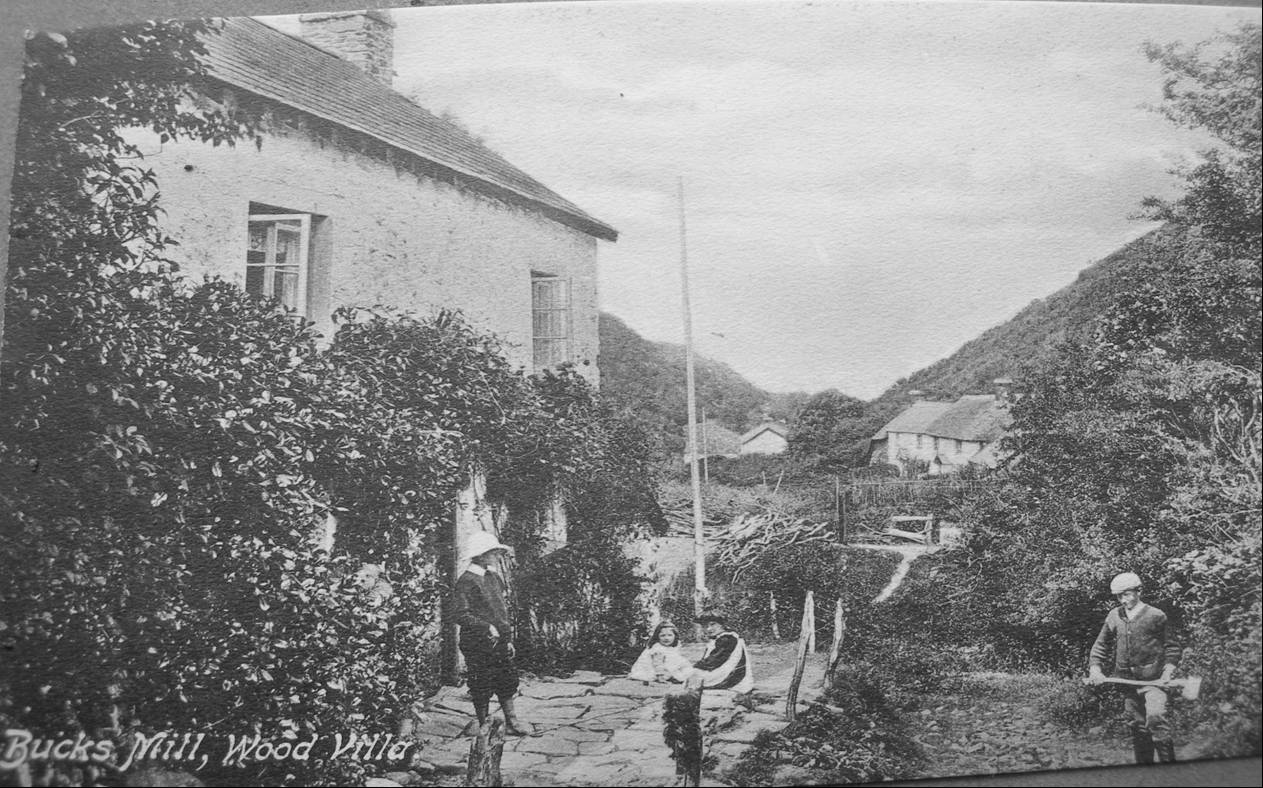
The family historian wants to know where the individuals lived


So which are you, family historian or genealogist? And which would you rather be?

E is for Evidence in Family History #atozchallenge

What is evidence? Is someone else’s online tree ‘evidence’? There are some accurate and well researched family trees online. Equally there are some that are beyond fanciful, with people having children five years after they have died, or at the age of three. Then there are the creative genealogists who subscribe to such theories as, ‘They got married in 1825 so they must have been born in 1800’, because of course everyone gets married at the age of 25. Or ‘I have someone of roughly the right name in roughly the right place, the age is a couple of years out but hey it must be him.’ Have you actually looked for alternatives? How complete are the indexes you are using? Could there be equally, or even more, suitable alternatives in records that have yet to be included in that index? How well do you actually understand the data set that you are asking your subscription website of choice to search? And then there is my pet hate, ‘He was baptised in 1750 so he must have been born in 1750’. Why? How do you know? Do you actually have any evidence beyond the knowledge that the majority of baptisms were of young infants? What you should be doing, if you must assign a date at all, is recording that birth as about 1750 and looking for corroborating evidence that this was indeed that individual’s date if birth. If that evidence is not forthcoming then the about remains.

There is also the question of how much proof do you require? How much evidence do you seek before adding an individual to your family tree? One piece of evidence? Two? Three? Clearly what is key here is the quality and likely reliability of that evidence. One person has recorded this on their online family tree, to my mind is next to worthless as evidence. Ah, you may say but five people have the same line on their online family tree. How do you know that researchers (and I use the term loosely) two to five have not just lifted researcher one’s information and grafted it on to their tree?

Forget online trees for a moment. What about ‘granny says…….’. This maybe ok, how is granny’s memory? Do great auntie and great uncle agree with her? Are there any official documents, birth certificates, newspaper reports, census returns, to back this up? The further back our family trees extend the harder it becomes to find one piece of reliable evidence, let alone anything that might be termed corroboration. This is the point at which you should stop scrambling backwards, pause until new evidence is unearthed and enjoy finding out more about the individuals that you already have whilst you wait.

FH Smith baptism

Researching the Smith family of London requires more corroborating evidence

The size of the population in the area and era that you are researching and the name of the individual may also effect how much evidence you feel you need before deciding that you have linked two records correctly. I am searching for a John Smith (yes really) in London in the late 1700s. If I find a baptism of a John Smith in London in 1799, even if the John Smith is in the parish where ‘my’ John Smith married do I make that connection? – probably not. Even if I have ‘my’ John Smith’s place and approximate date of birth from the 1851 census do I? If the place is a highly populated London parish maybe still no. If I know ’my’ John Smith’s father’s name (from his marriage certificate for example) and that agrees (especially if it is a more unusual christian name) then maybe I am getting somewhere. On the other hand, if I have a Crispin Pepperell in a small rural Devon parish (and I do) then I may be quicker to assume I have the correct person.

I appreciate that many people live thousands of miles from the focus of their research but this is not a reason to accept second hand ‘evidence’. As far as I am concerned an original source, or a digital image of that source is evidence, an index or transcription is not. Agreed, transcriptions and indexes are brilliant finding aids and providing they are done well, can lead us to original sources but they are not evidence in themselves. Ironically, it seems that the easier it becomes to access original records at a distance, the less people are seeking them out and the more content they are to rely on indirect data or non-evidence. I accept that there are many rigorous and diligent researchers out there but increasingly I see works of fiction family trees where the compiler appears to require no evidence at all.

If people get fun out of building the biggest family tree in the world by melding their data with that of others without checking it, without researching it, without even thinking about it, who am I to spoil their fun? Just don’t kid yourselves that this is family history or even genealogy (there is a difference – see my ‘F’ blog tomorrow). This is mere pedigree hunting and the pedigree you have snared is highly likely to be inaccurate or not your own. As Anthony Camp, former Director of the Society of Genealogists, once said, ‘With poor knowledge of the sources and little care, the person who comes out of the shadows may just be a skeleton or more often a botched up monster of a Frankenstein, two people rolled into one, or one cut down the middle and married off to someone he probably never knew in real life’.

D is for Death and its Causes in History

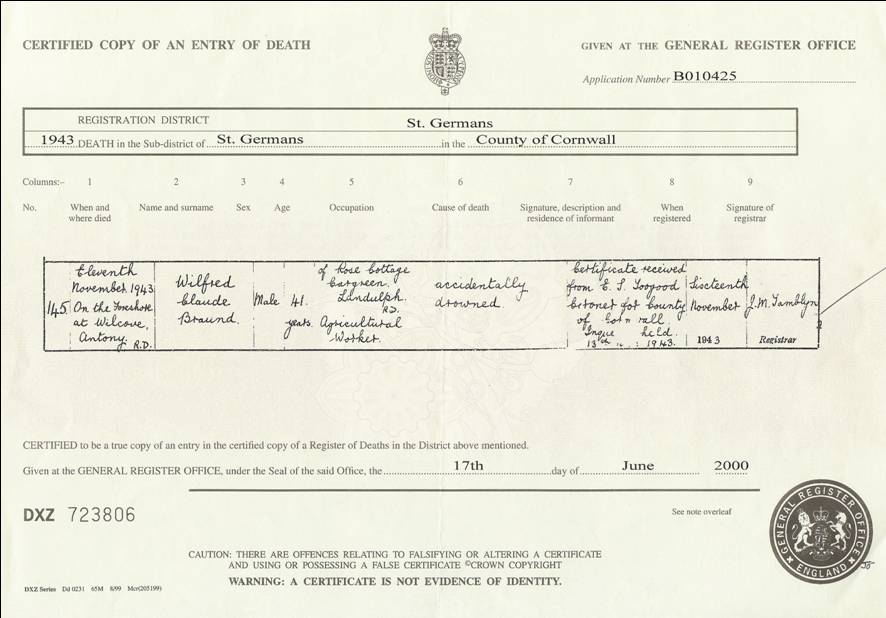
Death is something that has happened to all but our most recent ancestors however it is often a vital event that is ignored by family historians. Records of birth and marriage are avidly sought as they form the building blocks of the family tree. Death or burial records might only be resorted to when an age at death is needed as a clue to a date of birth. We really should kill off our ancestors (in the nicest possible way) not least because this helps to ensure that we have been tracing the correct person, not someone who died as an infant. In England and Wales we have, from 1837, death certificates. The current £9.25 cost from the General Register Office makes researchers think twice about their purchase but they can be a source of interesting detail about the individual concerned. Apart from the obvious date and place of death, age, address and occupation of the deceased, there is the name and address of the informant, together with their relationship, if any, to the person who has died. This may provide the first clue to the married surname of a daughter. If the informant is not a relative but an official from a workhouse or nursing home, for example, then the details they have provided may be less likely to be accurate. Of course if you are fortunate enough to have an ancestor who died in Australia, then their death certificates are even more informative.

Picture1Then there is the all important cause of death. If the individual died in an accident, as was frequently the case in the pre health and safety era, then there may be a coroner’s record or a newspaper report giving details. If your ancestor died of an illness then what were the symptoms and likely treatments at the time? Did they die as a result of surgery or in an outbreak of infectious disease? Prior to the advent of death certificates we are less likely to know how an individual died but we can still examine the common killers of the time. Consider not only illness and disease but those who might have died in wartime, of famine, in childbirth or as a result of suicide or murder.

One of the presentations that I give is about death and its causes. I range from cholera to chlorosis, small pox to syphilis, typhoid to TB, puerperal fever to plague. On the subject of the plague there has been a recent media splash suggesting that the fleas on rats were not responsible for the Black Death. To begin with it was not called the Black Death until centuries afterwards – rather The Great Pestilence. Secondly the idea that plague might be pneumonic (airborne) rather than bubonic (the fleas on rats scenario) is far from being new. Even the school text book that I was using to teach the history of medicine over a decade ago acknowledged that the 1348 outbreak was probably so severe that it must have been a combination of the pneumonic and bubonic strains.

Our ancestors’ deaths are part of our family history. We need to understand how they may have died, the course that their illness may have taken, even if it saddens us to realise that today this might not have been fatal.

For a list of epidemics in Britain see the website of Keighley and District Family History Society. Useful books include Tracing your Ancestors through Death Records by Celia Heritage (Pen and Sword 2013) and How Our Ancestors Died Simon Wills (Pen and Sword 2013).

C is for Communities

Communities have histories of their own that provide a backdrop to our ancestors’ lives. I shall use other letters of the alphabet to explain why I think that it is essential for a serious family historian to examine the locations in which their ancestors found themselves. For now, I want to concentrate on the benefits of studying the past to the communities of the present.

The history and heritage of communities, localities, places – what ever term you wish to choose are popular fields of study for individuals and groups. My own village formed a history group 7 months ago. Our website includes a ‘Tomorrow’s History’ section that details current happenings in the parish. In that short seven months we have reported the erosion of many community facilities. We have lost our football club, our milk round, our butcher’s shop and our mobile library service has been reduced. We live in time when services are being depleted. Those of us who live in rural communities have neighbours who are working elsewhere, being educated elsewhere and whose recreational facilities are often also in the nearest town.View from the church tower 2 2007 J Few Village taken 1903-1906

How can history and heritage groups help? To begin with there is a suggestion that flourishing heritage groups help to boost tourism. Not only are they an attraction for those hunting ancestors but heritage trails and exhibitions provide activities for those visiting the area. More to the point, an investigation of and engagement in a community’s past can help to create a sense of belonging in the present. If those of us who study local history can share it with others, or better still involve others in its recreation, we help to create a sense of belonging and provide a focus for a common identity.

Local history groups should encourage the wider community to engage with their shared past in order to provide a focus for unity in the present.

B is for Books for Historians

Even in today’s digital age the diligent historian needs books. I have several different historical ‘hats’ and I thought I would mention just some of the books that have caught my attention whilst working in my various fields.

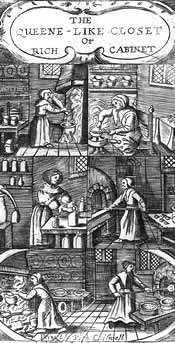
Hannah Wolley facsimilieAs regards my life in the seventeenth century, what better than a book written at the time. There are a number of these, many illuminating the lives of women. For today, I am choosing Hannah Wolley’s The Compleat Servant-maid: or, the young maiden’s and family’s daily companion. She has written others but this, first written in 1677 and available in facsimile, is full of recipes and household hints so that we can build a picture of the lives of our seventeenth century ancestors. More suggestions of contemporary books can be found in the bibliographies to the chapters of my Coffers, Clysters, Comfrey and Coifs: the lives of our seventeenth century ancestors.

My latest project, regarding the period 1946-1969, has led me to two excellent books. Firstly Jean Baggott’s The Girl on the Wall, that I have mentioned in a previous blog. If you need something to inspire you to write your memories this is it. Secondly Kate Adie’s Corsets to Camouflage, a story of women in war over the centuries.

I am of course a family historian and there are numerous books I could recommend to help researchers hone their craft. I could even mention one that I have recently written myself! Instead I am going to suggest that family historians do seek out information, either in written or digital form, that helps them to understand the sources that they are using. I have been a family historian since B.C. (before computers). Whilst I applaud modern technologies that allow us to see digital images of records from the comfort of our own homes, it has also bred a generation of ‘push-button’ genealogists who do not understand the records that the computer is searching on their behalf. Please, before you ask one of the leading subscription websites to interrogate a data set, read the background information that will explain why that class of record was created, what information it is and is not, going to provide and any gaps that there may be in its coverage.

Families do not come alone and I spend much of my time looking at the communities in which they lived. Do look for books about your own community or the communities of your ancestors. More on this topic tomorrow but for now I will recommend the sadly out of print Sources and Methods for Family and Community History: a handbook (Cambridge University Press 1994) by Michael Drake and Ruth Finnegan, with yours truly as a critical reader.

Finally a few more favourites that can help with many branches of history:-
Caroline Davidson’s A Woman’s Work is Never Done: a history of housework in the British Isles 1650-1950 (Chatto and Windus 1986)
Michael Wood’s The Story of England (Viking 2010)
Dorothy Hartley’s Food in England (Piatkus 1954)

So books are important to historians, read them, write them, let others know about your favourites, even if we access them online do not let books become a thing of the past.

A is for Agricultural Labourers Amongst your Ancestors

A2Z-BADGE-0002014-small_zps8300775cWell you were warned – today I begin to wend my way through the alphabet for the month of April, as part of the A to Z blogging challenge. Hopefully I can provide useful information and add to the debate amongst fellow history addicts, interspersed with non-alphabetical general happenings. So……..

A is for Agricultural Labourers

Every family tree has them, the ubiquitous Ag Labs and we tend to treat them as an amorphous group, frequently neglecting to find out more about their lives. How often do we hear, ‘My family tree is really boring, it is all Ag Labs’? As with any ancestor’s occupation, we owe it to those ancestors to find out more about what the job entailed. What tools were used? What clothes were worn What innovations or processes took place in their field (no pun intended) during their working lives?

Not all agricultural labourers are the same. Use maps, local sources and Google Street View to find out about the terrain. Can you discover what the soil type is in the area? Tithe Maps of the 1830s and 1840s will tell you about the land use on the farms where your ancestor may have worked. The National Farm Survey of 1941, held at The National Archives, will give a more up to date picture. Look at the British county by county General Surveys of Agriculture, written in the late eighteenth and early nineteenth century. Here is the volume for Devon . Another excellent book about West Country Agriculture is The Husbandry of Devon and Cornwall by Robin Staines, Andrew Jewell and Richard Bass (Stanes 2008).

The DVDs and books that resulted from the Victorian, Edwardian, World War II and Tudor Monastery Farm television programmes are invaluable. As a result of the Victorian Farm series, The Book of the Farm that the team used as a source, has been reprinted, with an introduction by Alex Langlands. This is a great insight into Victorian Farming techniques.

Visit if you can The Museum of English Rural Life or its Scottish equivalent. See also the Rural Museums’ Network. Find exhibitions of old farm implements or best of all spend time doing some of the tasks your ancestor would have done. There is nothing like a day spent picking stones or weeding potatoes in the rain to bring home just how difficult life was.

Follow up some of these suggestions, read some of the books below, then decide if your agricultural labourers really are boring.

Harvesting Littleham-Monkleigh-BB Mike and Rosie Smith

Thanks to Mike and Rosie Smith for this image


Waller, Ian My Ancestor Was an Agricultural Labourer (SOG 2008).
Handford, Kay The Agricultural Labourer in 19th Century England (Grosvenor House Publishing 2011).
Brown, Jonathan Tracing Your Rural Ancestors: a guide for family historians (Pen & Sword 2011).
Hammond, John & Barbara The Village Labourer (The History Press 2005).
Porter, Valerie Yesterday’s Farm: a taste of rural life from the past (David and Charles 2008).
Rogers, J Thorold A History of Agriculture and Prices in England (Oxford University Press 1882).
Reay, Barry Rural Englands (Palgrave MacMillan 2004).
Humphries, Steve and Hopwood, Beverley Green and Pleasant Land: the untold story if country life in twentieth century Britain (Channel 4 Books 1999).
Fussell, G E The English Rural Labourer; his home, furniture, clothing & food, from Tudor to Victorian times (Batchworth Press 1949).

Seventeenth Century Characters Loose in Plymouth

Pleased to learn that my One Place Studies article for Discover Your Ancestors periodical is now available. Other good news for family and local historians is the plan by Find My Past  to make the 1939 register available. This was the list compiled at the outbreak of the second world war, in order to facilitate making identity cards available and organise rationing.

We recently spent an enjoyable day at Dorset Family History Society’s Fair, in company with a party from Devon Family History Society. Young Edward’s early arrival made it possible for us to attend and therefore we could save money by having a self-drive mini-bus with Chris as driver. When he went to collect the vehicle, the day before our trip, he was disconcerted to be told that he was too old! As he is only just the wrong side of retirement age this was a bit of a shock and of course meant that we had no way of getting our party to Dorset. Fortunately a few phone calls to the insurance company rectified the issue and we drove away with our vehicle of choice.

A couple of days entertaining school children in the seventeenth century and a talk to Devon Family History Society in Plymouth this week. As we draw up at the Plymouth church where Mistress Agnes is on the bill, the premises is suddenly surrounded with vehicles sporting blue flashing lights on their roofs. There seems to be some form of raid going on. Has someone reported strange folk loose in Plymouth in seventeenth century garb? I am relieved that we are lacking any unusual herbs, swords or guns amongst our props. Later Chris collects fish and chips from the nearby take-away without the proprietors blinking an eye. Does this say something about the residents of Plymouth perhaps? I do wonder if the particularly generous portions of chips owed anything to the period clothing. Either they were impressed or keen to get rid of him!

The building work is coming to an end, just leaving me with a lifetime of painting to do. A couple of minor snags. Butler sinks are clearly designed for ornament not use. Mine does not have a plug. Surely I cannot be the only person who wants a sink to hold water? Is that not a definition of a sink? I point this out to the representative from the prominent DIY chain who supplied the kitchen. They agree that I can purchase a plug, which bizarrely they do not stock, at their expense. Then there is the issue of the free washing machine that was part of the deal. This did not arrive when it should, with the rest of the kitchen. Several phone calls later and a delivery date is arranged. An integral washing machine arrives on my doorstep. ‘No’, I say. ‘I am expecting a free standing washing machine’. After all my kitchen has been designed and there is clearly no space for an integral machine. The integral washing machine is on its way back to the depot and I chase up its replacement. Ah, it seems the free offer was for an integral washing machine only. This has not been made clear. Where am I to put an integral appliance? This saga is ongoing, watch this space.

A slightly greater hitch on the snagging list is the fact that a sharp shower has revealed that there are two major leaks in the conservatory. One involves rain rushing in under the lead flashing and pouring ferociously down between the old wall and the plasterboard, finding its way out round the window frame and on to the floor. Another downpour and my beautifully plaster boarded conservatory will lack a wall. The builders are on track to come and solve this – hopefully before the rainy season sets in.

Be warned good folk that I am taking part in the annual A to Z blogging challenge. This means that almost every day in April will be taken up with blogging my way through the alphabet. I am yet to finalise my theme for this but I promise that it will be historical.A2Z-BADGE-0002014-small_zps8300775c

Grandparenthood – a family historian’s perspective

Family History is all about relationships but how often do we consider what those relationships actually mean. Regular readers will remember that when I first became a grandparent, in November, I posted about The Maternal Line and suggested that it might be interesting to compare numbers of children, ages at marriage and ages at death of our female ancestors. Now I have acquired my first male descendant I have to think of something different. Edward Leo does have a direct male line of course but that is for his other grandmother (also a family historian) to pursue. I thought therefore that I would concentrate on grandparents on my side of his family. Grandparents have been much on my mind recently and not just because of my newly acquired status. When I married in 1980 the wedding ring of my maternal grandmother became my wedding ring. Yesterday, with regret, I had to remove this ring before my increasingly chunky fingers necessitated it being cut off. A lengthy session with margarine and ice cold water and mission accomplished. When I married, my grandparents’ initials and the date of their marriage in 1922 were still visible, engraved on the inside. After thirty four more years of wear, sadly, these are no longer legible but I have at least preserved the band intact. I have had a ring on that finger since I was eleven. First a copper band that had to be nail varnished on the inside to prevent my finger becoming green. This was replaced by a silvery metal version and then the wedding ring. I felt the need find a replacement ring for the fourth finger of my left hand. What better than the, slightly larger, wedding ring of my paternal grandmother, which now graces my finger. Tangible links then these rings from the past.

So how has the grandparent-grandchild relationship changed? On this side of the family, Edward has one living grandparent – me. I am younger now than any of my grandparents were when I was born. I have (so far) two grandchildren and they live 300 miles away. In the past this might have meant that I saw them rarely, if ever and unless I was comfortably literate, even the occasional letter would have been unlikely. It is too soon to say what aspects of my appearance or personality will be reflected in my grandchildren but I can see echoes of my own grandparents in me.2 March 2014 me and Edward 1

What then of these grandparents of mine, Edward’s great great grandparents? I was an only grandchild for all of them, unusual for the time. When I was born I had four living grandparents, although all had died by the time I was eleven years old. Even though I am fortunate to have a very good recollection of my childhood, this does mean that my memories of grandparently relationships are limited to the perspective of a young child.

Ivy and Gwen

Ivy Gertrude Smith née Woolgar and her daughter (my mother)


My mother’s parents lived within walking distance and we saw them weekly. They were able to provide regular support for my mother. Equally she was on hand to help my grandmother when my grandfather was ill and then when she was widowed. When my grandmother herself became unwell she came to live with us.

‘Granny’, Ivy Gertrude Woolgar, was 63 when I was born and died a month after my seventh birthday. She was a wonderful lady and the archetypal granny in everything except build. We played together regularly, she taught me to knit, recited nursery rhymes and did all the things grannies are meant to do. My first family holidays were on the Isle of Wight and Granny came too. My memories of Granny are a role model for my own grandparenting. Although I lack her dainty size, physically I have inherited most from this grandparent. In fact I wonder why, when I look in the mirror, she looks back.

Picture1My maternal grandfather and youngest grandparent, was Frederick Herbert Smith; he was 61 when I was born and he died the following year. Despite this I do remember sitting in the sunshine on his desk in the back bedroom that was his office. According to other relatives he was happiest with his own company. A Chartered Accountant by profession, his main hobbies were stamp collecting and train spotting. I suspect that in today’s world a diagnosis of Asperger’s Syndrome might have been applied. He did everything he could to avoid family gatherings but nonetheless played with me and taught me to count his keys. There were thirteen but somewhere someone must have suggested that thirteen was not to be mentioned so I always counted ‘eleven, twelve, fourteen.’ What then has come to me from this grandparent? Physically, my short-sightedness but some aspects of my personality, such as the attention to detail and my self-sufficiency are his too. I wish I could have had the chance to get to know him better; I think we would have got on rather well.

Albany Home GuardMy paternal grandparents were much more aloof. We visited, perhaps monthly and occasionally went to Battersea Park, together with my parents. I was certainly never alone with them and have no recollection of anything that could constitute play. Albany Braund, ‘Grandpops’, a railway porter, became a grandparent at the age of 67 and died when I was six. He was also the only one of my grandparents to grow up in the countryside and I now live closest to his birthplace. I was always a little wary of his gruff manner. Although I didn’t realise it at the time it is likely that my maverick tendencies and my willingness to challenge authority come from this grandparent.

Elizabeth Ann Hogg 1912My fourth grandparent, ‘Grandmums’ Elizabeth Ann Hogg, was 69 was I was born, the eldest of my grandparents, yet she lived the longest, dying when I was ten. My relationship with her was a distant one and memories are shaped by her diabetes. We always had to shop for PLJ for her to drink and diabetic chocolate, neither of which were easy to obtain. I can’t identify how Elizabeth Ann has contributed to my genetic mix. I clearly remember the journeys to their house and the house itself but the personalities of my paternal grandparents elude me. Perhaps that in itself suggests that they were not child orientated. When one considers their background this is perhaps not surprising. Albany was only five when his widowed mother married again and left him to be brought up by his grandmother and then an older aunt, who had children of her own. He had contact with his three surviving grandparents, all of whom lived close by. In contrast, although three of Elizabeth Ann’s grandparents lived until she was a young adult they lived many miles away in Northumberland and Buckinghamshire, whilst Elizabeth’s parents had brought her up in London. Elizabeth’s mother died when she was twelve and family stories relate that her Northumberland grandmother came to look after her.

Unusually for their generation, three of my grandparents grew up as only children, the exception was Ivy; this probably had an impact on their ability to form other family relationships, certainly Ivy was the most family orientated of the four.

So young Edward, what will come down to you from all these ancestors and of course from your equally significant ancestors on your paternal line and the forebears of your maternal grandfather, whom I have not celebrated here? You will of course just grow up to be your own very special person but maybe sometimes echoes of your genetic forbears will travel down the generations and show themselves in you.

Renovations, Reminiscences and Recommendations

After the mayhem of sleeping in six different counties in ten days, I returned to the relative calm of having my house turned upside down. Conservatory builders and house painters are now joined by kitchen fitters in week ten of entertaining workman. After the debacle with the freezer there was the incident of the large tub full of white emulsion in the shed. Suffice it to say that ‘full’ is no longer an appropriate term but I do have a very white shed floor. This was not part of the planned renovations. Then there was the wall that was considered to be too inaccessible to be plastered. I was prepared to concede that it was indeed impossible and went to relay the project manager’s decision to the plasterer only to find that he had somehow managed to accomplish the impossible by dint, I think, of lying on top of the oil tank.

In general though it is all going pretty well and I have already spent the odd ten minutes relaxing in the conservatory. Only the inability to see the lap top screen when it is sunny is preventing me from living out there. Today I had the fun of trying to fit things into my new kitchen units. I feel a certain amount of reorganising coming on and by Christmas I shall probably still be wondering where I have put things under the new regime.

Appropriately my 1946-1969 women’s memories project has got underway in Women’s History month. My lovely ladies have been exchanging memories of the clothes of the period. I was surprised to find that there was little difference across the class divide. Clothes were minimal in quantity, washed only when visibly dirty and thrown away when beyond any sort of repair. Who remembers The ‘New Look’, liberty bodices, popper beads, roll-on girdles, knitted swimming costumes or soaking net petticoats in sugar water to make them stand out? This brief twenty four year period saw so much change, particularly for women, in all aspects of their lives. We are all having great fun with the project and I have unearthed some gems from the family album. I happily whiled away a whole day writing up my own recollections of such sartorial delights as florescent green stockings and purple nail varnish, which I teamed with a jersey mini-dress in narrow stripes of florescent yellow, pink and orange.1951 Bexhill 1948 Carisbrooke June 1950 March 1951 Roof of the Elite Cinema May 1947 Ryde June 1949

I have been back to the seventeenth century to entertain and inform in one of our regular schools. My voice, which still hasn’t fully returned to full volume, managed to last for the full four hours of presentations and the feedback from the school says it all:- “Another great day from the Team who brought us ‘How to Swallow a Fork From the Outside’, ‘My Favourite Use for Urine’ and ‘The Boy’s Book of Really Worrying Ways to Treat Vital Parts of Your Anatomy’. I taught one of the groups this morning and their feedback was wholly enthusiastic -‘I learned how to torture a witch’ – a vital skill for the future, clearly.” I was a little disconcerted nonetheless when one of the incoming twelve year olds to my classroom commented, “Oh look we’ve got an old woman for this one.” This grandparenthood has obviously taken its toll. I will also share a little known fact, vouchsafed by one of my audience, “The Puritans banned the cinema.”

My attempts to get underway with my One Place Study project on World War I military personnel, in company with fellow members of The Society for One-Place Studies, were hampered by unsolicited phone calls this afternoon. Firstly the man from a well known telephone company who wanted to give me a new mobile phone. He seemed somewhat stupefied at my response to his question about how often I topped up my existing phone. Apparently the free phone he was offering could not be worth more than my average monthly top up. As this worked out at 4p he was at a loss. He was swiftly followed by another of the ‘I am not trying to sell anything’ brigade. I am never sure why these people always assume that I am more likely to succumb if they use my christian name. ‘May I call you Janet?’ – well you may but I am still not interested. His question was easier to answer – would I say I found it more difficult getting in the bath or out of the bath? He had obviously been talking to my twelve year old fan in the school. I debated a while and then put him out of his misery by explaining that I have no bath. Finally, back in the First World War I have been studying the ten men from my village who lost their lives, on the Somme, in Basra and less exotically but none the less tragically, in Weymouth. The helpful suggestions provided to members of The Society for One-Place Studies have been invaluable and I am enjoying being part of a collaborative project.