Well, here we are, 2017. Who knows what the year will bring? This time last year I am sure few could have predicted the seriously scary political machinations and plethora of celebrity deaths that accompanied 2016. So far this year I have learned that it is possible for a memory stick to survive being vacuumed up along with Christmas tree prickles.
I would also like to share an incident from the lacuna that is that gap between Christmas and New Year during which the descendants descend. The phone rings at 7am. A phone call at this time of day normally means bad news – or that your daughter has arranged for T****s to deliver food to your house later in the day. I am a T****s delivery virgin; I know not how these things work. Having the food delivered was deemed easier than having my personal shopper struggling to identify various ‘modern’ ingredients on the list. We do not know our humus from our quinoa sadly – even spell checker doesn’t recognise quinoa, so we are not alone. The main challenge for the T****s delivery driver will be finding the house. If he uses his satnav he is doomed. It turns out, for some reason that he tried to justify, he was expecting to be delivering to a building site. The justification involved my house name – any suggestions anyone? He had a list of what had been ordered. What would a building site do with several dozen nappies of a suitable size for a two year old?
The DNA results arrived sneakily early, before I had finished restoring the house to a semblance of normality and before I had made any discernable impression in the mountainous pile of post-Christmas laundry. This means that I still haven’t completed my documentary trail hunt for third cousins, so more on that when I get the chance. What have I learned from my results? To be honest, not a lot. Sadly, no previously unknown half-siblings have climbed out of the woodwork. I have 788 matches. Big deal, or not, actually. Eleven people are predicted to be related in the range 2nd-4th cousins. Sorry FTDNA, unlikely I think. I know these people are not my second cousins (or second cousins with a few removes). I think it is very unlikely that they are my third cousins, so that leaves fourth cousins. Three of these matchees (it’s ok, I just invented that word) do not provide any surnames apart from the one they now carry. To be honest I don’t blame them. It was a bit of a learning curve working out how to add these. I have included the surnames of all my great great grandparents and will be adding those for the previous generation when I get a minute (like in about 2031).
As expected, most of the testees have families trees that seem to still be rooted in the US and the only surname that is common with any of my ancestors is Smith and I really don’t think this is the same Smith. What is slightly worrying is that there appears to be no commonality with members of the Braund family who have done this test, although, to be fair, our likely relationship is more distant than 5th cousins. This didn’t stop me from hoping for a remote cousin match. Two of the eleven 2nd-4th cousin matches have uploaded a family tree. I guess that this is the next challenge for me to tackle. No areas of commonality here either. There is one match that looks possible, although it wouldn’t be at 4th cousin level. He does at least have Cornish ancestry and a surname that appears on my family tree, although not amongst my direct ancestors. I know I am supposed to do something with my centimorgans. Maybe we don’t share enough of them. I will await instruction. I had a play with the chromosome browser. The most likely match and I share seven segments. I am not sure why therefore they are identified as a closer relative than someone with whom I share 18. I clearly need someone to explain the significance of this in words of half a syllable.
What other fun can I have with these results? I am 99% European, no surprises there then. This is allegedly Britain, Scandinavia and Western Europe, although not Iberia. As regards my ancient origins, I am 10% a Metal Age Invader. What does that even mean? I am 40% Farmer, which seems to mean I may have origins in Aleppo. Excuse me, I’m just off for a bit of hunter gathering, in line with 50% of my ancient origins.
 I started at the beginning of December with twenty four authors in the historical novelists’ ‘hat’. I drew one out each day to determine the order in which I have introduced them to you. Today’s entry is south Devonian
  Another great historical series for today’s novelist: the Morland saga by
  More Roman sleuths today in the shape of
  Another North Devon author is pulled from today’s advent box; there is so much talent in this county.
 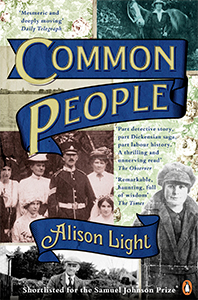 Now for the advent calendar. This is a book I haven’t actually read yet but it looks so good that I am going to include it – shamelessly relying heavily on the blurb and other people’s reviews. It isn’t actually a novel either but the story of a family. The author has done exceptionally well to find a publisher for her family’s story in the days of the hobby’s boom. I remember when I first started, reading Marjorie Reeves Sheepbell and Plougshare – don’t read that unless you want to be seriously envious about the amount of family documents and memorabilia that she inherited. Others from that era were John Peters’ A Family from Flanders. Must also mention John Titford’s Come Wind, Come Weather but all these date from the 1970s and 1980s. Now the world and his wife are writing up their family stories getting one commercially published is next to impossible, which is why I think
  We are in sixteenth century Cornwall with today’s historical novelist,
  We are in Devon again for today’s historical novelist and the final genealogical sleuth of the advent calendar (there are others but there weren’t enough days).
 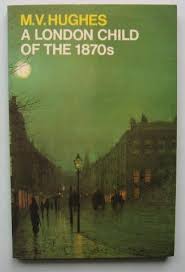 Today I offer you M V Hughes as my historical novelist. I am stretching the definition of the genre a little here as the books in her London series (yes, another series) are semi-autobiographical, despite the preface which claims that the characters are fictional. This tell the story of a late Victorian middle class family, who nonetheless have struggles of their own. Through A London Child of the 1870s, A London Girl of the 1880s, A London Home in the 1890s and finally, A London Family between the Wars, we become immersed in the life of the fictionalised recreation of Hughes’ own family. Molly Hughes was herself well educated, having attended Miss Buss’ North London Collegiate School, trained as a teacher and been awarded a BA, at a time when serious education for women was unusual. London Girl, in particular, provides a very interesting insight into girls’ education of the time. I read this series of four books, which were first published in the 1930s but were reprinted in the 1970s, before becoming aware that there was an earlier book Vivians. This was re-printed after the other four, so for me it was a prequel, even though it was originally published first. I actually think that reading it after the other four is the best order. This tells the story of Molly’s mother’s Cornish mining family and explains the background to the London novels, the first three of which are available as an omnibus volume. I found this excellent
  Another day, another historical novelist and again a writer based in Devon.
  The History Interpreter - Janet Few