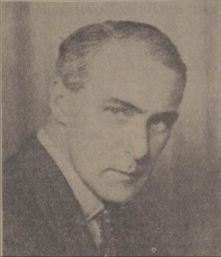
#100daysofbfotc Day 72: Philip Waters

Picture1A story about a fishing community needs to include a boat builder and in Barefoot on the Cobbles it is Philip Waters from Appledore. In the novel, Polly’s father works in the Waters’ family yard and it is to Philip that Albert turns when he wants a new boat. It is said that the Waters put double ribs in the bottom of their clinker boats for additional strength.

Philip Bale Waters was born in 1863 in Appledore, into the boat building family of Edwin Waters and his wife Mary Elizabeth née Bale. Edwin was a Clovelly man, which is why the Clovelly fishermen trusted his boats. When he was a child, Philip’s family lived with his maternal grandparents at 12 Alpha Place. He did his apprenticeship in Appledore and married Harriet Williams in 1884; they had 11 children. They spent most of their married life living at 123 Irsha Street in Appledore. Philip died in 1959 at the age of 95.

‘A few more catches like this and there would be enough coins in the pot on the mantleshelf for Alb to buy a better boat. He hankered for a ledge boat, such as they used at Bucks Mills, preferring it to the heavier picarooner favoured by the Clovelly men. Polly looked up at her husband.

‘There’s nigh on three pounds ten in the pot now,’ she said. ‘You could send word to Philip Waters, over to Appledore. By the time the boat’s ready, us’ll have enough.’ ’

Barefoot on the Cobbles will be published on 17 November 2018. More information about the novel can be found here. Copies will be available at various events in the weeks following the launch or can be pre-ordered from Blue Poppy Publishing or the author.

#100daysofbfotc Day 66: Mr Caird

New InnIn Barefoot on the Cobbles’ divide between ‘us and them’, that is characteristic of early twentieth century society, Mr Caird is unequivocally one of ‘them’. As such, he is distanced from Clovelly’s villagers, acting as a buffer between them and the Lady of the Manor, Mrs Hamlyn.

George Charles Caird was agent to the Clovelly estate. He was born in Stonehaven, Kincardineshire, Scotland, in 1865, the son of George Scott Caird and his wife Christian née Sharpe. His father was a solicitor and procurator fiscal, so Caird grew up in a comfortably off household in Evan Street, Fetteresso. By 1901, Mr Caird was working as a factor’s clerk in Roxboroughshire and here he met his wife, Hellen Hall Thomson, who was living with her uncle at Huntlaw Farm in Minto. Together they moved to Clovelly where their only child, Hellen Christian Drawhill Caird, was born in 1904. They lived firstly at Slerra, Upper Clovelly and then in the village, at number 21 but Mr Caird’s role probably prevented them from being regarded as villagers. Mr Caird died in 1922; his widow and daughter remained at 21 Clovelly until the second world war, when his wife died and his daughter married.

Mr Caird called to present Mrs Hamlyn’s good wishes and to enquire after Daisy. Remembering the last time he had visited, Polly was reluctant to invite him in. Only the thought that other people might overhear what he had to say persuaded her to grudgingly open the door wider and usher the dapper little man inside. He brushed down his immaculate, tweed plus-fours and rested the stout stick that he always carried against the chimney breast. The stick was an affectation, rather than a necessary aid; Mr Caird was fit for his fifty years.’

Barefoot on the Cobbles will be published on 17 November 2018. More information about the novel can be found here. Copies will be available at various events in the weeks following the launch or can be pre-ordered from Blue Poppy Publishing or the author.

#100daysofbfotc Day 53: Ivy Cottage, Bucks Mills

Malcolm Langford cards (19)

Ivy Cottage (top left)

Ivy Cottage was almost certainly built in the 1830s and is set back from the road on the coastal path to Clovelly. Like most of the cottages in the village, it was constructed of cob, with a thatched roof. In Barefoot on the Cobbles it appears as the home of Eadie and her family. Today known as ‘Crippetts’, the cottage, was occupied by the Harris family in the 1840s. They were followed by the Penningtons and it is likely that Eadie’s parents, Thomas and Ellen, moved in in 1874, the year after their marriage. They had nine children and although they did not all live at Ivy Cottage at the same time, the four rooms would have been very crowded. The family remained in the cottage for over sixty years and after Eadie’s father died, in 1938, it was taken over by Mr and Mrs Bergg. During the Second World War, the intrepid Mrs Bergg used to descend the cliffs on the end of a rope in order to destroy falcon’s eggs as birds of prey were attaching the carrier pigeons that were vital for wartime communications.

‘There were five girls in Ivy Cottage, where Eadie lived, the stairs leading directly on to the bedroom that she shared with her sisters.’

Barefoot on the Cobbles will be published on 17 November 2018. More information about the novel can be found here. Copies will be available at various events in the weeks following the launch or can be pre-ordered from Blue Poppy Publishing or the author.

More information about Bucks Mills can be found here.

Day 6 – At Sea

Another full day of lectures, although I miss the first one in order to prepare for my own. All in all I have attended all but two of the sessions on offer during the week. There have been some difficult choices, as for the most part, there have been two and sometimes three, streams of lectures. I begin the day with Helen Smith on ‘Begotten by Fornication’, an interesting look at illegitimacy. Then Jan Gow with ‘Remember the WWW. No, not the world wide web but the Who, Where and When’. It is over twenty years since I last heard Jan speak, when she was in the UK. This is really a talk about one-place studies so very interesting for me. I follow this with my session on the mental health of our ancestors, a talk I always enjoy presenting. A short break and then it is Pat Richley-Erickson aka Dear Myrtle with ‘Seven Habits of Highly Effective Genealogists’. I volunteer to represent one of the points although I am not sure I quite qualify as ‘highly effective’ as much of my information is still on index cards. Next, more DNA with Maurice again. This time his title is ‘Using Triangulation to Break Through Brick Walls’. The afternoon ends with my Facebook Generation talk, which was very well received and sparked many questions and comments.

An interesting incident in the toilets by the Windjammer. The doors to the cubicles open inwards and an injudiciously position toilet roll holder makes it quite difficult to exit, for even an average sized person. One of the cruise-goers has got herself in but is struggling to extricate herself. She attempts to sidle out facing the toilet roll holder. This fails, so she turns round and gives it a go facing the other way. I have to say she was a lovely lady and was laughing at her various ineffective attempts. We wonder if she will have to do a Winnie the Pooh and remain there until she is thinner but no, somehow she squeezes past the obstacles and is free.

DSCF0814.JPGThe evening sees the presentation of the prestigious Prince Michael of Kent Award to Cyndi Ingle for her decades of tireless work on Cyndi’s list. Mia has somehow managed to successfully bring this glass vase from the Society of Genealogists without mishap and there are a few tears as it is handed over. Very well deserved it is too, if you haven’t consulted Cyndi’s List then you can’t call yourself a family historian. Caroline Gurney follows with ‘Are you Related to Royalty?’. The answer is probably yes, so Maurice, who has been trading on his distant relationship to Princess Diana all week, now has to deal with competition from the rest of us.
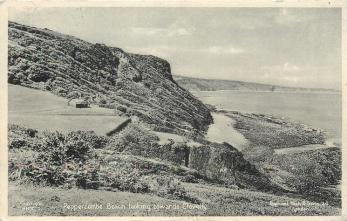
#100daysofbfotc Day 45: Richard Wakely

Peppercombe‘Richard’ Wakely is one of the characters in Barefoot on the Cobbles whose christian name had to be altered to avoid confusion. In real life, he was named William and he lived in the hamlet of Peppercombe. Born in 1835, he began his working life as an agricultural labourer and around the time of his marriage to Eliza Found in 1860, he trained as a ship’s carpenter. In order to ply his trade with Waters’ boatbuilders in Appledore, he walked in to town each week, returning to his family at weekends. William was still working in his late seventies even though he would have been eligible for an Old Age Pension.
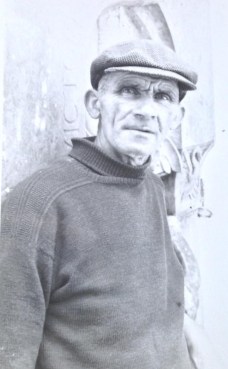
The Wakelys had a son and five daughters who survived infancy, two others died as babies. William himself died at the age of 95, in 1931.

Her father’s tar-stained holdall was slung across his shoulder and thudded on his back with each successive step. It receded into the distance, as he gained more ground. Richard seemed unaware of his daughter’s presence, let alone her exertions. Lost in thought, he spat a plug of tobacco into the bank and kept his gaze firmly forward, glad that the heat of the day was abating for the journey. Richard contemplated the long walk ahead of him.’

Barefoot on the Cobbles will be published on 17 November 2018. More information about the novel can be found here. Copies will be available at various events in the weeks following the launch or can be pre-ordered from Blue Poppy Publishing or the author.

#100daysofbfotc Day 40: Bertie

Bert Braund taken by Jim Willis

Taken by Jim Willis

Bertie’s presence in Barefoot in the Cobbles provides an opportunity to examine yet more facets of Albert and Polly’s brand of parenthood. Their second son, Bertie was born in 1900 and he spent much of his life in Clovelly, working on his father’s fishing boat. In today’s world, Bertie might have been labelled as having mild learning difficulties. A family story tells of how, as a schoolboy, he used to hold the donkeys and walk the unladen beasts up and down the street, when the visitors had finished their rides. Any silver coins he received as tips had to be handed to  his parents but bronze and copper were his to keep. After the deaths of his parents, Bertie went to live with his sister Violet in Bideford. He died in 1969.

‘The doctor looked at Bertie appraisingly.

‘Hello young man,’ he said. ‘You look just the age for my Scout Patrol. Have you heard of the Boy Scouts? I am sure you would enjoy the jolly times we have. We are off to camp in a week or two. What do you think of that?’

Bertie looked desperately at his mother for guidance. How on earth should he respond to this gentleman? He might have been speaking a foreign language for all Bertie understood of the words.

‘Oh no, sir,’ exclaimed Polly in horror. ‘Not Bertie sir, he’s well…. He’s not the sort for being away from home, camps and the like, no, no, no it would never do for Bertie.’ ’

Barefoot on the Cobbles will be published on 17 November 2018. More information about the novel can be found here. Copies will be available at various events in the weeks following the launch or can be pre-ordered from Blue Poppy Publishing or the author.

#100daysofbfotc Day 23: Dr Crew

Dr Crew

Unattributed newspaper cutting

Much of the incidental information about Dr Crew, that appears in Barefoot on the Cobbles, is based on fact. He really was the local scout master and he was indeed fascinated by chicken genetics. He breezes into the lives of the novel’s main characters when they are in crisis and there is only scope to portray the brief essence of a fascinating man, who spent just a short time in Devon.

Dr Francis Albert Eley Crew was born in 1886 in Tipton, Staffordshire, the son of a grocer. Frank was the only surviving child of five siblings. He was educated at King Edward VI School in Edgbaston and his interest in breeding and showing poultry began at an early age. His father changed careers and became the manager of a brick works; the family lived in Stourbridge at this time.

Frank went to Edinburgh University to study medicine, graduating in 1912. He married fellow student, Helen Campbell Dykes and together they set up a practice in Hartland and Clovelly. Quite what the inhabitants of rural North Devon felt about the ministrations of a female doctor is unrecorded.

A keen member of the territorial army, Dr Crew also ran the local scout troop. This allowed me to make a brief reference to a recently founded, yet significant, institution, which helped to evoke an essence of the era. The Bank Holiday camp in East Devon, to which Dr Crew alludes, is reported in the local press. Dr Crew was also an honorary member of the Mariners’ Union, along with Mr Caird, Clovelly Estate’s Land Agent. When the First World War broke out, Frank was attached to the 6th Battalion of the Devonshire Regiment. He gained the rank of major, serving with the Royal Army Medical Corps in France and India. The Crews had two children.

Dr Crew did not return to Devon after the war; instead, he went back to teach at Edinburgh University, becoming a leading authority on animal genetics, particularly chickens. During the Second World War he was in charge of the military hospital at Edinburgh Castle and was inspired by the many Polish prisoners of war to set up a Polish School of Medicine in Edinburgh. He gained the rank of brigadier and became the director of Medical Research at the War Office. After the war, he abandoned genetics in favour of concentrating on the development of nursing training. He made several overseas trips in connection with the World Health Organisation, including visits to Egypt, Canada and India. He worked for several years in Burma and India before retiring to Sussex.

In 1972, the year before his death, Frank remarried to Margaret Ogilvie Withof-Keus, with whom he had worked in the Army Medical Corps. More information about Dr Crews can be found here.

‘The doctor looked at Bertie appraisingly.

‘Hello young man,’ he said. ‘You look just the age for my Scout Patrol. Have you heard of the Boy Scouts? I am sure you would enjoy the jolly times we have. We are off to camp in a week or two. What do you think of that?’ ’

Barefoot on the Cobbles will be published on 17 November 2018. More information about the novel can be found here. Copies will be available at various events in the weeks following the launch or can be pre-ordered from Blue Poppy Publishing or the author.

#100daysofbfotc Day 5: ‘Crumplefoot Tommy’

Crumplefoot Tommy‘Crumplefoot’ Tommy is referred to in the first chapter of Barefoot on the Cobbles. Although we do not actually get to meet him, we form an impression of his character through his wife and daughter. The ‘Crumplefoot’ nickname is supposed to refer to an injury to his foot, that he sustained whilst at sea. I have probably used this nickname anachronistically, as I suspect he was not injured until later in life but it was too evocative to ignore. Thomas is in his late thirties at the point at which he appears in the story. His wife, who was also his first cousin, has just given birth to the eighth of their nine children. Tommy was in the merchant service and also worked a fishing boat from Bucks Mills. His injury was obviously not life-limiting, as he lived to the age of eighty nine.

‘ ‘Why tears maid?’ asked Albert, moved by the plight of one of Crumplefoot Tommy’s ever-increasing brood.

‘Me da fetched me one.’ The tone was philosophical but she scarcely stifled a rising sob. ‘He said I woke the bebby but I niver.’ ’

Barefoot on the Cobbles will be published on 17 November 2018. More information about the novel can be found here. Copies will be available at various events in the weeks following the launch or can be pre-ordered from Blue Poppy Publishing or the author.

#100daysofbfotc Day 4: East-the-Water, Bideford

DSCF0566

Looking across the River to East-the-Water

As the name suggests, East-the-Water refers to the part of Bideford that lies on the eastern bank of the River Torridge. One of the principal characters of Barefoot on the Cobbles arrives in East-the-Water in Chapter 2 and the following Chapter is centred on this part of the town. Although East-the-Water has never been the principal part of the town, at the time of the novel, the riverside’s wharves swarmed with activity. Higher up the hill were the prestigious villas of the Chudleigh Estate, built in the lee of the seventeenth century Chudleigh Fort. The Way of the Wharves, community history project explores the history of this area in more detail. There is also an account of East-the-Water’s history on the community website.

Ok so the real post this time – I hope!

So what happened there? I blame the rubbish motel internet – I am too mean to pay for the upgrade. Thanks to the 200ish people who looked at a blank post yesterday let’s hope this works!

So it is officially the hottest week for decades and here I am stuck in a motel room in that northern industrial city once again. For the benefit of my overseas readers, these rooms are not equipped with air-con and the windows only open a couple of inches because they are afraid of being sued if guests jump out. Normally, the rooms are equipped with fans. I appreciate that all these do is move hot air round the room but it does give the illusion of slightly less heat. My travelling companion sweet-talking the receptionist, resulted in the provision of an industrial strength, floor-standing fan, which I think may have deprived the receptionists of a breeze. Even with this on all night, the temperature did not dip below 28 degrees. I know, I must have looked at the thermostat at least once an hour. Now it is 7.30pm and still 29.5 degrees, a good fifteen degrees above my ideal bedroom temperature.

In other adventures: in an effort to look vaguely respectable for ‘work’ I brought a suit to wear. As I went to put it on, I discovered that the trousers were missing. I have no idea at what stage they escaped from the dry cleaner’s polythene bag in which they were ensconced but they are not there now. That put paid to the professional image I was trying to create. Anyone seen a pair of trousers lying abandoned at some point between home and here?

A bit of a win win in the motel restaurant though. In the crowded dining room last night we patiently waited foodless for 45 minutes after ordering. When food arrived for a table who had ordered 25 minutes after us, we politely enquired as to the whereabouts of our dinners. We’ve been involved in the hospitality industry, we understand that these things happen. Cue grovelling apology, full refund of the price of our dinner, the appearance of our meals and the offer of a compensatory bottle of wine. Being virtual non-drinkers, I ask if we can have free breakfasts instead. Yes, is the reply. Today we descended for a our free breakfasts to be greeted with a bottle of wine as well! – that’s another for the book launch collection (permission for serving of alcohol permitting). It was 7.30am; we nonchalantly sauntered out of the restaurant looking like it was normal to be carrying a bottle of wine about at that hour.

Chris and Musket 1 DEPhotographyI have noticed that, as I struggle with all this marketing lark for Barefoot on the Cobbles, it seems that the way to get a reaction on social media is to post gratuitous pictures of the fisherman of my acquaintance. Forget images of cute animals, I have cracked the latest trend! So here is a random picture that has nothing to do with my post but which will get folks rushing to click on their like buttons – maybe.