New Year – New Resolutions: telling your family’s story

As one year comes to an end and another looms on the horizon we often have wonderful intentions about where the next year will take us. Sometimes we make commitments that relate to our health or long overdue tasks. As genealogists, we might make research plans for the forthcoming twelve months. Meeting with relatives over the holiday season might have reawakened enthusiasm for investigating a particular branch of the family. One thing that all too many of us continually put off is the task that we label ‘writing it up’. One day we will put all this in some sort of coherent order for our nearest and dearest. We just want to kill off auntie Annie/get back one more generation/prove that family rumour first. In short, we want to ‘finish’ our research but as all but the most naïve genealogists know, the day that we finish our research never comes.

Why then are we putting off the dreaded ‘writing it up’? Some feel that their online tree, plus rigorous source citations, is a finished product in itself. Ask yourself though how appealing this is to non-genealogist family members. You are much more likely to spark their interest with stories, with context. To make your family into three dimensional characters, you need to think about the local and social historical background to their lives.
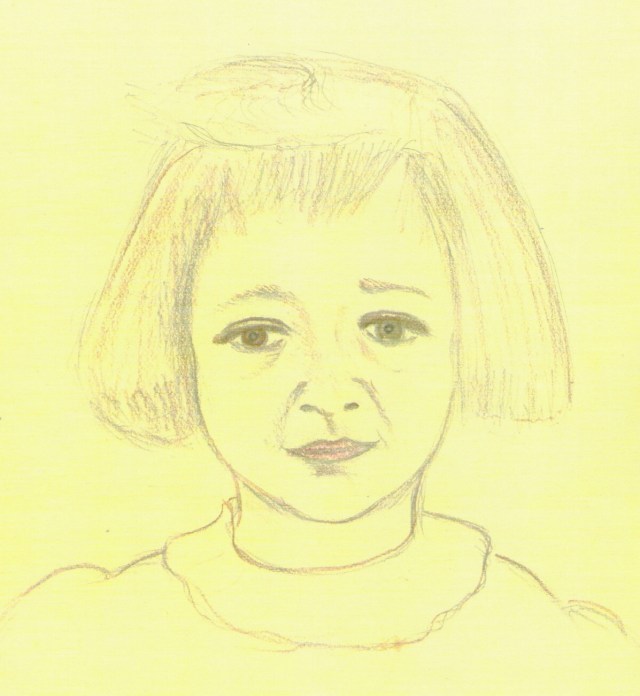
Drawing of Janet

My father’s portrait of me, aged about 4

Many of us, especially if we have been researching for years, just put ‘writing it up’ very firmly in the ‘too hard’ basket and screw down the lid. It is true that it can be a daunting task but it is one that should be tackled, sooner rather than later. To begin with, ‘writing it up’ doesn’t have to mean a book. There are many other formats, both traditional and more unusual, that can be a vehicle for telling your family’s story. Some of these are much less scary than a book and may suit your own particular strengths. Perhaps you feel that your literary skills are lacking. Don’t worry, if you can read this you will be fine.

You do not have to do it all at once. Concentrate on a small twig at a time, not the whole tree. Set yourself a realistic deadline; perhaps there is a family reunion or an anniversary coming up that could be a target. The most important thing is to stop procrastinating and put fingers to keyboard. Yes, you will find loose ends on the way; extra pieces of research that need doing but don’t let these divert you for too long – there can always be volume two! Think about your potential audience and what might appeal to them. In the end, this impossible task can become enjoyable rather than a millstone round your neck.

If your New Year’s resolution was to lose weight or to give up smoking, you might well seek help from a group who were embarking on the same journey. Researching and writing can be solitary activities, so mutual support and encouragement is important here too. If you publicly announce your intention to do something, be it taking more exercise or telling your family’s story, that public declaration is in itself a motivator. Can you get together as a small group and meet to share your progress and problems? Can you find a course that might offer both guidance and encouragement? Whatever route you decide to take, please don’t let 2020 be yet another year when you don’t start to ‘write it up’. Good luck. I am sure you will get satisfaction from your creation.

Janet Few runs ‘Writing and Telling your Family History’ courses for Pharos Teaching and Tutoring.  The next one starts on 31 March 2020,. These are online courses, which can be taken from anywhere in the world. This one is particularly appropriate for those with British ancestry.
Extending your Family Tree – some tips for climbing over (or round) those brick walls

As many of my genealogy friends will be spending the days between Christmas and New Year frantically seeking the next generation of their family tree, I thought it was a good time to re-post this, which I originally from for the In-depth Genealogist blog.

We all have them, those pesky ancestors who’ve been lurking at the top of a branch of our family tree for years, or even decades. They seem to have come from nowhere. We are desperately searching for their parents so we can extend the line but the necessary records elude us.

The first step is to revisit the life of that ancestor to ensure that you haven’t missed a clue. If they live into the period of the census returns, track them in every census, not just one (apologies to those with Australian ancestry, I know this one is not for you). Look for deaths, burials, obituaries and gravestones. Some of these records will give a clue as to a date of birth, even if they do not suggest a place. Sometimes the results will be inconsistent. Use as many records as possible to establish when the ancestor was born and then accept that they all may be wrong!

When calculating a date of birth remember that you do not just subtract the age in the document from the year of the record, which is what the data providers do when compiling their indexes. For example, most UK censuses were taken in late March or early April. At that point ¾ of the population will not have had their birthday in that year. It is more accurate therefore to take away the age in the census+1 when estimating a birth year. In any case, you want to narrow the date span as much as possible.

If an individual claims to be 27 when they married on 20 December 1874, then they were born between 21 December 1846 and 20 December 1847. If that same individual was aged 43 in the 1891 UK census, which was taken on 30 March, then their date of birth was between 31 March 1847 and 30 March 1848. If they were 73 when they died on 15 July 1921, then their birth date was between 16 July 1847 and 15 July 1848. Taking these three pieces of information together, you now have a birth date between 16 July 1847 and 20 December 1847 providing all these ages are accurate. You may need to widen your date search. Remember the legal ages for marriage. In the UK these remained at 12 for girls and 14 for boys until as late as 1929. For female ancestors their child-bearing years will give some clue as to possible birth years.

There are various reasons for failing to find the much-needed birth or baptism entry. Are you looking under the wrong version of the surname? Names are misheard, mis-read and mis-transcribed. Mis-hearing and mis-reading lead to different variations. Ask others to write the spoken surname to see what mis-hearing might lead to; remember regional accents will make a difference. Note commonly confused capital letters: I & J or L, S T & F, for example. Use wildcards in your searches.

Some people change their surnames altogether, for a number of reasons. In some cases, it may be possible to search using just a forename, date and place of birth, then the resulting possibilities can be investigated to see if they might have become your ancestor.

Is the forename wrong? If you have John Henry, try Henry John. Consider nicknames: Jack and John, Polly and Mary Ann, Jenny and Jane. Remember that UK birth registrations were sometimes done before a name was decided upon, so they may appear as Male or Female —-.

Are you looking in the right place? People often believe they were born in the place where they spent their early childhood but this is not always so. Might they have been born further afield? Perhaps the family was away from home at the time, or even overseas.

Sometimes, sadly, the record we are seeking never existed, or has not survived. In this case we have to turn to alternative sources and rely on luck to take us further.

Good Luck!

Catherine Seear

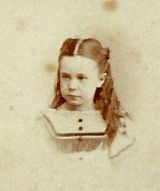
Clara Seear (not a brick wall!)

Christmas Memories

Until recently, I was a columnist for the In-depth Genealogist Magazine and also wrote for their blog. Now the magazine is sadly no more, contributors have been invited to re-post their blog material elsewhere, so that it is preserved. This is another post that I wrote for the magazine, which I have edited to bring it up to date.

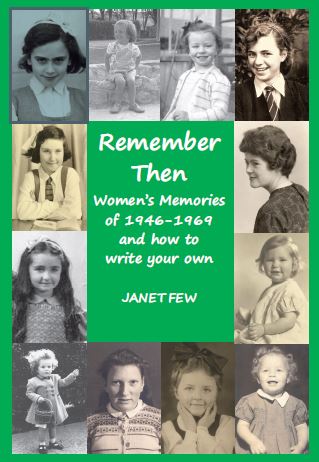
This four years ago I was taking delivery of my latest creation; a whole pallet full of poorly wrapped books were deposited near my driveway in the rain. I say my creation but that wasn’t really true. Eighty ladies had spent the preceding eighteen months writing their memories of various aspects of their lives in the decades following the second world war. I then wove these together into what was to become the book Remember Then: women’s memories of 1946-1969 and how to write your own. These ladies wanted copies of the book to give as seasonal gifts and I had very few days in which to package and post numerous copies. So that is a memory of 2015 but what about earlier December memories?

The previous year, my ladies had been writing the section of the book that related to celebrations. We wrote about food, gifts, gatherings, religious ceremonies, decorations and family rituals and traditions. Along with them, I too recorded what I remembered of this special time of year. These memories appeared on a blog post at the time. Many of the traditions of my childhood have been perpetuated by my descendants, other have been lost over the decades, making it important for me to preserve them for posterity. Are your descendants aware of how the holiday season was spent in your youth? Do you have older relatives who you could question about the customs of past decades? These memories are part of your family’s history and should be recorded.

Remember Then cover

To give you a flavour, what follows are just a few of the memories that my ladies shared. I would encourage you to preserve similar recollections for your own family.

“There was one year when the roast potatoes found themselves on the floor. I don’t think the five second rule had been heard of then but the potatoes were eaten, we survived and none the wiser. Then there was catering for Uncle Percy, who emphatically didn’t eat turkey – except of course when we convinced him that it was chicken! Christmas mornings meant cheeselets and ginger ale, later replaced by Benedictine or Southern Comfort.”

“When we were young, we always tried to give my parents a hand-made gift, made and wrapped in great secrecy. I remember string pot cloths, drawn-thread tray cloths, embroidered hankies, frilled aprons, home produced bath salts in decorated bottles, knitted tea cosies, gloves and ties.”

Many of our decorations were hand-made and we spent hours cutting coloured paper into strips and gluing them into chains. We also bought home Chinese paper lanterns made at school and made crepe paper streamers to decorate the ceilings. In later years, I made Christmas bells out of Teacher’s whisky bottle tops, painting them white and dipping the bottom edges in silver or gold glitter, then drilling a hole in the top to hang a bead clapper and a loop to put them on the tree.”

““We always went to the pantomime shortly after Christmas. We usually had good seats at the front on the left as you faced the stage. I have no idea how early mum had to book, or how much she had to pay, to get these premium seats. Being at the front was very important as, at some point, children would be invited to go up on stage and it was whoever could get there quickest. I don’t remember being disappointed. The lucky children would then help with the audience participation song and I think, were given a small gift.”

Glimpses then of past celebrations. Now is the time to grasp your own memories and commit them to paper before they fade into oblivion. By the way should you want a copy of the book, please contact me for details (still on a mission to reduce the book stock 🙂 )


Not actually a Family History Advent Calendar Part 12

Well, I made it to half an advent calendar! This will probably be the last post of the festive season as the descendants are about to descend and I really need to tidy up, or at least make space for them, before they arrive. Interesting incident yesterday when a full carton of fruit juice fell on to one of those metal spiky dish things you use for carving meat. Ok, so I don’t use it for carving meat but the occasional roast animal does get deposited on it before being inelegantly hacked to pieces. You know that thing on medical dramas where they say, don’t remove the knife or they will bleed out? They aren’t wrong. Interesting ‘bleeding-out’ carton of fruit juice incident anyway. Despite all this and the other pre-Christmas merry-go-round, cakes iced, presents still not wrapped etc., I did manage to update the account of one branch of my family history. For those who remember the Mary Cardell saga, I am a teeny bit closer to making progress but I am still not confident enough to ink it in.

Anyway, enough of this trivia. The favourite family history website of the day is: V is for Vision of Britain Through Time. The website provides links to maps, historical travel writings and old photographs. It also includes the census reports and statistics and there are some statistics of church attendance from the ecclesiastical census.. It is effectively a gazetteer of place names, including those from the 19th  century. Inevitably, there is more information for some places than others. So have fun exploring your ancestral areas.

Thank you for your support and have a wonderful Christmas. For those who find this time of year difficult, reach out, there are people there for you. If you are happiest in your own space that’s fine too, you don’t have to feel guilty for not celebrating in a conventional manner. Be kind to each other folks.

DSCF0993

1950s vintage – slightly ruined by a particularly resinous tree one year

Many of the entries in this year’s advent calendar are based on my book Family Historian’s Enquire Within. I would be very grateful if anyone in the UK wanting to buy a copy would get in touch with me directly (there will be no charge for UK postage).

Not actually a Family History Advent Calendar Part 11

So today I decided not to play the ‘How long will it take me to get through to Whirlpool’s broken ‘help’ line regarding the recall of my washing machine’ game. Though it is a bullet that will have to be bitten. In the meantime, you may wish to stay downwind, should we meet in person.

I was momentarily diverted by searching on the Catholic Family History Society’s database of recusants and have identified one for my one-place study. See what I did there – a bonus advent website for you!

Novel number two is making progress. I may start dropping a few hints in the new year.

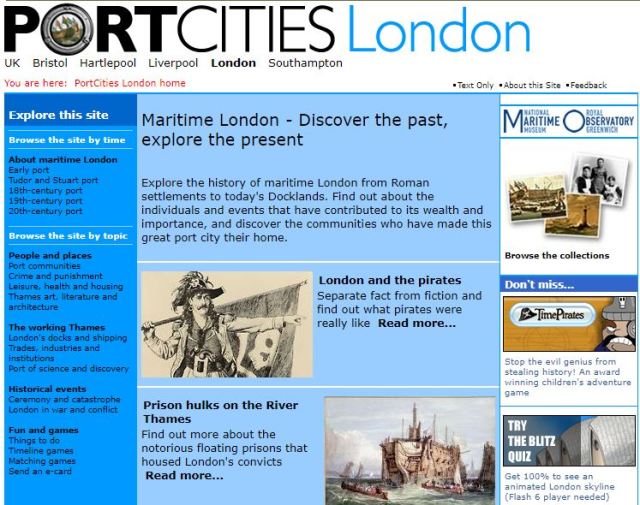
Today’s advent favourite website is P is for Port Cities. Sadly, this great website has now been archived but it is still available (it is important to use the links at the top for Hartlepool, Liverpool and London). It is full of historical information about the maritime heritage of Bristol, Hartlepool, London, Liverpool and Southampton. You can find out more about the slave trade in Bristol, health and education in Hartlepool, ships and shipping lines in Liverpool and pirates in London, amongst many other interesting articles.

Many of the entries in this year’s advent calendar are based on my book Family Historian’s Enquire Within. I would be very grateful if anyone in the UK wanting to buy a copy would get in touch with me directly (there will be no charge for UK postage).

Not actually a Family History Advent Calendar Part 10 North East Inheritance Database

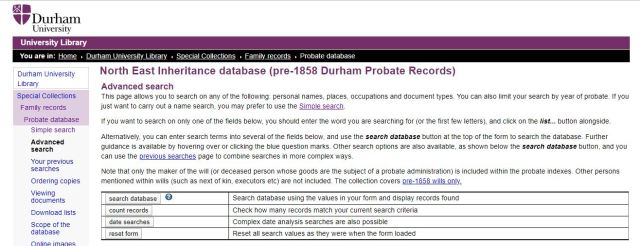
Well people still seem to be reading these entries so here goes with N is for North East Inheritance Database. This is part of Durham University Library’s Family History pages. In fact, I’d recommend looking at them all if you have ancestors from England’s north-east. Here there are links, information about and in some cases images of, Tithe Apportionments, Land Tax, Bishops’ Transcripts and more.

The database itself enables searches for pre 1858 wills for Durham and Northumberland. The advanced search feature allows you to search not only by surname but also by place and occupation. Great for one-name and one-place studies again. You can then click through to images of the actual documents, which are accessed via Family Search.

Capture

Many of the entries in this year’s advent calendar are based on my book Family Historian’s Enquire Within. I would be very grateful if anyone in the UK wanting to buy a copy would get in touch with me directly (there will be no charge for UK postage). I am trying to free up book storage space ready for novel two arriving!

Not actually a Family History Advent Calendar Part 9 Reports of Medical Officers of Health

Another day, another of my favourite websites. This one features in my ‘In Sickness and in Death: researching the ill-health and deaths of your ancestors’ online course. So, M is for Medical Officers of Health.

The Public Health Act of 1848 introduced the role of local Medical Officers of Health, who had to report on conditions in their own areas. Those for London boroughs from 1848-1972 are available on the Wellcome Library website. These give summaries of causes of death and report particular problems in the area. They may also mention severe weather conditions and public health problems. It is also worth seeing if any are available in the local archives that cover your ancestral areas.

For more detail about medical statistics see the Wellcombe Library Guide.

Capture

Many of the entries in this year’s advent calendar are based on my book Family Historian’s Enquire Within. I would be very grateful if anyone in the UK wanting to buy a copy would get in touch with me directly (there will be no charge for UK postage). I am trying to free up book storage space ready for novel two arriving!

Not actually a Family History Advent Calendar Part 8

We have reached I in the alphabet. My favourite family/local history website for today was going to be Images of England but I have just discovered that it has been absorbed into The National Heritage List for England. This includes descriptions and photographs of 300,000 English listed ‘buildings’ (some aren’t actually buildings but things like lamp posts and letter boxes). This is great for local history and one-place studies. Be aware that the dates they give are based on architectural styles and not on documentary evidence, so may be approximate.

So as that doesn’t begin with I anymore, I will offer you a bonus entry. Ok, so it doesn’t begin with I either but I’m afraid you can’t be fussy. So L instead then. L is for London Lives. Subtitled ‘Crime, Poverty and Social Policy in the Metropolis 1690-1800’. The website tell us that it provides ‘A fully searchable edition of 240,000 manuscripts from eight archives and fifteen datasets, giving access to 3.35 million names.’ These include registers of three London parishes, workhouse records, probate material, guild records, coroners’ records, criminal records and hospital archives. It is definitely worth popping ancestral surnames into the search box, especially if you know your family spent time in London. There is a link to the Locating London website, which relates entries in the database to maps, based on John Rocque’s 1746 map.

Capture

Many of the entries in this year’s advent calendar are based on my book Family Historian’s Enquire Within. I would be very grateful if anyone in the UK wanting to buy a copy would get in touch with me directly (there will be no charge for UK postage). I am trying to free up book storage space ready for novel two arriving!

Not actually a Family History Advent Calendar Part 7 H is for Hearth Tax

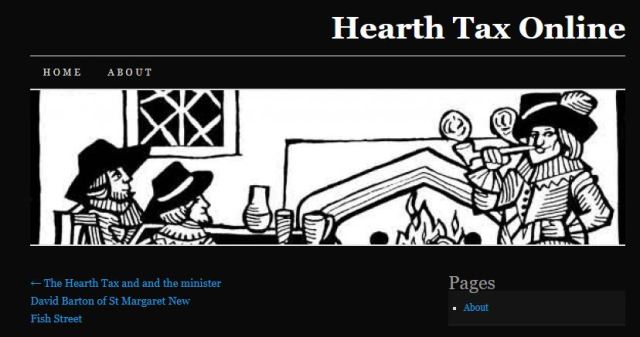
Today’s entry in the ‘favourite family history website’ list is actually now two websites and comes under the heading of H is for Hearth Tax. This tax was levied from 1662 to 1689, though incomplete lists of taxpayers only survive from 1662 to 1674. The records are useful to the family historian, one-namer and one-placer in that they enable us to identify our ancestors in place and time, indicate the size of the house and thus the degree of affluence or otherwise of our ancestors. Persons with houses worth less than £1 per annum were exempt, as were those in receipt of poor relief. Otherwise, 2/- (2 shillings) per hearth was payable. The parish constable made lists of householders with the number of hearths and the lists were submitted to the Justices at the Quarter Sessions. The tax was collected twice a year, at Michaelmas and Lady Day. A person with only one hearth was probably relatively poor. A yeoman or “gent” might have three or four and an esquire six or more.

The records of the Hearth Tax are held at The National Archives. A research guide Taxation before 1689 can be downloaded from their website. There are two fantastic websites about the hearth tax and I recommend looking at both. The first provides plenty of background information and regular blog posts about the tax and its times. The companion site ‘Hearth Tax Digital’, contains searchable transcripts of some of the returns. This is in its early stages but eventually all surviving returns will be included.

Many of the entries in this year’s advent calendar are based on my book Family Historian’s Enquire Within. I would be very grateful if anyone in the UK wanting to buy a copy would get in touch with me directly (there will be no charge for UK postage). I am trying to free up book storage space ready for novel two arriving!

Not actually a Family History Advent Calendar Part 6 Christmas Puzzling and Maps

For most of us, Christmas is a time for traditions, old and new. We recall past Christmases and family occasions. Sadly, there are those for whom this time of year is a challenge; memories are not always happy ones. We blithely wish others ‘Happy Christmas’ or ‘Happy Holidays’ [insert your preferred greeting of choice] but it is often far from happy. So, whilst as a family historian I would encourage you to share and make memories, I know that might not be easy for everyone. It is important to preserve the past, however unpalatable that past might have been but memories should only be dredged up if the process contributes to your own well-being. If slavishly adhering to family traditions or expectations is toxic for you, then ignore them, throw them out and start anew.

I am fortunate that I have wonderful Christmas memories and I enjoy the various traditions that have developed over the years. Some date from my childhood, others are of more recent standing. The past few years has seen the incorporation of Gordon Gray’s fiendish, charity Christmas Puzzle into our family’s seasonal repertoire. Do take a look if you are fans of this sort of thing. My first attempt suggests that I might do slightly better this year than on previous occasions but it is early days!

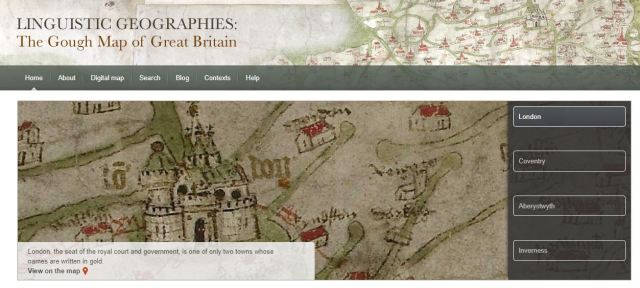
So what do I have as today’s advent favourite website offering? I give you G is for Gough Map. Probably dating from the 1370s, the Gough Map is the oldest known map of Britain. Its website allows searches by modern and Medieval place name. I know that very few people have traced their families back to Medieval times, I certainly haven’t but this is still a fascinating website – great for one-place studies too.

Capture

goughmap.org