How historians celebrate Valentine’s Day and other historical goings-on

How does one spend Valentine’s Day? Sharing a romantic meal with one’s beloved? Staring at the sunset? Even a trip to Paris? No, I spend it dressed in seventeenth century costume, drumming my way through the streets, in the company of a regimental rabble, commemorating the Battle of Torrington, which effectively ended the first English Civil War in 1646. I don’t get to drum very often and my previous performances have been of the English March (affectionately known as ‘going to the shop’). This year there were only three drummers and the one of us who actually had half an idea of what was going on (that would not be me) decided that we would go for the Scottish March, on the grounds that it was slower and might be easier on the hangovers of members of our accompanying pike block. In fact the Scottish March is easier but it was of course different and when our leader put in twiddly bits, I was reduced to drumming randomly, smiling and hoping for the best. By the time we reached the town square though we were actually managing to pretty much keep together.

Drumming, even for less than a mile, makes you heartily sick of marching beats, be they English, Scottish or whatever. Goodness knows how troops coping with twenty miles a day put up with repetitive beats – they were probably all deaf from the constant noise anyway. Even with a small troop and three drummers it is pretty noisy, what with the drums and the soldiers hurling abuse at the enemy, especially when walking through the streets adds an impressive echo. Imagine how the inhabitants of small village would have felt when armies of up to ten thousand men marched through. This battle commemoration always gets the hairs standing up on the back of ones neck. Great to celebrate local heritage in this way.

2590261’Til Death us do Part is now on sale and will soon be an ebook. I have also been writing for the Worldwide Genealogy Blog and of course I am working my way through the chapters of my (still to be titled) book, based on the memories of some lovely ladies who are recalling the years from 1946-1969.

Mistress Agnes has been round and about a bit lately – apart from her drumming episode. She has being describing the duties of the seventeenth century housewife, accompanying Master Christopher, when he talks about the weaponry of the time and tomorrow her topic is ‘The Civil War in the South West’. There may be exciting times on the horizon for Mistress Agnes; I hope to be able to reveal more soon. This week is very much one of those, ‘It is Wednesday, I must be talking about writing up your family history’ weeks, with a day course and a half day course to deliver, as well as the individual sessions – heigh ho – at least I don’t get bored.

A Surfeit of YouTube

The last week or so seems to have been a mad round of presentations and with seven more in the next fortnight, it isn’t getting any less hectic. Those I have just done have been of the digital variety, those to come are in person and many of them are for Mistress Agnes, rather than myself. First, I helped The Society for One-Place Studies to launch their migration project for 2015 via a Google+ Hangout on Air. Next, our own local history group held a workshop day, in freezing temperatures, researching the men on our first world war roll of honour. In connection with this, we put my introductory chat on YouTube, for the benefit of far flung members. A new venture that we hope will continue. It was very odd sitting talking to myself in order to create the video and yes, I forgot to turn the telephone off but at the second attempt, it wasn’t too bad.

On the subject of First World War research, I have come across a couple of useful websites recently. Firstly, the National Archives have made records of appeals tribunals, where individuals applied for exemption from military service, available. The bad news is that these only cover London and Middlesex but interesting nonetheless. Then there is this website and blog, Walter Carter WW1 Soldier’s Tale, which recreates the story of a fictional soldier on a day by day basis, using social media. It deserves much wider publicity.

Still more YouTube, as I was interviewed in order to create a trailer for the Ontario Genealogical Society conference, at which I am speaking remotely in May. This finished project makes me sound weirdly jerky, as indeed I do on some of the other videos but I assure any potential audience members that I don’t really sound like that – I am blaming bandwidth. Thanks to friends, I am also lining up some live presentations in Canada for later in the year. Keep an eye on my forthcoming talks page for details.

My headphones seem to have been permanently in situ. My grandchildren, who I Skype regularly, must think these strange protrusions are part of my anatomy. I spent a very interesting hour or so being interviewed, via Skype, by FindMyPast, as part of their user panel. As I have been doing family history significantly longer than any of my three interviewers had been alive, I had to try not to appear a total dinosaur but it was good fun and hopefully useful. It does sound as if there are some moves in the pipeline to make searching more user friendly.

What else is on the agenda? Well, preparations for Unlock the Past’s 8th cruise are progressing. My partner in crime now appears on the speakers’ list alongside myself. I will soon know exactly what sessions I shall be presenting during the cruise and I am getting very excited about it. A booklet that I have written for the Unlock The Past stable is also due for publication any day now ’Til Death Us Do Part: causes of death 1300-1948. It will also be available as an ebook – watch this space! You may find me (or indeed Mistress Agnes) on the Unlock the Past stall at Who Do you Think You Are Live?. I shall be helping on other stalls too, as well as giving talks, being an expert to ask and meeting up with other one-place studiers but I am there all three days, so look forward to catching up with old friends and meeting new.

Finally, for all those involved in local history groups, this website is worth a look. Plenty of ideas about conducting research, engaging the public and securing funding.

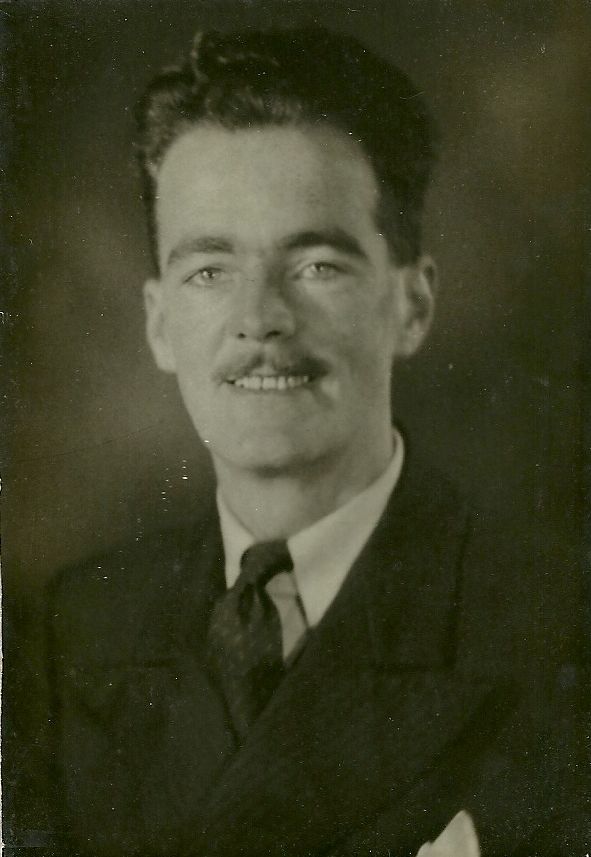
Cyril Albany Braund 1915-1965 #1ancestor

A number of family historian bloggers take part in the #52 ancestors project, where they write about one ancestor each week. I don’t have time to participate but today would have been my father’s 100th birthday, so I thought that I would devote today’s blog post to him. This then is my #1ancestor.

My father died when I was nine. When I decided to write the story of his branch of my family, in the late 1990s, I realised that I had spent many hours tracing more distant ancestors but that I had neglected to document my grandfather and father, whom I had known. So I decided to research their lives and published their story in In the Shadow of the Iron Horse.

Although I have very good recall of my early childhood, my own memories of my father are fleeting; probably because he worked long and unsocial hours, so our time together was limited. I was able to talk to my mother but inevitably, now she is no longer here to be questioned, I realise that there is still so much I don’t know. I have some facts. Dad, Cyril Albany Braund, was the middle of the three sons of Albany and Elizabeth Ann [Bessie] Braund née Hogg. All three boys were born within three and a half years so times were hard for the family, who were not well off. My grandfather, Albany, was a cleaner and later a porter for London South Western Railway.

Dad went to infants’ school at St. Mark’s in Battersea; a one room school attached to the church. The story in the family is that Dad and his brothers often had to take it in turns to attend school, so that they could share a single pair of boots. Another story relates that Dad, who was very keen on drawing, had to swap his teddy bear in order to obtain a pencil, because the family were so poor. Drawing and painting was a lifelong hobby, as was music. He taught himself to play the piano in the pub owned by the parents of his great friend Eric John Golding. Dad was eighteen and earning before he could afford piano lessons.

At the age of eight, Dad transferred to St Peter’s School, in Plough Lane, Battersea, an enormous, seven story, building, where he remained until leaving school when he was fourteen. He had been punctual and regular in his attendance and exemplary in his behaviour. Like his older brother, he began working in the exciting new world of the cinema as a ‘page boy’, employed in the foyer under the supervision of the doorman. This was the ‘dream job’ for boys of the time; perhaps akin to being a computer games developer today. He joined The Majestic, Clapham in an era when silent films were giving way to the talkies’, eventually working his way up to become a projectionist.
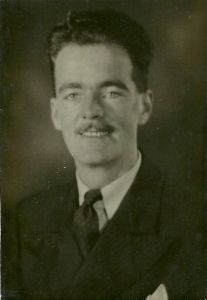
Cyril Albany Braund 1945In 1939, Dad was employed by the Granada Group, who owned several London cinemas, at their Wandsworth Road branch. Thanks to a wonderful history of Granada Cinemas (Morgan, Guy Red Roses Every Night: an account of London cinemas under fire Quality Press 1948), I know many details of life in this cinema chain during the second world war. For example, on the 28th of August 1939, the staff were read the following memo from the managers of the Granada Group. A priority air-raid warning will be given to cinema managers when enemy aircraft are sighted over the North Sea. You will not on any account pass on this priority warning to your audience. You will merely give the warning RED ROSES to your staff so that they will be prepared. Today, this conjures up rather farcical images of staff rushing round whispering behind their hands and it seems unlikely that regular patrons would have remained ignorant of the password for long.

Nearly half the men Dads age were in uniform and with the extension of the call-up, in May 1940, he enlisted, together with Eric Golding. They joined the Royal Air Force Volunteer Reserve on the 4th of July; thus losing their independence on Independence Day. Dad became Gunner 1351715 and was described as being five foot eleven inches tall, with a thirty two inch chest, black hair, hazel eyes and a fresh complexion. I have used service records and family memorabilia to follow Dad’s second world war career, part of which was spent on Sicily and in southern Italy. He was actively involved in the entertainment of the army camp. By the spring of 1945, the end of the war was in sight and Dad was effected by the War Cabinets move to draft naval and air force personnel into army. On the 13th of March 1945 he was officially discharged from 2859 squadron on enlistment in the army. His air force report read, A very good type Airman though not a good J.N.C.O. He could be well employed in his civilian trade. General Conduct excellent.

In the spring of 1945, he met my mother and despite the RAF report, he spent time as a gunnery instructor in Ireland. Once the war was over, Dad remained in the army, as a sergeant with the Department of National Service Entertainment, resuming his civilian trade as a cinema projectionist. He returned to Naples and helped to set up a cinema at Pomigliano. Dad was formally transferred to the army reserve on the 23rd of August 1946, with effect from the 6th of November. His reference reads This N.C.O. has proved himself a capable worker and given consistently good service in the Cinema Division. He is a qualified projectionist and is keen hardworking and reliable. An efficient and valued N.C.O..

He went back to his work as a projectionist and my parents married in 1947. During the first months of their marriage, they lived with their respective parents, staying with each other only on Dads days off. In June 1948 they found a flat, 65 Mallinson Road, just round the corner from Cyrils family. During the first years of their marriage my parents often went on outings and holidays with Eric Golding and his wife, Eileen. In 1951, this time with mums school friend Joyce Chaplin and her husband Peter, they took their first holiday on the Isle of Wight. They stayed at Norton Grange holiday camp in Yarmouth where, fifty years later, their granddaughters performed regularly with the Shanklin Town Brass Band.

Dad was never really satisfied with his working life and changed jobs fairly frequently to try to find something more congenial. One of my particular memories is of being aware of how much he hated his short spell of employment at Cinerama cinemas. His dream had been to set up his own business with Eric Golding but this never transpired. He left for work on the first day of the school holidays in 1965 and died of a heart attack on his journey.

So I have managed to document quite a few facts. When my mother died, I found ‘Forces War Record’, recorded for her by my father in 1946. I had no real recollection of how he sounded. I was able to get this recording put on to disc, just before it deteriorated beyond saving. He was sending my mother birthday greetings. He had got the date wrong but they hadn’t know each other long at this point! I was amazed to hear that his Battersea roots were not noticeable in his accent, which was distinctly BBC – probably a legacy of his career as a cinema projectionist – all those clipped tones of the film stars of the 1930s! So I have his voice.

What I strive to recapture however is some sense of his personality. I know he always felt inadequate in the shadow of mum’s more middle class family and certainly was of the opinion that he had to make up for her ‘marrying beneath her’. I do have a few diaries of the 1960s, which record notes of appointments and events. Just occasionally Dads personality shines through the bald statements of fact in these diaries. One such entry is Beat Bob at Chess!!, accompanied by a doodle of a flag. Family pets also get a mention in the diaries, for example, the birth of the family dog, Sparky. Even the death of the remarkably long-lived hamster, Nora, is recorded, in the same way as the many deaths of family members, with her name surrounded by a black box. I do have the chance to learn more, as I inherited all Dad’s letters to mum, written whilst they were apart in 1945 and 1946. So far, I have only had time to skim through these but I have promised myself I will study them in detail to try to recapture more of the essence of the man behind the facts that I have gleaned.

More details of Dad’s life and that of his father, can be found in my book In the Shadow of the Iron Horse which is available from me.
January Whirlwinds of the Historical and Domestic kind, with thoughts on the Genealogy ‘Do Over’

I am well aware that I have left my (devoted?) readership in a state of limbo lately. It has been that hectic post-festivities period when one has to do four weeks’ work in two in order to catch up. Add to this the after effects of the lurgy, the volume of things that have to be returned to their rightful places and the mountain of washing that are the after effects of visitors and blog writing has slipped down the ‘to do’ pile. On the subject of washing, my family administered a couple of strategic kicks to the ailing washing machine and it appears to have recovered.

Then there was the incident of the power cut. Given that the week after Christmas saw temperatures drop, I opted to abandon the idea of sleeping in the conservatory, whilst my visitors appropriated my bedroom, in favour of the settee in the living room. Granted this is a two-seater settee, which created problems of its own but it was worth it to have all the family together. The day of our ‘Christmas’ dinner there was a power cut. When it was not restored after a few minutes, anxious to have power in order to cook said dinner, I toured my near neighbours and ascertained that it was only me who was without electricity. It turns out that the fuse had tripped, we re-set it, problem solved. With two small persons needing attention in the middle of the night my descendants left lights on, which is how we knew that the supply tripped out again about midnight. I heard one of my guests come downstairs to reset this but shortly after, it tripped again. I went to investigate and after whispered conversations with those who were awake and ensuring that all who needed a light source had a torch (on their mobile phones – who knew?) we decided it was safest to leave it off until morning. By now wide awake, I was staring into space when I noticed a strange flash in the region of a wall-light. Said wall light had caused problems when my fuse box had been upgraded during the spring’s building works, was it about to burst into flames? I waited. It flashed again. Despite all logic telling me the electric supply was off and the house could not be about to catch fire, I did start mentally running through what I would save, after the family of course. After what seemed like an hour of rising panic, I heard a small person wake up and went to consult with the attending parent. Martha agreed that yes there was an intermittent flash and no it wasn’t a light flashing outside and then went back to bed. The flashing continued, By this time it was 5am and I was in a real panic so I sent for reinforcements. Chris, bless him, drove out from Bideford and diagnosed the problem. It seems carbon monoxide detectors flash to show you they are working (another fact that was new to me). Mine was on a table below the metal wall light, which was reflecting the flash. We did also identify the problem with the fuses, which were being tripped by a heater, set to come on in the conservatory when the temperature was very low. It had been on for weeks but this was the first day it was cold enough.

History, I promised you history and there has been plenty of it. Inevitably, with a new year come resolutions. Many are participating in the ‘Genealogy do-over’, which encourages us to restart our genealogy from scratch. This has led to some interesting debates and I can certainly see the merits of revaluating. I, in the company of some others, will be jumping off this particular bandwagon, whilst supporting those who are participating. My response to Yvette Hoitink, a fellow sceptic was as follows. I have been seriously researching for 38 years (since my early twenties) and much of my research is still paper based. Without wishing to sound like a dinosaur ‘in the old days’ people learnt how to do family history in a reasonably competent manner BEFORE they began researching in any depth. Although I still have things to learn and certainly didn’t begin research as a fully competent genealogist, I learnt from the outset to organise, to cite sources and to use original records and all my students have been encouraged to do the same. In those days it was impossible to import large (and potentially inaccurate) online family trees researched by other people, so there was another pitfall avoided. Of course my trees aren’t perfect but I hope they are as good as it gets because no one has ever been added to my tree on the basis of speculation or ‘best guess’ and every fact has a source citation (in almost all cases these sources are originals not transcriptions). People are added to my trees because I have researched them myself, not because I have grafted on someone else’s Gedcom. This is not because I am some sort of genealogical paragon but because that is how things were in the late 1970s (we had very few indexes or transcriptions) and I still adopt these procedures. When the ‘do-over’ call came I was a bit shocked. As a teacher of family history for the last 30 years, I should have known that many genealogists do not regularly review their work as a matter of course but I had naively assumed that revaluating and rechecking was not the revolutionary concept that it seems to be for the do-over participants. To me, reviewing is a process that anyone who seriously wants to be considered a family historian should do as a matter of course. Equally, citing sources is just part and parcel of the hobby and not an optional extra. Periodically I take a branch of my family, update, review, look for additional material and convert paper to digital images. I have always done this as part of what I consider to be ‘good practice’, I guess I thought that this was ‘normal’. Yes, there are things I need to do and in the unlikely event that I find that elusive commodity ‘spare time’, I shall be looking again at some of my family lines this year. I have joined the ‘do-over’ community because I am interested in the debate and I think it could be a good idea for some people. I also like the concept of mutual encouragement and support and the exchange of ideas. I shall be rigorously reviewing and re-examining my reasoning for making family connections, rather than re-doing from scratch.

B6NdOmQCYAEevKRFor those who like to start a new year with a challenge I like this one.

So what does 2015 hold for me? Plenty of talks around and about, with Canadian engagements coming in, although the Canada trip is a holiday not a lecture tour. I am really grateful to Canadian friends for help with this.

The Baltic Cruise with Unlock the Past will be a highlight. I have been invited by Unlock the Past to contribute some booklets to their catalogue – one down (on causes of death) and two to go. In the process of compiling this I learnt how to index using Word. Why have I never done this before? I shall also be at Who Do You Think You Are Live? In Birmingham and Mistress Agnes may put in an appearance. I also have some courses looming, there is (just) still time to book. So if you want to organise your family history research into some sort of coherent end product on February 18th or learn how to read old documents on February 21st or join in with Discovering your Ancestors and their Communities after 1800 on 28 February get in touch.

I and my lovely volunteers, are making progress with recording our memories of the period 1946-1969. Some of us are making better progress than others! I really must get on with collating more chapters. I would love to have this in print for Christmas (did I say which Christmas?).

Exciting times on the one place studies front. I am just about to help launch a year long project to study migration at community level with the Society for One-Place Studies. Look out for our first Hang-out-on Air on the subject on 23 January. This will eventually find its way on to YouTube

Locally I have been encouraging the local WI to create a scrapbook of our community for the year 2015. This was something that WI members did fifty years ago and I have had an overwhelming response to the idea of repeating the process from today’s members. Their enthusiasm gives me a that warm fuzzy feeling that makes all the hard work worthwhile. Also enthusiastic are my band of volunteers who are researching local world war one servicemen. I’m looking forward to our first workshop next week.

A significant amount of my local history and work on emigration involved the Bible Christians who celebrate the bicentenary of the foundation this year. A valuable resource book has just been made available online.

So it will be another busy year. I hope you will be along for the ride.

Accentuate the Positive Geneameme 2014

In a recent blog post, Jill Ball (GeniAus) invited us to Accentuate the Positive Geneameme 2014, in other words, to concentrate on our positive achievements in the world of genealogy. If you would like to join in, her instructions are to respond to the following statements/questions in a blog post. Write as much or as little as you want or just answer a few questions. Once you have done so please share your post’s link in a comment on Jill’s original post or to her via email to Jillballau@gmail.com. You only need to respond to the questions that you feel are relevant. Here is my version.

1. An elusive ancestor that I found was – after 37 years of searching I discovered that John and Florence Braund were my 7 x great grandparents on my direct paternal line – never give up!

2. A precious family photo I found was – not an old photo but I have been creating my own, including one of my daughters, their husbands and my grandchildren – precious without doubt.

3. An ancestor’s grave I found was – someone else’s ancestors but I have located gravestones for my One Place Study that had been removed to private gardens. These will shortly be added to our database.

4. An important vital record I found was – for my One Name Study this time – a lease that proved a vital link. This source is not online – look beyond your computer.

5. A newly found family member shared – this year I have met, literally and virtually, several people whose ancestors came from my ‘one place’ – what a joy to exchange information.

6. A geneasurprise I received was – being voted the UK gold medallist in Anglo-Celtic Connections’ poll for genealogical rockstars – still reeling from this one.

7. My 2014 blog post that I was particularly proud of was – the one about grandparenthood that I wrote when my grandson was born.

8. My 2014 blog post that received a large number of hits or comments was – the one for ‘O’, written as part of the A to Z blogging challenge. ‘O is for Ownership – do you own your family tree?’ which had 538 views.

9. A new piece of software I mastered was – not exactly software but I can now set up a Hangout-on-Air.

10. A social media tool I enjoyed using for genealogy was – I finally feel that I have got to grips with Google+.

11. A genealogy conference/seminar/webinar from which I learnt something new was – I have learnt a great deal from sharing ideas on the series of Hangout-on-Air by the Society for One-Place Studies.

12. I am proud of the presentation I gave at/to – it is hard to choose just one but I have to mention my presentation at British Isles Family History Society of Greater Ottowa because it is the first I have delivered remotely.

13. A journal/magazine article I had published was – here I will mention the One Place Studies article I wrote for Discover Your Ancestors Periodical in April.

14. I taught a friend how to – access Google+ so they could join in my online course about early twentieth century research.

15. A genealogy book that taught me something new was – not exactly a genealogy book but a wonderful gift from someone whose ancestors came from my place, which describes the experiences of nineteenth century emigrants to Canada.

16. A great repository/archive/library I visited was – I have to say my own local archive, North Devon Record Office, which sadly now is under the threat of closure.

17. A new genealogy/history book I enjoyed was – ‘The Girl on the Wall: one life’s rich tapestry’. The author, Jean Baggott, born in the 1930s, constructed an elaborate tapestry illustrating memories of her own life and local and national events of the era. The book explains each image (there are more than 70). I do not have the skills or the eyesight (32 point canvas) for the sewing aspect but a wonderful framework in which to record recent family history.

18. It was exciting to finally meet – the latest member of the family, my grandson Edward Leo.

19. A geneadventure I enjoyed was – My research looking for descendants of the victims of a shipwreck led to a wonderful day when those descendants and I met Princess Anne.

20. Another positive I would like to share is – I am thrilled that my project to encourage eighty ladies to write their memories of the years 1946-1969 has led to the creation of a cohesive, supportive group of women who are so enthusiastic about the project.

Christmas Calamities

I am in that lull between real Christmas and my Christmas as all my descendants are on their way to visit. Still trying to work out how to fit seven people into one large bedroom and two tiny bedrooms (one of which has no bed in). I think I will be evicted to either the conservatory (a little bracing at this time of year) or the living room. The downside of the latter is that I will have to go to bed last, not something that I normally do even when in good health and inevitably, as it is Christmas, I am not.

Having had a vague sort of sore throat for about a week, on Christmas night it developed into a full blow agonising sore throat/ear ache/swollen glands but weirdly on one side only. I made the mistake of looking it up on the internet – well you do don’t you? One of the options was ‘potentially fatal’ so then came the task of accessing a doctor on Boxing Day. Having no voice that could comfortably be used I assigned the task of ringing 111 (for the benefit of overseas readers, in the UK, this is for non-life threatening problems) to my partner in crime. I needn’t have worried about having no voice, after half an hour of ‘we are experiencing heavy demand’ there was still no one to talk to, so we gave up and headed to the local minor injuries unit. Two hours and three health professionals later I was told it was ‘probably viral’ and rest and fluids were prescribed. I was hoping for something a bit more conclusive like ‘this definitely isn’t the thing with the long name that leads to your throat closing up and you being unable to breathe.’ Heigh ho. I ask if it is still sensible for two small children to be in the vicinity of my germs, it seems it is fine. I promise not to lick their faces.

I am blaming ill health for one of my senior moments before Christmas. We were trying to exit the local multi-story car park, not something we do very often. ‘Insert your ticket here’ it says, so I do … several times. It keeps asking me to insert my ticket. I let a couple of other people try – they have no problem. I then realise that I am inserting, not my parking ticket, but a business card that I have just been given by a travel agent.

Yes, travel agent – our trip to Canada for 2015 is now official. We will be combining a DIY tour with a package, seriously spending the descendants’ inheritance here. Trying to organise the camper van has not been without incident. I have spent a long time engaged in online ‘chat’ with ‘Vlad’ from the hire firm, whose avatar bizarrely is that of a young female. Peculiarly, it is cheaper to hire a five berth van than it is a two berth. When I asked Vlad why, he replied that it was demand. I decided I wouldn’t ask why they didn’t just buy more smaller vans!!

Then there was the incident with the washing machine. There it was spinning merrily when suddenly all its lights were flashing and it ground to a halt. I turned it off and on again as recommended. I was just wondering if I should be ignoring the smell of burning rubber when it stopped again. Unusually, I was able to open the door to let the washing out, inevitably this also let out gallons of water in an uncontrollable whoosh. Typical, just as I am about to have all the post visitor bedding to cope with. I am reassured because it is under guarantee – regular readers may remember the washing machine saga from earlier in the year. This turns out not to be much of a bonus as the call out fee is £110 and if I turn out to have committed the sin of neglecting to un-block the filter then I am in deep trouble. Errr unblocked the filter mmm (searches frantically for manual).

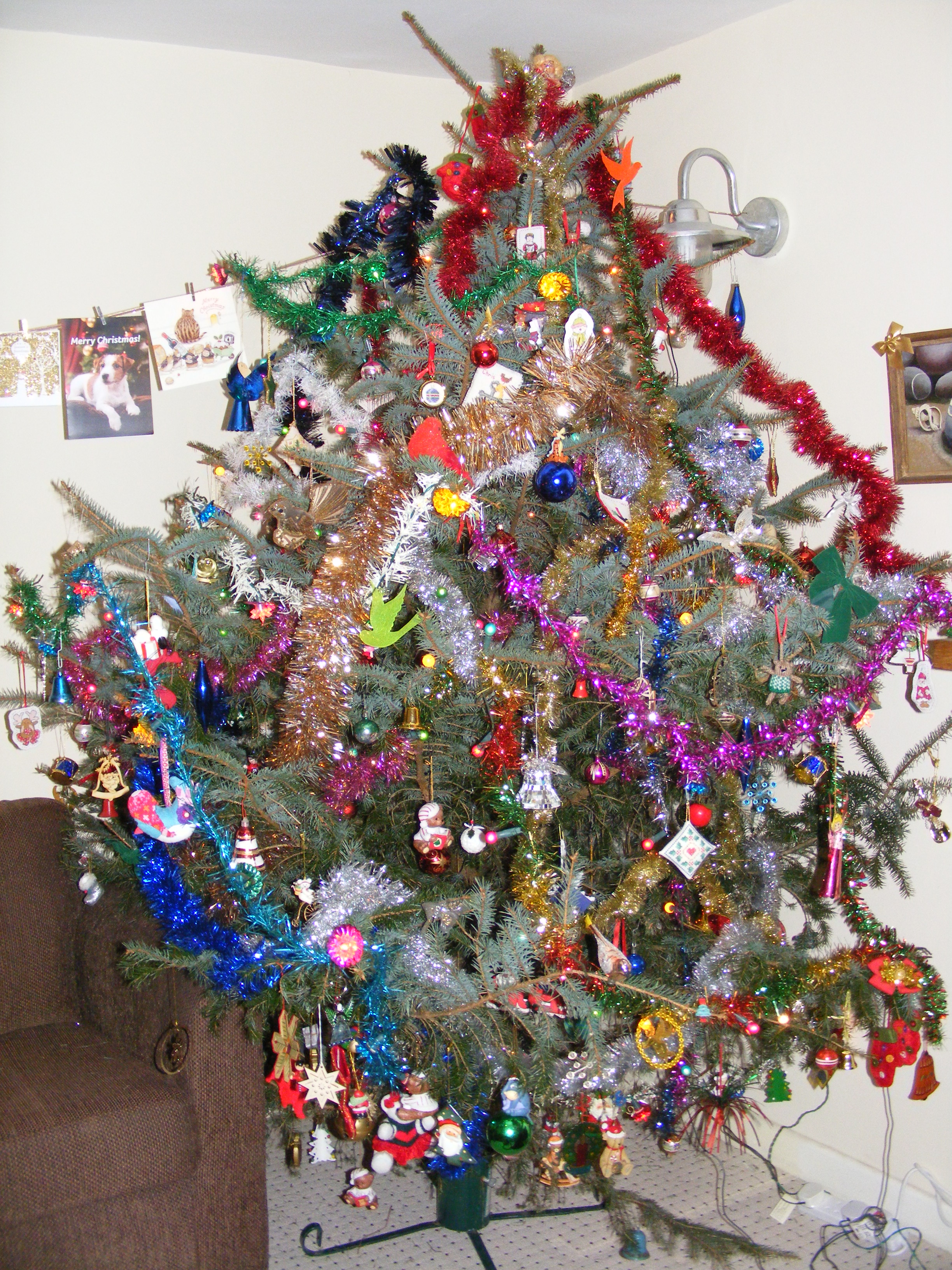
My poor Christmas tree has not held it’s needles well, to be honest it hasn’t held its needles at all. Every time someone breathes a deluge of needles patter on the presents below and if you inadvertently sneeze there is a positive tsunami. Nonetheless I am sure Santa won’t mind and we will have a wonderful second Christmas Day.

Christmas Memories

As part of my 1946-1969 project my lovely volunteers are currently writing about their memories of Christmas. Just to prove that I don’t ask them to do anything that I wouldn’t do myself here are my efforts. I have left out the section on tree decorations as I covered that last year. Preserving your recollections of the holiday seasons of the past are part of your family history and what better time of year to start jotting down your own family’s traditions.

The Christmases of my childhood were magical times, although I am sure they were stressful for my mum who, when I was small, normally catered for the extended family at some point during the festive season. The build up to Christmas was accompanied by the opening of the cardboard doors of an advent calendar. These were the sort with pictures behind; it was long before chocolate advent calendars. I would get a new one most years but still kept and opened the old ones. I remember one year we had one with a window for the 26th on – very strange. When I was first married it was a Snoopy advent calendar each year. For Rebecca’s second Christmas she had the cardboard calendars but also a ‘chimney’ with small boxes that could be filled with gifts. When Martha arrived we acquired a set of advent boxes in the shape of houses, so that we had a second way of dispensing advent gifts. It was quite difficult to find things to fit in these containers so mum made a series of bags from wrapping paper, which were slightly larger and the girls swapped between one or other of these calendars until they were adults. At middle school both Martha and Rebecca won several prizes for increasingly impressive home made advent calendars.

Decorating the house was hugely important and still is. Most of the decorations are old friends and bring back many memories. One year, when we lived at Firsby Avenue, mum made amazing door decorations from coloured shiny paper, that was the latest trend that year. There was an angel, a tree and a stocking amongst the collection. A less successful attempt at home made decorations came from another new invention. Some kind of granules were purchased that could be turned into minute polystyrene balls, perhaps by boiling, I can’t remember the process. These were dyed and glued to twigs from the garden. It was the gluing part that was tricky and polystyrene balls adorned the hall floor all that Christmas season. We had a nativity set that my father had painted. Strangely this had four kings, later I was knowledgeable enough to know that this was not biblically inconsistent – three gifts but no record of the number of donors. I still have ‘angel chimes’ which revolve and make an irritating noise when the candles under them are lit and the heat causes them to move. I also have a cardboard boot, which started life as a container for a present but which still comes out each year as a decoration. These made the Christmases of my childhood a wonderful place. I would hate a colour co-ordinated scheme that had no sentimental associations. Decorations that date from the 1980s included a door mat that, by means of a battery, went ‘Ho, ho, ho, Merry Christmas’ when someone trod on it. The novelty of this soon paled and it used to spend most of the season with its battery detached. On one occasion I was up the other end of the hall and sneezed, always a violent activity. The vibrations set the mat off, something I have never been allowed to forget.

Family traditions were established over the years. Mum made me an enormous netted stocking for my first Christmas that was decorated with ribbon bows. Rebecca later took this over and I made an identically sized one for Martha. There was also a special Christmas ribbon that had to ornament my ‘best’ present. Stocking presents were opened in bed at a very early hour. I knew that childhood Christmases were over when, aged thirteen, I didn’t wake up in the early hours of Christmas morning. Main presents were opened after breakfast and might take most of the morning. They were unwrapped slowly and in turn so we could see what each other had received. We had to use particular pairs of scissors that I think had come from my great-grandmother Clara Woolgar née Dawson. The shape was identical but mum had the larger ‘mummy’ pair and I had the smaller. The paper was always smoothed out and saved for another year, cutting off any sellotape round the edges so the papers got smaller and smaller each year. I still find it really difficult not to do this, even though I have enough paper to last for the rest of my life.Christmas Tree December 2014

As soon as my dad died, at the age of nine, I took Christmas present buying for mum very seriously. I saved six pences in a little boot shaped purse all year and used other pocket money to buy her a range of presents, relying heavily on Woolworths and Boots as sources of these. She didn’t have a stocking but her small under-the-tree presents usually included a reel of cotton and matching bias binding and a walnut whip. I continued this tradition well into adulthood as a joke. One year I purchased a packet of ten cigarettes, which I appear, as a twelve year old, to have been able to do without question and wrapped them individually. I am not sure if they were smokable afterwards! Records survive of some of my purchases. In 1969, amongst other things, I spent 4/11 on a glass animal from Kennards Arcade, 2/4 on hand cream from Woolworths and 11d on a flannel from Boots.

Christmas was never about the food. I do remember how difficult family Christmas cooking was for mum, who was never any more fond of cooking than I am. In the years before my day died when we entertained my paternal grandparents, two uncles and aunt, as well as my mum’s Uncle Percy, there was one year when the roast potatoes found themselves on the floor. I don’t think the three second rule had been heard of then but the potatoes were eaten, we survived and none the wiser. Then there was catering for Uncle Percy, who emphatically didn’t eat turkey – except of course when we convinced him that it was chicken!

When I was married I started making Christmas cakes and puddings each year, both of which I love. I usually produced several of each. The ritual was important and once the girls were old enough, they joined in, taking it in turns to add ingredients. It was always difficult to fit everything in the mixer bowl and someone had to hold a spatula in place at the top of the bowl as the mixer revolved in order to stop everything coming out. More recently I have abandoned the mixer bowl altogether. We have always used the large mixing bowl that mum had as a wedding present to mix the dry ingredients by hand. Cake and pudding making has not been without incident. One year I put silver coins in. No one had warned me that this was not especially hygienic or that they should be inserted after cooking not before. I did forget a vital ingredient one year and on another occasion we used whole almonds because they were cheaper than the ground sort. We tried, unsuccessfully, to chop these up and then attempted to liquidise them. Putting them in whole was not an option as I don’t actually like nuts! The icing has caused problems over the years. I am particularly inept at this so the usually opt for a ‘rough snow’ style. I use royal icing that I mix myself and I don’t always get the consistency right. I did end up with a donut-like ring of icing on the plate round a icingless cake one year when it was too runny to stay on the cake at all. I also remember putting it outside on the door step at Cross Street, where it was cold, to try and get the icing to set. That may have been the year that I didn’t actually ice the cake until Boxing Day.

‘Entertainment’ came in the form of quizzes and games. I can remember one year recording the relatives on my reel to reel tape recorder then playing the voices back at the wrong speed to see if we could guess who was who. We played many board games; there was traditionally a new one each year. We didn’t particularly watch anything on television at Christmas, although we always watched ‘The White Heather Club’ on New Year’s Eve. There would be the usual round of Christmas specials from the likes of Morecombe and Wise and the Two Ronnies. Purchasing the Christmas Radio and TV Times (one giving BBC programmes and the other was for ITV) was essential; these were often fortnightly, instead of weekly, issues. Harry Bellefonte’s ‘Mary’s Boy Child’ was the first Christmas record that I remember. As a teenager we listened to Phil Spector’s Christmas album each year. When my Children were small favourites were the Spinners’ ‘Mrs Hooligan’s Christmas Cake’ and ‘Donald where’s your Trousers’.

We always went to the pantomime shorly after Christmas at the Ashcroft Theatre in Croydon. These normally starred Cyril Fletcher and Dame Peggy Ashcroft and included a Harlequinade, which was superfluous to the plot. We usually had good seats at the front on the left as you faced the stage. I have no idea how early mum had to book, or how much she had to pay, to get these premium seats. Being at the front was very important as at some point children would be invited to go up on stage and it was whoever could get there quickest. I don’t remember being disappointed. The lucky children would then help with the audience participation song and I think, were given a small gift.

Christmas is and always has been very special to me.


Mostly about Santas and Co-incidences

When things are quiet on the blog front you can be sure that they are busy in life. I am currently catching up whilst waiting for a delivery. Said delivery will allegedly occur between 7am and 1pm, hence the need to not only be awake by 7am – never difficult – but also to be dressed and respectable – more tricky. Now that I have made the effort they will probably arrive at 1pm, if at all.

So what have I been up to? I have just completed a 4000 word article about Bible Christians in North Devon. A bit of a pity that a) it started out being 5000 words long and b) that I read the eight page style guide after I had completed it. I have also compiled another chapter for my 1946-1969 book – on housework this time.

Amongst several recent talks, I extolled the virtues of One-Place Studies at the Society of Genealogists. Co-incidentally, amongst the enthusiastic audience was a lady whose ‘place’ was where I grew up and we have since exchanged information. Another co-incidence occurred when I was tracing the family history of a new member of our local history society. Imagine my surprise when I discovered that his ancestors were not long term Devonians but were distantly related to my daughters’ Wiltshire forebears.

I had a great time in Bude as usual, talking about witchcraft this time, my online early twentieth century community history course has come to an end and I have just hosted a Hangout-on-Air for the Society for One-Place Studies. Just a couple more engagements this year, including a return visit to Buckinghamshire Family History Society. Things don’t look like being any less hectic next year as I already have a very full calendar including Who Do You Think You Are? Live in Birmingham, the Guild of One-Name Studies annual conference, a Baltic cruise for an Unlock the Past Cruise and two remote presentations for the Ontario Genealogical Society Conference in May – so much for things calming down!

I have spent a couple of days with seven year olds at the time of the Great Fire of London. My colleague asked if any of the children knew the name of the biggest church in London. One of the adults in the party attempted to whisper ‘St. Paul’s’ to the child next to her. Confidently the child put up his hand. His response – ‘Santa Claus’ – Chinese whispers rules.

DSCF2083On the subject of Santa Claus, I completed my Santa ‘fun run’ at the weekend. Not only was it probably the warmest November day on record but someone had decided that making the Santa suits of felt was a good idea – just a tad cosy. I am very grateful to all those who sponsored me in aid of Children’s Hospice South West; still time for additional sponsors.

The round of Christmas get-togethers has begun with the Braund Society lunch at the weekend. Probably a good job I have been fun-running in preparation for the surfeit of food.


Local and Family History Feel-good Factors

There are some moments in the daily round of historical research that make you feel warm and fuzzy and help to make it all worth while. There have been several of these lately. Yesterday I went to our local school to present prizes to pupils who had entered a competition run by Devon Family History Society’s Acorn Club. This was one of the outcomes of Buckland Brewer History Group’s involvement with the school, helping them to investigate the role of local men in World War 1. I had forgotten to factor in Children in Need day. I was one of the only people in the room not dressed as a super hero. I am not sure that my explanation – ‘I am me on a posh day’ – sufficed.

This week I was able to provide a young person, who is not in contact with half of their family, with details of their ancestors. The reaction ‘This is the best thing that happened to me in a long time. I feel a little bit more placed in this world now I know more of my family. I haven’t stopped smiling.’ reminded me why I do this.

I have enjoyed presenting to appreciative audiences, sharing three very different strands of history. Mistress Agnes aided by Master Christopher, instructed the Bridport Group of Somerset and Dorset Family History Society in the ways of the seventeenth century. This was followed by an online one place study session and a talk about emigration from North Devon to a local U3A. Next, I shall be discussing witchcraft in Bude and then more one place studies at the Society of Genealogists.

It has been ‘Explore Archives’ week in the UK and I visited my local record office. We are now so used to records being available online that we forget the plethora of documents that are only available in repositories; repositories that are increasingly under threat. So the good news that many more Devon records have been uploaded by FindmyPast, is tempered by the realisation that this will decrease the footfall in the record office and help to provide ammunition for those seeking to close the archives. The fact that without archives and archivists documents could not be preserved, catalogued, digitised and made available online, escapes many people. More on this here.

But back to the happy stuff. The wonderful world of genealogical and local historical collaboration came to the surface recently. I have exchanged information with the one-place researcher for the Buckinghamshire village where my grandmother was born. I have been sent a newspaper report, telling me that my great grandmother won prizes at the village show in 1872. In another newspaper report, I learned of the exploits of young people in my home village. All this information was thanks to the generosity of other researchers.

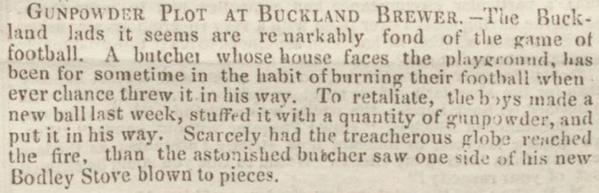
Exeter Gazette 30 September 1830 Guy Fawkes football

Exeter Gazette 1830

In an effort to spread the goodwill, I have enrolled on a (thankfully very short) ‘fun’ run. Can ‘fun’ and ‘run’ be used in the same sentence? So, in aid of Children’s Hospice South West, on November 30th, I shall be dressed as Santa (yes really) ‘running’ along Bideford Quay. I am touched by those who have sponsored me so far; additional sponsors are welcome.


Visits, One Place Studies and an Inadvertent Brush with Experimental Archaeology

Just catching my breath after a hectic round of visits to far flung family and friends. First stop the Isle of Wight. Not, as intended, accompanied by Martha, Rob and Edward, as they were busy moving house. Whilst on the ferry the fire alarm sounds in a protracted manner. Nobody takes any notice. Several minutes later and still no one is taking notice, although a few meaningful glances are being exchanged. Then the announcement. We are not to be dismayed, it is a false alarm. Dismayed? Moi? I am too busy making the most of the free wifi before I drop into an internet free black hole. The frenetic few days of socialising involves a great deal of eating out. I delude myself into thinking that this is compensated for by a daily forty lengths of the caravan site small (that would be really very small) swimming pool and a couple of long walks. It turns out that this is not the case.

Regular readers (and there must be some as this site has now topped 30,000 hits) will remember the car debacle that accompanied our trip to Scotland. This time the car worked perfectly. Our fairly new-to-us caravan however performed less well. It is equipped with many gadgets. Gadgets of course are fine as long as they work. The legs descend at the flick of a key – or not as it turns out. Gale force winds are forecast. Will the caravan cope balanced only on its wheels and a car jack? A call to the manufacturer of the leg lowering equipment enables us to effect a temporary repair. My dread is that the legs will get stuck in the down position but as we leave the Isle of Wight they ascend successfully.

DSCF2024

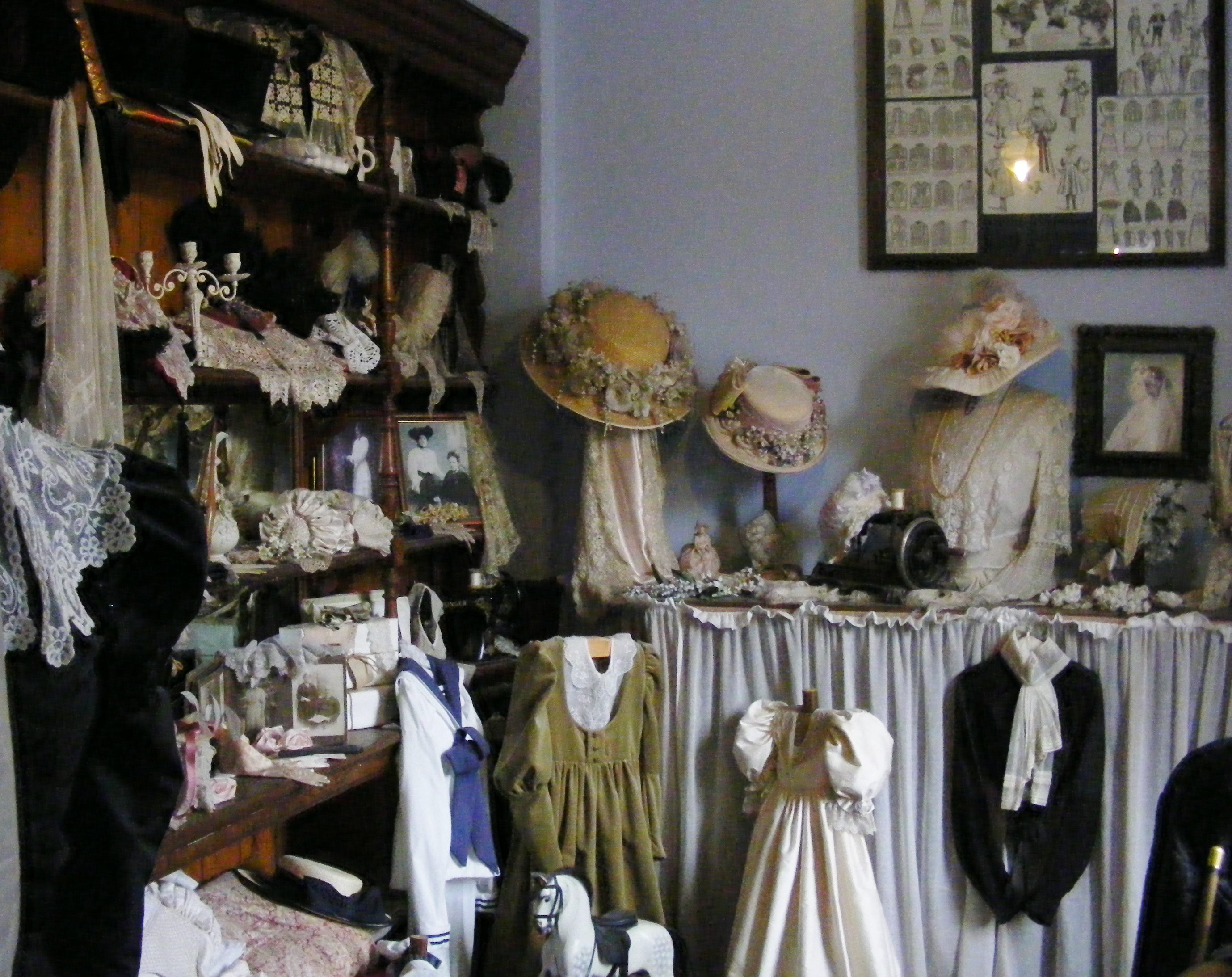
Blist’s Hill Draper’s Shop where I spent rather a lot of money

On to the Society for One-Place Studies’ inaugural conference in Telford. We nearly went to Tamworth instead (long story but to be fair, they both begin with T). A fascinating visit to Blist’s Hill Victorian Village. Then the conference. What a joy to meet with such enthusiasm and friendliness. I now have the honour and responsibility of chairing this organisation and I am looking forward to continuing to promote the cause of one place studies. I am very thankful for the support I’ve already received from committee members, postholders, members and like minded organisations. I also received the news that, following my first foray into appearing at a conference via a web link last month, I am to present at next year’s Ontario Genealogical Society conference.

Next stop Lincolnshire, to move a million (well maybe not quite a million) boxes and give gardening advice in between being in granny mode with Edward. The internet was not yet up and running in their new home so, each morning, I skulked in Boots’ car park to download and send emails. I have no idea what anyone monitoring the CCTV thought we were up to. And the caravan legs? Well here 75% of them worked. The trouble is that, unless the mechanism senses that all four legs are on the ground, it continues in descent mode ad infinitum. Gales have subsided so we settle for being legless for the remainder of the trip. Finally, to Cambridge to celebrate my granddaughter’s first birthday. Surely she cannot be one already.

Meanwhile in darkest Devon it turns out that we have no water; well we have water but just not in the right places. This has been discovered by my friends who have the misfortune to be looking after my house. Last time they were keyholders they encountered the deceased cat, this time there is water pouring through the hall ceiling. Well it is one way of getting out of the job in future. Bless them, they mopped up, drained the tank and turned the water off. Home then to forty eight hours without water, a real taste of living the lives of my ancestors. In the days when all water would have been collected from the village pump or well people would be used to managing with very little water. On day one I have three litres with which to wash and eat, a practical exercise in how difficult life would have been in the past. I hadn’t actually planned on conducting some experimental archaeology at this time but hey ho. Fortunately the water butt is full and its contents can be used for flushing the toilet. The key to using very little water is to reuse and you really need to do things in the right order. So minimal water is in the basin ready for washing and I start cleaning my teeth. Ah, I have neglected to work out where to spit the toothpaste out. I can’t waste the washing water so it has to be a quick trip downstairs. I’d already decided that I could wash my hair in water that I had already been used to wash my body. Fine so far. Next a brilliant idea – I can use the now cold water from my hot water bottle to rinse my hair. A hot water bottle may sound like a waste of precious water but no water equals no heating. Great idea in theory. My antiquated hot water bottle disgorges its liquid contents over my head, accompanied by quantities of bits of perished rubber – great. I did admit defeat with the washing up. In the past I would have been looking for bran and pewterwort (a plant also known as horsetails) to clean my dishes but I just pile them up and put my faith in a twenty first century plumber turning up when he said he would. Normal service is now pretty much resumed but it is a sober realisation that this is not only how our ancestors would have lived but also how people are still having to live in some parts of the world.