
Torquay Town Hospital
Winnie is a character where a little more imagination came into play. Barefoot on the Cobbles needed a VAD nurse, so I searched the Red Cross database to find someone of a suitable age who actually worked at Torquay Hospital. I also needed to include someone who was a little more street-wise, to introduce Daisy to life in the town and Winnie fulfilled that role. Although there is no evidence that Winnie and Daisy met in real life, they may have and Daisy would have needed a friend in her new home.
Winnie’s employment at Aylwood is another invention. On the other hand, Winnie’s description of her time at the hospital, far-fetched though it may sound, is taken from genuine memories of a VAD who worked at the Town Hospital at the time. In reality, Winnie Hamm worked in the pantry at the hospital from 3 November 1917, earning 9d a day.
Although I have implied, in the novel, that Winnie grew up in Torquay, the real Winifred Muriel Hamm was born on 24 Feb 1899 in Tooting, London to Sydney and Alice Hamm. When she was working at Torquay Town Hospital, Winnie’s address was Ruthven, Meadowfoot Lane, Torquay. At some point after the war, Winnie moved to Bathavon and in 1930, she was fined at Corsham Petty Sessions Court for failing to display a motor registration license. In 1939, Winnie was living with the mother at Laurel Cottages, High Street, Bathavon. Winnie was obviously keen on public service. She was a manager of Bathford Primary School and stood for the Parish Council in Bathavon in 1949. She died at the age of 96, on 20 June 1995 and is buried at St Swithun’s Bathford.
‘Daisy judged that Winnie was the younger by several years, probably not much older than Violet. Although not a hair was out of place, there was a light dusting of freckles across Winnie’s pert nose, which somehow made her seem more approachable.’
Barefoot on the Cobbles will be published on 17 November 2018. More information about the novel can be found here. Copies will be available at various events in the weeks following the launch or can be pre-ordered from Blue Poppy Publishing or the author.
 If you still think you might enjoy my creation, can I make a plea that you purchase a copy directly from me, either at
 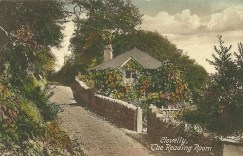 Clovelly’s Reading Rooms feature in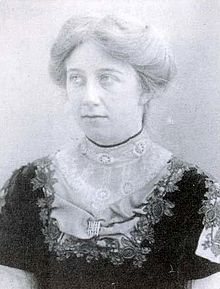
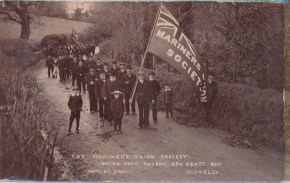 The Mariners’ Union was a Friendly Society, formed in Clovelly on 19 November 1792. Initially, they met once a month in the New Inn but later their club room was at the Red Lion, on the quay. A copy of the original articles of the society, together with the names of the first members, are held at the North Devon Record Office and have been transcribed
  It is fitting that today we should mention Temperance Lloyd, noted as being one of the last people to be hanged for witchcraft in England, in 1682. Her name has echoed down the centuries and together with Susanna Edwards and Mary Trembles, she lives on in North Devon folklore. What is she doing in a novel set in the early twentieth century? She appears in
  Postman Branch is somewhat of an interloper in
  Upton Hill features in
 James Charles Ashby was born on 1 January 1874 in Holsworthy, the son of James and Grace Ashby née Jones. James followed in his father’s footsteps and began his working life on a local farm. In the mid-1890s he joined Devon Constabulary.
 The History Interpreter - Janet Few