Often my blog posts are about family history. This one is a bit different. This is about my family present, posted with the blessing of my daughter. I want to tell you about Edward, my wonderful elder grandson. This is not self-indulgent granny-boasting, this is important, please persevere to the end. Edward is funny, he is bright. He loves dinosaurs and wildlife and Robot Wars. He can tell you the properties of every robot in every series of this television programme. He knows all the roboteers and where they come from, which robot was the victor in every encounter and the modifications that were made to it for the following series. Ok, I will admit, Pokemon is gradually eclipsing Robot Wars. Unfortunately there are hundreds of Pokemon and to be in his presence means you will need to know about them all, about which ones evolve and which ones don’t, oh and what they evolve into and their special powers. You will have to be able to pronounce the unpronounceable names and not forget if you’ve been told once, several weeks ago, how it should be said. Edward loves board games, as long as he is the victor and soap-boxes and nature. His language is complex and varied; he is the only four year old I know who can use ‘ante-penultimate’ in context. I’ll be honest, we had to look it up when he wanted to know what came before penultimate. ‘Conversations’ with Edward do have their unique element but they make us laugh. He also happens to have a facet of autism known as PDA (Pathological Demand Avoidance). Even if you think you know about autism and what that means, you may not be aware of this specific manifestation of the condition. Edward isn’t five yet, so he can’t tell you how this makes him feel, therefore I would like you to look at this brilliant account by an adult with the same lifelong condition and at this one page summary by the PDA Society. I know you think you are too busy, that you don’t have time to read all this but please do, it could be life-changing for someone you may meet who will need you to understand them.
 The recent official diagnosis confirmed what his close family have known for some time but it has involved focusing very much on what he can’t do, not on all the many things that he can. So I wanted to celebrate all the joy he brings to those around him. I want you to know about the time he spent talking to the men at the Isle of Wight dinosaur museum (to whom I shall be eternally grateful for their patience), when he asked about every single artefact they had in their workshop. I want to share his excitement when he rode his home-made soap box and to recall how he repeated to his parents exactly what I had told him about how to approach the miniature ponies so they wouldn’t be scared. I need to tell you about the emotion on a rare family get together (Edward finds dealing with more than one person at a time difficult) when I had to hold back the tears as he spent an afternoon holding his younger cousin’s hand, instead of pushing him over in frustration because his cousin was too small to play in quite the desired fashion.
More than this, I want to pay tribute to his truly amazing, patient and totally exhausted parents. I am writing this because I want you to understand children like my Edward. I want you to know that they are not being naughty, or defiant or spoiled, or angry, or deliberately violent. They are just being the way their brains have made them; they are trying to cope with what to them is a very scary and incomprehensible world. Crucially, I want you to understand their parents. They continually have to run the gamut of the tutting and disapproving looks in the supermarket or park. The accusations of bad parenting, the ‘why don’t they give him a good telling off’, the ‘my child would never have got away with that.’ Unbelievably difficult though it is for them, they are going against the natural parenting instinct to guide your child by telling them what to do. They are giving their son exactly what he needs, the chance to grow and blossom in an environment where demands are kept to an absolute minimum, in order that his anxiety levels do not overwhelm him.
When you see a child who looks just like yours, a child who does not obviously have an intellectual or physical disability, a child who, on the surface seems articulate and yes, I will use the N word ‘normal’, please remember that you do not know what lies beneath. If that child then behaves in a manner that society has labelled ‘naughty’, or ‘anti-social’, or ‘unacceptable’, that child genuinely may not be able to control themselves. That tantrum on the pavement, or that lashing out at the adult with them, may be their only way of coping with the enormity of a life that is, to them, overpoweringly confusing and loud and bright and just too much to bear. Before you raise your eyebrows at the carer who is ignoring the meltdown in a public space, before you criticise them, either in your head or out loud, for inadequate parenting, please stop and think for a moment. That parent has probably not had an unbroken night’s sleep for years, that parent may have little or no opportunity for a life away from their dearly loved child, that parent may feel alone and unsupported. They might not be ignoring their child’s behaviour because they are lazy, or because they are a bad parent. They are not allowing their child to ‘get away with it’. They are, despite how much it might hurt them inside, despite their embarrassment, despite their sense of isolation, doing, out of overwhelming love, precisely what they should be doing for the good of their child.
I would love to offer my grandson a world in which he can be understood, where difference is tolerated and his unique positive qualities are lauded. I want a society where parents who are doing the very very best for their children are supported and praised not denigrated and made to jump through impossible bureaucratic hoops. I feel impotent in the face of the ignorance and misunderstanding that surround this little family and others like them. Using my words is all I have. I will support and defend them with every fibre of my being. I will fight so that others might have even just a slight indication of the enormous mountains they have to climb on a daily basis. It is lovely when you share my posts. Sometimes I am encouraging you to buy my books, or those of my fellow authors, sometimes I am inviting you to join me on one of my courses or at one of my presentations, or I am suggesting useful resources for your family history research. Other posts share my travel mis-adventures. None of that matters. This is the big one, the important one. If you don’t usually share or like my posts, please share this one. Please help to make life just a little easier for my grandson, his parents and families like them everywhere. Thank you.
 After a lovely time with two fifths of my descendants, I used the lacunae between Christmas and New Year to cough a great deal and revisit some family history. This was partly inspired by a recent meeting with the full range of my second cousins at the funeral of the last of my mother’s cousins. This officially makes me the oldest generation now, that is a sobering thought. I was also motivated to look at my daughters’ ancestors, in preparation for LivingDNA results for one of them. I found my own regional profile that I received from LivingDNA closely matched the documentary evidence and I have already
  In the course of working out what I was expecting, I also calculated how many of my direct ancestors I have discovered in forty two years of research. Not a bad haul for someone whose grandparents were born in the 1880s and 1890s, especially as I am 95% sure who the missing 3 3x great-grandparents are, which has a knock on effect on the totals in earlier generations. Whether I shall ever be confident enough to ‘ink these in’ is another matter.
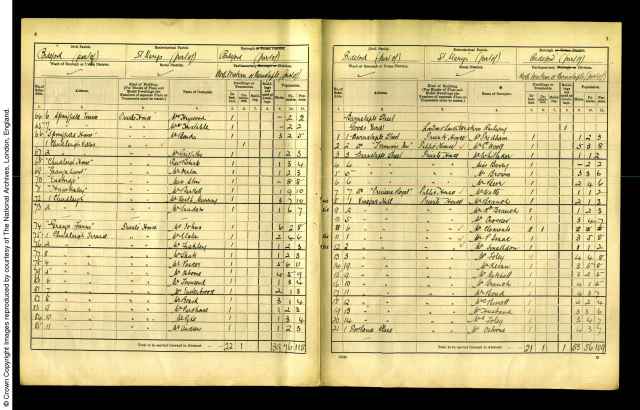
 When tackling the horrors of the Western Front, I chose Abraham Tuke as my ‘point of view’ character. Research into his background revealed that he had been the editor of his college magazine. I decided that, like others involved in the Great War, he might relieve the stress of being in a combat zone by writing poetry. I re-read the classic World War One poets, Wilfred Owen, Siegfried Sasson, Rupert Brooke, Lawrence Binyon and other well known names. I was also fortunate to have access to a collection of works by poets who are not household names and whose work is a little less polished,
  I would like to mention another local archive today:
 Previous advent posts have mentioned the importance of local archives, local history books and relevant websites, when an author is trying to recreate the geographical context for a novel that is set in the past. When my character, Polly, moved to East-the-Water, Bideford, to take up her position with the Powell family, I needed information about the area. An excellent summary of life on the eastern bank of the Torridge appears on the
 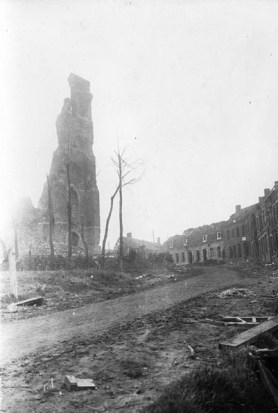 The chapter that I was most concerned about was the one set on the Western Front. It was the only location that I was unable to visit and I have no experience of being a young man, or of being in a combat zone. I read fifty or so pages of the regiment’s official
  When writing of real events in the more recent past, newspapers are invaluable. I used hundreds of local and national newspaper articles during my research. The court and inquest scenes were heavily reported in many papers. In the absence of actual court records, these were vital. The huge advantage of these was that they provided me with verbatim statements spoken by the accusers, the witnesses and the accused. As someone who was more used to writing non-fiction, I was concerned about my ability to write dialogue. By the time I had used the words reported in the newspapers, I had a real feel for how many of my characters would have spoken. Newspapers were also useful when I was researching the historical background of my minor characters. For example, it was from the local newspaper that I learned that Dr Crew was about to lead a scout camp; yes, that tiny little throw-away line was based on fact!
 The History Interpreter - Janet Few