Regular readers might recall that I often do daily ‘advent calendar’ posts but I decided to give that a miss this December. What I am preparing is a list of the top ten books that I’ve read this year. I’m not going to rank them one to ten but just the ten best of the 70 or so fiction books that I have read in 2020. If you are wondering if that is more or less than usual because, well because it is 2020, that’s probably about normal for me. Then there is all the non-fiction but I tend to dip into many of these rather than read from cover to cover, so my list will be fiction only. Stand by for this nearer the end of the year.
Now to recording. A few weeks ago, I was invited to chat to the lovely History Hacks Ladies. As a result I am now a podcast, whatever that is. So if you want to hear me chatting about Sins as Red as Scarlet in a very croaky voice you can. There’s plenty of other good stuff on there too, so head on over and listen in.
Then, whilst I was still reeling from all the Genealogy award thing excitement, came the amazing news that I had won a writing competition. I found out on Monday and once I’d picked my jaw up off the floor, spent most of the week with a stupid smile on my face. I don’t usually ‘do’ short stories but both my novels are on the Trip Fiction website, so when they announced a competition I decided to give it a go and well, wow, just wow – look! You can read my story and those of the other winners on the site. It is also a great place to look for books that are set in your favourite locations. If you are expecting my story to be set in the West Country, sorry, no, Northumberland this time. I’m afraid it is no good sending begging letters asking for a share of the prize money as a significant proportion has already been donated to charity. If you like the story and still haven’t dipped into my novels, if you are very quick, I can still send signed, festively wrapped copies out to the UK in time for Christmas – you do need to order directly from me for this though. P.S. and here is what the lovely judge said – I still can’t believe this is about something that I have written.
In other news, I glimpsed this under the clematis yesterday. I am hoping he is hibernating not deceased and will add more leaves and possibly build a shelter to put over him as this looks a bit exposed. The first photo was taken in the summer.
With a sold-out talk for the Society of Genealogists in the offing my lap top decided to go slow and then grind to a halt. As I was fresh from a ‘discussion’ with Amazon who decided they couldn’t verify my bank account in order to pay the paltry royalties due to me, this was the last thing I wanted. I should add that Amazon have been using this bank account for over two years with no problem but I guess they have to check occasionally. The issue seemed to be that the account officially uses my initials whereas the system assumes it uses your name and insists that you enter that. Anyway back to the expiring laptop. Good news, the repair shop was open during lockdown. Bad news there could be a week to wait. I review the alternatives for giving the three Zoom talks I have in the next week. I can use a lap-top that only has the free version of Power Point, meaning I have to alter all the fonts. Alternatively, I can use a teeny tiny lap top that is more difficult to use. A bit of testing and it seems I can make this work. Hurrah.
I am sat in the conservatory because that is the best light. The talk, on Madness, Mania and Melancholia: mental health of our ancestors, goes well. I am just in to the 35 minutes’ worth of questions when a neighbour arrives at the glass door with a brace of very deceased pheasants in his hand. I try to subtly gesture to the front door indicating that he should ring the bell, which should summon my lockdown companion. No, subtlety isn’t cutting it. I have to abandon the audience briefly to explain. I guess it beats the Zoom call cats.
The catalogue of woes continues. In order to complete a job due next week I need to download some software on to the borrowed computer. To do this I need to access a website. I have forgotten my password (which is saved on the defunct computer). Simples, I will reset it. It needs me to answer a ‘secret’ question. ‘What is my mother’s maiden name?’ That old chestnut. Clearly I do know what my mother’s maiden name is; I am a family historian. I don’t normally give the correct answer as it is in the public domain (you can probably find it on this website). It is also very easy to guess. I try the only two plausible alternatives – wrong. I try the actual maiden name – also wrong. There is no way round the ‘secret’ question. There should be a help phone number but guess what, the document with these useful numbers on is accessed via the website I can’t currently get in to. You couldn’t make it up.
I won’t mention the other website I can’t get into because I am not receiving the verification codes that they are allegedly sending me. Oh and then there was me trying to connect the borrowed laptop to my printer – don’t even go there. ‘You have 90 seconds to use this verification code.’ On this teeny tiny lap top – no chance. Good news I have a wireless keyboard and yes I can even locate it in the crowded loft. What I can’t locate is the little USB thingy that has to go in the laptop – sigh. Expect typos.
Then there is Tesco’s, fortunately to reset their password you do not need the inside leg measurement of your infant teacher’s uncle. I put in a new password, ‘that is your old password, please choose another password’. Arrgghhh.
Another day, another Zoom talk. I have finished the actual talk and am trying to minimise the presentation in order to copy and paste my web address in the chat. I press the escape key. Ah well on my computer it would be the escape button. On the one I’ve borrowed it is the power off key. Luckily this one was a double-hander so I just had to pop up on a different screen in another room in my house. Never work with children, animals or technology.
Sorry for the long silence dear readers. It certainly hasn’t been because I have been idle. Although I am continuing to stay at home, I have been around the world virtually, Zooming into homes across the planet. I am pleased to announce that I have enough support to continue to present my ‘History Interpreter Online’ series of Zoom family and social history talks. This is deliberately a small group so we maintain a friendly, chatty atmosphere but we do have room for a few more, either as occasional visitors or ‘season ticket’ holders.
I’ll start with the exciting news. I have had the great honour of being awarded a certificate of achievement by the Society of Genealogists. These are awarded annually ‘in recognition of efforts and activities that have made some exceptional contribution to genealogy to the benefit of anyone wishing to study family history’. I know I am in some very illustrious company, so it did come as a bit of a shock. The precise citation is, ‘For long-term services to family and local history and encouraging the involvement of young people in history and heritage.’ The ‘long-term’ bit makes me feel very old but I suppose I have been seriously researching my family for 43 years so I guess it is justified! I am looking forward to the face-to-face presentation, which can hopefully take place in August next year.
Despite the ‘long-term’ research I have managed to add 9x 10x and 11x great grandparents to a branch of my tree this week so there’s always something new to discover.
Of course, it is impossible to ignore the fact that, in general, things have been on the gloomy side. Christmas, as expected, will be different this year. I had planned to visit the descendants right at the end of the school holidays, giving family members who are in school as much time as possible to develop any nasties they may have picked up. The freedom that we have to visit for five days around Christmas Day itself just doesn’t work for me, especially as we would have a 600 mile round trip to make and the world and his wife will all be travelling on the same days. It is a very long way to go to wave to your nearest and dearest from the other side of a chilly field, which is what it would mean if we went in early January. Although I would go to the ends of the earth to see my family, my head says that, having been so careful for nine months, it would be stupid to be reckless now. So, I will, regretfully, continue with my ‘just because I can doesn’t mean I should’ stance and make the most of what technology will allow.
It is, of course, that time of year when not just visiting but also seasonal gift giving is in our thoughts. Many of us are unable or unwilling to visit shops in person at the moment, so we are seeking other alternatives. Living, as I do, a distance from a shopping centre, relying largely on online shopping is the norm, although I do love the atmosphere of the shops at this time of year. I usually try to find a garden centre with displays of decorations. I am planning a swift visit to acquire a Christmas Tree but shan’t be lingering any longer than necessary. The added consideration this year is that gift purchases will need to be sent directly to the recipients or be easily postable. I am hoping to patronise as many small independent online shops and sellers as I can. If I was more talented, I would be hand-making gifts. I am also hoping that folk may want to relieve me of a few more books. I am happy to gift wrap these and send them straight to the recipient if you are looking for gift ideas. My fictional offerings are described here and for non-fiction you need to look here. I don’t charge for postage to the UK. Or you could gift a season ticket to my talks!
Zero progress on a potential new novel I’m afraid. My writing has been devoted to finishing a new course for Pharos and an article for Who Do You Think You Are? Magazine, due out next year.
The next thing to look forward to will be getting the historic decorations out of the loft.
Next week I am co-hosting a themed #Devonbookhour on Twitter, when we will be focussing on historical novels, with a special emphasis on those set in Devon and/or written by Devon writers. This begs several questions. Firstly, what constitutes an historical novel? There are probably as many definitions as there are readers of this genre. Clearly some proportion of the book has to be set in the past but how much of the book and how far in the past? Time-slip or dual time-line novels are popular; I’ve written one! I do class mine as an historical novel and in my case 75% is set in the 1600s, with the remainder in a somewhat alternative version of 2020. My own opinion and I know that others will disagree, is that more than half needs to historical for it to be an historical novel. What then is history? The Historical Novel Society stipulate that books for review should be set at least fifty years ago. I think most of us struggle to accept anything that is within our lifetimes as ‘historical’; I am just coming around to considering books set in the 1960s and 1970s, that were written more recently, as historical. There are of course many books that are set in what is now the past but are emphatically not historical novels because they were contemporary when they were written.
Historical novels come in many guises and all are valid in their own way. There are those that seem to have been written as historical novels in order to justify the swashbuckling pirate type and a woman in a corset on the cover. Sometimes there is little evidence of historical research and the plot, frequently a romance, would have worked equally well in the present. I am not intending to be disparaging here, this is a hugely popular and highly marketable, version of the historical novel, even though it would not be my personal preference.
Then there are the immaculately researched historical novels, where the historical setting is intrinsic to the plot. This category can be sub-divided into those that feature famous people, frequently royalty and those whose main characters are purely fictional. In this respect, my own books are in a minority, as they tell the true stories of real but little-known people.
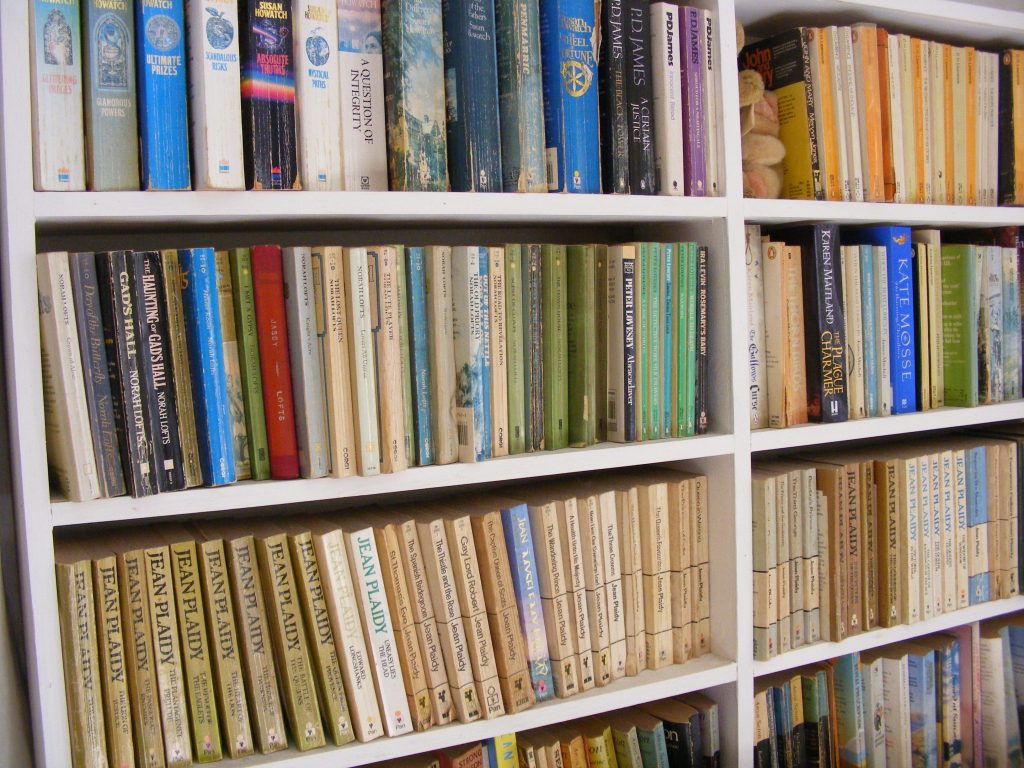
Why do people read historical fiction? Is it to learn more about the past in a digestible way, or is it because they are fascinated by history, or both? My own love of historical fiction and history blossomed concurrently. I can tell you exactly when my historical novel journey began and it did not grow out of reading children’s historical novels; I came to the likes of Rosemary Sutcliff and Cynthia Harnett as an adult. At the age of eleven I watched the film of Dragonwyck, probably on a wet Sunday afternoon, on a flickering black and white TV. I would probably struggle to sit through it now but somehow it spoke to me. I was already an avid reader, consuming up to five books a day in the school holidays. It was a diet of Enid Blyton, Malcolm Saville, Monica Dickens, Elinor M Brent-Dyer, Enid Blyton, Ruby Ferguson, The Pullen-Thompson sisters and yet more Enid Blyton? I have no idea how I realised that Dragonwyck was a book but realise I did and I quickly worked my way though Anya Seton’s entire output. I do still reread these. I then turned to Jean Plaidy. I have kept a shelf full of her books but I haven’t read one for decades. Then Norah Lofts, Cynthia Harrod-Eagles, Daphne du Maurier R.F. Delderfield and Susan Howatch were added to the repertoire. Next, inspired by the first Poldark series (despite the obvious attractions of Aiden Turner – he of the unrealistic scything – I never got into the remake) I read Winston Graham’s novels. It was fortunate that I latched on to such prolific authors. By the time I reached adulthood, I was eagerly awaiting the yearly offerings from E.V. Thompson, followed by Lindsey Davis and Susanna Gregory. I am a bit of a sucker for series, where I can follow the characters from book to book. I was looking forward to more from Ariana Franklin, when sadly, she died. You will also find Barbara Erskine and Phillippa Gregory’s non-royal fiction on my shelves.
In preparation for the Twitter event, I have looked at several ‘Best Historical Novels’ lists and these rarely contain my favourites, several of whom are now considered to be a bit outdated. Here are three such lists and from their combined suggestions I’ve probably only read a dozen.
I have attempted my own list of authors, rather than specific titles, below. Some rate a place for nostalgic reasons, rather than as a reflection of my current reading habits. I don’t go for a particular time period, my favourites span 2000 years. Although I am happy to read a book set in wartime, I am not so keen on books that focus on the battlefront. The geographical setting is also an attraction for me. I do enjoy reading about places I’ve been. I tend to favour books set in Britain, particular the west country, which is probably why I have read so few on the ‘best’ lists. Strangely, some of the best known and highly revered historical novelists do not feature on my list. I promise I have tried the likes of Hilary Mantel and C J Sansom but just couldn’t get into them. It sounds slightly ridiculous but it is partly their sheer size. Not that I mind the lots of pages thing but I tend to read in bed and believe me you do not want Wolf Hall landing on your nose when you doze off. Perhaps I should try them again as ebooks.
I have yet not mentioned the output of my many author friends, some of whom will be less widely known but whose new books I eagerly await. I do enjoy genealogical fiction and my own Sins as Red as Scarlet has a nod to this. Although these tend to fit better into the genre of crime novels, some have considerable historical content. I have already written about several of my favourites. In fact, if you check my blog archives for December 2016, I singled out an historical novelist for each day of advent.
So here are some authors whose books I have enjoyed, as well as those mentioned above. I have made no attempt at ranking here (I have gone for alphabetical order). I am sure I will have missed some, so sincere apologies if I have offended you by not giving you a mention. It may not be because I didn’t enjoy your book!
Piers Alexander
Rebecca Alexander
Kate Braithwaite
Ruth Downie
Stacey Halls
Paul Marriner
Wendy Percival
Sara Read
Liz Shakespeare
Reay Tannahill
M J Trow
Beth Underdown
Join us on Twitter on Monday 9 November 8.00pm for #Devonbookhour (except it will be an hour and a half!).
Sometimes I review books on my blog. This is one of those occasions. I would like to introduce you to two offerings from The Genealogical Publishing Company, in Maryland.
The first is Roots for Kids: finding your family stories by Susan Provost Beller (2020). I am passionate about involving young people in exploring their history and heritage and I was intrigued to see what this 68 page book had to offer. I even managed to get past the use of the word ‘Kids’ in the title, which I must confess does tend to set my teeth on edge but that does not detract from the content. The author, very sensibly, focusses on family stories, rather than formal genealogy. The book is written by a US author, which means that some of the activities are not so appropriate elsewhere, or need ‘translating’. For example, there is an assumption that the reader will have immigrant ancestors within the genealogical timeframe, which is less likely in a European context. This might mean that it is not an ideal gift to a young person from outside the US but nonetheless there are some excellent suggestions that are universal. For the British reader, it is probably a book to be used as a source of activities for adults to present to a child. The book is enhanced by black and white drawings.
There are suggestions for ways to approach older relatives, a section on surnames and hints for organising information. Despite the rather steep £14.78 UK price tag, this book would be very useful for adults working with young people and hoping to introduce them to genealogy, through the medium of family stories. It is probably best suited to the 8-12 age range.
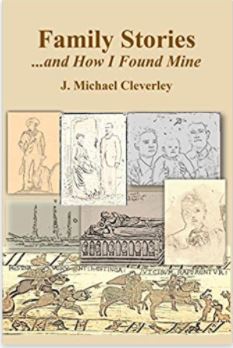
The other book is a substantial volume by J Michael Cleverley, entitled Family Stories and how I found mine. I always recommend that my ‘Writing up your family History’ students read family histories by others, in order to see what they feel might work for them. This book would be particularly useful as it adopts a rather different approach. The author has obviously carried out an enormous amount of research into both his own family and the broader historical context. Spanning 900 years, the author recounts his own family story, setting it firmly within the broader history of the time. Unlike many family histories, the author tends to focus first on the broader history and then introduce the appropriate family story, rather than the more common approach of beginning with the family. This makes this family history a bit different and works very well.
The intrinsic family story is obviously of greatest interest to those who share this ancestry but it is definitely worth a read to find out about the background, which has a broader appeal and as a good example of how a family history might be approached.
The book is accompanied by outline family trees, giving names only. These were a little faint and would have benefited from including some dates and place names. The book includes an impressive bibliography, detailed endnotes and an index; all valuable additions to a family history. Again, this volume attracts a hefty price tag, £36.39, something for a family history society library perhaps.
I was given free copies of these books in return for a frank review.
Since returning from the frozen north, in between wall-to-wall Zooming and another weird allergic reaction incident (see below), I have been revisiting a branch of my daughters’ ancestry. It is so long since I last looked at this family that the documents that I wrote, telling their story and recording my research path and sources, no longer open. Fortunately, I have hard copies, so can retype. My version of this line stops with Thomas and Sarah Kear of St. Briavels in the Forest of Dean, Gloucestershire. Other researchers have extended Thomas’ ancestry further but this was all I was confident of and indeed still is, although I am pretty sure where it goes next.
Newland Church
Looking again at the evidence, I realised that there were two Thomas and Sarah Kears in St. Briavels and neighbouring Newland, having nine children between them from 1765-1789. The obvious way to distinguish between the two families was to assume that those baptised in St. Briavels were one family and those in Newland were another and certainly this did not lead to biologically impossible families. By now some of you will be wondering if this was in fact all one family, as did I but it was definitely two families; there are two burials for both Thomas and Sarah Kears, all in Newland. God bless them, both Thomases and one Sarah left wills and this sorts t’other from which. One Thomas was a maltster and the other a coal miner. Although both have sons called Thomas, the dates of their baptisms and a property that continues through the family makes it clear that the St. Briavels Thomas and Sarah are the correct ones for my daughters’ line.
Next to look for marriages of Thomas Kears and Sarah …….. . Yes, as expected, there are two, seven years apart, both in Newland, both a year before the baptism of the eldest child and guess what both Sarah’s have the SAME surname – James. Then of course there are the two Thomas Kears baptised in Newland within a month of each other in 1745……… almost certainly neither of which are the one I want!
It is always worth returning to old research. This time I discovered the sad story of a family member who took his own life and was drowned, according to the coroner, ‘asphyxiated by upper dentures’.
Ignore what is below if you are just here for the family history.
Now the weird allergy thing, sorry but some people did ask (never ask, never). Some of you will recall that, earlier in the year, I received free (but unwanted) botox courtesy of an adverse reaction to who knows what. Friday I was happily Zooming away, looking as normal as I ever look. An hour later I went to drink a cup of coffee and realised that my mouth was seriously swollen. Ring 999 said Dr Google. I was reluctant to do this so went for 111 instead. The call handler quickly decided that this was above their pay grade and I was passed to a paramedic who actioned the ‘super-fast, highest priority’, emergency ambulance. I explained the difficulties with finding my house and precise instructions were relayed. By this time, I was sat clutching the emergency epi-pen that I’d been given last time and the paramedic talked me through its use, in case I needed to self-administer it. I was once trained in the application of these things but it was so long ago that I had retained nothing of this potentially helpful information. After half an hour, the paramedic says he will get off the line in case the emergency ambulance needs to ring. I ask how long it might be. ‘Any time now, you are top of the list, as if you are having a heart attack.’ I have packed my emergency ‘going to A & E’ bag. I have arranged back up if I don’t get back in time to host a meeting in the evening and I am sat on the stairs with shoes and coat on and the door open. I debate how bad one has to be to use the emergency epi-pen. I can still breathe and talk, so I am thinking not now but of course once one isn’t breathing …….. After an hour and a half, the ambulance arrives, they’ve been deployed from another area due to volume of calls. Don’t get me wrong, I love the NHS and they do an amazing job in the face of ridiculous underfunding. I am also aware that the downside of living in the middle of nowhere is that emergency services don’t get to you so quickly but an hour and a half for absolute highest priority does seem a tad overdoing it. Just as well I wasn’t having a heart attack.
I was treated in the ambulance for an hour, give oxygen, medication was organised and as I didn’t seem to be getting worse, I was free to go, with strict instructions to seek urgent help if it recurs. Still absolutely no idea what is causing this and this time the rash (which came first last time) developed later and much less severely. Next step will be parting with copious amount of blood to see if they can work out what is going on. Ah well, life is never dull.
I have been home for a week and I have reprehensibly left you all in the wilds of Northumberland. So, for the one of you who is wondering what happened next, here goes.
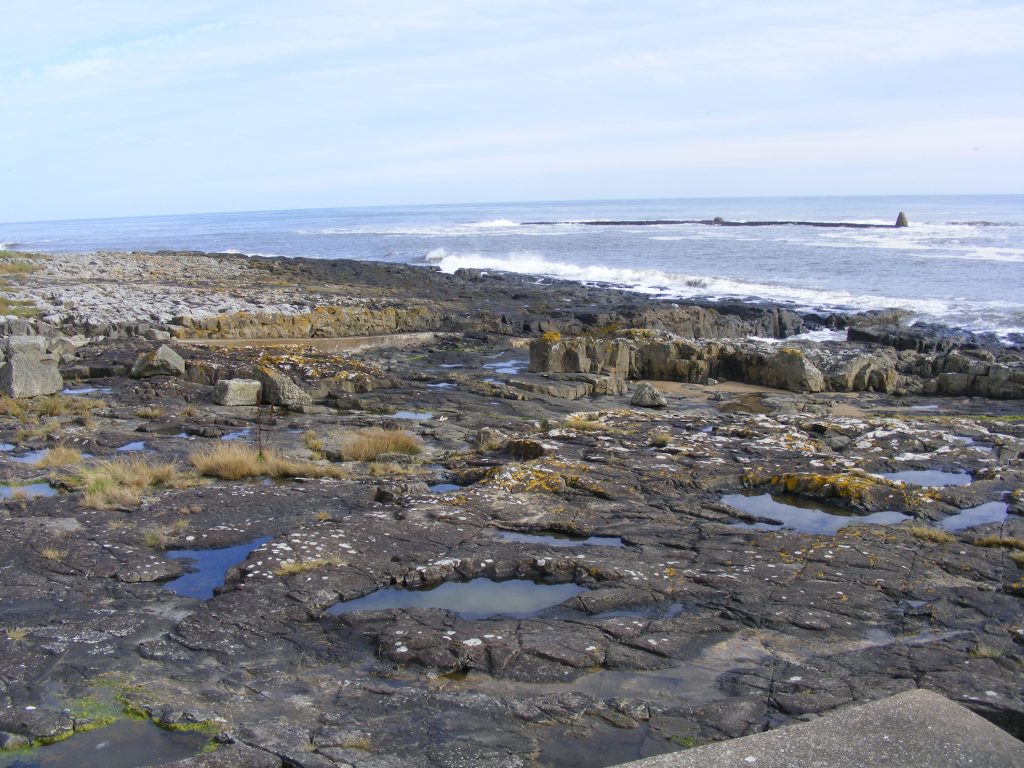
We spent several days grappling with the lack of internet, during which time we managed to get the car fixed. Undeterred, we returned to Craster, to find it marginally less busy than on our previous visit.
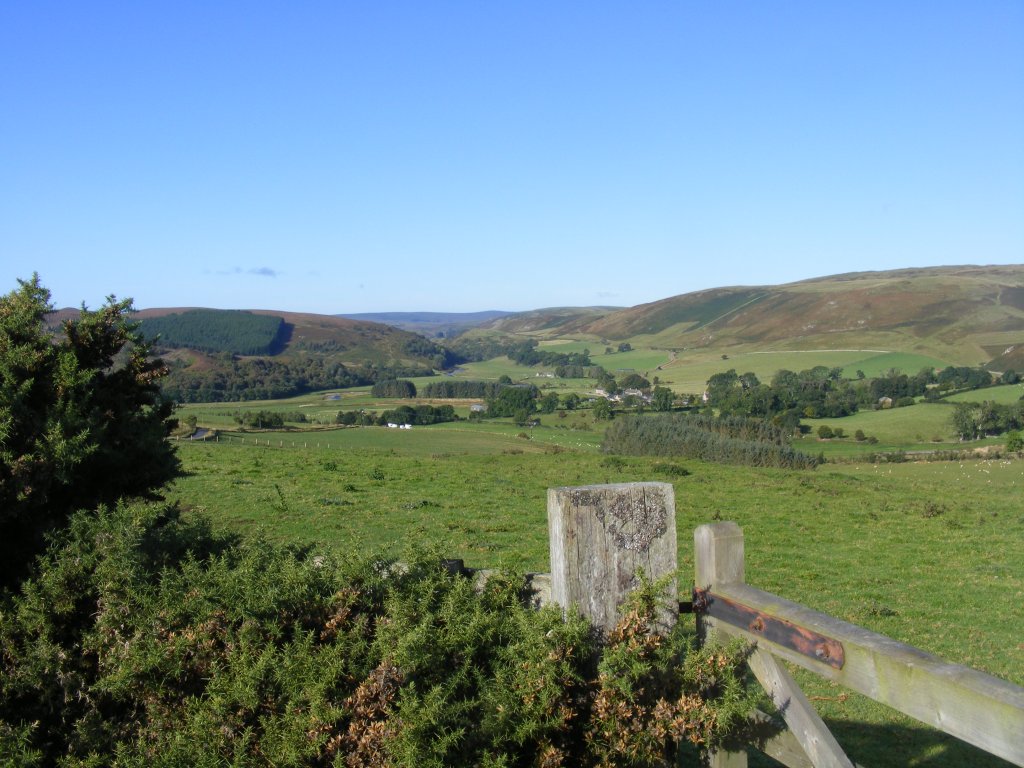
Next, a glorious, sunny day during which we ventured back to the Keilder Forest. On the map, the home of one of my probable ancestors looked to be up yet another non-road. Based on previous experience and mindful that the car was newly fixed, I debated whether or not we should boldly go. My companion was undaunted, so off we set and we were rewarded with a proper road and spectacular countryside. My ancestors certainly knew how to pick the best spots. Talking of maps, these trips always remind me how much I enjoy following routes on OS maps. This is absolutely not the same as navigating, though I have been doing that too, as some of the places on our itinerary are too small to be recognised by the sat-nav.
As the descendant of a Northumbrian shepherd, I was fascinated by these round, stone sheep-pens
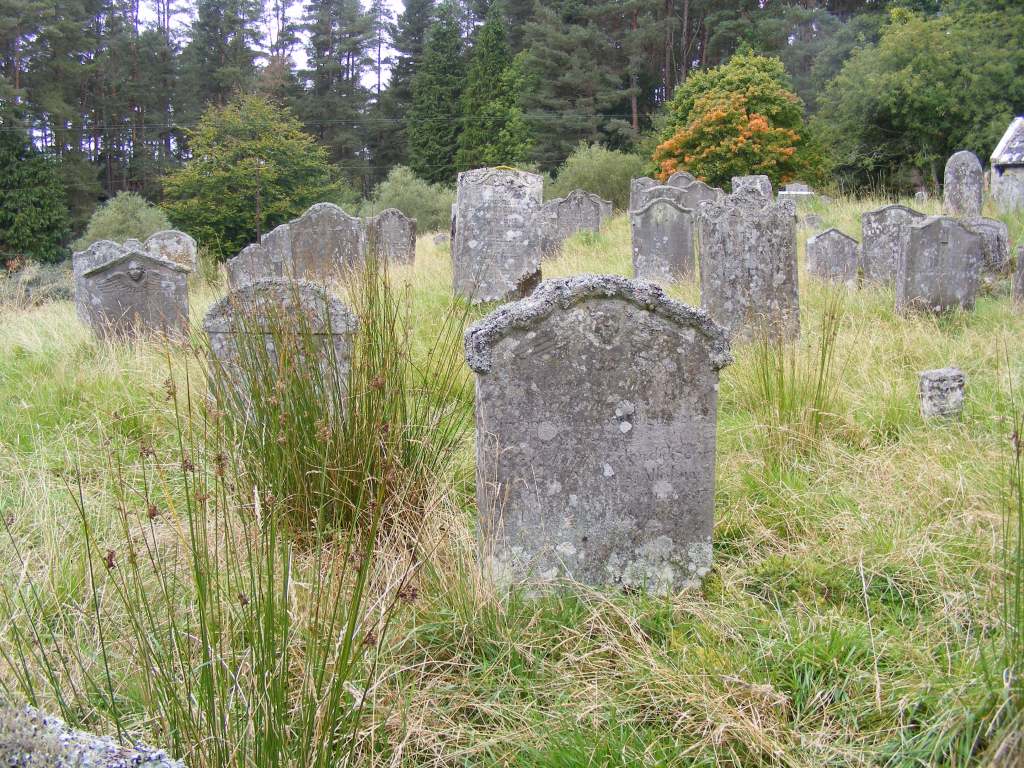
We then returned to my ‘one-place’ to photograph the eighty or so gravestones. Fortunately, these had already been transcribed by the local family history society, so it was just a case of taking the pictures.
Back at the van, we found that there was still no internet, meaning no work could be done, so we went for a walk round the nearby nature reserve. We’ve been to this caravan site several times before but as we habitually approach it from one direction, we had only just discovered this spot a few hundred yards beyond the site entrance. This meant that I could accomplish my Race for Life kilometreage (surely there should be a metric equivalent of mileage). It wasn’t very ‘racy’ but it was done and we got to see a huge flock of greylag geese as a bonus.
Our final day saw us embrace more hunting for ancestral houses. Against my better judgement my companion suggested that we embarked on a journey up a long and bumpy private drive as ‘we are almost there now’. These are occasions when I side down in the footwell and keep everything crossed that the owners are out. No such luck. A 4 x 4 approached from the opposite direction. We put on our best ‘we are stupid tourists’ expressions and were set to blame a faulty sat-nav. This is preferrable to admitting why we are actually there, as this often involves me in producing complete house histories gratis in exchange for a quick photo op. All is well this time as the 4 x 4 owner seemed totally disinterested in why we were up her drive in an area where households are currently not allowed to mix. There have been no follow ups to our adventures, so it seems that our covert photography has not led to us being reported to the local Farm Watch after all. Finally, internet was restored and I began to tackle the 210 emails that had arrived during the outage.
Then home. I was glad we went. It would have been all too easy just to stay at home but it was probably wise to escape briefly. It wasn’t as relaxing as usual and not ideal to be in a COVID hotspot but this was booked pre-COVID. Now I would be quite content to hibernate safely within my own four walls and garden until spring.
The holiday is over but due to the non-existence of the caravan site’s internet for several days, you think I am still stranded in Northumberland. All this happened a week ago; I promise you will catch up eventually.
What is life like in the frozen north? you ask. Bracing, I think would be an accurate term; windy, a bit drizzly and about 10 degrees. It turns out that the car’s funny noise means it needs a new alternator and that is booked in for four day’s time. Now all we need is for it not to break down completely in the interim. We drive out to the edge of the Keilder Forest for more gravestone hunting of ‘almost certainly my ancestors’ the Newlands and the Corbitts. All I can say is that I have not inherited their hardy gene. They must have been very resilient, trying to eke out a living here 300 years ago. The landscape is inspiring but forsaken and bleak. All I need to do is to find a tiny bit more evidence to confirm that John Hogg really was the son of Robert and I can claim this area as an ancestral home. All the evidence suggests that John son of Robert should be on my family tree but I am waiting for something further (which I may never find) before I ink him in.
Another day and more ancestor hunting. This time though in a town, so slightly more adventurous. I enter the large town churchyard in search of a grave. I have no burial plan and there are hundreds of graves. What I do have is a photograph with a tiny bit of background that I am hoping to identify, in order to take my own photo. I pause just inside the entrance and hold up the blurry picture to indicate to my companion that we are looking for a grave near to a fence and a lamp post. I look at the grave immediately in front of me – and it was the one I sought! It also contained information that wasn’t legible in the photo. Definitely a win this time. For those who have been following my recent family history adventures, this commemorates Peter (he of the pig and the 5 women) his parents and two of his children, one of whom I had not been aware of before.
This success was followed by my first visit to a supermarket in more than six months. It was a smallish supermarket and it seemed to pass off without incident but I will be relieved to get back to home deliveries.
After braving the town, we feel in need of a socially distanced day, so it is off to one of my one-places for some covert photography of people’s houses. We are used to narrows country roads but my proposed route does take us to some ‘interesting’ places. Despite the fact that my companion is very keen on his ‘new to him’ car, he bravely goes where no self-respecting driver has been before. This is clearly not the place for the alternator to expire completely.
The non-road takes us past the ruined peel tower that might have been the home of the Hoggs who I hope are my ancestors. Some of the one-place farms are too far up drives to be photographed. Although my partner-in-crime expresses a willingness to turn up a front doors of strangers when we are in an area where visiting other people’s homes is forbidden, I am less keen. I am already aware that we have zoomed in to take pictures of farms displaying large ‘cctv in operation’ signs. I suspect the local farm-watch hotline is already buzzing with our descriptions.
This is the day when I should have been doing my alternative Race for Life. Given that my back is still not conducive moving much, I have decided to postpone my 5km run/jog/walk until I am nearer home. I have been ridiculously poor at asking for sponsors too, so if anyone has a few pennies to spare this is where to go.
Having arrived in COVID central, on another lovely sunny day, we set off in search of the many local mills once worked by the Eadington family. We wander round Lesbury and then on to Alnmouth, which is very pleasant. We have reasonable success in locating the sites on our list and most are away from the crowds anxious to enjoy the last day of summer. We get stuck behind a flock of sheep, some of which have gone rogue and broken away in the opposite direction. One man and his dog, or in this case quad-bike, it is not. ‘Hunt the mill’ does take us to places other itineraries do not reach.
The next day and the temperature has dropped by ten degrees. Undaunted we venture north in the footsteps of my great great grandparents who travelled across the border to Lamberton Toll for a Scottish irregular marriage. I am pretty sure they would have taken the coach that ran up what is now the A1, from close to their home right to the Toll. I know that the toll house no longer exists but allegedly there is a plaque marking the spot. Fail on that one. It must be a very well-hidden plaque. Heading westwards, we call in at Norham Castle, built in the C12th for the Bishops of Durham as an entertaining space. It was here, in 1291, that Edward I and his advisors chose John Baliol, from thirteen contenders, to be the Scottish king. There was significant re-building following damage in the 1510s when the Scots got a bit troublesome. It had been subject to many sieges over the centuries. My ancestors lived close to this castle and would have known it when it was a little less ruined than it is now. Until it came under state ownership in 1929, it had not been maintained since the Union of the Crowns reduced the threat from the North.
Then it is off to Norham church to search for some gravestones. This will be fine, we have plot numbers and a plan. We know where row one is, what we don’t know is which end of the row is number one, nor is it quite clear what constitutes a row amongst the randomly scattered stones. More by luck than plan, we locate two of the four. What I have neglected to do, is note the names on stones surrounding the ones I am interested in, which might be more legible. We have phones, in theory we should be able to find the website and look at the transcription. In practice, neither of us has mastered using the phone for internet searches so that is not an option. In any case the stones I am missing are 1720s and the transcription was probably done in the 1980s so it is likely that they are no longer standing or legible.
Home via a couple of Scottish churches which involves a gate-related incident. Mindful that we are in a COVID hotspot, I attempt to hook the gate open with my foot. I achieve this and my companion exits the church yard. As he does so, he pushes the gate open further. Sadly, my foot is still wedged in it at the time. As I am wearing wellies in order to scour wet churchyards, I fail to hop backwards sufficiently swiftly and end up sinking to the ground grabbing the gate that I had been at pains not to touch in the process. It really is easier to stay at home. Fortunately, we have plenty of hand sanitiser. The car is making a bit of a weird noise. It is going and there are no warning messages but it looks like tomorrow will involve a trip to a garage. We do have form for getting stranded miles from home.
So, in the run up to departing for the wilds of Northumberland, I indulge in what was apparently some over-zealous gardening and am rendered almost immobile by a pulled muscle in my back. This means that many of the ‘must do before I go’ jobs take twice as long as usual, or don’t get done at all. Let’s be honest, it’s taking half an hour to get out of bed. The days have been punctuated by numerous Zooms, including C17th presentations for The Institute of Heraldic and Genealogical Studies and a panel chat for Family Tree Magazine – you can watch it here. By the time I got to the panel I’d already been presenting for two hours, hence the regular swigs of gin water.
Having been out of the house a mere handful of times since March it does seem rather out of character that we decide to head to Northumberland just as it hits special COVID measures. The plan is to be in the middle of nowhere in the north of the county and restrict ourselves to driving/walking in isolated areas. Definitely no tourist attractions/pubs/restaurants and with luck, just one shop visit – it will be my first for six months. We are also on stand-by to bale out at any point. In the interests of avoiding public toilets, which are in any case non-existent in the wilds of Northumberland, we have purchased what is basically a bucket with a seat attached. I am still not quite sure how using this in the boot of the car will go, even though it is quite a big boot. Not being able to bend will make it even more ‘interesting’ than it might otherwise have been. Said purchase did mean that Amazon, bless them, sent the usual ‘Would you like to share your experience of …..?’ email. Ermmm, are you quite sure Amazon? Anyway, it is, as yet, untried; I’ll let you know how it goes.
I also have a new phone, this is a proper phone, one that, in theory, does things apart from make phone calls. The operator is still playing catch-up but I am gradually increasing my ability to make it do things. I even occasionally remember to charge it and turn it on.
On the way north, we call on some descendants and meet at a National Trust property. This counts as very adventurous for me and we have duly pre-booked. On arrival at the entrance the man fails to find my name on his list. I have helpfully printed out the tickets and I rummage in my bag for these, only to find that I have inadvertently booked for a different day! By this time, the other half of the party are already inside. I ask if I can inform them of the problem. Whilst I am confessing to my blunder, the fisherman of my acquaintance somehow blags our way in, partly due to his powers of persuasion but helped by my life membership and his status as a National Trust volunteer. Phew. A lovely sunny day and some glorious flowers, although I prefer the wildflowers to the dahlias. It was lovely to spend socially-distanced time with the family. Onwards and upwards.








 The History Interpreter - Janet Few