This will be my final #RootstechConnect report. I have more sessions to watch on my playlist and I will mention any that stand out but this is the last dedicated post. Many congratulations to the organisers. I hope it will be repeated.
It is strange how so many of us are binge watching RootstechConnect talks, when we could just watch one a week for the next year. Maybe it is in a subconscious attempt to replicate the hectic face-to-face experience. Despite being lured into the garden by the glorious weather, I have made inroads into my playlist over the last two days.
Having recorded details of all my Relatives at Rootstech on a word document I realised that it would have been a lot more useful if I’d gone for a spreadsheet, so I could sort by common ancestors and so on. That took a bit of time. Now I have my list I need to do something with it and actually contact a few of these people.
For the final official day, I tried the two part Tracing your ancestors in the 1700s using DNA with Dr Tim Janzen. Sadly, his approach assumes that you have far more close relatives than I have and also makes use of GEDmatch, which I don’t use. When he said ‘I tested my mother’s sixteen first cousins’, I realised that his methodology wasn’t going to be much help to me!
Bringing your Genealogical Society into theC21st with Andrew Lee, was next, there were three parts this one. Suffice it to say that most of the societies I am involved with are considerably further into the C21st than those he was describing. It began with ‘get an email address for your society’. To be fair, it came from a US perspective and seemed to be addressed to small groups of 30-100 members. I really hope that less enlightened groups take his advice on various topics.
The great thing about virtual Rootstech is that, if you find a presentation isn’t relevant to you, you don’t have to regret sampling it, as you haven’t missed out on another session in order to attend.
Then it was time to check out every booth in turn and see if any of the downloadable resources were of use. I spent most of the time at the Family Tree Maker booth and was interested to see their resources for societies. I succumbed to the latest version but still have to grasp the nettle and try it out. I do miss the supply of free pencils and sweets that would come with a trawl of the various stands at an in-person conference!
Back to the ever-increasing playlist to listen to Discovering Records of the Enslaved a discussion between Sharon Batiste Gillins and Cheri Hudson Passey. A really thought-provoking session on how we share information about issues surrounding slavery, be we descended from enslaver or enslaved. I also watched her excellent follow up session Discovering Slaveholders in the Family Tree. These are definitely right up there on my best sessions list.
I looked at Community Reconstitution by Joe Price, thinking that it would be one for the one-place studiers. Personally, I prefer the term reconstruction but I wasn’t being picky. It was interesting to find that he viewed surname studies as a form of community reconstitution. The focus of the talk was not about community reconstitution at all, or at least not in my sense of the term but about adding more people to the Family Search tree. There was an emphasis on quantity over quality, advocating the use of five year olds to add new people and adding records whilst listening to audio books and exercising. That way madness lies.
Another session that I would recommend that you put on your must watch list is Girls must Feed Pigs by Darris G Williams. This is an interesting look at personal testimonies from various sources, such as Parliamentary enquiries, diaries and letters, that flesh out the evidence in the mainstream records. He recommended this from the family search wiki and similar pages for other countries. Ok so the list is shorter than the number of books on these topics that I own but it is a good start and we were invited to add to the content. I just need several more lifetimes to do all this.
Encouraged by Twitter traffic, I then took a look at what #21dayfamilyconnectionsexperiment was all about, although I am not sure that I am any the wiser. Creative Storytelling Techniques borrowed from Photography from Laura Hedgecock was next, a novel idea and Laura’s photographs are stunning.
I learned about The Genealogist’s new Map Explorer feature. Something else to tempt me to take out a subscription, although I always told myself I’d wait for the rest of the Valuation Office Records to be added before adding to my subscription list. I did ask the question; it will be a while.
The final talk of my weekend was Shortcuts to Success: solving English genealogical conundrums with Else Churchill. Now to tackle those relatives at Rootstech. Only 20% are on my maternal side and 121 of the 269 descend from the same couple!
A bit of a slower #RootstechConnect day for day two. I began by spending rather too much time analysing my Relatives at Rootstech (237 and counting). The bias towards descendants of one particular couple is marked.
To begin the day I watched 10 Things you are Probably doing Wrong with Jenny Joyce, definitely things that all researchers should bear in mind. On the topic of doing things wrong, am I the only one who keeps clicking on the little pink ticks in my RootstechConnect playlist, thinking that will start the video when in fact it removes it from the list?
Next, I enjoyed Michelle Patient’s From Convict Stain to Royalty; I always know Michelle’s talks will be good. I followed this with Connecting Children to their Family History with Jana Greenhalgh of Genealogy Kids.
Then it was time for Family Tree Magazine’s afternoon tea. Great to chat with friends again; I think that this is the aspect of a live event that we are missing the most. This time the poll was for our favourite teatime snack. This session included an ‘interesting’ interruption from an interloper. I didn’t quite catch what they said but it led to their immediate expulsion! Having Zoomed almost daily and sometimes more than once, since March this is my first such incident!
Continuing the theme of down-under presenters, I very much enjoyed Rob Hamilton, talk about Freemasons’ Records. I am inspired to see if I can find out more about my grandfather’s membership. I first enquired thirty five years ago and was given some very basic information; perhaps they might be more forthcoming now.
As I wasn’t asked to speak at Rootstech this time, I thought I should probably listen to Becoming a Better Conference Speaker by Julie Miller from NGS. Much of this was directed at responding to calls for papers in the most effective way.
That was enough for one day. I suspect many attendees are in the same position as I am, for every talk I remove from my playlist, two more are added. Good job we have a year to view!
Tomorrow I must make sure that I have done all I need to do in the Expo Hall before it closes. Decisions, decisions, do I want to invest in updating my Family Tree Maker; can I cope with the learning curve?
I have to congratulate the#RootstechConnect and Family Search Team for an impressive feat of organisation. The day began with a Zoom breakfast chat with the lovely folk from Family Tree Magazine (UK). It was great to see so many familiar faces. I was able to become part of the ‘What Family Historians Like for Breakfast’ poll.
I then started making my way through the playlist that I’d made from the 1500+ sessions on offer. This proved not to be as daunting as I’d thought, as some were less than two minutes long and none were more than twenty minutes. There doesn’t seem to be a way of knowing how long the session is until you open the video. I started with Why Family Search has a shared Family Tree with Brad Lowder, worth watching for the hilarious opening but I might dispute his reference to it as ‘the most accurate tree’.
I tried looking at Thru Lines and Genetic Clusters with Nicole Dyer, then watched Penny Walters’ more substantial Adoption sessions. Having had fun with Relatives at Rootstech, I tuned in to Mike Sandburg’s session, which was accompanied by rather a lot of background noise. I learned that you could filter the relatives by maternal and paternal lines. Only 20% of mine are on my mother’s side.
I then decided I’d better see what was on offer in the Expo Hall and maybe pick up some bargains. I was tempted to upgrade my Family Tree Maker at a seriously discounted price, although the person I ‘spoke’ to seemed to think it was a better idea for me to use the existing customer discount, which is substantially less than the show offer. I then tried to get a reduction for my soon to expire Ancestry account. Having got rid of the virtual assistant I got a real person who offered me 30% off but I would have to ‘ring this number’ as they couldn’t process payments on chat. I duly rang that number and spoke to a ‘customer solutions agent’. I was a bit surprised to find the person on the end of the phone had absolutely no idea what Rootstech was. She kept telling me that Rootsweb was different! ‘You know’, I said, ‘big virtual conference, half a million people.’ It appeared to fall on stony ground and I couldn’t get a discount as I had no record of the ‘conversation’ I’d had online, not much of a solution there then.
Some ‘proper’ sessions next. Maurice Gleeson on Y DNA for surname research, Sylvia Valentine’s Children in Care and Debbie Kennett’s Secrets and Surprises, followed by the briefer 10 Virtual Family History Activities to Connect with Family from Shenley Puterbaugh. I watched and enjoyed Sunetra Sarker’s live keynote session but I will give the other keynotes, none of whom I’ve heard of, a miss. I am afraid I just can’t get my head around using non-historians/family historians as keynotes, although that’s just me, other people love these sessions and find them inspiring.
I then had fun with My Heritage’s new Deep Nostalgia feature, which animates old photographs in a somewhat creepy fashion. This is another marmite thing and I have misgivings about tampering with the original evidence but this didn’t stop me giving it a go.
I finished the day with a brief visit to a virtual genie pub.
All in all, great fun. I hope you are joining the party. Now all set for day two. What will that bring?
Today came the excitement that we can see who our Relatives at Rootstech are. I now have 71. Not unexpectedly, 65% are living in the US, 16% in Canada, 10% in Australia and 9% in the UK.
The closest relation, who remained so about as long as my alleged relationship to Prince William lasted (see yesterday’s blog), was a third cousin. Some more tree surgery and now she is correctly labelled as a 5th cousin once removed. I have four of these and these are the closest Relatives at Rootstech. This is about par for the course given my dearth of cousins. Amongst the Relatives at Rootstech, I have six sixth cousins, fifteen sixth cousins once removed and seven sixth cousins twice removed. Then follow various seventh and eight cousins. The most remote relatives identified are nine nineth cousins, five of whom descend from the same couple.
What was most interesting, was which branches of my family were and were not, represented. I should say that, apart from one brick wall great great grandparent, my tree is fairly evenly populated, with many lines back to 4x or 5x great grandparents and beyond. I looked at my Rootstech relatives and which of my eight great grandparents they linked to. As expected, no one was connected to the brick wall ancestor. I have now added the people who I believe to be his parents and the ancestry beyond that, to see if that makes any difference. Much more surprisingly, two other great grandparents were not represented at all, although I suppose one was called Smith and others may not have had much success tracing them. Given the high levels of emigration from Devon and Cornwall, I was expecting many of my relatives to link to that quarter of my ancestry. What I wasn’t prepared for was quite how overwhelmingly this was the case. 72% of my Relatives at Rootstech come from this 25% of my ancestry. An overwhelming 38% of my Relatives at Rootstech come from just one line, although I must say that I believe the earliest generations of this tree to be speculative. I suspect that US descendants of this line became adherents of the LDS church, which might account for the high number of matches.
I began, as you do, by madly and randomly clicking on the various listed relatives. The I went through them methodically, making a note of all the names, so, if the number goes up, I can tell who is new. I have also listed the relationship, the common ancestors and where the relative lives. I then went through each one, to see if they featured on my list of DNA matches. Of course, I only picked this up if the user name was similar or recognisable. I thought I might identify the connection for some of those DNA matches with no Ancestry trees, or private trees. I was surprised and disappointed find just one Relative at Rootstech who was also a DNA match, and I had already identified her place on my tree.
Relatives at Rootstech by Great grandparent
If you want to join in the fun, there are three stages to the process. You need to make sure you have signed up for RootsTechConnect using the same email address that you use to log in to Family Search. You have to have some kind of tree at Family Search and you have to have opted in to Relatives at Rootstech. I would love to find out that I am related to someone I know.
There have been some more excitements on the family history front lately. Having discovered new third cousins, just a week later, I was contacted by the great niece of my father’s life-long best friend. The best friend had written his memoirs, mentioning my father and my contact also had photos that I didn’t have. As my father died when I was nine, these memories were particularly precious. The way in which she found me was also amazing. She didn’t go searching for the descendants of my dad, instead she had Googled a place name, where her great-uncle had been during the war. On last year’s VE day anniversary, I had blogged about my dad’s wartime experiences. He and his friend had joined up together, so the place was mentioned and my blog came up on her Google search!
Along with half the genealogical world, I am signed up for next week’s RootstechConnect. If you haven’t yet registered, go ahead now, it is free. There is an unbelievable amount on offer. An optional aspect of this is to join ‘Relatives at Rootstech’ via the Family Search website. This means that, during the conference, you can contact those who appear on the same composite family tree as you. This tree is hosted on Family Search and for it to work, you have to have a least an outline tree there. This was something that I had resisted up until now but as I lack any living ancestors, I thought I would go for it. It actually doesn’t take long, as you only have to add three or four generations before you link up with the worldwide tree that is already there. There are minor frustrations, as you have to lop off some of the wildly speculative connections that others have added but this was soon accomplished. As of today, I have 69 relatives at Rootstech.
Adding to the Family Search tree also enables you to have a bit of fun seeing if you are related to anyone famous; although many of the possible celebrities are American. I really don’t subscribe to the cult of celebrity and I would far rather be connected to interesting lesser known individuals but it seemed rude not to give it a whirl. For about ten minutes I was Prince William’s tenth cousin once removed. I was mildly interested enough to see if the suggested link held water. It didn’t. After a bit more pruning, I was left with an alleged relationship to an obscure US President. Suffice it to say, that was wrong too but by then I’d lost the will to conduct any more tree surgery.
I have been revisiting one line of my daughters’ ancestry and have been able to add a few generations. When one of them was very small (I won’t say which one to project the guilty) she decided that she was going to name her future children water filter and fish tank; this decision passed into family lore. So there I was, delving into a Wiltshire parish register, only to find that her x times great grandfather had the christian names Fish Coppinger. I checked the original and also a military record and that really was his name. I hoped that would be a clue to earlier relatives but although Fish Coppinger (in this case Coppinger was the surname) was a notable individual, he certainly doesn’t seem to be a relation of the Wiltshire agricultural labouring family that I was researching. I suspect they named one of their fifteen children after the local landowner, in the hope of preferential treatment.
FindmyPast are rolling out new ways of viewing documents. I haven’t had much change to explore yet but after the initial, ‘oh no this is awful’ reaction, that usually accompanies anything new, I have discovered some distinct advantages. I am a fan of the new ability to go straight from image to transcription without going back out to the results. Moving to adjacent images is also now easier.
Oh and the being in two places at once thing. This is an art I appear to have now perfected. I was giving a Zoom talk the other day, whilst my friends were in a meeting of a different society. It seems that someone in their audience was multi-tasking, as they were able to hear a snippet of my talk being relayed by someone who hadn’t muted themselves and was in one meeting, whilst listening to mine.
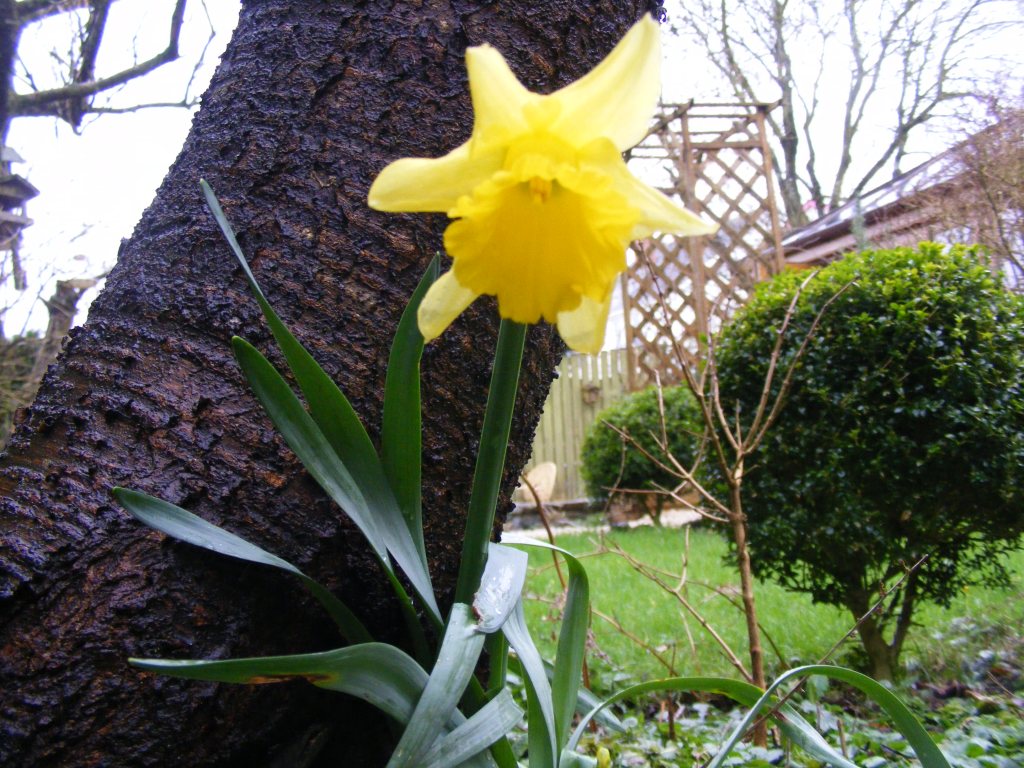
The really exciting news is that I will be joining the ranks of the vaccinated next week and just to prove that spring it on the way, this lone daffodil has been bravely blooming in my garden for the past couple of weeks.
Regular readers will know that I am distinctly devoid of family members, apart from my five descendants and two in-law descendants. No siblings, no first cousins and only six second cousins, all on the same side of the family. So, a third cousin (with whom I share great great grandparents) counts as practically my closest relative. Since I was a child, thanks to my great aunt and the family photo album, I was aware of my great grandmother Clara’s four sisters and brother. I was also aware of the children of those siblings, my grandmother and great aunt’s cousins. I had photographs of most of them too. This generation was born between 1878 and 1895.
About five years ago, I decided to trace these cousins of my grandmother further forward to the present day. Imagine my surprise and excitement, when I discovered, in my own generation, a third cousin who had been in my class at primary school. (I should point out this was not in some small ancestral village. We were living in a highly populated area, each having a potential of about twenty schools that we could have gone to). My mother was certainly not aware that my classmate was the granddaughter of the first world war soldier whose image looked out of the pages of our photo album.
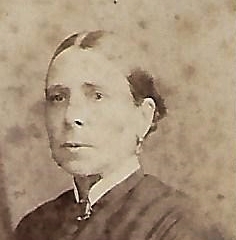
Mary Archer Dawson née Bowyer our mutual great great great grandmother
Although I did not keep in contact with any of my primary school peers into adulthood, about ten years ago a few of us did get together via Friends Reunited. We formed a Facebook Group and some of us met in person from time to time. I attempted to make contact with my newly discovered third cousin but wasn’t able to do so.
Then, this weekend, one of our Facebook Group organised a Zoom gathering. By the process of osmosis, the word spread and there before me was my third cousin! Fortunately, she was as excited as I was.
There are some interesting events coming up. On 9th February I am taking part in the Institute of Heraldic and Genealogical Studies Diamond Event. I shall be giving suggestions for those who are wanting to write their own memories and sharing reminiscences of the period 1946-1969. There may still be spaces if you want to book. Then, in March, I shall be joining my down-under friends for the virtual Family History Down Under Conference, giving two presentations. In between I am criss-crossing the country with talks to local societies as well as running my own. Of course there are also the excitements of RootsTechConnect to enjoy this month.
I am still on a book selling mission. I had to repurpose two book boxes in order to send birthday presents to my descendants. This means I now have a pile of loose books looking untidy. So, if you were thinking of buying a copy of any of my books from me, now might be a good time. Just in time for Valentine’s presents! On the topic of selling, Martha is also selling some of her beautiful craft items (if privacy settings prevent that link from working, take a look at the post I shared on my Facebook page). I think Edward may be going to benefit from the proceeds.
I regularly receive catalogues from a seller of old documents and paper ephemera. This week, one of the items on offer was a Devon based, late nineteenth century chemist’s notebook, giving recipes for various medicines and ‘cures’. It was not what you might call cheap. Using the fact that I have been giving wall-to-wall Zoom talks over the past couple of weeks, including a voice damaging seven in five days, as justification, I parted with my hard-earned cash. I am now eagerly awaiting the postman. Said postman is officially a star. Today he successfully delivered a missive addressed to ‘Mistress Agnes, c/o Dr J Few, Buckland Brewer, N. Devon’. Given that about 1200 people live in Buckland Brewer, I thought that that was pretty impressive.
In other news, I have just been asked to share the story of my Thockrington One-Place Study to a Northumbrian Group. I am looking forward to this challenge.
Last but definitely not least, thank you to everyone who sponsored Martha and I for our Move for Mind challenge we hit our modest exercise and fund raising targets.
Well, I am certainly not going to be bored. I have Zoom presentations coming out of my ears, with five to deliver in three days this week, as well as some to listen to. The first of my own series starts tonight and I will be encouraging people to write their life stories, a great lockdown project. You can attend just this single talk if you wish but you need to hurry up and book! Having not, from choice, done any professional family history research for a while, recently, I had two requests on the same day. Obviously, I am limited to what I can do from home but I already have one happy customer and I am waiting for a marriage certificate before I can make progress on the other.
On the presentation front, I have had to climb the learning curve that is recording audio on to a power point. I thought I had cracked it as I worked my way through a whole presentation, doing the whole replaying and re-recording bit. The latter was a frequent occurrence as it is winter croaky voice season. It was going pretty well I thought, although I don’t sound my usual relaxed self, it is more like I am still getting used to auto-cue. Even though I am not using a script, it sounds as though I am, maybe because I am trying to enunciate clearly. At least it has slowed me down a bit. The problem came when I hit save. I was drastically revamping a previous presentation and it was in an old version of power point, which, wait for it, doesn’t support sound! By then it was too late to save as the new format. In the end there was nothing for it but to start all over again. It didn’t even seem to work copying the slides into a new format document, so it was definitely back to the drawing board on all fronts.
I am enjoying compiling the family history albums for my grandchildren. Probably more fun for me than it will be for them but I can hope.
As to the whole pre-diabetic thing. I’ve now consumed my Christmas cake (ok cakes), one of my all-time favourite foods and cooked before the diagnosis. Now I guess I take it seriously. The fitness watch is still enough of a novelty to get me out of the chair. I wore it for a couple of days doing just what I would normally do to see how little I did. Bearing in mind I am not leaving home at the moment, I was expecting it to be about 200 steps a day and was surprised to find it was around 1600. Encouraged by Martha, we signed up for a challenge involving us in walking 100 miles a month. After a bit of adjustment, we worked out that 6666 steps a day would do it and I’ve managed to stick to it since January 2nd. I am a bit annoyed that we didn’t realise how many it was in time for 1st January but hey ho. It probably sounds pathetic to my fitness fiend friends but I am consoling myself with the fact that it is four times what I was doing. As this has to be accomplished in my tiny house it does involve quite a bit of jogging on the spot. I tend to make up the numbers in the evening during the adverts on commercial television – a bit of an incentive to watch BBC! You have no idea quite how many adverts Dancing on Ice has until you try this. The challenge does involve sponsorship and thanks to lovely friends Martha and I are nearly at our modest joint target. Of course, it would be great if we smashed it. If anyone would like to donate to the mental health charity Mind, particularly relevant at the moment, here are the links for myself and Martha.
Any minute now the watch will buzz to remind me that I haven’t moved yet today so I’d better get going.
Pictures of jogging would not be pretty sight so here are some flowers to cheer everyone up instead.
Last year I posted a round up of the 2010s and looked forward to what the 2020s might bring. The first year of the 2020s has certainly brought us rather more than any of us might have bargained for but in the spirit of new beginnings, I thought I would assess my progress towards my ambitions.
Family. I hoped I would be able to spend more time with mine. Well, COVID certainly stood that one on the head and this does not look set to change for the next few months at least.
Home and Community. My bedroom has been decorated this year and thanks to lockdown, there has been some progress in the garden but I might have expected to achieve more in this regard. My community input has been limited to organising weekly Zoom coffee mornings and monthly online History Group meetings.
Work. This has altered to take account of 2020 circumstances. I predicted that I would be doing more online. I could not have imagined how much, or how quickly. My speaking engagements went online. I set up my own course of lectures and have a lovely, friendly group attending these, with room to add a few more if you are interested. I have also spoken to many groups across the country and indeed the world, most of these would not have taken place in person.
Travel. Clearly, 2020 has not been the year to achieve travel ambitions but we did sneak off to the wilds of Northumberland and there is always next year.
Writing. I published my second novel and one of two planned booklets. Marketing has been tricky but book sales have held up surprisingly well. I have written up some more family history stories and was thrilled to win a short story competition.
Leisure. I have had a few piano lessons, mostly virtually, I have definitely improved and can manage a few recognisable tunes, albeit a bit slowly. I also don’t look at the keys all the time anymore. Learning Cornish got no further than buying some books and I still haven’t got back to my spinning.
Family history. All-consuming rather than leisure, so it rates its own category. The highlight in this respect has to be my Certificate of Recognition from the Society of Genealogists. I have added a few new ancestors to the tree but unsurprisingly, my three major brick walls remain. I have found myself as the chair of Devon Family History Society, which is an interesting challenge. I hoped I would inspire my descendants with a sense of their past and I do have plans in that direction.
Health. Not so good here and I have added an unidentified allergy and pre-diabetes to my list of ailments. In a vain attempt to knock the ‘pre-diabetes’ on the head, last week I bought a fitness watch. It seems that that isn’t enough, you actually have to do stuff as well. The first challenge was to get it to talk to my phone. That’s ok, there are instructions. Line one, ‘wear the product on the waist’. Really? I know I need to lose a few pounds but no way can I get this round my waist. Ah. It seems I am the victim of someone writing instructions using Google translate, for ‘waist’ read ‘wrist’. After two days, I managed to get the watch and the phone to communicate. Apparently, I get credit for ticking off five healthy habits per day. One is reading! I have so got this. Others are getting up early, check. Having breakfast, check. Going to bed early, check. This is a cinch. Ah. The fifth one is movement. Well, I move, probably not enough but I’ll give it a go. I am fascinated that it will tell me how much I sleep. Ok. So, I was expecting it to reveal that I don’t sleep much but 0%, really? Mind you I was allegedly awake 0% of the night too. Perhaps I haven’t quite got this sussed yet. Added later – it turns out you have to be asleep for four hours for it to realise that this is your night time and you are not just dozing off in front of the fire and register. I almost never have four hours of unbroken sleep, so it won’t be giving me statistics any time soon.
Here’s to a positive start to 2021. Let’s take care of each other and ourselves.
It started in the east this thing as plague, as cholera, had before it. It crept onto our television screens before last Christmas, lost in the news of Brexit posturings and snap general elections. In any case it was not about us. This was distant, sad maybe but it was happening somewhere else, to them and not to those we knew. We carried on with our lives as the insidious wave swept inexorably closer. By January, the infection reached our shores, brought back by travellers returning from overseas.
Then it began. It passed from one to another, reaching out. Survival instinct set in and showed itself in the scramble for toilet rolls, for pasta, for hand sanitiser and soap. We began to be afraid. At first perhaps a salacious, voyeuristic fear, still believing it couldn’t be, wouldn’t be, our friends, our family, ourselves who died. We were told that it was older people, those with underlying health conditions who were at risk but some of us were older, some of us were sick. We grieved for Italy in a way that perhaps we had not for Wuhan. Inexplicable this distinction but we’d holidayed in Italy, we knew people who knew people. It was still not about us but we began to believe that it could be.
Deaths were announced, in other cities, other towns. Deaths of younger people, healthy people. We were not immune. Yet still, for most, the impact was no more than shopping shortages, or small children being sad that the caretaker no longer high-fived them on the way into school. Then school children who had been on half-term skiing trips brought it to our county, our neighbourhood. We watched the lines on the graph rising ever more steeply.
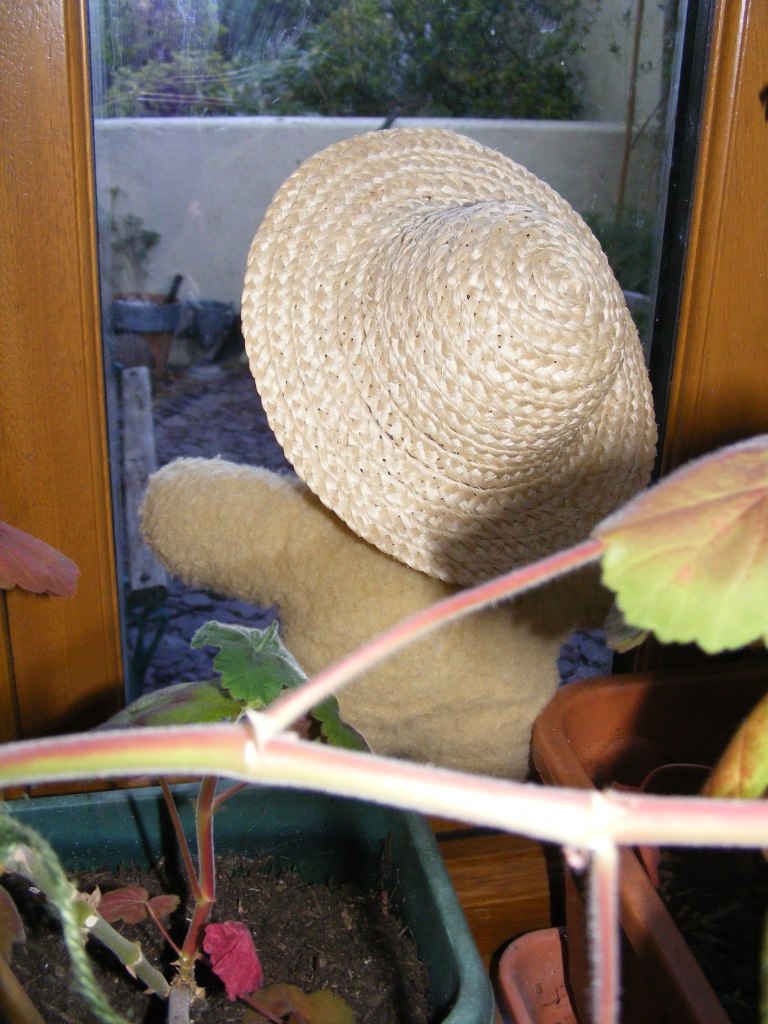
As the number of cases grew, a numbing terror, a paralysing grief for the life we had known, a life we would never know again. By March, people who were able, or whose fear allowed them to do no other, began to hide in their homes. Then this became a requirement. Worried owners fastened the doors on shops and businesses, fearing that it might be a final closure. Children stayed at home, their parents forced into the role of educators, whilst teachers hastened to provide materials to support their pupils at a distance. Other teachers continued to work, foregoing their Easter holidays, risking their health and sometimes their sanity, to provide care for vulnerable children and the children of key workers. Mournful teddies peered from windows, hoping to catch the eye of a passing child, out for a fleeting moment, their exercise circumscribed by geography, by expediency. Rainbows of hope adorned fences and walls. Aimlessly they stretched across the smeared window-panes, symbols of an optimism that we did not really feel.
Many feared for their jobs, wondered how the next bills might be paid. Workers were furloughed as the government promised help, throwing money at the problem. For some this was a relief, yet others fell through this hastily cast net. We were told to keep our social distance. Suddenly, everyone understood just how close, how far, two metres might be. We became physically isolated from our families, our friends, our neighbours.
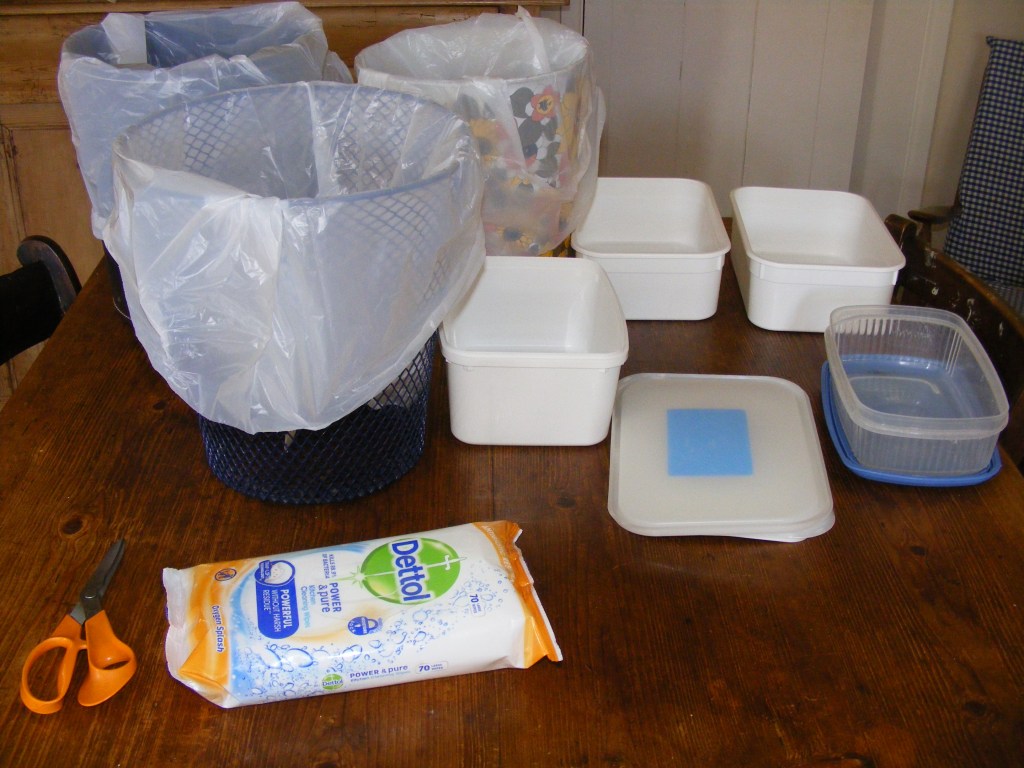
There was a frantic struggle to secure a supermarket delivery, if we did not go out would we be safe? Yet when those deliveries arrived there was the dread that somehow the unseen enemy had crept in unawares on our box of cereal or our tin of beans. People spent hours scanning websites or waiting in telephone queues, trying to get on the ‘vulnerable’ list that would entitle them to priority deliveries. Frenetically, we wiped our groceries, sanitised surfaces and washed our hands. Suddenly, every day was a birthday as we sang the song to ensure we had scrubbed away our infection and our guilt.
Obsessively, we tuned in to the daily government briefings, looking for guidance, looking for hope. We scrolled through social media, reading the horror stories because we could do no other. Seeing the breakfast TV News presenters ‘socially distancing’, sitting at opposite ends of the sofa, brought things home. This was real. This was now. Yes, this was happening to us. It ripped through our care homes, taking our most vulnerable first. Bewildered elderly folk died without the comfort of their families, excluded in a failed attempt to keep the virus at bay.
People spoke of waves of anguish, of incapacitating fear, of inability to concentrate, of not being able to settle or get things done. Here was something that we could not control. There were tales of overburdened hospitals. The aging and the unwell were encouraged to write DNRs so, if they were hospitalised, the decision as to who would, or would not, be given scarce ventilators would be taken out of the hands of the medical professionals. Sobbing health workers appeared on our screens, their skin bruised by goggles and masks, exhaustion etched on their faces and unseen scars branding their minds. They begged for PPE to protect them from this horror. Nightingale hospitals sprung up at amazing speed, designed to help cope with the strain on hospital beds. Retired medical professionals and the nearly qualified were pressed into service.
We lost track of what day it was, like a perpetual bank holiday but our weeks were punctuated by Thursdays, when at 8pm we gathered and we clapped and we cheered. Bells rang and saucepan lids clattered as we thanked those who nursed, who cared, who despaired. We did it for them but we did it for ourselves, buried in our impotence, in our guilt for letting others take the burden.
It was not all bad news. Captain Tom Moore, in his hundredth year, circled his garden on his walking frame. Endlessly walking, lap upon lap. He caught the imagination of a jaded public, of a grieving world seeking the good news story, a reprieve from reports of the soaring death toll. Donations flooded in, over £32 million but why did an old man have to walk and walk and walk again to raise money for a health service that successive governments have bled dry? With the morning came the irrepressible Joe Wicks. We jumped and stretched and let the aching muscles take our minds from darker thoughts for space. Children who would normally receive free school meals were left hungry at home. It took a young footballer, Marcus Rashford, to cajole the government into action, ensuring that our children were fed and another hero of the pandemic emerged.
There were too the villains of the piece. Dominic Cummings drove to Barnard Castle ‘to test his eyesight’, making a nonsense of government restrictions; their exhortation to ‘stay at home, protect the NHS, save lives’. Anger fuelled our fear, we were a rudderless ship and emphatically we were not all in this together.
Gradually, resilience and determination begin to surface. We created our own new normal. Interaction circumscribed by our screens, our diaries began to fill with online events. We sported lockdown hair styles of increasing shagginess; some took matters into their own hands and inexpert hair-cuts appeared on our screens. A few took the idea of DIY to extremes and self-administered dental treatment. Those of us fortunate enough to have outside spaces dug the soil and squeezed joy from the nesting birds, the cleaner air and the silence, as traffic dwindled to a trickle. In all this awfulness, the environment was a victor. The birds still sang. Whilst some people baked soughdough bread or learned new crafts, others remained paralysed, fraught by memories a life that was no longer ours. We were told we were past the peak. Children began to return to classrooms.
Summer. Outside our bubble, our safe cocoon, in the heat and the terror, the world went mad. Democracy was thrown to the storm. The compassionate joined in outrage as another black life was lost to intolerance and hate. Then they gathered, coming together in their anger and their fear. The crowds formed because black lives do matter but the seeds of infection lay lurking amongst those desperate throngs, waiting for the unwary.
Small sighs of relief as numbers began to diminish. We donned our masks, the latest fashion accessory and ‘ate out to help out’, supporting the hospitality sector that had been so badly hit. Folk crowded to beaches, to areas that had thus far escaped from the worst impact of the virus. Relief that struggling business were being supported was accompanied by the fear that those city-dwelling tourists that were a life blood were, at the same time, bringing with them disease and death.
With public examinations cancelled, students received their teachers’ predicted grades. Another furore, was this fair, was it just? Schools and colleges opened their doors and gradually, relentlessly, the graphs that we studied so avidly began to rise once again. Universities restricted students to the corridors of their halls of residence in history’s strangest freshers’ week.
November and another lockdown, slightly less restrictive than that of the spring but now it was winter, we were weary, exhausted, drained. Plumbing the depths of our mental reserves, we sighed and reconciled ourselves to the inevitable, yet were mindful that there were those who had nothing left to draw upon. The virus brought not only its own casualties but other victims, those whose physical and mental health had been damaged beyond repair as a by-product of this year.
Then a glimmer at the end of the endless tunnel. News that a vaccine had been approved for use. The oldest amongst us stood by to receive it before the end of the year. The prospect of Christmas shone out, a beacon of hope. We could mix in a limited way, a reward for all that we had endured. The creeping worm of doubt, reverberated from the mouths of the scientists, the medics. Yes, we could but could was not should. We could but they would rather we didn’t. Many planned solitary celebrations that, although sad, would at least be safe. Others clung to the opportunity to see long-estranged family. Getting together would be a salve to their bruised and battered equilibrium.
As we fought back with the administering of the first vaccines, the virus did not lie sleeping. It retaliated with a mutation, more virulent, more terrifying. The promised comforting warmth of Christmas interaction was ripped from us. A necessary but devastating precaution. We dismantled our Christmas plans, unpacked our suitcases and wondered what to do with 24lb turkeys. Daubed ‘Plague Island’, Britain was shunned by its neighbours as Europe closed its borders. Thousands of lorry drivers were stranded on Kent’s roads and there were fears that our food supplies would be compromised. Tiers were tightened and more people were set to enter lockdown once Christmas was over. All this, interlaced with a Brexit deal that nobody, be they leavers or remainers, voted for.
Jupiter and Saturn aligned in what some saw as a welcoming echo of the Christmas star. Would the more superstitious regard it as being more akin to the comets that were in past times harbingers of disaster?
This was the year when every email, every virtual meeting, signed off with ‘take care’ or ‘stay safe’. A fruitless platitude but all that we could utter in our impotence. As 2021 dawns, with the vaccine on the horizon, we hope for better things, believing, trusting, that they could hardly be worse. When this is over, whatever over will mean, will we speak of ‘before’, as earlier generations spoke of ‘before the war’? For us all, whatever happens, 2020 has been a life-changing watershed; we and the world, will never be the same. So ‘take care’, ‘stay safe’, be kind and be hopeful.
As I haven’t done an ‘advent calendar’ on my blog this December, I thought I’d share my top fiction reads of the year. I have read seventy novels in 2020. With a week to go I might manage a couple more; this is about the same as in a ‘normal’ year. I know some people’s reading habits have changed in favour of ‘feel-good’ books during the pandemic but I have stuck to my usual fare. There is a bit of a witchy theme, perhaps because I was writing about witches myself at the time. These books do obviously reflect my own interests, that’s why they are my top ten but I hope you might be tempted to give some of them a try. I decided not to rank them 1-10, so here they are in alphabetical order of author. I have deliberately only provided links to the authors’ own websites, where I can find them. As an author, I know how important it is to encourage you to buy directly from authors, publishers or independent booksellers, rather than from major online retailers but if you want e-reader versions, or if you really must, you can find them there too.
I am a great fan of genealogical mysteries and Nathan is one of the best exponents of this genre. During the first lockdown he created a choose your own adventure for his long-running character Morton Farrier. This is a work of genius, as it is read online and you can follow Morton’s research via links to genuine documents and websites. I can only imagine how much effort it took to construct the story and create all the conceivable choices. I loved the topical references as Morton and his family struggled with food shortages and virus restrictions. Even better, you can read it for free. If you enjoy this and Nathan’s books are new to you, then there are plenty more Moreton adventures for you to enjoy.
I do prefer Phillippa Gregory’s books about ‘ordinary’ people to those whose main characters are royalty and this is one such. It is the story of Alinor, a wise woman who lives in 1648, when England is in the grips of the Civil War. At a time of turmoil, neighbour begins to turn upon neighbour and Alinor is in the line of fire. As you’d expect, it is well-researched and well-written. This is the first of a series and I am looking forward to the sequel.
Killing the Girl – Elizabeth Hall
An absorbing psychological thriller in which the lead character, Carol, is forced to revisit incidents from her past. It is difficult to say very much without spoilers but I was immediately drawn into the story. Some of it is set in a realistic 1970.
The Familiars – Stacey Halls
I usually try to avoid ‘Best Sellers’ that everyone will have heard of but I couldn’t ignore this. Set as it is against a background of the Pendle witch trials, this was likely to hold my interest. Stacey Halls has taken real people as her main characters and has created a plausible story about Fleetwood and Alice, who come from different walks of life.
This book was previously published as The Lost Book of Salem. It is set during the Salem witch trials, with a more recent strand. In 1991, Connie comes across the physic book whilst researching for a PhD and sets out to discover more about the life of Deliverance Dane. In the process, the reader is given an insight into the world of late C20th American academia.
A Kind of Spark – Elle McNicholl
A neurodivergent lead character, historical witchcraft and a struggle for acceptance. This had to be on the list. A coming of age story in which Addie comes to terms with who she is and how others perceive her. Elle McNicholl has used her own experience of neurodivergence to craft a compelling novel, which draws links between past instances of intolerance and bullying and Addie’s own life. Definitely a must read for anyone who wants to understand the overwhelming nature of neurodivergence and to rejoice in Addie personal triumphs.
Another of my favourite authors of genealogical mysteries. This is the latest of a series of books featuring genealogical sleuth Esme Quentin. Set in North Devon and featuring, yes, you’ve guessed it, more witches, as well as a curse and a mystery to uncover. Wendy’s, or rather Esme’s, genealogical research is believable and I enjoy learning more about Esme with each book Wendy writes. Although this is one of a series, you don’t need to have read the others but having read this one, you will probably want to.
More seventeenth century (inevitable really). Sara Reed has used her academic research about the history of early modern midwifery and crafted a fascinating account of Lucie Smith, who practices her craft of midwifery as London begins to be gripped by the plague. I like my historical novels to be rooted in sound research and this certainly is. A fascinating story.
A story set in my home village and based on real nineteenth century events. Liz has set her characters against a carefully researched background and I was quickly absorbed in the story of the Mitchell children. A beautiful evocation of the Devon landscape and a wonderfully detailed portrayal of Victorian rural poverty. It is difficult to write a convincing book for adults with children as the main characters but Liz has achieved this with admirable skill.
Who’s There – Karena Swan
A compelling read this one and a little different from the historical novel fare. We follow the story of Arnold, a young man with learning difficulties who is taking his first steps towards independence. Sadly, there are always those who seek to exploit the vulnerable and the plot takes a sinister turn. The characters were convincing and portrayed with empathy. A gripping recounting of how terrifyingly easy it is to become a victim.





 The History Interpreter - Janet Few