For those who don’t know (and if you don’t, you’ve not been reading my blog long enough) RootsTech is the largest genealogical event in the world, with thousands of people attending live in Salt Lake City and many more taking part virtually from all parts of the globe. Many of the sessions are recorded and you can access these for free here. These remain online after the event, so you can watch presentations from this year and previous years at your leisure. This is a brilliant opportunity to learn more about research methods, sources, genealogy related technology, DNA, social history and much more. There really is something for everyone. Including a few talks from me!
I started the day with a 5am talk from UK researcher Davina Wilcock ‘Considering Location When Researching Your Ancestors’, a great introduction to the importance of place and as a One-Place studier, who am I to argue. Then at 6.30am my own pre-recorded session ‘Timelines for Genealogy; a powerful research tool’ went live. Excruciating as it is to listen to oneself, I did, thinking that I could comment and answer any questions in the chat. I could see other people’s comments but my screen lacked the blue ‘join chat’ button that others had.
At 3pm I had a clash, so I started with ‘The GPS in Practice: Examples of Reasonably Exhaustive Research’ with Angela Packer McGhie. The speaker gave worked examples of verifying evidence and analysing the reliability of records, defining reasonably exhaustive research. I appreciated that an English example was included. A very minor niggle, the speaker did refer to Bolton le Moor as a county. British geographical jurisdictions are confusing, particularly for those overseas and getting confused about them is common. She needs my session from 2025 ‘Where am I?: Are You Searching in the Right Place?!
Then it was back to catch up with ‘Poor, Pauper, or Pragmatic? Victorian Burial and Identity: interments in Philips Park Cemetery in Manchester 1866-1900’ with Dr Micala Hulme and I finally solved the lack of a join chat button. It seemed it was because my Family Search profile lacked my date of birth. It would have been handy to have been warned of this somewhere obvious. Interestingly, my own talk is suggested as a related talk alongside Micala’s. It was an interesting overview of Victorian burial practices with Manchester as a case study.
The first part of Diahan Southard’s DNA Swim School was next on my list. The session was very well presented and interesting but not relevant to me as she was focussing on looking for a 2x great grandparent. I don’t have any missing 2x great grandparents and only have one missing 3x great grandparent. The use of ancestral journeys, which she talked us through, is also less helpful to someone with 100% English ancestry. Nontheless, Diahan is a very entertaining and knowledgeable speaker.
Then I listened to a panel discussing Guidelines for the Responsible Use of Artificial Intelligence (AI) in Genealogy in 2026. The panel members and others are part of a Coalition for Responsible AI in Genealogy, who advocate for accuracy, transparency and privacy. A very balanced discussion, with the take away ‘Don’t let AI make the final decision for you’. Definitely a must watch. There were six more evening sessions on my schedule for day 1 but I decided to swap for Crufts and watch those later, one of the great positives of RootsTech. More tomorrow!
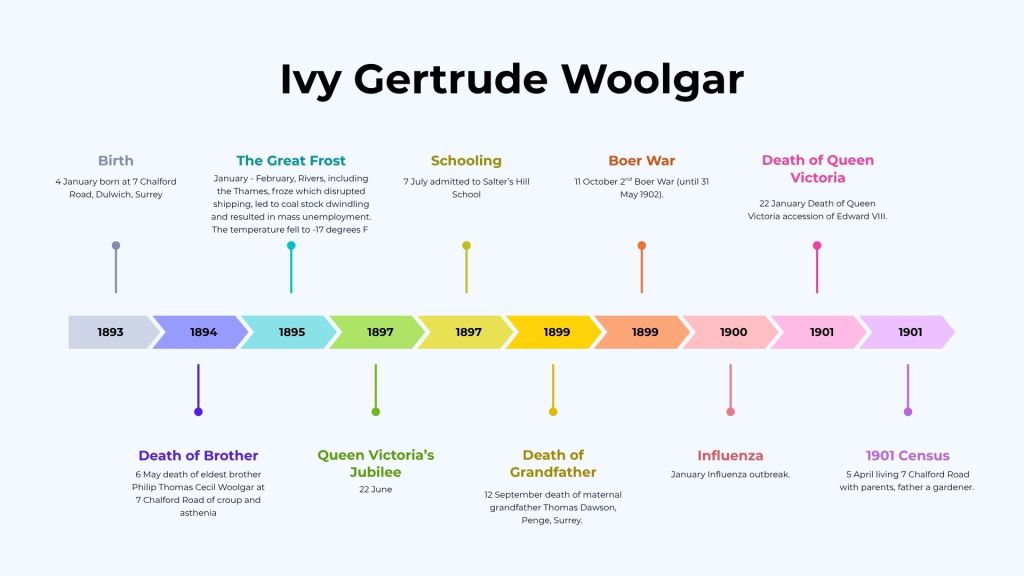
Image created using Canva
 The History Interpreter - Janet Few