Seasonal Musing and some Exciting News

Sorry for the long silence dear readers. It certainly hasn’t been because I have been idle. Although I am continuing to stay at home, I have been around the world virtually, Zooming into homes across the planet. I am pleased to announce that I have enough support to continue to present my ‘History Interpreter Online’ series of Zoom family and social history talks. This is deliberately a small group so we maintain a friendly, chatty atmosphere but we do have room for a few more, either as occasional visitors or ‘season ticket’ holders.

I’ll start with the exciting news. I have had the great honour of being awarded a certificate of achievement by the Society of Genealogists. These are awarded annually ‘in recognition of efforts and activities that have made some exceptional contribution to genealogy to the benefit of anyone wishing to study family history’. I know I am in some very illustrious company, so it did come as a bit of a shock. The precise citation is, ‘For long-term services to family and local history and encouraging the involvement of young people in history and heritage.’ The ‘long-term’ bit makes me feel very old but I suppose I have been seriously researching my family for 43 years so I guess it is justified! I am looking forward to the face-to-face presentation, which can hopefully take place in August next year.

Despite the ‘long-term’ research I have managed to add 9x 10x and 11x great grandparents to a branch of my tree this week so there’s always something new to discover.

Of course, it is impossible to ignore the fact that, in general, things have been on the gloomy side. Christmas, as expected, will be different this year. I had planned to visit the descendants right at the end of the school holidays, giving family members who are in school as much time as possible to develop any nasties they may have picked up. The freedom that we have to visit for five days around Christmas Day itself just doesn’t work for me, especially as we would have a 600 mile round trip to make and the world and his wife will all be travelling on the same days. It is a very long way to go to wave to your nearest and dearest from the other side of a chilly field, which is what it would mean if we went in early January. Although I would go to the ends of the earth to see my family, my head says that, having been so careful for nine months, it would be stupid to be reckless now. So, I will, regretfully, continue with my ‘just because I can doesn’t mean I should’ stance and make the most of what technology will allow.

It is, of course, that time of year when not just visiting but also seasonal gift giving is in our thoughts. Many of us are unable or unwilling to visit shops in person at the moment, so we are seeking other alternatives. Living, as I do, a distance from a shopping centre, relying largely on online shopping is the norm, although I do love the atmosphere of the shops at this time of year. I usually try to find a garden centre with displays of decorations. I am planning a swift visit to acquire a Christmas Tree but shan’t be lingering any longer than necessary. The added consideration this year is that gift purchases will need to be sent directly to the recipients or be easily postable. I am hoping to patronise as many small independent online shops and sellers as I can. If I was more talented, I would be hand-making gifts. I am also hoping that folk may want to relieve me of a few more books. I am happy to gift wrap these and send them straight to the recipient if you are looking for gift ideas. My fictional offerings are described here and for non-fiction you need to look here. I don’t charge for postage to the UK. Or you could gift a season ticket to my talks!

Zero progress on a potential new novel I’m afraid. My writing has been devoted to finishing a new course for Pharos and an article for Who Do You Think You Are? Magazine, due out next year.

The next thing to look forward to will be getting the historic decorations out of the loft.

Historical Novels – some thoughts

Next week I am co-hosting a themed #Devonbookhour on Twitter, when we will be focussing on historical novels, with a special emphasis on those set in Devon and/or written by Devon writers. This begs several questions. Firstly, what constitutes an historical novel? There are probably as many definitions as there are readers of this genre. Clearly some proportion of the book has to be set in the past but how much of the book and how far in the past? Time-slip or dual time-line novels are popular; I’ve written one!  I do class mine as an historical novel and in my case 75% is set in the 1600s, with the remainder in a somewhat alternative version of 2020. My own opinion and I know that others will disagree, is that more than half needs to historical for it to be an historical novel. What then is history? The Historical Novel Society stipulate that books for review should be set at least fifty years ago. I think most of us struggle to accept anything that is within our lifetimes as ‘historical’; I am just coming around to considering books set in the 1960s and 1970s, that were written more recently, as historical. There are of course many books that are set in what is now the past but are emphatically not historical novels because they were contemporary when they were written.

Historical novels come in many guises and all are valid in their own way. There are those that seem to have been written as historical novels in order to justify the swashbuckling pirate type and a woman in a corset on the cover. Sometimes there is little evidence of historical research and the plot, frequently a romance, would have worked equally well in the present. I am not intending to be disparaging here, this is a hugely popular and highly marketable, version of the historical novel, even though it would not be my personal preference.

Then there are the immaculately researched historical novels, where the historical setting is intrinsic to the plot. This category can be sub-divided into those that feature famous people, frequently royalty and those whose main characters are purely fictional. In this respect, my own books are in a minority, as they tell the true stories of real but little-known people.

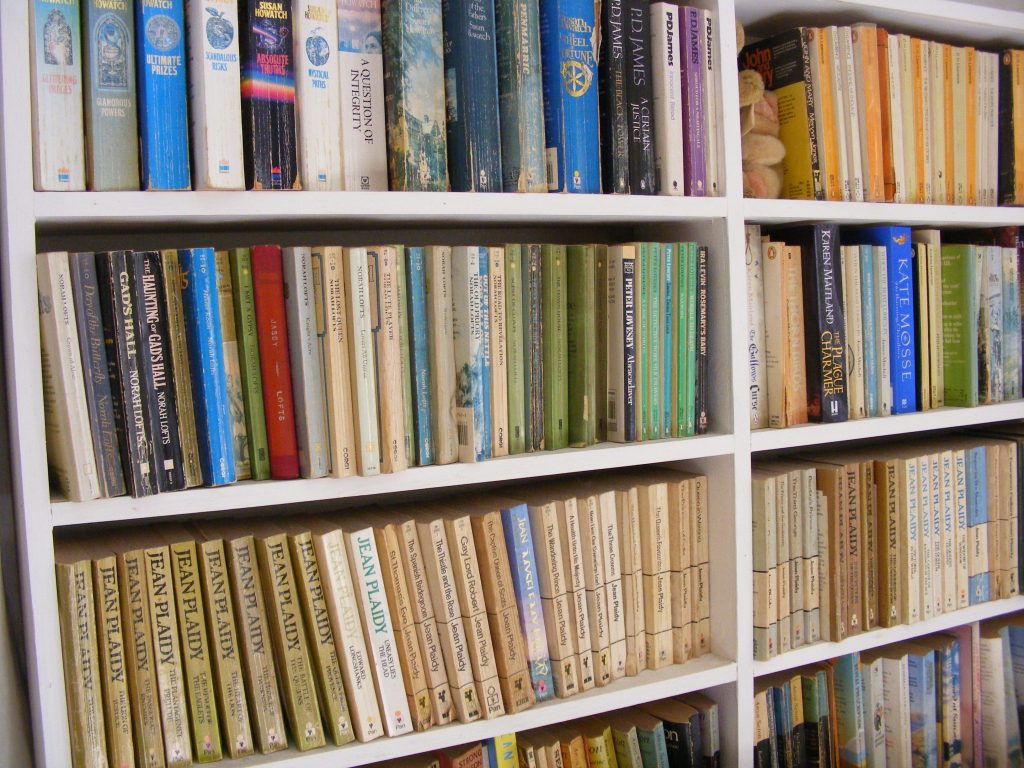
Why do people read historical fiction? Is it to learn more about the past in a digestible way, or is it because they are fascinated by history, or both? My own love of historical fiction and history blossomed concurrently. I can tell you exactly when my historical novel journey began and it did not grow out of reading children’s historical novels; I came to the likes of Rosemary Sutcliff and Cynthia Harnett as an adult. At the age of eleven I watched the film of Dragonwyck, probably on a wet Sunday afternoon, on a flickering black and white TV. I would probably struggle to sit through it now but somehow it spoke to me. I was already an avid reader, consuming up to five books a day in the school holidays. It was a diet of Enid Blyton, Malcolm Saville, Monica Dickens, Elinor M Brent-Dyer, Enid Blyton, Ruby Ferguson, The Pullen-Thompson sisters and yet more Enid Blyton? I have no idea how I realised that Dragonwyck was a book but realise I did and I quickly worked my way though Anya Seton’s entire output. I do still reread these. I then turned to Jean Plaidy. I have kept a shelf full of her books but I haven’t read one for decades. Then Norah Lofts, Cynthia Harrod-Eagles, Daphne du Maurier R.F. Delderfield and Susan Howatch were added to the repertoire. Next, inspired by the first Poldark series (despite the obvious attractions of Aiden Turner – he of the unrealistic scything – I never got into the remake) I read Winston Graham’s novels. It was fortunate that I latched on to such prolific authors. By the time I reached adulthood, I was eagerly awaiting the yearly offerings from E.V. Thompson, followed by Lindsey Davis and Susanna Gregory. I am a bit of a sucker for series, where I can follow the characters from book to book. I was looking forward to more from Ariana Franklin, when sadly, she died. You will also find Barbara Erskine and Phillippa Gregory’s non-royal fiction on my shelves.

In preparation for the Twitter event, I have looked at several ‘Best Historical Novels’ lists and these rarely contain my favourites, several of whom are now considered to be a bit outdated. Here are three such lists and from their combined suggestions I’ve probably only read a dozen.

http://www.listmuse.com/best-historical-novels-time.php

https://www.barnesandnoble.com/blog/50-best-works-revisionist-history-speculative-history-historical-fiction/

https://www.panmacmillan.com/blogs/history/best-historical-fiction-books

I have attempted my own list of authors, rather than specific titles, below. Some rate a place for nostalgic reasons, rather than as a reflection of my current reading habits. I don’t go for a particular time period, my favourites span 2000 years. Although I am happy to read a book set in wartime, I am not so keen on books that focus on the battlefront. The geographical setting is also an attraction for me. I do enjoy reading about places I’ve been. I tend to favour books set in Britain, particular the west country, which is probably why I have read so few on the ‘best’ lists. Strangely, some of the best known and highly revered historical novelists do not feature on my list. I promise I have tried the likes of Hilary Mantel and C J Sansom but just couldn’t get into them. It sounds slightly ridiculous but it is partly their sheer size. Not that I mind the lots of pages thing but I tend to read in bed and believe me you do not want Wolf Hall landing on your nose when you doze off. Perhaps I should try them again as ebooks.

I have yet not mentioned the output of my many author friends, some of whom will be less widely known but whose new books I eagerly await. I do enjoy genealogical fiction and my own Sins as Red as Scarlet has a nod to this. Although these tend to fit better into the genre of crime novels, some have considerable historical content. I have already written about several of my favourites. In fact, if you check my blog archives for December 2016, I singled out an historical novelist for each day of advent.

So here are some authors whose books I have enjoyed, as well as those mentioned above. I have made no attempt at ranking here (I have gone for alphabetical order). I am sure I will have missed some, so sincere apologies if I have offended you by not giving you a mention. It may not be because I didn’t enjoy your book!

Piers Alexander

Rebecca Alexander

Kate Braithwaite

Ruth Downie

Stacey Halls

Paul Marriner

Wendy Percival

Sara Read

Liz Shakespeare

Reay Tannahill

M J Trow

Beth Underdown

Join us on Twitter on Monday 9 November 8.00pm for #Devonbookhour (except it will be an hour and a half!).