Family Stories: some books to get you thinking

Sometimes I review books on my blog. This is one of those occasions. I would like to introduce you to two offerings from The Genealogical Publishing Company, in Maryland.

The first is Roots for Kids: finding your family stories by Susan Provost Beller (2020). I am passionate about involving young people in exploring their history and heritage and I was intrigued to see what this 68 page book had to offer. I even managed to get past the use of the word ‘Kids’ in the title, which I must confess does tend to set my teeth on edge but that does not detract from the content. The author, very sensibly, focusses on family stories, rather than formal genealogy. The book is written by a US author, which means that some of the activities are not so appropriate elsewhere, or need ‘translating’. For example, there is an assumption that the reader will have immigrant ancestors within the genealogical timeframe, which is less likely in a European context. This might mean that it is not an ideal gift to a young person from outside the US but nonetheless there are some excellent suggestions that are universal. For the British reader, it is probably a book to be used as a source of activities for adults to present to a child. The book is enhanced by black and white drawings.

There are suggestions for ways to approach older relatives, a section on surnames and hints for organising information. Despite the rather steep £14.78 UK price tag, this book would be very useful for adults working with young people and hoping to introduce them to genealogy, through the medium of family stories. It is probably best suited to the 8-12 age range.

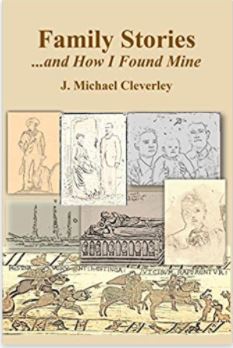
The other book is a substantial volume by J Michael Cleverley, entitled Family Stories and how I found mine. I always recommend that my ‘Writing up your family History’ students read family histories by others, in order to see what they feel might work for them. This book would be particularly useful as it adopts a rather different approach. The author has obviously carried out an enormous amount of research into both his own family and the broader historical context. Spanning 900 years, the author recounts his own family story, setting it firmly within the broader history of the time. Unlike many family histories, the author tends to focus first on the broader history and then introduce the appropriate family story, rather than the more common approach of beginning with the family. This makes this family history a bit different and works very well.

The intrinsic family story is obviously of greatest interest to those who share this ancestry but it is definitely worth a read to find out about the background, which has a broader appeal and as a good example of how a family history might be approached.

The book is accompanied by outline family trees, giving names only. These were a little faint and would have benefited from including some dates and place names. The book includes an impressive bibliography, detailed endnotes and an index; all valuable additions to a family history. Again, this volume attracts a hefty price tag, £36.39, something for a family history society library perhaps.

I was given free copies of these books in return for a frank review.
Seeing double – when family history gets confusing

Since returning from the frozen north, in between wall-to-wall Zooming and another weird allergic reaction incident (see below), I have been revisiting a branch of my daughters’ ancestry. It is so long since I last looked at this family that the documents that I wrote, telling their story and recording my research path and sources, no longer open. Fortunately, I have hard copies, so can retype. My version of this line stops with Thomas and Sarah Kear of St. Briavels in the Forest of Dean, Gloucestershire. Other researchers have extended Thomas’ ancestry further but this was all I was confident of and indeed still is, although I am pretty sure where it goes next.

Newland Church

Looking again at the evidence, I realised that there were two Thomas and Sarah Kears in St. Briavels and neighbouring Newland, having nine children between them from 1765-1789. The obvious way to distinguish between the two families was to assume that those baptised in St. Briavels were one family and those in Newland were another and certainly this did not lead to biologically impossible families. By now some of you will be wondering if this was in fact all one family, as did I but it was definitely two families; there are two burials for both Thomas and Sarah Kears, all in Newland. God bless them, both Thomases and one Sarah left wills and this sorts t’other from which. One Thomas was a maltster and the other a coal miner. Although both have sons called Thomas, the dates of their baptisms and a property that continues through the family makes it clear that the St. Briavels Thomas and Sarah are the correct ones for my daughters’ line.

Next to look for marriages of Thomas Kears and Sarah …….. . Yes, as expected, there are two, seven years apart, both in Newland, both a year before the baptism of the eldest child and guess what both Sarah’s have the SAME surname – James. Then of course there are the two Thomas Kears baptised in Newland within a month of each other in 1745……… almost certainly neither of which are the one I want!

It is always worth returning to old research. This time I discovered the sad story of a family member who took his own life and was drowned, according to the coroner, ‘asphyxiated by upper dentures’.

Ignore what is below if you are just here for the family history.

Now the weird allergy thing, sorry but some people did ask (never ask, never). Some of you will recall that, earlier in the year, I received free (but unwanted) botox courtesy of an adverse reaction to who knows what. Friday I was happily Zooming away, looking as normal as I ever look. An hour later I went to drink a cup of coffee and realised that my mouth was seriously swollen. Ring 999 said Dr Google. I was reluctant to do this so went for 111 instead. The call handler quickly decided that this was above their pay grade and I was passed to a paramedic who actioned the ‘super-fast, highest priority’, emergency ambulance. I explained the difficulties with finding my house and precise instructions were relayed. By this time, I was sat clutching the emergency epi-pen that I’d been given last time and the paramedic talked me through its use, in case I needed to self-administer it. I was once trained in the application of these things but it was so long ago that I had retained nothing of this potentially helpful information. After half an hour, the paramedic says he will get off the line in case the emergency ambulance needs to ring. I ask how long it might be. ‘Any time now, you are top of the list, as if you are having a heart attack.’ I have packed my emergency ‘going to A & E’ bag. I have arranged back up if I don’t get back in time to host a meeting in the evening and I am sat on the stairs with shoes and coat on and the door open. I debate how bad one has to be to use the emergency epi-pen. I can still breathe and talk, so I am thinking not now but of course once one isn’t breathing …….. After an hour and a half, the ambulance arrives, they’ve been deployed from another area due to volume of calls. Don’t get me wrong, I love the NHS and they do an amazing job in the face of ridiculous underfunding. I am also aware that the downside of living in the middle of nowhere is that emergency services don’t get to you so quickly but an hour and a half for absolute highest priority does seem a tad overdoing it. Just as well I wasn’t having a heart attack.

I was treated in the ambulance for an hour, give oxygen, medication was organised and as I didn’t seem to be getting worse, I was free to go, with strict instructions to seek urgent help if it recurs. Still absolutely no idea what is causing this and this time the rash (which came first last time) developed later and much less severely. Next step will be parting with copious amount of blood to see if they can work out what is going on. Ah well, life is never dull.

Out and About

I have been home for a week and I have reprehensibly left you all in the wilds of Northumberland. So, for the one of you who is wondering what happened next, here goes.

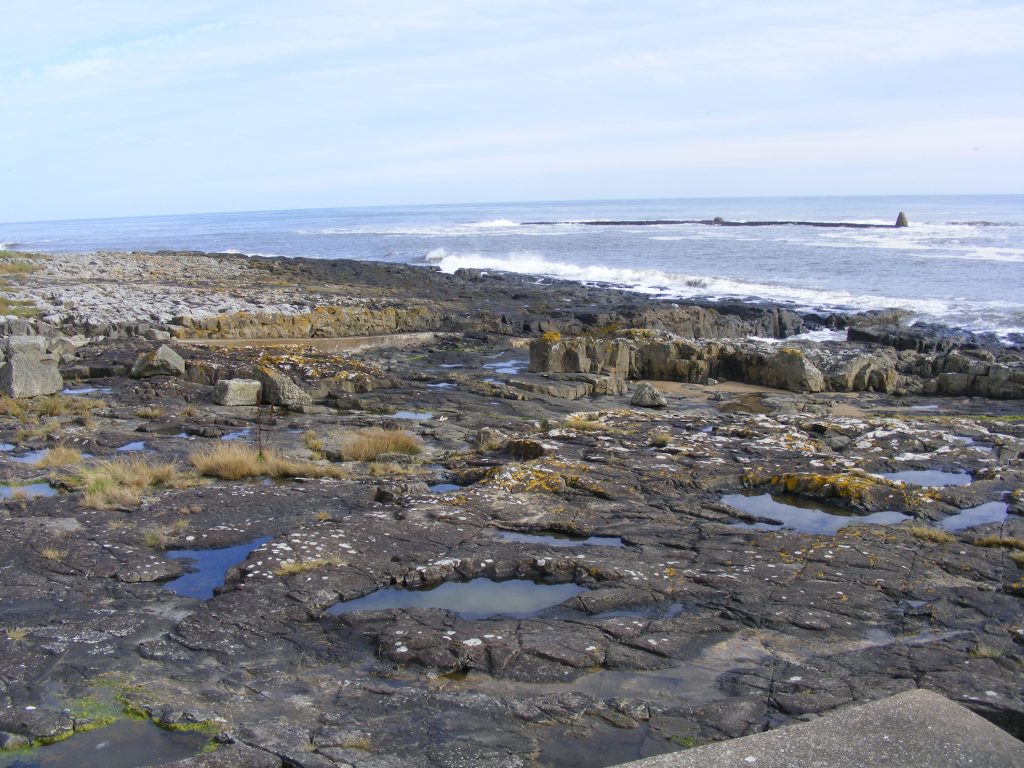
We spent several days grappling with the lack of internet, during which time we managed to get the car fixed. Undeterred, we returned to Craster, to find it marginally less busy than on our previous visit.

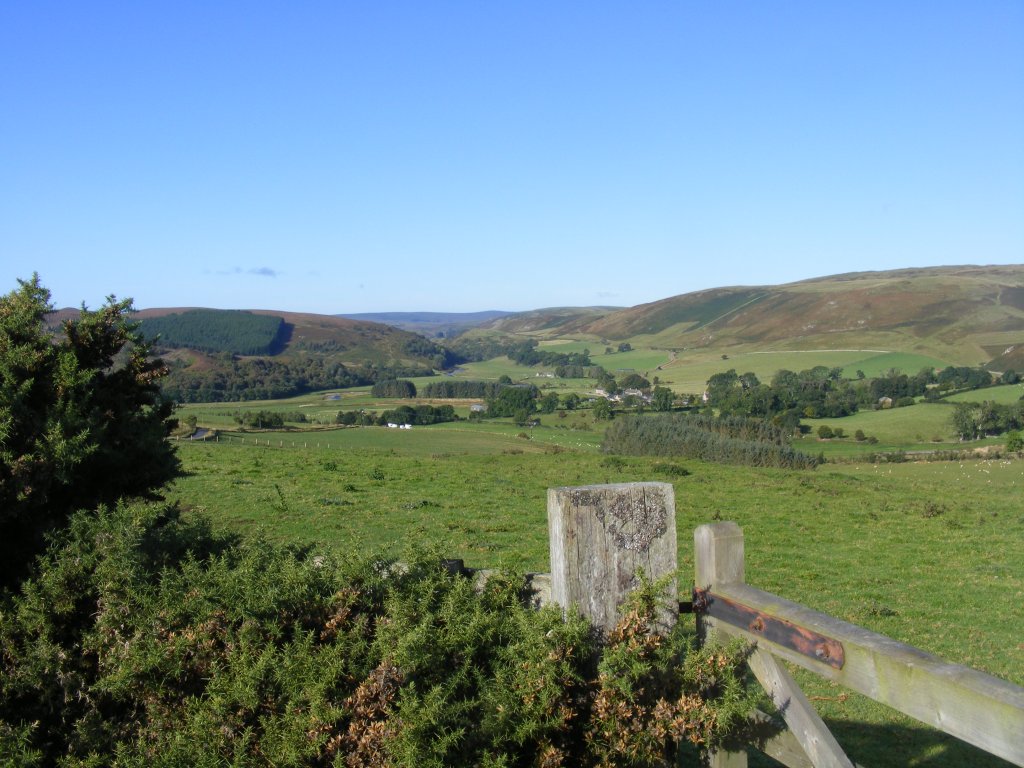
Next, a glorious, sunny day during which we ventured back to the Keilder Forest. On the map, the home of one of my probable ancestors looked to be up yet another non-road. Based on previous experience and mindful that the car was newly fixed, I debated whether or not we should boldly go. My companion was undaunted, so off we set and we were rewarded with a proper road and spectacular countryside. My ancestors certainly knew how to pick the best spots. Talking of maps, these trips always remind me how much I enjoy following routes on OS maps. This is absolutely not the same as navigating, though I have been doing that too, as some of the places on our itinerary are too small to be recognised by the sat-nav.

As the descendant of a Northumbrian shepherd, I was fascinated by these round, stone sheep-pens

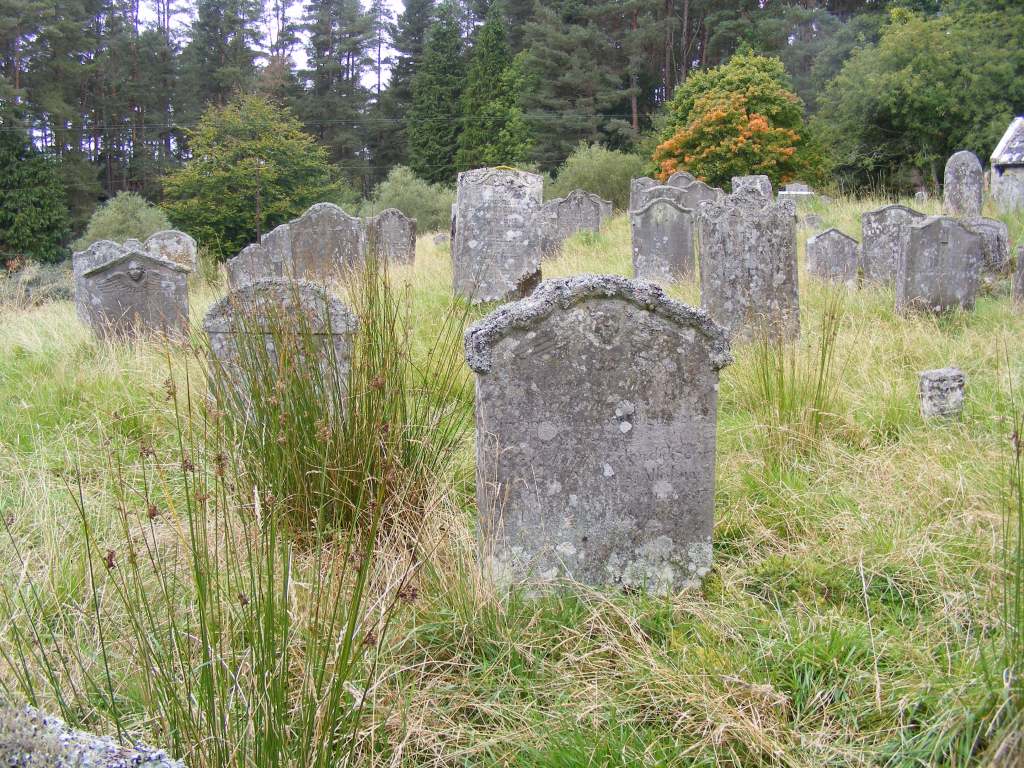
We then returned to my ‘one-place’ to photograph the eighty or so gravestones. Fortunately, these had already been transcribed by the local family history society, so it was just a case of taking the pictures.

Back at the van, we found that there was still no internet, meaning no work could be done, so we went for a walk round the nearby nature reserve. We’ve been to this caravan site several times before but as we habitually approach it from one direction, we had only just discovered this spot a few hundred yards beyond the site entrance. This meant that I could accomplish my Race for Life kilometreage (surely there should be a metric equivalent of mileage). It wasn’t very ‘racy’ but it was done and we got to see a huge flock of greylag geese as a bonus.

Our final day saw us embrace more hunting for ancestral houses. Against my better judgement my companion suggested that we embarked on a journey up a long and bumpy private drive as ‘we are almost there now’. These are occasions when I side down in the footwell and keep everything crossed that the owners are out. No such luck. A 4 x 4 approached from the opposite direction. We put on our best ‘we are stupid tourists’ expressions and were set to blame a faulty sat-nav. This is preferrable to admitting why we are actually there, as this often involves me in producing complete house histories gratis in exchange for a quick photo op. All is well this time as the 4 x 4 owner seemed totally disinterested in why we were up her drive in an area where households are currently not allowed to mix. There have been no follow ups to our adventures, so it seems that our covert photography has not led to us being reported to the local Farm Watch after all. Finally, internet was restored and I began to tackle the 210 emails that had arrived during the outage.

Then home. I was glad we went. It would have been all too easy just to stay at home but it was probably wise to escape briefly. It wasn’t as relaxing as usual and not ideal to be in a COVID hotspot but this was booked pre-COVID. Now I would be quite content to hibernate safely within my own four walls and garden until spring.

More Gravestones, Ancestral Homes and Non-roads

The holiday is over but due to the non-existence of the caravan site’s internet for several days, you think I am still stranded in Northumberland. All this happened a week ago; I promise you will catch up eventually.

What is life like in the frozen north? you ask. Bracing, I think would be an accurate term; windy, a bit drizzly and about 10 degrees. It turns out that the car’s funny noise means it needs a new alternator and that is booked in for four day’s time. Now all we need is for it not to break down completely in the interim. We drive out to the edge of the Keilder Forest for more gravestone hunting of ‘almost certainly my ancestors’ the Newlands and the Corbitts. All I can say is that I have not inherited their hardy gene. They must have been very resilient, trying to eke out a living here 300 years ago. The landscape is inspiring but forsaken and bleak. All I need to do is to find a tiny bit more evidence to confirm that John Hogg really was the son of Robert and I can claim this area as an ancestral home. All the evidence suggests that John son of Robert should be on my family tree but I am waiting for something further (which I may never find) before I ink him in.

Another day and more ancestor hunting. This time though in a town, so slightly more adventurous. I enter the large town churchyard in search of a grave. I have no burial plan and there are hundreds of graves. What I do have is a photograph with a tiny bit of background that I am hoping to identify, in order to take my own photo. I pause just inside the entrance and hold up the blurry picture to indicate to my companion that we are looking for a grave near to a fence and a lamp post. I look at the grave immediately in front of me – and it was the one I sought! It also contained information that wasn’t legible in the photo. Definitely a win this time. For those who have been following my recent family history adventures, this commemorates Peter (he of the pig and the 5 women) his parents and two of his children, one of whom I had not been aware of before.

This success was followed by my first visit to a supermarket in more than six months. It was a smallish supermarket and it seemed to pass off without incident but I will be relieved to get back to home deliveries.

After braving the town, we feel in need of a socially distanced day, so it is off to one of my one-places for some covert photography of people’s houses. We are used to narrows country roads but my proposed route does take us to some ‘interesting’ places. Despite the fact that my companion is very keen on his ‘new to him’ car, he bravely goes where no self-respecting driver has been before. This is clearly not the place for the alternator to expire completely.

The non-road takes us past the ruined peel tower that might have been the home of the Hoggs who I hope are my ancestors. Some of the one-place farms are too far up drives to be photographed. Although my partner-in-crime expresses a willingness to turn up a front doors of strangers when we are in an area where visiting other people’s homes is forbidden, I am less keen. I am already aware that we have zoomed in to take pictures of farms displaying large ‘cctv in operation’ signs. I suspect the local farm-watch hotline is already buzzing with our descriptions.

This is the day when I should have been doing my alternative Race for Life. Given that my back is still not conducive moving much, I have decided to postpone my 5km run/jog/walk until I am nearer home. I have been ridiculously poor at asking for sponsors too, so if anyone has a few pennies to spare this is where to go.