The Words and Voices of our Ancestors

Until recently, I was a columnist for the In-depth Genealogist Magazine and also wrote for their blog. Now the magazine is sadly no more, contributors have been invited to re-post their blog material elsewhere, so that it is preserved. This is another post that I wrote for them.

As genealogists, we spend our time trying to recreate our ancestors’ lives. As we make progress, most of us move from collecting bare facts about vital events, to looking at the social historical context. If we are lucky, we may have photographs of our more recent ancestors, to help us to visualise what they looked like. Failing that, we may have physical descriptions from service records, prison records or asylum admissions’ books. Have you ever considered what your ancestors may have sounded like, what words they may have spoken?

Firstly, are there any examples of your ancestors’ actual words? If you are fortunate enough to have letters or diaries, these convey an impression of the writer’s turn of phrase. We don’t usually write how we speak of course but it helps us to get a feel for that person’s vocabulary and use of grammar. There are occasions when an ancestor’s verbatim speech may have been recorded, if they came up in court as a witness for example. Often the most accessible route to these words is through newspaper reports.

How about accent and dialect or even language? If you descend from those who emigrated, then their language may not be your own. Even if the language has not changed, the accent and inflection is not necessarily the same and neither is the meaning. You only have to consider the difference between American English and English English to understand how things have altered over time and distance. This does not just apply to emigrants. I grew up in south London, England. I have grandparents who were born in Cornwall, in the far south-west and Northumberland, on the Scottish border, both of these areas have very distinctive regional accents. Sadly, I was too young when these grandparents died to remember the way that they spoke. Regional accents are slowly being eradicated but there is still time to catch a flavour of your ancestors’ regional speech. Look for recordings in sound archives or online.

Dialect is distinct from accent and relates to words that are only in use in a particular district, often quite a small area. Dialect dictionaries are readily available and can help us to understand words that are local in origin and which may have been used by our forebears.

Think too about the use of individual words and idioms. Our vocabularies are changing. Some words, phrases and expressions would not have been used by our ancestors. Slang dates us and would have been very different in times past. If you decide to write up your family history and put words into your ancestors’ mouths, you need to get this right. Good dictionaries provide you with information about the earliest use of certain words and phrases but obviously you can’t look up every word. Reading books and auto-biographies, from the appropriate era, gives you a flavour of how words would have been used.

093 Forces War Records sleeve February 1946Don’t forget that our ancestors’ language was modified by their surroundings. A few years ago I inherited a Forces Record that my father had recorded for my mother during the Second World War. He died when I was nine; I had no recollection of his voice. I was able to get this record converted to a format that I could listen to. I was astonished to hear my father speaking in immaculate BBC English, despite the fact that he grew up in London poverty. Of course he would be using his ‘telephone voice’ for the recording but this was still a shock. Then I realised that his peacetime occupation was as a cinema projectionist and that he was continually exposed to the refined tones of the film stars of the 1930s and 1940s; he sounded exactly like them.

How do you Solve a Problem Like Maria?: a family history conundrum

Regular readers may remember the sad and sorry saga of my 43 year search for the mother of my 2 x great grandmother Mary Cardell. There have been a couple of posts about it already here and here. With all the zest of new year/new decade (arguably), I pursued the search yet again. To summarise and update slightly: Mary Cardell was born in Highgate, Middlesex between 1816 and 1818. Her father James was a gardener. She had a sister Catherine, born c. 1813 in Highgate and possibly a short-lived sister Eliza (c.1820-1824). I have already ruled out likely looking potential parents James Cadwell and Mary Ann Guteridge, who married in 1813 in Hornsey.

I then turned to a possible marriage of a James Cardall and Maria Withenbury at St. Alban, Worcester, Worcestershire on the 12th February 1798, both claiming to be ‘of this parish’. Worcester might seem a bit far away from Highgate but there was a widowed Maria Cardell who was in St. Pancras workhouse in the 1841 and 1851 censuses who claimed to have been born in Dudley, Worcestershire and who warranted further attention. Maria has not been found in the 1861 census. I have searched under all variants, under M.C. and also with no name but just using her age and the birthplace Worcestershire. I have not been able to find the workhouse in an address search.

There is a Maria Withenbury baptised in Worcestershire 2 August 1780, daughter of James and Elizabeth née Harris but Dudley is 30 miles from Worcester. I have checked the all the Marias baptised in Dudley 1776-1780, regardless of surname, none marry a Cardell. For a long time, I agonised over a burial of a Maria Cordle on 11 May 1834 at St. Nicholas, Worcester, age 54, who seemed like a rather too convenient fit for Maria née Withenbury. I now believe that this Maria is the wife of a William Cordle. They had several children in Worcester between 1803 and 1820, on one baptism Maria appears as Celia Maria. I cannot find a marriage for William and Maria/Celia but I am happy that this burial is not Maria née Withenbury.

A Samuel Cardel was baptised in February 1802 in Worcester, son of James and Maria. Samuel cannot be found in the census returns. A Samuel Cardall of St. Pancras (no parents mentioned) was buried in September 1805 aged 3 years 8 months at Whitefields (non-conformist) Memorial Church in Camden. If Samuel was about a month old at baptism, as was typical, this fits exactly. If this is the same Samuel, it suggests that the family moved to London between 1802 and 1805.

There is also Sarah Cardall, born 22 Jan 1811, baptised 10 Feb 1811, to James and Maria at St Margaret’s Westminster. She married as a minor in 1829 at St, Mary’s Lambeth, to William Thornton, with the consent of Maria Cardall, who also signed as a witness, implying that James was dead by this time. There is a potential burial for James in 1824 in Southwark, this is only eight miles from Highgate but it is south of the river, it remains speculative. Crucially, Maria signed her name on her daughter’s marriage record and I have been able to compare this with Maria Withenbury’s signature on her own marriage thirty years early. I believe that these are not incompatible.

Maria was admitted to St. Pancras workhouse in 1836 and died there in December 1861. She is listed on the 1861 census of long term workhouse residents (available on Ancestry). Although workhouse records state that she was a widow, there is no mention of a husband on her death certificate. The informant, S Deane, is probably a workhouse employee. I have not be able to track them down. St. Pancras workhouse would have covered Highgate. There is some fascinating information about the workhouse on Peter Higginbotham’s excellent workhouses site. Thanks to this site, I know that, in 1857, the Illustrated London News reported on the innovative steam laundry that had been installed in the workhouse. As there were, according to the article, 1500-1900 inmates, 8000 items had to be washed each week and the machinery could accomplish this in four days. This is particularly significant as Maria is recorded as a laundress on her death certificate. Earlier she had been listed as a glover but perhaps by this time her eyesight no longer allowed her to sew. It may be significant that James Withenbury was also a glover.

This sounds very progressive but the previous year had found serious deficiencies at the workhouse. This too is reported on the workhouses website. The workhouse was found to be “severely overcrowded with patients in the infirmary having to be placed on the floor. Ventilation throughout the building was deficient, with fetid air from privies, sinks, drains, urinals and foul patients permeating many of the wards and producing sickness, headaches and dysentery amongst the inmates. The staff also complained of nausea, giddiness, sickness and loss of appetite. A lying-in room, also used as a sleeping room by night nurses, had a smell that was ‘enough to knock you down’. In the women’s receiving wards, more than eighty women and children slept in two rooms which provided a mere 164 cubic feet of space per adult.” Incredibly, Maria spent twenty five years living here.

So where does that leave me? I believe that James and Maria née Withenbury had a son Samuel in 1802, moved to London and had a daughter Sarah in 1811, who subsequently married William Thornton. (This despite the world and his wife on Ancestry having Sarah as the daughter of a William Cardell – the baptism and marriage records taken together are quite clear – the father is definitely James). There is obviously a large gap between Samuel and Sarah. Given that there are no baptism for great great granny Mary or her sister Catherine, if this is the same family, this could be an explanation. Samuel’s non-conformist burial may also be significant. Alternatively, James could have been away fighting in the Napoleonic Wars, he could have been in prison, there may have been a series of miscarriages, or any number of other explanations for the apparent nine year gap. The 1851 census for Cardells and variants, born in Highgate, Finchley, Westminster or Southwark reveal only a William, born c 1815/6 in Southwark, as a possible additional sibling (and then this does not fill the gap) – no baptism has been found for William but coming as he would between the two girls born in Highgate, it seems less likely that he belongs to this family.

I also believe that Maria Cardell née Withenbury, mother of Samuel and Sarah, is the Maria who spent twenty five years in St. Pancras Workhouse. The million dollar question is, is she also the mother of great great granny Mary, Catherine and probably Eliza? Can I  add her to the family tree? I don’t know if there are further relevant workhouse records that the London Metropolitan Archives have not put online, if so, that is an obvious place to start. Maria’s father, James Withenbury, left a will but unfortunately, he died before Maria married, so there is no hope of Cardell grandchildren being mentioned. I do have a DNA match with a descendant of Sarah Thornton née Cardell, which is encouraging but I also have a match with a descendant of the sister of Mary Guteridge, who married the wrong James Cawdell. I have contacted the descendant of Sarah and another who does not appear to have done a DNA test – no replies. I am almost out of ideas. Suggestions on a postcard ……..

Oh, you would like another novel hint (8/11 chapters now written) – well here is #2:- like Barefoot it is not exactly all sweetness and light. Another tragic incident underpins the story.

DNA Dilemmas

The following post was another that I wrote for The In-depth Genealogist’s blog. I am writing it from the perspective of someone who has done DNA tests with three different companies and who runs a Y-DNA surname project.

DNA testing for genealogical purposes has never been more popular but it is not without its drawbacks. All too often, people bemoan the fact that potential DNA connections have provided no family information to their testing company of choice, or that they fail to respond to emails. There is however a more serious issue. Somewhere in the fairly small print most, if not all, the testing companies warn that those taking a test should be prepared for the results not being what they are expecting. In our excitement, how many of us read, mark and inwardly digest the implications of these caveats? What can possibly go wrong?

Nowadays, for many, it is a DNA test that sparks the research trail but others are experienced genealogists. For those serious researchers, before that test is taken, there has been time, money and most importantly, emotion invested in a particular family line. What happens then when the DNA results suggest that there is no genetic connection to that family at all? If we think, as we scrape our cheeks or spit in our tubes, about the possible outcome at all, have we really come to terms with how we would feel to no longer be a Smith but a Jones? Even if we are intrigued or excited about the thought that, somewhere in our ancestry, a Mrs Smith has had a child by someone who is not Mr Smith (Mr Jones perhaps) this will not just affect us. How will our siblings, parents, cousins, others who share this hiccup, feel? These relatives may or may not have been particularly interested in our genealogical delvings, they may even have been discouraging. Do we tell them and if so how? Will they be interested or appalled? Remember that it may be very difficult to pinpoint the precise point in our ancestry where the genetic pedigree deviates from the documentary. It could be 60 years ago or 600. It might be easier to accept a 6 x great grandmother going astray than a grandmother but in either case, we have lost that genetic link to a family that may have been ‘ours’ for decades.

What about those of us who run surname DNA projects, perhaps with the aim of proving that documentary family trees for a rare, potentially single origin, surname are genetically linked? Hopefully we explain to those who test that they may not match the normal profile for that surname but I suspect those testees all go ahead without really expecting it to apply to them. When non-matching results come back how do we break the news that they do not have a genetic link to that surname at all? To have tested in the first place they presumably feel some sense of belonging to the genetic line. I guess we can approach this in a similar way to those who have been adopted into the family but then it is not usually the family genealogist who has to break the news that someone is adopted and in most cases, there are now options for adoptees to identify their birth parents. Unless our non-matching DNA reveals a connection to a very unusual surname, the chance of finding the birth father of the product of Mrs X’s indiscretion is remote – even supposing that we can narrow down which Mrs X went astray.

When I took my first test, my head was prepared for a non-match, I am not sure that my heart was equally prepared. Fortunately for me, my slightly dodgy documentary direct paternal line was confirmed by DNA. How would I have felt if it was not? If I am honest, I really don’t know. I would be very interested to hear how others cope with DNA dilemmas.

This image is a work of the National Institutes of Health, part of the United States Department of Health and Human Services. As a work of the U.S. federal government, the image is in the public domain.

Of all Things New: presentations, courses, books and more

New year, new things on the horizon. Here is just a selection. Last week I spent a very interesting day at the headquarters of Family Tree Magazine, filming two presentations for their downloadable content. Despite the fact that I am used to presenting, it is actually very difficult to talk for nearly an hour (x2) with no audience participation, no hesitation, deviation, umms and ahhs, coughs, pauses to swig gin etc.. The presentations will be available in a month or two. One is on tracing twentieth century English ancestry and the other on pauper ancestors.

Whilst on the subject of Twentieth Century ancestry, my online course for Pharos begins in a couple of weeks and is filling up fast, book now to avoid disappointment and all that. I am also preparing two new online courses, which will be available through Pharos. There will be an introductory one-place studies course, which will begin in September (ok, so that isn’t written yet either). The previous course, run by Celia Heritage, is no longer available, as Celia has other commitments. This one will be a brand new; I have deliberately not looked at Celia’s version. A course to help those tracing Agricultural Labouring Ancestors is planned for 2021. I also have a new presentation on the same topic, Sons of the Soil, which will premiere at Dorset Family History Day  in March. Err, no, that isn’t written yet either.

Back to one-place studies for a minute. Putting your Ancestors in their Place is now very nearly out of print. I am preparing a new booklet, which will have a rather different approach and a more international feel. It will also be available for Kindle, which I hope will be popular. With luck, that may be ready for THE Genealogy Show in June and yes, you’ve guessed it, not actually written yet. Add to this the book that I may need to write in connection with the job I must not mention and there are no prizes for guessing what I shall be doing over the next few months.

Deepest Darkest Devon

And now for something completely different, something that is actually written! Hurrah! Exeter Authors Association of which I am very much an inactive member, have produced an anthology of short stories with a Devonian slant, Tales of Deepest Darkest Devon. I am not by nature a short story writer but one of mine (ok the only one of mine) Brought to Book is in that collection. If you enjoyed Barefoot it is similar in style and based on a true story that took place in Devon in the 1820s and 1830s. You also get to read all the varied and fascinating contributions by other local authors. Priced at £4.99, it is due for publication on 31 March and is currently available in Kindle format only. It can be pre-ordered now here. Part of the proceeds will be donated to Devon Air Ambulance Trust.

My next novel is due to be launched on 29th August, ok, so there is the small matter of a third of it still to be written (have you spotted a theme here?) – that’s a mere detail. Advance notice that I will not be creating a millstone round my neck and writing 100 blog entries about the characters and locations as I did for Barefoot but I will be drip-feeding some hints and teasers in my blog posts in the meantime. #1 It is, like Barefoot, based on a true story. So, stand by, there will be more and a title reveal is imminent (when I have decided what it is to be that is!).

Whilst I look forward to these excitements, my thoughts are with my many Australian friends and the appalling fires that are currently threatening their homes and families. On a more positive note, it is exciting to see that several of my favourite genealogy presenters will be participating in Family History Down-under in March 2021. I think that it is very unlikely that I will be able to attend but if you live nearer than half a world away (or even if you don’t) this is going to be a major event on the genealogy calendar.

Happy Birthday Granny

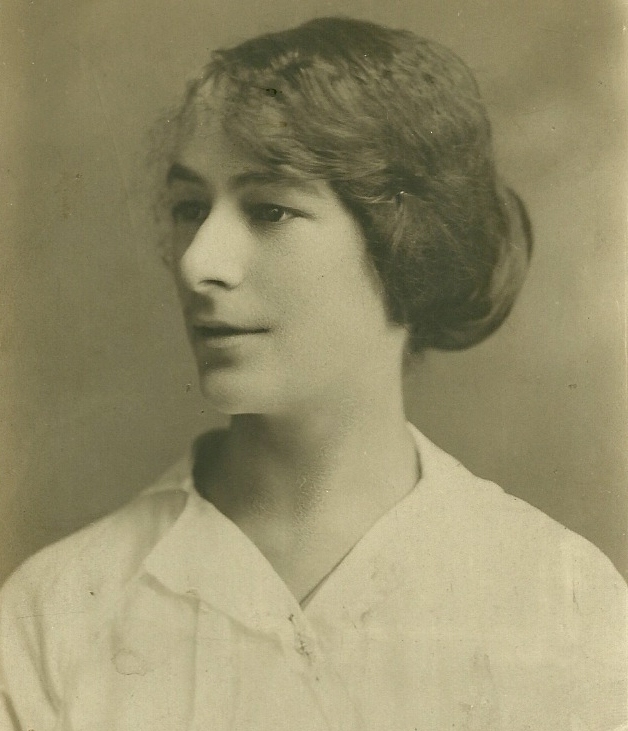
Today would have been my grandmother’s 127th birthday. Here is a little about her.

My grandmother, Ivy Gertrude Woolgar was the youngest of four children of Philip James and Clara Woolgar née Dawson. She was born at the family home, 7 Chalford Road, Dulwich, South London on the 4th of January 1893.[1] Whilst Ivy was a child, her father gave up his job as a milkman and became a gardener.[2]  The family were regular church goers, usually attending nearby Emmanuel Church,[3] unless they went to hear Ivy’s brother, Percy, sing in a choir elsewhere.[4]

Ivy was entered into Salter’s Hill School, Gipsy Road on the 1st of July 1897, she transferred to another school, possibly the junior department of Salter’s Hill, on the 2nd of July 1900.[5] She became an office clerk,[6] working for John Gardner & co.[7] She was reported to have been her father’s favourite and he accompanied her to work on her first day at Smithfield Meat Market.[8] On the 8th of April 1922 she married Frederick Herbert Smith, after banns, at St. Clement Danes in the Strand, London. The witnesses were Ivy’s mother and brother, Clara and Percy, Herbert H Smith, Frederick’s father and Muriel Chown Bird who was the sister of Ivy’s brother in law William Bird.[9]

In 1924, Frederick and Ivy went to live at 159 Albert Road (later renamed Davidson Road)[10] where they lived for the rest of their lives. Their daughter, Gwendoline Catherine, was born on the 27th of February 1925.[11] She was baptised on the 31st of May 1925 at Emmanuel Church, Dulwich, Surrey.[12] Frederick died on the 13th of September 1957 at 159 Davidson Road, of heart failure, bronchitis and emphysema.[13] Ivy Gertrude died of lung cancer at her daughter’s home, 28 Sundridge Road, Addiscombe, Croydon, Surrey, on the 25th of April 1963. She was 70 years old.[14]

‘Granny’ was 63 when I was born (my age now) and died a month after my seventh birthday. She was a wonderful lady and the archetypal granny in everything except build. We played together regularly, she taught me to knit, recited nursery rhymes and did all the things grannies are meant to do. My first family holidays were on the Isle of Wight and Granny came too. My memories of Granny are a role model for my own grandparenting. Although I lack her dainty size, physically I have inherited most from this grandparent. In fact I wonder why, when I look in the mirror, she looks back.

Ivy Gertude Woolgar 1893-1963 6.jpg

[1] The short birth certificate of Ivy Gertrude Woolgar 1893, in family possession.

[2] Oral evidence from Gwendoline Catherine Braund née Smith.

[3] This is no longer standing.

[4] Oral evidence from Gwendoline Catherine Braund née Smith.

[5] Admissions’ Register for Salter’s Hill School, held at The London Metropolitan Archives.

[6] 1911 census for 7 Chalford Road, Norwood, Surrey RG14 2134 folio 190.

[7] Oral evidence from Gwendoline Catherine Braund née Smith.

[8] Oral evidence from Gwendoline Catherine Braund née Smith.

[9] The marriage certificate of Frederick Herbert Smith and Ivy Gertrude Woolgar 1922, in family possession.

[10]  Information from Gwendoline Catherine Braund née Smith, daughter of  Frederick Herbert Smith.

[11]  The birth certificate of Gwendoline Catherine Smith 1925, in family possession.

[12]  The baptismal certificate of Gwendoline Catherine Smith 1925, in family possession.

[13] The death certificate of Frederick Herbert Smith 1957, in family possession.

[14] The death certificate of Ivy Gertrude Smith née Woolgar 1963, in family possession.