On a day ear-marked for treading in my ancestors’ footsteps we set off round numerous villages and hamlets across the wilds of Northumberland. Great great grandfather, John Hogg, led an itinerant life, so we had a long list of places to cover. Chollerton was first on the list. This small village is sited on the ‘Corn Road’ from Hexham to Alnmouth, which opened in 1753, enabling produce to be shipped to London. Outside the church was a ‘hearse house’ used, as the name suggests, to store the village hearse and to provide stabling for the vicar and others coming to church. It now contains a small, unmanned museum. Interestingly, the font at Chollerton church has been created from a former Roman altar.
Amongst other stops, we go to Thockrington, officially one of my favourite places in the world. Believe me, it is not a place you are likely to encounter unless you make a deliberate effort but the awe-inspiring landscape is worth the effort. We called at Great Bavington, Mitford and Netherwitton, with a supermarket stop in Morpeth in between. The main road north of Morpeth was closed due to an accident and fortunately we noticed this as we approached and whilst we still had time to take avoiding action. This sent the sat-nav into ‘turn around where possible’ mode, so it was back to the trusty map. I actually really enjoy tracking journeys on OS maps. It doesn’t seem to make me feel as unpleasantly unwell as it used to do. Unfortunately, this did mean we had to miss out three of our intended destinations.
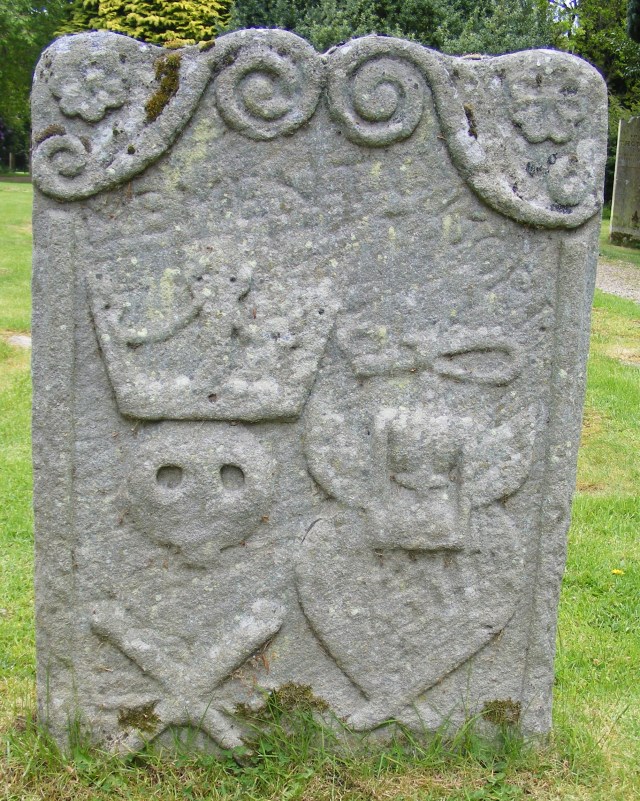
Not one of my ancestors! Reverse says John Pots (sic) d. 1724 age 30 Mitford, Northumberland
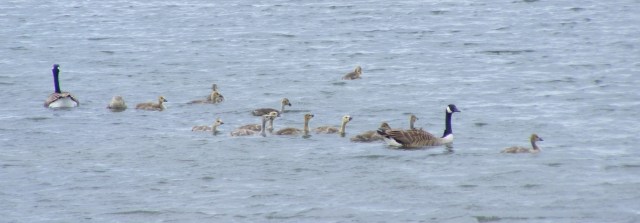
Ten out of ten for Hauxley Wildlife Discovery Centre today. The forecast was a little uncertain but indications were that the early rain would pass over, so we ventured out and were very glad that we did. This coastal nature reserve is run by the Northumberland Wildlife Trust and is excellent. The only charge is a donation towards the car parking. The 1km walk round the lake gave access to several bird hides and I don’t think I have ever seen so many different birds at one location. I believe the lake has been created from a landscape that was a legacy from open cast mining. To top it off, the café, with its views of the lake was lovely too. If you are interested in this sort of thing here are the birds and wild flowers that we encountered:- great tit, robin, black-headed gull, mallard and ducklings, magpie, Canada geese and goslings, grey heron, oyster catcher, house martin, barnacle geese, greylag geese, lapwing, mute swan, moorhen, goldfinch, crow, blackbird, jackdaw, shelduck, little grebe, cormorant, house sparrow, wood pigeon, blue tit, pheasant, tufted duck, gadwall, shoveler. Red campion, primroses, dandelion, buttercup, daisy, iris, bluebells, hawthorn, cleavers, gorse, cowslip, violet, stitchwort, white clover, speedwell, bird’s foot trefoil, red clover, stinging nettle, broom, dog rose.
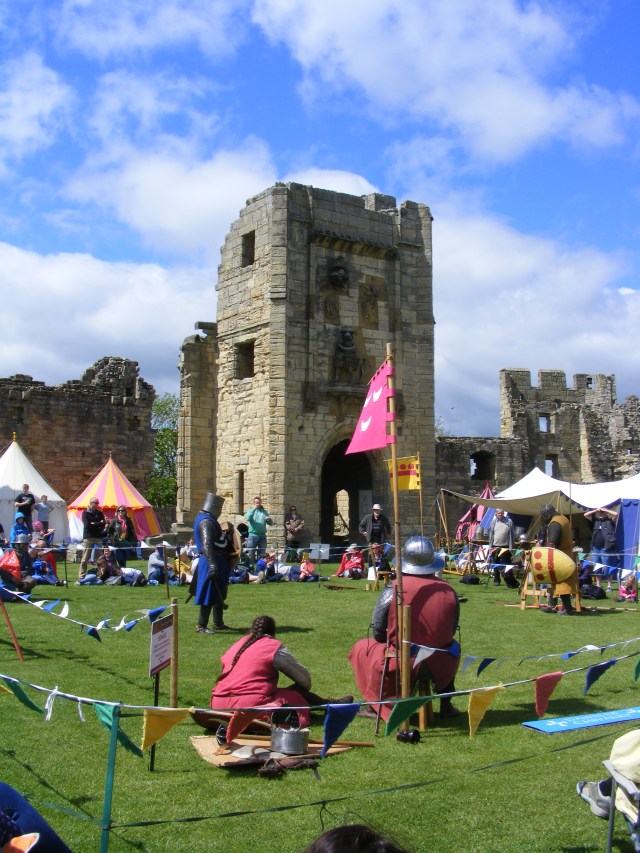
We debated whether to go straight back to the van but decide to call in at nearby Warkworth Castle on the way and again this was the good choice. We hadn’t realized there was going to be a fifteenth century living history event underway. This was a real bonus and we enjoyed chatting to armourers, bow-makers, shoemakers, stained glass artists, candlemakers, rope-makers and potters. We watched dancing and combat and listen to music. I was amused that the compere attempted to disguise his anachronistic microphone by covering it with hessian. All in all, two great destinations today.
 The History Interpreter - Janet Few