 With some technical wizardry, this post should appear at a time when I am languishing in a local shopping centre hoping to sell my books to unsuspecting passers-by. I have a small share in a stall, along with other local authors. No idea how successful it will be but I will try anything once.
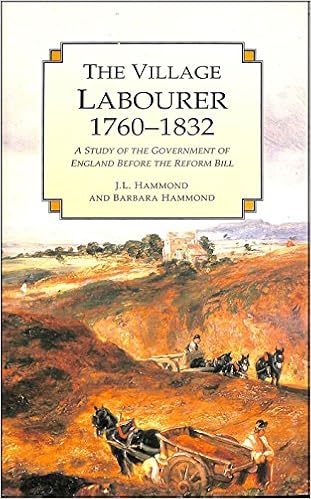
On the social history book front, I have chosen The Village Labourer 1760-1832: a study of government in England before the reform bill by J L and Barbara Hammond as today’s offering. This is another book that has been on our shelves for some time; the first edition came out in 1911. It looks at the fate of the disenfranchised rural labourer at a time when the government were bringing in enclosures. It considers how enclosures were forced on the agricultural poor and the impact that they had. It also covers the reaction and riots of the 1830s. It does come from a particular political stance but this is a refreshing outlook for a book written over a century ago. A slight criticism is the emphasis on the Home Counties. Seventy pages of appendices include transcripts of particular enclosure acts; there are also examples of family budgets. There is a companion volume ‘The Town Labourer 1760-1832: the new civilisation’, which also highlights the plight of the working classes, this time from an urban perspective. As long as you keep the authors’ biases in mind these volumes provide a valuable and interesting background for our working class ancestors.
 The History Interpreter - Janet Few
Books written long ago do contain …. ahem …. biases is a good word Janet. I remember as a young person being appalled at reading John Buchan’s book The Thirty-Nine Steps, published in about 1915, in which Buchan openly showed great distaste for Jewish people. Buchan, of course, was Lord Tweedsmuir, and our Governor General in Canada from 1935 until his death in 1940. I was too young then to realize that Buchan’s attitude was similar to many British, particularly the upper classes, including during and after the second world war. Cheers, Brenda