This morning has been spent doing my bit for the community, wielding a scanner in the local community shop, alongside someone dressed in red, uttering strange ‘Ho, ho, ho’ sounds who looked strangely familiar. A great way to wish my friends and neighbours ‘Season’s Greetings’. Everyone keeps asking me if I am ready for Christmas. Christmas I can do. Whether I am ready for the familial onslaught on 27th is another matter. At this point in time, most of the house is (by my standards) clean and tidy. I have achieved this by shoving all the junk in one room. This would work well if a small person didn’t have to sleep there. The excavation of sufficient space begins on Boxing Day. I really should be finishing an article this afternoon but this may have to wait until next year. I might just spend some ‘me’ time trawling for a few more third cousins.
 I started at the beginning of December with twenty four authors in the historical novelists’ ‘hat’. I drew one out each day to determine the order in which I have introduced them to you. Today’s entry is south Devonian Michael Jecks. For his Templar series of books, we return to the Medieval period, where we find former Crusader Sir Baldwin and bailiff Simon solving mysteries in and around Dartmoor. Baldwin’s official title is Keeper of the King’s peace for the shire of Devon and it seems that there are plenty of incidents to keep him busy. The mystery element of these books is well crafted and it is rare that ‘who dunnit’ becomes obvious before the denouement. The history is well informed and the geographical setting is beautifully recreated, all the elements are therefore in place for an absorbing novel or, of course, in this case, whole series of novels – bliss. There really are enough excellent Devon authors for me to be able to ‘read local’ for several years!
I am sorry to those authors amongst my historical fiction collection who did not get included in my calendar; it is not a reflection of my opinion of your work, advent was just too short for everyone to get a mention. I have to say this series of advent blogs has led me to purchase rather more books than I like to admit, as I discovered new titles by favourite authors – now all I need is time to read them.
HAPPY CHRISTMAS!
 Another great historical series for today’s novelist: the Morland saga by
  More Roman sleuths today in the shape of
  Another North Devon author is pulled from today’s advent box; there is so much talent in this county.
 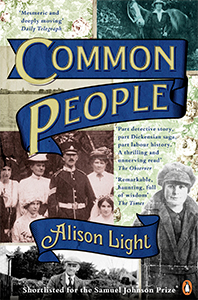 Now for the advent calendar. This is a book I haven’t actually read yet but it looks so good that I am going to include it – shamelessly relying heavily on the blurb and other people’s reviews. It isn’t actually a novel either but the story of a family. The author has done exceptionally well to find a publisher for her family’s story in the days of the hobby’s boom. I remember when I first started, reading Marjorie Reeves Sheepbell and Plougshare – don’t read that unless you want to be seriously envious about the amount of family documents and memorabilia that she inherited. Others from that era were John Peters’ A Family from Flanders. Must also mention John Titford’s Come Wind, Come Weather but all these date from the 1970s and 1980s. Now the world and his wife are writing up their family stories getting one commercially published is next to impossible, which is why I think
  We are in sixteenth century Cornwall with today’s historical novelist,
  We are in Devon again for today’s historical novelist and the final genealogical sleuth of the advent calendar (there are others but there weren’t enough days).
 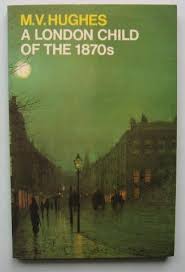 Today I offer you M V Hughes as my historical novelist. I am stretching the definition of the genre a little here as the books in her London series (yes, another series) are semi-autobiographical, despite the preface which claims that the characters are fictional. This tell the story of a late Victorian middle class family, who nonetheless have struggles of their own. Through A London Child of the 1870s, A London Girl of the 1880s, A London Home in the 1890s and finally, A London Family between the Wars, we become immersed in the life of the fictionalised recreation of Hughes’ own family. Molly Hughes was herself well educated, having attended Miss Buss’ North London Collegiate School, trained as a teacher and been awarded a BA, at a time when serious education for women was unusual. London Girl, in particular, provides a very interesting insight into girls’ education of the time. I read this series of four books, which were first published in the 1930s but were reprinted in the 1970s, before becoming aware that there was an earlier book Vivians. This was re-printed after the other four, so for me it was a prequel, even though it was originally published first. I actually think that reading it after the other four is the best order. This tells the story of Molly’s mother’s Cornish mining family and explains the background to the London novels, the first three of which are available as an omnibus volume. I found this excellent
  Another day, another historical novelist and again a writer based in Devon.
 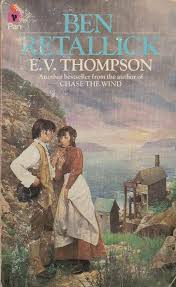 Today’s historical novelist is one who held the rank of ‘favourite’ for many years and I eagerly awaited each new offering. E V Thompson released at least one book every year from his first Chase the Wind, in 1977 until his death in 2012 and I have all but the final half a dozen. Most of his books are set in Cornwall, although he does make use of his experiences in Africa to move to that continent for some of his books, notably those of his most famous Retallick saga. I can’t understand how this series has been overlooked by the makers of costume dramas. My liking for these books stems more from their geographical context than their historical background, which is predominantly Victorian. The reason that I abandoned the later books is because they were becoming a little formulaic with boy choosing between rich girl and poor girl in many of them. This makes them sound like romances and I don’t think that is a fair description. Some are fast paced adventure stories with a love interest thrown in.
 The History Interpreter - Janet Few