The obvious answer is ‘of course it is’; yesterday is already history. Certainly anyone who knows anything about current UK secondary school history teaching would be forgiven for thinking that the twentieth century is the only history. Students seem to leap from conflict to conflict – the second world war, the cold war, the Arab-Israeli conflict, the Irish troubles and if they are really lucky, that dim and distant event, the first world war. For community historians, the twentieth century has an appeal because it is within living memory; oral history projects abound. Why then do family historians seem reluctant to venture further forward than the 1911 census? Some adhere to the concept that the twentieth century is somehow ‘too recent’ and therefore not worthy of investigation. Perhaps this is partly because we often already know the names of our twentieth century ancestors, without the need for research. Are some put off by the difficulties of researching in the twentieth century? Records are subject to closure, people migrate or emigrate more frequently, there are just more people. Then what do you do with any information that you might find? Plastering the names of living second cousins twice removed, whom you have never met, all over family trees is, for most, an unacceptable invasion of privacy.
So do we just go back to the comfort of the nineteenth century and beyond? No; your twentieth century ancestors are every bit as much part of your family tree. Perhaps begin with your direct ancestors who are no longer living. Try this exercise:- Make a list of all parents, grandparents, great-grandparents and so on, who were alive between 1900 and 1940 but who have since died. If they were born during this period, make a note of when, otherwise write their age in 1900 next to their name, so you can appreciate their life stage at the time. You will probably be surprised by how many names are on this list. If you have photographs of any of these ancestors you may like to create a montage, otherwise keep the list of names handy. These are important links in your chain of ancestry. You owe it to them to find out more about their lives, their communities and what they experienced.
So here are my direct ancestors who were alive between 1900 and 1940 – no great aunts, great great uncles or cousins – just my direct line.
Cyril Albany Braund 1915
Gwendoline Catherine Smith 1925
Albany Braund 12
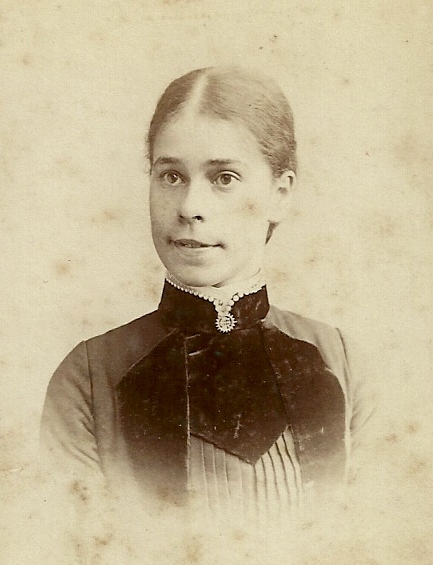
Clara Dawson
Elizabeth Ann Hogg 14
Frederick Herbert Smith 6
Ivy Gertrude Woolgar 7
Fanny Thomasine Bishop 31
John Hogg 45
Herbert Havet Smith 34
Catherine Seear 34
Philip James Woolgar 45
Clara Dawson 42
Elizabeth Buckingham 67
Elizabeth Pearson 72
William Howe 69
Anne Stratford 66
Mary Archer Bowyer 69
Eliza Seear 77 – she only just makes it, Eliza died on 1 January 1900
Anne Balls Bulley 65
Writing that felt a little like reading the Roll of Honour on Remembrance Day. Perhaps that is how it should be. These nineteen individuals are my personal role of honour, as are all those who died before 1900. I shall be holding them in my mind as I begin my online course on Tuesday ‘Discovering Your Ancestors’ Communities in the early Twentieth Century’. I still have a couple more spaces in the ‘room’ if you would like to join in and feel you can cope with Google+.


 The History Interpreter - Janet Few