Crazy with a Smell of Mothballs – Day 2

Our room in the Travel Lodge ‘conveniently’ has serious double glazing and non-opening windows. This is to protect us from airport/traffic noise. Unfortunately, the air conditioning that is therefore necessary is far noisier than trying to sleep on the M25 – although I’ll admit a tad less dangerous. I never sleep well at the best of times. In fact it wasn’t until I was at college and sharing a room for the first time, that I realised that people went to sleep at bedtime and woke up in the morning, without waking up several times in between – something I have never done. Just because I could do with a decent sleep, inevitably insomnia kicks in big time. Normally I solve this by reading myself back to sleep. On this trip I have reduced the strain on the baggage allowance by leaving books behind in favour of a well stocked Kindle (other electronic readers are available). This would have worked well if my Kindle hadn’t magically uncharged itself. I can’t read it whilst charging as the plug socket is too far from the bed, so I spend the next hour or so restlessly wondering why hotel rooms are always so hot and discovering that it is possible to turn the air-con down to a slightly less raucous level.

The alarm was set for 5.15am but as usual we are awake before it goes off (have I actually slept at all?) and attempt to check out. The trouble with the lift is that it always goes up to the very top (level 6) before descending. This means that every time it gets to us on level 4 it is already full. We watch four crowded lifts pass us by, deciding that we really don’t want to attempt four flights of stairs with our luggage and sit it out until we finally manage to squeeze ourselves in to an already full lift. Eventually we are outside waiting for our taxi……….and waiting………and waiting. This is seriously annoying as we were actually ready in time for the 5.32am Hoppa bus. The other difficulty is that the taxi pick-up point is also ‘smokers’ corner’, so our lungs are being imperilled as we wait in rising panic (well I was panicking). Why do places put the smoking zone in such a position that those entering and exiting have to run the gamut of toxic fumes? I abandon Chris and the luggage and run up a flight of stairs to ask reception why our taxi is 15 minutes late. He says he will chase the taxi up. The 6am Hoppa arrives – we should have been at the airport half an hour ago. Of the mindset that a Hoppa in the hand is worth several taxis that are goodness knows where, we board the bus, only to see our taxi arrive as we pull away. We are now keeping a low profile and a sharp look out for irate taxi drivers. Today’s panic 2 (panic 1 was the non-appearing taxi) will they trace us through our room number (which they have) and try to charge us?

The Hoppa bus careers through a red light. Chris thinks this is ok as we are in a bus lane. It clearly isn’t ok as the driver apologises – he ‘forgot’ where the brake was as he thought he was driving his car. This doesn’t appear to be a joke. Is this supposed to be reassuring? Perhaps this is retribution for not waiting for the elusive taxi.

We arrive at the airport at 6.30am – an hour after the time advised and have to serve ourselves to get baggage labels. This involves inputting our booking number – which is not recognised. This is definitely the point at which we vow to remain in Britain henceforth. Fortunately, we are able to use our passports in lieu of the non-existent booking number and have negotiated this hurdle We are invited to press an appropriate button to rate our check-in experience. I firmly press the red frowny face button. Instructing the laptop bag to look small and rather wishing I had brought the cat instead, we go to abandon our luggage. Not a tape measure or a ‘cram your bag in here or else’ box in sight – hurrah. It is a relief that we have decided to circumvent the juggling with plastic bags of ‘liquids’ by putting these in our cabin baggage. I still can’t understand how toothpaste and lipstick can be classed as liquid. We pass through the scanner and there is a loud bleeping – but it isn’t us!! This time I press the pale green almost smiley face when asked for my opinion. I even manage to access the free wifi.

Boarding next. I approach with two passports and boarding passes in hand – Chris’ is on top. The security guard looks at Chris’ picture, looks at me and waves me through. He then realises that I am holding two passports. Either my facial hair problem is more serious than I thought or this is acutely worrying – look out Canada, this guy is responsible for your security. We board late and some people clearly haven’t measured their luggage and are having trouble fitting it into the overhead lockers, fortunately I am not one of them. For a long time the third seat in our row is vacant; at the very last minute it is occupied by a gentleman with very little English and even less idea of what he is supposed to be doing (it later transpires that he hasn’t made this journey (or probably any other journey) before and he has my sympathy, going through all this in a language he barely understands. With him comes a distinct aroma of mothballs – well at least our nasal passages will be clear for the duration. A woman has lost her toddler. How can you lose a toddler on a plane? Said toddler is retrieved. The cabin crew are having difficulty persuading a passenger to take his seat. He too appears not to understand and keeps asking for water. He finally gets the idea and we begin to taxi. We are told that the journey will be approximately seven hours nine minutes long. That doesn’t sound very approximate to me.

008  Greenland  16 September 2015At last, breakfast. I am so hungry that egg (cooking method unspecified and it was anyone’s guess), anaemic frankfurter and what appeared to be spinach (strange combination) initially seemed appealing but was about as revolting as it sounds. This was accompanied by the crumbliest roll in the world – whose stupid idea was this? Now all the passengers are liberally besprinkled with crumbs. All in all it is a trouble free flight for us and seems disappointingly short compared to our Antipodean long hauls. Highlights are great views of the Lake District, Scotland, Greenland and Canada. The Canadian lots are clear to see and everything looks so ‘square’. I am aware that this is how land grants were issued but it is even more marked than I expected. I manage to do the final proofing of a good proportion of my book then it is time to land. Our neighbour is struggling to fill in his customs’ declaration card. I have already done mine and Chris’ as he has forgotten his glasses. Chris then of course can’t see to help our neighbour. I am on the far side and a bizarre game of Chinese Whispers ensues. I copy the names of our neighbour and his wife from their passport on to the form. Their names have about 15 characters each and their addresses aren’t much better – you obviously aren’t allowed to live in a town that has more than ten letters. I read the ‘have you got guns?/are you carrying food?/have you been on a farm? questions to Chris who tries to relay them to our newfound friend. There is a lot of nodding and smiling going on but I am really not at all convinced he knows what he is saying yes and no to and our Gujarati is on the minimal side. You’d think they’d have the questions available in several languages. Goodness knows if the poor couple will ever get through customs.

We are told that, as the flight is more than four hours long, all security information has to be repeated. Is all collective memory erased after three hours fifty nine minutes then? We escape customs unscathed and after a slight detour to find our pick up point we are transported by a silent lady shuttle bus driver to the Best Western. Lovely comfortable hotel, free unlimited wifi – what more could one want? The only slight snag is that my plug adaptor won’t stay in the socket so we have had to rig up a Heath Robinson solution wedging the chair leg against the adaptor. Tomorrow’s panics – will we get our camper van without a hitch? Will it really be 33 foot long? Will my travelling companion, who is very confident, be able to cope with the wrong side of the road? Will we get where we need to be so I end up in Ottawa by Saturday? Always like to leave my readers with a cliffhanger.


Getting Set Day 1

The vital paper work for our trip finally turned up with three days to spare. Unfortunately it turned up at the travel agents sixteen miles away and with a weekend in the way, posting it on was risky so we waste two hours of our lives going to collect it. This is the point at which we realise that the second part of our trip, a ‘package’, does not entitle us to food. Well, it entitles us to three breakfasts in seventeen days. I know I need to eat less but this is somewhat excessive. This means we need to get more cash. We get a favourable rate at the travel agent with whom we booked – another thirty-two mile round trip and another two hours only to find that their computer will not allow them to put cash on a travel card. What else can go wrong? Well, this – it seems that the coach station is closed for renovation so our coach will be depositing us somewhere else. It is not clear how far ‘somewhere else’ is from where we need to be.

I have arranged to close a bank account while I am away, writing to give the requisite notice. I decide to telephone to check this will happen and exactly when the funds will be in my other account. Never, it turns out, as my signature didn’t match – must have used my ‘best writing’ when I opened the account. Why was I not informed of this? I ask. Had I not phoned I would have remained in blissful ignorance. Allegedly a letter was sent – a letter I did not receive. Who failed to deliver this letter? The Post Office. Who sent the letter? The Post Office. The irony is not lost on me. Now my only option is to pay these incompetents in order to release some of the funds. Post Office savings to me: I will need your 6 digit security code. Me: ****** (the correct six digits). Post Office savings: No that won’t do – I need to ask you for certain numbers and you have to give me them!

Then there is my usual anguish over baggage allowances and security issues. We are allowed a carry-on bag and a ‘personal item’. Descriptions of what constitutes a personal item vary from laptops, to musical instruments and cats – cats? I debate taking the cat instead of the laptop, after all I survived a fortnight on the cruise without internet with only a slight twitch as a result. Then I realise that in order to take the cat I will have to perform an exhumation first and decide against it.

Amongst all this pre-holiday mayhem I learn that I have been awarded the silver medal for Britain in this year’s Genealogical Rockstars competition. A great honour and some megastars and friends are amongst the other awardees. I am honoured to be in such illustrious company. Congratulations to all and many thanks to those who felt that I warranted their vote.

001 Leaving Bideford Quay 15 September 2015We are off! As usual this involves me sitting on Bideford Quay with all our luggage while Chris takes the car home and walks back down the hill. Panic 1 – will he arrive in time? He does. Our ticket informs us that we should be at stop B. Chris insists it is stop A. We wait at stop B. The coach stops at stop A. I point out that our ticket says stop B. Apparently the driver has stopped at stop A so passengers get used to it before the stop is changed to A next week. How many people do this sort of journey on a weekly basis? Standing at Bideford Quay I realise that the emigrants I am due to talk about would just be arriving in Canada after their voyage as I will be arriving home again – and I think my journey is bad

We begin the long haul to Heathrow. A lady alights at Tiverton with an identical bag to mine. Panic 2 – will she take the wrong bag by mistake? This is not so irrational as it sounds – it has happened to me before, when the bags were not even similar. Turns out my fears are unfounded. Panic 3 – will we find our way from the wrong coach stop to Hoppa bus 7? We do. Panic 4 – will there be food at the Travel Lodge? (again this fear is based on past experience) – there is. They even refund our breakfast money, which we paid when we thought our flight was mid-day instead of at an unearthly hour. Panic 5 – will we be in time for check in? We are advised to be there three hours before take off; this is 5.30am. I am very law abiding, if it says be three hours early, I am four hours early – on a calm day. This does seem very early even to me and I am almost always awake before 6. We can get the return Hoppa at 5.32am. On the strength if the refunded breakfast money we book a taxi instead for 5.45am – WE WILL BE LATE! Oh the stress. Panic 6 – My laptop bag (my personal item in lieu of the cat) is fractionally larger than the approved size – will I get away with this?

More from our Neighbours and Tallinn, Estonia – day 6

Another all night session from our neighbours, with their stateroom door slamming approximately every ten minutes between 12.15 am and 4.30am. This is like some sort of sleep deprivation torture and I reach the stage of not wanting to go to sleep because I know as soon as I do doze off, there will be a rude awakening. We are beginning to regret handing back all Master Christopher’s tools. By morning and after approximately three hours broken sleep, I am far from my usually tolerant self. We complain (again) to the lovely Emma on Guest Relations – words will be had!

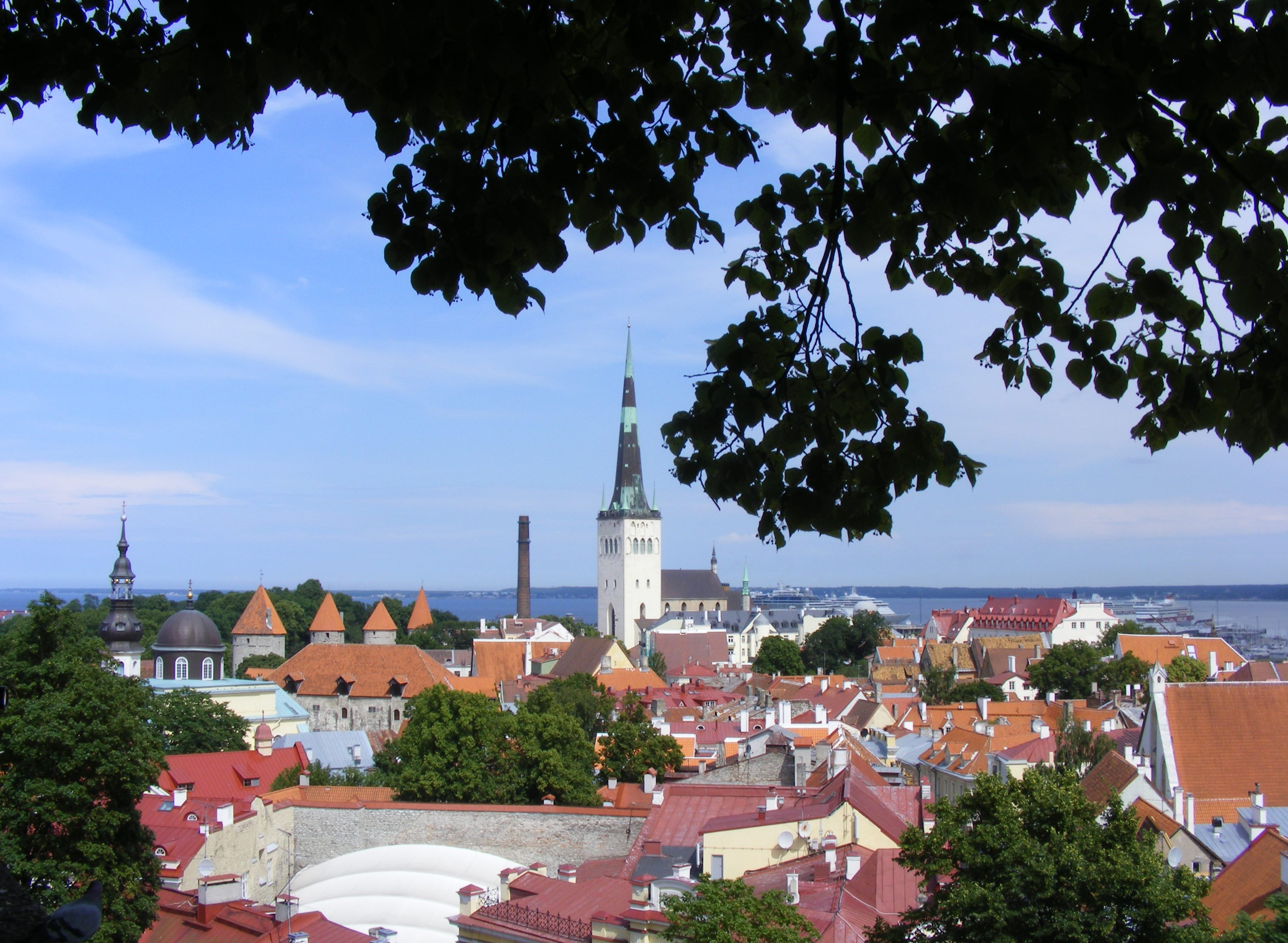
We foregather in the theatre prior to our tour of ‘Tallinn Town and Country’ and join ‘Pink 8’ group, led by Tanel, who is a university lecturer earning extra holiday money. The Old Town of Tallinn was granted UNESCO World Heritage status in 1997 and its Medieval importance was as a key port of the Hanseatic League. Country first though and we head out of Tallinn, learning about Estonia as we go. There are signs of Neolithic settlement in Tallinn, which was then a fishing village. Changes in sea level mean that the site of this area is now inland. In 1246, the King of Denmark gave city status to Tallinn and the limestone fortifications were built, making Tallinn a walled city until the middle of the C19th, when building outside the walls began. By this time, Tallinn had lost its military importance, so defence was not so vital. The original wall was 3km long and incorporated 60 watch towers. Now only 1km of wall and fourteen towers remain, including ‘Fat Margaret’.

049 The Dome Church, Tallinn 16 July 2016 (18)

The Dome Church

The Estonian language is very different from most European languages, bearing the closest resemblance to Finnish. Some German vocabulary found its way into Estonian, as German was the language of the upper classes, Estonian being spoken only by the peasants in Medieval times. We are reminded that Estonia is a similar latitude to Alaska and the Shetland Islands.

053 Lower Old Town, Tallinn 16 July 2015

Lower Old Town, Tallinn

We arrive at Esko Farm, which is a dairy farm that produces its own products for sale rather than selling the milk. They also have some beef cattle and we notice that most of these retain their horns. For Esko, diversification has included becoming involved in tourism and also providing the location for a famous long-running Estonian soap opera – not famous enough for it to have been heard of outside Estonia but famous nonetheless. We sample some of the produce – yoghurt and strawberry jam, Gouda and Feta-like cheese (you can’t call it Feta as it is not produced in Greece). There is also a drink called Kama powder, which is a mixture of rye, wheat, oats, peas, yoghurt and sugar and is singularly revolting – resembling a concoction of Complan and bran flakes. A hero of the Estonian soap narrates a video explaining how Saku cheese is made on this farm; it takes 10 litres of milk to make 1kg of cheese.

Leaving the farm, we drive through Saku, which is also well-known for its beer and vodka production. Hunting has become an important aspect of tourism, predominantly bear, wolves and lynx. We are taken to visit a typical, ordinary Estonian home, although my guess is that ‘typical comfortably-off Estonian home’ might be a better description. Peter, the owner, has obviously learnt how to cash in on the tourists and who can blame him. Mind you, I would not want a coach load of tourists traipsing round every room in my home. Apart from the library on the large landing, this is sparsely furnished and décor is reminiscent of the 1960s. The building itself is clad in plastic, wood-effect sheets.

We move on to the Old Town of Tallinn itself and visit the Cathedral of Saint Mary the Virgin, also known as the Dome Church, which contains many heraldic carvings. We also see the church of St. Olaf, whose spire was once the highest building in the world at 159 metres. Following numerous lightening strikes it is now reduced to 123 metres. Formerly a Catholic cathedral, it is now a Baptist congregation. We pass the Danish Crusaders’ Castle, Toompea Loss and the impressive, Russian Orthodox Alexander Nevsky Cathedral, built in 1900 as a sign of Russian domination. There have been suggestions that this should be pulled down because of what it symbolises. With a population of 400,000, 25% of whom are Russian, Tallinn is the largest city in Estonia. Traditionally Lutheran in belief, the religious landscape includes, Russian Orthodoxy, Baptists and Catholics.

Most of the tourist shops are selling amber jewellery and Matryoshka or ‘Russian’ dolls. I pass on one and succumb to the other. As we leave Tallinn to return to the ship, someone lies down in the road in front of the coach. Is this some sort of anti-tourist protest we wonder? Our driver manhandles said individual to one side – apparently he has just imbibed too much vodka.

The evening session is another entertaining one from Cyndi Ingle, on Google Maps.

Scenic Flanders and Sleep Deprivation – days 2 & 3

003 Ramskapelle C17th Grain Mill 12 July 2015

Ramskapelle

For breakfast I attempt the granola. I have managed to circumvent the normal menu and on request get, guess what, yoghurt to accompany it. Let’s just say that the granola was more like sugar puffs – an acquired taste that I have not yet acquired.

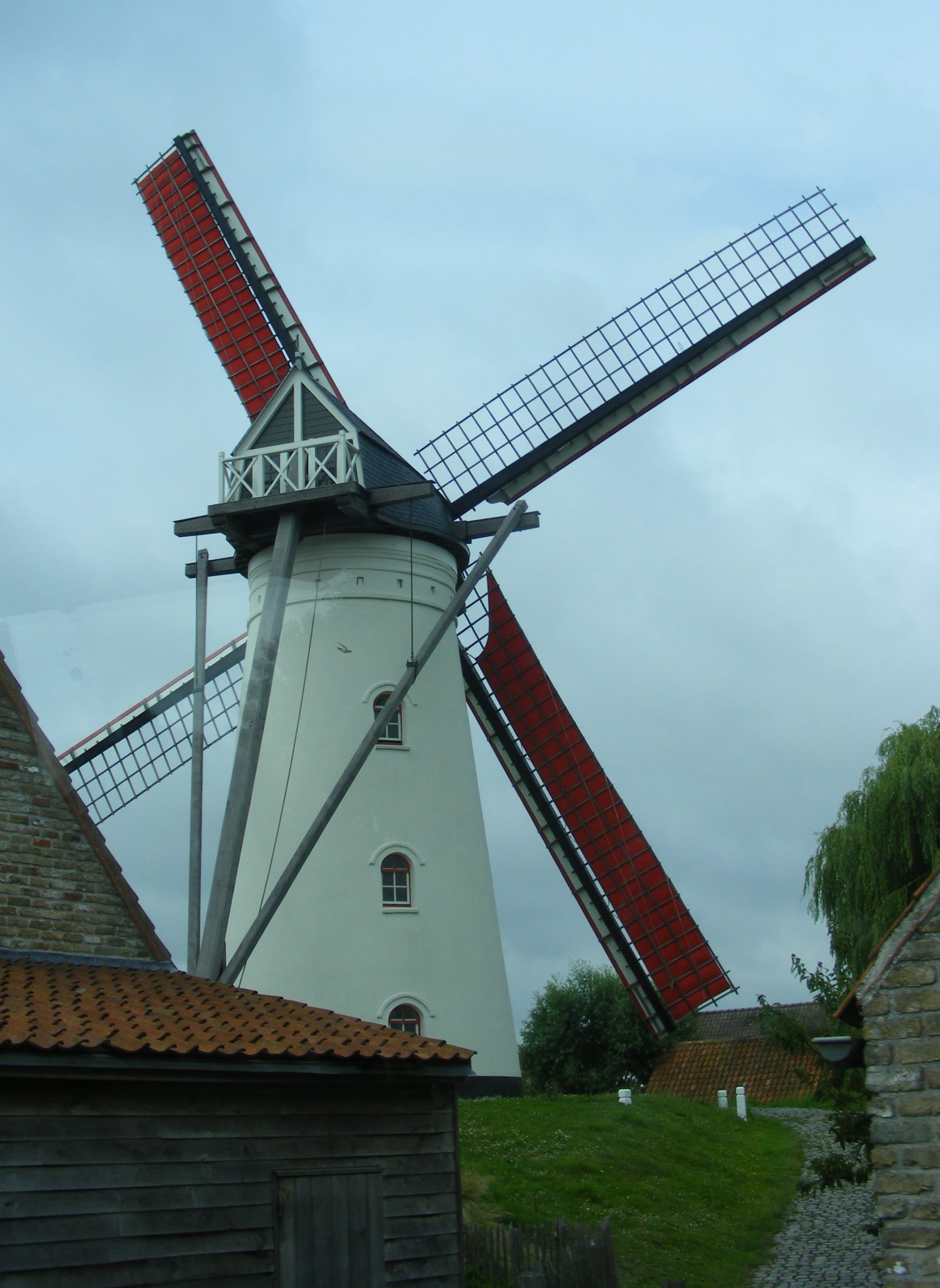
We dock in Zeebrugge, yet another port associated with an appalling sea disaster, this time the Herald of Free Enterprise. Along with two of our dining companions, we join folk with yellow stickers in group 26 for a tour of ‘Scenic Flanders’. Clearly seat belt wearing is not an option on Flemish coaches and off we set on a grey Bruges day. For a while, Flanders is looking anything but scenic but our brilliant Flemish guide, incongruously called José, manages to make a virtue out of driving through a port. He tells us that Zeebrugge is the entrepot for the car industry. Over a million cars have already been transhipped from here this year. 6000-8000 cars are loaded onto each ship for onward transportation; these ships take 100 drivers four hours to empty. We drive through Ramskapelle (Church of the Ram), the site of a celebration yesterday commemorating a Flemish defeat over France in 1302. We also pass the C17th grain mill at Ramskapelle. Most of the buildings use very small bricks, similar to Elizabethan bricks in the UK.

We see the poplar-lined canals known as ‘The Blinker’ and ‘The Stinker’; the latter is so named because it used to take the garbage out of Bruges. The landscape is predictably flat and there is wheat and sweet corn being grown for animal feed. The tops of several of the Medieval church towers were used as lighthouse beacons. We alight to tour the Medieval city of Damme. The town hall, outside which some kind of horse drawn carriage rally is taking place, was built in 1388. In 1468, the Duke of Burgundy (Charles the Bold) married Margaret of York in Damme. We visit the site of the old herring market, where 33 million tons of Scandinavian salt herring was shipped in. I failed to grasp over what time period. On occasions, this saved the area from starvation, notably when the potato crops failed at the same time as the more well known Irish Famine. A dog appears on the flag of Damme as, allegedly, a dog was once used to plug a hole in a vital dam from which the town gets its name. Damme is the Hay-on-Wye of Belgium and there are many book stalls. We also view the ruined church at Damme, which was sacked and burnt by Protestants in 1582. In the grounds of the church is an impressive sculpture by Delporte.

Next stop is Roose’s chocolate factory. The chocolate making demonstration is carried out by someone who is neither wearing gloves nor head covering. Maybe they don’t have food hygiene certificates in Flanders. We don’t buy any chocolate! We move on to the neo-gothic ‘Castle’ of Loppem or Lophem. This was designed by Pugin in 1856 for the Catholic Baron de van Calden. At this time, a member of the Braund family was working with Pugin and we wonder if he had any hand in the furniture design but we can find no proof. This is certainly neo-gothic in the extreme, with Catholic iconography overload, some very nice tiles and wooden carved banisters that took two men ten years to complete. A stuffed grizzly bear in the entrance hall was once an inhabitant of a local zoo. We learn that the treaty of Versailles was prepared here.

On our return, we listened to a very amusing presentation by Chris Paton on his Scottish/Irish identity crisis, followed by Cyndi Ingle, of ‘Cyndi’s List’ fame. Then a quick change to try to appear ‘formal’ for dinner. Lacking a ‘cocktail dress’, I hide behind Chris and we are deemed acceptable. I have some very appetizing lamb chops and we repair upstairs for a talk by Carol Baxter, which engenders some heated and very interesting, debate about genealogy standards.

017 Rabbit Towel by Jeffrey 12 July 2015

Towel Origami

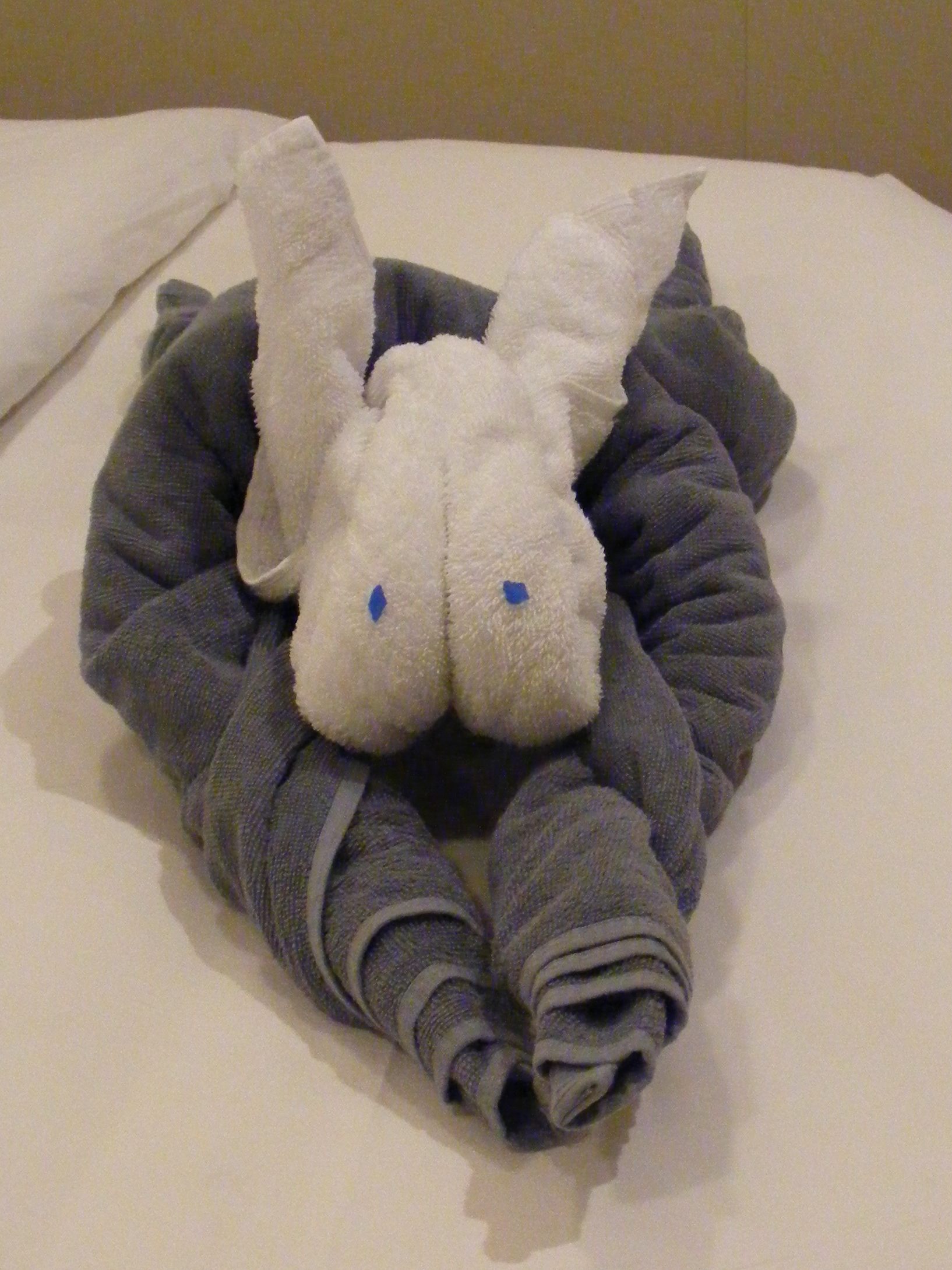
Jeffery, our stateroom attendant, has left chocolates on our pillows and an origami towel creation, which is very impressive.

We chose our stateroom because it was on the end of a corridor in the bow (that’s the pointy end to you and me) and we would only have one neighbouring stateroom. Unfortunately, our one set of neighbours are the proverbial neighbours from hell. The first night was bad but last night they went in and out of their stateroom about twenty times between 1.00am and 5.30am. This was accompanied by jiggling of locks and slamming of doors. Add to this the loud music and chatter, together with periodic falling against the adjoining wall and no sleep was had by all. It even kept Chris awake, something that I thought was impossible. Mine could be the first after lunch presentation where the speaker falls asleep. I finally got to sleep at 5.45am, only to wake again briefly at 6.30am and eventually get up at 7.50am. Sadly, this meant missing the first session of the day and being semi-comatose for most of the rest of it. Very interesting session by Shauna Hicks on records of emigrants (or from her perspective immigrants) to Australia. Then I retired to try to get some sleep but I find sleeping in the day difficult, so I gave up the attempt.

Back to the fray to listen to Jane Taubman on Family Historian and then after lunch it was my turn. A to Z of family history sources this time. I am competing with an art auction next door but despite mis-pronouncing Wagga Wagga (why it should be said Wogga Wogga I will never know), it seemed to be well received and there was a good crowd. Another session from Shauna Hicks, this time focussing on diaries and letters, excellent once again. Paul Milner’s informative presentation on the Parish Chest and time for our evening meal; Chris continued to work his way through his cow.

After dinner today was Cyndi Ingle talking about her eponymous list, in a very entertaining vein. And so to bed and blessedly only twenty minutes of door slamming at 1.15am this time.

Setting Sail – day 1

001 Celebrity Eclipse 7 May 2015

Celebrity Eclipse

Having climbed out of an internet black hole, I can now share the excitements of the past fortnight with my loyal readers. After all the frustrations of the past few weeks, during which I seem to have encountered more than enough incompetence to last me a life time, we manage to leave ahead of time for two weeks as ‘cruise ship entertainers’. The only difficulty seems to be that I am suffering from a surfeit of yoghurt (you may remember that yoghurt appeared in another post recently). Waste not, want not and there was the majority of a large pot left that I was loath to throw away. Consuming it seemed like a good idea at the time. We drive merrily along in our very small but fuel efficient, car, with a ridiculous amount of luggage. I would like to place on record a) that two thirds of one of my suitcases is full of C17th attire (oh, what a shame, no room for cocktail dresses) and b) that the other suitcase contains books that I am hoping to persuade people to acquire AND it was suggested to me by someone of my acquaintance, who normally does plenty of under the breath muttering when transporting of books is mentioned, that I may need to take more!

We head to Southampton. I have already been reminded several times that this is the port from which Titanic sailed – I was aware of this but probably could have done without it being brought to my attention. Then comes our attempt at making a security officer’s day. We approach with trepidation and a box full of axes, knives and saws.

Security Officer: ‘What is in that trunk sir?’

Master Christopher: ‘Axes and knives.’

Said security officer is clearly thinking ‘We’ve got a right wit here’.

To save my partner from arrest for flippance, I add hurriedly, ‘He’s not joking.’

Numerous security staff flock to the scanner to watch knives etc. being scanned. We are instructed to abandon our precious tools and are assured that they will be collected by security and make their way to the ship. Good luck with that one, they weigh several ton. We will need to keep an eye out for a security officer with a hernia. At the time of writing, I still have no clue whether or not there is a bereft barber surgeon’s kit loitering somewhere in Southampton Port security office.

After a very long and very hot, wait in a queue (this despite advance ‘express’ check-in) we board the Celebrity Eclipse. One thing is for sure, we are going to get plenty of exercise going from one activity to another. Our ‘stateroom’ 7188 is the most basic but fine for us. It is lovely to get to know people I have only previously ‘met’ online. We then have the obligatory but farcical, security muster. The majority of passengers were mustered before the alarm sounded so the crew have no idea how long it would take in a real emergency. We watch a weird cartoon with an annoying jingle exhorting us to wash our hands. Hints on how to abandon ship are provided in English and Spanish (there seems to be a significant Mexican contingent on board) and we are away.

002 Southampton Water 11 July 2015

Southampton Water

We watch the Isle of Wight slip past. A very pleasant meal in good company. Chris devours a steak that is so rare that it looks as if it is still capable of meaningful life – he likes it that way. Then an excellent opening presentation from Paul Milner. And so to bed. We have to put our clocks forward an hour. I am already panicking that we may not find ourselves in the right place at the right time for tomorrow’s Scenic Flanders trip.

What Happened Next or Never Rely on the Internal Combustion Engine

Will we or won’t we get our car back today? Finding out is an effort in itself as there is no phone signal for ten miles and we have to resort to using the telephone box for which the minimum charge per call is 60p. I am sure it was 2d last time I used one. At 11.00 we are to ring back at 3.30. We decide to be optimistic, pack up the van ready to hitch up and start to head for Skye in the courtesy car, intended to ring as soon as we have signal and turning round if our car is not finished. So we head over the bridge to Skye for the third and in this case unscheduled, time. We top the courtesy car up with petrol. Strangely, the more petrol we put in, the lower the petrol gauge seems to go. Confident that we must have returned the contents of the tank to the required level, notwithstanding what the gauge suggests, we seek an opportunity to contact the garage. Unfortunately phone signal and potential passing places do not coincide. As soon as we spot a signal indicating bar appearing on the phone screen we pull in to a turning, as the road is too narrow just to pull up. Immediately we do so the bar flickers and disappears. This happens several times before finally signal and parking opportunity coincide and we are told we can collect the car in an hour and a half’s time, at 5.30. At this point we realise that we really should have eaten our main meal in the middle of the day. We use the spare time before car collection to acquire some very good fish and chips from Portree harbour, highly recommended. It is raining, what a surprise, so we have to eat these in the car. This means that we have to continue our journey with all the windows open in an attempt to alleviate the smell of fish and chips.

We find the garage and there is our beloved car minus its wheels. Correction, it is Chris’ car. When I see the size of the repair bill it is most definitely Chris’ car. Wheels affixed, we set off, hoping to get to Grantown-on-Spey tonight, some 150 miles away from the garage on Skye. We make good time back across Skye to the caravan site. Van attached and we feel our holiday is back on track. Five miles up the road and the car begins to sound like a jumbo jet, there is also a rather alarming smell of burning paint. Admitting defeat we limp back to the site we have just vacated and settle in for the night.

The next day we return to the phone box for another call to the recovery services. Whatever is wrong seems unrelated to the previous problem and we are told the car will get us home. Ok, I’ll admit, there was no mention of when. I am not clear on the nature of the problem in technical terms – something to do with thrusts or turbos. In practical terms our top speed is 50mph and that’s going downhill, uphill is a very noisy 30mph. This is the highlands of Scotland. The clue is probably in ‘high’; there are a lot of hills. Chris is convinced that it is ‘all downhill’ on the way home; I am sceptical. We have 642 miles to go and Bank Holiday traffic is looming, deep joy.

We begin the journey home as soon as we can, at midday. The weather is that typical Scottish combination of beautiful sunshine one minute and rain the next, although this is probably the best weather we’ve seen for a fortnight – inevitable really. We nurse the car southward, including along past Loch Lomond on a route that we have not traversed previously. After 150 miles and 4½ hours of annoying the traffic behind us we reach our first dual carriageway. We arrive in Glasgow for rush hour. Signs warn us that progress will be slow for seven miles, or in our case four hundred and seventy seven miles. Our not recently updated satnav doesn’t recognise this bit of road. We decide to ignore her instruction to ‘turn around where possible’ in the middle of the M74. We finally give up at Carlisle but at least we are back in England and the site has a television signal so we can watch Who Do You Think You Are?

An early start the next day as we still have 375 miles to go and the sooner we reach the south west peninsula the more likely we are to miss the worst of the weekend get-away traffic. The weather is glorious – no comment. Now we have motorway we can manage a steady 50mph, when the road works, traffic jams and accidents allow. On spotting a caravan that has come adrift from its towing vehicle on the M6, fortunately it seems without injuries, we realise that we could be worse off. In fact looking at the traffic heading north, which is solid from Manchester to Tewkesbury, we could be a great deal worse off. Getting through Bristol, eight hours in to our journey and during the rush hour build up is time consuming. Beyond Bristol things improve for us but there are clearly still serious north bound delays. At last we are thirty miles from home and the end is in sight when we see the dreaded ‘road closed due to accident diversions are in place’. Said diversion was up a narrow (narrowish – our caravan passed another going in the opposite direction without mishap) road and our convoy is being led by someone who has clearly never driven on anything more slender than a motorway. Their response to being on a road with only four foot on either side of their vehicle is to drive at twenty miles an hour; at least we are no longer getting the blame for impeding the flow of traffic. This diversion puts another hour on what has already been a ten hour journey. I reflect that, in the past, ten hours to travel the length of England, without getting wet or saddle sore, would have seemed like a dream; sadly though I have twenty first century expectations. At least I am compensated for the debacle and missing what promised to be some of the ‘best bits’ of the holiday by the fact that half my family are waiting to greet me at home. I have gate crashed their time in Devon but at least I can enjoy being a Granny.

Wester Ross

Another wet and windy day in the van waiting for the garage to not mend our car. We have an amended plan here on in but it depends on our car being available the day after tomorrow and there are no guarantees. Ah well, I do manage to make progress with the Braund Society Journal whilst stuck in the van.

The next day we decide we really should do something. First, in to Kyle of Lochalsh to find a cash point and get some food. There is a very tiny general store and meat comes from the butcher’s next door. We show ourselves up by being unsure of the weight of the mince that we require. I hate to admit that we normally grab pre-packaged mince in a plastic box that looks the right sort of amount, without being aware of its weight. In this area there are plenty of road signs exhorting us to drive on the left. This of course is for roads that have space for two vehicles to pass and given the number of European tourists, may well be necessary.232 19 August 2014 Wester Ross

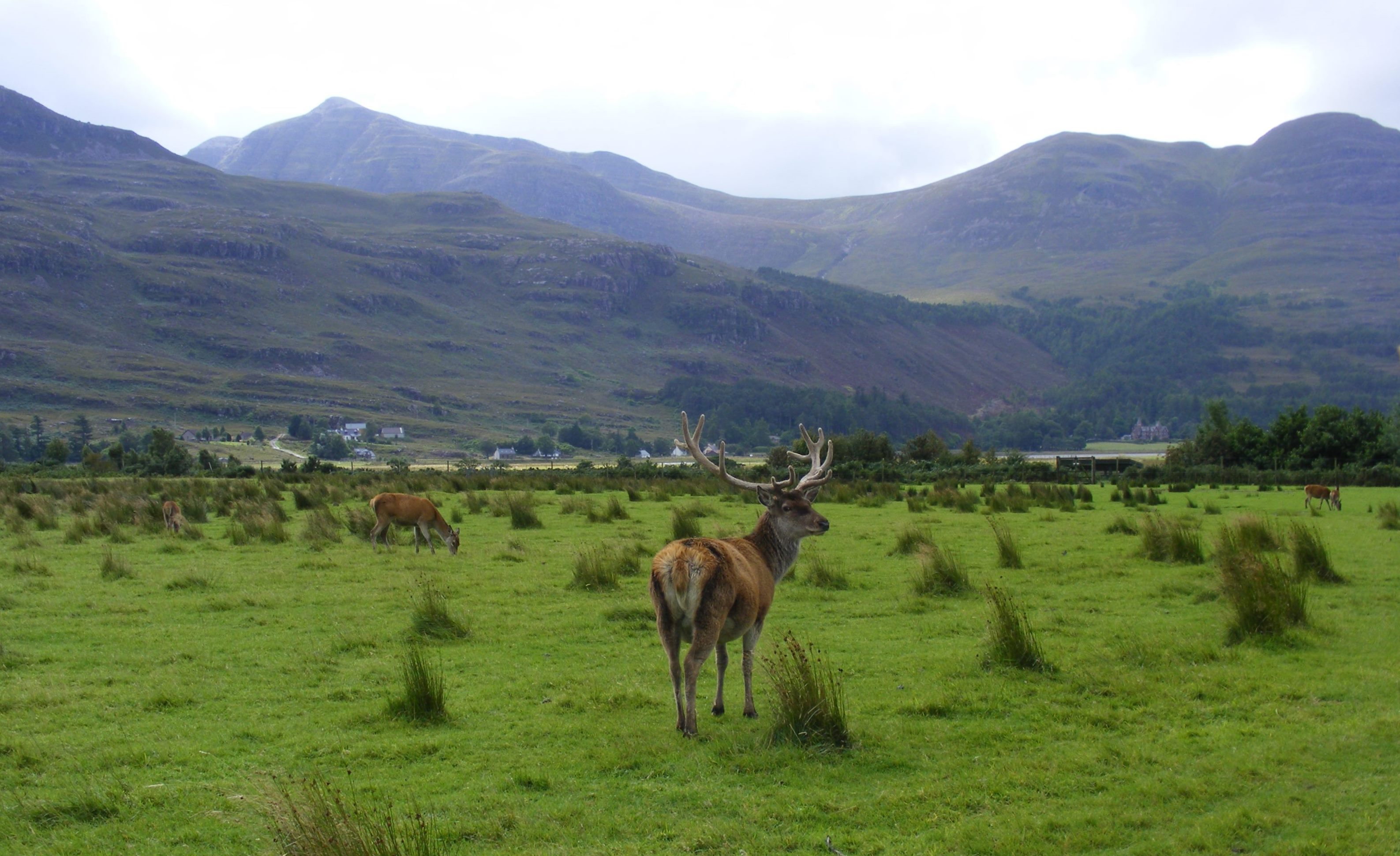
We head north across the breathtaking countryside that is Wester Ross. We have chosen a destination somewhat at random and are aiming for Torridon Countryside Centre. The weather is what we have come to expect of Scotland, raining one minute and sunny the next. Along the Wester Ross Coastal Route we encounter a sign to Stromferry. Helpfully, the sign warns that there isn’t actually a ferry at all at this location. We have seen many abandoned and ruined crofts, either a relict of the ‘clearances’ or signs of where a more recent crofter has found themselves unequal to the demands of life in the remote highlands.244 19 August 2014 Deer

On arrival at the Countryside Centre, we are able to watch a short film about the flora and fauna of the area. Accompanied by an evocative smell of pine, we walk down to the small deer museum and park, where we can see captive Red Deer. There are meadow pipets and curlew and as ever, rowan trees (Mountain Ash) full of berries. As the year progresses and we get further north, the Rosebay Willow Herb that has been prolific since the Lake District is finishing and the heather is becoming more noticeable.

We take a slightly longer way home to avoid retracing the whole of our route. Firstly, along Glen Torridon, alongside the towering Beinn Eighe range, then through Glen Docherty and Glen Carron. Here we re-encounter the convoy of Italian camper vans that we first met at Killin. Here also our first close up view of a wild, full grown, male red deer, unfortunately not in a position where we could take a photograph.

Our car is still being described as ‘a work in progress’, which is less than helpful and may mean that the revised plans require further revisions.

In Search of Monsters

DSCF2319After our exploits on Uist we spend a day recovering in the van; the stormy weather making this an attractive option. The following day we are still marooned in Kintail and the weather is no better. Although we would rather not have had our plans diverted, there is some comfort in realising that this is the day we should have been on a boat going to Orkney. The weather is reputedly worse further north. It remains to be seen if we will get there but if we do the conditions can only be better.

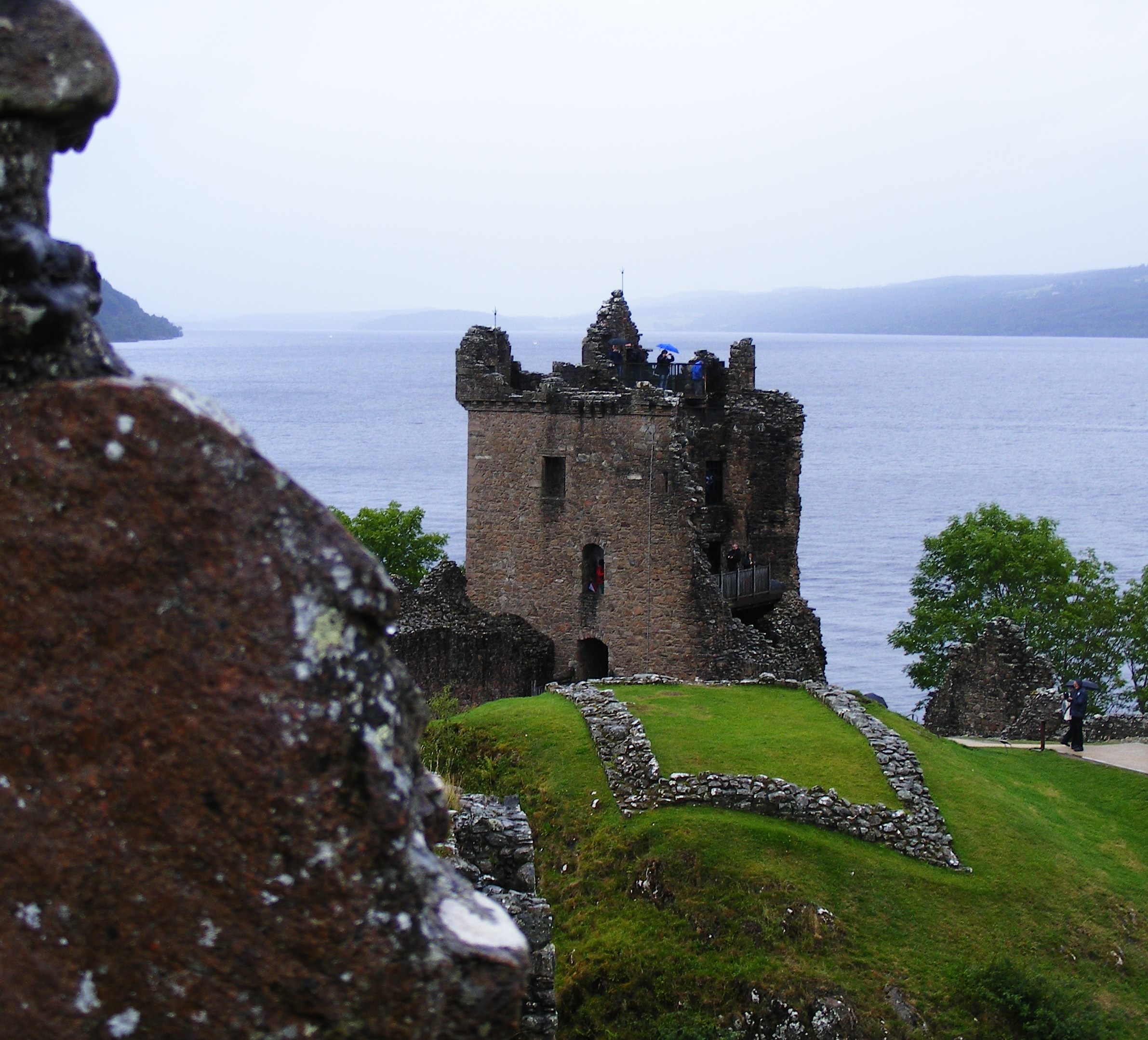
We decide that we will take our courtesy car eastwards to seek out monsters in Loch Ness; maybe our form for wildlife spotting will improve. In rain and mist we pass the site of the battle of Glen Shiel, which took place in 1719 when the Jacobites and their Spanish mercenary allies fought the British troops. This was the last time that the British army faced foreign troops on British soil. We view Loch Ness through wind and rain. We drive further up the loch to Drumnadrochit, planning to utilise the car park of Castle Urquhart, which we can enter free, in order to photograph the loch. Here we encounter numerous foreign tourists on their ‘every possible castle in Scotland and then some’ coach trips and the car park is full. Fortunately someone is just departing and we slot in to their space.

Although it wasn’t on the itinerary, Castle Urquhart (bizarrely pronounced Uff-irt) is an interesting location and yet another example of serious investment in Scottish tourism, with an impressive visitors’ complex. Apparently, this met with local opposition when it was proposed in the 1990s and it is set partly underground to minimise the impact. Like everywhere else, the staff are very friendly and we are greeted by two members of Clan Grant in ceremonial dress. We are asked where we hail from and they decide that Devon just about qualifies us for entry. We are probably more local than 90% of today’s visitors; rain is doubtless keeping the less intrepid British holidaymakers indoors.

We are herded in to watch a well put together video presentation about the history of the castle. In the sixth century, Saint Columba visited the Pictish chieftain Emchath, who owned the fortress on this site, and converted him to Christianity. Sir Alan Durward built the stone Urquhart Castle in 1230. Edward I captured Urquhart in 1296, during the wars of Scottish Independence but it was soon regained. In 1395 it was seized by Donald, Lord of the Isles, seeking to increase his power. In 1509, James IV stripped the MacDonalds of their land and titles and gave Urquhart to the Grants. Raids by the MacDonalds continued. In 1545, they captured 2,000 cattle and many other animals, as well has taking furniture, cannon and the castle gates.

In 1689, the Grants supported William and Mary and there was an unsuccessful Jacobite raid on the castle. Nonetheless the Grants abandoned the castle, firing the gatehouse so that it could not be taken over by their enemies. Grant was compensated by Parliament but although they retained ownership until 1912, the castle remained in ruins. Much of the interpretation for this castle, one of the largest in Scotland, are of the ‘this may have been’ nature. Amongst the remains is what’s left of a ‘Doocot’, or dove-cot, which John Grant was obliged to build as a condition of his being granted the castle in 1509. There is a full size trebuchet in the grounds, accompanied by the proviso that there is no proof that one was ever used at Urquhart. What next, a nuclear war head complete with a similar caption?

Having done enough to feel that we haven’t wasted the day, we retire to the van to watch the European athletics championships.

Up South Uist without a Clutch Pedal: or you couldn’t make it up

I wake up early as usual. This is just as well as we need to leave the van at 7.00am and something weird has happened to my alarm clock, which thinks it is still 1.00am, so it would have been no good relying on that. What more can go wrong? We drive across Skye to Uig. Chris is convinced that this is pronounce ‘You-eee’ and he has been here before so who am I to gainsay him. I would like to place on record that we were not first in the ferry queue, nor indeed, second or third. The ‘Hebrides’ ferry arrives with a distinctly worrying tilt to starboard. We can only hope that this does not have a detrimental effect on our voyage.

We are bound for North Uist and by the judicious use of bridges, will be able to visit five islands for the price of one. Okay, so it was quite a substantial price but there are only two return ferries and one of those leaves five minutes after we arrive. The other is later than we might have chosen but it does mean that we will have plenty of time to explore. On the journey across, we see, ranged across the skyline, the myriad of rocks that make up the tiny islands of the Outer Hebrides. From a distance, they resemble the humps of the fabled Loch Ness monster.

I have brought my laptop with the intention of finishing the Buckland Brewer History Group newsletter whilst on board and make good progress. As the ferry draws in to Lochmaddy we see notices that instruct us to ‘wait for instruction to move before starting engine’. How difficult can this be? Very difficult it turns out, as most of our neighbours are turning their ignitions before the ferry’s ramp is lowered. North Uist, where we land, is distinctive, much flatter than Skye, with many inlets and stretches of water. At last heather is in abundance. I opted to visit this chain of five Outer Hebridian islands, rather than Harris and Lewis, primarily because I liked the sound of Benbecula. First stop is the island of Berneray, so we head north. Like much of Skye, this is single track road with passing places, involving much slowing down and changing of gear. The road is blocked by a van pulling a trailer containing a digger. We wonder why they are hunting around in the ditch instead of moving out of the way. Ah, they are searching for one of their trailer wheels, that explains a lot.

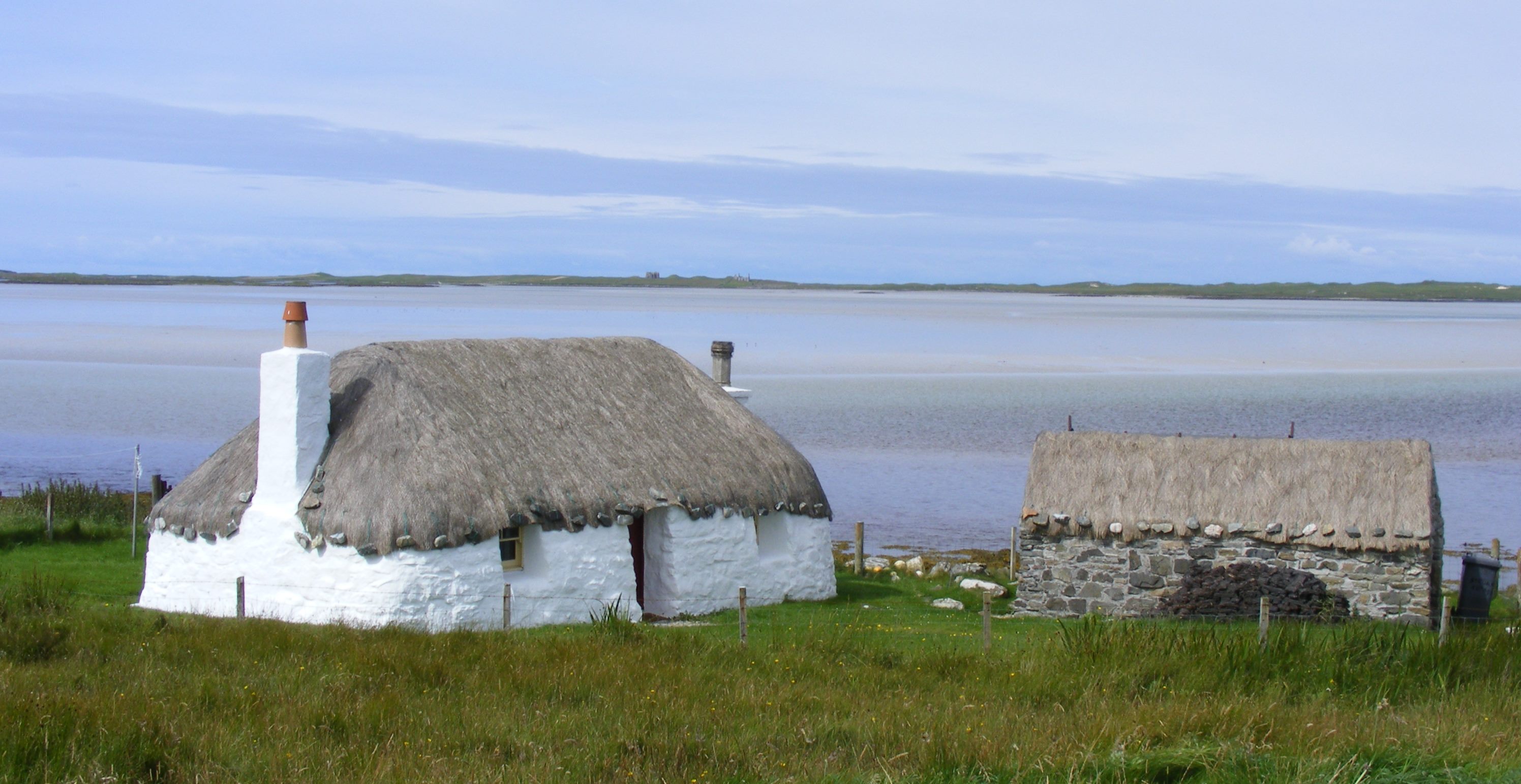
The mobile bank arrives as we draw up at the only shop on Berneray. Chris attempts to get them to part with money but they can only cope with Royal Bank of Scotland customers. We call in at the Berneray Heritage Museum in the old nurse’s house, given to them by the council for a peppercorn rent when the district nurse was discontinued. Worryingly, there were not only problems with the paperwork relating to the original purchase of the building but also with the lease, so they may be on borrowed time. We learn that kelp gathering and horse breeding were the staple industries here. Of a 1911 population of between 500 and 600, 86% were Gaelic speakers, although schooling was in English. Each child took a piece of peat to school every day for the fire. In the 2011 census one Berneray resident from the 1911 census was still on the island. The museum even has a photo of a yacht that Chris’ Devonian grandfather crewed, along with men from the Western Isles. We learn of Angus MacAskill, born on Berneray in 1825, who is accepted as being the world’s tallest man ever at seven foot nine inches. We ask about some of the traditional ‘black houses’, which here have a roof that slopes down inside the line of the front and back walls, leaving a shelf like projection at the top of the wall. We are told that this is to deflect the rain so that it doesn’t drip on those leaving the dwelling. This doesn’t seem very logical to us as surely this makes the walls more vulnerable. The island location means that there is rarely snow here so roofs do not have to cope with that.

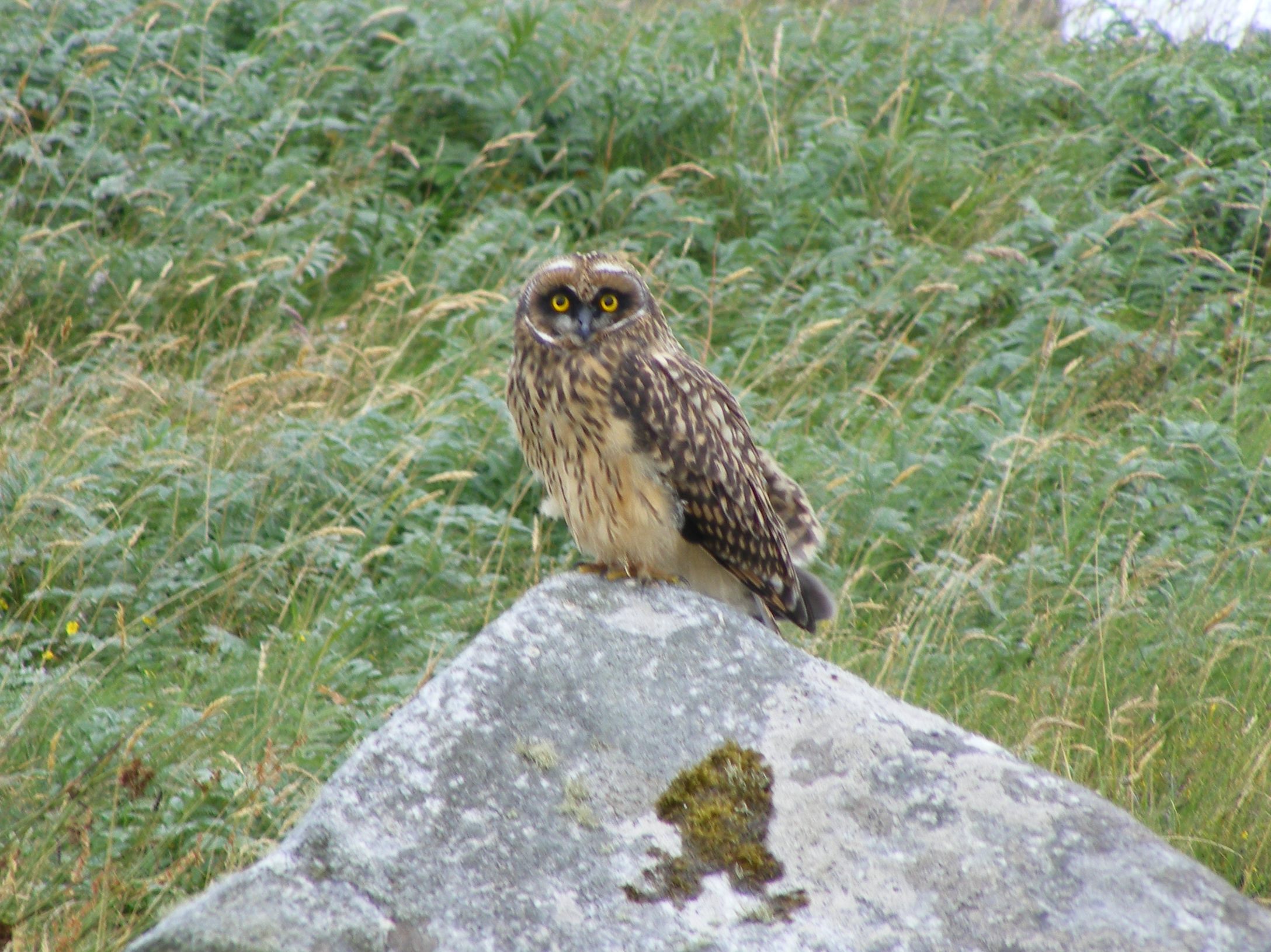
219 15 August 2014 Short eared owl Outer HebridesBack on North Uist we somehow miss the RSPB reserve but nonetheless see lapwing, hear curlew and manage to take a photo out of the car window of a short-eared owl sat on a rock. Our progress is hampered by playing dodge the sheep on the narrow road. We stop at the ruined Trinity Temple, allegedly Scotland’s oldest university. It was a medieval monastery and college founded by Beathag, daughter of Somerland. After an extension in the sixteenth century, it was dissolved during the Reformation, although there were later repairs.

Benbecula may have a cool name but it contains the least of note of today’s islands. As we traverse it, along the slightly longer coastal route, the car begins to make a strange noise. The driver seems unperturbed (or is a very good actor) and we continue to weave our way in and out of the passing places in order to venture on to South Uist. Flora MacDonald was born here, near Kildonan. It was she who helped Bonnie Prince Charlie to escape after his defeat at Culloden in 1746. Peat cutting and kelp gathering are still carried out here. South Uist is hillier than the three more northerly islands in the chain. The car is still not well and there are mutterings about a lack of clutch fluid. We stop at Kildonan Museum, hoping that letting the car cool down will help it recover from the excesses of gear changing over the last couple of days. Kildonan Museum is another example of a Scottish community valuing its heritage in a way that is not seen in England, with archives and research opportunities available on site. South Uist is the heartland of Gaelic culture, home of oral tradition and Fair Isle knitting. There are several telling quotations round the museum’s walls. ‘There is always a danger that history comes to mean the past, as opposed to an interpretation of it.’ and ‘However we interpret it, there is nothing surer than that history has as much to do with the present as the past.’

220 15 August 2014On leaving the museum, we find that we no longer have to worry about the clutch being overheated; there is no functioning clutch. We have to abandon plans to reach Eriskay, the southernmost island of the chain, noted for its wild ponies and the wreck of S.S. Politician in 1941. The vessel was laden with 260,000 bottles of whisky and its story became the basis for the book and later film, ‘Whisky Galore’. We limp back towards Lochmaddy, attempting to do so without stopping or changing gear, next to impossible on a single track road. In the middle of absolutely nowhere we find a lorry servicing garage. The mechanic confirms the demise of our clutch. The good news is that he can fix it on Tuesday. It is Friday. If that is the good news I don’t want the bad. We are four islands away from our caravan and several miles from anywhere where we could potentially sleep or obtain food. I have only had a lemon muffin since 6.00am and even Chris’ full English breakfast on the ferry is a distant memory. Now comes the very long wait while the recovery service try to work out if they can indeed recover us. Chris is patiently spelling out our current location, once we confirm where that is, where we have to get to, via where and most importantly by when. We really need to get that ferry back to Uig.

I’ll admit it, I am hopeless at doing nothing. I could read my Kindle but the battery is low. I could use the laptop – ditto. What about good old pen and paper. I can manage the former but the car is lacking in anything to write on. Finally I locate a single A4 printed receipt that I took to exchange for our ferry tickets. If I write very very small I can occupy myself for a while using that. I need something to stem the rising tide of panic, made worse by the fact that we have very little cash, thanks to not being RBS customers and that Chris’ phone battery, like every other battery in our possession, is getting very low. I know, I know, this is a time when I need my ‘emergency phone’; inevitably it is back at the caravan.

After what seems forever, recovery truck one arrives. The car is loaded and the driver ferrets around in the back for something resembling a seat to put in the middle of the cab for me. This ‘seat’ doesn’t rate a seat belt but this seems not to matter. I am sandwiched between a broad Devon accent and a broad Gaelic accent, acting as interpreter but truth be told, I could only follow half of what our rescuer was saying. I did catch the bit when he said he though his clutch was going but I ignored that. In the process of getting the car on the truck it was apparent that no way was our car going anywhere, like on a ferry, unaided. Understandably, our driver would rather not have to tow us on and become marooned on Skye overnight. Not to worry, this is the Outer Hebrides, everyone knows everyone. In the queue there is a random van, with someone known to our driver at the wheel. He is approached to tow us on and off the ferry and our driver even donates a tow rope as a souvenir. I look pathetically at the dispatchers, not difficult as I am both sleep and food deprived and they agree to load us as a towed vehicle, by no means a foregone conclusion. Despite our lack of automotive capacity we are on the ferry.

The ferry is half an hour late arriving and all we want to do is get home but finally we are aboard. After consuming the welcome curry from the café, there was the issue of getting off the ferry. Our helper accelerates away at a great rate and the tow rope snaps. We tie it together but it was short to begin with and now Chris is very close to the almost new van in front. He manages to avoid running in to it and we are handed over to recovery truck two. We are on Skye, this driver drives at Skye speeds. I do have a seat belt this time but as he hurtles round the many twists and turns our knuckles are whitening rapidly. We arrive at the garage, deposit the car and collect a courtesy car that has been left out for us. We are still an hour and a half from ou destination. Arriving back just before 1.00am, I don’t think we have ever been so pleased to see the van. Now we have to work out how to cope when we are fifteen miles from a shop or a phone signal and fifty miles from our car. Thank goodness for the internet connection. Working out what needs cancelling or rearranging in order to get our trip back on track can wait until morning.

Over the …..errr Bridge to Skye


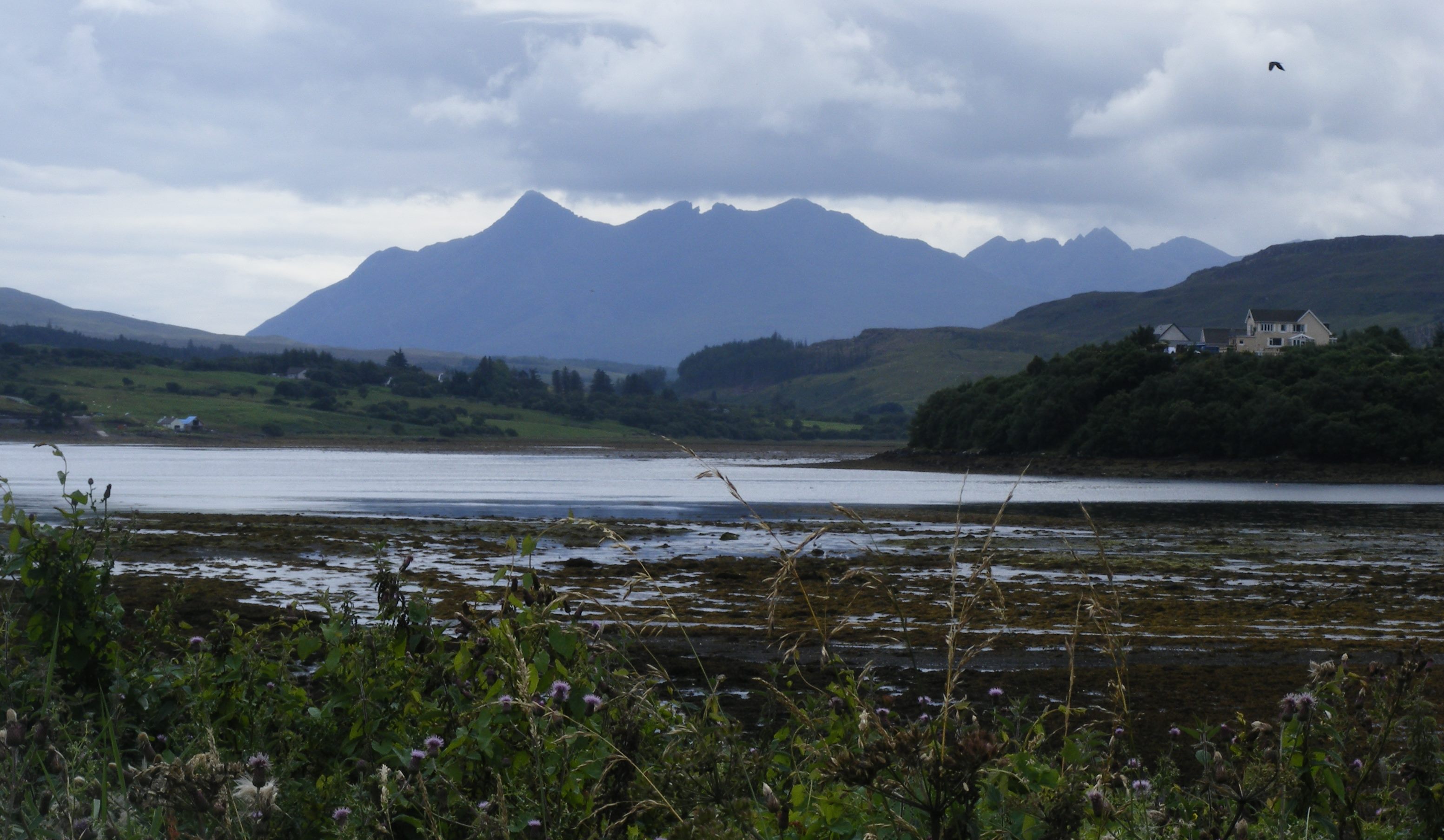
We travel over the bridge to Skye without any bonnie boats, or indeed birds on wings, in sight. Skye, once voted one of top five island in the world by National Geographic magazine, is living up to its Gaelic name, Eilean a’ Cheo – Misty Isle – so the tops of the Cullins aren’t visible. We head to a hide at Kylerhea, supposedly the place to see otters, unless of course you are us. Any potential otters are a good way away out to sea. We think they are otters but I am still not totally convinced that they aren’t seals. We do definitely see a number of those. Using binoculars is always tricky when one wears glasses and today is no exception. I end up with a squint and round rubber marks on my glasses.


Historically cattle from Skye were swum across the 550 metre channel to Glenelg in groups of six or eight. They would be roped in a line behind a boat and rowed to the other side before being walked to market. There don’t see to be many cattle left; there are more sheep. Of course tourists are now the bedrock of Skye’s economic activity and there are plenty of those, the bridge making it easy for coaches to travel across in great numbers. They and many other vehicles, seem obliged to go at ridiculous speeds, hurtling past us at the most inappropriate points.214 Skye


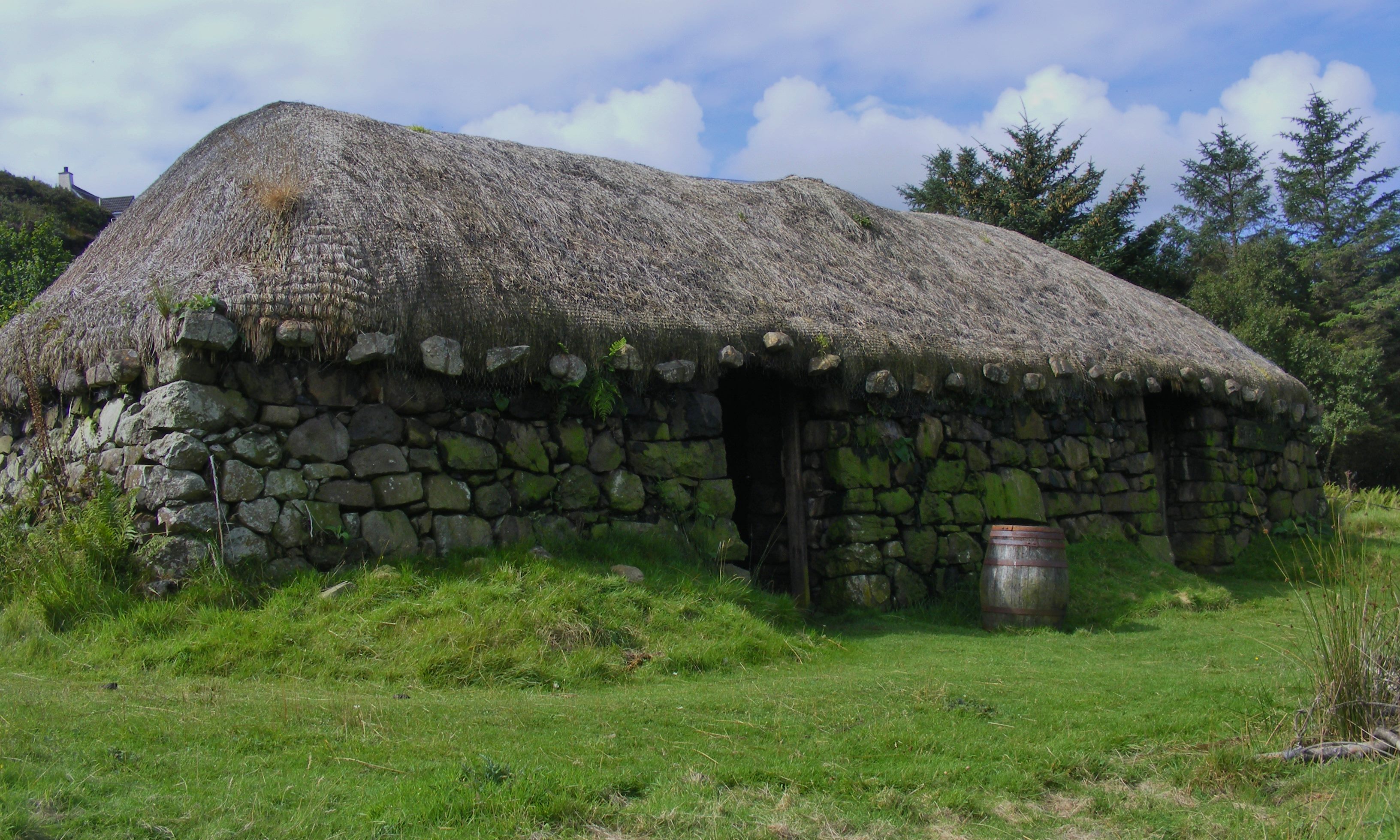
We travel north to Colbost, spotting a stranded campervan on the way. The driver has parked on a soft verge and the nearside is now significantly lower than the offside. Having no method of offering assistance we leave the owners telephoning the recovery services. At Colbost we can see a traditional Skye ‘black hut’, a stone built, two roomed dwelling, with no windows or chimney. There is a central fire and a typical boxed in bed. Animals would have been kept in one end and humans would inhabit the other. The roof would be rush or bracken. Today the rushes are held down with chicken wire and this is weighted by large stones being tied round the edge, rather like the corks on the stereotypical Australian hat. I guess, in the era pre-chicken wire, a net may have served the same purpose. The croft even has the remains of an illicit whisky still behind it.


209 14 August 2014 Croft, Colbost, SkyeWe travel on to Portree, grabbing the last space in the car park. I narrowly avoid being mown down by a bus. It appears that the whole of Skye is in the throes of a power cut. We had seen so little habitation so far that we hadn’t noticed. A swift walk round Portree and we return to the mainland across the barren hillsides of Skye. It is beautiful and rugged here and somehow different from the mainland in an indefinable sort of way. We shall be back tomorrow en-route for the Outer Hebrides.