A full day at the conference today. Typically, a road between the site and the conference venue had been close but fortunately the detour was fairly straightforward. We made a mercy dash to Sainsbury’s for Strepsils on the way. I give Sainsbury’s full marks for retaining its apostrophe in much of its signage.
After a non-controversial AGM, Nick Barrett opened the conference with a session on the future of family history. I had heard this presentation before but this was a revised version, focusing on different issues. Nick spoke about the move from archive-based research to methods that rely largely on digital content and highlighted the impact that financial cutbacks have had on archives. The other major game changer is the rise of DNA-inspired research. He then touched on data ownership; all that information we (or you, as it happens, as I have deliberately not done this) upload to the likes of Ancestry, is now owned by them. Upload if you like but be aware of the implications. Nick went on to talk about initiatives to involve young people in non-traditional research and mentioned the Making History initiative. He encouraged us to promote links with academia and other institutions. A new #historianscollaborate movement is seeking to do this. One of Nick’s case-studies was Ryde Social Heritage Group’s cemetery project; it was good to hear the Isle of Wight getting an honourable mention. Finally, he considered family history as a vehicle for well-being, mentioning the benefits of social interaction with like-minded people.
Next was lunch. Seats were in short supply, so we nobly opted to sit on the high bar-stools, on the grounds that we were slightly less incapable of climbing on and off these than some of our fellow conference-goers. I am pleased to report that we are not still stuck in the restaurant with our feet dangling half a metre above the ground. Again, some slightly weird food combinations, or rather lack of obvious accompaniments – roast chicken but no hot potatoes for example, although to be fair, there were sweet potatoes. I can vouch for the high quality of the Eton Mess, once you worked out how to get it to fall off the serving spoon into your bowl. (Not as an accompaniment to roast chicken of course.)
Next, Dr Penny Walters gave a thought-provoking session entitled ‘The Psychology of Searching and Ethical Dilemmas in Genealogy’. She invited us to consider why we research and outlined the potential minefields that adoptees researching birth families might create, as well as the implications of unexpected DNA results. Penny was followed by Shirley Jones, head of conservation at West Yorkshire Archive Services, talking about her work. Finally, Paul Smith spoke on the Thomas Cook Archives. He outlined the history of the business, which sprung from Cook’s desire to further the Temperance cause. His first organised excursion, in 1841, was to a Temperance rally. Paul then described the contents of the archive, which is now held in Peterborough. I would swear that I had heard this presentation at a previous Guild conference but no one else seemed to remember it, so maybe it was at a different conference, or perhaps it was just a case of déjà vu.
By the end of the afternoon, I was feeling less than wonderful, so I was quite glad that we had decided not to attend the evening’s banquet. Time to return to the van and recharge the batteries.
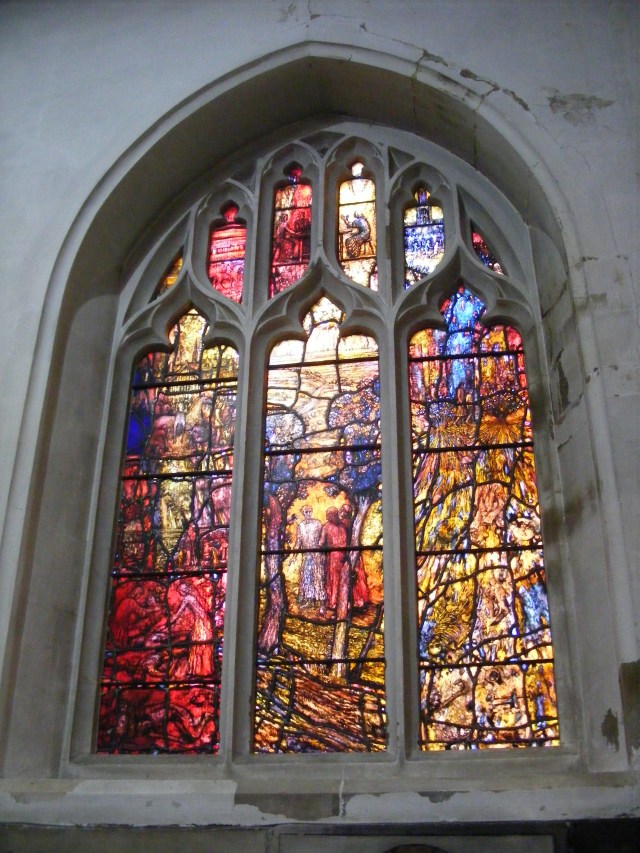
Leicester Cathedral
 The History Interpreter - Janet Few