An Alternative Shower, Shrinking Cupboards and Yes a Little History – I Promise

For those of you who think I am still in Leicestershire – surprise! Our last day in the county was spent visiting Beacon Hill Country Park. Here the rocks are 700 million years old – I promised you some history. With our south-west coastal park experience, we opted for the longest of the suggested routes through the park. All I can say is, there is a reason why the word ‘hill’ appears in the name of the park. Actually is was very pleasant and much of it was flat, a distinct lack of wildlife though. I am a bit ambivalent about country parks. They are, after all, a sanitised version of ‘country’. Still, I suppose they do encourage people to get outside and engage with the environment, if only in its pink and fluffy form. Preferable I guess to the land being built on.

DSCF1505

Once back home, I had this idea, as you do, that I would swap the positions of the two dressers in my kitchen. If you think two dressers is extravagant, there isn’t much else in my kitchen and in fact this move may well be the first step towards there being something else. This lack of kitchen units once landed me in trouble. This incident was so ludicrous it is probably worth repeating.

The phone rings, someone who claims they are not selling anything is on the other end. They clearly are selling something. It’s my lucky day, they want to enter someone from my postcode in a draw for a new kitchen. How old is my kitchen they ask? I try to explain that it is a free standing kitchen, it doesn’t have an age. ‘Freestanding’ is obviously a concept that is new to the telesales person; does she not watch the Home channel? Ageless kitchens are clearly beyond the scope of the ‘how to sell a kitchen’ training manual. She tries again, ‘well how old is it?’ ‘Four hundred years’ I say, only slightly facetiously, the house is, after all four hundred years old. Tele-not-really-selling-anything girl is now very confused. ‘Do you have a kitchen?’ she asks. In words of half a syllable I explain that, yes, I have a kitchen but the furniture in it is all different ages. ‘Shall I put about ten years old then?’, she says, hopefully. By now I am in fully obstructive mode. I am, after all, on the telephone preferencing service, she shouldn’t be ringing at all. ‘The furniture is Victorian’, I say, then, to be helpful, ‘that’s about 150 years old’. She gives up. ‘Well you are entered into our draw anyway.’ Oh joy, now I will get a whole load of advertising literature for a kitchen that may have an age but which I don’t want. Have to say, this was almost as good as the salesman who spent ten minutes trying to sell me up and over doors for the garage I don’t have. He couldn’t grasp that, however wonderful, the doors would look pretty stupid standing there with no garage.

Anyway back to the dresser moving. As said dressers are on the chunky side, I had enlisted help with their removal. Unfortunately this was help, singular. I emptied the dressers and humanely disposed of all the unwanted and unidentifiable bits of kitchen equipment that had been lurking there for the past five years or so. Where do all these containerless lids come from?

My enlisted helper and I exchange the dressers – well we shove at them a bit and they end up in each other’s places. In the meantime, we have removed the dust of ages from behind the dressers. I then replace the contents. I break a few things to make more space. There are still an awful lot of items on the kitchen table that now don’t fit in either cupboard – how can this be? Have the cupboards mysteriously shrunk?

Before we leave these domestic ramblings, there has also been the mysterious incident of the shower in the bathroom. That is not THE shower you understand, which is perfectly well behaved and where it should be. This is another shower, of rain, which is pouring down the walls. Currently a builder is coming to look at it – not sure when – manana is his middle name. In the meantime I am ignoring it and hoping it will go away – not working yet and heavy storms forecast.

NOW the history. Corrected Family Historians’ Enquire Within are on their way back to the printers at last. Hopefully it will be available in time for Santa to pop a copy in your stocking – you won’t want me to say this but 99 days to – oh I wasn’t going to say was I!

Now to the next book, which is to be about One Place Studies. The new society of the same name, with which I am involved, is gaining a great deal of support, as is Buckland Brewer History Group. Whilst on the topic of one place studies, do take a look at this pod cast on The National Archives website.

I’m in the midst of another ‘five talks in a fortnight’ session and next year is filling up fast. Two one day courses for Devon Family History Society are on the calendar for early next year. I also managed to join the Braund Society reunion in Canberra. It was a virtual presence but great to say hello to everyone across the miles.

‘Genealogy for Grown Ups’ at Exodus 2013 Conference

Up early for a day at the Halsted Trust’s ‘Exodus: Movement of the People’ conference. Great to chat to old friends and new and meet family historians from all corners of the globe. Especially pleased to meet some of my overseas blog followers. Advance news (or should that be warning?), if all goes well, I am hoping to visit Canada in the autumn of 2015. I have already had some requests for talks and I will be delighted to fit these in if I can. First I listened to Peter Park, speaking about rural to urban migration, using Cumbria and Liverpool as his case study. In the light Of my visit to the area last year, this was particularly fascinating for me.  I sat the next session out and caught up with the latest news. There was a great deal of interest in our Society for One-Place Studies and membership has grown rapidly over the weekend.

I had a good audience for my talk on Devon emigrants and some very positive feedback afterwards. Finally a brilliant session from John Titford on migrants who bounced back. I have known John for more years that either of us would like to admit to and this talk was delivered in his usual, wonderfully dry, humorous style. The research he was describing involved what he called ‘genealogy for grown ups’. I would call it ‘family history for grown ups’ but I am so with him on this one. All about looking at lesser known sources in original form at Record Offices in order to investigate the context for our ancestors lives. Well done John – a tour de force. Back in the van I find that I have somehow acquired a remote control for a digital projector – oops. I could claim I thought it was mine, which is after all exactly the same. In truth I just didn’t think at all.

A Day at the Workhouse

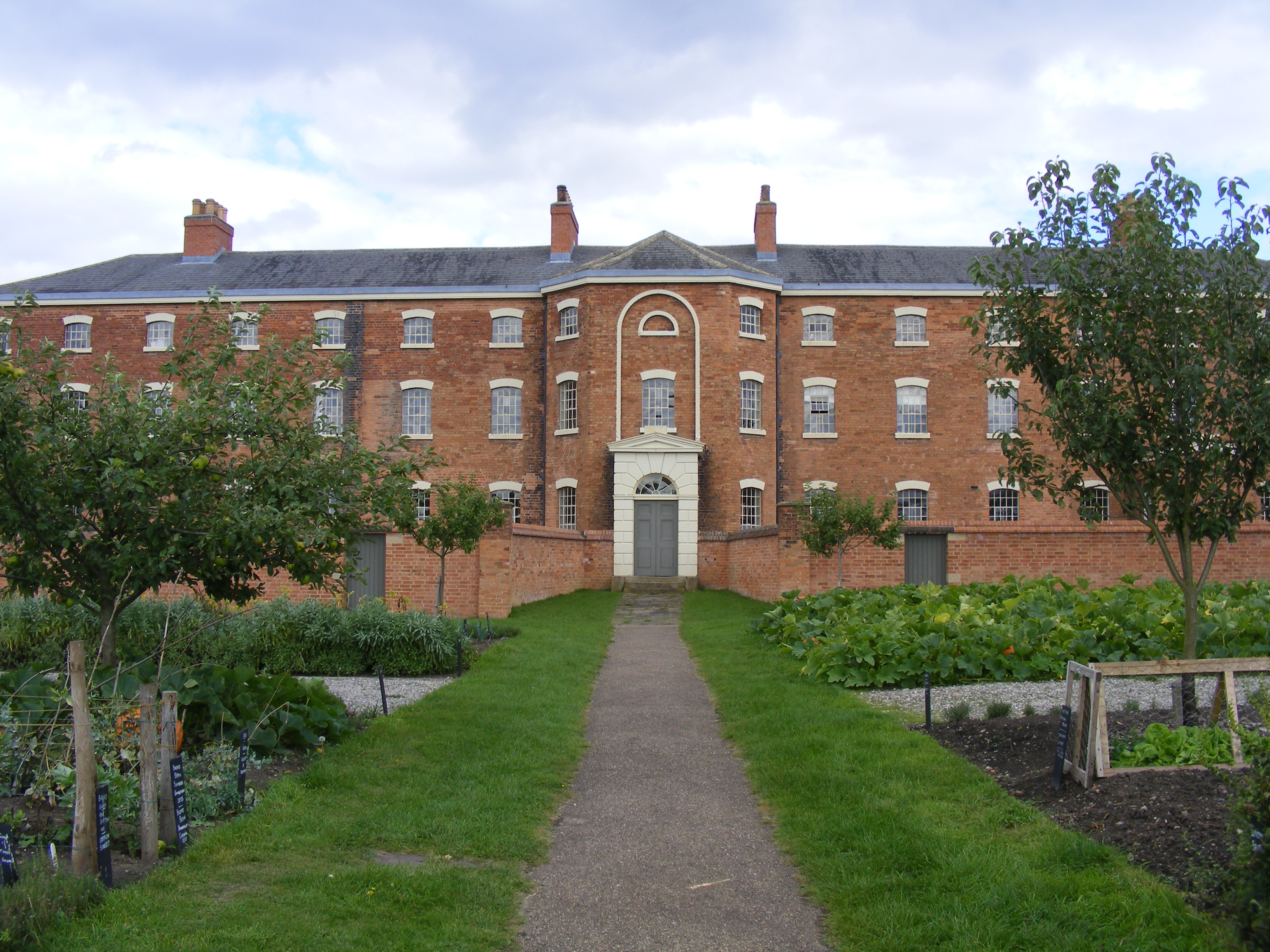
Leaving Leicestershire today, we head for Southwell Workhouse in neighbouring Nottinghamshire. We arrive in time for the before hours ‘Welcome Tour’. This is very interesting and takes us round the outside of the premises, to see parts that self guided tours do not reach. This is an early example of a rural Union Workhouse, which opened in 1824 to serve forty nine parishes. Established as a result of the provisions of the Gilbert Act of 1782, Southwell became a blueprint for the post 1834 Poor Law Union Workhouses. I am tempted to put in a mention in for The Isle of Wight Union Workhouse, which predated this one. Although very similar in style and regime to workhouses in large towns, this is on a much smaller scale, designed for 158 inmates. Although the lifestyle was spartan, it was significantly better than most inmates were enduring on the outside. We view the dead room where bodies were kept, often for some time, whilst awaiting collection by their parish of origin was right next to the room where inmates were held in isolation as a punishment.

7 September 2013 Southwell Workhouse

The supervised part of our tour is over and Martha and Rob have come over to meet us. We explore the symmetrical workhouse and neat vegetable garden. Chris is struck by the similarities between workhouse life and an institution with which he was closely involved in his working life. The mangle room is on an upper story, as our guide pointed out, clearly designed by a man. We are struck by the facsimile of the punishment book, recording only two or three punishments per year. As these include minor misdemeanours such as ‘profane language’, this seems strange. Maybe they wanted to give a favourable impression for the inspectors. Despite the infrequent entries, the names of repeat offenders are in evidence.

The able-bodied men would crush stones, I know what that’s like from my spell in the Neolithic era, or pick oakum. This would be sold to make ‘money for old rope’ on behalf of the workhouse. In the absence of anything more productive to do, the men would turn a crank. This served no practical purpose but stopped them from being idle.

Mistress Agnes Loose in Leicestershire – in search of Richard III

I’ve received a strange request. Could the photograph I took at Bambrough last year be used as a background for a visualisation by wind farm protestors? Flattered  though I am, I can’t help wondering why they don’t just take their own. I do say yes but I am a bit ambivalent as I am, in general, a fan of wind energy. The trouble is, the wind farms need to be in the right place. Sadly, any proposal is always in the wrong place for some.

Off in the new-to-us caravan again. Chris has rediscovered the blueberries that went missing on the last trip. That was six weeks ago. I am not a great observer of ‘best before’ dates but even I have to admit that they are now a little past their best. Bowling along the M5 we see a chicken on the hard shoulder. At this point in time it is an alive chicken. This is perhaps taking ‘free range’ to extremes.

We arrive at our Leicestershire destination with comparatively little incident – just a minor detour at the very end. The camp site is hidden from view by some serious looking security gates. Chris has to speak through an intercom for them to be opened remotely, allowing us to enter. We are now in a field in the middle of nowhere, next to a very impressive new property that appears to rate two gardeners. We are wondering if we will ever be able to get back out through the security gates, or if we have been kidnapped for nefarious purposes. If we do manage to escape, what happens if we want to return and there is no one to press the ‘open sesame’ button?

Chris is trying to get a TV signal. This caravan is all singing, all dancing, full of technical gadgets but lacking in instructions as to how these might work. We now have an external TV aerial – the previous caravan didn’t rate one of these. Chris needs his reading glasses to look at small print on an awkwardly positioned control box. It seems his glasses are in a cupboard with a sliding door. In transit, something has fallen down, covering the channel inside the cupboard into which the door needs to slide. The cupboard now seems to be irretrievably hermetically sealed. A bit of judicious jiggling with a kitchen knife and we have gained entry and are back on task.

After a certain amount of head scratching and plugging numerous aerial cables in to the aforementioned awkwardly positioned box affair, in various combinations of sockets (Krypton Factor here we come), no television. I am not so bothered as I am too busy being excited by the discovery that, despite the remote location, I have achieved an internet connection. Not too sure whose connection I am hijacking. It appears to have the narrowest bandwidth in the world but it is an internet connection of sorts. Meanwhile, Chris has solved the lack of television. It seems that some incompetent (ok me) has plugged the aerial in the wrong socket in the television itself and the cables in the inaccessible box were right all along.

Next day and we are off to the Bosworth Battlefield Heritage Centre. We have already established, thanks to Tripadvisor, that this is not actually on the site of the battlefield at all, so that won’t be a disappointment. In fact the received wisdom concerning the exact battlefield location has changed over the years. It is raining, quite a lot, so we do the indoor bits first. The exhibition has obviously had serious money thrown at it and is interactive and impressive. The story is told through the eyes of three fictional characters and Thomas Stanley. One is ‘Colette’, allegedly the wife of a French mercenary, who sound as if she has stepped out of ’ello ’ello. She does stop short of saying ‘I will say this only once’ but only just.

6 September 2013 View of Bosworth field

We linger in order to avoid a school party that is being supervised by Joyce Grenfell. We throw ourselves in to the interaction with gusto. A surprise discovery, apart from an attempt by Genghis Khan, carrier pigeons were not used until the nineteenth century. My son in law has obviously been here. An interpretation board referring to ‘less than 1000 knights’ has been corrected to ‘fewer’. We can’t resist trying on armour. These are a more realistic weight than our seventeenth century versions. Chris does an impression of man in the iron mask and is surprised by the lack of vision from the helmet. Then a chance to see how good we are at pulling a long bow (2 fingers only allowed for this). I have done archery before but I am amazed that my pull equates to a 220 metre range. The maximum, which Chris achieves, is 240 metres. Maybe it is rigged to improve visitors’ self esteem. The Battle Story presentation brings it home just how critical the role of Thomas Stanley was in determining the outcome. The terrain clearly played its part as well.

We then venture outside, where the rain has abated somewhat. We follow the 2km Battlefield Trail, wondering why the advice is that this takes and hour. This takes us through Ambion Wood – a corruption, apparently, of Anne Beame.

Then on to Leicester itself to see if we can find THE car park. We find A car park. Not, it turns out, THE car park. Further investigation round the old part of Leicester takes us to the Cathedral. The gravestones have been rearranged, rather strangely, one behind the other, with only a few inches’ gap between them. This makes reading them difficult and photographing them impossible. We see the Guildhall, parts of which date back to 1393. Finally, THE Greyfriars car park.

6 September 2013 Gravestones at Leicester Cathedral

Back in the van and my shoulder is hurting. I suspect a longbow related injury. I really should be less competitive.

In at the Outset – Society for One-Place Studies, Soldiers’ Wills and other matters

Hurrah! After all the hints of the past few months I can confirm that the Society for One-Place Studies is born. I seem to have ended up as Vice Chairman. Do look, do join if you too are researching the history of a place. This is going to be a good way to exchange ideas and encourage each other. Yes, this does mean that I have been instrumental in the launching of two societies in a month – so much for a quiet life.

The Buckland Brewer History Group website is developing nicely and we have had a great deal of interest from near and far.

Spent some time this week searching for the Braund Society journal, which had in theory been delivered to an outbuilding near me. Outbuildings duly searched and no sign. Eventually the parcel was tracked down. The relief delivery driver used his sat nav (always a bad idea if you are trying to find my house) and then dumped the parcel in the nearest shed, which just happened to be that of a neighbour who was on holiday. The regular driver, refreshed from his break, after consultations with his colleague and identifying sheds on Google Earth, retrieved it.

Had a new one in the seventeenth century this week. I had enlisted a willing (well probably not so willing) victim volunteer, to pose as a cavalry officer. I was about to place a Monmouth cap (knitted beany hat affair) on his head, which was somewhat follicly challenged, when he tells me he is allergic to wool! So straight to the helmet then – one has to suffer for one’s art – or at least he did.

Some TV ties ins now. Disappointed to find that Celebrity Masterchef’s ‘Wars of the Roses’ menu included orange carrots. Thanks to Martha for picking that one up – to say nothing of the not very historic plastic stock pots. Impressed though by Nick Hewer’s apparent fluency in reading seventeenth century documents during his episode of Who Do You Think You Are? Was there really a nicely transcribed copy nearby? I rather think there may have been.

Finally I must mention the heavily hyped Soldiers’ Wills site. Great resource but the site leaves a lot to be desired. They need to include a proper explanation of the class of records. It also needs the facility to search a range of dates, currently it is one year at a time. The full date span on the advanced search is 1850-1986. It seems the only dates in use at present are 1914-1921 but if it tells you that, it isn’t anywhere very prominent. Just glad I didn’t search 1850-1986 a year at a time for all the Braunds! This is really only set up for an individual family historian looking for a single will at present. What about us One Place Studiers? I’d also like to have been able to tell them all this but my and several others’, feedback emails bounced! Second attempt at feeding back was more successful and the wills arrived on my computer within two days – shame one was mis-indexed though.

Mole Traps, Moggies and Morning Dew: the hazards of photographing gravestones.

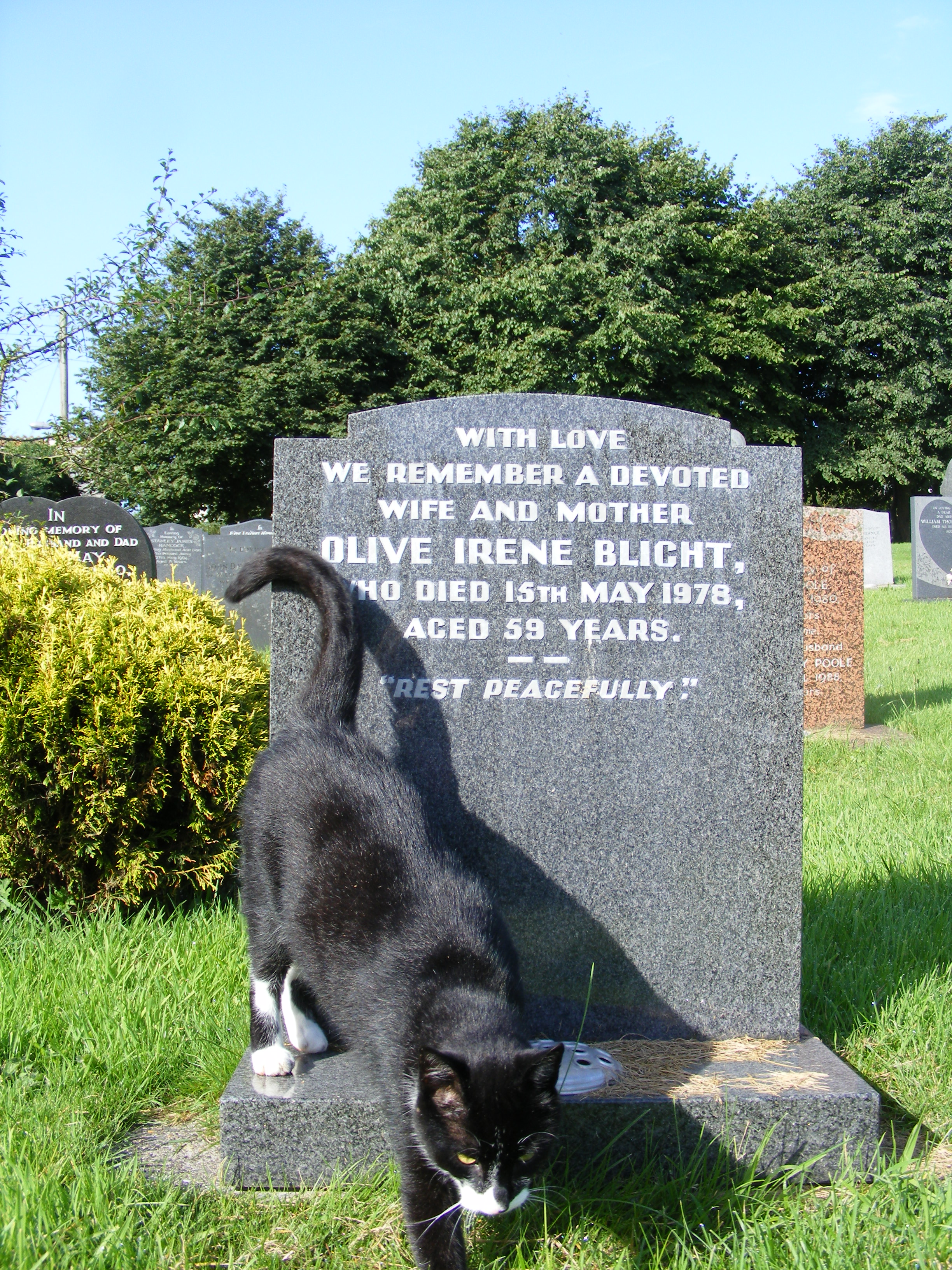
I am finally catching up with last year’s jobs and finishing off the last few gravestone photos to go with the Buried in Buckland project. I have long since established that this needs to be a morning job as the sun is at the wrong angle for afternoon photography. 6.30am and there is thick fog over Buckland Brewer. I proof-read my way through the ‘B’s of Family Historian’s Enquire Within and then venture out into the morning dew. Rather a lot of morning dew actually – feet and sandals now soaked (not the new blue sandals of the previous post.). It’s jolly hazardous this gravestone photographing you know. Not only do you have to negotiate Ernie’s mole traps, there is the continual getting up and squatting down to be level with the stone in question. The latter activity means that I have now been squatting down in long dewy grass and I look as if I have had an unfortunate accident. Then, what do you know, today’s chosen rows of stones include a significant number that face the wrong way. These are afternoon stones – typical. I clean mown grass off Cyril Metherall and remove numerous dead floral tributes out the way in order to get the best view. Then I encounter the local cat who refuses to move from in front of Olive Blight.

DSCF1290

Gratified to see that the latest episode of Who Do You Think You Are? with Gary Linekar, was filmed in Hinckley, location of the forthcoming Exodus Conference (mentioned in my previous post). Not only that but he shares with my children the distinction of being descended from a poacher.

It seems I am now Chairman of the Buckland Brewer History Group steering committee – how did that happen? Speakers to book, web pages to create, burials to index. I know, I am supposed to have finished indexing the burials. As a result of an administrative error when backing up my computer (alright, I admit it, I overwrote the new file with the old one), I now have 1741-1782 to redo. Next stop marriages. I was feeling pleased with myself that I seemed to have managed to set up an email account for the above society. Obviously lulled into a false sense of security though. They want a mobile phone number to send a verification to. I do have a mobile phone – somewhere. The number errr now that’s another matter.

Pretty pleased with our shiny new baby website for the group. It’s just a shame I should have been doing something else when I was playing at getting the webpages together. War Memorial Inscriptions now added to our Buried In Buckland pages.

Families, Salmon Poaching, Methodism and One Place Studies

Where have I been? You may wonder. So do I – surely it should be about April and here we are August coming to an end. No sign yet of the ‘less hectic’ year that I promised myself. I have been buried in visits from family and friends, always good fun. My children get me into untold scrapes. First a fairly pregnant Rebecca and I undertake a mad scramble across the rocks at Croyde. I have nobly leant her my brand new, ridiculously expensive, sandals on the grounds that they are blue and she is wearing blue. Keen as I am for her not to tear her feet to pieces on sharp rocks, I am not so keen on her getting the sandals covered in sandy salt water. Could I make my way across the rocks and throw the old sandals back to her? Could we wear one old and one new sandal each and hop? The whole process would be much easier if we weren’t laughing so much. We emerge relatively unscathed.

Then Martha and I get ourselves trapped in a local budget supermarket beginning with L. We are there to buy flowers. We enter with our basket. The flowers are outside. As we try to go back to the entrance, past the no entry sign the basket sets off the shop alarm. Even the empty baskets are alarmed here – what does that say about the residents of this town (unnamed to protect the guilty)? Not to worry we will just go out the exit and go back round again. It seems impossible to get to an exit without buying anything and what we want to buy is past the exit arghhh. In the end Rob comes to the rescue by barging his way past numerous people who have been over indulging on Doritos, lager and chocolate (I know I looked in their baskets) and brings us back in the flowers so we can exit in the appropriate way – i.e. having parted with some money.

Life in the seventeenth century continues, with now weekly visits from our friends at the local care home. We are working towards all their residents having enjoyed our peculiar brand of ‘fun’. If drilling holes in people’s heads and attacking them with pikes can be termed ‘fun’. One of our other young visitors, aged three, was very concerned that we didn’t seem to have any princesses with us. I might have pointed out that the princess of our time ended up incarcerated in Carisbrooke Castle under house arrest. Actually the young visitor was more concerned with telling me that she wanted to be Rapunzel when she grew up. There’s a career path. She also took well to pike drill with her mini pike. First time I’ve seen a pike wielded like a majorette’s baton.

I ventured overseas (well outside Devon) to give a talk on seventeenth century gardens to Bude U3A. I usually appear in period attire for these, leaving enough of my twenty-first (well ok twentieth) century clothing underneath, so I can strip off at the end without offending anyone. It was awfully hot but I went for it, tucking my trousers in my socks so they didn‘t show under the seventeenth century petticoat (an outer garment for the uninitiated). Pity I forgot to un-tuck them before sauntering back across the car park afterwards. The talk went very well, if the fifteen minutes of questions was anything to go by. Martha did point out that this might be because I hadn’t explained things properly in the first place but it didn’t seem to be.

An interesting Q & A session for the North Devon Group of Devon Family History Society and our 2014 programme is now nearly complete, with some fascinating presentations on the list. I’ve been revisiting a branch of my children’s ancestry, as we are planning a trip to south Devon and they came from that area. One individual, described as ‘an old offender’ seemed to spend every February being caught for salmon poaching. I am guessing it was a seasonal activity – something to do with spawning maybe. Thanks to the British Newspaper Archive, which I access via FindmyPast, I know all the gory details. Whilst on the subject of FindmyPast, I see they have added numerous Canadian resources. I hope that may help with my Devon emigrants research. I have also been running through (not with a weapon you understand – not in the C17th now) my chosen emigrant examples for the Exodus conference in a couple of weeks’ time. This means immersing myself in the history of the Bible Christian movement.

In fact, much of my research time lately has been spent on Methodist related topics. I strive to understand the mind set of the people of the past – as all true family historians should. Why would a local Anglican Lord of the Manor continue to allow one of his properties to be used as a Methodist place of worship, whilst conducting an acrimonious exchange with another Methodist group in the local press? I have proof read a new edition of an excellent book and I have had discussions concerning a local chapel which may be used to combine evangelism and heritage – exciting times. Exciting times too on the local history/one place studies front. It’s a secret at the moment but do watch this space. Not a secret is the launch of Buckland Brewer History Group next month – first meeting on 18th September. Be there or be something or other.

More Walking and Family History ABC

A pot pourri of bits and pieces since my last post. First – the end of our walking adventures:-

A thick sea mist today, so leaving early to avoid the heat wasn’t really necessary. A bit of a detour trying, unsuccessfully, to find free parking in Salcombe. Better luck in Hope Cove, where today’s walk starts. This section, 8 miles from Inner Hope to Salcombe, is described in our instruction book as ‘strenuous’ – deep joy. In the end it turns out to be less strenuous than anticipated and we even finish in 3½ hours – half an hour less than the books suggests. It is however very humid so we are soon ‘glowing’ nicely. Views are not on the menu with the thick sea mist. Unlike yesterday, we certainly do feel we’ve done something today.

First port of call on returning to the site are the showers. I grab some clean clothes to put on afterwards. I am wearing walking trousers with detachable legs. Unfortunately, as I leave the shower, I realise I have brought the legs and not the shorts part. Not wishing to put on the less than savoury pair that I have just removed, now I am nice and clean, I go for wrapping a towel round me instead. I then have to nonchalantly saunter back across the site trying to make a bath towel look like a fashion statement.

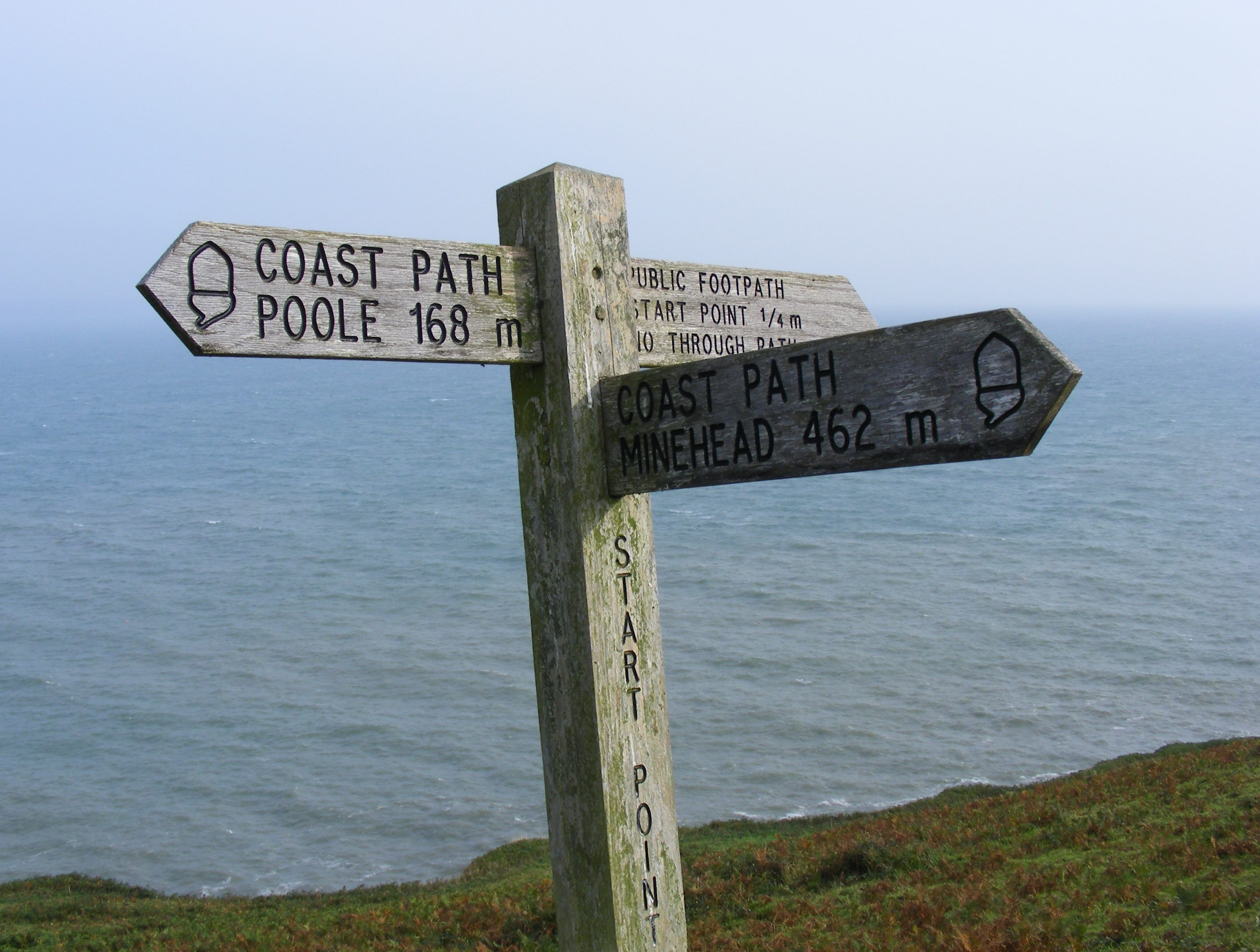
Day 68 23 July 2013 Looking across at Salcombe

By the next day I am almost immobile again. Notwithstanding, we set off to walk from East Portlemouth to Prawle Point. This wasn’t the intended stopping point but there is an annoying diversion due to a cliff fall. I limp along personfully as my knee joins my back in the list of bits of my body that don’t work properly.

We decide to call it a day and cut short our trip, returning to the rugged north. By this time even I am sick of the very long stretches of barely car width road. Glorious drive back across Dartmoor – even more glorious because I avoided the A38 this time. As I herd a flock of sheep with my car in order to make progress, I revel in how wonderful the Devon landscape can be.

We are in the midst of a wonderful fest of family and friend visits but I am making time for history too. Another great day in the C17th with folk from the local care home and others, plus promoting Clovelly Archive Association at Woolsery Show and planning for the soon to be launched Buckland Brewer History Group.

On the writing front, Family Historians’ Enquire Within is now at the printers and I am waiting for proofs. Put it on your Christmas list folks – you won’t regret it. A new project beckons – watch this space. 3 entries to whet your appetite:-

A is for AIM25 The website provides access to collection level descriptions of the archives of more than a hundred institutions within the London area. These include the records of London livery companies, higher education institutions and learned societies.

B is for BARGES See also Boatmen, Canals and Watermen. From 1795-1871, all boats and barges exceeding thirteen tons burden used on inland navigations had to be registered with the Clerk of the Peace. Such records are with the Quarter Sessions (q.v.) records in CROs. Information on the history of the sailing barge can be obtained from the National Maritime Museum. The Society for Sailing Barge Research website is useful. A website entitled Thames Sailing Barges is also very informative and details a number of museums and other sources of information.

C is for COUNTESS OF HUNTINGDON’S CONNEXION This was connected with the Methodist denomination. The Countess Selina (1707-1791) advocated the principles of Methodism and appointed George Whitfield, a notable preacher, as her chaplain. Her name was given to Whitfield’s followers. The Countess founded a college in Wales and built many chapels. The earliest register of this sect comes from Norfolk and dates back to 1752. The movement spread throughout the country. Registers were deposited with the Registrar General in accordance with the 1840 Act and are in TNA.

Mistress Agnes goes on holiday – more about driving than history

Have recently added Linkedin to my social media collection. A little worrying that they have interpreted my skills as being suitable for a post that involves ‘developing mathematical algorithms for high-order simulation of compressible flows’. I am sure I could, if only I knew what it meant.

French Exchange students with us in the seventeenth century this week. Somewhat anachronistic that they all began singing the Marsellais when doing pike drill!

Was not holding out much hope when I received a request to trace the Jones family. Things got better when I managed to get back to an Archimedes Jones (got to be better than William). They then got worse again as his birthplace was Jamaica!

Now on a short break resuming our south-west coastal path walk. This portion requires two cars. Not very ecologically sound but there are just no buses anywhere near the places we need to start and stop some of the sections. This means I have to work out a convoluted route so I can get to south Devon without encountering anything that purports to be a major road – the A38 for example. This is especially important as I am in the new-to-me car that I am not yet used to. The up side is that I get to pootle across stupendous countryside in the middle of nowhere Dartmoor. I stop for herds of horses and generally enjoy myself. I am fine until I get to Cornwood. Unfortunately the next bit is not on my map. Well it is but not on any of the maps that I have actually brought with me. Fine, I have borrowed the sat-nav. I’ll sat-nav on from here. Problem one – This is not my sat nav so it has to lie on the passenger seat. This means I can hear it but not see it, so not much time for anticipating what is coming next. Problem two – I lose GPS signal for about ten minutes on a very narrow road with a car behind me and no chance of stopping. During this period I have to guess the route. Problem three – the sat-nav would like me to go along the A38. By this time I am tired and hungry. A38 – whatever – it is only a road. I am to join the A38 on a blind bend with the sun in my eyes. My wing mirrors or angled down to facilitate getting up my drive, which is barely wider than my car, without untold damage to the Methodist Church next door. They are not angled correctly for seeing what is bearing down on me at a great rate on the A38. The wing mirrors don’t seem to move much. I am restricted to twisting round awkwardly and using my rear view mirror, which is about as helpful in these circumstances as a chocolate tea-pot. I launch myself into the unknown. There is no screeching of brakes or hooting of horns. I seem to have joined the A38 without incident. More by luck than judgement.

Driving along the A38 is fine, it is just the joining I have trouble with but this is seriously out of my driving comfort zone. I know, I know, I have been driving for twenty five years. Sadly, most of that was on the Isle of Wight, where you get a sum total of 200 yards of dual carriageway and joining that is controlled by traffic lights. I leave the A38 after 3 miles cross under it and – oh no – have to join it AGAIN going in the opposite direction! Effectively I am crossing it but not in a straight line. Arggh!

Chris and the caravan have been in south Devon for a couple of hours already. I am later as I have been conducting a Devon Family History Society session for beginners, slow starters and the generally stuck. In this weather the paddling pool in the adjacent park was probably more appealing but those who attended seemed appreciative. We plan an early start for tomorrow’s walk to avoid the forecast 30 degree temperatures.

We leave before 8 o’clock to walk from Bantham to Inner Hope. A comparatively short stretch but we are out of practice and the starting and stopping points have to take account of the many south Devon river estuaries. We leave my car at what will be the end of the walk and drive in Chris’ to our starting point. An unidentifiable red warning light appears on his dashboard. We ignore it – the wheels haven’t fallen off or anything – we will be fine. Against our principles but we have already paid a small fortune to park my car now we need to pay again to park Chris’. There is no on road parking for a very long way. Neither of us have had the sense to actually bring any money with us. We count out the copper and 5 pences in Chris’ car ashtray, wondering what plan B is if we can’t come up with the £5 required. Fortunately we have enough, although the car park attendant looks less than impressed with a handful of change.

 Day 66 21 July 2013 Looking back at Bantham

We set off on a lovely stretch of coastal path. Bizarrely there appears to be a martial arts class going on on the beach. Landslips mean we are diverted on to a narrow road. Every time a car passes we have to squash ourselves in to the hedge, attempting to choose a portion that is lacking stinging nettles and brambles. We cross a rickety bridge, keeping a sharp eye out for trolls and manage to get back to my car before the heat of the day – pretty much just as everyone else is starting out. We drive back for Chris’ car. The only place to turn my car round is past the man collecting the £5s for the car park. An advantage of Chris being distinctive looking and I guess of us having paid in 5ps is that, amongst hundreds of customers, we are recognised and are allowed to drive past to fetch Chris’ car without being deprived of any money, which we don’t have anyway.

Then the problems start. We are two of only a few cars who are heading up a single width road away from the beach as hoards of surf board carrying, spade wielding tourists are approaching it in their cars. None of these tourists seem to a) know the width of their car or b) be able to find reverse. Plenty of squashing into hedges, reversing and passing with half an inch to spare is required. Unlike the A38, this is fun. I can do this. This is what I do all the time. Slow, I’ll grant you but fun.

More from the seventeenth century

Thanks everyone for the Race for Life donations – it made all the ‘running’ in the hot weather worth while. The medals, that were awarded for not expiring from heat exhaustion on the way round, are equipped with safety gadgets in their ribbons. I suppose these are a nanny state necessity in case any hapless racers attempt to hang themselves.

 A nearby village has a scarecrow competition running. I accelerate nonchalantly hoping no one noticed that I slowed down for the lollipop lady. I did wonder why she was so far from the nearest school. Well she was very life like. The last week has seen us spend a seventeenth century day in the hottest classroom in the world. Fifty children were crammed into said room making matters worse. Some excitement was occasioned however when a gardener began some not very seventeenth century strimming outside. Obviously all the windows were open making said strimming distractingly loud. I was half way through the fourth of four hourly sessions so my voice was beginning to falter somewhat. I was just shouting my way through what happened when armour was hit by a musket ball when the strimming man’s strimmer flung up a stone and shattered the window. Any teenagers rendered comatose by the heat jerked into an excitable frenzy. I extolled the virtues of armour when being attacked by flying stones.

We rush home to show a Clovelly Archives Association member round her ancestral village. Needless to say she is related to Chris. Pretty much anyone with North Devon ancestors is related to Chris. Walking up and down the cobbles makes my muscles remember that I have raced for life the previous day.

Then one of our best ever days back at the 1646 ranch. Four wheelchair bound, brain injured, residents of a local care home come in with their carers. I open secondary doors to allow wheelchairs to pass through. I knew it was going to be a good day when one of the lovely carers, of ample proportions, suggested that this might be for her benefit, rather than that of the chairs. We were able to dedicate our day to these wonderful people. Pike drill was a blast – ‘place the right wheel of your chair against the base of your pike’.

A meeting to discuss our proposed Buckland Brewer History Group followed. Not being a milk drinker, when offering guests a cup of tea, I check the sell by date first. Unfortunately I did this after I had removed the lid. I did realise and stop tipping when my foot started to get wet. June 13th by the way.

Off in our new to us caravan, in preparation for the South West Family History Fair at the weekend. We are struggling a little with the downsizing that is a concomitant of the new van. We call in at Street. For the benefit of my foreign fans, Street is the home of the Clarks outlet store. Clarks being one of our premier shoemakers and this being their largest store. We then commence the farce that is me attempting to buy shoes. My feet are pretty much square and when approached by assistants asking what I am looking for I am not joking when I say, ‘Anything that fits’. On previous occasions I have left this store because nothing does fit. This time I am after sandals. This is better than shoes as, with sandals, ones feet can sometimes hang over the edges a bit. I would really like some the same as I am wearing, purchased in this store about eight years ago. My shoe wearing and buying resembles that of my ancestors. I buy a pair of shoes (yes, singular) and then wear them until they are beyond economic repair. This is to postpone the awful shoe buying scenario for as long as possible. It is still very hot but shoe trying on requires sock wearing. I am now looking natty in my three quarter length trousers, sandals and socks. The assistant looks at me as if I am seriously sad when I ask if 2005 fashions are still in stock. I head over to the children’s department. The one advantage of having feet my shape is that I can fit into children’s shoes and thus avoid paying VAT. Oh silly me this is July and predicted to be the hottest weekend of the year. Of course sandals are not in season. Oh to live in days when shoes were home made and were for comfort not fashion. Of course at this time of year, many of our ancestors would have gone barefoot to preserve a valuable asset for the winter. The weird thing about historical shoes is that, allegedly Medieval and Victorian footwear had a left and right, yet in the seventeenth century shoes were identical. The reason I have heard given for this is that, if shoes were identical, it was quicker to pull them on in a time of war. How does this work? Were there then no wars in the Medieval period? I then try to emulate my ancestors by tripping barefoot down the prom at Weston super Mare for the first paddle of the season.

I pop in to a high street bank to pay in some cheques. Super keen Simon approaches. Would I like to try paying them in using the machine to save queuing? Well, not really but Simon looks like he is on some kind of payment by results deal so I agree. It is not a quick option this and first my debit card and then my cheques are swallowed by a machine. After a lot of whirring they are duly spat out again. Simon thinks it is because one of my cheques is not a standard size. Now I am at least three places further back in the queue to pay them in the conventional way.