Exploring History, Writing Books and Lost Fishermen

‘Putting your Ancestors in their Place: a guide to One Place Studies’ is now with the proof readers. If all goes well it will be available in time for Who Do You Think You Are? Live in February, to go with one of my presentations there. Hurrah – now what shall I write? Actually there are plenty of ideas so please don’t suggest anymore. If you are still waiting for ‘Family Historians’ Enquire Within’, it is on its way – promise. Gave the talk of that book yesterday. The audience seemed to appreciate the A to Z suggestions but a bit of a crisis when, with only ten minutes to go, I was still only on M.

Favourite website of this week is the ‘Explore’ section of the Victoria County Histories’ website. There are articles, maps, drawings, photographs and audio files, even for counties that are poorly served by the volumes themselves.

I’ve managed to successfully identify three death certificates for the Clovelly fishermen who were lost in the 1838 storm and whose bodies were recovered. Also completed three research requests and tried to unravel another confusing American Braund line.

This coming week will see me passing on the benefits of our gravestone recording experiences, listening to the story of the research into the men on our local war memorial and a day in the seventeenth century.

Still working on Lucy’s maternal line – details to follow.

Remembering the 5th November for all the right reasons

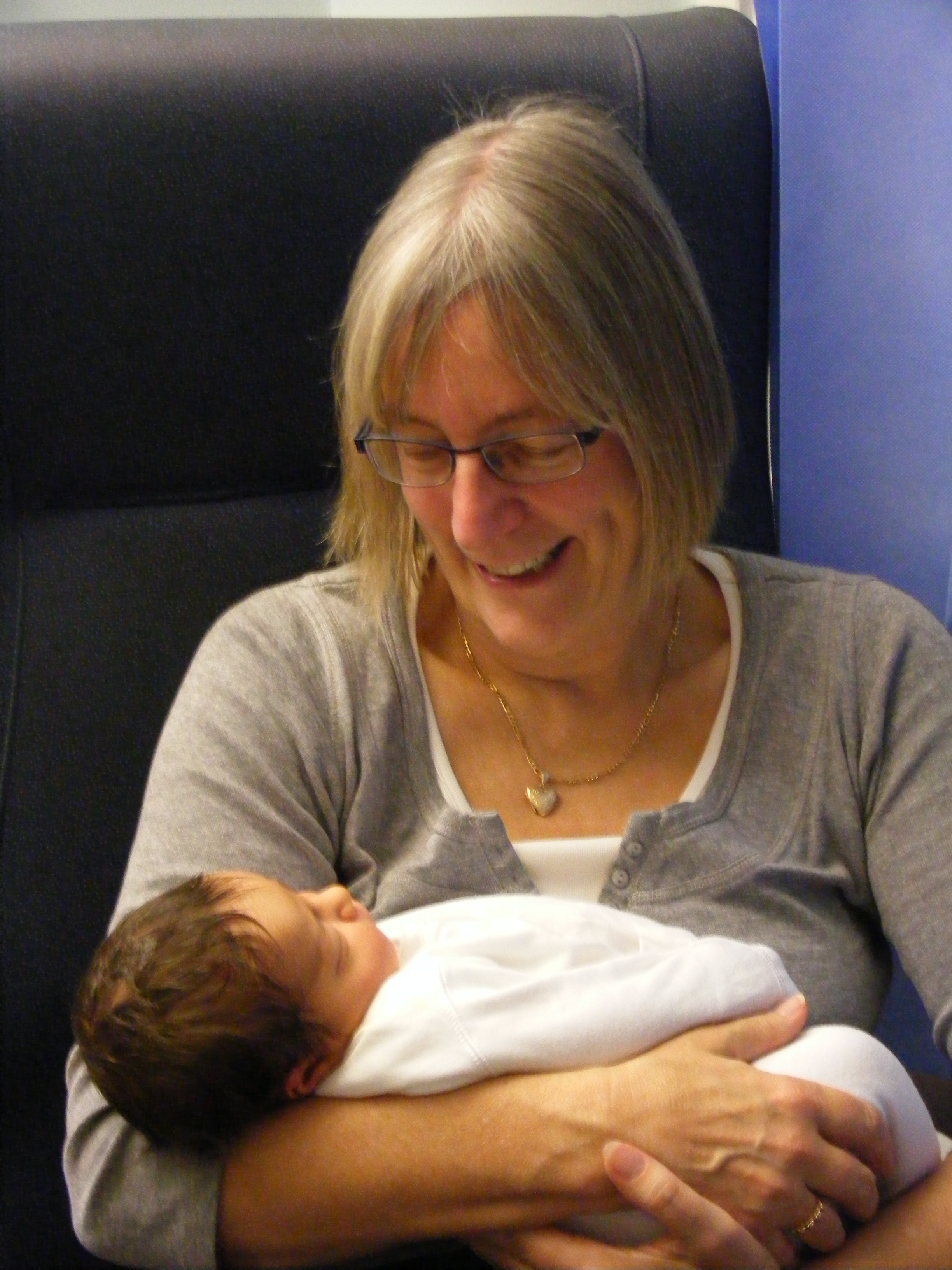
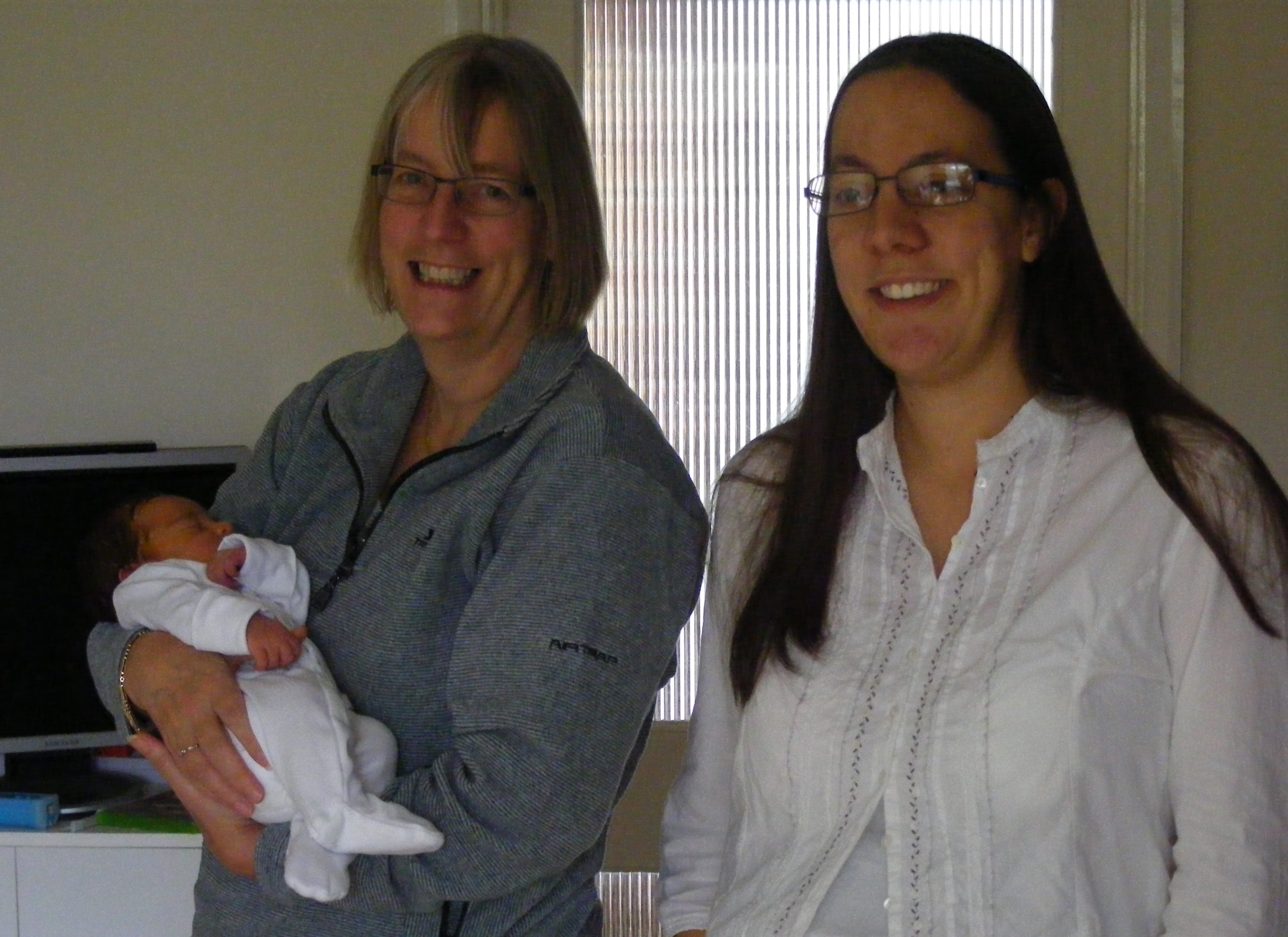
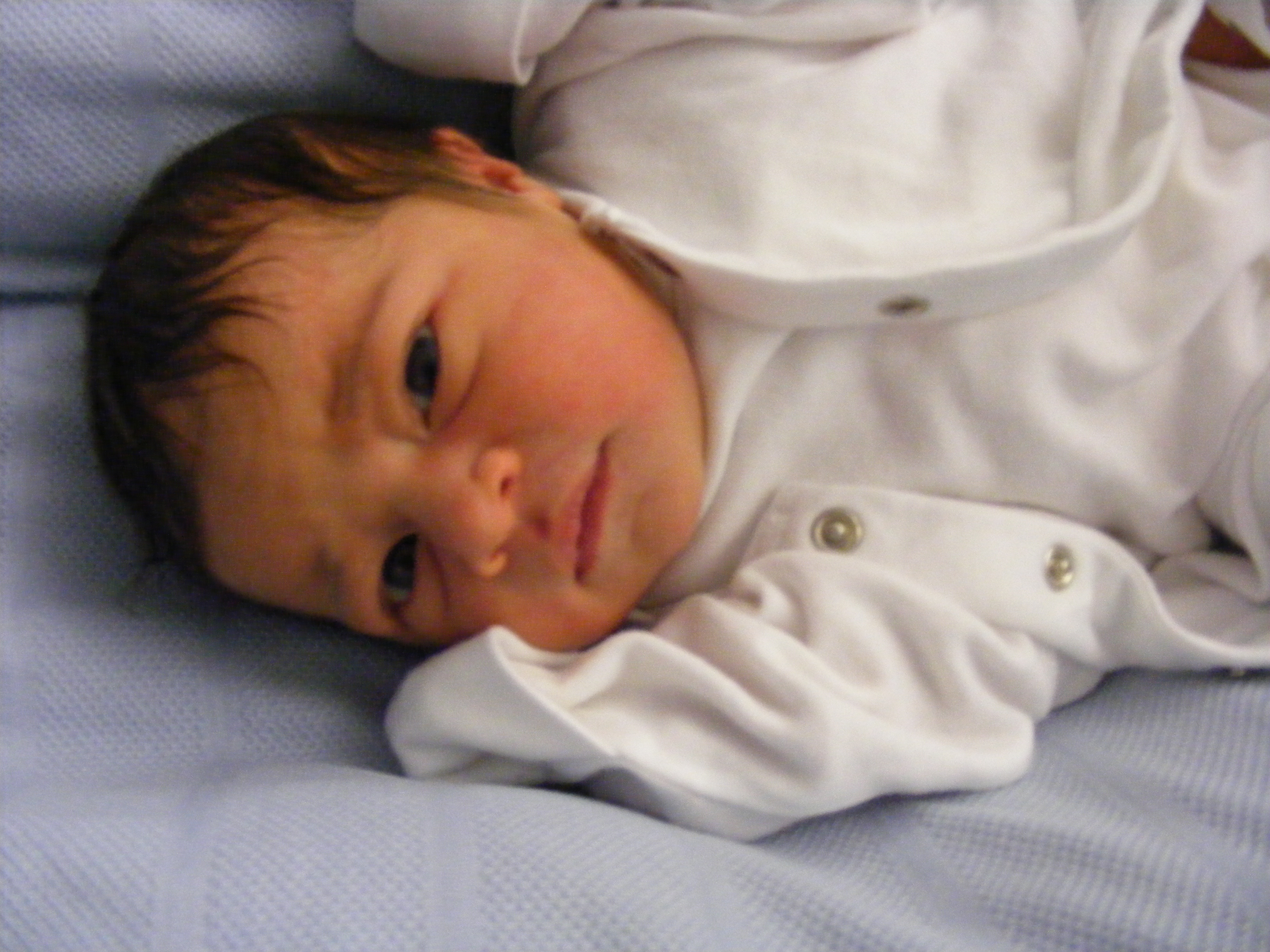
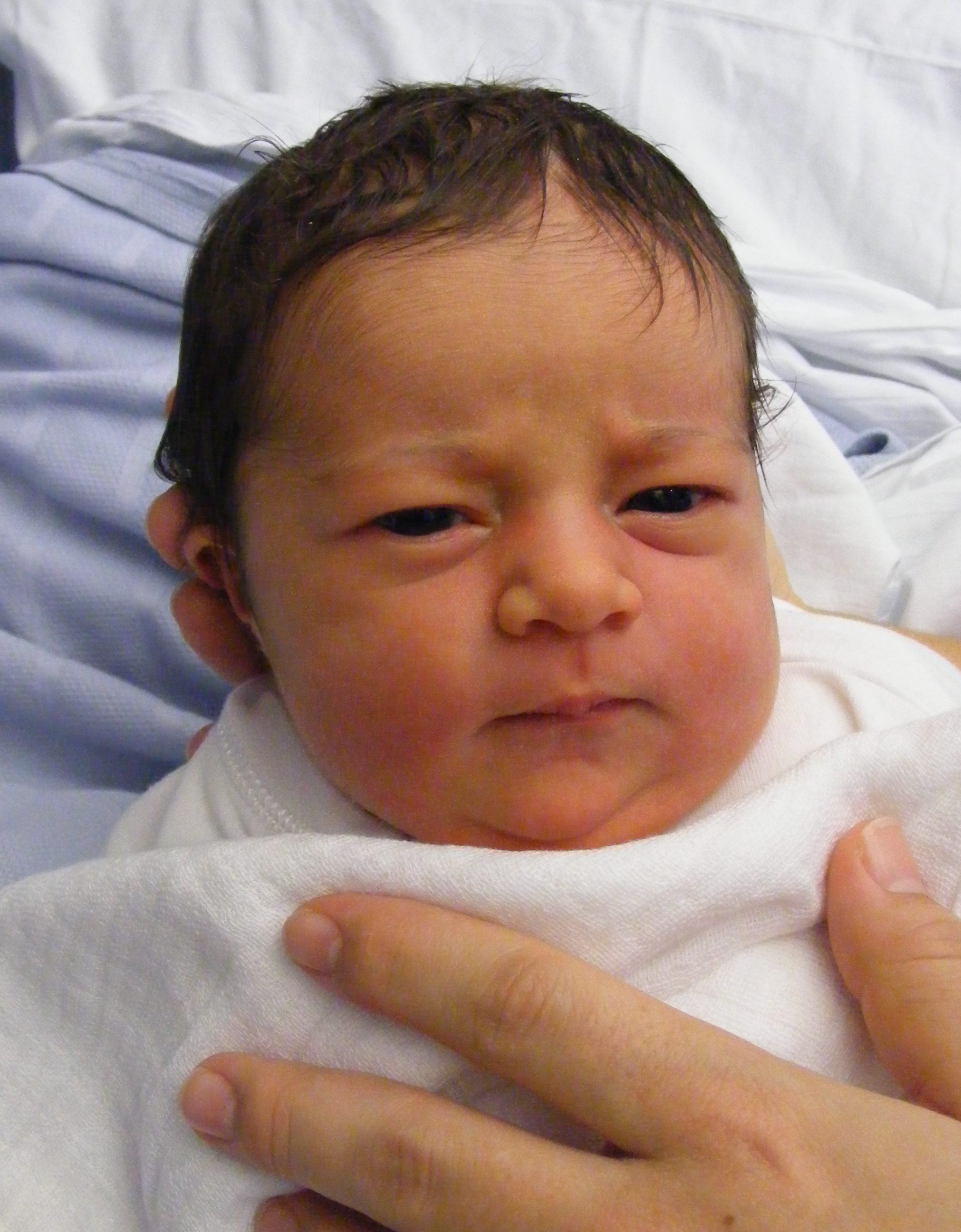
Having been on tenterhooks (if any of your think that should be tenderhooks – no, sorry – tenterhooks were used to stretch bleaching linen out on the tenter ground) anticipating the extension of my family tree in the best possible way, I finally got a call on Monday morning – 8 days late – that things might be happening. Had no one told this child that, in its mother’s family at least, everyone one is always early for everything? This was a relief as had it been much later I was about to hit one of my four talks in ten days plus a day at work and fitting in a 600 mile round trip to see the new arrival would have been difficult. Monday dragged on and still no news, by early evening the prospective parents were at the maternity unit. Unsurprisingly I slept not at all on Monday night. Lucy Ruth finally put in an appearance by emergency C-section just before 8am on Tuesday morning.DSCF1005
I had a talk to give on Tuesday afternoon, which, despite being my being asleep and having other things on my mind, went well. Afterwards, we headed north (pretty much everywhere is north from here) in pouring rain, pleased to see how many people were setting off fireworks to celebrate Lucy’s birth.

We arrived too late for Tuesday’s visiting hours and sadly had to wait until 5.00pm on Wednesday before we could breach the security cordon. Chris passed the time strimming the ‘lawn’ for the new parents. Unfortunately this involved the outer glass of their back door being augmented with a particularly attractive crazed glass pattern.

DSCF1013 DSCF0983

Lucy is, needless to say, the most wonderful baby girl in the world. I explained to her about not wanting to believe all that nonsense about being born on Guy Fawkes Day, when in fact it should be called Robert Catesby Day. She seemed to appreciate this. I can trace Lucy’s direct maternal line back through 8 generations, with another two speculative generations after that but that is for another post.

8 Nov 2013 3 generations 2

After all too short a time we had to head back to Dorset, where I was speaking about One Place Studies. We ensconce ourselves on a caravan site. We are near to our favourite fish and chip shop and my insides were just nicely anticipating my chicken and chips when Chris returns through dark and rain to explain that we are locked in and there appears to be no way to get the car out of the site in order to reach the too far away to walk chip shop. I was disconcerted by the locked-inness, worried about what might happen in an emergency and disgruntled by the lack of chicken and chips – obviously a 5.30pm curfew on that site!

Home again and time for the Remembrance Day Service. This involves a certain amount of standing outside in the cold so I look out my Lapland thermal outfit and fleecy boots. It turns out to be the warmest November day on record and I swelter nicely, especially after the service moves in to the church.

Mistress Agnes in the News, Calibrating Cobbles and Medical Reports

It appears that Mistress Agnes, along with Master Christopher, has got herself in December’s Family Tree Magazine. I have no idea how she has achieved this as cameras were not invented in her day and even portraits were dodgy, in case your soul was stolen. I really can’t turn my back for five minutes. Rumour has it that she is off to Westward Ho! tomorrow and in Bude on Monday. People will keep asking her to tell them about her life and times and quite frankly, it just gives her big ideas. She will be insufferable.

In the process of writing my One Place Studies book I have come across this excellent website MyHomesPast. A great opportunity to upload photos of your homes past and present, as well as any pictures you might have of ancestral homes. The only drawback is that I need time to look out all those ancestral home photographs, remind me when those ten day weeks start.

I have been delving more deeply into the Clovelly fishing disaster of 1838 and have identified six possible death registrations for the victims. I’ve been restrained and only ordered three of these, now to wait and see if they are the correct ones.

Another interesting, newly discovered source are the London Medical Officer of Health Reports 1848-1972, available online from the Wellcome Institute.

I haven’t been neglecting my own One Place Studies either. Tonight I am liasing with a local theatre company in connection with a show called The Bureau of Extraordinance Survey. Apparently they ‘calibrate the cobbles, measure the mice, rotate rhubarb and weigh hey as they survey your settlement, no stone will be left unturned or leaf unlisted’ but I am none the wiser.

The Clovelly Storm of 1838, One Place Hanging Out, C17th London and Other Matters

With hurricanes forecast for the night of 27th/28th October, it is a good time to ask for help with one of my (many) research projects. Exactly 175 years ago there was a bad storm off Clovelly. In a direct response to the loss of life in this tragedy, in 1839, the Shipwrecked Fishermen and Mariners Royal Benevolent Society, better known as the Shipwrecked Mariners’ Society was founded. This was set up by Charles Gee Jones and John Rye, in order to raise funds to assist the fishermen’s widows, orphans and parents. I am attempting to identify those involved, both victims and survivors and trace living descendants of any of these men. There is plenty of information available about the storm of 1821 but much less about that of 1838. Newspaper reports are inconsistent about the number of boats and men who were caught in the storm and the number of victims.

One version of the list of those who were lost includes the following:-

From Clovelly:-  James Britton senior; James Britton junior son of the above; John Britton, son of James senior; John Shersel, a married man; William Shersel, brother of the above, a married man; John Lewis who left a widow and family; Thomas Jenn and Richard Lane.

From Bucks Mills:- John Braund, left a widow and 3 children; James Veale; John Bagelhole, left a widow and child.

From Hartland:- Hugh Bayley; Thomas Trick, left a widow and 2 children; Philip Cowell, left a widow and family.

Also:- James Radford from Ilfracombe, left a widow and family; Mr Carpenter from Ilfracombe, left a widow and family. James Kelly from Appledore, left a widow and 6 children; Richard Lock from Appledore, left a widow and 3 children; Henry Pooley from Bideford, left a widow, his body was recovered; Richard Parker from Bude; An unknown Cornishman.

Unfortunately, for those whose bodies were not recovered, there can be no death or burial records. So tracing these men and their descendants is difficult.

Last night I had my first experience of participating in a Google+ Hangout on air, on the topic of One Place Studies. The result is now available on YouTube. I have no idea why I sound so out of breath and hesitant – it was past my bedtime – that’s my excuse and I am sticking to it! Good fun though and a very productive discussion.

Not too sure about the variations on ‘Scarborough Fair’ as a musical accompaniment but as someone who lives in the seventeenth century, this new game (at least I think it is going to be a game) was of interest. All about the Streets of London – now wouldn’t that have been a better track? – great fan of Ralph McTell me. Do play the video. It could even persuade me to start computer gaming. Mistress Agnes would have put it on her Christmas list but I have pointed out that not only have computers not yet been invented but Cromwell is about to ban Christmas.

Some very interesting documents have been loaned to me lately. I am currently guarding with my life some old school registers and the archive for the local WI. The latter includes a wonderful survey of the village in 1965 and contains a very unusual picture of my house.

Coles Manning 1965 Lloyd Prance - WI

This is particularly strange as my house was thought to be make of cob, as the walls are two feet thick. This clearly suggests that there are bricks involved.

Anyone worried about Halloween needs this seventeenth century preventative:- The thumb of a hanged man in your left shoe wards off witchcraft.
Warning: this post contains descriptions of surgery

Lovely day at the Community Archives and Heritage Group seminar on Monday. I was not alone in wondering how a four figure sum could be spent recording gravestones. Impressive archaeology project by Widecombe Local History Group who have been trying to locate a Medieval Building. Also a very different spin on community history with an account of the Pride in Our Past project.

Today and the next step in the five week toothache saga. ‘Does it feel numb?’, asks the dentist as she wields her drill, having administered anaesthetic. Numb, yes. Numb enough, no. The dentist inserts a probe and riddles it up and down in the hole she has just drilled in my tooth. My wincing seems to make an impression. She inserts a second injection of anaesthetic. More riddling, more wincing and a third injection is dispensed. Then – you know that feeling when you just have to cough. There I am, with my mouth full of drills, mirrors, suction pumps and dentist’s hands and yes, I start coughing. This isn’t even the end of it as I have to go back to have this temporary filling replaced. I am now worse than I was before I started, heigh ho. I keep persuading myself that I am so much better off than my ancestors who made do without the triple As (anaesthetic, anti-biotic and antiseptic).

Is today the day to start transcribing the 1680 book of medical receipts I ask myself? Or have I had enough of things medical for one day. A quick look suggests that some of it is in Latin. Latin gave me up after two years of the likes of ‘Caesar’s spear is in the camp’. Nil desperandum. Still not sure about the cure for bleeding ‘Dyed blew linnen cloth soaked in vinegar & laid to the privities or the part affected,’ particularly as predicted text turned ‘the privities’ to ‘depravities’.

An Excellent Oyntment for a Blast or Heat in the Face Braking Out in Pimples

What on earth am I on about this time? Well I am on the way to ticking something off my ‘to do’ list. About four years ago, I became aware that Totnes Museum (well worth a visit incidentally) had a Receit (sic) Book dating from 1680. Before you think receipt as in ‘thank you for paying your bill’, this is what we would now call a recipe book. Not how to cook the dinner but recipes for herbal cures. Just up Mistress Agnes’ street. At the time I thought ‘that would be great to transcribe one day’ but Totnes is just too far from home for this to be easily accomplished.

Finally I managed to do something about this, thanks to Devon Family History Society’s wonderful digitisation equipment and to Totnes Museum too of course. If you have documents that need preserving do get in touch with Devon Family History Society to see how they can help. It is likely that your precious document won’t even need to leave your sight.

Book of Receits 1680b

Oh, you want to know how to cure your pimples – well take ‘Mouse eare and boyle in oyle of creame or May Butter.’ If you were wondering, ‘A Blast is a red fiery swelling for the most part in the face, if it be not killed runnes into scabs all over the face,’ Please don’t go ripping the ears off small rodents – mouse-ear is a plant, a type of chickweed.

I have offered to transcribe the whole book. Actually, I made this offer before asking how long the book was. Fortunately for me, it is not thousands of pages so you may be regaled with further cures in the future.

A particularly rewarding seventeenth century session this week. Our audience were rather younger  than sometimes so I was in best storytelling mode and trying not to sound too much like Joyce Grenfell. Part of my role was to walk through the streets of Torrington on the night of the battle of 1646. The emphasis is on night, logically this means it is quite dark. It is no mean feat to persuade 50 seven and eight year olds to brave our version of the ‘town’, even with the aid of my magic lantern. First I have to persuade them that there aren’t actually going to be shot at. Sometimes they like to hold my hand for reassurance. This is very difficult as I like to wave my hands about when I am storytelling but we managed and every child stayed to the end. Conducting four half hour monologues in succession can be exhausting but oh so exciting to see the young people really engage with the past.

Image with permission of Totnes Museum and Devon Family History Society

Convict Orphans, Distractions and What Not to Buy?

Spent some time yesterday answering an enquiry for my One Name Study. For those of you who think this is Braund, well you would be wrong. Although I am the honorary historian for the Braund Society that registration belongs to a fisherman of my acquaintance. My registered surname is Sweetingham and I don’t get many contacts from fellow researchers. This was from someone whose ancestor was transported in 1830 as a four year old, together with his mother and grandmother. I found myself investigating Tasmanian convict orphans and trying to trace what happened to the father of the young boy.

It turns out that dad led a somewhat disreputable life himself and I was back in the realms of the British Newspaper Library index following reports of assault, selling alcohol without a licence, drunkenness and finally a sentence of eight months hard labour for destroying his father’s will. This is the stuff of which family histories are made, not my family history sadly but fun to research nonetheless.

I was very pleased to be invited to present two sessions at next year’s Who Do You Think You Are? Live at Olympia. Both are related to my books ‘A to Z of Family History’ is based on the forthcoming (it is forthcoming honest – should be available in time for Christmas) Family Historians’ Enquire Within. I will be previewing this talk in Bideford in November. I have been putting the finishing touches to this presentation but it is so difficult not to get sidetracked investigating all those wonderful sources. My current writing project and the subject of my other Who Do You Think You Are? Live presentation, is Putting Your Ancestors in their Place: a guide to One Place Studies and that is equally distracting. After all I just have to stop and put all my suggestions into practice for my own One Place Studies just to check that they work don’t I?

I have responded to an enquiry for memories of the 1987 storm that swept southern England. It feels rather strange to know that my, to me comparatively recent, memories are now part of an historic investigation. Still another snippet to add to my memoirs. You are recording your own memories aren’t you? We are tomorrow’s history – don’t plan to do it when you retire, when you are less busy, when you have something to say – do it NOW. Your descendants and other historians will be grateful.

Been tempted by the ‘buy it now’ button in Amazon lately. They have helpfully provided a list of what might be of interest to me. These irrelevant delights include War and Peace, a jigsaw of Padstow harbour and a 4x 4 boot liner for dogs. I have neither 4 x 4 nor dog so no idea where that came from.

Maimed Soldiers, Photographs, Freeholders and Pains in the Mumblepins

Excitement on the One Place Study front as I receive a photograph of someone who was born in my house in the 1860s. Nice to meet you Henry Ley.

Mary & Henry Ley seated  George on right +Mary Giles and Walda - Sarah Colyer use as wish

Saturday was spent at the One Day Conference for Devon Family History Society. Very interesting talk from Jan Wood about Quarter Sessions’ Records. Amongst other things she mentioned the Devon Freeholders’ Lists on Genuki – transcribed from Quarter Sessions Records. These are in addition to those accessible via the Friends of Devon Archives – those for my One Place Studies now duly extracted thank you. I am also eager to get to Exeter to look at QS128 – petitions from maimed Civil War soldiers.

After lunch was Mistress Agnes’ slot – plenty of positive feedback and a quantity of Coffers, Clysters, Comfrey and Coifs sold. Just a bit of a shame that a large percentage of the sales money found its way into the pocket of the man selling postcards. Two of Buckland Brewer, three of Clovelly equals small fortune but worth it.

The day finished with Rebecca Probert talking about Marriage Law for Genealogists – this kind of background information helps to make it clear why we can’t locate our ancestors’ marriages.

The calendar for next year is also filling up rapidly, with more engagements for Mistress A and myself – book early to avoid disappointment. Excited that I shall be presenting at Who Do You Think You Are? Live at Olympia again next year.

Nagging pain in the mumblepins and a lack of handy cloves, has finally driven me to make an emergency dental appointment. Unlike my seventeenth century ancestors, I know it is not a worm in my tooth that is causing the problem. This is just as well, as the cure would have been inserting a red hot brass probe to kill the worm. Having suffered all weekend, I then go through the ‘our receptionists are all busy at present’ routine. Finally, a real person on the other end. ‘Do I mind seeing someone who is not my regular dentist?’ by this stage I’d be willing to see the cleaner, the receptionist, anyone with a barrel load of painkillers or strong tweezers. All set for this afternoon. ‘All set’ is probably a relative term.

More Walking, More Rain and a Trip to the 1920s

Raining again and I would easily be persuaded to stay in the van. Chris however is cracking the whip and we set off in the car for Blackpool Sands. It turns out that this is the right choice as, despite thick mist on our drive, we accomplish most of our walk before the drizzle begins and at last we have reached the River Dart. This is a very pleasant stretch and we chat to a man erecting signposts to help us on our way. When the rain starts there is the usual dilemma – when to put on the plastic coat that normally results in one being wetter inside than out. The possible drawback with today’s plan is that we have decided to get a bus back to the car at the end of the walk. The 93 bus only runs once an hour. As we approach Dartmouth we have twenty minutes to cover the last mile and find the bus stop. At this stage in the walk, this is pushing it. The alternative to is wait in the rain for an hour. After a morning’s walk we are not in a fit state to mingle too closely with the public, so don’t relish an hour of being outside in a rainy Dartmouth. The 93 bus leaves at 12.20. At 12.19 and 50 seconds I spot the 93 bus in the distance. I can confirm that I am still capable of running for a bus at the end of a 5 mile walk. Chris, who has done something dire to his hip whilst crossing a stile, has more of a problem. I am all set to refuse to leave the bus until Chris arrives. As I have no money on me, I am banking on the row about my non-payment of the fare lasting long enough for him to reach the bus. In the event, this is unnecessary as the driver is bent on finishing his coffee before departing.

The combination of the sat-nav and a diversion takes us back to the site on a series of single lane roads. As we wend our way up and down, the car makes a strange noise. Chris is of the opinion that this has something to do with the brakes. I am no mechanic but surely brakes are pretty vital, especially in the hills of the South Hams. I hardly dare ask if we do still have any brakes. Fortunately we are nearly back at the van and there is a garage just up the road. I am deposited at the site to shower and eat chocolate (what else does one do after what for us is a reasonably long walk?) whilst Chris goes to chat brakes, or the lack of the same, at the garage.

Chris is soon back in a courtesy car and the brakes are fixed overnight. Today is another day when ‘occasional showers’ are forecast. Not that occasional I am afraid. We begin the day by visiting Colyton Fishacre. An arts and crafts house designed by Oswald Milne in the 1920s, after the style of Lutyens. The original owners were the D’Oyley Carte family, of opera and hotel chain fame. They seem to have led rather unhappy lives amongst the bright young things. When the National Trust took over the house it was almost empty and they have gone to an enormous amount of trouble to recreate the interior as it would have been. I was impressed with the light fittings and the Sylvac flower vases in the flower room. Oh to have a house big enough for a flower room!

We begin our walk from Colyton Fishacre, having cleared it with the parking man that it is ok to leave the car there. Ten minutes later it starts to rain. We wait five minutes to see if it might be a passing shower, by which time I am soaked to the skin and in no mood for the next five miles. We paddle back to the car park and attempt to sneak past the car park attendant, so we don’t lose face. Fortunately he seems to have gone for his lunch. I then have to strip off rather more of my clothes than is decent in the car park to minimise the impact of my rain soaked attire on the car seat. I am already sitting on the cover that is supposed to keep the rucksack dry. Not actually sure I am the same size as a rucksack.

2 October 2013 Colyton Fishacre Gardens 3

If this is ‘occasional showers’ what on earth will ‘torrential rain and severe storms’ be like to tomorrow. We know when we are beaten and head home to catch up on all the historical excitements that have been building up in my inbox whilst I have been away.

Rain, Rain and More Rain

I wake in the night to hear the pattering of raindrops on the caravan roof. My washing is outside, on the airer attached to the window and is almost dry. Not wishing to venture forth into the dark and rain in my night attire, I hang precariously out of the window. The window is hinged at the top so it inconveniently closes on me as I try to retrieve the almost dry socks. The rain is not going to go away. The forecast ‘occasional heavy showers’ manifest themselves into continuous torrential rain until mid afternoon. This walking lark is meant to be fun so we abandon our plans and stay in the van. The upside of this is that I make really good progress on my forthcoming One Place Studies book.

Next day and for once it isn’t actually raining. We are still on the frustrating walking in both directions kick, due to the lack of public transport. We set off from Hallsands heading for Torcross. Coincidentally we see someone we know as we set off. I am carefully watching my footing as yesterday’s rain has made parts of the path very slippery. This means that I don’t spot an overhanging branch – ouch! There are plenty of early migrant geese on Slapton Ley. We read about the practice manoeuvres for D-Day that took place here, with the loss of 946 American servicemen’s lives.

Back to Hallsands and we now have to move campsites. I set the sat-nav. As we head towards Dartmouth I idly wonder at what point we cross the River Dart. Ah, that would be now. We are about to head on the Dartmouth Ferry. This is clearly my fault. Not being sure if the Dartmouth Ferry accepts caravans, we make a last minute detour before we are past the point of no return. This means it takes ages to get to the new campsite. The new-to-us caravan is equipped with numerous unnecessary gadgets, including legs that descend automatically. That would be automatically and incredibly slowly. There is no way of over-riding the automatic leg descending thingy. It also means, if the mechanism fails, there is no alterative method of making the legs do what they need to do. Once descended, the legs then take another millennia to, theoretically, level the van. The bleeping noise, that signals descended and levelled legs, finally sounds. I do not have a spirit level about my person but no way are these legs level. I test my theory by rolling a can of rice pudding rapidly across the caravan floor. There is nothing for it but to raise the legs and start again, as we get gradually colder waiting outside for the caravan to cease being legless.

Next day and at last we can walk in one direction, without having to retrace our steps. We set off for the bus stop in order to get the bus to the start of the walk, with the intention of then walking back to the car that is parked by the bus stop. I am not in Martha’s league but I do like to leave plenty of time on occasions like this, especially as there is only one bus an hour. Even by my standards, we leave early, to the extent that I am worried what we will do whilst waiting for the bus. There is thick mist and we have completely failed to take account of the fact that we have to drive through Totnes during rush hour. ‘Drive’ is probably a misnomer, as we spend most of our time at a standstill in grid-locked traffic. We make the bus with minutes to spare. I have not been looking forward to this walk, described as ‘strenuous‘. In fact it isn’t nearly as bad as expected. The first two miles along the bar at Slapton and are beautifully flat. We seem to be able to walk about as fast as the local toilet cleaning man can clean toilets, as we see the same man and van at no fewer than three toilets en route. Then up a steep but manageable hill before emerging on to the road. Our instruction book warns us that this stretch is ‘frankly unpleasant’. Chris  is waving a high viz jacket in an attempt to stop us being flattened by traffic as the road is busy, narrow and lacks pavement. He is not actually wearing said high viz jacket on the grounds of temperature.

Just as I am thinking that this isn’t too bad, we encounter a valley whose sides must be at a gradient of 1:2. The local sheep all have two legs shorter than the other two. The photographs do not give a true indication of just how steep this was. I debate sitting down and sliding. At the bottom we pass a couple traversing the valley in the opposite direction. We are a little disconcerted when the woman says she is recovering from heart surgery. Nonetheless she makes it to the top of her side of the valley more quickly than we do and appears to be still standing by the end.

Day 72 30 September 2013 Steep Hill near Blackpool Sands 3