Across the Border for Real (not a reel you understand)

After our quick foray into Scotland yesterday we retreated back to England. Now we are crossing the border intending to stay. It seems very strange being away knowing half my family are at home staying in my house but I will see the other half very soon. There is something strange up with the sat nav. Set it up for our destination town and road and it is twenty miles nearer than if I set it for the campsite itself. Fortunately I discover where I have gone wrong in plenty of time. I am sure I can’t be the first person to confuse Culzean Road, Maybole with Maybole Road, Culzean. We travel along the M6 and M74 before turning off on to the A70. Here the landscape is barren and desolate with evidence of open cast coal mining. The villages seem run down and depressed. Annoyingly the road we need is closed but we manage to negotiate the diversion and only one U turn is required before we arrive at Culzean. It seems we have not booked this site. We so have booked. My itinerary says we have so it must be so. They insist we haven’t. Fortunately cancellations mean there is room for us. This site has a swimming pool but it is £9 a day for a family. This is good value if you have a family with you but it seems rather a lot just for me so I invest in 24 hours’ internet connection instead and begin to catch up.022 26 July 2014 Walled Garden Culzean Castle 1

In the afternoon we visit Culzean Castle and Country Park. Apparantly Culzean is pronounced Culeen and this is the largest estate in Ayrshire. Our English National Trust cards mean we do not even have to part with money to see this Adam designed stately home on the Firth of Clyde, once home to the Kennedy family. There is a list inside of some of the many servants who have worked at the castle at various dates. Many of these are clearly taken from the census returns but one, from the 1740s, is Scipio Kennedy who, with that first name and sharing has he does the family name, must surely have been a slave.

Today is decidedly cooler and by mid afternoon it has begin to rain but undaunted we look at the walled garden. This is huge and more a garden with a wall than a walled garden in the traditional sense, although the head gardener insists that the walls do have warming properties. Talking of warming properties, it seems every shop on the premises has its heating on full blast. I know it is not as hot as earlier in the week but this does seem unnecessary. We look at the deer in the deer park then investigate swan lake. This is not a balletic performance but a lake with swans and terns on. By this time the rain has set in and we are getting as wet by the lake as we would in it so we head back to the van.


Mistress Agnes Threatens to Elope

We move the van the short distance to Englethwaite Hall, a very pleasant wooded site lacking in facilities. Near here reddish sandstone cottages are becoming a feature of the villages. Our journey deliberately included a stop off at motorway services so I could balance my computer in one hand and download 200 emails with the other. We could of course have done this sitting at a table but a) we are too mean to invest in hugely expensive services beverages and b) neither of us had thought to bring money with us out of the car. We also get fuel and supplies at a local supermarket. There is no space to park the caravan so I am delegated to get the shopping while Chris gets the diesel. On the list are toilet rolls. I grab a bargain. This involved purchasing 16 toilet rolls; too late I wonder quite where we are going to store 16 toilet rolls until they are needed.

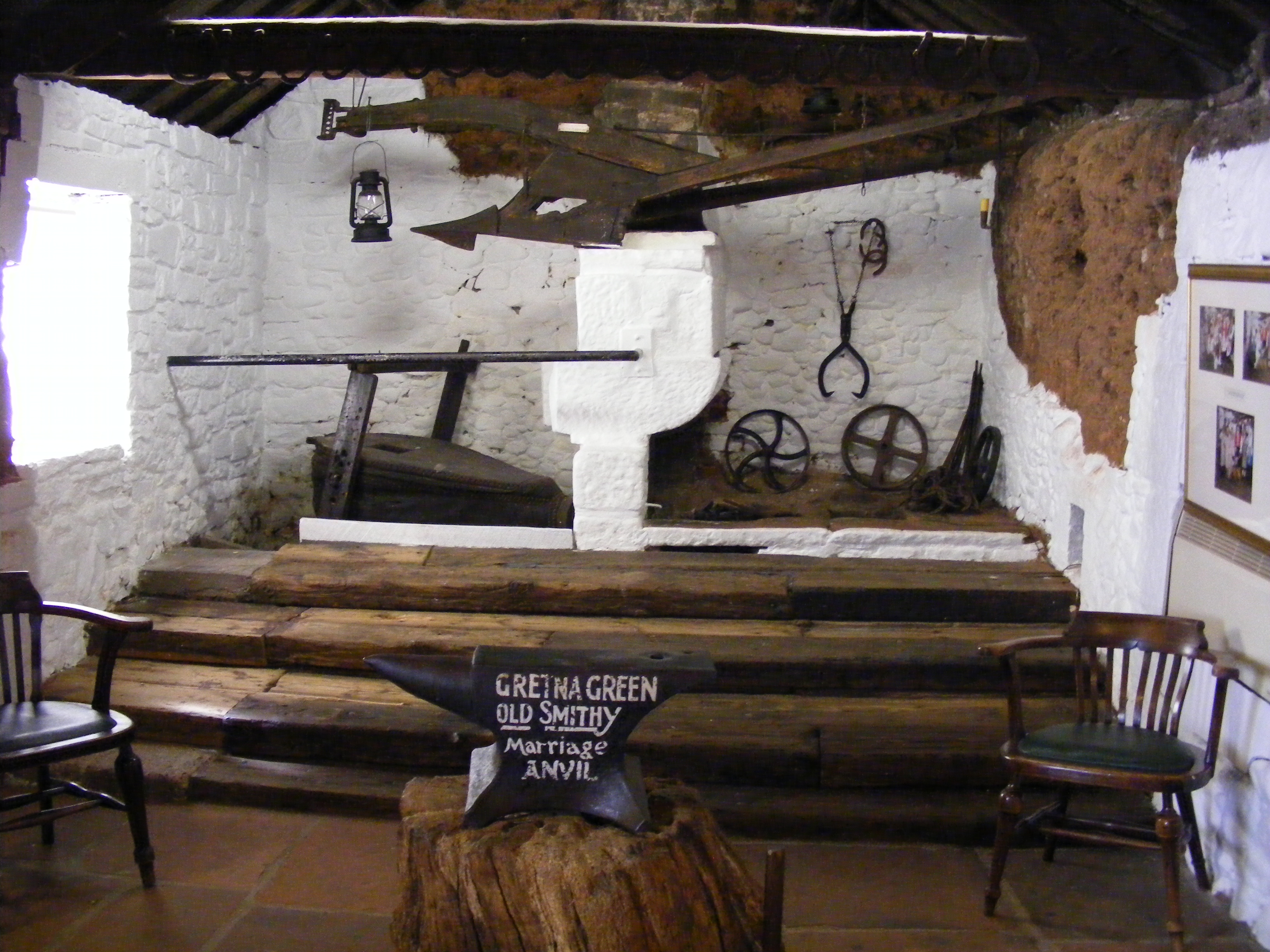
014 25 July 2014 Blacksmith's room Gretna GreenIn the afternoon we take a trip to Gretna Green, not I hasten to add in order to get married, although we are offered a ‘no need to book’ opportunity to be ‘hand fasted’ for £30. Inevitably the whole thing is ridiculously commercialised but rather like Land’s End, you feel you just have to see it when you are in the area. There are several ‘blacksmith’s shops’ posing as the real thing, though of course clandestine marriages did take place in more than one Gretna location. We have to dodge wedding parties as the complex is now a wedding venue. It is like a conveyor belt and one bridal group, having been marched in accompanied by bagpipes (and these so need to be heard out of doors not inside), are out again in no more than ten minutes. There are also some glaring errors of the most basic kind concerning the history of marriage legislation on display. I grit my teeth and try to ignore these. You can’t blame the locals for cashing in on the gullible tourists and I have to say that the gift shops did avoid the worst of the tourist tat. I guess few visitors are genuinely interested in the history of the place, which is probably just as well. We try out the ‘Courtship Maze’, where couples are supposed to enter by different entrances and see if they meet. I know how mazes work (always take the left hand option in and right hand option out) so I whizz round and even manage to meet Chris in the middle.


A Close Encounter with a Lake

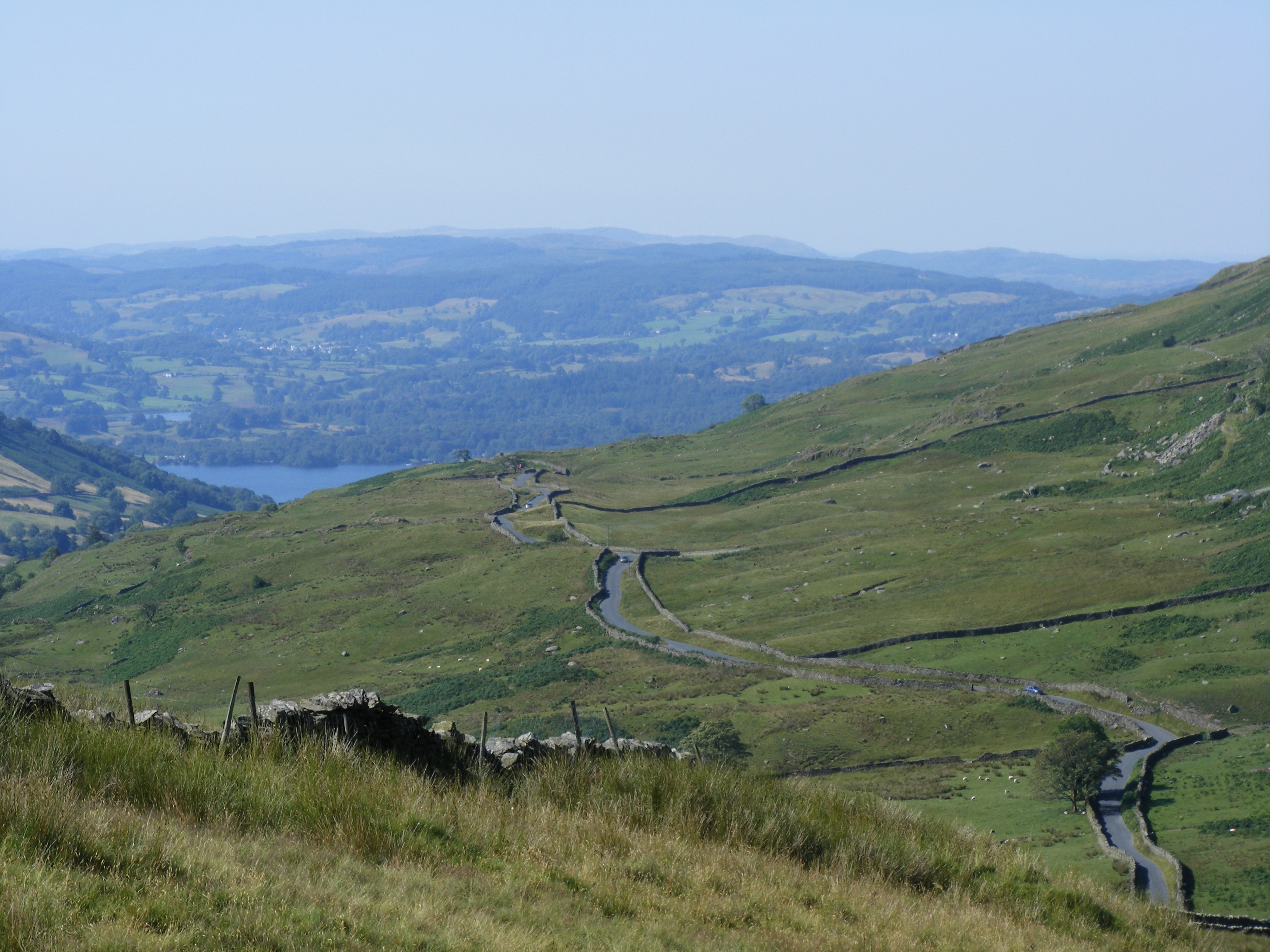
We had planned a drive round to see some of the sights we enjoyed last time and were rewarded with glorious weather. We headed south towards Ullswater stopping at the peaceful Glencoyne Bay to admire the view. Then 1500 feet up the 1:8 hill over the Kirkstone Pass. We decide to take the minor road down to Ambleside and the shores of Lake Windemere. The road is called the Struggle but nothing ventured. We take advantage of the National Trust membership to park at Fell Foot, on the shores of Lake Windemere, near Newby Bridge. Last time we came we were forced back to the car by heavy rain after a few minutes. This is a lovely spot with families enjoying the school holidays and the lake.

011 24 July 2014 Fell Foot Park - Canoe on Lake Windermere 2

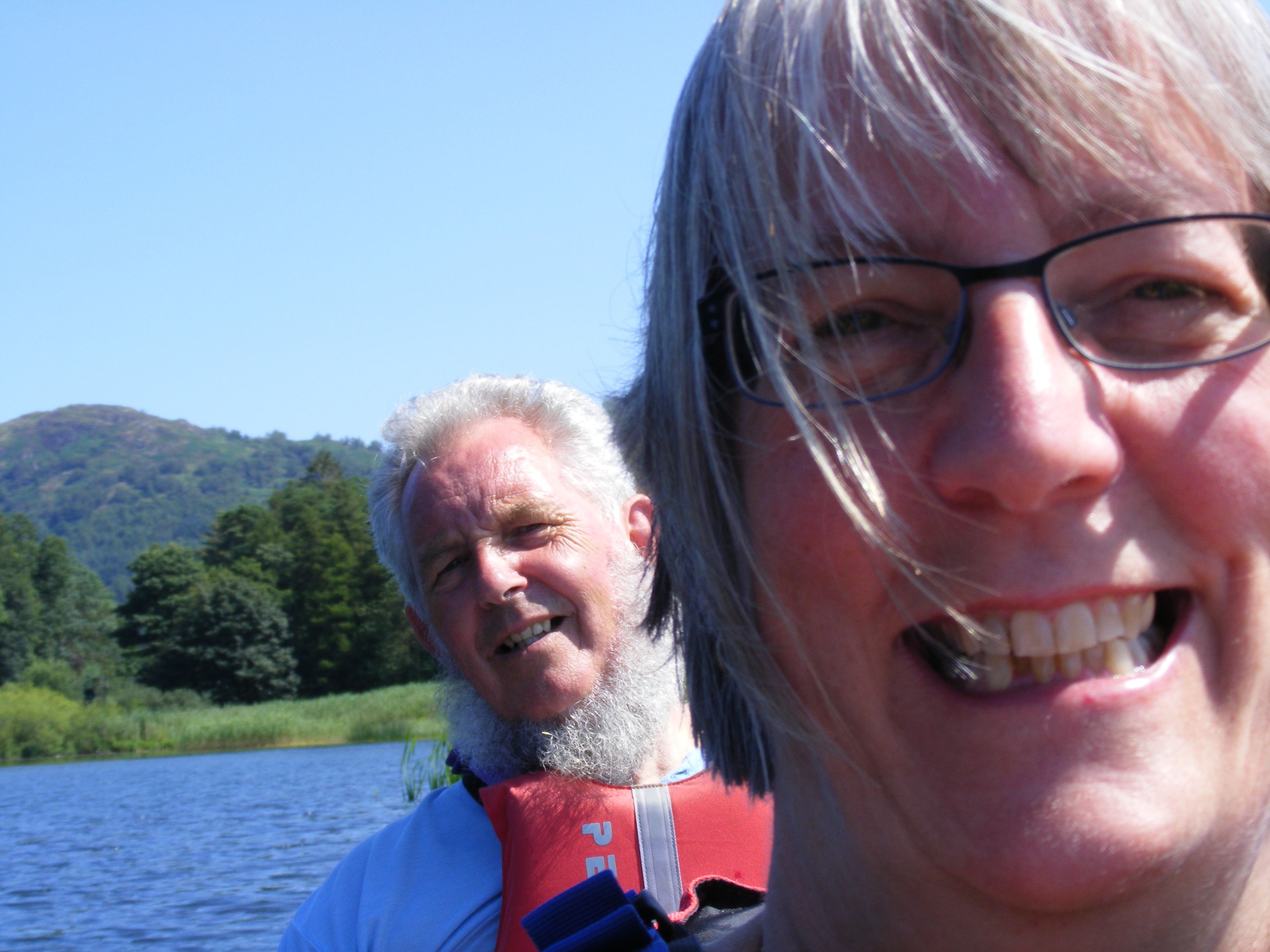
A selfie taken whilst trying not to capsize

Somehow we find ourselves hiring a kayak. Whose silly idea was this? Oh, it appears to have been mine! I have to fill in a form as the responsible adult of the party – in other words the one who had their reading glasses with them. I have to state the ages of other members of my party; ‘ancient’ seems to be sufficient. We were squeezed into life jackets. ‘Have we kayaked before?’, we are asked. The fisherman of my acquaintance has not but I have. I neglect to mention that it was more than forty years ago. A few practice strokes with the paddle and we are let loose on Lake Windermere. We debate the relative risks of taking our valuables with us (we might capsize) or leaving them with the kayak man (they might get stolen) and opt for the former. We choose the quieter end of the lake, taking careful note of warnings of weirs and faster currents. Paddling for 45 minutes is actually quite hard work but I am determined to get value for what was quite a lot of money. I am not quite sure what I am doing wrong but I manage to soak all my below the waist clothing to the skin. It is incredibly hot but even so I do not dry off on the walk back to the car. We decide to cope with the situation by my removing my trousers, covering myself up with my jumper and sitting on my plastic rain poncho. It really is rather too hot for sitting on plastic but needs must.

As we leave the car park we witness an interesting incident where a van towing a trailer designed to hold canoes is being driven, fairly badly, out of the car park. The driver misjudges the turn and then has to reverse. As she (and I hate to admit it was a she) was incapable of going forwards there is really no hope of her going backwards and so it proves. Chris restrains himself from offering to help and after several abortive forward and back motions her colleagues unhitch the trailer and manoeuvre it manually. Astonishingly she has managed to avoid hitting any of the parked cars in the process but the anticipation that she might do so was entertaining.

009 24 July 2014 Kirkstone Pass

Kirkstone Pass

Not wanting to retrace our steps, we drive home the slightly longer way through the Grizedale Forest. A sign warns us of delays due to road works and suggests we seek another route. At this stage there isn’t really another route so we proceed, only to find that the promised ‘long delays’ are non-existent. A little further on a fellow motorist coming in the opposite direction suggests we turn round because the road is blocked by an accident. Again we ignore the warning and again our decision is vindicated as the road is not remotely closed. Back at the site I have to get from car to van without anyone noticing I am imperfectly dressed. We manage this with the use of car and caravan doors and Chris wielding my coat like a matador. This of course serves only to attract the attention of any passing caravaners.

Heading North

Obviously almost any journey we make involves heading north but this time we are planning to go as far north as you can without leaving the land or falling off the edge. After a slight hiatus when we somehow couldn’t quite get the caravan and car to attach, we departed on the hottest day of the year so far. We seem to make a habit of this. At least this time we are not flying off and missing the summer.

We make a ‘breaking the journey’ overnight stop at Tewkesbury, This site is notorious for flooding and was underwater for weeks earlier in the year. No sign of floods today and we arrive in time for a quick wander round Tewkesbury. Sadly some of the beautiful ancient houses are in disrepair. The heraldic flags brighten the town but the shops are distinctly lacking in anything that would be remotely useful on a daily basis. Plenty of interesting antique shops but I can’t start filling the caravan with random items at this stage of our trip. There is also a branch of every conceivable bank, I wonder how long some of these will survive. We do locate a well hidden supermarket for essential supplies, like super-glue. This is required to reattach a vital knob to the caravan fridge.

The local insects have decided that I need a rehearsal for the promised midges of Scotland and have had a quick chew. Fortunately bite cream is not one of the things that I have inadvertently managed to leave at home. We are staying in sight of the cathedral. The quarter hour chimes vie with the collared doves to ensure that we are sleep deprived. In fact it is too hot to sleep anyway so neither win.

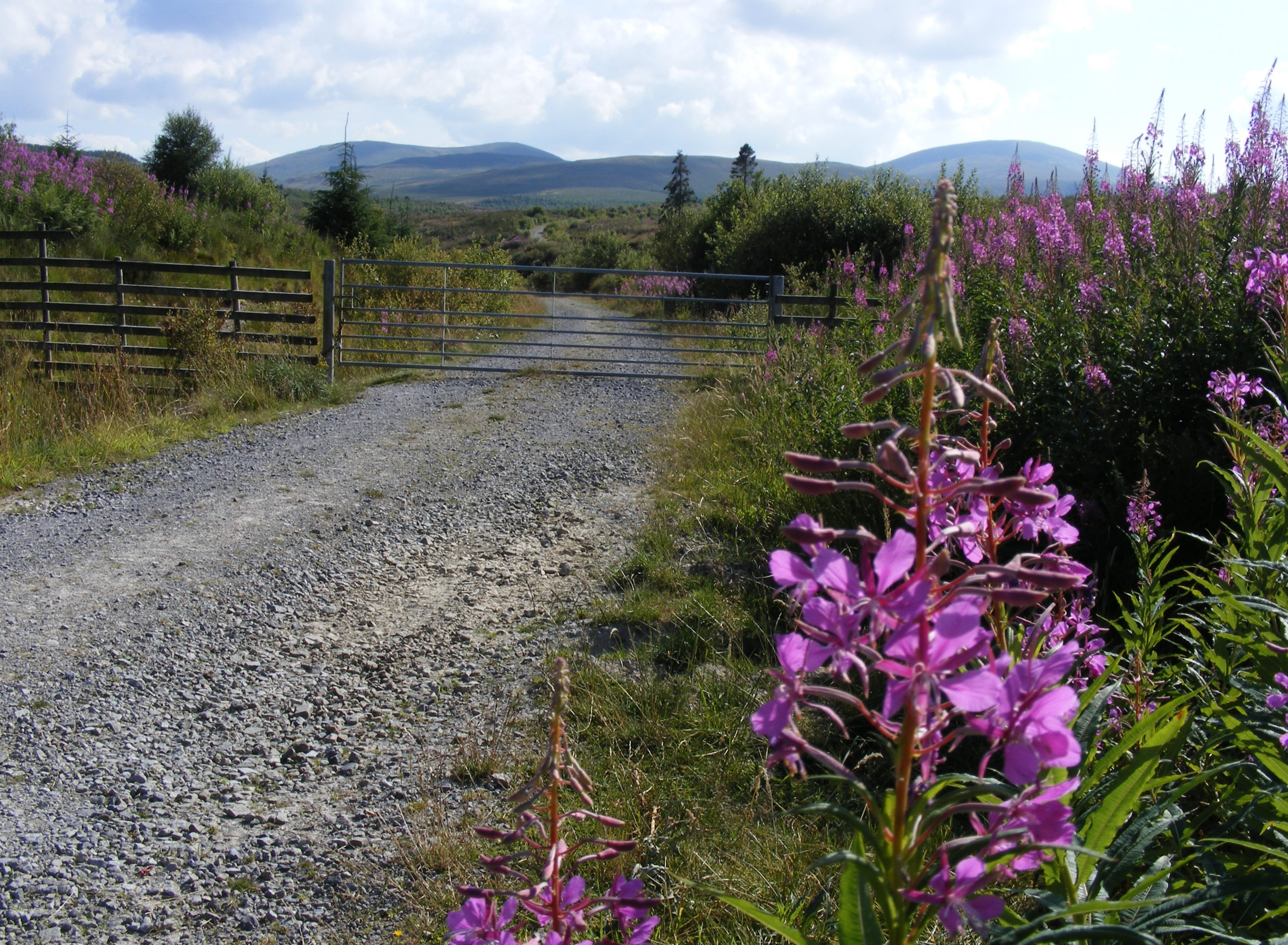
The next day and we depart for the Lake District. There are only minor motorway hold-ups for roadworks. Many of these seem to involve miles of traffic cones and not a workman in sight. The last third of our journey leaves the industrial Midlands behind and the scenery begins to look like a holiday destination. It makes a change to be able to actually see the Lake District as last time we were here in rain, floods and mist. There is pinky-purple Rosebay Willowherb growing everywhere, setting the hillsides alight. The Sat Nav gets us safely to the site at Troutbeck and the van is, as the name suggests, right by the Trout Beck. We go for a short wander through the Matterdale Forest in 27 degree temperatures – yes overseas friends that is hot for us.003 23 July 2014 Rose Bay Willow Herb Matterdale Forest

On returning to the van I look for the site on the map so I can plan for tomorrow. Ah there is a place called Troutbeck. Funny, I didn’t think we were as far south as that. Oh, there is another river to the north east called Trout Beck, maybe we are there instead but how can we be, there is no nearby road? I give up and look at the Caravan Club book to see which Troutbeck is correct. Hmm that would be neither of them – there is a third Troutbeck and that is where we are! I appreciate there must be a lot of trout round here but it does suggest a distinct lack of imagination.

End of Term for the History Interpreter

All a bit of a mad rush really, with talks to give and research to do as well as the fun of having visitors. Then Mistress Agnes came forward in time to participate in World War 1 day at the local school. Interesting to see how some of the children found the formality very difficult, whilst others revelled in it. The children had written some very moving poems that they ‘planted’ in the poppy fields on the Village Green. My ’1946-1969’ ladies have been writing about their schooldays. I wonder if World War 1 day will be a lasting memory for those who took part.

I was really excited to see that ‘Putting your Ancestors in their Place’ was chosen as one of the books of the month in the Family History Bookshop. On the One-Place front I have been planning an on-line course for the autumn. ‘Discovering Your Ancestors’ Communities in the Early Twentieth Century’.

Now it is the holiday count down and trying to get the house fit for its house sitters, who will be in residence while I am away. Inevitably, I do not get to the end of the ‘to do’ list but hopefully the things I can get away with the things I haven’t done.


A Voyage into the C17th – review of The Bitter Trade

A rather different blog from me this time – a review of a book by a fellow lover of the seventeenth century.

The Bitter Trade by Piers Alexander

As someone who ‘inhabits’ the seventeenth century as an historical interpreter and a fan of historical novels, I jumped at the chance to review Piers Alexander’s debut novel The Bitter Trade. Normally, reading historical fiction is a risky process for me. Will I be enthralled by the plot or frustrated by historical inaccuracy? Then there are those disappointing historical novels, which are a cheesy romance, ostensibly set in times gone by – times that are threaded through with factual errors. The Bitter Trade was a delight and no glaring anachronisms detracted from the story. The book is set at the time of the political turmoil of the Glorious Revolution in 1688 and the action is fast paced, making the book hard to put down. The plot is complex enough to hold the interest of the reader without being confusing. The characters, particularly that of the hero Calumny Spinks, are well drawn and believable.

The Bitter Trade is also beautifully written, with intricately drawn descriptive passages. Alexander’s characters do not speak in genuine seventeenth century language but this is just as well as it would alienate the majority of readers, rendering as it would the text incomprehensible to all but Shakespearian scholars. The author gets the balance just right. The vocabulary and phrasing are different enough to give the flavour of the period and remind the reader that they are not in the present, yet it possible to understand the meaning, even if some terms are no longer in current use.

I was given a copy of the novel to review but the task was a pleasure not a duty and I look forward to a sequel.

Alexander, Piers The Bitter Trade Tenderfoot 2014 978-0-9928645-0-7 422 pages £11.99 also available on Kindle. Currently on offer on Amazon. See also the author’s website.


Of Voyages, Vicars, Wedding Vows, Wonderful Venues and Wildlife

It has been a little quiet on the blogging front lately, mainly because life has been far from quiet. I spent a wonderful week in Granny mode. This involved rather more heaving cases on and off trains than is ideal but it was worth it. Whilst on the subject of trains there was an unusual incident when the guard, having helped Edward’s buggy on to a train, dropped his phone on the track. Regular readers will know that I have form for this type of thing, so it was gratifying to see that even the ‘professionals’ make this sort of error.

Exciting news for next year, when I will be combining travelling with family history in the best possible way, as a presenter on the Unlock the Past Baltic cruise. Now where did I put those sea sickness tablets? On the presenting front I have been keeping up with technology by leading a Society for One-Place Studies Hangout On Air about Marriage Records. I will also be discussing finding elusive marriages at the next meeting of the North Devon Group of Devon Family History Society. More tackling technology as I prepare for my remote presentation on emigration for British Isles Family History Society of Greater Ottowa in September and yes it works! Last night’s lower key, local presentation was something special. Mistress Agnes and Master Christopher were appearing at Poundstock Gild House – what a truly amazing gem. Go there, visit, you will be in awe. In truth Mistress Agnes rather wants to live there. Check out the history of these Church Houses and go and soak up the atmosphere.

Isn’t it great to live in a friendly community? Today one of my neighbours helped me by extracting a baby starling from the inside of my fat ball holder – industrial strength wire cutters to the fore. Wildlife abounds in Mistress Agnes’ tiny garden, a friendly hedgehog was my latest visitor. I must say I am less enamoured by the army of flies who have taken up residence in the new conservatory and I have to confess to having adopted extermination tactics. At least, I am trying – some of the blighters seem to be immune to any form of fly spray. Yesterday another neighbour came to find me when she encountered some ancestor hunting visitors to the village. I was able to show them several houses where their relatives had lived, including my own. In return they showed me a memoir of a Victorian vicar of the village, written by their ancestor, that totally turns on its head some of the theories about the effects of non-conformity on community cohesion that I expounded only two weeks ago at The Devonshire History Society conference – fascinating.


A Genealogical Detective Story: Family History Brick Wall of Thirty Seven Years’ Standing Starts to Crumble

I have hesitated before blogging about this because I still can’t believe it. My direct paternal line has had one Samuel Braund at its head since 1977. Since then I have found out more about this 6 x great grandfather and his descendants but have singularly failed to identify his parents, his date of birth or where he was born. He first turns up in 1741, when he gets married in Cornwall where he works as a teacher. I know from my work on the Braund One Name Study that he is likely to have come from Devon and my book on his life, Cornish Origins, even gave some ‘best guesses’ regarding his connection to existing Braund family trees.

FindMyPast have not been my best friends since the changes to their website that they laughingly refer to as ‘improvements’. Despite this, the addition of many more Devon parish register images to their site meant I could resume the hunt for Samuel. Braund of course has many variants. Most things that start ‘Br’ and have an ‘n’ somewhere near the end qualify. I identified a likely baptism to a Humphry and Florence Brand in 1716 at Sampford Courtenay. I then searched for other children of this couple in Sampford Courtenay and came up with Elizabeth, baptised 5 November 1718 and John baptised 4 December 1720; in both these cases the parents were given as John and Florence Brand. Now I was under the impression that Florence only became popular as a christian name following the rise to fame of Florence Nightingale and indeed, searching the whole of Devon for seventeenth and eighteenth century Florences, of any surname, revealed very few. Had she been Mary or Elizabeth, I would have been sceptical but this looked like the same family to me; was Humphrey a clerical error? I now sought to prove three things:- That these three Sampford Courtenay baptisms were the same family. That the Brands were Braunds in disguise. That this was the long sought baptism of my 6 times great grandfather, Samuel Braund.

The obvious thing to do was to look for a marriage between Florence and a Humphry and/or John Brand, Broad, Braund, or similar variation. Initially nothing was found. I did find a burial for a Florence Brawn on 30 June 1757 at St. Eustachius, Tavistock. Tavistock is the big town, some twenty miles south west of Sampford Courtenay but given the very unusual christian name, Florence, this looked like our lady and moved the Brand surname closer to Braund. I failed to find a burial for a Humphry or John but it looked as if Florences daughter, Elizabeth was also in Tavistock.

I tried again for a marriage, this time searching for any marriages of ladies called Florence, to anyone, anywhere in Devon between 1680 and 1720. Working my way through the few options located Florencia Maritati and Johannes Braund marrying in Northlew on 1 May 1715. Northlew is ten miles from Sampford Courtenay and was not only home to a Braund family but a parish that I had identified as a possible origin for Samuel. A look at the image of the original marriage register was very exciting, the entry read Johannes Braund de Sampford Courtenay et Florencia maritati sunt primo die Maii. I was disappointed to relinquish the exotic Maritati name; this was merely Latin for married and no surname was recorded for Florence.

I was however now convinced that the three Sampford Courtenay Brand baptisms were a single family and also I was happy that they were indeed Braunds in disguise. It was looking more and more likely that I had the right Samuel but could I find any more substantiating evidence to prove it? I tried searching for Devon baptisms between 1710 and 1750 where the mothers name was Florence, again ignoring the surname. Sure enough, up came two children who were indexed as the offspring of John and Florence Browne but on checking the originals, were in fact Brawnes. They were both baptised at Sourton, between Sampford Courtenay and Tavistock and were Humphrey, baptised on 15 January 1723/4 and Rebecca on 2 January 1725/6. There was a Rebecca Braund buried in the same parish as my Samuel who I had identified as a possible sister or sister in law. Rebecca’s age at burial made this baptism just three months too early but I felt as though I was getting closer. The inclusion of a Humphry amongst the children was interesting, perhaps this name had some significance and might account for the confusion over the fathers name in Samuels baptism entry.

20 Oct 2010 Rebecca Braund grave

The next move seemed to be to look for futures for the children of John and Florence, to see whether they fitted, or were incompatible with, my Cornish Braunds. Amongst others, I found a niece for the Sampford Courtenay Samuel called Rebecca, baptised in May 1761. My Cornish Samuel’s will mentions his niece Rebecca Hunt née Braund. Rebecca Hunt’s burial suggests a birth between August 1759 and August 1760, again close and of course she may not have been baptised as a tiny baby.

The identification of these two Rebeccas, related to the Samuel who was baptised in Sampford Courtenay, both of whom were very close to the ages of those connected to my Samuel Braund, meant that it looked as though John and Florence were indeed my 7 x great grandparents. Somehow though I just can’t bring myself to ‘ink them in’. I am not sure what I am waiting for in terms of additional proof but I seem to feel I need something more. Is it just that I cannot believe that I have made progress on this line after so long?

Then of course, if I do accept John and Flo and I think I do, there is the matter of proving who John was, in the absence of surviving Northlew parish registers for this time.

Water, Water Everywhere

Some of you have kindly enquired about the home improvements. We are still tackling a final leak in the conservatory but it really is nearly finished. The trouble is with testing the efficacy of leak mending is that you need it to rain! A slight diversion last week however as I came down in the morning to find water pouring and I do mean pouring, through the kitchen ceiling. Yes that would be the kitchen ceiling that had just been painted. Stopcock turned off and the water slows to a trickle. Emergency plumber, bless him, arrives within the hour. He decides it is a problem between the water tank and the bathroom. He needs access to the pipe. Sadly also between the water tank and the bathroom are two bedrooms, containing between them twelve full height, crammed bookcases, to say nothing of other things and the carpets have to come up. Spring cleaning these rooms hadn’t been on the ‘to do’ list but most of the contents are moved to gain access to the recalcitrant pipe.

This incident coincides with the saga of the parcel. I am tracking its whereabouts on the internet. To be fair the first time they tried to deliver it I wasn’t in. It is rescheduled for the following day. As I am moving the contents of the two bedrooms I have things to do so staying in isn’t a hardship. I am at home, the front door is open, the back door is open. Strange then that the tracking tells me that they have tried to deliver the parcel at 3.15 and I wasn’t in. I ring the firm and explain that I was indeed in. I acknowledge that my house isn’t easy to find and provide a phone number so the driver can ring for assistance when he arrives in the village. 5.40 and the tracking says they have tried to deliver it again and I wasn’t in! I ring again, more assertively now. There is no note of my phone number on the paperwork. I give the phone number again and instructions on ‘how to find my house’ (park outside the Methodist Church) and also ‘how not to find my house’ (do not pay any attention to the Sat Nav). The receptionist is not impressed that my address contains no road name; this is clearly somehow my fault.

The next day dawns, this is not a day when I had planned to stay at home but I do. Finally I get a call from the delivery man. He, like others of his ilk, is incapable of identifying a Methodist church when he sees one (clue – it says ‘Methodist Church’ outside) and is parked up the road outside the Anglican church. I walk up to relieve him of the parcel and explain where he should have been. It turns out that he has been trying to deliver to the house over the road. He seems to have identified a property, with no apparent name or number, in roughly the right area and has gone for it. Obviously asking at the heavily signposted, nearby shop was not a possibility. Never mind he says I know where it is now. In the next sentence he tells me he only has another week in the job. So I am fine for future deliveries from this firm for the next week only. I didn’t ask if his new job required initiative of any kind.


Witchcraft and School Friends

Hastily, I should explain that he two parts of the title are not connected!

Saturday I got up at the crack of dawn and dawn cracks pretty early in June in the UK, to set off for London. As I heaved a case of books on and off trains I started to realise that a week of moving books and furniture (there will be a forthcoming post about this activity) had taken a toll on my back. Notwithstanding, I arrived at The Society of Genealogists to take part in their Seventeenth Century day seminar. Unfortunately even my ‘first train of the day’ start was not early enough to get me there in time to hear Elsa Churchill but I caught most of Colin Chapman’s informative session, packed with sources for C17th research. Colin and I often turn up on the same bill and it is always a pleasure to listen to him. After the lunch break and some running repairs to the air conditioning, which appeared to allow the room to be cold or hot but nothing in between, it was my turn.

I chatted about the impact of witchcraft on the lives of our C17th ancestors and lightened my load by re-homing some of my books, in return for a perfectly reasonable sum of money. Strangely, after becoming interested in this topic as part of my general foray into the social history of the C17th, I discovered that one of those tried for witchcraft, Joanna Elford, was probably related to me. I was followed by Michael Gandy and was very thankful that it wasn’t the other way round. Michael’s subject was how to read C17th handwriting and I suspect the audience were expecting sight of letter shapes and perhaps collective interpretation of documents. This was not to be. It takes an exceptional speaker to engage an end of the day audience for an hour and a half with not a single visual aid. Unbelievably, Michael held the room in thrall with an entertaining, relevant, tour de force on this topic without actually showing us any C17th writing at all – brilliant.

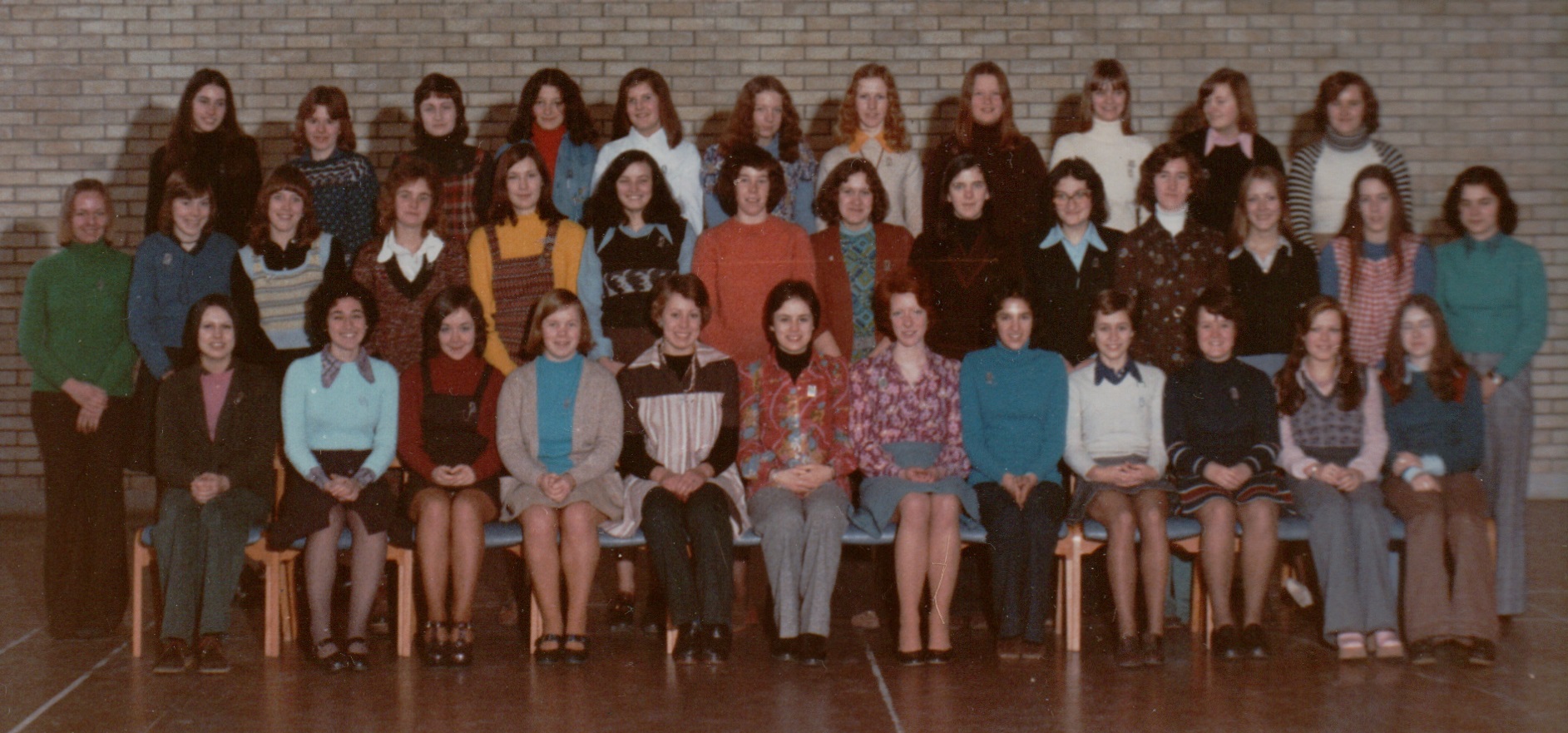
Then it was off to catch up with my school fellows who made up the class of 1974. I had missed the reunion itself but fifteen tail-enders were to spend the night in a nearby hotel and I set off to join them. School reunions can be fraught with anxieties: ‘What shall I wear?’ in my case compounded by the lack of room in the case full of books and the need to make it suitable for the talk as well. ‘Will I recognise anyone?’ ‘Will anyone recognise me?’ and if they do, does this mean I have worn well or that I still look as gawky as I did at school? ‘Have I been sufficiently successful?’ And most importantly, ‘How do my wrinkles/greying hair/middle aged spead compare?’. Of course anyone who voluntarily reconnects with a group of people they haven’t seen for forty years is going to be someone who is comfortable in their own skin, someone who feels they have ‘arrived’, by their own standards if not by anyone else’s.

StitchSCAN0137-SCAN0138

I limp my way as far as East Croydon station and decide that I really can’t face trying to find out where they have hidden the 64 bus stop since I was last here. I therefore elected to spend a high proportion of my book sales money on a taxi to the hotel. Said hotel is ‘posh’ by my standards. Ok, I know most of my hotel going is of the Premier Inn variety but this is four star. Although the surroundings are lovely it turns out that really only the prices are four star. Admittedly our party was accompanied by two sets of wedding guests and a group of England football supporters, who may well have been renegades from one of the wedding receptions but the service was execrable. I was expecting the food to be of the variety where you need a magnifying glass to see anything beyond the drizzle but there were several mouthfuls on each plate. Unfortunately, I somehow managed to choose something that contained two of my least favourite foods but that was my own fault.

My room is situated in the furthest reaches of the building, on the top floor and along an extremely long corridor. I struggle along with my case, which although no longer quite so full of books, was still heavier than my increasingly ‘twinging’ back was comfortable with. I come to terms with the room’s idiosyncrasies. The shower has no visible means of being switched on. I try turning, pushing and pressing various parts of the mechanism and am on the point of giving up when something I do results in water gushing out. Sadly, it took whoever was in the neighbouring room until 2.00am to work out how theirs worked and then they had a noisy and lengthy shower. Then there was the bed. To begin with I had twin beds that had been pushed together. I kept losing things down the narrow gap between the beds. Having retrieved the Kindle for the third time, whilst listening to midnight wedding revellers, I was beginning to despair. The bed was also as hard as ….. I will refrain from making any of the possible obscene similes here and just say it wasn’t very hard, not ideal when one has a bad back.

Of course none of this really mattered because we were there to meet our former school fellows and the chatting and reminiscing was in full force. We all have slightly different perceptions of the rarefied atmosphere that was our alma mater but agreed that we had an excellent grounding for our varied futures. Whether school days were the best or worst days of our lives, if we are historians, we should be recording our memories. Of course it is much easier to recall those memories in the company of those who shared them. If an actual reunion isn’t possible, what about a virtual one? Facebook, Google+, or just plain emails, are all possible vehicles for this. I and my classmates may not being doing this again in another forty years but a good time was had by all.

Then there was the journey home. Now, as I have said on previous occasions, I am no longer fit to be let out on my own. One of my former school fellows had offered to shepherd me back to the station. Where I come from two busses a day is considered a regular service but of course I am now almost in the metropolis so there are plenty of options, despite it being a Sunday. We are going for the tram. Ah, there are no trams. The police have cordoned off the area round our destination due to an illegal rave. I know I and my former classmates were on the rowdy side but to call us an illegal rave seems harsh. A bus driver is planning to go as close as the police will allow to the station and we hop on board. In my case the ‘hopping’ was more of a hauling but we are on our way. Although the road is closed, the station is open and I start the journey home through the engineering works and tube line closures. I manage to get an earlier than planned train out of London but sadly not early enough to get a different train from Exeter onwards. Two hours on a wooden bench at Exeter station puts paid to any remaining mobility in my back. Eventually home safe and sound. Now to edit the ‘year book’ that we are compiling; interesting to see the different paths that we have all taken.