You’d think I would remember that it isn’t a great idea to tour churches on a Sunday but no. With my children’s family history in mind, we went for drive and walk round Hanley Swan and Hanley Castle. Sadly, most of the buildings are too late to have been family residences but we were able to get an overview of the area. We arrived at the church at 10.15am. Good news, the service wasn’t until 11am and the church allegedly was open from 10am daily, except that today it wasn’t. I was able to photograph the outside though.
On to Upton on Severn. This was Blues Festival weekend so roads were closed and the streets were crammed with street food vans, buskers, festival outlets and people. It made for a lively vibe but not ideal for photographing churches, one of which was a gig venue so I couldn’t even get near to it.
After an afternoon back in the van we headed to Llanthony Secunda Priory in Gloucester for an outdoor Fisherman’s Friends Concert. A very quick stop off to look at Ashleworth Tithe Barn on the way and we reached Gloucester. There was a slight issue accessing a car park that didn’t require us to do something complicated online on our phones but that overcome we took a short walk through the docks to the venue. The Augustinian Priory was established in 1136 as a second house to Llanthony Prima in Wales.
We were carrying our own chairs and I decided I could get away without encumbering myself with the umbrella or a coat in addition to my fleecy zip up top. As black clouds loomed I doubted this ‘wisdom’ but the umbrella was not needed. By the end, I did wish I had brought my coat but my noble companion sacrificed his. What is it about open air venues that makes people think it is ok to talk loudly throughout? We were probably the only audience members not to avail ourselves of the bar and food offerings at inflated prices. The concert was excellent of course but there was a teeny difficulty locating the car park for our homeward journey. We found a car park easily enough, just not the right one. It wasn’t helped by the fact that places looked familiar because we’d driven past them in the quest for a car park in the first place. I am sure we could have done something clever with our phones when we got out of the car but ‘clever with our phones’ is not us. After what I will describe as a ‘slight detour’ round Gloucester Docks thankfully the car hove into sight.
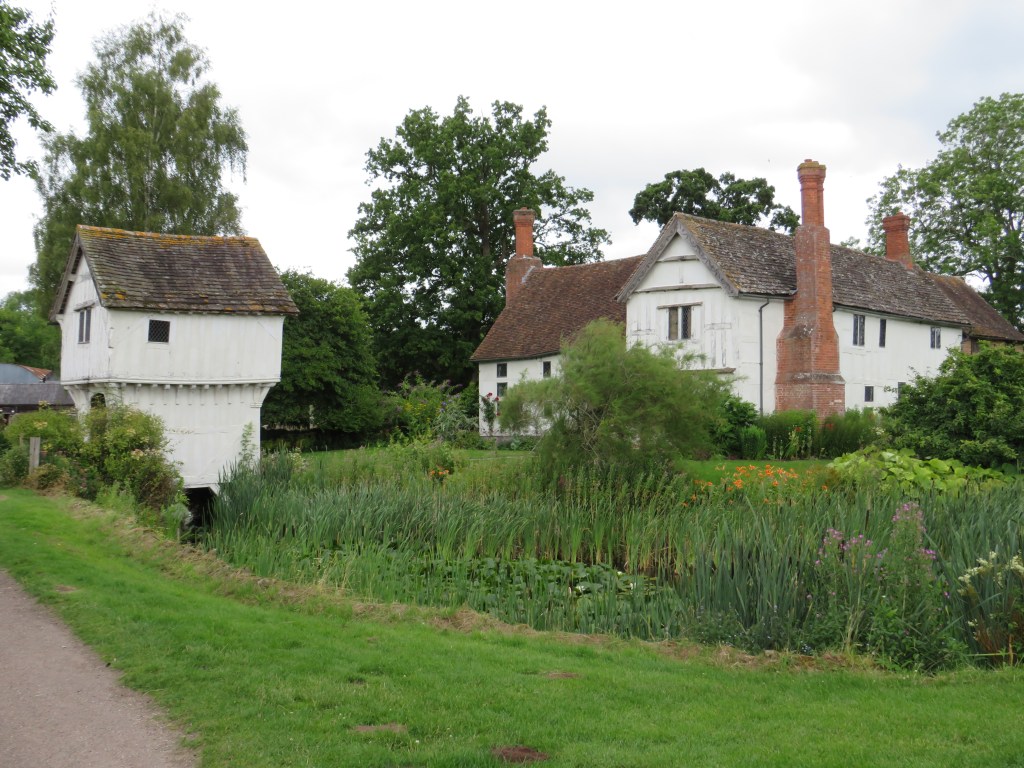
The next day, we headed north into Herefordshire to visit the Brockhampton Estate, definitely highly recommended. First up was the fifteenth century house with its sixteenth century gatehouse. The archetypal Tudor timber-framed home sports white wood and not the traditional black but apparently this is historically accurate, Black and white was not popularised until the Victorian era, when tar replaced limewash on the wood. Tar however was later found to trap moisture and cause rot. Brockhampton house’s wood has been limewashed and was therefore white. The original, cruck-framed building was constructed in the 1420s for John Domulton and his wife Emma Brockhampton. Later owners were the Barneby and then the related Lutley families. Renovations in the 1870s were overseen by John Chessell Buckler. Buckler was known for his work on Lincoln Cathedral. He was also the runner up for the design of the new Houses of Parliament when they were rebuilt after a fire in 1834. By the nineteenth century the house, was the home of estate workers. The whole estate was given to the National Trust in 1946.
The rooms in the house have been furnished to show different eras of occupation from the 1400s to the 1950s. The table in the main hall was set with square wooden trenchers. Each one contained a mini biography of a different inhabitant of the house from its earliest times until the twentieth century. There were plenty of interactive opportunities and items that could be handled. The house should be commended for its efforts to be disabled friendly, with captions in braille, and typed descriptions of each room, that are suitable for those who can turn text into audio. You could also borrow noise cancelling headphones and fidget toys.
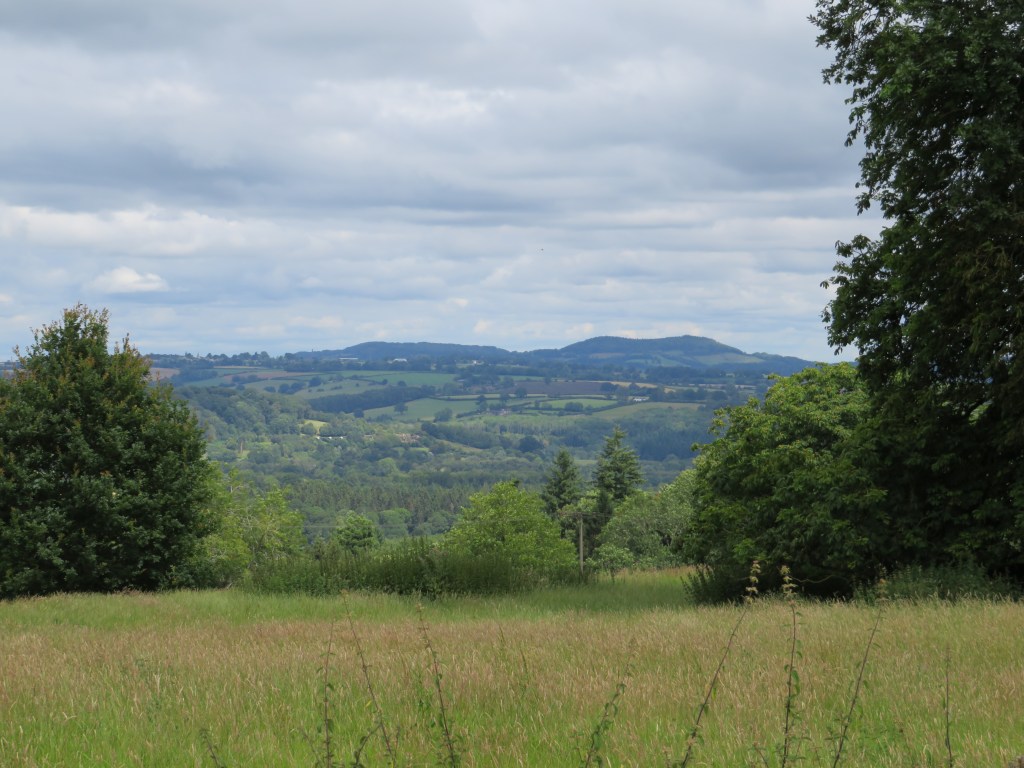
Armed with a map of the estate, we decided to embark on the yellow route walk. To be fair, this was flagged as being ‘hard’ but we have cut our walking legs on ‘strenuous’ sections of the coastal footpath and we rashly decided that National Trust’s ‘hard’ might not be too bad. It was more difficult than we anticipated, mainly because it was uphill, at least on the way out. Once at the top of the hill, we swapped to the red route to see the advertised views. The views were good but perhaps not worth the mile and a half uphill walk to get there, especially as we could have driven up there and parked in an auxiliary car park.
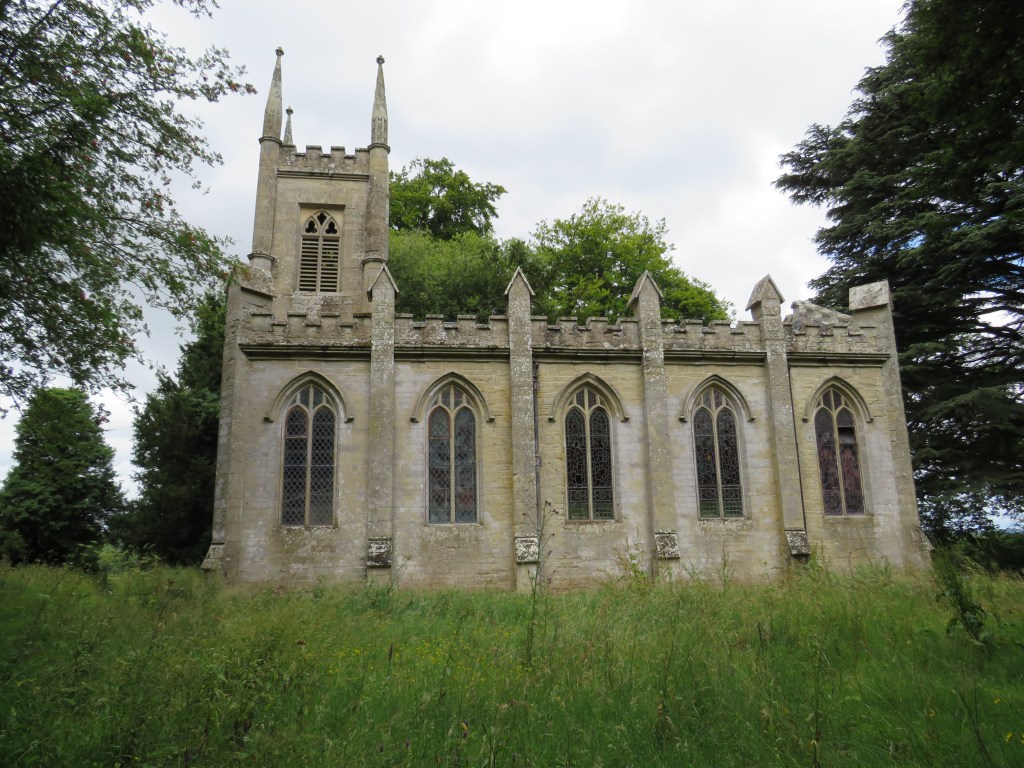
We looked round the chapel, built in the late eighteenth century in a very ornate in style, with perhaps a Russian influence in the panel behind the altar.
Next, to another parish church with family history connections before returning to the van via a supermarket shop.





 The History Interpreter - Janet Few