As the rigors of the job I must not mention were abating, last week, we embarked on a short trip to Worcestershire. Years ago, we began a campaign to spend a few days in every county and although this has somewhat fallen by the wayside, Worcestershire was not one we had ticked off, so this was an opportunity to remedy that.
After a slight pause, because we set off without the extending mirrors that allow the driver to see round the caravan, we were on our way to Malvern. The journey was smooth and uneventful but true to form, we found ourselves travelling on the hottest day of the year so far. This was designed to be an opportunity to relax and twenty eight degrees was too hot for us to want to do much beyond rest in the van, so apart from a wander round the site once it began to cool a little, that was it for the day.
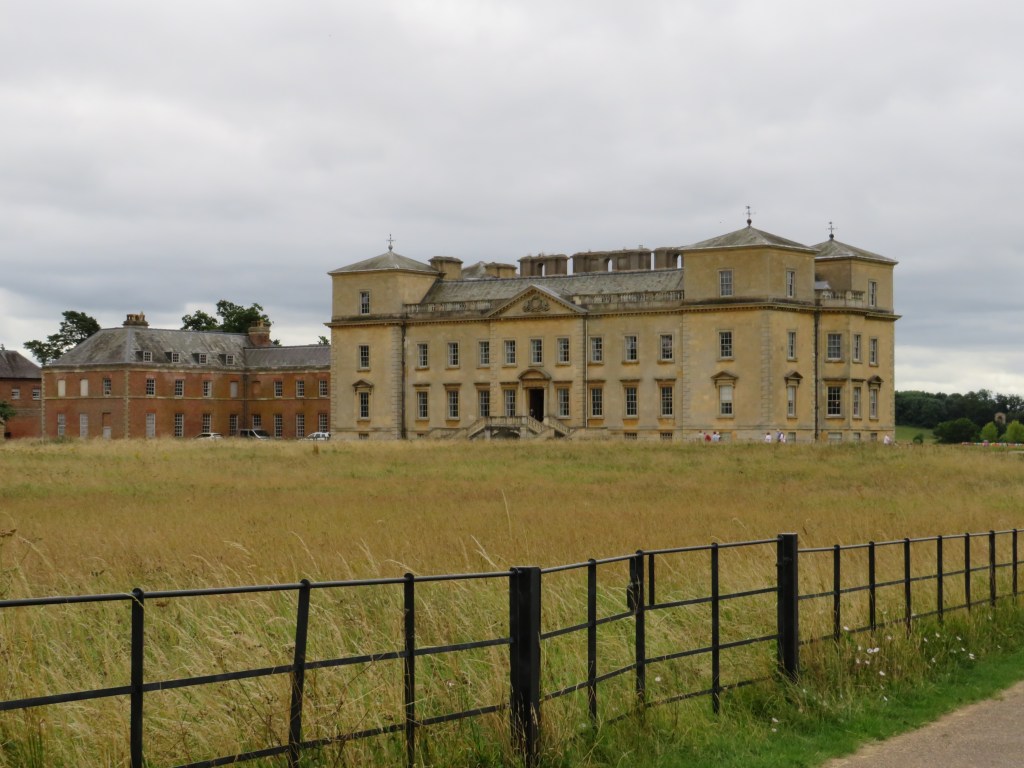
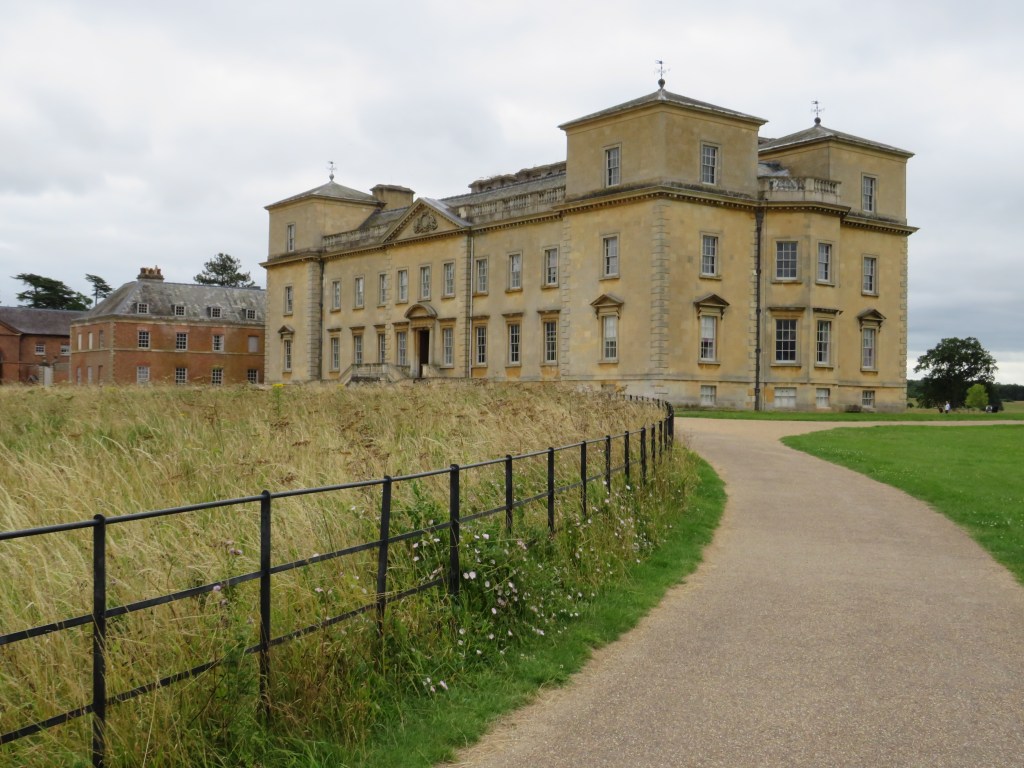
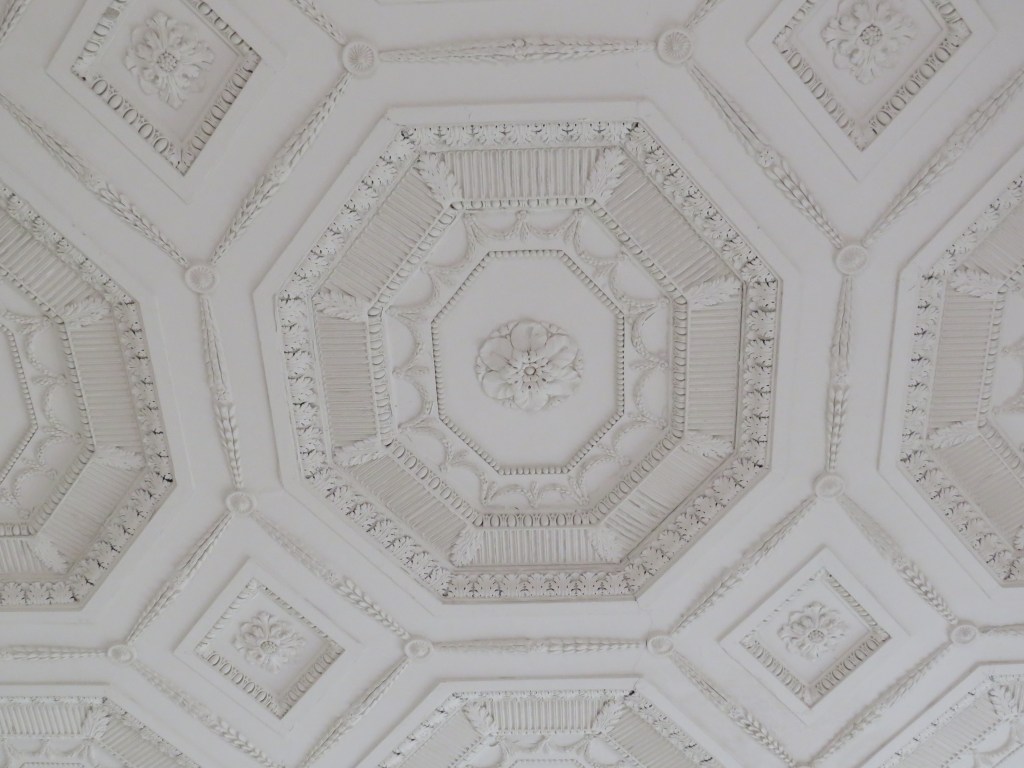
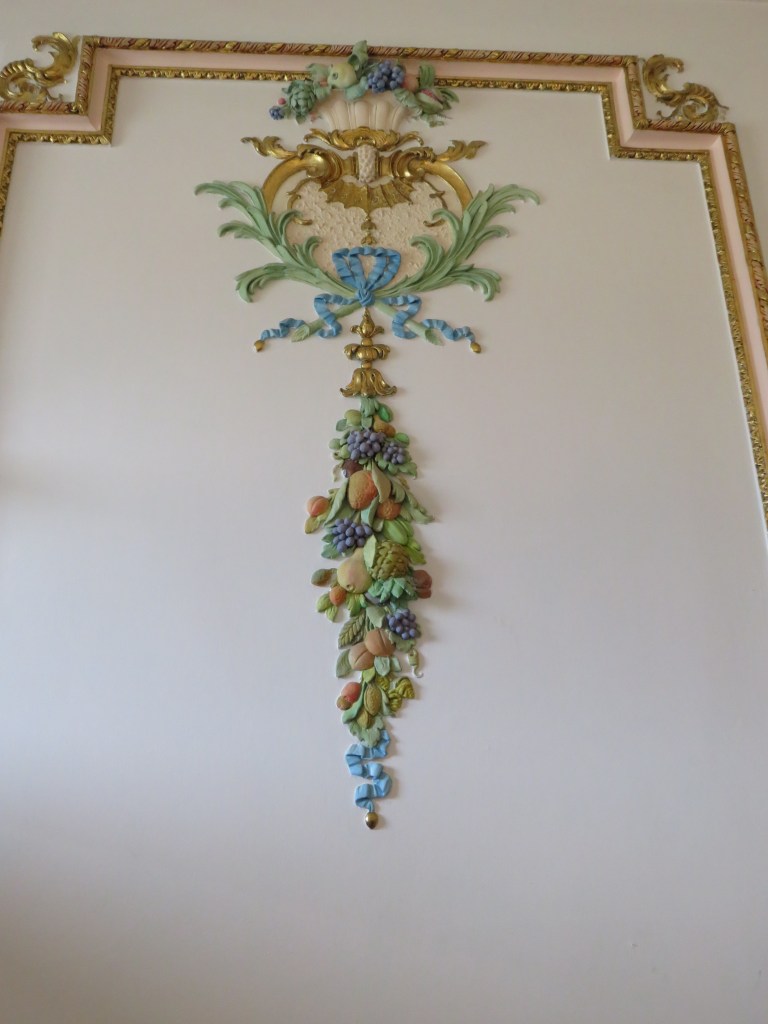
The next day was forecast to be the rainiest day of our trip, so we decide to visit somewhere with some indoor opportunities. Croome House was our destination of choice. It turned out that today Croome was the location for the start of a bike race so, although we arrived as it opened, the car park was almost full. It was a bit of a walk through the park to the house but the views were impressive. Guides were allegedly thin on the ground and Mike seemed to pop up in every room. We learned a little of the history from a rather whimsical video.
Originally the home of the Earls of Coventry, George William, the 6th Earl, inherited Croome on the death of his brother in 1744. He had a utopian vision to create the perfect home, in an idyllic setting. He gathered like-minded visionaries to bring his dream to fruition, including Robert Adam, James Wyatt and Lancelot (later ‘Capability’) Brown. The red brick house was transformed into a Bath stone-faced Palladian mansion set in parkland. The gardens contained imported plants from across the world. When the 8th Earl died, in 1843, many plants were sold off. The National Trust, who own Croome, are gradually replanting shrubberies and trees to Brown’s design but we seemed to miss the evidence of this.
The 9th Earl was noted for his racehorses and also for his herd of Herefordshire cattle, some of which were sold to Australia. Croome was requisitioned during the Second World War and RAF Defford was built in the parkland. After the war, Croome was used as a Catholic Boarding School, then a centre for Hari Krishna and finally a private home, before the National Trust took over in the early twenty-first century. The house has been stripped of almost all its furniture and artefacts and is now used more as a museum space, home to some art installations. One of these was an ‘archive’, a spiral bookcase full of box files, some of which contain information or artefacts relating to the house at various stages of its history.
We were fortunate to have visited on a day when Peter was on duty. Peter does fortnightly tours telling the story of the house’s time as a school. He kept us entertained for nearly two hours with his account of the punitive regime that he endured before he moved to the senior school at the age of thirteen.
We also looked at the RAF Defford museum, which is in the grounds. The airfield was the home of radar testing and the site of the world’s first fully automated aircraft landing. Most of the buildings were demolished, leaving just the runway and a handful of buildings beyond the wood as a reminder of the site’s time as an airfield.
We timed our visit well as the rain began just as we were leaving. We did make a very quick detour to photograph a church of potential family history interest at Pirton.




 The History Interpreter - Janet Few
Great photos!
Mx