Toronto – Days 28 & 29 (1 & 2)

We say goodbye to all the Braunds who are heading homeward as we have to get to the Chelsea Hotel to meet up with our package tour co-travellers. From now on, the days have two numbers to help me keep organised; one is the day of our holiday the other is the day of our tour – hope you can keep up. We investigate various ways of getting ourselves and our possessions to the new hotel. As we don’t want to walk for twenty five minutes with six weeks’ worth of luggage or change several times on public transport, it seems a taxi is our logical option. This will, we are told, cost us a serious amount of money (they are not wrong) but we bite the bullet. It seems all taxi drivers in Canada drive without any hands on the wheel – we manage to survive. We had the option to meet the rest of the tourists at the airport, to which we could have had free travel but we clearly didn’t think this through and when asked to state where we would join the others we stupidly opted for the hotel.

Once at the hotel, I am relieved to find, after some confusion during which I am mistaken for the tour guide (do I look like a tour guide?), that our names are recognised, so we must be in the right place. This is Canada’s largest hotel with 1590 rooms. To save time, certain lifts stop at particular floors only, we need blue lifts and can resume the ‘guess which lift will arrive first’ game that we played on the cruise. In fact the hotel is about the same size as the Celebrity Eclipse and the corridors are as confusing. We are on the eighteenth floor, with an accessible balcony from which to view the town. Did I mention that I like heights about as much as I like the 401? I am excited to realise that this might be the Chelsea Hotel – as in Leonard Cohen – although Google suggests that that was one in New York instead – oh well. We haven’t been through central Toronto before and I am in awe of all the sky scrapers. We venture out for a quick walk round the block and then meet up with the tour guide and eleven other people with whom we are to spend the next fortnight.

I will have some issues if I want to leave things in the safe. The code is made up of the first four letters of my surname – good luck with that one. The hotel has the ultimate in low maintenance fish tanks, a large screen showing a film of an aquarium. We manage to acquire a good value ‘build your own’ salad for our meal. You pay per plate so it is a challenge to see just how much you can pile on.
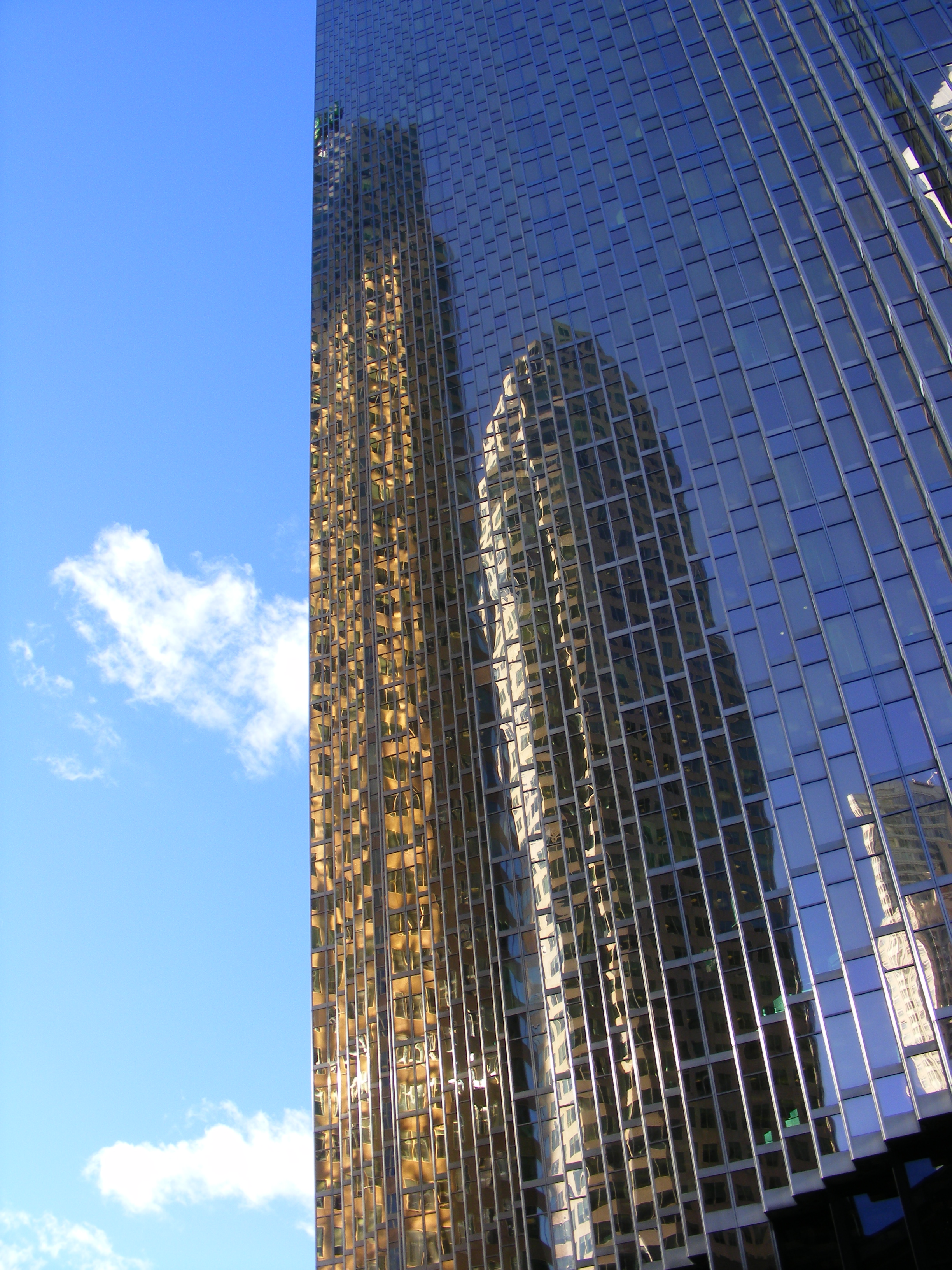
166 Royal Bank of Canada golden towers 13 October 2015The next day and we go down for our breakfast. Our friends from Buckland Brewer are also holidaying somewhere in Canada. That somewhere would be right here, in this hotel, on this day – what a coincidence. This morning we have a coach tour of the sights of Toronto. We set out on Yonge Street, which was entered into the Guinness Book of Records as being the longest street in the world at 1178 miles; it is however only 56km long but was mistakenly measured along with another street. We are taken through Brookfield Place, where an old office façade hides a modern covered shopping centre. This method of combining old and new is not uncommon in Toronto. Toronto has 11 miles of underground shops and restaurants, ideal for winter weather, which isn’t yet here. We look at the shiny golden towers of the Royal Bank of Canada towers, whose windows were impregnated with gold dust.

165 CN Tower 13 October 2015Toronto has a ‘tossed salad’ population; with 120 nations represented, yet retaining their own cultures. Apart from those of British, French and First Nation (the current politically correct term for native Americans) backgrounds, the Italians are the most numerous community. There is also a significant Chinese presence, due mainly to nineteenth century railway workers and those who came during the gold rush. We drive through the vibrant Chinatown.

Toronto itself is 222 years old so pre-dates confederation in 1867. There were about 200 First Nation villages along the northern shores of Lake Ontario and in 1615, Frenchman Etienne Brulé, a fur trader came to the area. In 1760 the British ousted the French in this region. In 1793, when American invasion was feared, Fort York was built to protect the harbour entrance and initially the new settlement was called York. Colonel Simcoe’s Queen’s Rangers manned the garrison here. Simcoe also relocated the capital of what was then Upper Canada, to York from the more vulnerable Niagara. The name became Toronto in 1834, which is a First Nation (Algonquin) word meaning ‘gathering place’; ‘Ontario’ translates as ‘shimmering waters’.

We spend some time in St Lawrence Market, with its glorious smells and many meat, cheese and other food stalls. Then it is off to the CN tower so some of us can climb up and stand on the glass ceiling, like I’m going to do that. Even the fact that said floor can support forty hippos (must have been tricky getting them in the elevator) won’t persuade me. We admire the 1800 foot tall tower with feet firmly on the ground. It was built as a telecommunications tower in 1976 at a cost of $65 million and was the tallest building in the world for many years. Next door is the Bluejays’ Skydome stadium. There are some needle games going on at the moment apparently. The pitch is large enough to land seven jumbo jets on – rather like the hippos thing – would you want to try? The playing surface is seven stories down.

We have decided to try to find Fort York. Not realising that we would have the chance to be dropped off at the CN tower, which is much nearer to the fort than the hotel, we are not wearing the best shoes for walking but it seems daft to go back to the hotel (nearly three miles away), change our shoes and walk all the way back again, so we head off in the vague direction of the fort. After a slight detour, we have to go under a fairly dodgy looking underpass and arrive at the fort. They are probably not best pleased that construction is playing havoc with the approach to the museum/historic site. We decided to come here as we’d heard that they were currently displaying one of the copies of the Magna Carta, dating from 1300, that is normally in Durham Cathedral. It does seem a bit incongruous to come across the Atlantic to view a British treasure but it is an interesting display and also on view is the lesser known ‘Forest Charter’.

Then on to the fort itself and an opportunity to get more good value artefacts that we can use in the world of Swords and Spindles, as long as we can fit them in our baggage. Although, after the fort’s initial establishment in 1793, fortifications were then concentrated on Kingston, further tensions led to the strengthening of Fort York in 1811. The fort played a significant part in the war of 1812, when, in 1813, the American troops tried to move into what is now Canada, greatly outnumbering those defending the fort. In an attempt to distract the Americans, the British, together with a few Canadian and First Nation soldiers, ignited the ammunition store, which also prevented the Americans getting their hands on the ammunition – some parallels here with the Battle of Torrington. In fact, one of Simcoe’s weapons was an outdated Cromwellian culverin There was a moving list of those who perished in the battle of Fort York in 1813, including a William Toogood, a drummer with the American troops, who must surely have Isle of Wight connections. The Americans were victorious and occupied the fort for six days, later burning it down. The fortifications were rebuilt by the British in 1814.

A long, uphill walk north and east back to the hotel, by which time we were really regretting not having more suitable footwear but still glad we chose to visit the fort. Food in the hotel again and Chris has elevated the ‘how much salad can you fit on a plate?’ game to the level of an Olympic sport and is probably heading for a world record.

Braunds United – Days 25-27

Heavy rain and high winds during the night did nothing to lessen my impending sense of doom as I anticipate our rush hour journey back to Toronto. Luckily the worst of the weather has abated by the time we leave the site but the trip along the 401 is not one I shall be aiming to repeat. Our van is returned on time and found to be satisfactory. There have been times when I seriously doubted that we would get thus far unscathed. We have travelled 6663km, across four provinces in 22 days and stayed on 14 different sites (returning to two sites twice), it would have been 15 if one of those on the itinerary hadn‘t been closed. We used approximately 1600 litres of fuel, which cost us around $1600 or £800 – eat your heart out UK drivers!

Then began the wait for our courtesy bus to the hotel. Our chauffeur is a lovely chap from Jamaica but I do rather wish he a) wouldn’t turn round when he talks to us and b) that he wouldn’t gesticulate frequently, with both hands off the wheel. Then over 300 emails of the past few days to deal with as we unpack at Best Western, our home for the next three days; three days in one place will seem like luxury.

By lunch time enthusiastic Braund reunion attendees are foregathering in the foyer of the Best Western, many of these are people that we have not met before but it is, as usual, like a gathering of old friends. Braund matters are discussed until we have little voice left and the evening is spent in Mickele’s Restaurant, which is next to the hotel. The staff are not a bit bothered by catering for 32 people, who all want different dishes and who want to pay in twos and threes.

156 Braund Reunion 10 October 2015The next day is spent in a very pleasant church room in Toronto, with 55 Braund family members exchanging news and views, finding themselves on family trees and discovering connections. There were mini reunions within the reunion, with cousins meeting up for the first time in many years. Everyone was full of excitement and enthusiasm, listening to presentations and learning more about our shared history. Then off to a local restaurant to do what Braunds do best – eat.

160 Black Creek Village 11 October 2015A chance to catch our breath the following morning and then a coach ride for our party to go to Black Creek Village. This is another pioneer village, the former land of the Stong family who had Germanic roots and settled here in 1816, having come, along with many others, from Pennsylvania. Those of German origin were, in general, more welcome than the English, as they had the farming skills that were required. Keeping a party of Braunds together is a little like juggling jelly and Black Creek Village, whilst very interesting, does not win an award for super organisation. After some free time wandering, we somehow get our unruly crew into two groups for a tour of the village. We see several historical interpretations including the weaver who is using large balls made up of thin strips of material as her weft. The 36 inch wide, linen warp threads have taken two days to string up and a seven metre length of cloth would take several days to produce. Ladies would bring in their balls of material for weaving. The weaver would keep a quarter to make things to sell on as payment and the remainder would be woven up and returned to the owner. We learn that the weather was much harsher in the early nineteenth century; so warm clothing was essential. Climate change, urban smog and the felling of trees have all made a difference.

Volunteers for dressing up are called for – how could the Mistress Agnes in me refuse? Next we visit the printer’s workshop and then the doctor’s residence. Another party have been celebrating a wedding. Here’s is a tip: if you are going to have your wedding at a pioneer village take some alternative footwear as stilettos are not a total success. When we planned this weekend it was scheduled for the date we happened to be in Toronto; we had no idea it was Canadian Thanksgiving. Our scheduling meant that twenty five Braunds, from three continents, had a traditional Thanksgiving dinner at Black Creek Village. The staff did seem to have been to some bizarre alternative school of waitressing, whose technique involves a lot of pointing at the customers and asking the same question several times but otherwise all was fine. Just because we hadn’t eaten enough, in the evening we went up the road from the hotel for yet more food. A wonderful weekend with lovely people and I think the North Americans will certainly be getting together again.

Port Hope and Cobourg – Day 24

We set off, heading east on the 401, to take a look at Port Hope, where Braund and other emigrants settled. The Archives is open from 1-5pm and we plan to look for that rare species a Canadian car park, so we can walk round the town first. As we drive past the Archives at 10am a sign reads ‘open’ so we take it at its word and enter. They seem surprised that we are surprised they are open and there is even room to park alongside. Maybe Port Hope Archives have their own time zone. Few records pre-confederation in 1867 but we do find some documents worth photocopying. Extracting ourselves from the parking space does involve some nifty reversing back on to the road but we manage. There is even a place to park by the harbour so we can view the town. We see some Canada geese and a large orange butterfly, which I later learn was a Monarch, that won’t stay still long enough to be photographed. The harbour-side is industrialised and dominated by a large Cameco plant, which is guarded by conspicuous security personnel. I am carrying a camera in preparation for photographing the site of William Braund’s house, which is nearby, so I am keen to keep a low profile and not be accused of spying. Chris decides to ask the security guard what goes on here – now they will think he is the distraction technique for my illicit photography. To make matters worse, it turns out that they produce uranium for a nuclear plant; my chances of arrest for industrial espionage soar.

152 Canada Geese 8 October 2015We walk up the hill through the ‘heritage town’ and find the Episcopalian Methodist Church, which was built in 1875. We also learn that the Prince of Wales, later Edward VII, visited in 1860, so some of my emigrants may have been part of the celebration. Returning to the harbour we see numerous dead salmon in the creek, presumably failing in their attempt to return upstream after spawning.

Next stop is Cobourg and another fail on the car park front. We eventually find a residential street where it seems possible to park without risking collision, parking infringement or the wrath of residents. We eat our final meal in the van and then head off for the library for me to talk about emigrants to the Lakeshore Genealogical Society. The organisers have been a little concerned by my unavoidable web silence over the last few days; they did not have a plan B. This is another very friendly group and in keeping with the other societies I’ve visited, they provide elaborate refreshments: soft drinks, fruit, cheese and crackers. Puts the UK’s cup of tea and a biscuit to shame. There is even a descendant of one of my case study families in the audience. As a prequal to this weekend’s Braund reunion, two of our members have come along to listen to tonight’s talk. Heavy rain begins as we head back to Darlington, on the last of our three journeys in the dark. It is a bit of a shame that we decided to take the final opportunity of washing clothes. It has been a glorious, hot sunny day until just before we reach the site in order to rescue our by then dampened clothes.

Parry Sound and Back to Darlington – Days 22 & 23

We have one of our longest days driving today to re-trace our route south on the 17 and 69. We have managed not to duplicate our journey very much so far but there really was no sensible option for this bit. In any case the road looks very different in this direction and it is noticeable that the trees have reddened since we came the other way on Saturday and Sunday. Pulling off for petrol resulted in a very pretty detour round a back street. I finally managed to locate a post office so I could pay a small fortune to send back the corrected proofs of ‘Remember Then’ – this had better be worth it and mean we get a pre-Christmas publication date. Today’s best town by-line was ‘Echo Falls – worth repeating’ – who thinks these up?

In theory the sat-nav knew exactly where this site was. Theories are all very well and the last couple of miles were undertaken without her aid. Just as we began to look for a place to make a U-turn, the site appeared. This is one of several Ontario Provincial Parks sites that we have used and is better patronised than some. The receptionists always ask if they can reveal our pitch number to guests enquiring about us – sadly I don’t think we are likely to have any visitors! Today I was also asked, not just for the license plate number of the van but where it was registered. How on earth do I know? She writes down Toronto, later we discover that it tells you on the plate and I should have said Alberta, oh well, can’t be far apart!

We have a lakeside pitch again and just to make us feel at home the train line is nearby, so we have the joys of hooting trains once more. Next to us is another Canadream van – we have not encountered many – driven by a couple from the Isle of Wight. We make the obligatory tour of the site to view Oastler Lake, which is very attractive. Today marks the half-way point of our trip.

144 Oastler Lake 6 October 2015While we have our breakfast we watch a red squirrel unearth nuts in our pitch’s fire pit and retreat to eat them. Good job we hadn’t lit a fire. We did wonder if this squirrel likes his nuts roasted! With the view of the lake in the background, the only thing that mars this site are the ever present trains, which hoot long, loud and repeatedly all through the night.

A little more step retracing as we head back to Darlington Provincial Park for our last two nights. Some rain for the early part of the journey does not detract from the trees that are now truly beautiful. We are going through Kawartha Lakes, allegedly because it will be a new road for us and also because the Jewell and Prouse families emigrated there from Buckland Brewer and Clovelly. Actually this route is primarily in order to avoid the centre of Toronto. Today’s is a comparatively short drive. Not as short as it should have been owning to a road closure. A sign helpfully said ‘Detour’ but there was no clue as to where the alternative route might be. Some deviations, hesitations and a U-turn later and we are back on track. We end up with nice views of Lake Simcoe that we might otherwise not have had.

We have another lovely lakeside pitch at Darlington Provincial Park. Inevitably there are still trains but not quite so close as they were last night at Parry Sound. On this stop at this site we have time for a walk through the park to McLaughlin Bay; here the squirrels we spot are black. The first European setters arrived in Darlington Township, via Port Darlington near Bowmanville, in 1794. Roger Conant, John Burk and John W Trull had answered the appeal for United Empire Loyalists to settle in the area that is now the park.

Chris has a bit of an incident with the shower curtain rail – there now isn’t one. I hasten to add that this was inadequate construction techniques and not his aggressive shower curtain pulling. Tomorrow is likely to be a busy day so we start to see how much we can cram back in to our suitcases. This seems to go worryingly well – what cupboards have we forgotten to empty?

Agawa Canyon on the Algoma Central Railway – Day 21

Sorry to leave you in suspense everyone – we hit a four day internet black hole – so back to the plot. We have to board our train at 7.30am. The sat-nav tells us we are 13 minutes away from the station. We therefore, of course, leave the site at 6.40am. It turns out that this wasn’t such a silly idea as roadworks, detours and a one-way system have us going round in several circles, as every road the sat-nav directs us down is closed. This was made more difficult by the fact that it was not yet daylight. We finally extricate ourselves and arrive only 23 minutes ahead of time, that’s almost late by my standards. My fears that the station might somehow be in a different time zone and we would have missed the train were unfounded.

We are to travel 114 miles north up the Agawa Canyon on the Algoma Central Railway. The only disappointment is that this is diesel and not steam driven. The station is in Sault Saint Marie, which is a large industrial town that is weirdly in two countries as part of it is in Michigan and part in Ontario. Its fortunes were built up initially round the hydro-electric power generated by the sault, which we have learnt means waterfall. It seems this town is pronounced Soo Saint Marie though, affectionately known as ‘The Soo’. Fortunately, we have not embarrassed ourselves by pronouncing it Salt Saint Marie in public.

We are sat opposite a very pleasant couple from Michigan and commentary is provided by ‘Cathy and Mike’, whose recorded voices are activated by GPS. They are about as patronising as the Founders’ Museum woman. They tell us that the population of The Soo is 75,000 and that the station boasts one of only two indoor railway turntables. The area across which we are travelling is part of the mineral rich Canadian Shield and is made up of granite with only a very thin subsoil and certainly some of the trees seem to be clinging to virtually nothing. We also learn that 20% of the world’s fresh water is in the Great Lakes and today we get a glimpse of our third, Lake Superior.

Two problems arose from the trains running up the canyon. The original trains were steam and the sparks from the engines caused fires. Now any fires are primarily fought by ‘water bombers’, planes that scoop up water from the lakes and of course diesel does not cause sparks. The second train related problem was with moose. The trains’ hooters scared away most wildlife but were attractive to rutting moose who would stand on the track and confront trains, which presumably they viewed as rivals. Several different hooters were experimented with to find one that moose ignored. In our experience, on various campsites, train hooters are over-rated. We pass through beautiful scenery and the trees are spectacular but travelling in a train going at speeds of up to 45mph and being behind a window means that photographs are very disappointing. I spot a beavers’ lodge but no beaver. We travel along the 472 metre long Montreal River trestle – that’s a viaduct by the way but we are learning to speak Canadian.

135 From Agawa Train  5 October 2015On arrival at Agawa Canyon Park we await de-training – that means getting off the train; even the Canadians haven’t heard that one. We have ninety minutes to complete trails of our choice in the park. By this time we are in beautiful sunshine, so that bodes well, We elect to begin with the ‘very strenuous’ climb to the lookout. We have repeatedly been warned about how difficult this is and that it involves 330 steps. Notwithstanding, we stride out with vigour, along with a number of fellow passengers. We estimate that there were well over a thousand people on the train. As we climb the steps people gradually drop out or pause on the passing points. I did have a couple of short stops, purely to admire the view of course. Just as I think we must be nearly there we pass a marker that tells us we have got to step 200; I would rather not have known. Breath is becoming a little harder to come by but I am determined to make it to the top, no clue why, I hate heights even more than I hate tunnels. The views from the top are worth it and someone has thoughtfully left an oxygen tank and mask at the summit. There were no accompanying instructions as to its use and I managed without. Some of our fellow climbers look more in need of defibrillators. Sadly the sun is now our enemy as it is in precisely the wrong direction, making all photographs look like silhouettes.

We accomplish two more trails, to see Black Beaver Falls and Bridal Veil Falls, within our allotted time and return to our train (re-train?). We believe we have solved the no food problem for the second part of our trip. Someone has heard Chris’ accent and has offered us very tasty cranberry cookies because her late husband came from England. Now I just have to stand Chris on a street corner somewhere and get him to talk very loudly (no difficulty there) and the food will come flocking in. All in all a lovely trip.

Plenty of lakes and lots of Wind – Days 18 – 20

There has been no sign of the skunk as we leave our lovely lakeside site. The trains have been hooting all night and now we have to brave the level crossing. The lights are red as we approach and this time two engines are pulling no less than 177 carriages. Most of these are two containers on top of each other so that is some train. I do wonder what possessed me to decide I could cope with the 401 through Toronto in rush hour but cope we do. Part of this road has five lanes and it is the biggest road either of us has ever driven on but Chris is unfazed; I remain frankly terrified. I do hope I am not going to find I have turned into a total wimp as a passenger when I get home. I am not normally bothered by being driven on busy UK roads.

Once past the outskirts of Toronto we are in flat farmland again. We are heading further west and take a slight detour through Guelph, where the Chings of Bulkworthy went to live. I am beginning to wonder if Canadians don’t eat, or if we are missing something. Despite riding through towns there are no signs of any food shops, apart from numerous take-away outlets. Around Elmira, we are travelling through Mennonite country and signs warn us to look out for ponies and traps; we do spot some.

Today the sat-nav is clueless on the location of the site but yippee the map has it marked. We even managed to finally find a food shop in Goderich first; just as well as we are out of supplies. On this site, there is even a certain position where emails can be downloaded. This time our booked pitch, 207, is vacant but in order to connect to the electricity supply using the ridiculously short cable with which we have been provided, we are in danger of ending up in a ditch. Chris does some nifty manoeuvring and approaches the pitch from the opposite direction, which does mean that we are relatively flat and have electricity.

We go to explore the site and after 122 steps down, are on the banks of Lake Huron in what we have been told is the remnants of a hurricane. We don’t linger long and after a quick wander along Old Farms Trail it is back to the van to watch the birds from our window. We have had no news for over a fortnight so the world could be coming to an end for all we know. A chatty lady camper tells us the weather on Sunday will be ‘interesting’ – wonderful, something else to worry about.

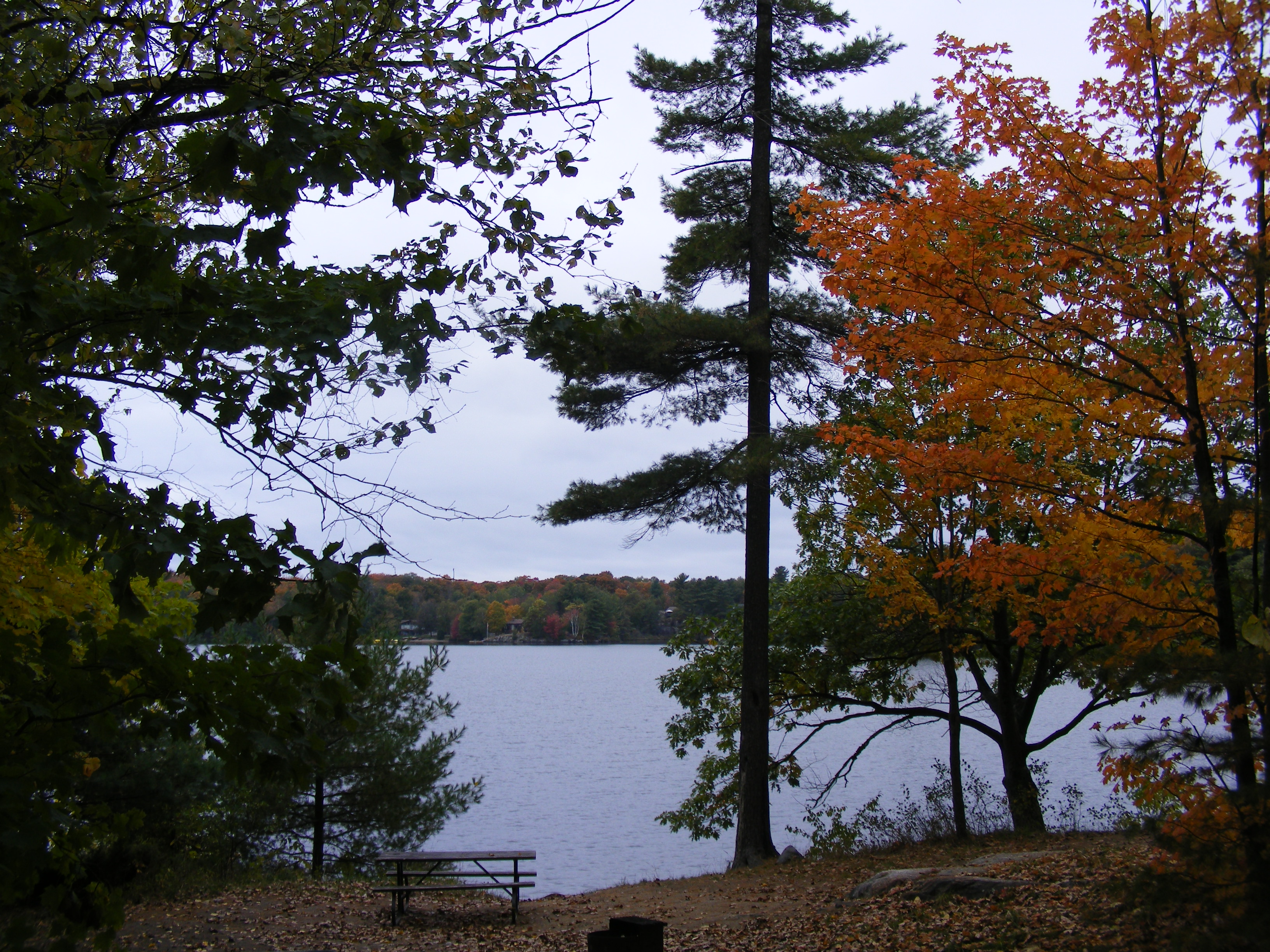
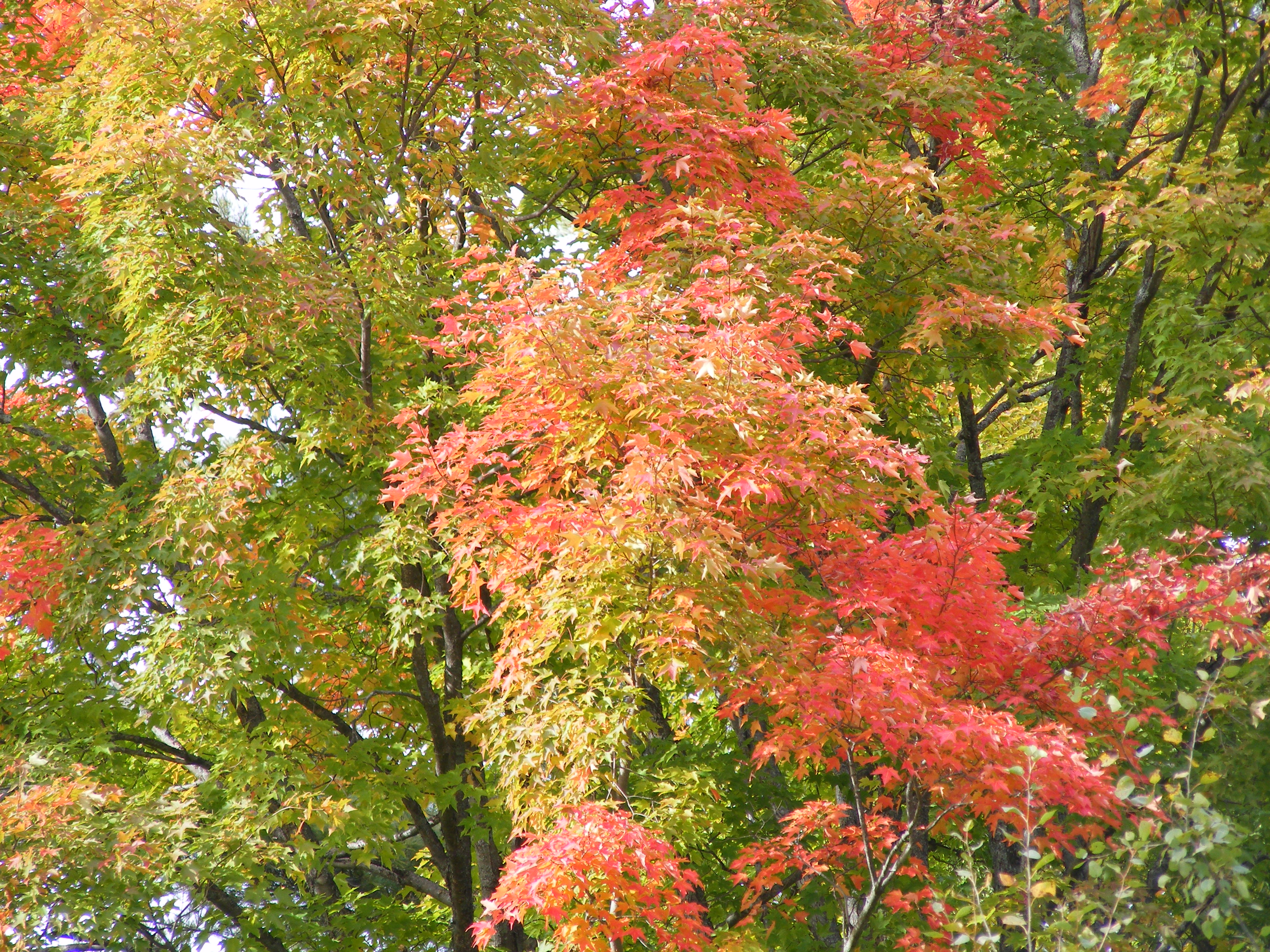
109 Trees at Grundy Lake 3 October 2015We continue our journey from Goderich – another destination for north Devonian emigrants, this time the Penningtons. The street grid here is diagonal to our direction of travel, so we tack across minor streets, through open farm land, in seriously high winds. Many houses have pumpkins on their steps, or orange ribbon decorations, presumably ready for Thanksgiving. We also see chrysanthemums for sale in various places. Half our journey is on road 400 but this is not to be compared with the 401 in the scary stakes, although the buffeting of the vicious wind does add a terror factor. Much of this road, known as the Georgian Bay Coast Route, is cut through rock and people have built mini-cairns along the cliff tops. The road’s construction must have required a serious amount of blasting and we wonder why it wasn’t just built on the top but we have noticed that Canadians like their roads to be flat, so perhaps this is why. At least the rocky channel gives us some protection from the wind and the trees on top of the cliffs are really beginning to look quite special now, although we have been told it will be another week before the colours peak.

We arrive at Grundy Lake Provincial Park, another site found without aid of sat-nav and the only hazard here is that bears have been spotted in the locality, oh and the rattle snakes. I’d quite like to see a bear from the safety of the campervan; I have been practicing my introductions as advised (see day 3). I’d even settle for a moose. Wildlife tally so far: chipmunk, red, grey and black squirrels (that’s three different squirrels not a multi-coloured variety), squashed skunks and racoons and of course the ever present flies. Again we have difficulty parking close enough to the electricity point. Our first attempt was near enough but meant a branch was banging against the roof. In this wind, the novelty of this could very quickly wear off so we try again. Then a quick walk round the site to observe Grundy and Gurd Lakes but the wind is too cold to make this pleasant so back to the van. Today we passed the 5000km mark for our trip. There is a somewhat worrying water leak in the van that seems to be dangerously near the electrics but Chris claims to have fixed it.

Today’s predicted ‘interesting’ weather did not materialise, perhaps yesterday‘s was enough. We have got more rain as we set off further north on the 69 but this soon eases and we turn westward on the 17. This is similar scenery to yesterday’s and a pleasant drive. This will be as far north and west as we get under our own steam and the journey is purely so we can take a train ride up the Agawa canyon tomorrow. So many things can go wrong. This trip has already caused problems as pre-booking and in theory, pre-paying, is essential but for some reason, when trying to pay from the UK, neither Chris’ nor my cards would work. They very kindly agreed to hold our places and said we could pay in cash on arrival. The sat-nav recognises the train station and we are going via there on our way to the site (also miraculously recognised), to make sure that there will be somewhere to park tomorrow. I am fairly sure there will be as I checked this out on Google Earth and sure enough there is a huge car park. The only slight worry is that we have had to travel down streets where lorries are prohibited. I do realise we are not a lorry but all the other vehicles look much smaller than us and I am wary of another low-bridge incident.

We pay for our tickets and are all set for tomorrow. A very good job we booked in advance as tomorrow’s train is full. A quick trip to Wallmart to replenish Chris’ chocolate peanut supply and we are away. We find our site without difficulty; we are the only van on site and there is even internet – hurrah. We park up and I look for our train tickets. They are nowhere to be seen. I begin to panic. I turn the van upside-down. I know I put them in the glove compartment. They are not there. I search all the places they cannot possibly be – nothing. I send Chris back up to reception, a not inconsiderable walk away, in case I left them there – still nothing. I enlist his help in the search. He finds the tickets in the glove compartment. I am clearly no longer fit to be let out. Tomorrow Chris is to be in charge of the tickets.

I settle down to make use of the internet, which may be our last until Friday. Chris is cooking but passes the time investigating parts of the van that he had not yet fiddled with. A green light starts flashing. In order to find out what this means, I have to lie flat on the floor. It appears to be something to do with the carbon-monoxide detector. A flashing red light means call 911, two flashing red lights mean we are dead but no clue as to what a flashing green light means. We open a window in case. A minute or two later the light stops flashing and we assume we are safe. If this is the last blog post, we weren’t.

Rain does not stop play – Darlington and Upper Canada Village – Days 16 and 17

Last night made up for our fortnight with virtually no rain and we had the full two weeks’ worth in one night. As a potential site owner has put in an appearance, we do manage to paddle out to pay for our site before joining the 20 ouest in heavy rain and very poor visibility. This is just what is needed for the outskirts of Montreal, which took us back on the busier roads that I love so much (not). Then all my birthdays come at once – a tunnel – what could be better? Today saw us pass back into Ontario and also took our travels past the 4000km mark (another 2500km to go under our own steam). We find River Cedar Campground relatively easily, despite the sat-nav drawing another blank. This site on the north bank of the St Lawrence takes over 300 vans; we are one of about six on site. Do Canadians all hibernate at the beginning of September?

It is, I’ll admit, pretty jolly bracing weather now and more what I was expecting temperature wise. This is unfortunate as internet access here involves skulking outside in a howling gale. In fact even that is spectacularly unsuccessful and after ten minutes only three emails have appeared. At this point I give up and we walk round the site to look at the St. Lawrence and the resident bees’ nest. There are plenty of geese and other wildfowl in the distance and we see and hear some frogs.

The mornings now have a distinct autumnal chill and it is still very windy but the sunshine has returned. This is just as well as this morning we plan to be outside. We head off to Upper Canada Village, which is, by design, just up the road. It is also, with typical Canadian tourist board foresight, officially shut for the season. My pre-planning has revealed that, although this pioneer living history village is minus its historical interpreters, we can have a ninety minute guided tour of some of the building for the exceptionally reasonable sum of about £5 each. It would have been more for me had all this stressful travelling not made me look like I qualified for a senior’s ticket; the cashier didn’t ask and I didn’t argue – or indeed realise until later.

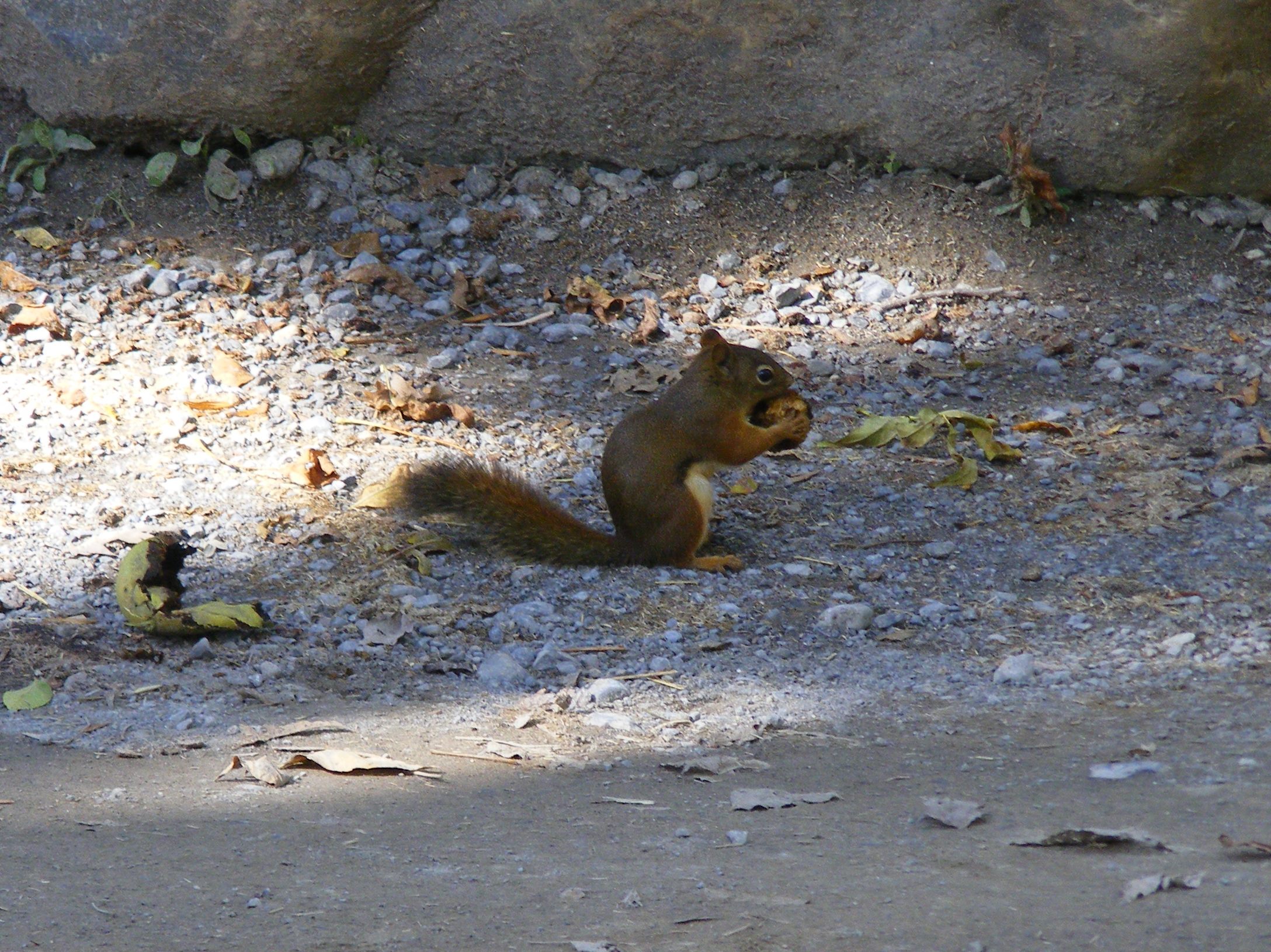
082 Red Squirrel, Upper Canada Village 1 October 2015Whilst waiting for the village to open we got our feet very wet in the long grass looking at the site of the battle of Crysler’s Farm, owned by the Crysler and Fetter families. This was fought in November 1813, bizarrely during the war of 1812. Combined British, Canadian and Native American troops of 800 defeated 4000 Americans, ending the American attempt to take land towards Montreal. We also see the pioneer memorial. In the late 1950s the St. Lawrence seaway project to improve navigability, involved flooding an area along the northern banks of the lake. Mid-nineteenth century memorial stones from cemeteries in the area earmarked for flooding were removed and set in walls on the Upper Canada Village site to form the pioneer memorial. A number of the older buildings were also preserved and moved, often in one piece, to form Upper Canada Village. Loyalists had been settled in the area from the 1780s but most of the village represents the mid-nineteenth century.

088 Pumpkin Inferno, Upper Canada Village 1 October 2015The reason that tours are being offered today is because the village is gearing up for a month of evening opening, known as the Pumpkin Inferno. The whole village is bedecked with thousands of intricately carved pumpkins, which will be illuminated this evening – a pity we can’t stay. We are duly impressed by all the carving, our awe does abate a little when we realise that the pumpkins are actually polystyrene but they are very lifelike and look spectacular. Our group of about twenty are shown round several of the preserved buildings including Cook’s tavern, the school house and the Lutheran pastor’s home. Two blacksmiths are working, although not in costume. It was good to learn that they were making a grill for the millrace, something that was actually of practical use to the settlement. We spot a red squirrel collecting walnuts and stashing them under the eaves of one of the buildings; it even stays still long enough for me to photograph. I invest in a small wooden top and dice; always good to make holiday souvenirs tax deductible.

We set off after lunch for a straightforward drive, with 215 of the 217 miles on the 401 west. We spot what has to be the prize winning by-line for a town sign ‘Great Napanee – great for many things.’ We also see the 1000 island bridge to the US, which we avoid. We assume that this is the home of the salad dressing of the same name but no helpful sign indicates this. Since we re-entered Ontario there have been services that we recognise as services. These allegedly have free wi-fi. This is more wi-fi of the so slow as to be totally useless variety and after making Chris fill up with petrol at half speed, I give up and hope for better luck on site.

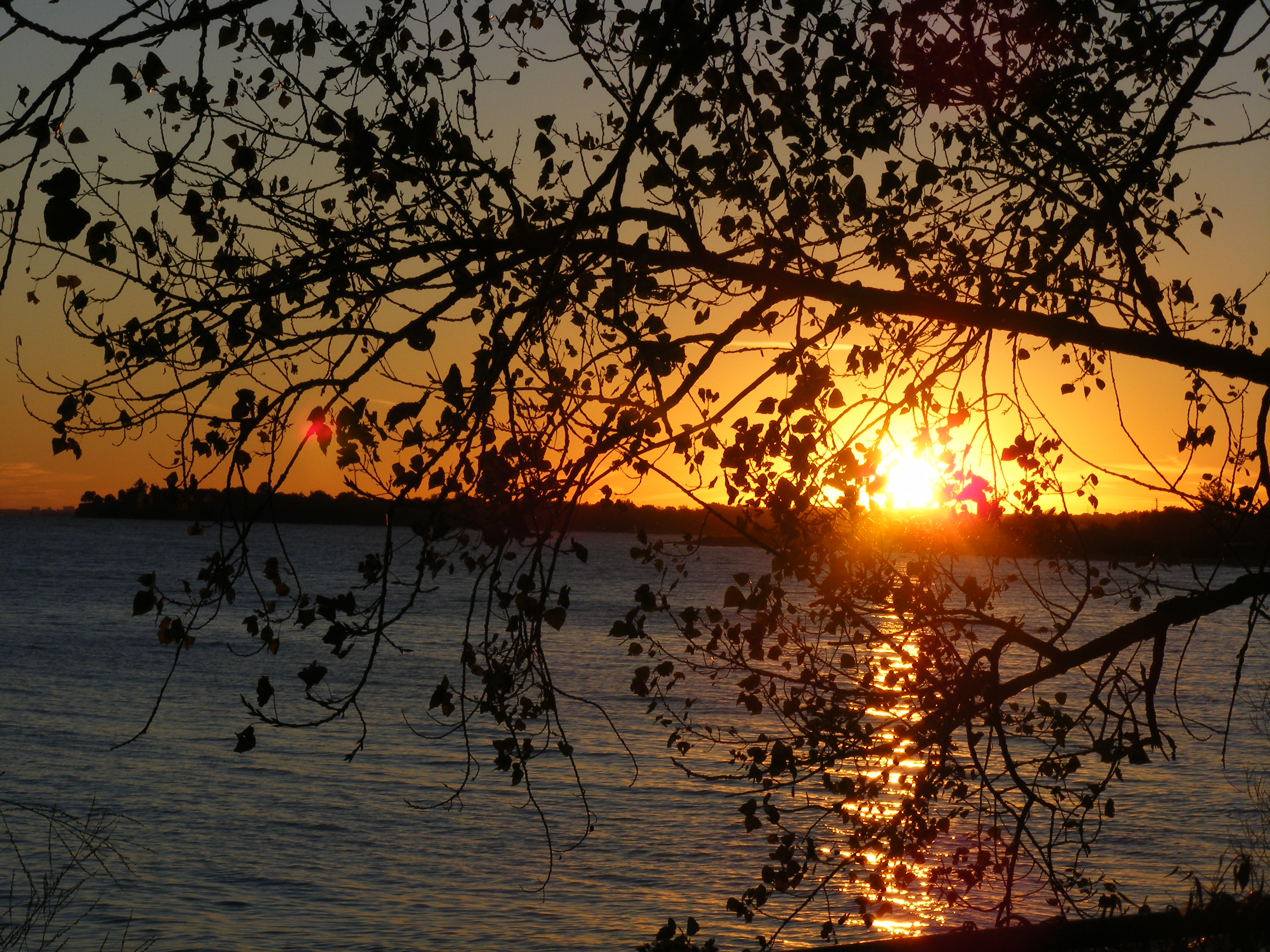
100 Sunset on Lake Ontario 1 October 2015This time the difficulty arises when we arrive on site, a site which, yes, the sat-nav can recognise and we can find straight away! I have paid for a specific premium pitch, pitch 71, with views over Lake Ontario. There on pitch 71 are two tents, two people and two dogs. The site office is closed so we need to use our initiative. The interlopers agree that it is their mistake but Chris offers to look for another vacant pitch. I am a little less keen, as I particularly want a lake view. We find an acceptable alternative pitch but are reluctant to set up in case this is reserved for someone who has not yet arrived. Unlike our last few sites, this one is not deserted. Fortunately I spot a chap on a ride-on mower and explain our predicament. After a short pause our pitchcrashers have paid for the similar neighbouring pitch (28). We happily agree that we will swap 71 for 28 to save them moving their tents and we have made friends for life. They tell us there is a skunk living nearby but I expect it went into hiding as we arrived.

098 Sunset on Lake Ontario 1 October 2015We can watch the sunset over Lake Ontario, which is yards from our van, as it illuminates the distant skyscrapers on the American side of the lake and wonder how many Braunds and other Devonians have sailed past this bit of shore. We can hear the waves lapping, oh, and the trains hooting loudly but nothing is perfect. It is also another internet black hole. By this time my family will think I am lost forever.

Heading North and Heading West – Days 14 and 15

Sorry for the long silence devoted fans – internet connections have been of the non-existent or steam-driven varieties and have involved shivering on a bench somewhere – this one is little better as regards speed but I am at least undercover.

Last night’s ‘quiet’ pitch did not get any quieter. To the loud train hooting at frequent intervals add our neighbour refilling his water tank after midnight, accompanied by a door banging extravaganza to rival our cruise neighbours (see July’s posts if you are new to these ramblings). I was dreading negotiating our way out of St. John’s in rush hour but by dint of ignoring the sat-nav, it was accomplished. We were surprised to see the amount of effluent in the river as we left the town. I had feared that today would be main roads and heavy traffic but although the roads were more major than some, we were lucky (or unlucky) if we saw more than two cars at a time and the scenery was still good, if a little repetitive; one tree does after all look very much like another of the same species. We are noticing the gradual reddening of the trees as we travel on.

Road 7 north then Highway 2 and we were heading back for Québec along the River Valley Drive. Don’t you just love it when the sat-nav says ‘continue for 332 km’? This route follows the border with the US and we can see Maine just over there. It would be much quicker to cut across the US but we don’t feel up to arriving visa-less at border security. We decided to give ‘the world’s largest covered bridge’ at Hartland (shades of home) a miss. Surely this is just a tunnel? I am not keen on tunnels. It seems that all towns have to have a by-line announcing some superlative claim to fame. Apart from Hartland’s covered bridge and yesterday‘s highest tides, we spotted ‘the French fries capital of the world’. Really? Who bestows these titles, or are they self-styled?

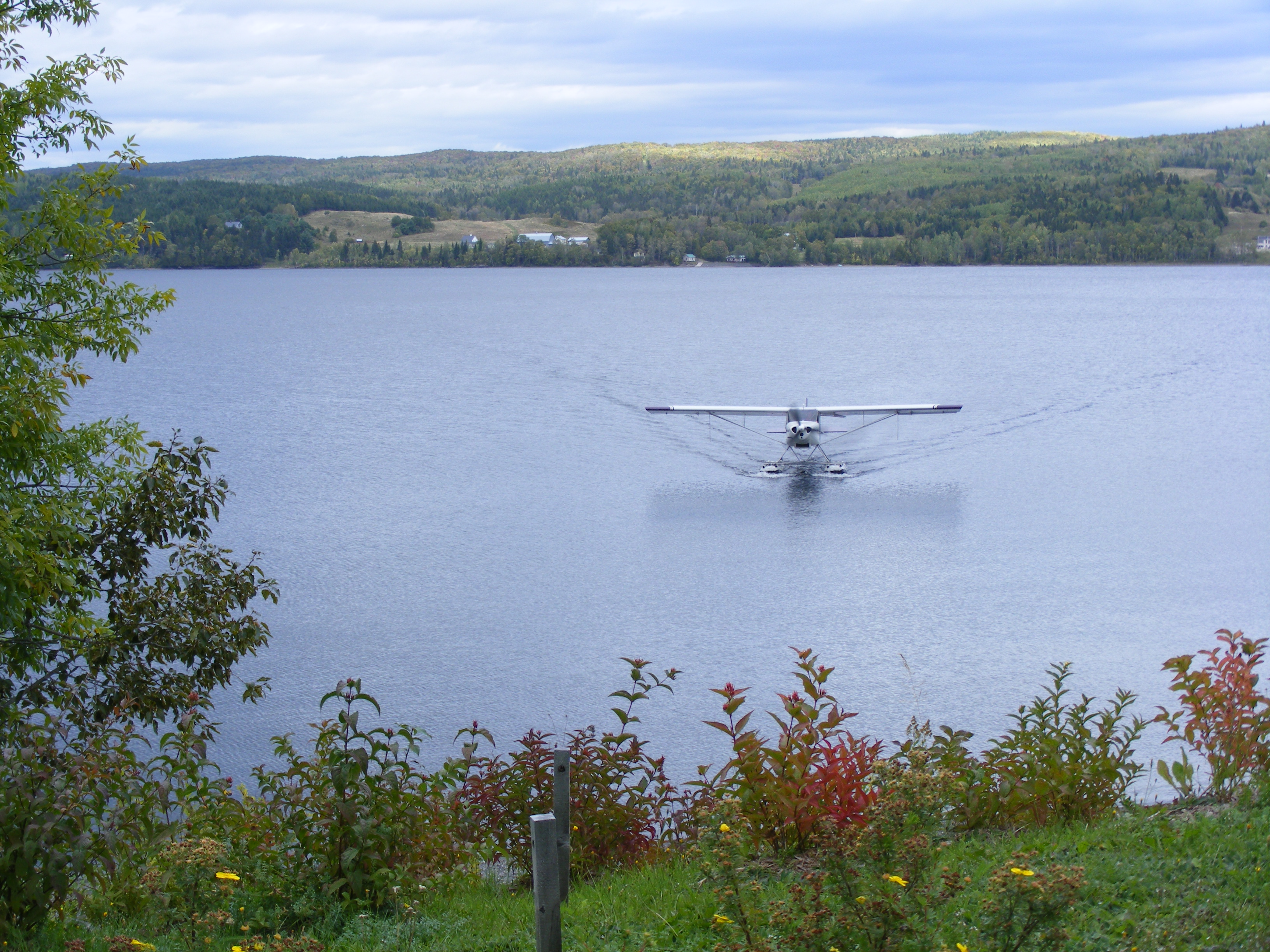
Today’s was quite a long journey but went very well for 273 of the alleged 274 miles. Rather too well it seems. Partly because we were aiming for a site unrecognised by the sat-nav – in fact the whole town was a sat-nav no show – and partly due to roadworks meaning that the sorties were fermé and my French not being up to the alternative instructions, oh and the out of date sat-nav maps, which meant we were supposedly driving in a field, we got horribly lost. We stopped and asked directions of a lady who strangely didn’t understand my truly excellent execrable French any better than I understood her English. That helped not at all and one hour, 30km and some very rough roads later we were back where we started. This is the point at which you a) burst in to tears, b) vow never to leave the country again, c) head for home, d) do damage to the sat-nav/your travelling companion – or indeed all of the above. I try again in a shop where someone speaks English. By this time Chris has been driving for five hours and needs a cup of tea; this is bring out his xenophobic tendencies. Miraculously the shopkeeper’s instructions work and we are compensated by being back at the beautiful Témiscouata-sur-lac site, with a lakeside pitch. We take a walk into the town of Notre-dame-sur-lac. Chris cannot find any boats that impress him but we do watch a seaplane land.070 Seaplane, Temiscouta sur lac 28 September 2015

The weather is humid and we think we may be in for a storm. Lakeside pitches are all very picturesque but this does mark the return of the hordes of flies and battle lines are firmly drawn. Normally I am a great respecter of all forms of wildlife but even I join in with attempts at swatting. Also on the wildlife front, there were numerous Canada geese on the lake when we arrived. Needless to say they were beyond photographable reach by the time I’d had the much needed cup of coffee.

After another very warm night and a beautiful sunrise over the lake, it is humid when we set off. I am suffering from some self-inflicted injuries as a result of our battle to exterminate the flies. Chris brandishes a tea-towel with menace and to great effect but I just seem to end up hitting myself and I already have a blackening thumb nail and several bruises. We manage to cope with the detour occasioned by yet more roadworks. For all these roadworks, some of the roads are in a pretty dreadful state, presumably because of the huge heavy commercial vehicles. Many roads seem to just be a thin layer of tarmacadam, with very little foundation.

As we are heading along road 185 nord it begins to drizzle. We have seen very little rain so far and it turns out that our windscreen wipers are about as reliable as the sat-nav. All they seem to do is spread an opaque smear across the windscreen. Opaque is not a good look whilst driving and will be even less so as we head west on the busier highway 2 but we manage. This is known as the Route du Navigateurs and follows the south bank of the St. Lawrence River, for the most part a little further inland than the 132, on which we travelled east. We do get glimpses of the river and the road is a lot less busy than I feared. As we drive alongside the railway a goods train heads east. It was pulled by two engines and had a total of seventy nine carriages. That has to rate as a superlative. The local town is obviously missing a trick. No sign of ‘we have the biggest goods trains in the world’ notices (NB that’s because they don’t – see later post).

We arrive at our campsite at Plessisville with only a five minute detour. There was a rather tense moment when there was a width restriction due to, guess what, roadworks. We had a bit of a debate as to whether or not we were less than 3.4 metres wide – turns out we are – just. This is another deserted campsite, with many vans that look as if they are permanent fixtures but are not currently occupied. A man with very little English says he will be back at three or four. We take this to mean ‘make yourself at home and come and pay me later’, so we do. We also decide to do rather more washing than normal, possibly not the best option on a drizzly day. Having done the making ourselves at home bit, after four we dodge the showers and take a muddy walk down to reception to pay. There is no one about, just a notice that says the site re-opens on 16 May – oops. There is another notice that is beyond my French but seems to be something about arsenic on the site. Surely arsenic is the same in any language? Oh, great. Now we are about to die of arsenical poisoning. One or two people do seem to be on site, clearly they are not in fear of poisoning, which is encouraging. None are the owner and we fail to make ourselves understood. We spot a lady in the distance on a golf buggy, she waves but doesn’t come and ask us for any money. I worry in case she garrottes herself on the washing line we have erected between the electricity wire pole and a handy tree. I have the bright idea of shoving a likely amount of cash through the letter box tomorrow morning. That would work well if there were a letter box.